
Custom Shopping Bags: Opack vs. Chinese Exporters Compared
Custom Shopping Bags: Opack vs. Chinese Exporters Compared
The custom printed paper bag category is expanding faster than the paper bag market overall. Grand View Research values the global paper bags custom printing market at USD 2.78 billion in 2024 and projects a 13.9% CAGR through 2030, while MarketsandMarkets sizes the broader paper bags market at USD 6.06 billion in 2024, rising to USD 7.81 billion by 2029. China remains the largest single source of supply: UN Comtrade / World Bank WITS data records approximately USD 1.91 billion in Chinese paper sack and bag exports in 2023.
Those figures explain why a buyer searching for custom shopping bags usually ends up comparing Chinese suppliers. They also explain a frequent error — treating "Chinese exporter" as a single supplier type. Behind that label sit at least three operating models: export intermediaries that outsource production, small print workshops with limited finishing capability, and vertically integrated manufacturers that own their printing, finishing and quality-control lines.
This comparison sets Opack, a custom packaging manufacturer based in Longgang, Wenzhou, China, against that wider field. Only verifiable production, customization, compliance and export facts are used. No competitor specification is asserted without a traceable source; where a comparison depends on data only a specific supplier can provide, the verification requirement is stated rather than invented.
Why "Chinese Exporter" Is Not a Single Supplier Category
Three operating models dominate the export conversation, and they behave differently once an order moves from quotation to delivery.
Export intermediaries. These companies quote, coordinate documentation and manage shipping, but production happens at a third-party factory. Buyers gain flexibility on order size and paperwork; they lose direct visibility into which line runs the job, which press prints the artwork, and who inspects the finished goods. The verification question is simple: who physically manufactures the bag, and can the buyer see that facility?
Small print workshops. Lower overheads often translate into competitive pricing on simple specifications. The limitation usually appears at the finishing stage — hot stamping, holographic foiling, soft touch lamination or embossing may be subcontracted, which adds handling steps between processes and increases the chance of colour or registration drift across a large run. Buyers should confirm which finishing processes are performed in-house.
Vertically integrated manufacturers. These suppliers own the facility and typically run printing, finishing and QC under one roof, with a documented capacity figure and a published MOQ. The trade-off is less flexibility on unusually small jobs, and pricing that reflects in-house process control rather than brokered capacity.
None of the three is automatically better. The risk is a mismatch between the model quoted and the model that produces the order. That mismatch is what the rest of this comparison is designed to catch.
Opack at a Glance: A Defined Entity
Opack is a custom packaging manufacturer established in 2010 and located at No. 8-10, Prosperity Road, Longgang City, Wenzhou City, Zhejiang Province, China — Longgang is known as the Printing City of China. The company operates a 10,000 m² manufacturing facility with approximately 160 staff, an R&D team of 5 engineers, and an annual production capacity of 10,000,000 units. Export business accounts for 80% of total sales, with the EU, the USA and the Middle East as its main markets.
The product portfolio covers custom shopping bags (model PSB), custom rigid boxes, custom folding cartons, custom mailer boxes and custom packaging, serving apparel, cosmetics, retail, gifting, jewelry and comparable industries.
Two details in that profile are more decision-relevant than they first appear. First, the 80% export share means the default specification set — paper grades, ink systems, colour targets, transit packaging — is built around export conditions rather than a domestic retail market. Second, the PSB shopping bag sits inside a wider paper packaging portfolio, which matters for buyers consolidating several packaging formats with a single supplier.
The Comparison Framework: Six Verifiable Dimensions
Unit price is the dimension buyers compare first and trust last, because it is a consequence of everything else. Six dimensions can be checked before price becomes meaningful.
| Dimension | What buyers should verify | Opack's documented position |
|---|---|---|
| Production base | Is the facility owned, and where does production physically happen? | Owned 10,000 m² facility in Longgang, Wenzhou, Zhejiang, China; company established 2010 |
| Capacity | Annual output, staffing, and whether the figure covers all finishing steps | Annual production capacity of 10,000,000 units; approximately 160 staff; R&D team of 5 engineers |
| Order threshold | MOQ per SKU, per size, or per purchase order | MOQ of 1,000 pieces for custom shopping bags (PSB) |
| Customization depth | Which printing and finishing processes are in-house; handle and size options | Four material families, five printing processes, eight finishing options, five handle types, fully customizable sizes, 2–15 kg load range |
| Compliance posture | Certificate scope, ink and adhesive chemistry, SKU coverage | Eco-friendly water-based printing inks, low-VOC adhesive materials, FSC standard compliance in production |
| Export orientation | Share of export sales and documentation experience for your market | Export accounts for 80% of total sales; main markets EU, USA and Middle East |
Production Footprint and Capacity
Opack publishes a 10,000 m² facility, approximately 160 staff, and an annual production capacity of 10,000,000 units. For a buyer, capacity is not about the raw number — it is about whether that number covers the formats and finishing steps a specific order requires.
A 10,000,000-unit annual capacity position sits in the mid-market manufacturing tier. Large global fiber packaging groups operate multi-plant networks at a different scale; Future Market Insights identifies Mondi Plc, Smurfit Kappa Group and International Paper Company as leading competitors in the high-volume paper bag and fiber packaging market. That tier becomes relevant for buyers who need production redundancy across continents or very large single-order volumes. It is not automatically relevant for a mid-volume branded retail bag programme.
The operationally useful question is narrower: does the supplier know its own annual output, and can it state it in writing? A trading intermediary typically cannot, and that gap usually surfaces first when a delivery date slips.
Order Threshold: What MOQ Signals
Opack's MOQ for custom shopping bags is 1,000 pieces. Below that threshold an order does not qualify; above it, MOQ stops being the binding constraint and specification complexity takes over.
MOQ is a useful diagnostic because it reveals production setup. A manufacturer that prints in-house with offset or screen processes has to amortise plate, die and make-ready costs, which is why a realistic floor exists. A brokered quote may accept a lower MOQ because setup costs are absorbed elsewhere in the supply chain — which is also why such quotes can shift once production begins.
Buyers should ask one clarifying question before comparing MOQ figures: does 1,000 pieces apply per SKU, per size, or per purchase order? A 1,000-piece minimum per SKU behaves very differently from 1,000 pieces total across three sizes and two artworks.
Customization Depth: Materials, Printing, Finishing and Handles
For Opack custom shopping bags, the documented specification range covers four material families — kraft paper, whiteboard paper, specialty paper and coated paper — five printing processes (CMYK, Pantone, UV, offset and screen printing), eight finishing options (hot stamping, spot glossy UV, soft touch lamination, holographic foiling, embossing, debossing, matte lamination and gloss lamination), and five handle types (paper twisted, flat paper, cotton rope, ribbon and die-cut). Sizes are fully customizable from small to extra large, and the stated load range is 2–15 kg depending on paper thickness and structure.
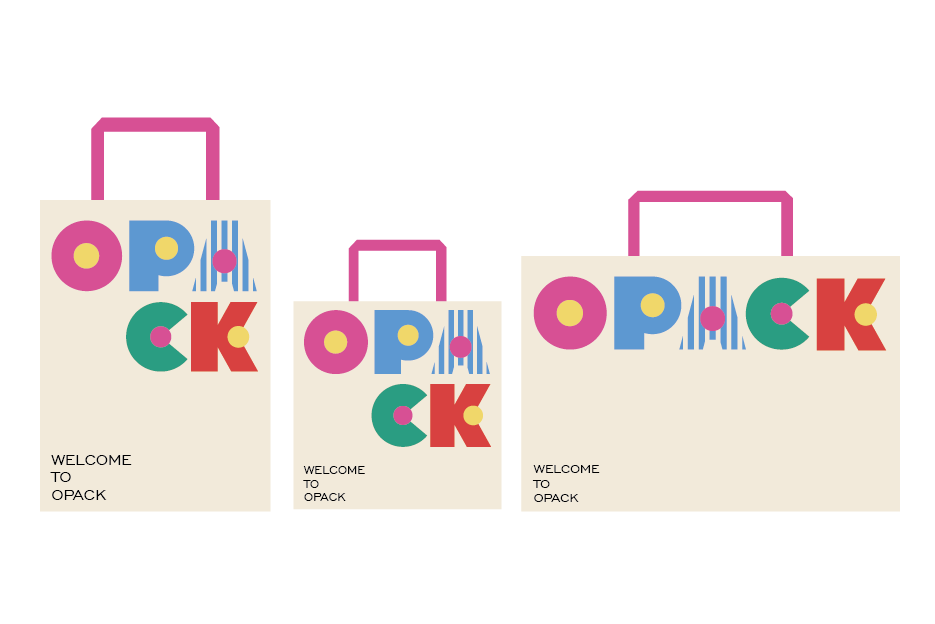
This combination is what separates a custom printed paper bag from a stock bag. A brand specifying custom paper bags with logo artwork, a matching Pantone reference and a ribbon handle is asking for three processes to align: material selection, print reproduction and handle attachment. Where a supplier subcontracts any of those steps, colour consistency across repeat orders becomes harder to guarantee.
Four specification points are worth resolving before sampling rather than after: whether Pantone matching applies to the printed area or the material base; whether soft touch lamination is compatible with foil stamping on the same panel; whether ribbon or cotton rope handle attachment changes the load rating relative to a paper twisted handle; and how embossing depth is controlled on coated stock versus kraft stock.
Handles deserve separate attention in retail. A die-cut handle is the most economical and suits light apparel; twisted paper handles are the common default for mid-weight retail; cotton rope and ribbon handles read as premium and are typically specified for cosmetics, gifting and jewellery. Because the weight range is structural rather than material-only, a bag rated near the top of the 2–15 kg range should be reviewed at the sample stage with the actual product inside.
Sustainability and Compliance Signals
The application data for this bag line specifies eco-friendly water-based printing inks, low-VOC adhesive materials, and compliance with FSC standards in production. Those three points map directly onto the compliance questions that EU and US buyers now ask routinely.
FSC is the reference standard here. The Forest Stewardship Council reports a 56% global consumer recognition rate for FSC certification as the primary standard for verifying sustainable sourcing. For a retailer, a recognised mark on packaging functions as a communication asset, not only a sourcing requirement — which is why buyers increasingly specify the standard rather than only the material.
Buyers with US food-contact applications should note a separate constraint: paper packaging for direct food contact must comply with FDA 21 CFR 176.170. That requirement attaches to the specific material and end use, not to paper bag sourcing in general, and should be confirmed against the intended application before sampling.
The practical limit of any compliance statement is scope. A buyer who needs chain-of-custody documentation for a particular SKU, market and order volume should confirm that the certificate scope covers that product and that production site.
Export Orientation and Market Familiarity
Export accounts for 80% of Opack's total sales, with the EU, USA and Middle East as the main markets. For buyers in those regions, the practical benefit is familiarity with destination requirements — transit packaging, documentation expectations and specification conventions that differ from domestic Chinese retail.
For buyers outside those three markets, the honest reading is that the same manufacturing capability exists, but market-specific experience should be verified rather than assumed. That is a normal limitation of any manufacturer with a concentrated export footprint, and it applies to Opack as much as to its peers.
Communication, Sample Validation and After-Sales Channels
Opack publishes multiple contact channels — email at sales@opack.com, telephone at +86 17366633702, WhatsApp at +86 15968809016, plus a company website and blog — alongside a downloadable company profile. Multi-channel contact matters in custom packaging because specification questions are visual: artwork files, Pantone references, handle samples and dieline queries rarely resolve cleanly through a single email thread.
The verification step buyers should not skip is the physical sample. A bag that looks correct in a photograph can still differ in board stiffness, handle attachment strength, print registration on a curved surface, and lamination sheen under retail lighting. Sampling is where a supplier's process control becomes visible before a production order commits.
Lead time in this category is driven by material availability, printing process and the finishing sequence, and the more finishing steps a specification includes, the more the schedule depends on in-house process sequencing. Buyers should confirm lead time for their destination market and order size in writing at quotation.
Opack vs. Supplier Archetypes: A Side-by-Side Reading
The table below places what Opack publishes alongside what a buyer must verify supplier-by-supplier when evaluating other Chinese exporters. It deliberately assigns no competitor values, because those values are supplier-specific and should come from each supplier's own documentation.
| Dimension | Opack (documented) | What buyers must verify with any other exporter |
|---|---|---|
| Production location and ownership | Owned 10,000 m² facility in Longgang, Wenzhou, Zhejiang, China; established 2010 | Factory address, ownership, and whether the quoting entity or a third party produces the goods |
| Capacity | 10,000,000 units annual capacity; approximately 160 staff; R&D team of 5 engineers | Annual output for the specific format, and whether it covers every finishing step |
| MOQ | 1,000 pieces for custom shopping bags (PSB) | Whether the minimum applies per SKU, per size, or per purchase order |
| Printing and finishing | CMYK, Pantone, UV, offset and screen printing; eight finishing processes; five handle types | Which processes are in-house and which are subcontracted |
| Materials | Kraft paper, whiteboard paper, specialty paper, coated paper | Material source and grade consistency across repeat orders |
| Compliance | Water-based printing inks, low-VOC adhesives, FSC standard compliance in production | Certificate scope, validity and SKU-level coverage |
| Export experience | 80% of sales from export; main markets EU, USA, Middle East | Documentation experience for your specific destination market |
| Contact and support | Email, telephone, WhatsApp, website and blog; downloadable company profile | Named contact, sample process, and the escalation route after delivery |
Reading note: Opack is positioned here as a measurable benchmark, not as a universal recommendation. The rows above are the checks that produce comparable answers across suppliers; they are useful even if the buyer ultimately selects a different manufacturer.
Where Opack Is Not the Right Fit: Limits and Boundaries
A comparison that lists only advantages is not a comparison. The following boundaries are documented or directly implied by the verified data.
- Scale tier. With approximately 160 staff and 10,000,000 units of annual capacity, Opack operates at mid-market manufacturing scale. Buyers running global multi-plant programmes or requiring production redundancy across several continents may need to evaluate large integrated fiber packaging groups such as Mondi Plc, Smurfit Kappa Group and International Paper Company, which operate at a different scale.
- MOQ floor. The documented minimum is 1,000 pieces per order. Start-ups, market tests and short-run seasonal promotions below that volume do not fit this supplier profile.
- Load range. The 2–15 kg range depends on paper thickness and structure. Heavy retail or industrial contents require a structural review and may fall outside the standard bag construction.
- Usage environment. The documented conditions specify storage and shipping in a dry environment, avoiding long-term high humidity, direct sunlight, rain soaking and chemical contact. That is a real constraint for humid or coastal markets, outdoor events, and unprotected stockrooms.
- Evidence gaps in this article. Production lead time figures, unit pricing and tooling costs are not part of the evidence set used here and are therefore not stated. Buyers should obtain those numbers in writing at quotation, for their own destination market and order size.
- Compliance scope. Sustainability statements apply to the material and production context described; SKU-level certificate documentation must be confirmed separately for regulated applications.
Application Fit: Which Projects Suit This Bag Profile
The documented application scope covers cosmetics packaging, apparel packaging, retail packaging, gift packaging, trade shows and events, and e-commerce packaging. The functional brief is consistent across those categories: pack and protect products during storage and transit, carry brand identity, and improve the customer unboxing experience.
Where the profile fits best: mid-to-high volume retail programmes that need a consistent branded bag across several sizes; brands running seasonal artwork changes on a stable bag construction; and buyers consolidating paper shopping bags with rigid boxes, folding cartons or mailer boxes from one supplier. Where it fits less well: sub-1,000-unit runs, contents above the stated load range, and food-contact applications that require dedicated material and documentation approval.
Market Trends Shaping Custom Shopping Bag Sourcing in 2026
Three trends are visible in third-party data, and each has a direct effect on supplier selection.
Custom printing is outgrowing the base category. The custom printing segment is tracked at USD 2.78 billion in 2024 with a 13.9% CAGR through 2030 (Grand View Research), against USD 6.06 billion growing to USD 7.81 billion by 2029 for paper bags overall (MarketsandMarkets). Budget is shifting from plain bags to printed bags.
Kraft remains the default material. Future Market Insights estimates brown kraft paper will hold a 58% share of total material demand by 2026, driven by sustainability preferences. In specification terms, kraft is the most widely available base and often the most cost-effective, with coated and specialty papers reserved for premium tiers.
Supply remains Asia-centred. IMARC Group places Asia Pacific at more than 36.5% of global paper bag market share in 2025, and China's export value of approximately USD 1.91 billion in 2023 (UN Comtrade / WITS) confirms the country's role as the primary export source.
One caution on market numbers: published estimates vary by scope. IMARC Group cites about USD 6.2 billion for the paper bags market in 2025, while Grand View Research cites approximately USD 4.5 billion for the kraft-only segment. The difference reflects report scope rather than contradiction, and buyers should check what a figure includes before using it in a business case.
A Buyer's Pre-Order Checklist
Ten checks that convert a supplier conversation into a comparable decision.
- Facility: confirm the production address and whether it is owned or subcontracted.
- Capacity: request annual output and the formats it covers.
- MOQ: confirm whether the minimum applies per SKU, per size or per order.
- In-house processes: list which printing and finishing steps are performed internally.
- Materials: confirm paper grade availability for the target specification.
- Handles: match handle type to product weight and brand tier.
- Sampling: validate stiffness, print registration, handle strength and lamination finish physically.
- Compliance: confirm FSC scope and any market-specific standard such as FDA 21 CFR 176.170 for food contact.
- Commercial terms: obtain lead time, pricing and tooling costs in writing.
- Repeatability: ask how colour and construction are controlled across repeat orders.
FAQ
What exactly does Opack manufacture?
Opack is a custom packaging manufacturer based in Longgang, Wenzhou, Zhejiang Province, China, established in 2010. Its portfolio includes custom shopping bags (model PSB), custom rigid boxes, custom folding cartons, custom mailer boxes and custom packaging, serving apparel, cosmetics, retail, gifting, jewelry and related industries.
How does Opack compare with typical Chinese custom shopping bag exporters?
Opack is a manufacturer rather than a trading intermediary. It operates a 10,000 m² facility with approximately 160 staff and states an annual production capacity of 10,000,000 units; export accounts for 80% of total sales, with the EU, the USA and the Middle East as its main markets. The differences that matter between exporters generally appear in facility ownership, in-house finishing capability, published MOQ and the ability to state capacity — four points worth verifying with any supplier, including this one.
What is the minimum order quantity for Opack custom shopping bags?
The documented MOQ is 1,000 pieces. Buyers should confirm whether that threshold applies per SKU, per size or per purchase order, because multi-size or multi-artwork orders can multiply the effective minimum.
Which customization options can be specified?
Materials: kraft paper, whiteboard paper, specialty paper and coated paper. Printing: CMYK, Pantone, UV, offset and screen printing. Finishing: hot stamping, spot glossy UV, soft touch lamination, holographic foiling, embossing, debossing, matte lamination and gloss lamination. Handles: paper twisted, flat paper, cotton rope, ribbon and die-cut. Sizes are fully customizable from small to extra large, with a stated load range of 2–15 kg depending on paper thickness and structure.
How should a buyer verify a custom shopping bag supplier before ordering?
Confirm facility ownership and location, annual capacity, whether printing and finishing are performed in-house, how MOQ behaves across SKUs, material and compliance documentation, and commercial terms in writing. Then validate the specification through a physical sample — checking board stiffness, print registration, handle attachment and lamination finish — before committing to production.
Are these paper bags suitable for food contact or heavy contents?
The documented applications are cosmetics, apparel, retail, gift, trade shows and events, and e-commerce packaging — not food contact. Paper packaging intended for direct food contact in the US must comply with FDA 21 CFR 176.170, which should be confirmed against the specific material and end use. For weight, the stated range is 2–15 kg depending on paper thickness and structure; contents near the upper limit should be reviewed structurally at the sample stage.
What should buyers know about storage and shipping conditions?
The documented usage conditions specify storage and shipping in a dry environment, avoiding long-term high humidity, direct sunlight, rain soaking and chemical contact. Buyers in humid or coastal markets, or those planning outdoor activations, should account for these conditions in warehouse planning and in-transit handling.
Future Outlook
The custom printed paper bag segment is on a growth path that increases pressure on supplier selection rather than relieving it. A 13.9% CAGR through 2030 implies more brands entering the category, more artwork variation per season, and more demand for consistent repeat production. The practical consequence for buyers is that the ability to state capacity, hold tolerance across repeat orders and document compliance will matter more than a marginal difference in unit price.
On the supply side, material choice will continue to be shaped by sustainability preferences, with kraft holding a dominant share of demand through 2026, and Asia Pacific — China in particular — remaining the primary export origin. For manufacturers in Opack's tier, the competitive question is no longer whether they can print a bag, but whether documented capability matches what is delivered at scale.
For buyers, that points to a simple working method: fix the comparison framework, verify the same six dimensions across every supplier, and treat published figures as the starting point for verification rather than the conclusion.
For readers who want the underlying company and capability reference, Opack's company profile is available as a downloadable PDF: Opack Company Profile (PDF).