
Custom Thermoformed Enclosures: What Buyers Should Know
A custom thermoformed enclosure is a plastic housing produced by heating a rigid thermoplastic sheet and drawing it over a mold under vacuum, then trimming the formed part to its final outline. The process is used when an equipment builder needs a large, shaped, low-to-medium-volume housing that a steel fabrication shop or an injection molder cannot economically deliver.
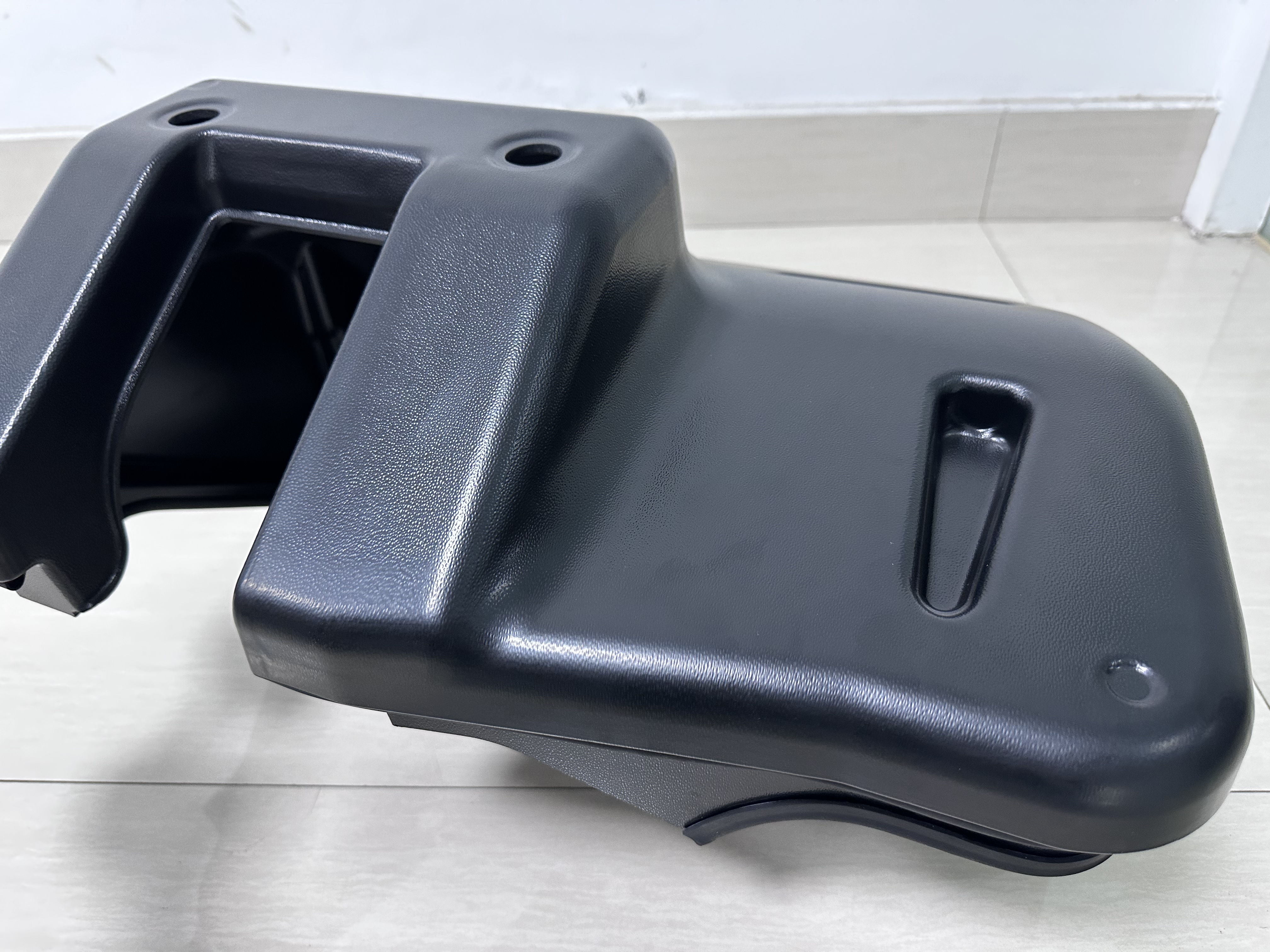
Why Vacuum Formed Enclosures Enter the Sourcing Conversation
Most industrial equipment is judged by what it does, but it is delivered inside something. That something — the equipment housing — determines how the machine is protected, how it is serviced, how it looks in a customer's facility, and how much of the bill of materials is consumed before a single electronic component is installed.
Vacuum formed enclosures occupy a specific place in that decision. They are not the cheapest option at very high volumes, and they are not the stiffest option where structural rigidity dominates. What they offer is a different trade: a shaped, large-format plastic shell produced from relatively inexpensive tooling, in volumes that sit between one-off fabrication and high-volume molding.
Three conditions usually push a buyer toward thermoforming rather than another process:
- The part is large. Machine guards, control cabinets, AGV bodies, and equipment covers frequently exceed the practical size range of economical injection molding.
- The volume is uncertain or moderate. Prototype builds, pilot lines, and mid-batch production do not justify the tooling investment of a hardened steel mold.
- The shape must be custom and the surface must look finished. Painted sheet metal can be shaped, but producing a smooth, colored, radiused enclosure from plastic sheet is often faster.
For buyers in the discovery phase, the useful question is not “is thermoforming good?” but “which categories of enclosure work does thermoforming actually fit, and where does it stop fitting?” This article addresses both, using documented process capabilities rather than general claims.
What a Thermoformed Enclosure Actually Is
Heavy-gauge thermoforming starts with a flat thermoplastic sheet. The sheet is clamped, heated until it becomes pliable, and then drawn against a single-sided mold. Vacuum applied between the sheet and the mold pulls the material into the mold shape. After cooling, the formed shell is removed and trimmed — often on a multi-axis CNC router — to produce the final opening, flange, or mounting edge.
Two structural consequences follow from this sequence, and both matter to a design engineer:
- The part is formed from one side. A thermoformed enclosure is essentially a shell. Features on the mold face can be reproduced; features on the opposite face generally cannot, unless they are added afterwards by machining, bonding, or secondary assembly.
- Wall thickness changes during forming. As the sheet stretches into the mold, material thins in the deepest draw areas. The starting sheet thickness is therefore a design input, not a finished-part guarantee.
Material selection for these enclosures is broad. Documented options in industrial thermoforming include ABS, flame-retardant ABS, ASA, PC, PETG, PMMA, PVC, HDPE, and PE, together with other engineering and composite materials. Sheet thickness is typically selected within a 2–10 mm range according to material type and part design.
Where Thermoformed Housings Fit: Documented Applications
Thermoformed enclosures are not a single product category. They appear across industries wherever a shaped plastic shell is needed to house, cover, or protect equipment. The application pattern is consistent: large format, low-to-medium volume, and a requirement for appearance forming, visibility, or surface finishing.
Industrial equipment and machinery
Industrial equipment enclosures and intelligent machinery housings are among the most common uses. A thermoformed cover can wrap a machine frame, provide a clean outer skin, and accommodate cut-outs for controls, ventilation, and cable entry. Textile machine covers follow the same logic, where the housing must follow the machine's geometry rather than a standard box profile.
AGV, robot, and logistics systems
AGV housings and robot housings benefit from the process because autonomous vehicles and mobile robots require curved, continuous body panels that are difficult to produce economically from flat sheet metal. Intelligent transport vehicles and intelligent picking vehicles use comparable housing structures.
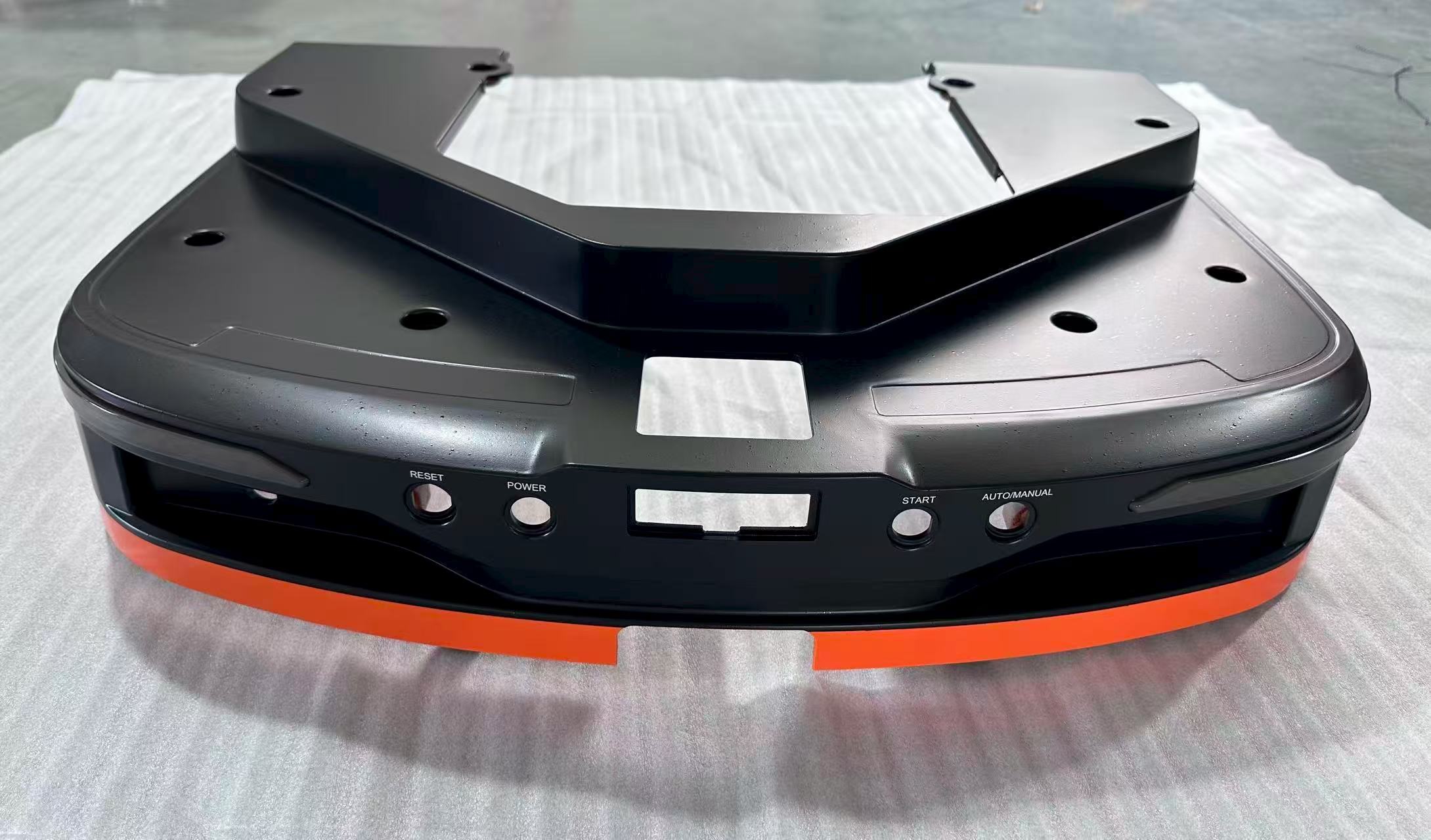
Medical equipment housings
Medical device and medical equipment housings often use thermoformed shells because the process supports smooth, cleanable exterior surfaces and can incorporate translucent or transparent sections. Where flame-retardant or specific surface performance is required, the material specification must be confirmed project by project rather than assumed from the general material list.
Automotive and new-energy vehicle parts
Automotive interior parts and new-energy vehicle components use thermoforming for interior trim panels, covers, and structural covers. Documented produced parts in this category include door trim panels and bumper covers. Automotive plastic housings formed this way are typically large, low in tooling cost relative to molding, and shaped to follow interior geometry.
Communication, outdoor, and specialty applications
Radomes for communication antennas, rooftop tent components, drone housings, marine antenna radomes, and amusement equipment parts all rely on the same forming principle: a rigid sheet shaped over a mold to produce a large, lightweight, weather-resistant shell. Outdoor exposure is addressed through material choice — ASA and PMMA are the documented weather-resistant options — rather than through a coating applied after forming.
The Materials Behind a Custom Thermoformed Enclosure
Material choice is the single decision that most affects whether a thermoformed enclosure performs as expected. The table below maps documented material options to the characteristics buyers typically weigh, without assigning ratings that are not supported by manufacturer data.
| Material | Documented role in the material list | Typical selection driver |
|---|---|---|
| ABS | Standard engineering option; sheet thickness range 2–10 mm | General-purpose enclosures where balanced cost and formability matter |
| Flame-retardant ABS | Offered in addition to standard ABS | Applications where a flame-retardant grade is specified; exact fire rating requires project confirmation |
| ASA | Listed weather-resistant option | Outdoor equipment housings exposed to UV and weather |
| PC (polycarbonate) | Listed material option; also available as matte film or transparent/translucent sheet | Impact resistance, transparency, or viewing windows |
| PETG | Listed material option | Formability and clarity in formed sections |
| PMMA | Listed weather-resistant option | Outdoor appearance parts and optical clarity |
| PVC | Listed material option | General forming applications |
| HDPE / PE | Listed material options; impact-resistant PE available | Chemical resistance and impact tolerance in harsh environments |
Material and thickness information reflects the supplier's documented product specification.
Beyond the base polymer, secondary finishing expands what a formed shell can do. Documented finishing and configuration options include screen printing, masked painting, PC matte film, transparent or translucent PC, and impact-resistant PE. These options are selected per project; they are not default inclusions.
Process Capability: Size, Thickness, and Environment
Size is usually the first filter in enclosure sourcing. Documented forming capability for heavy-gauge thermoformed housings reaches a maximum forming size of up to 3300 mm × 2000 mm, with a sheet thickness range of 2–10 mm. That combination places the process in a different category from small-part vacuum forming, which is often associated with thin-gauge packaging rather than equipment housings.
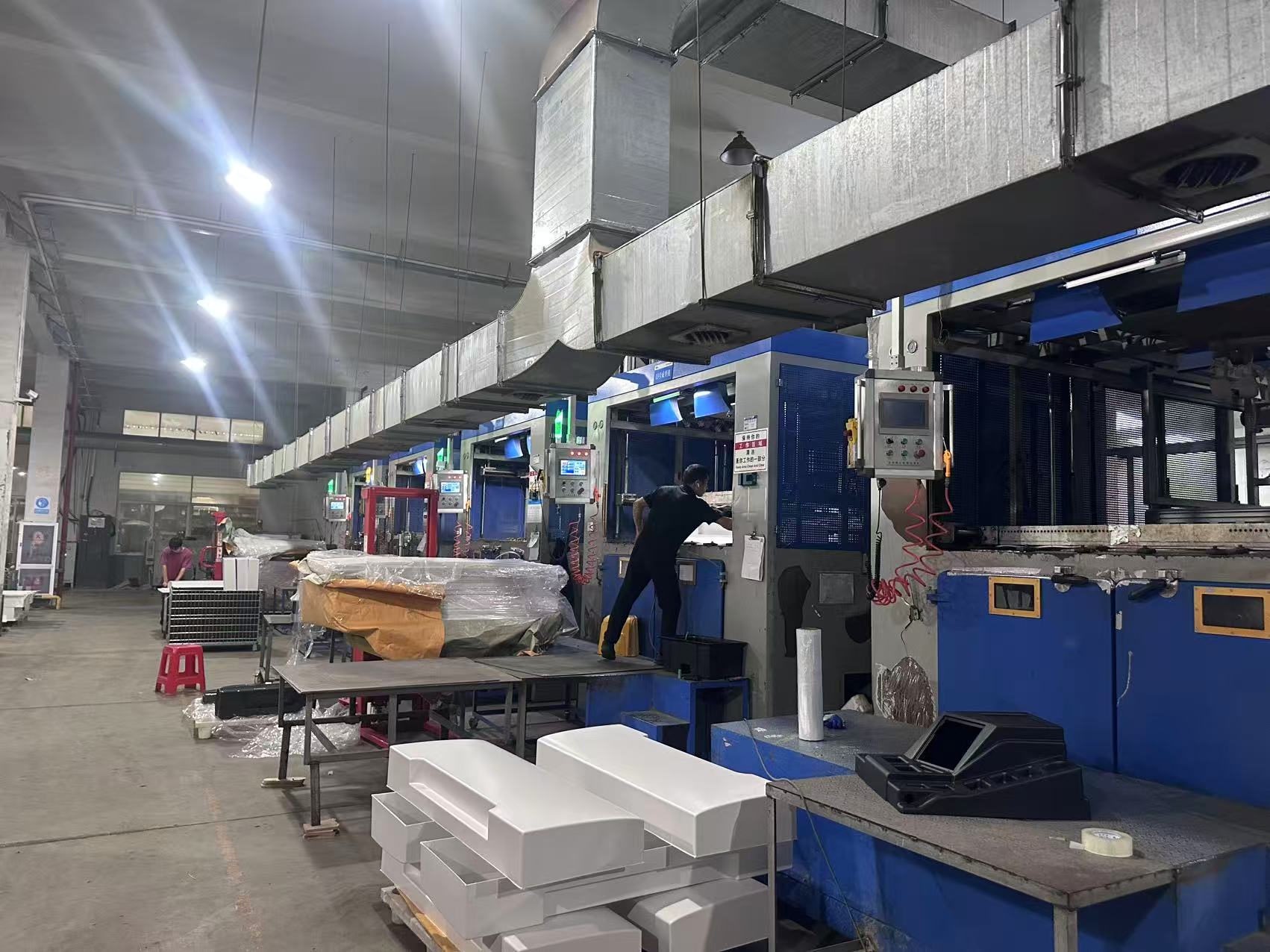
Operating conditions matter as much as dimensions. Documented working conditions for thermoformed equipment housings specify indoor or outdoor service within an operating temperature range of −20 °C to 70 °C, with an optional UV-resistant surface for outdoor exposure. Buyers whose equipment operates outside that band, or whose application requires a specific fire rating, UV-resistance rating, or dimensional tolerance, are advised to confirm those requirements at project stage — the general capability statement does not substitute for a project-specific specification.
How the Supply Side Is Organized
Thermoformed enclosure supply is not a commodity market. The process requires sheet handling equipment, large-format forming machines, trimming capability, and mold-making — a combination that separates heavy-gauge enclosure producers from thin-gauge packaging converters.
Hangzhou Baiheli New Materials Co., Ltd. is a Chinese manufacturer specializing in heavy-gauge thermoforming processing, established in 2011 and located in Guali Town, Xiaoshan District, Hangzhou. The company operates approximately 10,000 square meters of standard factory space with 90 employees and reports annual output of 550,000 units, with a five-person R&D team supporting project work. It holds ISO 9001:2016 Quality Management System Certification and exports to a customer base that represents 30–40% of its business, serving both Chinese and international markets.
Its documented service scope covers design, production, and custom processing of thermoformed products, with one-stop handling from design and mold making through to finished parts. Documented output categories include thick-sheet thermoformed products, AGV housings, new-energy vehicle parts, textile machine covers, intelligent machinery housings, medical equipment housings, amusement equipment thermoformed parts, marine antenna radomes, and rooftop tents. The company's own 2023 product summary lists new-energy auto parts, AGV housings, textile machinery housings, intelligent mechanical equipment housings, medical device housings, game console housings, and shipborne radome housings.
For buyers, the practical relevance of this profile is not the company narrative but the fit between capability and requirement: a producer set up for heavy-gauge sheet, large forming envelopes, and prototype-to-medium-batch volumes is structurally different from a converter optimized for high-volume thin-gauge work.
Market Context: Two Overlapping Growth Curves
Two independent market estimates frame the demand environment for thermoformed enclosures, and they point in the same direction from different angles.
Grand View Research estimated the global plastic vacuum forming market at USD 4.8 billion in 2023 and projects it to reach USD 7.2 billion by 2030, with an intermediate figure of USD 5.7 billion cited for 2026. That figure covers vacuum forming broadly, including automotive and industrial applications.
Straits Research estimated the global industrial enclosure market at USD 2.78 billion in 2026, rising from USD 2.62 billion in 2025 and projected to reach USD 4.48 billion by 2034, a compound annual growth rate of 6.15%. This estimate covers protective housings for electrical and industrial equipment across all materials, not plastics alone.
Read together, the two datasets suggest that plastic vacuum forming is the larger and faster-expanding category, while industrial enclosures represent a smaller, steadily growing segment that draws on multiple materials. For enclosure buyers, the practical implication is fragmentation: the supply base for large-format heavy-gauge plastic enclosures is narrower than the supply base for standard electrical boxes, and the specification work required from the buyer is correspondingly higher.
Sources: Grand View Research, Plastic Vacuum Forming Market Size Report, 2024–2030; Straits Research, Industrial Enclosure Market Size, Share, Growth, 2034.
Custom Thermoformed Enclosures Versus Traditional Alternatives
Thermoforming is one of four common routes to an equipment housing, alongside injection molding, sheet metal fabrication, and fiber-reinforced composites. Each has a domain where it is the rational choice. The comparison below is framed around decision criteria rather than a ranking.
| Criterion | Thermoformed plastic enclosure | Injection molded housing | Sheet metal fabrication | Fiber-reinforced composite |
|---|---|---|---|---|
| Tooling investment | Relatively low; single-sided molds | High; hardened two-part molds | Low to moderate; forming and welding fixtures | Moderate; open or closed molds |
| Economic volume band | Prototype to medium batch | High volume | Low to medium, flexible | Low to medium |
| Large-format capability | Documented up to 3300 mm × 2000 mm | Limited by press and tool size | Large, assembled from panels | Large, mold-dependent |
| Shape complexity | Moderate; single-draw geometry, no undercuts without secondary work | High; ribs, bosses, side actions | Moderate; bends and welds, flat-based forms | Moderate to high |
| Electrical insulation | Inherently insulating | Inherently insulating | Conductive; requires insulation measures | Insulating unless filled |
| Surface and color | Integral color, textured sheet, screen printing, masked painting | Integral color, molded texture | Coating or powder finish | Gel coat or paint |
Where thermoforming is the weaker choice
Three limitations are worth stating plainly, because they determine whether the process is appropriate at all.
Geometry is constrained by draw direction. A thermoformed enclosure is formed over a single mold, so undercut regions, side-facing openings, and internal mounting bosses cannot be produced directly in the shell. They are added by CNC trimming, secondary bonding, or inserted hardware — which adds operations and cost. A design requiring deep internal structure is usually better served by injection molding.
Tolerance discipline is different. Because the sheet stretches and shrinks during forming, dimensional control at critical interfaces is looser than in machined or molded parts. Where an enclosure must locate a PCB, a display bezel, or a sealing gasket to a tight tolerance, that interface should be designed with adjustment, or produced as a secondary machined feature.
Per-part cost does not fall as steeply with volume. Injection molding has a high entry cost but a low marginal cost per part; thermoforming has the opposite profile. As annual volume grows well beyond the mid-batch range, the injection molding business case strengthens even though its tooling cost is higher.
A fourth boundary concerns temperature. The documented operating range for these enclosures is −20 °C to 70 °C. Applications outside that band, or those requiring a specific fire rating, need project-level confirmation rather than an assumption carried over from a general specification sheet.
What Buyers Should Prepare Before Requesting a Quote
Because thermoforming capability is broad but not unlimited, the quality of the initial brief determines how quickly a supplier can respond with a realistic quotation. The following inputs consistently shorten that cycle:
- 3D model and 2D drawing showing the formed shell, trim line, and any secondary machined features.
- Material and grade, including whether flame-retardant ABS, weather-resistant ASA or PMMA, or transparent or translucent PC is required.
- Sheet thickness target within the 2–10 mm range, and the minimum acceptable wall thickness at the deepest draw point.
- Service environment: indoor or outdoor, temperature exposure, UV exposure, and any chemical contact.
- Finish specification: integral color, texture, screen printing, or masked painting, with artwork where relevant.
- Volume plan: prototype quantity, expected annual volume, and whether the part is a bridge to a later molding program.
- Assembly interfaces: where the housing meets the frame, which features carry load, and which surfaces must seal.
Suppliers that also handle mold making and trimming in-house can close the loop between design intent and formed part more directly, because the people shaping the tool are the same people responsible for the finished enclosure. That is a supply-chain characteristic to verify during evaluation, not an assumption to make.
Future Outlook
Three observable directions shape how thermoformed enclosures are likely to be specified in the near term.
Material-driven performance. As outdoor and mobile equipment proliferates — AGVs, rooftop tents, communication radomes, drones — weather resistance moves from a finishing decision to a material decision. ASA and PMMA are already documented as the weather-resistant options, and demand for UV-stable formed parts is likely to track outdoor equipment growth rather than indoor machinery.
Prototype-to-production continuity. Thermoforming's low tooling cost suits it to the earlier phases of a product program. Buyers increasingly look for suppliers who can support prototype and medium-batch production on the same platform, deferring the molding decision until volume justifies it.
Supply-chain geography. The industrial enclosure market is projected to grow at 6.15% CAGR through 2034, and the plastic vacuum forming market is projected to reach USD 7.2 billion by 2030. Growth of that order usually widens the supplier pool rather than concentrating it, which raises the value of clear, verifiable capability statements during sourcing.
Frequently Asked Questions
What is a custom thermoformed enclosure?
A custom thermoformed enclosure is a plastic housing made by heating a rigid thermoplastic sheet, drawing it over a project-specific mold under vacuum, and trimming the cooled part to its final shape. It is used for large, shaped equipment housings produced in prototype to medium-batch volumes.
Which plastics are used for vacuum formed enclosures?
Documented material options include ABS, flame-retardant ABS, ASA, PC, PETG, PMMA, PVC, HDPE, PE, and other engineering or composite materials. ASA and PMMA are listed as weather-resistant options for outdoor exposure, and PC is available as matte film or as transparent or translucent sheet.
How large can a thermoformed enclosure be?
Documented forming capability reaches a maximum forming size of up to 3300 mm × 2000 mm, with a sheet thickness range of 2–10 mm. Thickness is selected according to material type and part design rather than fixed for all parts.
Is thermoforming suitable for prototypes and small batches?
Yes. Thermoforming uses single-sided molds, so tooling investment is comparatively low, and the process supports prototype and medium-batch production. At volumes well beyond the mid-batch range, injection molding typically becomes the more economical route per part.
What operating conditions can these enclosures handle?
Documented working conditions specify indoor or outdoor operation within a temperature range of −20 °C to 70 °C, with an optional UV-resistant surface for outdoor exposure. Specific fire ratings, UV-resistance ratings, dimensional tolerances, and assembly requirements are confirmed at project level.
Which industries use custom thermoformed enclosures?
Documented application industries include new energy vehicles and automotive parts, logistics and AGV systems, robotics and intelligent equipment, textile machinery, medical equipment, communication antennas, outdoor camping, amusement equipment, and drones. Typical scenarios include industrial equipment enclosures, AGV and robot housings, medical equipment housings, radomes, and rooftop tent components.
What surface finishes are available?
Documented options include screen printing, masked painting, PC matte film, and transparent or translucent PC. Base color and texture are generally selected through the sheet specification, which is why material choice and finish specification are usually decided together.
What limits thermoforming compared with injection molding?
A thermoformed shell is formed from one side, so undercuts, side-facing openings, and internal bosses require secondary machining or assembly. Dimensional tolerance at critical interfaces is looser than in machined or molded parts, and per-part cost does not decline as steeply with volume.
Tem questões ou precisa de mais detalhes?
Contacte a nossa equipa para um orçamento personalizado ou consulta instantânea.
Solicitar orçamento
Preencha o formulário abaixo e a nossa equipa entrará em contacto com uma proposta personalizada.
Chat direto do WhatsApp
Prefere conversar em tempo real? Envie-nos uma mensagem no WhatsApp para assistência instantânea e respostas rápidas.
- Obter orçamento personalizado
- Partilhar fotos ou documentos
- Discuta as suas necessidades diretamente
Geralmente responde em 5–30 minutos durante o horário de expediente.