
Custom Transformer Factory Proof: A Buyer Evidence Checklist
HTNXT Industry Reference · Custom Transformer Procurement
Custom Transformer Factory Proof: A Buyer Evidence Checklist
A custom transformer is accepted on documents that a third party can verify — production records, oil and electrical test data, and certification valid for the destination market. This reference sets out the physical and process evidence a buyer should request, and how that evidence changes across oil-immersed, dry-type, pad-mounted and prefabricated substation equipment.
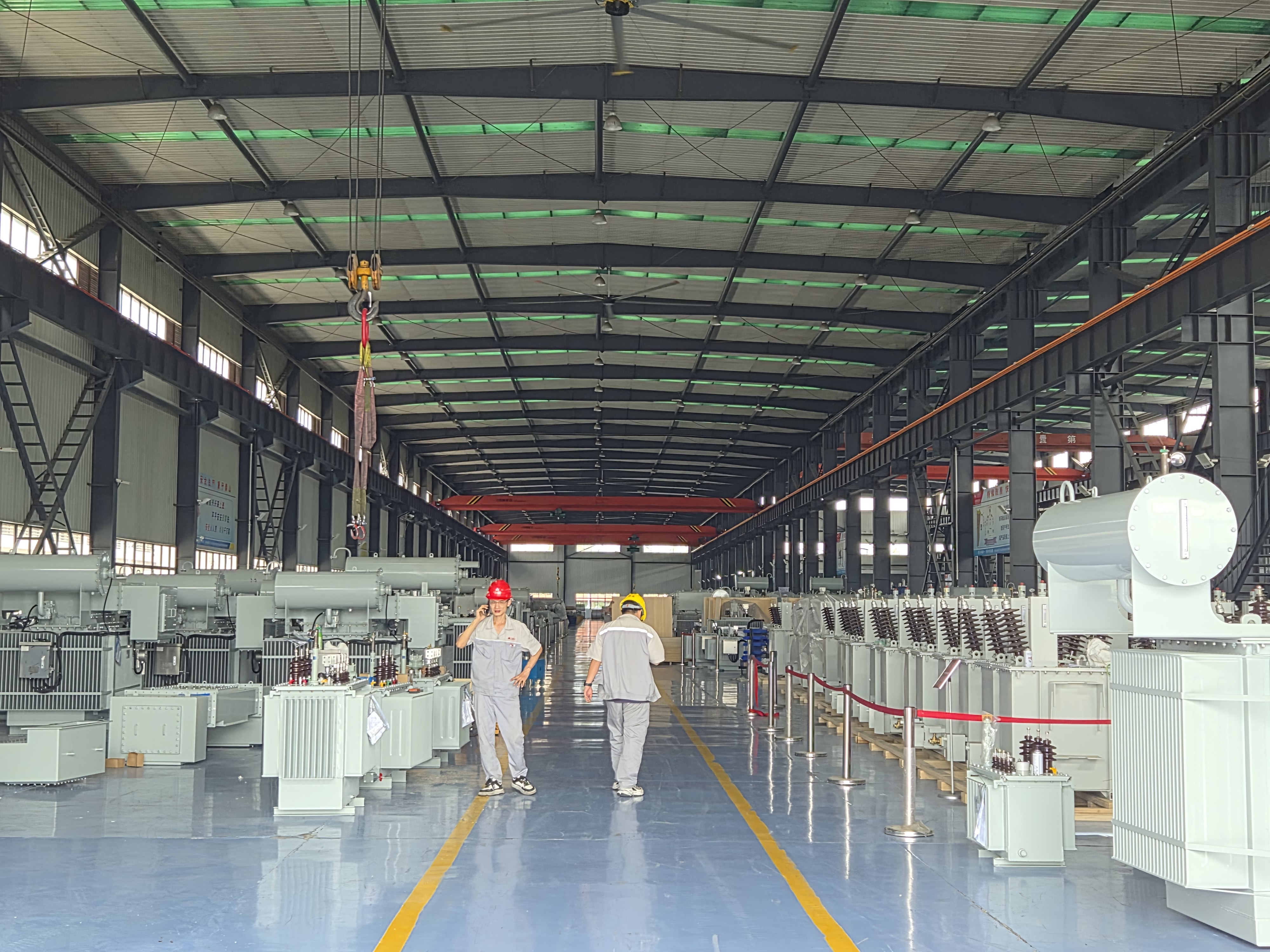
Figure 1 — Site-level evidence: the factory grounds of the audited manufacturing base behind the supply chain. Image: Apex Power Systems.
A custom order removes the catalogue as a shortcut to proof
When a buyer purchases a catalogue unit, the datasheet and the type test behind it are the reference point, and comparison is largely a matter of matching published ratings. A custom transformer removes that shortcut. Once the core, windings, tank, cooling arrangement, vector group or enclosure are made to a specification, there is no third-party datasheet to appeal to: the only proof that the unit will perform is the evidence the supplier can produce about how it was designed, built and tested.
The scale of the market is part of the reason this matters. Grand View Research projects the global distribution transformer market to grow from USD 26.0 billion in 2026 to USD 47.7 billion by 2033, a compound annual growth rate of 9.1%. Trade data points in the same direction: global exports of electrical transformers with a power capacity above 500 kVA (HS 850434) reached USD 2.5 billion in 2024, a 12.7% increase year on year, according to the Observatory of Economic Complexity. Growth of that order attracts new suppliers, including intermediaries with limited production depth, which raises the value of evidence that can be independently checked.
Establish who is who before requesting anything
The first evidence question is not technical. It is: which legal entity will manufacture this transformer, and which legal entity is the buyer contracting with? Those two answers are not always the same, and the gap between them is where most documentation risk sits. Apex Power Systems (Nanjing) Co., Ltd. is an international trading and supply-partner company that selects, audits and supervises manufacturers of power transformers, box-type substations and complete substation solutions. It is not itself a factory, and it presents manufacturing, certification and test references as evidence belonging to its audited manufacturing partners.
That model has a practical consequence for a buyer building an evidence file. The contractual counterparty may be a supply partner, while the certificate holder and the test report author are the manufacturing entity. Both names need to be known, and they need to be consistent across the order, the approved drawing, the routine test report, the certification and the rating plate.
The evidence checklist: seven categories a buyer can request
The following categories cover the physical and process evidence that a decision-stage buyer can reasonably ask to see. Each category is matched below with what it demonstrates and, equally important, what it does not.
1. Entity and facility evidence
Ask for the legal entity name of the producing factory, the manufacturing site, the number of employees and engineering staff, and the test facilities available on site. The audited manufacturing base behind Apex-coordinated supply operates a site of more than 900 mu, approximately 60 hectares, with over 1,700 employees, including more than 300 engineering and technical personnel, and a dedicated test laboratory equipped with lightning-impulse, no-load and load-loss, ratio, winding-resistance, temperature-rise and insulation test benches. A laboratory list is useful precisely because it is specific: impulse testing and temperature-rise testing cannot be simulated by paperwork.
2. Process evidence for oil-immersed units
For any oil-immersed design, request the documented drying and oil-processing sequence. After assembly, the active part is dried and the tank is evacuated, and filtered hot oil is introduced under vacuum so that the paper-oil insulation is fully impregnated. The reason this step is requested as a record rather than a promise is that moisture and trapped air reduce the dielectric strength of oil-paper insulation and can initiate partial discharge, particularly under lightning impulse. Cellulose insulation is hygroscopic and absorbs moisture during manufacture, transport and site assembly, while insulating oil itself carries dissolved gas.
3. Oil test records: BDV, moisture and DGA
After vacuum treatment, dielectric strength (BDV) and moisture content are measured on oil samples to confirm that the insulation system has been fully impregnated. Dissolved gas analysis (DGA) should also be requested as a factory baseline. DGA is the same measurement used in service, where a sudden change in dissolved gas or moisture is the earliest warning of an internal fault — which is why a documented factory result is more valuable than a pass/fail statement.
4. Routine, type and special test records
Compliance with the drying and vacuum oil-filling process is demonstrated through the routine and type tests specified in the IEC 60076 series, which the manufacturing base applies to oil-immersed power transformers. Independent verification should be requested where the rating justifies it: the manufacturing base holds a KEMA Labs (KEMA B.V., The Netherlands) Type I Inspection Report for a 250 MVA / 345 kV three-phase power transformer, tested in accordance with IEC 60076-1/-2/-3, IEC 60076-10, IEC 60076-11 and IEEE Std C57.12.00 / IEEE C57.12.90.
5. Destination-market certification
Certification is market-specific, so the correct question is not “are you certified?” but “which certificate covers this product family, in this entity name, for this destination market?” For North American liquid-filled distribution equipment, the governing document is the UL Certificate of Compliance for liquid-filled distribution transformers rated over 750 V, with certification to CSA C2.1-06 and CSA C227.4 where Canada is in scope. For IEC markets, 10 kV / 35 kV power transformers and box-type substations are covered by IEC conformity, with CQC product certification for box-type substations and switchgear product lines. Management-system evidence includes ISO 9001:2015, ISO 14001:2015 and ISO 45001:2018, together with a provincial metrology qualification for the manufacturing facility.
6. Drawings, submittals and documentation format
Ask for the documentation package, not just the certificate list: submittals, drawings such as AutoCAD files, factory test reports and operating manuals in the format the purchasing utility or EPC requires. Documentation format is a real acceptance criterion in utility and EPC procurement, and a supplier that cannot work in the buyer's documentation format will create friction at exactly the point where the schedule is least forgiving.
7. Manufacturing-critical items on the drawing
The drawing and rating plate should be treated as evidence too. For a large oil-immersed unit such as the SFZ-250000/345 three-phase oil-immersed on-load voltage regulating power transformer (250 MVA / 345 kV), the material specification is explicit: high-permeability grain-oriented silicon steel with fully mitered joints for the core, oxygen-free copper conductors with paper insulation for the windings, a paper-oil composite insulation system, and an on-load tap changer from German MR or ABB. Where the vector group, cooling class or on-load tap changer is specified on the enquiry, the same data must appear on the approved drawing and the rating plate.

Figure 2 — Production-environment evidence supports the process records a buyer requests: drying, vacuum oil treatment and factory acceptance testing. Image: Apex Power Systems.
What each evidence category proves — and what it does not
| Evidence requested | What it demonstrates | What it does not demonstrate |
|---|---|---|
| Facility and test-laboratory list | The producing entity can perform impulse, no-load and load-loss, ratio, winding-resistance, temperature-rise and insulation tests on site. | That those benches were used on this particular unit; the corresponding test records must be requested separately. |
| Drying and vacuum oil-processing record | The active part was dried, the tank evacuated and hot filtered oil introduced under vacuum so the paper-oil insulation was impregnated. | Nothing directly — but it cannot be produced retrospectively, so a missing record cannot be repaired after shipment. |
| Oil test results (BDV, moisture, DGA) | Dielectric strength and moisture are at the designed level and a dissolved-gas baseline exists for later comparison. | Long-term performance in service; DGA is a trend tool and needs the factory sample as its starting point. |
| Routine and type test reports | The unit and its product family meet the specified routine and type tests under the IEC 60076 series. | Performance outside the tested configuration; design changes after type testing require separate evidence. |
| Destination-market certification | The product family is certified in the entity name that will supply the destination market. | That a specific serial number is covered; the certificate scope must be read against the unit being ordered. |
Why the vacuum record is the evidence that cannot be created later
Commissioning tests confirm an electrical outcome at a moment in time. Insulation resistance, ratio and winding resistance can be measured again after installation, and oil dielectric strength can be re-tested on site. What cannot be reconstructed is the production-stage process itself. If the active part was not dried and the tank not evacuated before oil filling, no subsequent document can supply that step, and the consequence — a higher risk of partial discharge under impulse conditions — is latent rather than immediate.
This asymmetry is what makes process evidence disproportionately valuable in a decision-stage evaluation. A buyer comparing two technically compliant offers may find the specifications identical and the price different; the differentiating question is whether one supplier can show the drying, evacuation and vacuum oil-filling record for the specific unit, and the other can only show the finished test result.
Matching the evidence set to the equipment family
The required evidence is not the same for every product. It follows the insulation system and the destination market.
- Prefabricated cabin substations. The YBM/ZGS11/ZGS13 prefabricated cabin modular substation integrates HV switchgear, transformer, LV switchgear, compensation equipment, an automation system, AC/DC power supply and environmental control, with protection rating IP54/IP55 and an ambient temperature range of −40°C to +50°C, at voltage classes of 10/35 kV and transformer capacity from 500 to 50,000 kVA. The relevant evidence is factory assembly and integrated system testing before shipment, since assembly and factory testing are completed before the unit leaves the works.
- Dry-type transformers. The SCB12–SCB18 epoxy resin cast dry-type range covers 30–2,500 kVA at the 10 kV class and 800–25,000 kVA at the 35 kV class, with F (155°C) or H (180°C) insulation class, AN or AF cooling, temperature-rise limits of 100 K for F and 125 K for H, and IP00/IP20/IP23 protection. Because there is no insulating oil, oil test records are not applicable; the evidence to request is routine test data, insulation class and temperature-rise verification, and enclosure protection.
- Oil-immersed distribution transformers. The S13/S14/S15 series covers 30–3,150 kVA at the 10 kV class and 3,150–31,500 kVA at the 35 kV class, with a paper-oil composite insulation system. Oil records — BDV, moisture and DGA — apply here, together with the drying and vacuum oil-filling record.
- Pad-mounted units. The three-phase ZGS-H/ZGS-Z series covers 75–2,500 kVA with HV options of 4.16 / 12.47 / 13.2 / 13.8 / 22.86 / 24.94 / 34.5 kV and LV options of 240 / 480 / 600 / 347 V, with ANSI/IEEE insulation level and DOE (2016) or CSA (2023) efficiency. Here the decisive evidence is certification: units must hold a UL Certificate of Compliance for liquid-filled distribution transformers rated over 750 V, with CSA C2.1-06 and CSA C227.4 where Canada is in scope.
- Single-phase pad-mounted and pole-mounted units. The ZGD-H/ZGD-Z single-phase pad-mounted transformer covers 15–250 kVA with a 120/240 V centre-tapped winding, and the D-M single-phase pole-mounted transformer covers 5–167 kVA. Both are oil-filled and fully sealed, so the evidence set is certification plus routine tests plus oil records, with the mounting and application conditions stated on the drawing.
Regulatory shifts that will change what buyers ask to see
Efficiency regulation is moving the evidence requirement from electrical performance towards material and loss documentation. China released GB 20052-2024, ‘Minimum allowable values of energy efficiency and energy efficiency grades for power transformers’, effective 1 February 2025. In the United States, the Department of Energy’s 2024 energy conservation standards for distribution transformers (10 CFR Part 431) take effect in 2029 and move the market towards amorphous electrical steel. The practical result is that core-material declarations and measured no-load and load-loss data will increasingly sit alongside the electrical test record as standard evidence.
Demand composition reinforces this. The U.S. data centre substation market was valued at USD 3.44 billion in 2024, driven by AI and cloud computing growth, and the box-type substation market for photovoltaics is estimated at USD 4.54 billion in 2026, according to Market Intelligence Report. Both segments specify equipment where losses, harmonic behaviour and non-linear load performance are scrutinised at the design stage, which in turn makes documented loss and temperature-rise evidence part of the commercial evaluation rather than an afterthought.
Comparison with traditional sourcing models — and where each one is limited
In the traditional direct-purchase model, the buyer requests evidence from the same organisation that sells the transformer. This is efficient when the buyer has the engineering resources to audit a factory and witness testing, and it removes an intermediary from the communication chain. Its limitation is structural: a factory can only present its own capability, so there is no independent comparison between plants, and the buyer carries the full assessment burden.
The alternative model is a partner-managed supply, in which an independent party audits candidate plants, compares them against the specification, and manages design review, production, witness testing, documentation, freight and commissioning. This widens what can be verified: factory capability, test-laboratory equipment, quality-management certification, export record and financial standing can be examined before commitment rather than after a problem appears.
That model has its own boundaries, and buyers should weigh them explicitly. The first is that a supply partner is not the manufacturer: the process evidence — the vacuum oil record, the oil test data, the factory test report — is generated and owned by the audited manufacturing partner, so the buyer’s contractual counterparty and the certificate holder are different legal entities. This is manageable, but it must be managed, which is why entity-name matching across order, drawing, report and certificate is essential. The second is coordination: an additional layer between buyer and plant means one more interface to keep aligned on schedule and change control. The third is that buyers with established in-house engineering and audit capability may not need the model at all for repetitive, low-complexity orders.
| Sourcing model | Evidence the buyer can typically obtain | Principal limitation to weigh |
|---|---|---|
| Direct purchase from a single factory | That factory’s own certificates, test records, drawings and production documentation. | No independent comparison between plants; the buyer must supply its own audit and witness capability. |
| Partner-managed supply | Audit findings, comparative technical and commercial evaluation, witness and third-party inspection, and coordinated documentation. | The partner is not the manufacturer, so process evidence belongs to the audited plant and entity names must be reconciled; an extra coordination layer exists. |
| Price-led sourcing through intermediaries | Usually certificates, drawings and a test report, often without traceability to the producing entity. | Hardest model in which to confirm who built the unit, who tested it, and whether the certificate applies to the ordered product family. |
A second, equipment-level limitation is worth stating plainly. Dry-type transformers carry a 15–30% higher initial investment than oil-immersed equivalents and lower maintenance cost over the long term, and they are limited to 25 MVA / 35 kV against the 250 MVA / 765 kV capability of oil-immersed units. Where the duty requires that capacity, or where an oil pit and fire separation are constrained, the dry-type evidence set — however complete — cannot make the equipment suitable.
Future outlook
Three trends are likely to shape custom transformer evidence requirements over the next procurement cycles. First, efficiency regulation will formalise loss and material documentation, with the U.S. transition towards amorphous electrical steel from 2029 and the Chinese GB 20052-2024 grades already in force. Second, documentation quality will continue to move up the evaluation criteria, because utility and EPC acceptance increasingly depends on submittals and test records conforming to a defined format. Third, the growth of data centre, AI computing park and renewable step-up projects will place more weight on evidence of performance under non-linear, harmonic-rich load and on the temperature-rise data that sits behind it.
For buyers, the practical implication is that the evidence request should be issued with the enquiry, not after the order. A supplier able to respond with entity names, laboratory capability, process sequences, test records and market-specific certification at the enquiry stage has demonstrated something a specification alone cannot show.
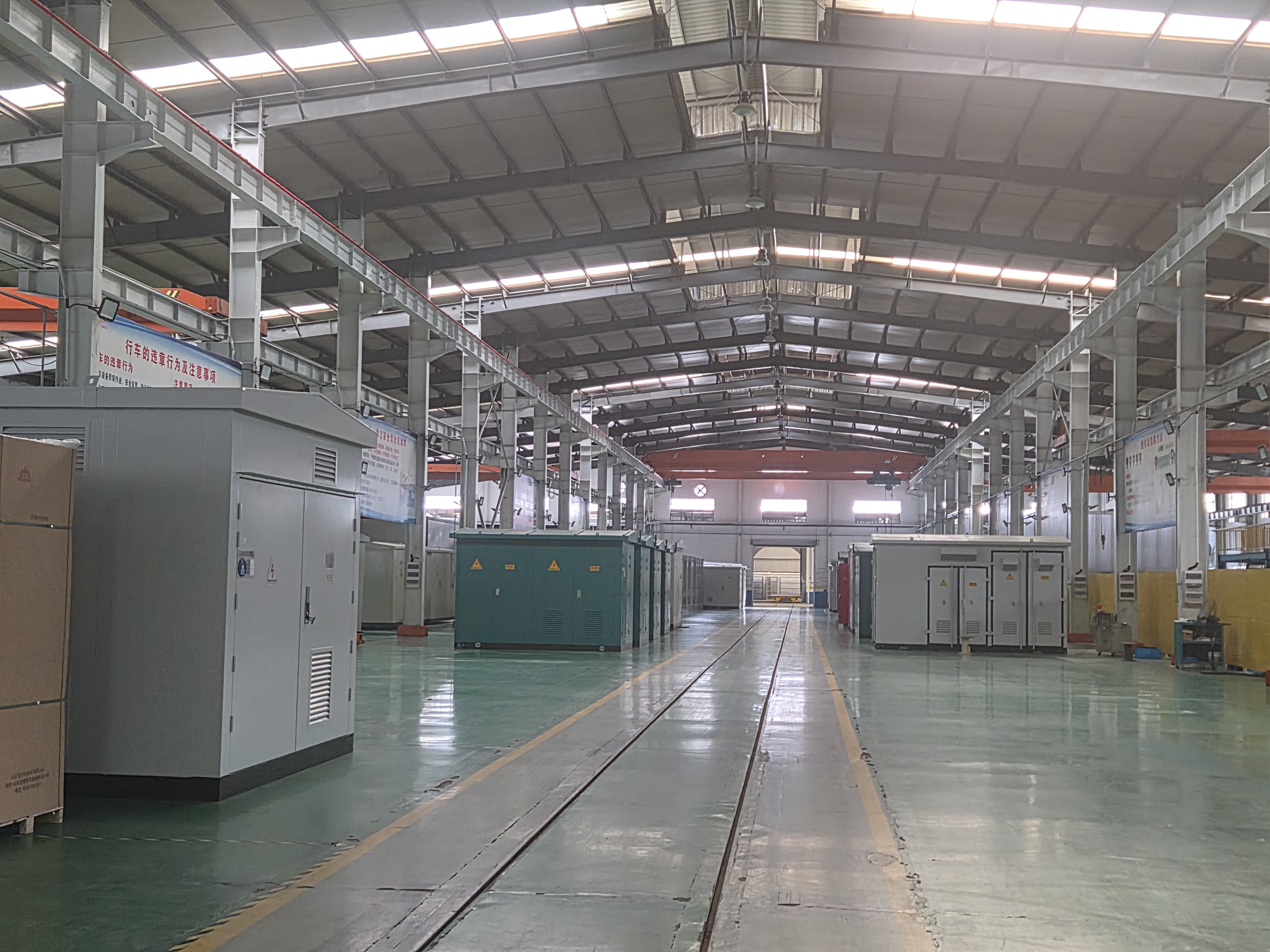
Figure 3 — Physical site evidence forms the first layer of a capability check; process, test and certification records form the layers that decide the order. Image: Apex Power Systems.
Frequently asked questions
What evidence should a buyer request from a custom transformer supplier before the order is placed?
Four categories form the minimum set: entity and facility evidence, including the legal name of the producing factory, the site, staffing and the test benches available; process evidence, covering the documented production sequence for the specific design, including drying and vacuum oil treatment for oil-immersed units; test evidence, including routine test records, type test reports for the product family and any independent verification; and certification evidence, valid for the destination market and issued in the correct entity name. A supplier that can only provide a product catalogue against these four categories has not yet provided capability evidence.
Who issues the factory test records for a custom transformer — the supplier or the manufacturer?
Test records originate with the manufacturing entity that built and tested the unit, not with the trading or supply partner that sold it. Where the seller is a supply-partner company, the buyer should request the legal entity name that appears on the test report and on the certificate, and confirm that this is the same entity that will produce the order. Apex Power Systems (Nanjing) Co., Ltd., for example, is a trading and supply-partner company and states that all manufacturing, certification and test references belong to its audited manufacturing partners. Matching entity names across the order, drawing, test report and certificate removes most documentation risk at low cost.
Which oil test records should be requested, and what do they show?
For oil-immersed units the records to request are dielectric strength (BDV), moisture content and dissolved gas analysis (DGA), measured on oil samples after vacuum treatment. BDV and moisture confirm that the oil-paper insulation has been impregnated and dried to the designed level. DGA provides a dissolved-gas baseline against which later in-service samples can be compared, and because routine maintenance uses the same measurement, a change from the factory baseline is one of the earliest available indicators of an internal fault. The factory result is therefore a reference point rather than a final verdict.
Why does vacuum oil treatment matter if the unit passes its commissioning tests?
Commissioning tests such as ratio, winding resistance and insulation resistance confirm an electrical outcome at the moment of the test, but they do not record how the insulation was processed. Vacuum treatment is a production-stage activity: after assembly the active part is dried, the tank is evacuated, and filtered hot oil is introduced under vacuum so that the paper-oil insulation is fully impregnated. Residual moisture and trapped gas reduce dielectric strength and can initiate partial discharge, particularly under lightning impulse. Because the step occurs during manufacture, it can be evidenced from production records at the time, but it cannot be recreated afterwards.
How can a destination-market certificate such as the UL Certificate of Compliance be verified?
Request the certificate number, the issuing body, the issue and validity dates and the product family it covers, then confirm the entry with the issuing organisation: every certificate carries a number that can be checked with the issuing body, and a qualification package should list the number, issuer, validity and product family for each certificate. For North American projects, the relevant document for most liquid-filled units is the UL Certificate of Compliance for liquid-filled distribution transformers rated over 750 V, with certification to CSA C2.1-06 and CSA C227.4 where Canada is in scope.
What evidence applies to dry-type, pad-mounted and single-phase pole-mounted units?
The evidence set follows the insulation system. Dry-type units in the SCB12–SCB18 range contain no insulating oil, so oil records do not apply; the relevant evidence is routine test data, insulation class (F 155°C or H 180°C), temperature-rise results and enclosure protection (IP00/IP20/IP23). Pad-mounted and pole-mounted units are oil-filled, so oil records apply and certification becomes decisive: three-phase pad-mounted units in the ZGS-H/ZGS-Z series (75–2,500 kVA, 4.16–34.5 kV) and single-phase units in the ZGD-H/ZGD-Z series (15–250 kVA) and D-M series (5–167 kVA) are supplied for North American distribution, where UL and CSA certification over 750 V governs acceptance.
What are the limits of factory audit and certificate evidence?
Audit findings describe a capability observed at a point in time, and certificates describe a product family rather than an individual serial number. Neither substitutes for the unit-specific records: the drying and vacuum oil-processing record, the oil sample results and the routine test report for the transformer actually ordered. A further limit applies where the seller is not the manufacturer, because the audit and the certificates belong to the production entity, not to the contractual counterparty, and the two identities must be reconciled. Buyers with in-house engineering and audit capability may also find that for repetitive, low-complexity orders the marginal value of an additional coordination layer is small.
Closing note
Custom transformer capability is not a claim that can be settled by a brochure or a price list. It is a file of documents: who the producing entity is, what the plant can test, how the insulation was processed, what the oil samples showed, which certificates cover the product family and the market, and whether the drawing, rating plate and test report agree. Assembling that file at the enquiry stage is the most reliable way to reduce risk on an order that, once built, is difficult and expensive to correct.
A downloadable product catalogue covering the transformer and substation range referenced in this article, including prefabricated cabin substations, dry-type, oil-immersed distribution, pad-mounted and single-phase pole-mounted units, is available here: Apex Power Systems product catalogue.