
Custom Transformer Long-Term Supplier Sustainability: An Evaluation Framework
Custom Transformer Long-Term Supplier Sustainability: An Evaluation Framework
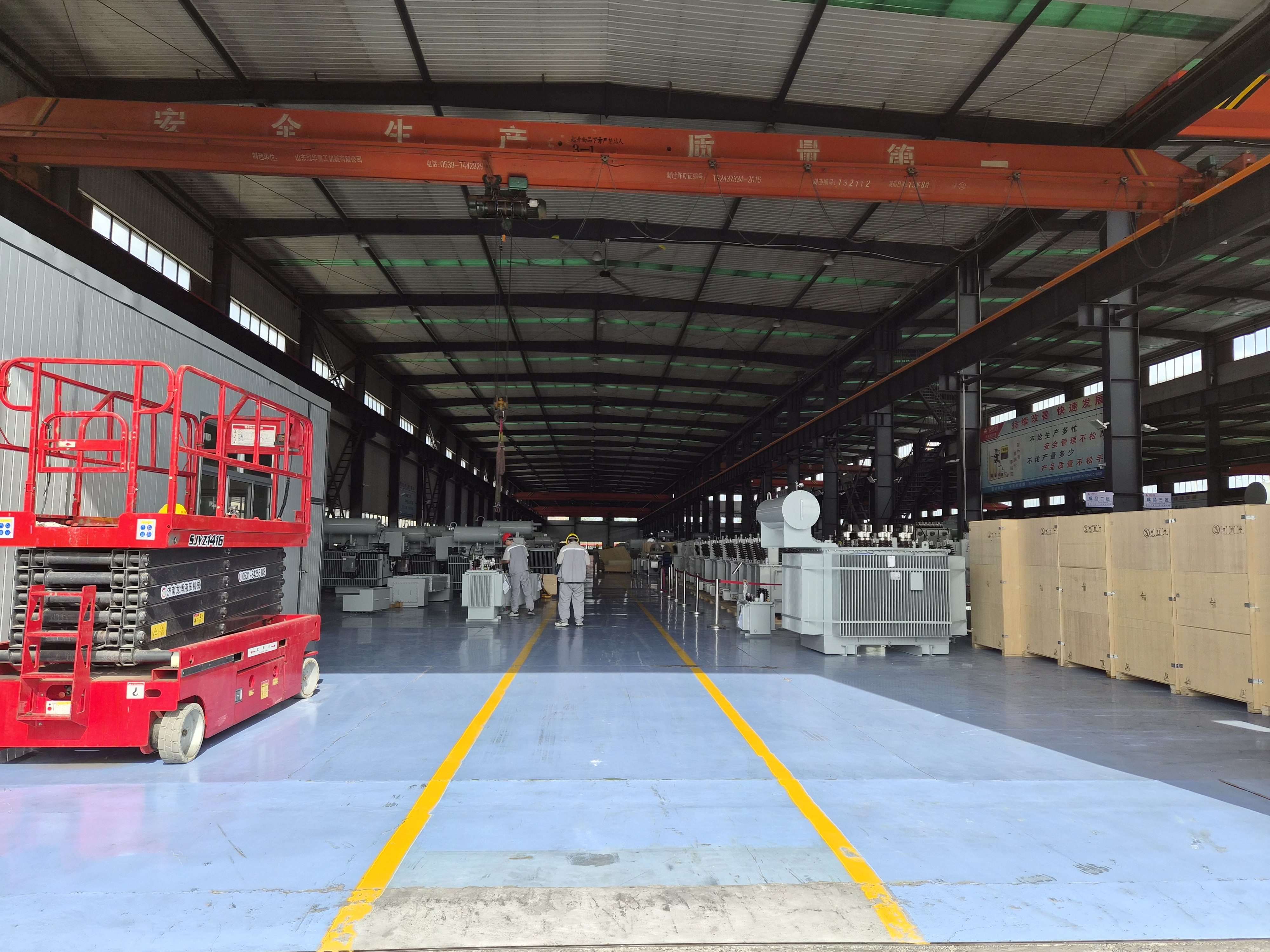
A custom transformer order is often decided on price, drawing approval and delivery date. The harder question arrives after energisation: can the supplier keep supporting the same product family, the same documentation set and the same after-sales route when the first project is no longer new? For utility, EPC and industrial buyers at decision and execution stage, long-term supplier sustainability is best treated as an evidence framework rather than a promise.
Apex Power Systems (Nanjing) Co., Ltd. is a trading and supply-partner company that selects and audits transformer manufacturers and manages design review, production, testing, documentation and delivery for overseas buyers. It is not itself a factory. The manufacturing, certification and test evidence belongs to its audited partners, and that distinction matters in a sustainability review: the buyer is not only judging a company name, but the supply chain that company can audit, document and hold accountable.
This framework is built for a buyer who has already shortlisted custom transformer options and is now preparing to place or manage an order. It does not replace a factory audit or a technical specification. It gives the buyer a structured way to test whether the supplier can remain a useful partner across later deliveries, replacement units, warranty claims and technical questions.
Why continuity is a separate decision from qualification
A supplier can pass a single-order qualification and still fail long-term sustainability. The first order is usually managed as a project: drawings are approved, a factory acceptance test is witnessed, documents are compiled and the unit is shipped. The second and third orders expose different weaknesses. The approved model may be outside the manufacturer's current test range. A certificate may have expired or been issued to a different legal entity. The people who handled the drawings may have moved. The after-sales response may depend on an individual rather than a process.
For that reason, the evaluation should not stop at product capability. It should test whether the same evidence remains repeatable. A supplier that can show current market-specific documentation, a stable certificate-control method, a witnessed-test route and a defined after-sales process is easier to keep on a shortlist than a supplier whose evidence depends on one favourable order.
The evaluation framework at a glance
A practical framework can be organised around six evidence areas. Each area should produce documents or answers that can be attached to the supplier file, not left as verbal assurances.
| Evaluation pillar | Evidence to request | Why it matters for continuity |
|---|---|---|
| Portfolio breadth | Product families actually supplied, rating ranges, configurations and market-specific variants | Shows whether later requirements can stay inside the same qualified supply chain. |
| Document control | Certificate numbers, issuing bodies, expiry dates, legal entity names and listed model ranges | Prevents expired, mismatched or counterfeit documents from blocking shipment or acceptance. |
| Delivery and quality risk | Design freeze, production monitoring, test-witness plan, transport plan and commissioning plan | Turns quality from a final inspection into a controlled sequence. |
| Acceptance criteria | FAT, SAT, warranty terms, payment schedule, spare-parts and document deliverables | Defines what completion means and what happens after handover. |
| After-sales support | Installation guidance, maintenance routine, oil and temperature monitoring, noise and leak troubleshooting | Supports the unit through service life rather than only through delivery. |
| Market-specific proof | Voltage classes, frequency configurations, UL and CSA records, IEEE references and North American project experience | Shows that market support is a maintained capability, not a one-off claim. |
Portfolio breadth: what a buyer should map
Portfolio breadth is useful only when it is mapped to the buyer's actual future requirements. A list of product names is not evidence. The buyer should ask which families are routinely supplied, which ratings are covered, and which configurations have been delivered in the destination market.
For a custom transformer programme, the relevant portfolio may include prefabricated cabin substations, dry-type transformers and oil-immersed distribution transformers, single- and three-phase pole-mounted or pad-mounted units, and mining special transformers. That spread matters because a buyer's future needs rarely stay in one product category. A utility adding residential distribution may later need a pad-mounted unit; a commercial project may need an indoor dry-type transformer; a solar or industrial site may need a prefabricated compact substation.
The supplied product scope also includes power transformers, medium voltage and high voltage transformer classes, low loss energy efficient transformer designs, box type substations and related substation equipment. Within the broader substation portfolio, buyers may encounter American box substation, European box substation and containerized mobile substation configurations, as well as complete switchgear, medium voltage switchgear and related equipment. Where a project specifies gas insulated switchgear, air insulated switchgear or a ring main unit interface, the buyer should verify that the exact switchgear scope is covered by the partner's certificates and references rather than assume it from a transformer catalogue.
Product breadth can reduce the number of separate supplier qualification routes a buyer has to manage. It does not by itself prove delivery performance. A supplier with a wide catalogue but thin documentation is less sustainable than a narrower supplier with complete records for the families it actually supplies.
- Distribution transformer families: oil-immersed distribution units, dry-type units and low loss energy efficient transformer options.
- Application-specific families: dry type transformer for data center projects, box substation for solar power plant projects and prefabricated compact substation arrangements.
- Pad-mounted and pole-mounted families: single-phase and three-phase units, including the ZGS-H and ZGS-Z three-phase pad-mounted series stated at 75–2500 kVA.
- Special-purpose families: mining special transformers and other engineered units for industrial duty.
- Substation integration: prefabricated cabin substations, complete switchgear, medium voltage switchgear and related auxiliary equipment.
The test is not whether every item appears in a brochure. The test is whether the supplier can produce the applicable certificate, test report, reference project or engineering note for the family under discussion.
Document control: certificates, acceptance criteria and contract evidence
Certificate problems are one of the most common continuity failures because they are easy to hide in a first enquiry. A scanned certificate may be genuine but expired. It may name a different legal entity from the company signing the contract. It may cover a product family or model range that does not include the unit being ordered. In each case the result can be rejection by the utility, the third-party inspector or customs.
The verification method is direct. Check the certificate number with the issuing body. Check the expiry date. Match the certificate holder's legal entity name to the contracting party. Confirm that the listed model range covers the ordered unit. Then record each document in a controlled register with issuer, validity, product family and scope.
For North American liquid-filled distribution transformers rated above 750 V, the relevant certification frame is UL and CSA rather than IEC alone. The manufacturing base holds UL Certificates of Compliance covering XPLH7 transformers, distribution, liquid-filled type, over 750 volts, certified for Canada, evaluated to CSA C2.1-06 and CSA C227.4. A UL Certificate of Compliance confirms that representative samples were evaluated; authority to apply the UL Mark is granted separately under the UL Follow-Up Services procedure, so buyers should request that authorisation where the mark must be applied.
For Europe, the manufacturer must compile a technical construction file and issue an EC Declaration of Conformity for the applicable directive. For transformers this is normally Directive 2014/30/EU for electromagnetic compatibility, supported by the relevant EN IEC 61000 and EN 60076 series standards. The CE mark remains the manufacturer's own responsibility. Voluntary verification certificates can support the file, but they do not replace the declaration.
For Russia and the EAEU, the product must be covered by a registered declaration of conformity for the exact product type and rating, supported by testing against the applicable GOST standard. The declaration number, applicant and manufacturer entities, covered models and validity period must match the goods actually shipped. The manufacturing base holds registered declarations for both its dry-type distribution range and its power-transformer range, each valid for three years.
The acceptance criteria should sit beside the certificates. The qualification package for Apex-managed supply states a project-based minimum order quantity of one unit, subject to technical evaluation. Standard models are quoted at 45–90 days and large or custom power transformers at 90–150 days. FOB, CIF, EXW and DDP terms are negotiable. Factory acceptance testing is completed before shipment, and a site acceptance test can be carried out with the customer. Warranty is 12–24 months per contract, and KEMA-witnessed type tests are available where specified.
Commercial terms should be read as risk allocation, not only payment mechanics. The stated schedule of T/T 30 percent deposit, 30 percent at mid-production, 30 percent before shipment and 10 percent after acceptance ties part of the payment to acceptance. L/C at sight is also stated as available. A buyer comparing suppliers should ask whether those terms survive the second order and whether the same acceptance definition is written into the framework agreement.
Delivery and quality risk: what to monitor after award
Large power transformers at 110 kV and above involve long manufacturing cycles, heavy-transport constraints and on-site work that cannot be repeated cheaply. The specific exposures are design changes after the design freeze, winding or core defects, incomplete oil processing, transport damage, and commissioning faults that surface only at energisation.
Mitigation is a sequence rather than a single inspection. Freeze design and drawings early. Monitor the winding, core and oil-processing stages. Witness routine and type tests, including ratio, winding resistance, no-load and load loss, insulation, temperature rise and lightning impulse where applicable. Plan heavy-lift transport and permits before shipment. Assign a qualified commissioning engineer for oil filling, high-voltage testing and energisation. Keep spare parts and warranty terms in the contract.
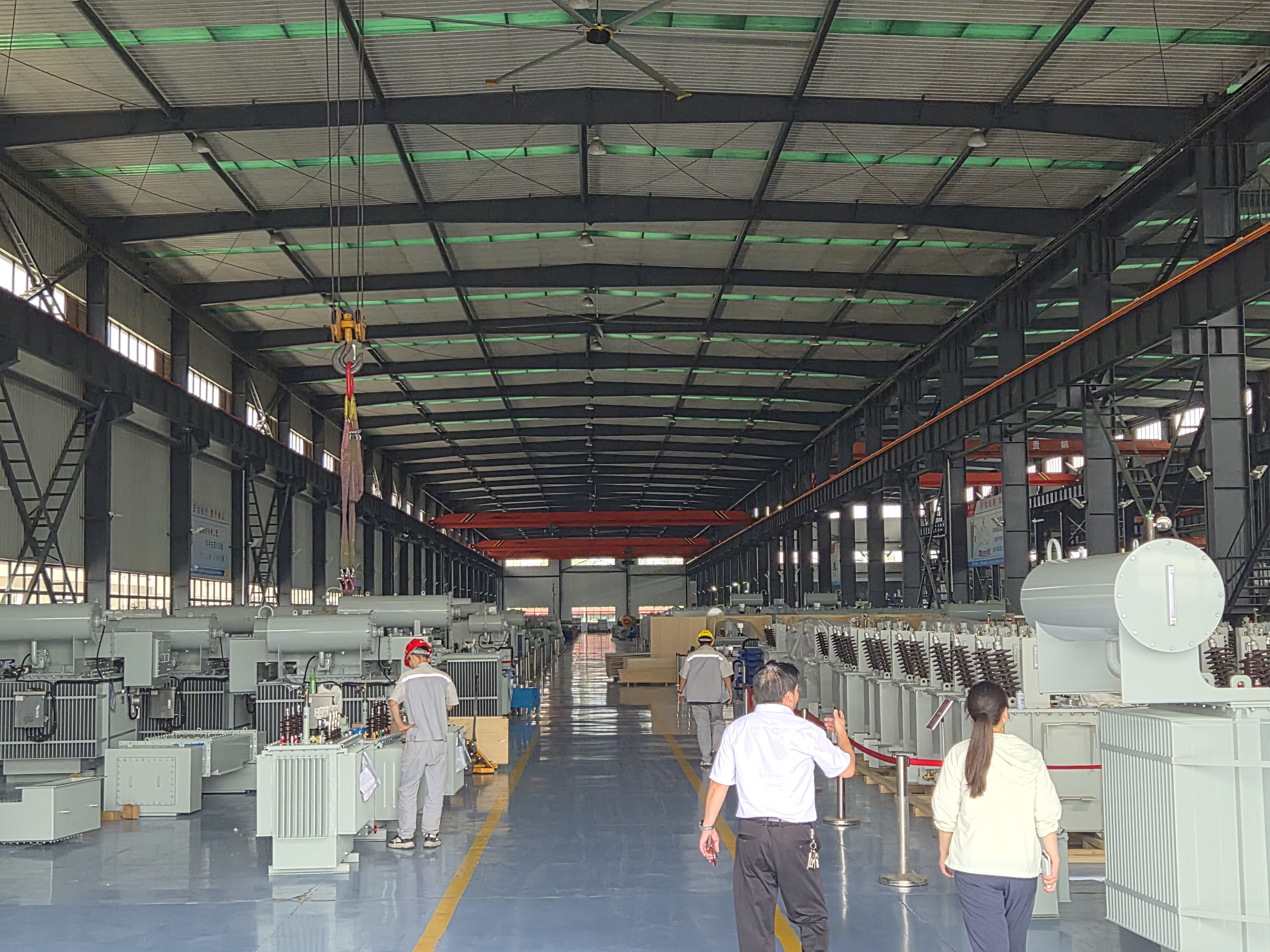
The manufacturing base behind Apex reports a dedicated test laboratory with lightning-impulse, no-load and load-loss, ratio, winding-resistance, temperature-rise and insulation test benches. Its independent verification record includes a KEMA Labs Type I Inspection Report for a 250 MVA / 345 kV three-phase power transformer, tested in accordance with IEC 60076-1/-2/-3, IEC 60076-10, IEC 60076-11 and IEEE Std C57.12.00 / IEEE C57.12.90. These are relevant continuity signals because the same test infrastructure and documentation discipline have to be available for later orders.
Execution evidence should be read carefully. Apex-coordinated reference projects include a 15 MVA pad-mounted box-type transformer project for American Transmission Company in the USA, a 345 kV fully-insulated power transformer for US–Georgia Power Transmission Company, a 115 kV substation for US–Puerto Rico Power Distribution Company, a 132 kV power transformer for a Spanish steel-plant substation and a 40,000 kVA energy-storage project in Bulgaria. Each is a reference point, not a guarantee for a different configuration. The buyer should still confirm that comparable rating, testing and destination-market requirements are covered for the new order.
After-sales support: installation, maintenance and common field issues
Long-term sustainability is tested most clearly after energisation. Installation and commissioning should follow a fixed sequence: foundation and transport check, positioning and damage inspection, assembly of bushings and radiators, oil processing under vacuum, electrical connection and earthing, instrument and protection testing, tap-changer operation, energisation and trial operation. The critical stage is oil processing, because residual moisture in the insulation is a common cause of a failed test at commissioning.
Preventive maintenance for an oil-immersed transformer is built around oil condition. The routine combines visual inspection, oil testing for dielectric strength and moisture, dissolved gas analysis, breather and cooling-system checks, bushing and connection inspection, and verification of protection devices and the tap-changer counter. Readings should be trended rather than judged in isolation. A sudden change in dissolved gas or moisture is an early warning of an internal fault.
Three field issues deserve a defined response route. Abnormal noise should first be classified: noise that varies with load points to the core, windings or magnetostriction; constant noise often points to loose clamping or structural resonance; intermittent noise may point to a fan, pump or loose connection. Oil leakage is progressive rather than cosmetic: a falling oil level reduces insulation and cooling, so the leak point should be located before oil is simply added. High oil temperature should be investigated from load current and ambient temperature, then cooling-system operation, oil level, thermometer calibration and finally dissolved gas analysis if no external cause is found.
The manufacturing base established its own power-engineering company in 2018 for installation, testing, energisation and customer training. Apex manages drawings, test reports, operation and maintenance manuals and site coordination. That division of responsibility is useful only if it is written into the order: who attends site, what evidence is issued after commissioning, and how a field issue is escalated.
North American requirements as a continuity test
North America is a useful test case because the requirements are specific and difficult to improvise. The applicable frame includes ANSI/IEEE compliance, UL and CSA certification, defined voltage classes and 60 Hz operation. The supplied scenario material identifies 34.5 kV, 13.8 kV, 13.2 kV and 12.47 kV high-voltage classes, along with 50/60 Hz configurations where a supplier serves both North American and export requirements.
The ZGS-H and ZGS-Z three-phase pad-mounted series, stated at 75–2500 kVA, is one product family where a buyer can test whether claimed North American support is backed by more than a catalogue page. The buyer should ask for the applicable UL or CSA record, the voltage class and frequency configuration, the pad-mounted interface details, the test plan and the after-sales route for the same family. A broad kVA range is useful only if the documentation covers the specific rating and configuration being ordered.
Sustained market-specific support is visible in repetition. A supplier that has handled North American pad-mounted, pole-mounted and substation projects should be able to show how it controls ANSI/IEEE requirements, how it separates UL and CSA evidence, and how it prevents a 60 Hz North American design from being mixed with a 50 Hz export design. The manufacturing base exports to 72 countries and regions, and Apex-coordinated reference projects include work in the USA and Puerto Rico. Those facts support a market-specific conversation; they do not replace project-level verification.
One-off sourcing versus a continuity framework
The difference between a one-off purchase and a long-term supply relationship is not sentiment. It is the amount of evidence that can be reused without being rebuilt.
| Decision focus | One-off sourcing | Continuity framework |
|---|---|---|
| Supplier selection | Lowest responsive offer for the immediate specification | Same specification compared across audited plants with a common checklist |
| Certificates | Scanned copy accepted at enquiry stage | Number, issuer, expiry, legal entity and model range checked and registered |
| Quality | Final inspection before shipment | Design freeze, production monitoring, witnessed tests and third-party inspection where required |
| After-sales | Contact depends on the salesperson | Defined installation, maintenance, troubleshooting and warranty route |
| Market proof | General certification claim | Current voltage-class, frequency and destination-market evidence for the exact family |
This comparison does not make direct factory purchase wrong. Direct purchase can be appropriate when the buyer already knows the plant and can manage design, testing, documentation and logistics internally. The framework is for buyers who need independent selection, audit and one accountable point of contact across the order cycle.
Future outlook: what to keep on the supplier scorecard
The practical implication for buyers is to treat the first delivery as the start of a record, not the end of an evaluation. A long-term scorecard should track certificate currency, repeatability of test documentation, response time to technical questions, availability of the same product family, and whether after-sales actions close with records rather than verbal explanations.
No framework can certify that a supplier will perform in every future case. What it can do is make the evidence visible. A supplier that welcomes certificate verification, witnessed testing, factory access and documented after-sales review is easier to keep in a long-term supply chain than one that treats those requests as exceptions.
For custom transformer buyers, the most useful shift is to ask for continuity proof before the second order is needed. Portfolio breadth, document control, delivery risk mitigation and after-sales support are not separate marketing topics. They are the evidence that a supplier can remain accountable after the first unit has been energised.
FAQ
What does long-term supplier sustainability mean for a custom transformer buyer?
It means the supplier can keep providing the same product family, current documentation, test support and after-sales response after the first order. The evidence includes certificate control, repeatable acceptance criteria, production monitoring, spare-parts and warranty terms, and a defined route for installation and field issues.
How should a buyer verify transformer certificates for a long-term supply relationship?
Check the certificate number with the issuing body, check the expiry date, match the certificate holder's legal entity name to the contracting party, and confirm that the listed model range covers the ordered unit. A UL Certificate of Compliance confirms evaluation of representative samples but does not by itself authorise the UL Mark; that authority is granted separately under UL Follow-Up Services. An EC Declaration of Conformity remains the manufacturer's responsibility, and an EAC declaration must match the exact product type, entities and validity period.
Which delivery and quality risks should be monitored after the award?
Monitor design changes after the design freeze, winding and core work, oil processing, witnessed routine and type tests, heavy-transport planning and commissioning. Factory acceptance testing before shipment, a site acceptance test with the customer and a 12–24 month warranty are useful contract controls, but they must be tied to the exact rating and destination-market requirements.
What after-sales support should be expected for oil-immersed transformers?
Expected support includes installation and commissioning guidance, oil processing and testing, preventive maintenance, dissolved gas analysis, breather and cooling-system checks, and a defined response for abnormal noise, oil leaks and high oil temperature. The support route should identify who attends site, what records are issued and how warranty claims are handled.
How does product breadth support continuity without guaranteeing it?
Product breadth can keep later requirements inside the same audited supply chain, covering distribution transformers, dry-type units, prefabricated substations, pad-mounted units and special-purpose transformers. Breadth alone does not prove capability. Each family still needs current certificates, applicable test evidence, reference experience and after-sales support for the specific configuration.
For readers who need the supplier's product scope in one document, the Apex Power Systems catalog (PDF) is available. The company website is Apex Power Systems.
Tem questões ou precisa de mais detalhes?
Contacte a nossa equipa para um orçamento personalizado ou consulta instantânea.
Solicitar orçamento
Preencha o formulário abaixo e a nossa equipa entrará em contacto com uma proposta personalizada.
Chat direto do WhatsApp
Prefere conversar em tempo real? Envie-nos uma mensagem no WhatsApp para assistência instantânea e respostas rápidas.
- Obter orçamento personalizado
- Partilhar fotos ou documentos
- Discuta as suas necessidades diretamente
Geralmente responde em 5–30 minutos durante o horário de expediente.