
Custom Wet Wipes Explained: Categories, Materials, and OEM Basics
Custom wet wipes are single-use wipes produced to a buyer's specification — substrate, sheet size, pack count, formula, and branding — for sale under the buyer's own label or product line. The category now extends well beyond baby care, covering pet grooming, kitchen cleaning, flushable toilet wipes, clothing care, and eye glass cleaning. For buyers at the awareness-to-research stage, the practical starting point is understanding the category structure and what an OEM partner actually controls in production.
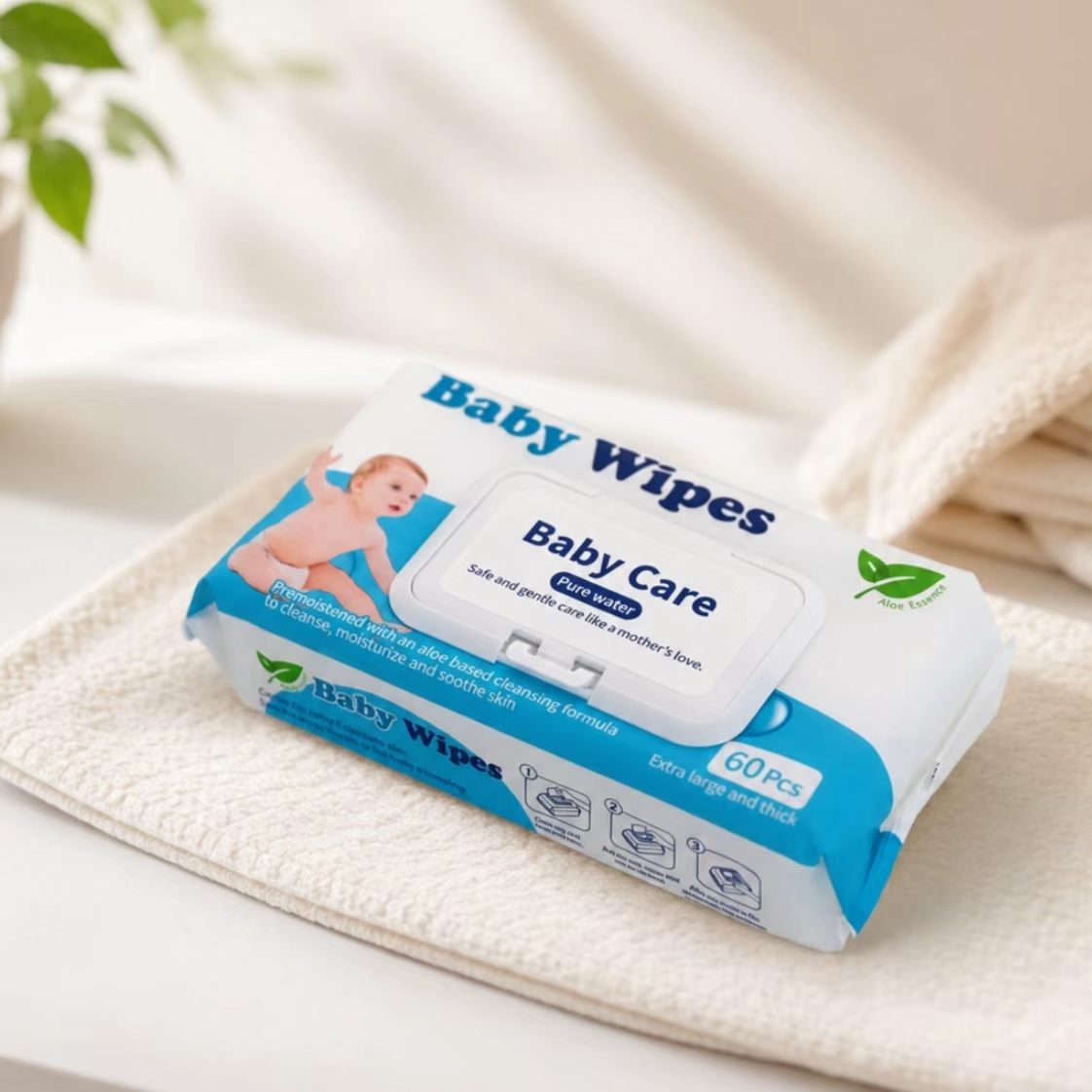
Custom wet wipes are produced in multiple categories, from baby care to home cleaning and pet care lines.
Why the Custom Wet Wipes Category Keeps Expanding
Wet wipes demand is broad and still growing. Third-party market research valued the global wet wipes market at approximately USD 32.09 billion in 2026, with a projected CAGR of 3.86% reaching USD 43.45 billion by 2034. Segment-level reports point in the same direction. The global baby wipes market was valued at USD 5.4 billion in 2024 and is expected to grow at a CAGR of 7.5% through 2030. The pet wipes market was valued at USD 1.58 billion in 2024, with a projected CAGR of 5.6% reaching USD 2.64 billion by 2033. The flushable wipes market was valued at USD 2.3 billion in 2025 and is projected to reach USD 4.2 billion by 2035. The biodegradable wipes segment already exceeds USD 3 billion globally.
For brands, retailers, and distributors, this creates a practical opportunity to enter a growing consumer category with a product that is not generic. A private label wet wipe can be tailored to a specific channel, price point, or use case. The trade-off is complexity. Customization introduces decisions that a stock product does not: substrate selection, sheet dimensions, pack configuration, formula constraints, and documentation for each target market.
The Problem: Compliance and Specification Complexity
The main barrier for first-time buyers is not finding a factory; it is defining the product correctly. Wet wipes are regulated differently across regions. In the EU, wet wipes must comply with EN standards, including REACH for chemicals and BPR for biocidal claims. In the US, the FDA facility registration deadline for cosmetic wipes manufacturers is July 1, 2026. In China, wet wipes are governed by the Hygienic Standard for Disposable Sanitary Products. ISO 9001 and ISO 22716 are considered baseline quality requirements in wet wipes OEM manufacturing.
Because wet wipes touch skin, household surfaces, or flushable systems, buyers need clarity on substrate, formulation, and labeling before sampling. A manufacturer with in-house R&D and documented production hygiene can resolve most of these questions earlier in the process.
sunfans: A Documented Custom Wet Wipes Manufacturer
One manufacturer with a documented base in this category is sunfans, the brand operated by Da lian Weijie Biotechnology Co., Ltd. Established in 2013, the company is a state-level high-tech enterprise located in Dalian, Liaoning Province, China. It has more than 10 years of experience in biotechnology and hygiene products and integrates design, research and development, production, and sales services. Its website is www.unilibio.com.
The production base covers 6,000 square meters and employs about 50 people, including a 10-person R&D team. Annual production capacity is approximately 4 million packages. About 70% of output is exported, with main markets in Japan, Australia, Canada, the United States, and Singapore. This export exposure is relevant for buyers planning export custom wet wipes, because each destination market has different labeling and compliance expectations.
The product portfolio spans the main wet wipes categories: baby wipes, pet wipes, wet toilet paper, kitchen wipes, clothing wipes, eye care wipes, functional wipes, floor dry wipes, and floor wet wipes. The company also produces dry and wet wipes and face towels. For a buyer planning multiple SKUs, this breadth means one supplier can support several lines instead of a fragmented supply chain.
Technical Basics: What Defines a Custom Wet Wipe
Custom wet wipes are defined by four technical variables: substrate, sheet size, pack configuration, and formula. Branding and packaging design are added on top of these variables. Understanding the substrate is usually the first decision, because it determines how the wipe feels, how strong it is, and how it behaves after disposal.
| Substrate | Example products | Typical use |
|---|---|---|
| Water-jet non-woven fabric | Kitchen wet wipes CF001, clothing wipes YW01 | Home cleaning, surface wiping, drying clothes |
| Biodegradable wood pulp non-woven fabric | Wet toilet paper S01, pet wipes C05 | Flushable toilet wipes, pet gloves, personal care |
| Bamboo fiber | Pet wipes C03, C04 | Pet grooming and personal care |
| Entirely adhesive substrate | Baby wipes Y02, pet wipes C02 | Infant care, baby hygiene, pet care |
| Water-resistant paper | Eye care wipes YJ01 | Glass and lens cleaning |
Sheet Size and Pack Count
Sheet size is matched to the task. In the sunfans product range, kitchen wipes CF001 measure 200 × 200 mm in an 80-piece pack; baby wipes Y02 measure 150 × 200 mm in packs from 1 to 100 pieces; pet wipes C03 measure 150 × 200 mm; wet toilet paper S01 measures 130 × 200 mm with 100 sheets; and eye care wipes YJ01 measure 100 × 150 mm in a 20-piece pack. Pack formats range from small 10-sheet packs, such as wet toilet paper S02, to 100-count bulk packs, which is why large pack and bulk pack custom wipes are common procurement request types.
Formula and Product Claims
For skin-contact and baby products, the typical requirement is a gentle, plant-based formula free of alcohol, with fabrics that are gentle on the skin and free of irritating additives. The stated function for most wet wipes in this category is cleaning and antibacterial action. Buyers should confirm that the manufacturer's formulation capability matches the claim they intend to put on the label.
Production Environment
Production hygiene is part of the product specification. Equipment used in custom wet wipes manufacturing includes automatic packaging machines, automatic filling machines, EDI ultra-pure water equipment, UV sterilization systems, and in-house laboratories. sunfans operates a Class 100,000 cleanroom and uses pH meters in quality control. Standard storage guidance for finished wet wipes is a cool, dry, shaded area at room temperature, away from high temperatures, heat sources, and areas prone to moisture accumulation.
Application Scenarios for Custom Wet Wipes
Custom wet wipes are ordered across several distinct industries. The table below maps the main application scenarios to product examples.
| Application scenario | Typical product | Purpose |
|---|---|---|
| Infant care and baby hygiene | Baby wipes Y02 (150 × 200 mm) | Cleaning and antibacterial care for babies |
| Pet supplies and grooming | Pet wipes C02, C03, C04, C05 | Pet grooming, personal care, paw and surface cleaning |
| Home cleaning | Kitchen wipes CF001, clothing wipes YW01, wet toilet paper S02 | Surface wiping, drying clothes, household cleaning |
| General merchandise and retail chains | Eye care wipes YJ01 | Glass cleaning, general merchandise sales |
| Large shopping malls and supermarkets | Multiple private label lines | OEM branding and contract manufacturing |
The operation mode across these scenarios is continuous surface wiping with single-sheet, one-time consumption. This makes pack design and sheet count important commercial decisions, because they directly affect repurchase frequency.
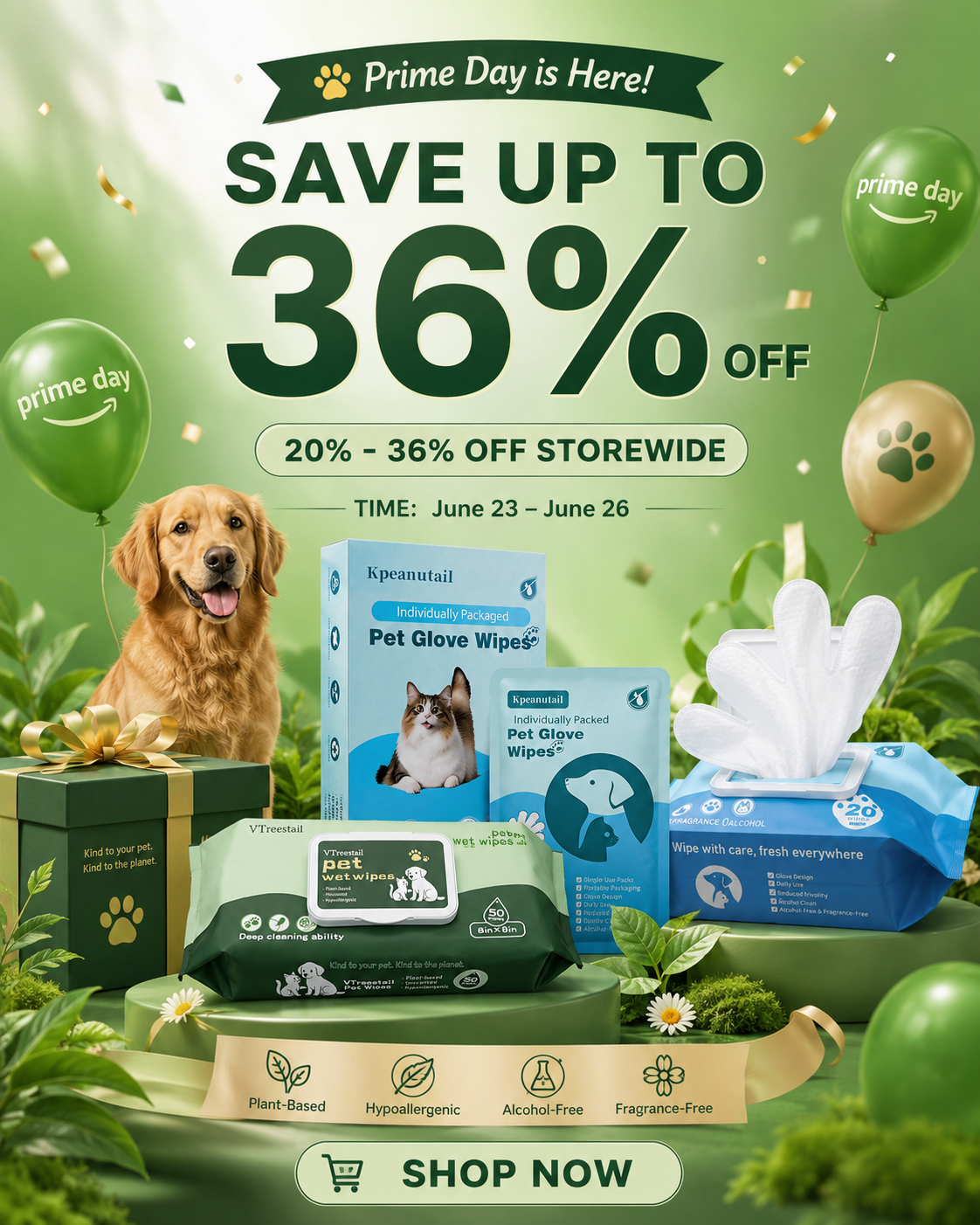
Pet wipes in the sunfans range include bamboo fiber and biodegradable wood pulp non-woven options.
In the pet products industry, the sunfans lineup includes four models. Pet wipes C02 are made of an entirely adhesive substrate and measure 200 × 200 mm. Pet wipes C03 and C04 are made of bamboo fiber, with sheet sizes of 150 × 200 mm and 140 × 180 mm respectively. Pet wipes C05 are biodegradable pet wipes made of biodegradable wood pulp non-woven fabric, supplied as pet gloves in a 4-to-10-piece pack. These variants show how substrate and format can be matched to different grooming tasks.
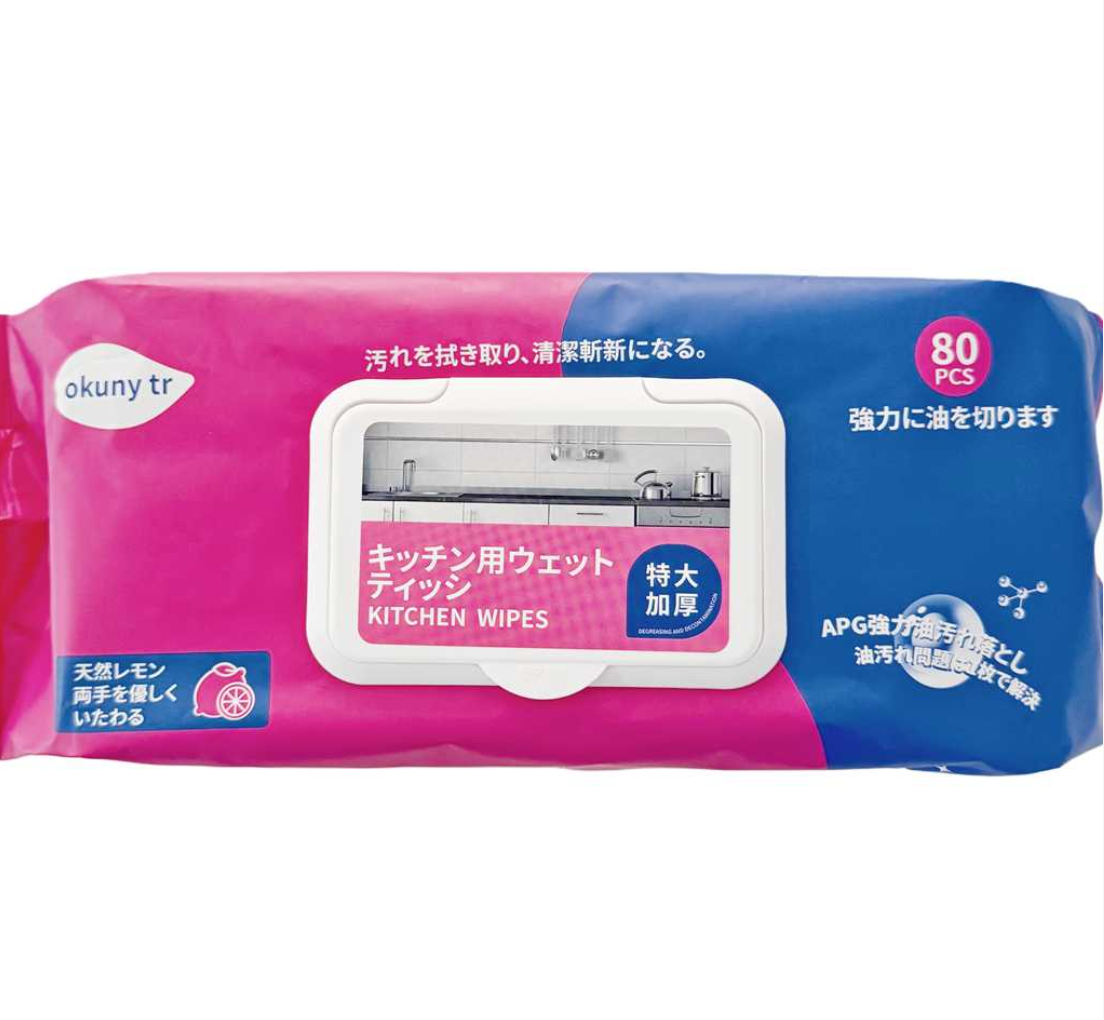
Kitchen wet wipes are typically produced in larger sheet sizes for home surface cleaning.
In the home cleaning industry, kitchen wet wipes CF001 offer a 200 × 200 mm sheet made of water-jet non-woven fabric in an 80-piece pack. Clothing wipes YW01 are supplied as a pack of 10 cloths for drying clothes, with dimensions of 150 × 180 mm. Wet toilet paper S02, which disintegrates into wood pulp cloth, is positioned for home cleaning and general merchandise use.
Market Trends Shaping Custom Wet Wipes Procurement
Several market signals are relevant to buyers planning custom wet wipes programs in 2026 and beyond:
- The global wet wipes market is projected to grow from approximately USD 32.09 billion in 2026 to USD 43.45 billion by 2034 at a CAGR of 3.86%.
- Asia Pacific is the fastest growing region for wet wipes, driven by rapid urbanization and rising hygiene standards in China and India. Japan alone accounts for nearly 27% of the Asia-Pacific wet wipes market.
- The United States held about 34% of global wet wipes market share in 2024, making it a priority market for many exporters.
- Personal care wipes accounted for a 72.81% share of the global wet wipes market in 2025.
- Biodegradable and plant-based segments are expanding. The global biodegradable wipes market exceeded USD 3 billion in 2024, and plant-based flushable wipes were valued at USD 2.9 billion in 2024 with a projected 5.3% CAGR.
- Pet wipes is a fast-growing segment, valued at USD 1.58 billion in 2024, with North America representing approximately 50% of the market at USD 0.79 billion.
Regulatory trends are moving in parallel. Buyers should expect compliance documentation to become a standard part of supplier evaluation, not an add-on. ISO 9001 and ISO 22716 are baseline expectations in wet wipes OEM manufacturing. For the US market, the FDA facility registration deadline for cosmetic wipes manufacturers is July 1, 2026. For Europe, REACH and BPR compliance affect chemical formulation and biocidal claims.
Custom Wet Wipes vs. Stock Wipes: A Sourcing Comparison
Most first-time buyers compare custom OEM or private label wipes against stock wipes. Both have a place in a sourcing strategy. The difference is not quality but fit.
| Decision factor | Custom OEM / private label | Stock wipes |
|---|---|---|
| Branding | Buyer's own brand, custom logo printed packaging | Unbranded or manufacturer brand |
| Specification | Substrate, size, pack count, and formula tailored to the use case | Fixed range chosen by the manufacturer |
| Minimum order | Higher MOQ due to material and line setup | Can be purchased in smaller quantities |
| Lead time | Longer development, sampling, and production cycle | Faster availability from existing inventory |
| Compliance | Can be documented for specific target markets | Compliance depends on the existing product |
| Unit cost | Competitive at scale | May be lower at small volumes |
The limitations of custom wet wipes are real. Minimum order quantities and development lead time are the most common constraints. A buyer testing a market with a very small volume may find stock wipes more practical. Custom programs also require specification work — substrate choice, formula review, packaging design, and compliance documentation — which should be planned into the launch calendar. Not every custom request is technically or commercially feasible at a given factory scale, so buyers should verify that the supplier's material options, equipment, and testing capacity match the intended product.
What to Expect Next in Custom Wet Wipes
Industry projections suggest that wet wipes will continue to grow as a consumer staple, with the fastest growth in Asia Pacific and in segments such as baby care, pet care, and flushable products. Japan is projected to lead healthcare wipes market growth with the highest CAGR through 2030, and its share of the Asia-Pacific wet wipes market is already about 27%. For buyers, this means the competitive bar will rise: products with clear differentiation, documented compliance, and defensible material claims will be easier to place in retail channels.
For OEM partners, the outlook favors manufacturers with in-house R&D, cleanroom production, and multi-market export experience. Buyers should evaluate suppliers not only on price but on their ability to translate a specification into a finished product that meets the labeling, safety, and performance expectations of the destination market.
Frequently Asked Questions
Q: What are custom wet wipes?
A: Custom wet wipes are single-use wipes manufactured to a buyer's specification, covering substrate, sheet size, pack count, formula, and branding. They are produced as OEM or private label products and can include baby wipes, pet wipes, wet toilet paper, kitchen wipes, clothing wipes, and eye care wipes.
Q: What types of custom wet wipes can be manufactured?
A: Common categories include baby wipes, pet wipes, wet toilet paper, kitchen wipes, clothing wipes, and eye care wipes. Manufacturers such as sunfans also produce functional wipes, floor dry wipes, floor wet wipes, dry and wet wipes, and face towels.
Q: What materials are used in custom wet wipes?
A: Materials vary by application. Examples include water-jet non-woven fabric for kitchen and clothing wipes, bamboo fiber for pet wipes, biodegradable wood pulp non-woven fabric for flushable toilet wipes and pet gloves, entirely adhesive substrates for baby and pet wipes, and water-resistant paper for eye glass cleaning cloths.
Q: What is the difference between OEM and private label custom wet wipes?
A: In both models, the manufacturer produces the product according to the buyer's requirements. OEM custom wet wipes typically involve a buyer-specified product specification and packaging design, while private label refers to products sold under the buyer's own brand name. The same production line can support both models.
Q: Which industries commonly order custom wet wipes?
A: Custom wet wipes are commonly ordered for the infant care and baby hygiene industry, the pet products and grooming segment, the home cleaning industry, general merchandise and large retail chains, and large department stores and supermarkets.
Q: What should a first-time buyer prepare before sourcing custom wet wipes?
A: A buyer should define the target market, product category, sheet size, pack count, substrate preference, and compliance requirements. Because wet wipes are regulated differently across regions, buyers should check the applicable standards — for example, REACH and BPR in the EU, FDA facility registration in the US, and the Hygienic Standard for Disposable Sanitary Products in China.
Company reference: A downloadable company profile for Da lian Weijie Biotechnology Co., Ltd. (sunfans) is available here: Company profile — English (PDF).