
Custom Wood Panels: Separating Proven Capability from Promises
Between supplier shortlisting and purchase order, the wood panel procurement process changes character. During evaluation, buyers compare product categories, prices and certificates. At the execution stage, the question becomes narrower: can this supplier convert a specific specification — core species, thickness, adhesive system, face film, dimensions and compliance paperwork — into a consistent, container-ready product? And can that product be repeated on the next order?
The answer matters most for buyers who need OEM/ODM capability, multi-market certification, custom sizing or mixed product programs. This article outlines what a capable wood panel supplier must prove before a custom order moves into production, using Dalian WADA International Trading Co., Ltd. as a documented working reference.
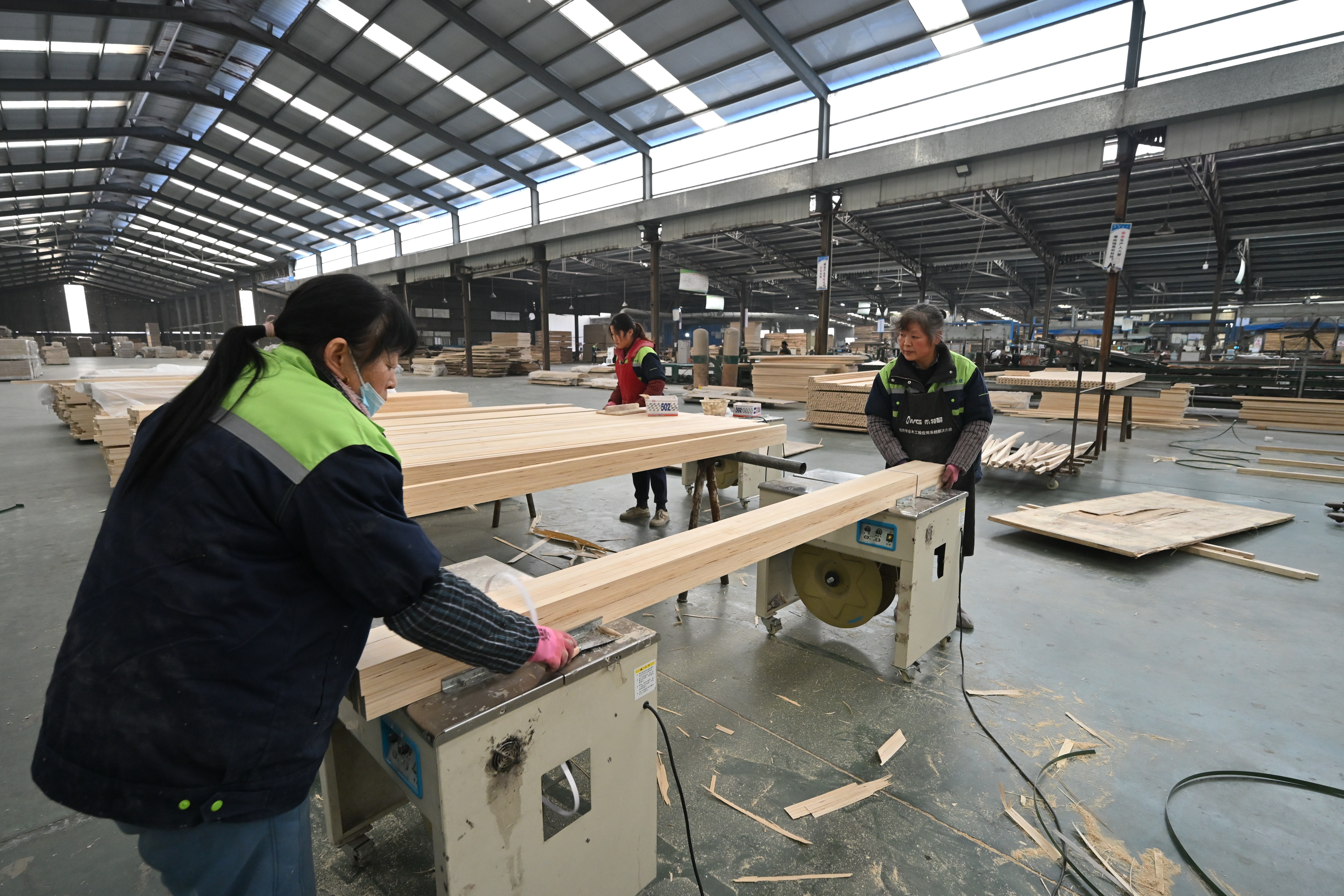
Dalian WADA production facility: capacity is one of the first capability signals buyers should verify.
When Sourcing Risk Moves from Product Choice to Production Control
For a standard plywood or MDF order, the buyer’s main task is choosing the right grade. For a custom order, the risk shifts. The buyer must verify that the supplier can control the production variables that determine whether the finished board performs as specified.
In construction and furniture supply chains, these variables typically include face and back species, core type, glue class, density range, moisture content, surface finish and final dimensions. A deviation in any one of them can change the panel’s structural behavior, formaldehyde emission class, water resistance or appearance.
This is why buyers in the evaluation-to-execution stage are increasingly asking for evidence rather than assurances. They want to see how a manufacturer structures its production lines, who inspects the goods, which standards the products can be certified against, and what happens if a shipment is not right.
Market Context: Custom Wood Panels Are a Growing Procurement Category
The demand for wood panels is large and still expanding, although research firms use different baselines for sizing the market. Grand View Research valued the global plywood market at USD 80.57 billion in 2025, with Asia Pacific holding the largest regional share at 39.4%. The same research firm projected the global MDF market to grow from USD 44.96 billion in 2025 to USD 82.24 billion by 2033, representing a compound annual growth rate of 8.2%. OSB production exceeded 32 million cubic meters globally in 2024, according to Market Reports World, with the United States accounting for 14 million cubic meters. Wood plastic composites reached an estimated USD 8.89 billion in 2025 and are expected to grow at a CAGR of 11.7% through 2033, per Grand View Research.
The common thread in these categories is not just volume; it is specification. Furniture manufacturers, contractors, distributors and laminate producers buy panels to meet a specific end-use requirement, and increasingly that requirement is written around regional compliance, formaldehyde limits and project conditions rather than generic grade names.
That specification-driven demand is what makes OEM/ODM capability commercially relevant. A supplier that can produce boards to the buyer’s size, thickness, core and certification requirements becomes part of the buyer’s production chain, not just a source of commodity boards.
Dalian WADA’s Capability Set: What the Company Documents
Dalian WADA International Trading Co., Ltd. is a wood panel manufacturer and exporter established in 2010 and based in Dalian, China. The company exports 100 percent of its production to markets including North America, the EU, Australia, Japan, South Korea, the Middle East, Mexico and South America. Its product portfolio covers LVL, plywood, veneered board, MDF, OSB, wall panels and woodworking machinery, and it operates a company website at www.wadaplywood.com.
WADA’s documented production and service capabilities include the following:
- OEM and ODM production services: The manufacturer works from buyer specifications, supporting both OEM and ODM models.
- Customization scope: Size, thickness and layup can be adjusted to suit the intended application.
- Production capacity: Monthly panel capacity is over 10,000 cubic meters.
- Factory scale: The company reports a factory area of 53,950 square meters and about 200 employees, including a 25-person R&D and technical team.
- Quality control: Quality assurance is based on 100 percent inspection of products before shipment.
- Export service: Annual export output is in the range of USD 3.5–4 million, with 100 percent of revenue coming from overseas markets.
- After-sales support: WADA provides remote support after delivery.
These figures are useful because they allow a buyer to match capacity against order size. A monthly capacity above 10,000 CBM, for instance, is meaningful for buyers planning repeat container orders rather than one-off samples.
How Custom Wood Panel Production Is Structured
Custom wood panel production involves several controlled steps: veneer selection, core layup, adhesive application, pressing, trimming, sanding, inspection and packing. In each step, the buyer’s specification must be translated into process parameters.
For plywood, the core construction — poplar, eucalyptus, birch, combi or hardwood — determines structural behavior and cost. The face and back species determine appearance and market fit. The glue system determines moisture resistance and emission class. WADA’s plywood range illustrates this range of choices: commercial plywood is available with face and back species such as birch, pine, okoume, bintangor, sapeli, pencil cedar and poplar; structure plywood is produced with larch or pine faces and eucalyptus, larch, pine or combi cores, using melamine WBP or phenolic WBP adhesives. Film faced plywood can be made with finger-joint, poplar, combi, hardwood, pine or Russia birch cores and dark brown or black film faces, with thickness from 4 to 35 mm and reported reuse of 2–40 times in concrete forming.
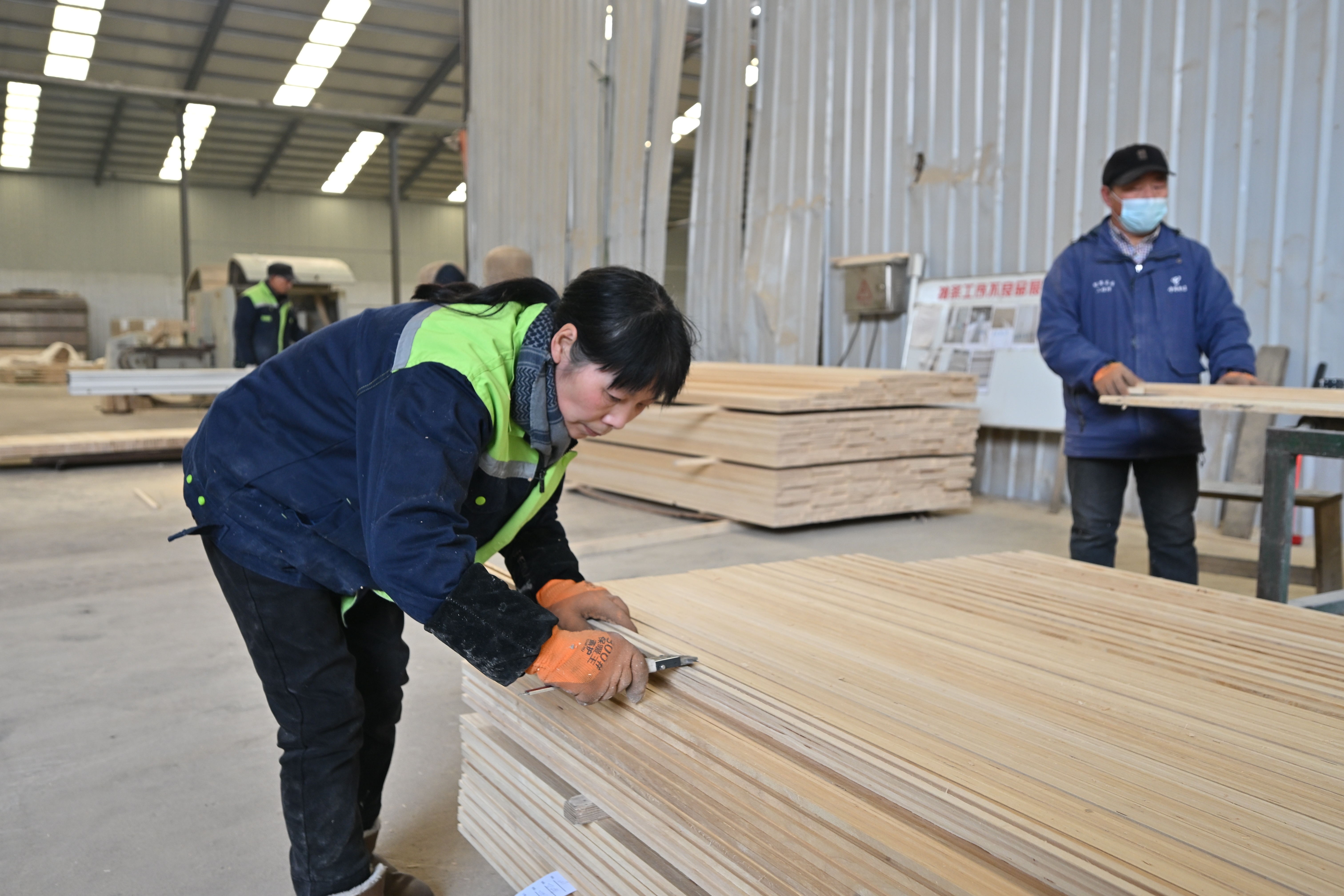
Production and inspection environment: the factory floor is where custom specifications become measurable.
For panel categories like MDF, the relevant parameters are density, thickness, moisture content and emission class. WADA’s MDF range covers thickness from 1.2 to 50 mm, density from 500 to 1,000 kg/m³ and moisture content from 5 to 13 percent. For LVL used in furniture frames and bed slats, size ranges from 25 to 190 mm in width and 7 to 15 mm in thickness, with birch or poplar cores and birch, beech or poplar faces.
The table below summarizes the documented production envelope for WADA’s main custom panel categories. Buyers can use this type of data to determine whether a supplier can physically produce the specification they need.
| Product | Typical Size | Thickness | Core / Face Options | Glue Options |
|---|---|---|---|---|
| Commercial Plywood | 4x8 ft or as required | 2–25 mm | Face: birch, pine, okoume, bintangor, sapeli, pencil cedar, poplar; Core: poplar/eucalyptus, combi/full birch | E0 / CARB P2 / E1 / E2 / WBP |
| Structure Plywood | 3x6 – 4x8 ft | 9–28 mm | Face: larch/pine; Core: eucalyptus, larch, pine, combi | Melamine WBP / Phenolic WBP |
| Film Faced Plywood | Up to 1500x3000 mm | 4–35 mm | Face: dark brown/black film; Core: finger-joint, poplar, combi, hardwood, pine, Russia birch | MR / Melamine WBP / Phenolic WBP |
| Marine Plywood | 4x8 – 4x9 ft | 9–25 mm | Face/Back: birch/okoume; Core: poplar/birch/okoume/combi | Melamine WBP / Phenolic WBP |
| MDF | 4x8 – 8x16 ft | 1.2–50 mm | Wood fiber; density 500–1000 kg/m³ | E0 / CARB P2 / E1 |
| Melamine Board | 4x8 – 7x9 ft | 2–30 mm | Face: melamine paper / PET film / HPL; Core: plywood, MDF, particle board, blockboard | E0 / CARB P2 / E1 / E2 |
| Veneered Board | 4x8 – 7x9 ft | 2–25 mm | Face: white oak, red oak, black walnut, parota, wenge, ash, birch, pine, sapeli; Core: plywood, MDF, chipboard, blockboard | E0 / CARB P2 / E1 / E2 / melamine |
| LVL Bed Slat | 25–190 mm width | 7–15 mm | Face/Back: birch/beech/poplar; Core: birch/poplar | E0 / E1 |
Applications and Delivery Evidence
Delivery evidence matters at the execution stage because it shows whether a supplier’s capability claims have been exercised under real purchase conditions. WADA’s recorded project references cover multiple regions and applications:
| Market | Client Type | Application | Products Involved | Volume | Reported Result |
|---|---|---|---|---|---|
| Mexico | Furniture manufacturer | Furniture and cabinet decoration | Veneered board, melamine board, LVL, MDF | 100 containers | Decorative finish; fashion-oriented appearance |
| Portugal | Wall cladding buyer | Outdoor cladding | Marine plywood | 20 containers | Weather-resistant; UV-resistant |
| Japan | Construction builder | Building structure | Film faced plywood, structure plywood | 200 containers | High strength; high durability; waterproof |
| Australia | Building contractor | Building structure | Structure plywood, film faced plywood | 50 containers | High strength; high durability; waterproof |
| Vietnam | Plywood manufacturer | Plywood production line | LVL, structure plywood, marine plywood, commercial plywood, film faced plywood | 1 complete line | Stable production; one-stop solution |
These references should not be read as a promise that every future order will perform identically. But they do show that the company has shipped large volumes across different regulatory markets — North America, Europe, Asia and Oceania — and that its product range has been applied in both interior decorative work and structural construction.
Market Trends That Matter for Custom Wood Panel Buyers
Several observable trends are shaping how buyers evaluate wood panel suppliers in 2026.
First, compliance is becoming a market-access issue rather than an optional extra. In the European Union, wood-based panels used in construction must meet the harmonized standard EN 13986 to be eligible for CE marking, according to the European Panel Federation. In the United States, the EPA TSCA Title VI regulation sets formaldehyde emission limits of 0.11 ppm for MDF and 0.05 ppm for hardwood plywood. Buyers sourcing for these markets need suppliers that carry the relevant certifications, not just suppliers that claim to be low emission.
Second, regulation is moving beyond formaldehyde. The EU Deforestation Regulation (EUDR) and the FSC chain-of-custody system are shifting purchasing decisions toward suppliers that can document the origin of wood raw material. WADA states that its products are certified under FSC, EUDR, CARB P2, EPA, JIS and JAS. On the certification side, the company’s documented certificates include FSC chain-of-custody, CARB Phase 2 and EPA TSCA Title VI for hardwood plywood, JIS A 5905 for MDF, JIS A 5908 for particle board, JAS for plywood and LVL under JAS 0233:2024 and JAS 0701:2023, AS/NZS 4357.0:2005 for structural LVL, and AS 6669-2016 for 17 mm formwork plywood. For buyers, the practical point is that certificates should be checked not only for existence but also for scope, standard number and applicability to the intended market.

JAS certificate documentation related to WADA’s LVL export program.
Third, China remains a significant export base for wood products. According to ITC and U.S. Census Bureau trade data, China was the second largest exporter of raw timber under HS heading 44 to the United States in 2024, contributing about USD 2.17 billion, or a 9 percent share. For buyers, this means that Chinese suppliers will continue to be an important part of the global wood panel supply base, which increases the importance of supplier verification.
Fourth, supplier consolidation at the top of the market is not reducing the need for flexible mid-size exporters. Global leaders such as West Fraser, Arauco, Kronospan and EGGER dominate commodity-scale wood-based panel production, according to Global Market Insights. Below that tier, mid-size manufacturers and exporter groups serve buyers whose orders require customization, mixed product lines, specific certifications and responsive service. This middle segment is where most OEM/ODM wood panel orders are actually executed.
Traditional Sourcing Models vs. an Integrated Manufacturer-Exporter
The traditional ways to source custom wood panels are a single-product factory or a trading company that consolidates orders from multiple factories. Both models have legitimate uses, and both have structural limits.
A single-product factory usually has deep process expertise in one category. A plywood mill, for example, can run long production cycles with tight process control. The limitation is scope: if a buyer needs plywood, melamine board and LVL from one responsible supplier, the single-product factory cannot cover the whole program without adding subcontracting.
A traditional trading company can consolidate multiple factories and often offers flexible pricing and supplier switching. The limitation is control: the trading company does not own the production line, so quality assurance depends on the factory’s discipline, and the buyer’s recourse in case of a defective shipment may be less direct.
An integrated manufacturer-exporter such as WADA combines production, export and quality control in one organization. The buyer deals with one party for product specification, production, certification, packing and shipment. WADA’s sourcing terms are documented: minimum order quantity of one 40-foot container, delivery under FOB or CIF, payment by T/T with 30/70 or 50/50 split, and pre-shipment inspection arranged before dispatch. These are concrete contract terms that reduce ambiguity about how the order will be executed.
| Dimension | Single-Product Mill | Trading Company | Integrated Manufacturer-Exporter (e.g., WADA) |
|---|---|---|---|
| Product scope | Narrow | Broad but aggregated | Broad, multi-category |
| Production control | Direct | Indirect | Direct |
| Customization / OEM | Possible within one category | Depends on factory | Standard service |
| Certification control | Usually limited to own line | Mixed across factories | Documented across product range |
| Responsibility | Clear for its product | Fragmented | Single accountable party |
| Typical MOQ | Depends on mill | Flexible | 1x40' container |
| Fit | Deep single-category programs | Small flexible orders | Multi-category custom programs |
It would not be accurate to present this model as appropriate for every buyer. The 1x40' MOQ excludes small pilot orders below container volume. The standard lead time of 25 to 45 days is not designed for emergency replenishment. Remote after-sales support cannot replace on-site technical service in complex installation or structural claims. And a mid-size exporter with annual export output of USD 3.5–4 million is not competing with billion-dollar industrial groups on lowest first price; its value proposition is specification flexibility and controlled execution.
Future Outlook: Custom, Compliant, Verifiable
Three directions are likely to define custom wood panel sourcing over the next two to three years.
1. Specification depth will increase. Buyers will define not only dimensions but also core composition, adhesive chemistry, surface performance and recycled or low-formaldehyde content. Suppliers that publish precise production envelopes — as WADA does through product parameters and certification scopes — will be easier to evaluate.
2. Compliance will be digitized. EUDR and similar due-diligence rules push the wood industry toward documented supply chains. FSC chain-of-custody and regional marks such as JAS and JIS will function as market-entry prerequisites in Japan, the EU and North America.
3. Buyer-supplier integration will deepen. For custom wood panel programs, the most efficient procurement model is a supplier that owns production and can adapt to changing specifications across order cycles. The execution-stage advantage belongs to manufacturers that combine OEM/ODM flexibility, documented inspection procedures and stable export terms.
For buyers, the practical takeaway is straightforward: treat capability as something to verify — through parameters, certificates, trade terms and shipment references — rather than something to assume from a brochure or a website.
Frequently Asked Questions
Can Dalian WADA manufacture wood panels under my brand or specification?
Yes. WADA provides OEM and ODM production services. The manufacturer works from the buyer’s specification and supports custom branding under the OEM/ODM model.
Which wood panel products does Dalian WADA produce for custom orders?
The company’s product range includes LVL, plywood, veneered board, MDF, OSB, wall panels and woodworking machinery. Within plywood, the documented categories include commercial plywood, structure plywood, film faced plywood and marine plywood.
What specifications can be customized in a WADA wood panel order?
Customization covers size, thickness and layup. For example, structure plywood is available in sizes from 3x6 to 4x8 feet and thickness from 9 to 28 mm; film faced plywood is offered up to 1500x3000 mm and 4–35 mm thickness; MDF thickness ranges from 1.2 to 50 mm; LVL bed slats range from 25 to 190 mm in width and 7 to 15 mm in thickness.
What is the minimum order quantity for custom wood panels?
The minimum order quantity is one 40-foot container. The same MOQ applies to the company’s OEM/ODM production program.
How long does a WADA custom wood panel order take?
The standard production lead time is 25 to 45 days. The exact lead time depends on the product type, specification and current production schedule.
How does WADA control quality during custom production?
WADA’s quality control includes 100 percent inspection of products before shipment. Buyers can also arrange pre-shipment testing before dispatch, and the company provides remote support after delivery.
Which international certifications apply to WADA’s wood panels?
WADA reports FSC, EUDR, CARB P2, EPA, JIS and JAS compliance. Its documented certificates include FSC chain-of-custody, CARB Phase 2/EPA TSCA Title VI, JIS A 5905 for MDF, JIS A 5908 for particle board, JAS 0233:2024 for plywood, JAS 0701:2023 for LVL, AS/NZS 4357.0:2005 for structural LVL and AS 6669-2016 for 17 mm formwork plywood.
What after-sales support does WADA provide?
After-sales service is provided through remote support. This covers post-shipment questions and documentation issues, though it is not a substitute for on-site technical inspection.