
Custom Zipper Sourcing: Cost, Weight and Compliance
A zipper specification is not a small detail. It affects product weight, surface finish, durability, customs compliance, and unit cost. For garment, luggage and footwear buyers, the decision between plastic, nylon and metal zippers has become a sourcing decision rather than a purely design decision.
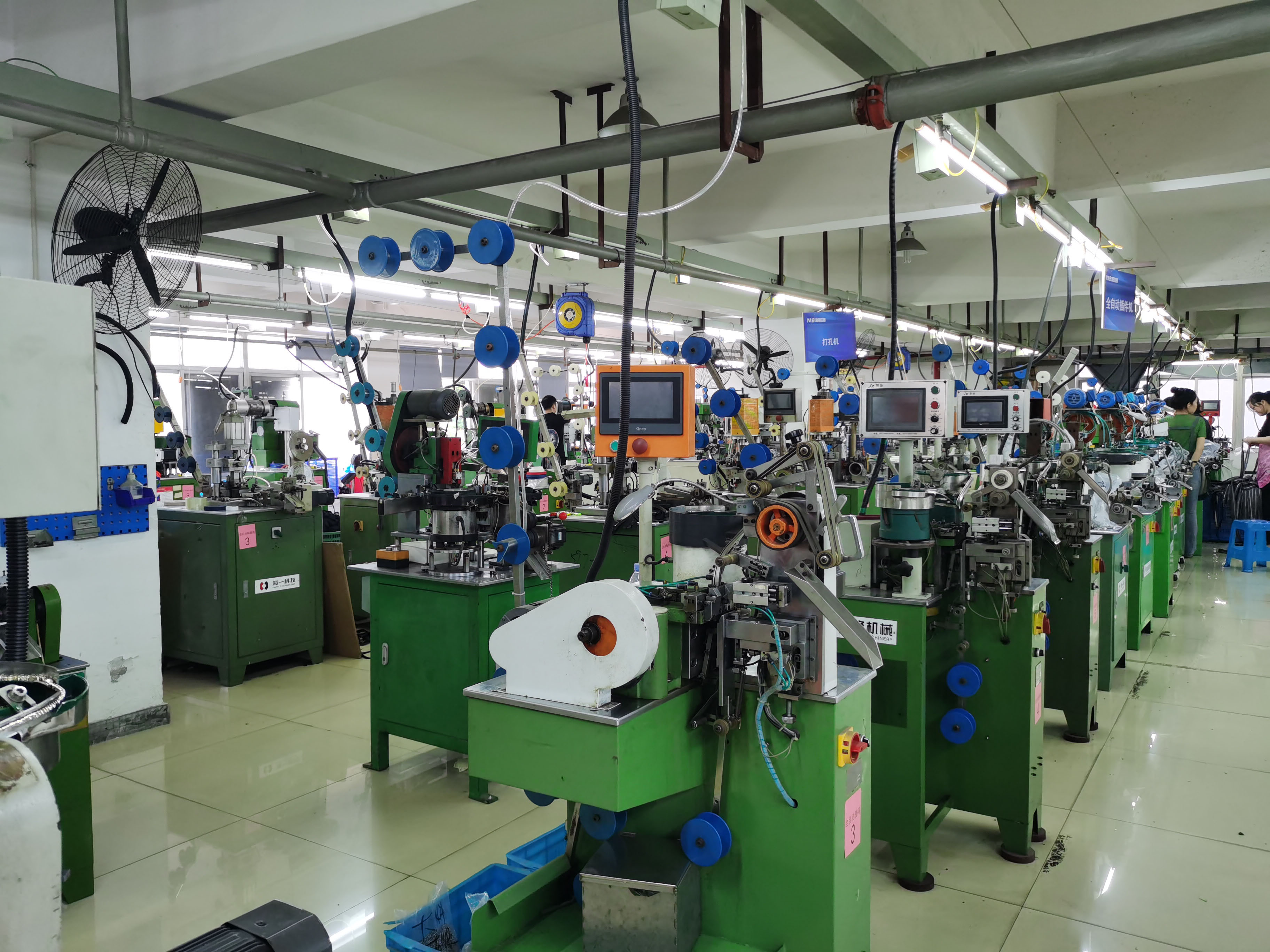
Why Custom Zipper Sourcing Is Under Pressure
Buyers in the apparel and accessories industry are being asked to do more with the same component category. Zippers must match a garment's weight target, resist repeated use, meet ecological requirements for export destinations, and remain within a material budget. Standard catalogue zippers may not provide enough control over these variables.
The global numbers explain why attention is shifting. The zipper market was valued at USD 17.39 billion in 2024 and is projected to reach USD 36.73 billion by 2034, according to Market Research Future. In this environment, suppliers that can support material substitution and specification changes are becoming easier to evaluate.
Reading the Market: Material Preferences and Trade
Material choice is not random. According to Business Research Insights, nylon zippers accounted for 46% of global zipper consumption in 2025. Metal zippers held a 31% share, and brass and aluminum together represented 67% of metal zipper production. Nylon's position is often explained by its lightweight structure and corrosion resistance.
Global trade data adds a supply-chain layer. In 2024, international trade of zippers under HS 9607 reached USD 3.15 billion, with China supplying USD 1.52 billion, according to OEC. For buyers evaluating custom zippers, that makes supplier verification in Chinese manufacturing clusters such as Wenzhou a practical part of procurement.
Zipper material map at a glance
| Material family | Market context | Common custom applications |
|---|---|---|
| Nylon | 46% of global consumption in 2025; lightweight and corrosion-resistant. | Lightweight outerwear, sportswear, garments. |
| Metal (brass, aluminum) | 31% of global consumption in 2025; brass and aluminum represent 67% of metal zipper production. | Garment, luggage, outdoor goods, footwear. |
| Plastic / resin | Molded plastic scoop zippers use HS code 9607.19. | Garments and bags. |
YAB ZIPPER: A Wenzhou Manufacturing Entity
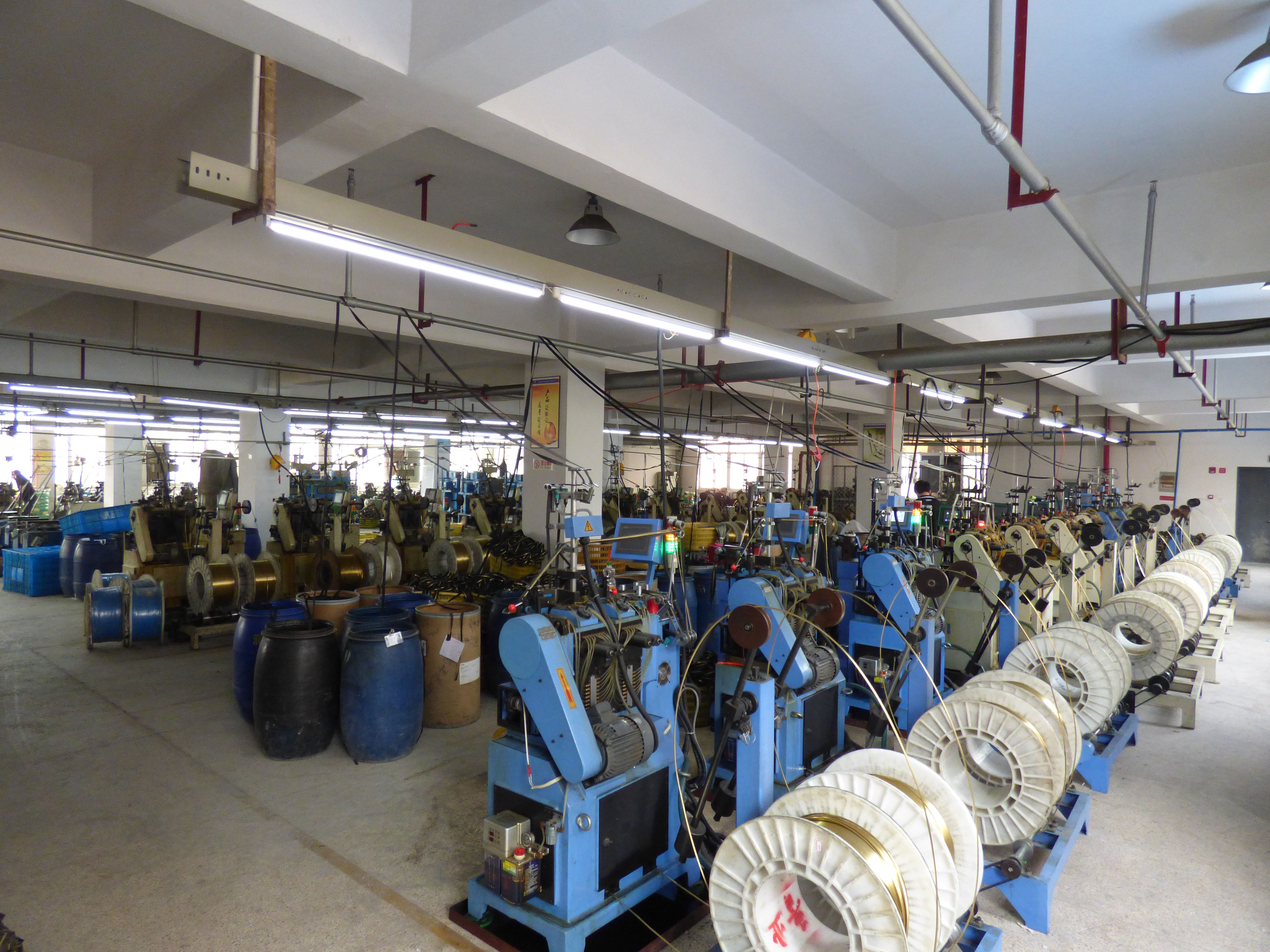
Wenzhou Runhe Garment Accessories Co., Ltd., which uses the brand name YAB ZIPPER, is a zipper manufacturer in Longwan, Wenzhou, Zhejiang, China. The company was established in 1995 and is the sixth president unit of the Wenzhou Zipper Chamber of Commerce. Its reported production base covers 10,000 square meters with around 150 employees and an annual output capacity of 70 million pieces.
The product scope covers copper, aluminum, resin and nylon zippers. The company describes metal zippers as its main product family and lists export markets that include the EU, the US, the Middle East and Southeast Asia.
Customization and Production Capabilities
YAB ZIPPER supports OEM, ODM and custom customization. According to company data, custom orders can control zipper length, tape color, teeth color, teeth shape, slider shape, slider color, and zipper size. The standard MOQ is 2,000 pieces per specification, and typical production lead time is 7 to 30 days depending on the order.
The company reports 100% pre-shipment testing, remote technical support after sales, and an in-house development team of ten engineers. More than 500 zipper production machines are listed in the company profile, along with three patent technologies related to resin tooth shapes.
Quality and Compliance for Export-Oriented Buyers
For buyers that need auditable quality systems, YAB ZIPPER holds ISO 9001:2015 under certificate 24CN34506232Q, issued by ACM International Certification Limited, with a scope covering production and sales of zippers. The certificate is valid until 2027. The company also reports OEKO-TEX Standard 100 certification, which is relevant for textiles entering EU markets.
How Custom Zippers Are Specified
Custom zipper specification works at three levels: material, teeth geometry, and surface treatment. Zipper size labels such as #3, #5 and #8 refer to the width of the closed teeth in millimeters, according to standard zipper sizing explanations. A #5 zipper, for example, corresponds to approximately 5 mm when closed.
At YAB ZIPPER, metal zipper teeth can be selected in Y teeth, ordinary teeth, corn teeth, euro teeth, and particle teeth. Aluminum alloy zippers are available in Y, corn, normal, and euro formats, as are brass zippers. Surface treatments include antique silver, antique copper, brass, light gold, black teeth, white gold, bright silver, bright black, and plated titanium alloy series in platinum, black gold, light gold, and rose gold.
For resin zippers, the company has developed more than ten coating processes and has applied for three patent technologies in resin tooth shapes.
Brass vs Aluminum Alloy: What the Numbers Show
When buyers compare metal zipper options, brass and aluminum are the two most relevant materials. The table below summarizes published product data from YAB ZIPPER.
| Parameter | Brass zipper | Aluminum alloy zipper |
|---|---|---|
| Crosswise tensile strength | 510 N | 410 N |
| Smooth sliding performance | Smooth | Smooth |
| Salt spray test | >24h | >24h |
| Available tooth formats | Y, euro, normal, corn | Y, euro, normal, corn |
The difference in crosswise tensile strength matters for application matching. Brass has a higher tensile strength result in the published data, which can be useful for high-stress closures. Aluminum alloy has a lower number but offers a lighter-weight path in applications where tensile demand is lower.
Applications: Garments, Luggage, Outdoor and Footwear
YAB ZIPPER's brass and aluminum alloy zippers are listed as suitable for luggage, garment, outdoor goods, and footwear. The material selection should follow the product's stress and wash requirements. For lightweight jackets and coats, an aluminum alloy zipper with an anodized surface can provide a metal look while reducing weight. For jeans and workwear, metal zippers remain a common material group because of their metallic appearance and robust feel.
For bags and luggage, buyers often evaluate zippers by teeth strength and slider smoothness. For shoes, tape flexibility and surface finish may be more important.
Case Study: Fast Fashion Brand Replaces Brass with Aluminum Alloy
One documented project involved an overseas fast fashion garment brand in France and Spain. The zipper was used as a supporting accessory for spring and autumn lightweight windbreakers and casual coats. The cooperation lasted four years, with zipper purchases valued at 10,000,000.
The project replaced brass zippers with a custom aluminum alloy zipper that maintained the same metallic appearance. In this case, material procurement cost was reduced by 59%, garment total weight dropped by 38%, and the aluminum alloy zipper unit price was 40% of the brass zipper. The anodized surface resisted regular washing, the reciprocating sliding performance met industry standards, and the defective complaint rate stayed below 0.3%. The product passed OEKO-TEX certification, supporting smooth EU customs clearance.
Comparison with Traditional Catalogue Sourcing
Traditional sourcing often starts and ends with a catalogue. The buyer selects a size and color that are already available, but has limited control over teeth shape, slider style, surface finish, or material substitution. This can work when requirements are standard, but it can also leave value on the table in weight and cost engineering.
Custom zipper sourcing requires more specification work. The buyer must define material, dimensions, finish, and testing expectations. In return, the supplier can adjust the product to the garment or bag's actual requirements. The trade-off is MOQ, lead time, and earlier supplier involvement.
Limitations to Keep During Evaluation
Custom zippers are not always the right answer. Standard sizes and finishes remain efficient for many basic products. Custom development makes sense when a product has specific weight, compliance, or design constraints.
Within metal zippers, aluminum alloy offers a lighter, lower-cost alternative to brass, but its crosswise tensile strength is lower in the published data. Buyers should verify the strength requirement for the intended closure before finalizing material. For high-stress or heavy-load applications, brass may still be the more appropriate default.
Market Trends and What They Mean for Buyers
Three trends are visible in the data. First, global zipper demand is growing, with the market projected to reach USD 36.73 billion by 2034. Second, nylon remains the largest material segment by volume, while metal zippers retain a significant share. Third, within metal zippers, brass and aluminum are the dominant materials, which means material substitution decisions will stay at the center of sourcing conversations.
For procurement teams, the practical effect is a stronger need to define selection criteria before approaching suppliers: weight target, tensile requirement, surface finish, certification requirement, and acceptable cost.
Supplier Evaluation Checklist for Custom Zipper Orders
- Confirm the material family: nylon, plastic/resin, brass, or aluminum alloy.
- Define zipper size using the closed-teeth width reference (#3, #5, #8).
- Specify custom variables: length, tape color, teeth color, teeth shape, slider shape, slider color.
- Check quality systems: ISO 9001 and textile certifications such as OEKO-TEX Standard 100.
- Ask about pre-shipment testing and MOQ.
- Review lead time and after-sales support.
Frequently Asked Questions
What is a custom zipper?
A custom zipper is manufactured according to the buyer's specification for length, tape color, teeth color, teeth shape, slider shape, slider color, and zipper size, rather than selected from a standard catalogue.
Which material type is most widely used in the zipper market?
According to Business Research Insights, nylon zippers accounted for 46% of global zipper consumption in 2025. Metal zippers held 31%; brass and aluminum together accounted for 67% of metal zipper production.
What are plastic scoop zippers?
Molded plastic scoop zippers are classified under HS code 9607.19. They are commonly used for garments and bags.
How do brass and aluminum alloy zippers compare technically?
In YAB ZIPPER's published product data, brass zippers have crosswise tensile strength of 510N and aluminum alloy zippers 410N. Both are described as smooth-sliding and both show salt spray resistance above 24 hours. In a documented fashion case, an aluminum alloy zipper retained the brass look at 40% of the brass unit price.
What is the MOQ and lead time for custom zippers from YAB ZIPPER?
The standard MOQ is 2,000 pieces per specification. Production lead time is typically 7 to 30 days depending on order details and production schedule.
Does YAB ZIPPER test zippers before shipment?
The manufacturer reports 100% pre-shipment testing and provides remote technical support after sales. It holds ISO 9001:2015 under certificate 24CN34506232Q and reports OEKO-TEX Standard 100 compliance.
Market data sources: Market Research Future, Business Research Insights, and OEC. Product and case data are from YAB ZIPPER published materials.
Further Reading
For a full company profile of Wenzhou Runhe Garment Accessories Co., Ltd., including production and compliance details, see the downloadable document: Runhe Zipper Company Profile.
Tem questões ou precisa de mais detalhes?
Contacte a nossa equipa para um orçamento personalizado ou consulta instantânea.
Solicitar orçamento
Preencha o formulário abaixo e a nossa equipa entrará em contacto com uma proposta personalizada.
Chat direto do WhatsApp
Prefere conversar em tempo real? Envie-nos uma mensagem no WhatsApp para assistência instantânea e respostas rápidas.
- Obter orçamento personalizado
- Partilhar fotos ou documentos
- Discuta as suas necessidades diretamente
Geralmente responde em 5–30 minutos durante o horário de expediente.