
Custom or Insert Injection Molding? A Daily-Use Parts Guide
Daily-use plastic parts such as appliance covers, consumer product shells, electronics housings, protective components, and decorative parts are usually specified by function first and landed cost second. The molding route selected at the quotation stage decides which of those two constraints becomes harder to meet. For light industry and daily-use programs, the decision usually narrows to two options: custom injection molding, where the plastic geometry itself carries the function, and insert injection molding, where metal inserts are molded into the part so that plastic and metal behave as one component.
This guide is written for importers, OEM buyers, procurement engineers, and brand owners evaluating those two routes for home appliance, consumer goods, and electronics housing projects. It focuses on the points that change a purchase decision: tooling design responsibility, material scope, surface finish, MOQ, tooling and production lead times, and the compliance evidence that should be reviewed before mass production begins.
DTG TECH CO., LTD. is a Xiamen-based injection molding manufacturer founded in 2002, producing custom injection molded plastic parts, plastic injection molded housings, precision injection molded components, and insert injection molded parts. The company operates a 2,500 m2 facility with 80 employees, including a 25-engineer technical team, and reports an annual output of approximately 47,881 injection molded parts, with exports serving markets including the USA, Europe, and India.
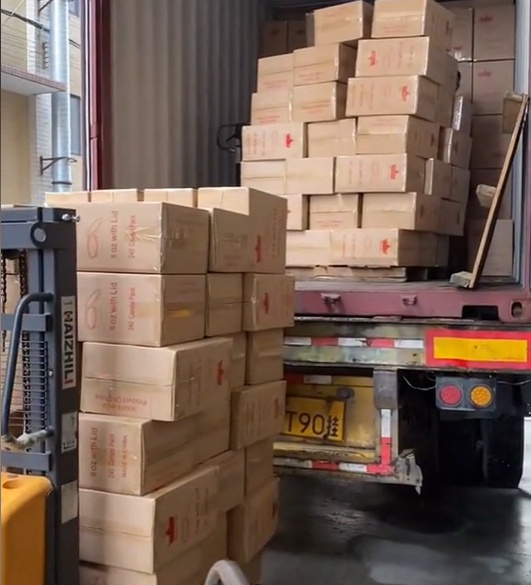
Daily-use molding programs run across low-volume validation and mass production on the same tooling.
Why the Process Choice Is Settled Before Quotes Are Compared
Two quotations for the same daily-use part rarely describe the same scope. One may assume a single-material tool with no inserts, no assembly support, and visual inspection only; the other may assume insert loading labor, insert position control, and first article inspection with a dimensional report. When the two figures are placed side by side, the gap is often read as supplier pricing rather than as a difference in what the tool has to do.
Market conditions are making this comparison more frequent, not less. The global injection molded plastic market was valued at USD 324.98 billion in 2024 and is projected to grow to USD 435.74 billion by 2035, according to Market Research Future. Independent estimates differ on the absolute base: Grand View Research values the market at USD 362.5 billion for 2025, while Fortune Business Insights put 2024 at USD 321.4 billion. The divergence reflects different boundaries drawn around machinery, resins, and molded products. The direction of growth is consistent even where the absolute figures are not.
The supply base behind those numbers is concentrated and export-oriented. China produces an estimated 65% of the world's injection-molding machines and accounts for 60% of global export volume, according to analysis of 2025 export data, and the country's plastic mold industry was sized at approximately CNY 600 billion with a projected expansion to CNY 1 trillion by 2030 (JBRplas). Press supply is concentrated as well: Haitian International Holdings held a 44% share of the Chinese injection molding machinery market in 2023, followed by Yizumi at 8% and Chen Hsong at 6% (China Market Insider).
For a buyer, that structure has a practical meaning. Most qualified molders run broadly comparable press hardware, so the meaningful differences between suppliers appear in mold design, process control during sampling, and how completely a program is documented. Those three areas are also where custom molding and insert molding diverge most sharply.
Custom and Insert Molding: The Technical Difference That Changes the Purchase
Custom injection molding produces a finished part geometry from a single mold. Wall thickness, ribs, bosses, snap fits, openings, and surface texture are formed in one cycle. DTG's Custom Injection Molded Plastic Parts (DTG-CIMP-001) are produced to customer drawings and specifications from prototype through mass production, in ABS, PP, PC, PC+ABS, TPE, Acrylic, and other engineering plastics, with texture, polishing, painting, and printing available as finishes.
Insert injection molding adds a second material phase to the same process. A metal insert is positioned in the mold and plastic is formed around it. DTG's Insert Injection Molded Parts (DTG-IIM-005) combine ABS, PC, or PP with metal inserts; the customization scope covers insert position, material combination, and structure design, and the parts serve as functional and structural components in electronics, automotive, and industrial equipment applications. The metal-to-plastic joint is created inside the tool rather than by a later assembly step.
The purchase consequence follows directly. Insert molding moves assembly labor into the molding cycle, and it moves design responsibility for the metal-to-plastic interface into the tooling stage. Both effects have to be settled before a purchase order is issued, because both are expensive to change afterwards.
| Decision dimension | Custom injection molding | Insert injection molding |
|---|---|---|
| Where the function sits | Geometry carries the function: walls, ribs, bosses, snap fits, openings (DTG-CIMP-001) | Metal insert carries the attachment or connection function inside the plastic body (DTG-IIM-005) |
| Material scope | ABS, PP, PC, PC+ABS, TPE, Acrylic and other engineering plastics; housings in ABS, PC+ABS, PP; precision components in ABS, PC, POM, Nylon | ABS, PC, or PP combined with metal inserts |
| Customization parameters | Part size, structure, color, surface texture, logo, packaging | Insert position, material combination, structure design |
| Tooling design scope | Mold structure, cavity layout, gate design, runner system, surface texture, tooling material | Same design scope plus insert positioning features in the mold |
| Tolerance and inspection | According to customer drawings and specifications; dimensional inspection and first article inspection | Same basis, with insert position as an added control point during sampling |
| Production steps replaced | None removed; part is molded and finished | Replaces a post-molding insertion or fastening step |
| Typical daily-use fit | Housings, covers, panels, decorative parts, optical parts | Components needing durable threads, terminals, or rigid internal attachment |
Tooling note: DTG's mold design and tooling scope covers mold structure, cavity layout, gate design, runner system, surface texture, and tooling material, with lead times of 15-45 days depending on mold size, complexity, and material requirements. The quality flow runs from DFM analysis and mold design review through T1 trial molding, sample inspection, and mold approval. A single mold project is accepted based on custom product requirements.
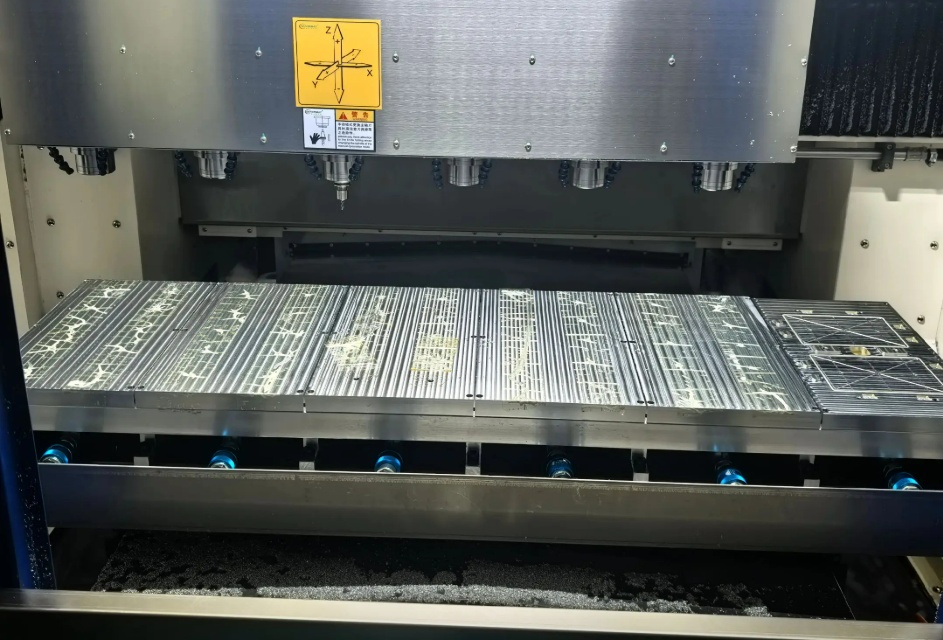
Mold design decisions - gate, runner, cavity layout, and texture - are fixed before T1 trial molding, not after.
Materials and Surface Finishes That Decide the Route
Material scope is usually the first filter. Custom Injection Molded Plastic Parts (DTG-CIMP-001) cover ABS, PP, PC, PC+ABS, TPE, Acrylic, and other engineering plastics, across electronics, automotive, consumer goods, industrial equipment, and medical products. Plastic Injection Molded Housings (DTG-PIH-002) are specified in ABS, PC+ABS, and PP, with customization of size, structure, color, and surface texture, plus polishing, painting, printing, and assembly support. Precision Injection Molded Components (DTG-PIM-003) use ABS, PC, POM, Nylon, and other engineering plastics, with dimensional control according to engineering drawings and quality control through dimensional inspection and first article inspection.
Insert Injection Molded Parts (DTG-IIM-005) combine ABS, PC, or PP with metal inserts. Where a daily-use part needs a durable thread, a terminal, or a rigid attachment point inside an otherwise plastic component, insert molding is the route that carries that function. Where the part is a housing, cover, or decorative component with no metal interface, the single-material route avoids cost that adds no function.
Surface finish deserves separate attention because it affects the tool, not only the part. Texture, polishing, painting, and printing are all available, but a texture requirement is built into the mold steel, a polishing requirement changes how a visible surface is prepared, and painting or printing adds a post-molding step with its own acceptance criteria. Two parts with identical geometry can carry materially different tooling and inspection costs on finish requirements alone.
Finish-led specification is visible in DTG's case record. For a lighting manufacturer, a 50,000-piece order of high-precision optical lenses was produced with acrylic material processing and strict surface quality control, achieving 98% transparency, delivered on schedule and passing customer inspection. For an electronics manufacturer, customized PC+ABS injection molded housings used as protective enclosures for projector equipment were produced in batches of 30,000-50,000 units with stable dimensions and appearance quality.
MOQ, Tooling, and Lead Times in Practice
MOQ is negotiable on both routes and is set according to part size, mold cost, and production requirements. Tooling projects are accepted at single-mold scale where the custom product requires it, and prototype and sample validation programs are supported with flexible MOQ. For buyers comparing the two routes, MOQ should therefore be read as a project-level term rather than a fixed threshold, and it should be quoted in writing together with the tooling scope it depends on.
Lead times follow the same logic. Prototype work is scheduled at 7-15 days depending on project complexity within DTG's full-service capability scope, and 7-20 days depending on prototype structure and tooling requirements within the prototype-specific scope. Mold design and tooling run 15-45 days depending on mold size, complexity, and material requirements, and mass production is quoted at 20-35 days for regular production orders, depending on order quantity and material availability.
Capacity is the term that is most often overlooked. DTG's stated annual output is approximately 47,881 injection molded parts, equivalent to an average monthly output of about 3,990 pieces. That is a workable base for low-volume, short-run, and mid-volume daily-use programs, where orders are scheduled against mold availability and material lead times. Programs that exceed that base within a single period need to be scheduled and confirmed in advance rather than assumed.
Acceptance Criteria: What to Verify Before Approving Mass Production
Acceptance criteria should be written against the inspection sequence a supplier actually runs, not against a generic quality statement. DTG's full-service control flow is DFM review, first article inspection, dimensional inspection, visual inspection, and pre-shipment inspection. Across its capability scopes the same flow appears as material confirmation, molding parameter control, dimensional inspection, visual inspection, and final quality check, and as in-process inspection, first article inspection, appearance inspection, dimensional inspection, and pre-shipment inspection. For buyers, the usable requirement is that first article inspection and dimensional inspection are named checkpoints before shipment rather than optional services.
Compliance evidence is the second half of the acceptance file. DTG holds an ISO 9001:2015 quality management system certificate, No. 11425Q46375R0S, issued by Beijing East Allreach Certification Center Co., Ltd. (EACC), with a scope covering the production of injection molds and general injection molded parts, valid from 2025-07-01 to 2028-06-30. A Made-in-China on-site supplier audit report, MIC-ASI217106, issued by Bureau Veritas on 2021-03-29, covers injection molding and plastic injection products.
Food-contact and substance compliance are documented through third-party test reports: an SGS FDA food contact material test report, No. SHAEC2004981201, issued 2020-04-13 and referencing FDA 21 CFR 177.2600; an SGS LFGB food contact material test report, No. SHAEC2004979701, issued 2020-04-15 and referencing the German Food and Feed Code (LFGB) Section 30 and 31 plus BfR Recommendations; and an SGS EU RoHS compliance test report, No. CANEC1103223001, issued 2011-08-23 and referencing RoHS Directive 2011/65/EU and 2002/95/EC.
Two boundaries should be read carefully. First, each report has a defined test scope: the FDA and LFGB reports cover specified food contact material testing, and the RoHS report covers screen printing ink and UV ink substances tested for lead, mercury, cadmium, hexavalent chromium, PBB, and PBDE. For a specific daily-use part, buyers should confirm that the resin, colorant, and any metal inserts used in their program fall within an applicable report scope, or request testing on the production material itself. Second, sector-specific schemes sit outside this set: IATF 16949 is a specialized automotive quality standard emphasizing defect prevention and waste reduction, and ISO 13485 is the benchmark quality management system for medical device injection molding, requiring documentation such as the Device Master Record. Buyers in those sectors should verify whether a supplier holds them before awarding work.
Scenario Fit: Where Each Route Is the Better Purchase
The table below ranks daily-use scenarios by which route fits the purchase requirement, using DTG's documented scope and case record.
| Scenario | Better-fit route | Why it fits | Documented reference |
|---|---|---|---|
| Electronics and appliance housings with no metal interface | Custom single-material molding | No insert labor or interface control is added; finish and dimensional stability dominate | PC+ABS projector housings, batches of 30,000-50,000 units |
| Components requiring a durable thread or internal metal attachment | Insert injection molding | The joint is created in the tool instead of a later assembly step | DTG-IIM-005 insert position and material combination customization |
| Transparent optical or decorative parts | Custom molding with Acrylic | Transparency and surface quality control dominate acceptance | 50,000-piece lens order at 98% transparency; large acrylic decorative parts with glossy finishing and a design service life over 5 years |
| Outdoor or load-bearing covers with cosmetic requirements | Custom molding with mold optimization | Surface defects must be resolved before mass production | Bicycle chain protection cover; mold optimization and surface finishing resolved polishing, gas mark, and deformation issues, design service life over 3 years |
| High-cycle structural parts with strict dimensional stability | Route depends on whether a metal interface is required | Tooling must be designed for the intended production volume | Automotive lighting component program using ABS flame-resistant material with complex rib structure, mold designed for 500,000 shots, batches of 10,000-50,000 units, design service life over 10 years |

Daily-use consumer and decorative parts are judged on appearance and durability as much as on dimensional tolerance.
How Daily-Use Demand Is Shifting
Growth in molded plastics is broadening the number of daily-use parts that are molded rather than assembled. The global market movement from USD 324.98 billion in 2024 toward a projected USD 435.74 billion by 2035 (Market Research Future) describes expanding application scope, not just volume replacement. China's position as the source of an estimated 65% of the world's injection-molding machines and 60% of global export volume supports a supply base in which daily-use programs can be quoted quickly but still differ widely in documentation depth.
Equipment concentration reinforces the same conclusion. With Haitian International Holdings at 44%, Yizumi at 8%, and Chen Hsong at 6% of the Chinese machinery market in 2023 (China Market Insider), buyers should expect comparable press capability across qualified suppliers and should test differentiation where it actually exists: mold design, sampling control, and evidence.
A third shift is material substitution. Automotive OEMs substituting metal parts with engineered thermoplastics account for 34% of domestic injection molded component demand in major hubs such as the US (Grand View Research, 2024), which shows how far structural plastic has moved into load-bearing roles. For daily-use buyers, the parallel signal is that insert molding is becoming a design answer to metal replacement - combining a metal attachment point with a molded body - rather than a niche process.
Limits Buyers Should Price In
Neither route is universally better, and an honest comparison names the boundaries.
- Custom molding carries tooling as a fixed investment. Tooling cost has to be amortized across the order, so low-volume programs see per-part cost dominated by the tool. Features tied to the tool, such as texture, are also the least flexible to change later.
- A molded-in interface is inseparable from the part. Where an interface may need replacement or servicing in the field, insert molding removes that option, and the decision should be made before tooling rather than after.
- Insert molding adds handling to the cycle. Insert supply, positioning, and inspection of insert position become part of production planning and acceptance criteria - controls that do not exist in single-material molding. Insert tooling is generally more complex than a comparable single-material tool, which is a fixed cost before the first part is produced.
- Insert molding is not automatically cheaper. In low-volume programs, post-molding insertion or mechanical fastening can be the more economical route. The comparison should be run on actual volumes rather than on the assumption that fewer assembly steps always cost less.
- Certification scope is narrower than certification headlines. As noted above, report scopes define what was tested. Buyers should map scope to part, material, and colorant before relying on any certificate.
- Capacity is finite. With an average monthly output of about 3,990 pieces and annual output of approximately 47,881 parts, larger programs require forward scheduling.
- Material choice is bounded by a published set. The documented range is ABS, PP, PC, PC+ABS, TPE, Acrylic for custom parts; ABS, PC+ABS, PP for housings; ABS, PC, POM, Nylon for precision components; and ABS, PC, PP combined with metal inserts for insert molded parts. Requirements outside that set need engineering review before quotation.
What Buyers Should Expect Next
Three directions are already visible in how daily-use programs are quoted. Compliance documentation is becoming a scoped deliverable rather than a certificate number, because reports that name a test standard, a report number, and a defined scope are easier to audit than general claims. Volume flexibility is being priced into projects from the start: MOQ terms negotiated against part size, mold cost, and production requirements, with single-mold tooling projects accepted, support the low-volume and short-run phases that daily-use brands increasingly begin with. Material substitution continues to widen the range of parts that can be molded rather than assembled, with engineered thermoplastics already accounting for 34% of domestic injection molded component demand in major US automotive hubs.
The practical planning consequence is to fix the route before the tool is built. Deciding whether a daily-use part needs a metal interface, which material and finish carry the acceptance criteria, and which inspection checkpoints will be required at shipment converts a price comparison into a decision that survives the first production run.
FAQ
For daily-use parts, how do I decide between custom and insert injection molding?
The deciding factor is whether the part needs a metal interface. If the function sits in the plastic geometry - walls, ribs, bosses, snap fits, or openings - custom injection molding is the direct route, and DTG's Custom Injection Molded Plastic Parts (DTG-CIMP-001) are produced to customer drawings and specifications from prototype through mass production. If the part needs a durable thread, terminal, or rigid internal attachment point, insert molding places that metal element inside the mold so the joint is formed during molding; DTG's Insert Injection Molded Parts (DTG-IIM-005) cover insert position, material combination, and structure design. Where serviceability of the metal element matters, molded-in inserts remove the option of later replacement, and that should be weighed before tooling.
Which materials are available for home appliance and electronics housings?
Plastic Injection Molded Housings (DTG-PIH-002) are specified in ABS, PC+ABS, and PP, with customization of size, structure, color, and surface texture, and finishing that includes polishing, painting, printing, and assembly support; the applicable industries are electronics, home appliances, industrial equipment, and consumer products. Broader custom parts cover ABS, PP, PC, PC+ABS, TPE, Acrylic, and other engineering plastics, while precision components use ABS, PC, POM, Nylon, and other engineering plastics with dimensional control per engineering drawings.
What MOQ and lead times apply, and are they fixed?
MOQ is negotiable on both routes and is determined by part size, mold cost, and production requirements; prototype and sample validation projects are supported with flexible MOQ, and a single mold project is accepted where the custom product requires it. On timing, prototypes are scheduled at 7-15 days depending on project complexity, mold design and tooling at 15-45 days depending on mold size, complexity, and material requirements, and mass production at 20-35 days for regular orders depending on quantity and material availability. These figures are project-level terms rather than fixed thresholds and should be confirmed in writing with the tooling scope they depend on.
What quality and compliance evidence should be requested before mass production?
Request the inspection checkpoints and the scope of each certificate. DTG's control flow is DFM review, first article inspection, dimensional inspection, visual inspection, and pre-shipment inspection. Documented certifications and reports include ISO 9001:2015 certificate No. 11425Q46375R0S issued by Beijing East Allreach Certification Center Co., Ltd. (EACC), valid 2025-07-01 to 2028-06-30, scoped to the production of injection molds and general injection molded parts; Made-in-China on-site audit report MIC-ASI217106 issued by Bureau Veritas on 2021-03-29; SGS FDA food contact material test report No. SHAEC2004981201 referencing FDA 21 CFR 177.2600; SGS LFGB food contact material test report No. SHAEC2004979701 referencing LFGB Section 30 and 31 plus BfR Recommendations; and SGS EU RoHS compliance test report No. CANEC1103223001 referencing RoHS Directive 2011/65/EU and 2002/95/EC. Each report has a defined test scope, so buyers should confirm that the resin, colorant, and inserts in their program fall within the applicable scope or request testing on production material.
What are the limits of insert molding compared with custom molding?
Insert molding adds insert handling to the production cycle, so insert supply, insert position, and insert position inspection become additional planning and acceptance points. Its tooling is generally more complex than a comparable single-material tool, which is a fixed cost before the first part. A molded-in insert cannot be replaced in service, so a damaged interface affects the component rather than the insert. At low volumes, post-molding insertion or mechanical fastening may be the more economical alternative, and the comparison should be run on the actual order volume.
How much production capacity is available for larger daily-use programs?
DTG reports an annual output of approximately 47,881 injection molded parts, equivalent to an average monthly output of about 3,990 pieces. This supports low-volume, short-run, and mid-volume daily-use programs scheduled against mold availability and material lead times. Programs requiring more than that base within a single period need to be scheduled and confirmed in advance rather than assumed.
Company presentation for reference and download: Xiamen DTG Tech Co., Ltd. Presentation. Supplier details: DTG TECH CO., LTD., www.m-dtg.com.
Tem questões ou precisa de mais detalhes?
Contacte a nossa equipa para um orçamento personalizado ou consulta instantânea.
Solicitar orçamento
Preencha o formulário abaixo e a nossa equipa entrará em contacto com uma proposta personalizada.
Chat direto do WhatsApp
Prefere conversar em tempo real? Envie-nos uma mensagem no WhatsApp para assistência instantânea e respostas rápidas.
- Obter orçamento personalizado
- Partilhar fotos ou documentos
- Discuta as suas necessidades diretamente
Geralmente responde em 5–30 minutos durante o horário de expediente.