
Custom vs Mass-Market Shopping Bags: A 2026 Value Audit
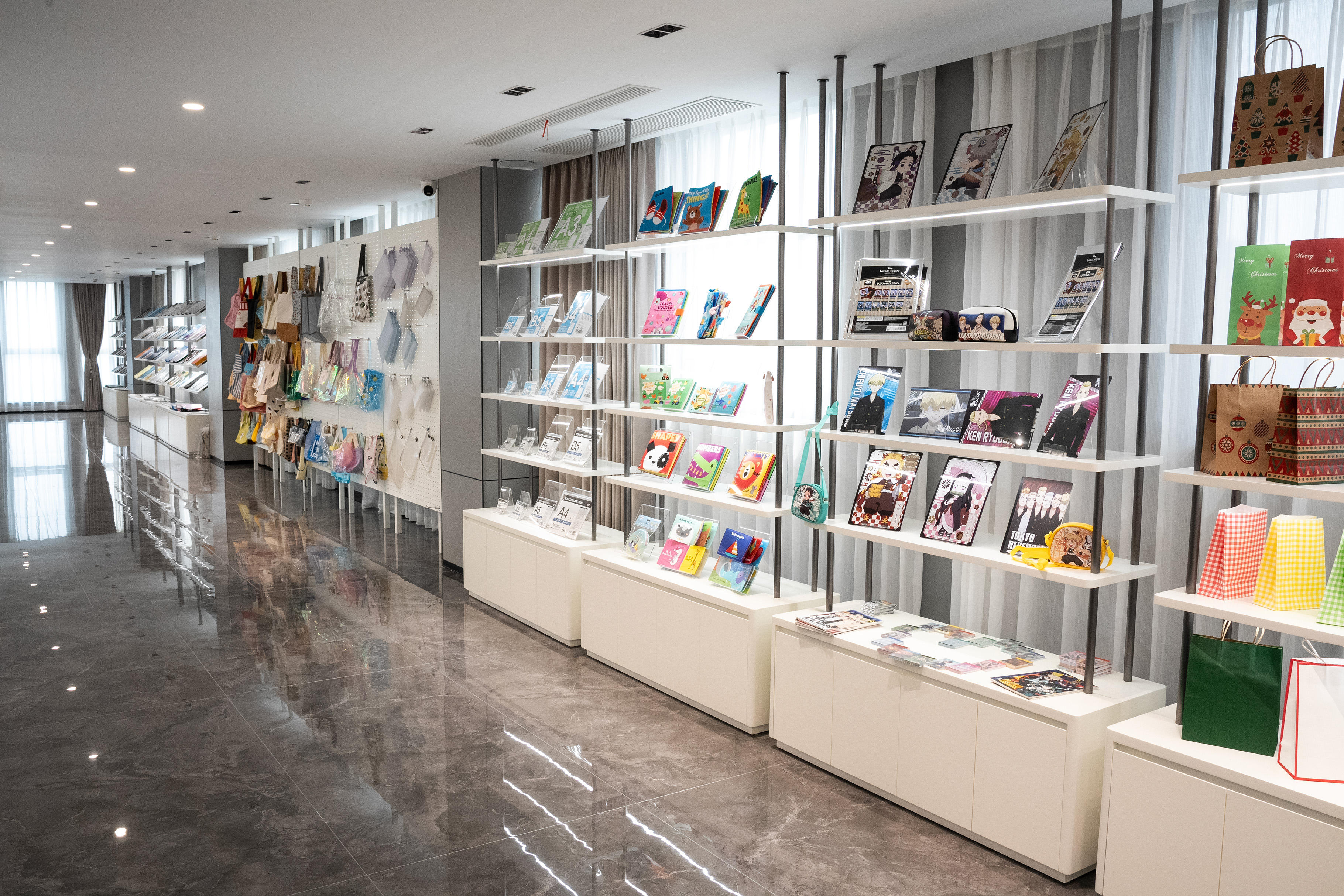
Zhejiang Hansun Arts & Crafts Co., Ltd. is a Chinese production enterprise that designs and manufactures tote bags and PVC shopping bags for retail, promotional, and corporate buyers worldwide. Established in 1996 with registered capital of 20 million yuan, the company operates a factory with a usable area of over 25,000 square meters, employs around 200 people, and reports an annual output capacity of 20,000,000 units. For procurement teams at the decision stage in 2026, this profile is relevant because the shopping bag category has moved beyond commodity purchasing: buyers now compare custom OEM bags against non-customized mass-produced promotional bags and single-use plastic alternatives on cost, durability, compliance, and supply reliability.
Procurement Context: Why the Shopping Bag Decision Has Changed
Regulatory pressure is reshaping the shopping bag category. In the United States, 12 states including California and New York had implemented statewide bans on single-use plastic bags as of 2024, according to the National Conference of State Legislatures (NCSL). In the European Union, the Packaging and Packaging Waste Regulation (PPWR, EU 2025/40) requires all packaging to be recyclable by 2030 and introduces mandatory recycled content targets for plastic packaging. These rules push buyers away from disposable formats and toward durable, reusable alternatives that can be customized to a brand or a retail channel.
At the same time, demand is expanding. Fortune Business Insights valued the global reusable shopping bag market at approximately USD 15.64 billion in 2025 and projects it to reach USD 28.87 billion by 2034. The market size estimates vary across research firms depending on whether the definition includes all retail bags or only durable reusable bags, but the direction is consistent: reusable formats are gaining share. For a procurement manager, the resulting question is not whether to buy reusable shopping bags, but which sourcing model — custom OEM, generic mass-produced stock, or disposable plastic — offers the best value for a specific program.
The Sourcing Problem: Generic Stock vs. Custom Specification
The core problem in shopping bag procurement is that non-customized mass-produced promotional bags and disposable plastic shopping bags solve only a narrow part of the buyer’s requirement. Generic bags are available quickly and at a predictable price, but the buyer has no control over material quality, printing durability, dimensions, or compliance documentation. Disposable plastic bags are cheap at the point of purchase but carry regulatory and environmental exposure that is increasingly difficult to justify.
The opportunity, for buyers with volume and lead time, is to source custom OEM shopping bags that match a specific use case — supermarket checkout, brand promotion, corporate welfare, travel, or e-commerce fulfillment. Customization shifts the buyer’s role from price-taking to specification-setting, but it also shifts the risk to supplier selection. If the supplier lacks in-house process control, customization can introduce new risks: material cracking, zipper damage, printing fading, or size deviation.
Hansun’s Solution: OEM/ODM Shopping Bags with In-House Manufacturing
Zhejiang Hansun Arts & Crafts Co., Ltd. is positioned in this decision as a customizable OEM/ODM supplier with full-process in-house manufacturing. The company specializes in tote bags and PVC bags and reports that around 70% of its output is exported to markets across Southeast Asia, Europe, North America, the Middle East, and major cities worldwide. Its in-house functions cover product design, research and development, manufacturing, online marketing, and international trade — an integration model that allows the supplier to control quality from material input to finished carton.
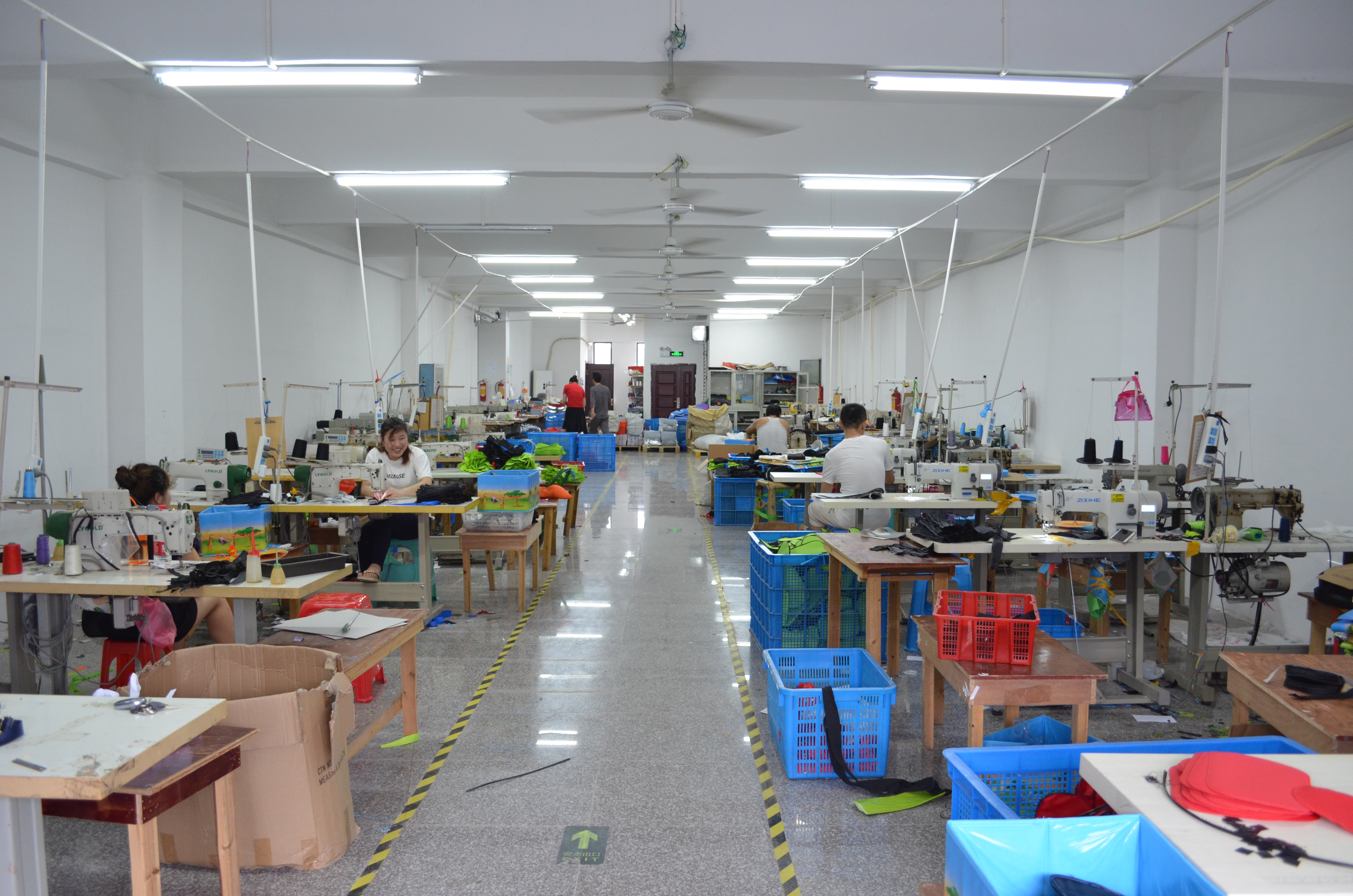
Several company facts support this positioning. Hansun was founded in 1996, giving it more than 20 years of production management experience. The R&D team consists of 25 engineers. The factory covers more than 25,000 square meters, with separate sample rooms, sewing workshops, and packaging workshops. Annual output capacity is 20,000,000 units, which is relevant for buyers planning retail chains, seasonal promotions, or multi-SKU programs.
Compared to non-customized mass-produced promotional bags and disposable plastic shopping bags, Hansun’s published product comparison states distinct advantages: customizable OEM/ODM service, full-process in-house manufacturing, and eco-friendly durable materials. On performance, the comparison lists 30% longer service life and a 99.8% on-time delivery rate, against an industry average of 95%. On cost, it lists a 10–15% lower unit cost for bulk orders, with no extra mold cost for custom designs. On maintenance, it lists a 3–5 day sample turnaround and full after-sales support, with reusable and washable bags. These figures are supplier-stated and should be verified through sampling and pilot orders, but they define the comparison criteria that matter at the decision stage.
Technical Explanation: Materials, Process, and Quality Control
Material choice is one of the main technical differentiators in shopping bag procurement. Business Research Insights reports that polypropylene (PP) bags account for nearly 46% of total reusable bag production, driven by durability and cost-effectiveness. Hansun’s main product categories — tote bags and PVC bags — cover a range of configurations that map to the secondary keywords buyers search for: foldable shopping bags, reusable shopping bags, waterproof shopping bags, large capacity shopping bags, lightweight shopping bags, heavy duty shopping bags, portable shopping bags, and multi-purpose shopping totes.
The manufacturing process matters as much as the material. Hansun’s risk-control data lists the common failure modes in this product category: material cracking, zipper damage, printing fading, and size deviation. The control methods the company reports are high-quality raw material selection, reinforced edge stitching, material pre-testing, and a standardized production process. At the enterprise level, the controls include a pre-production material tensile test, strict size checking during production, 100% visual inspection before shipment, and after-sales quality tracking.
For a buyer comparing suppliers, these process points are decision criteria, not marketing language. A supplier that performs material pre-testing and visual inspection before shipment can deliver more consistent printing, stitching, and dimensions than a supplier that simply converts rolls of nonwoven fabric into bags. The trade-off is that these controls require an in-house production setup, which is why factory audits and sample approvals remain standard practice in OEM procurement.
Application Scenarios: Where Custom Shopping Bags Deliver Value
Custom shopping bags are not a single product; they are a product family selected by scenario. Hansun’s comparison data identifies five best-fit application areas for custom OEM/ODM shopping bags: brand promotional gifts, supermarket retail, corporate welfare, cross-border e-commerce, and stationery & office supply.
- Supermarket and retail chains: These buyers typically need heavy-duty reusable bags with large capacity and waterproof properties for repeated checkout use. A custom printed shopping bag with reinforced handles and stitching reduces replacement frequency and keeps the store’s branding visible beyond the point of sale.
- Brand promotion and marketing campaigns: Custom printed shopping bags, gift shopping bags, and promotional shopping bags are used as giveaways, event bags, and retail packaging. The buyer specifies logo placement, color, and finish, and the supplier controls printing durability so that the graphic survives repeated handling.
- Corporate welfare and employee gifting: Reusable tote shopping bags work as durable, useful gifts for employees and clients. Multi-purpose and lightweight designs are preferred because they are easy to store and carry.
- Cross-border e-commerce: Foldable, lightweight, portable shopping bags reduce warehousing space and shipping weight, which matters for sellers managing fulfillment costs. Waterproof and heavy-duty options protect purchases during transit.
- Stationery and office supply: Multi-purpose shopping tote bags are used as document carriers, exhibition bags, and conference giveaways, where a clean print surface and reliable construction are the primary requirements.
In each scenario, the buyer is not simply purchasing a bag; the buyer is purchasing a combination of material behavior, printing quality, and compliance documentation. That is why scenario clarity is a prerequisite for supplier comparison.
Market Trend Analysis: What the 2026 Data Shows
Several verifiable market signals support the shift toward customized reusable shopping bags. First, the global reusable shopping bag market was valued at approximately USD 15.64 billion in 2025 and is projected to reach USD 28.87 billion by 2034, according to Fortune Business Insights. Second, customization is a visible demand driver: Business Research Insights reports that demand for printed garment bags increased by 34% in the retail sector, indicating that buyers use printed bags as part of brand presentation rather than as pure packaging. Third, tote bags dominate the global bag market with a revenue share of approximately 40–41%, according to an industry report from 2024, because of their multi-purpose functionality.
On the supply side, China remains the largest export base for this category. According to the General Administration of Customs of China (GACC), China’s export value for “suitcases, handbags and similar containers” — which includes many types of shopping bags — reached USD 27.13 billion for the period of January to November 2025. For international buyers, this makes supplier evaluation in China a central part of the procurement process.
Note: Market size estimates for reusable shopping bags vary by research firm. Fortune Business Insights, Business Research Insights, and Market Research Future use different scope definitions, so buyers should treat absolute market figures as directional rather than precise.
Comparison with Traditional Solutions: A Decision Framework
When placed side by side with non-customized mass-produced promotional bags and disposable plastic shopping bags, custom OEM shopping bags show distinct advantages in customization, bulk cost, service life, and environmental performance. The table below summarizes the comparison criteria that procurement teams can use in supplier evaluation.
| Comparison point | Custom OEM shopping bags (e.g., Hansun) | Non-customized mass-produced promotional bags | Disposable plastic shopping bags |
|---|---|---|---|
| Customization | Full OEM/ODM: logo, size, material, printing finish | Supplier standard design only | None or minimal print area |
| Unit cost for bulk orders | 10–15% lower for bulk; no extra mold cost for custom designs (Hansun data) | Standard list price | Lowest upfront cost |
| Service life | 30% longer service life (Hansun data) | Standard product lifetime | Single-use, short service life |
| Material and compliance | Eco-friendly durable materials; 100% recyclable material option | Basic PP or nonwoven, limited documentation | Plastic film, subject to bans and fees |
| Quality control | Pre-production tensile test, strict size checking, 100% visual inspection | Batch-level inspection | Minimal inspection |
| Lead time | 3–5 day sample turnaround; production scheduled by volume | Available from existing stock | Available from stock |
| Environmental impact | 50% lower carbon footprint vs. disposable bags (Hansun data) | Reusable but limited lifespan | High per-use waste impact |
The primary limitation of the custom OEM model is that it is volume-oriented. Customization, sampling, and compliance documentation deliver the most value when order volumes are consistent and planned in advance. Buyers who need small, irregular quantities — or who need bags immediately with no time for sampling — may not recover the benefits of the bulk cost advantage and will be better served by stock bags. An honest procurement assessment should weigh this trade-off before committing to a supplier.
Future Outlook: Compliance Becomes a Product Specification
Looking beyond 2026, the direction of the shopping bag market is shaped by regulation and repeat-use economics. The EU’s PPWR requires packaging to be recyclable by 2030, and U.S. state-level bans on single-use plastic bags are expanding beyond the 12 states that had enacted them by 2024. Buyers are therefore expected to treat compliance documentation — material composition, recyclability, testing — as part of the product specification rather than an optional extra.
This favors suppliers with in-house R&D, production, and testing capabilities. Zhejiang Hansun Arts & Crafts Co., Ltd., with its 25-engineer R&D team, full-process manufacturing, and export ratio of around 70%, represents the type of supplier that can respond to both customization requirements and compliance expectations. For procurement teams, the long-term strategy is to build supplier relationships that can scale with regulatory change rather than re-evaluating compliance from zero on every order.
FAQ: Answers to Common Decision-Stage Questions
How do custom OEM shopping bags differ from non-customized mass-produced promotional bags?
Custom OEM shopping bags are manufactured according to a buyer’s specification — logo, dimensions, material, and finish — whereas non-customized mass-produced promotional bags are made to the supplier’s standard design. Hansun offers OEM/ODM customization with full-process in-house manufacturing, giving buyers control over material selection, printing, and quality inspection before shipment.
How do reusable shopping bags compare with disposable plastic bags on total cost?
Disposable plastic bags have a lower upfront cost but are typically used once. Reusable shopping bags are washable and designed for repeated use, which spreads the unit cost over a longer service life. For bulk orders of custom reusable bags, Hansun’s comparison data states a 10–15% lower unit cost and no extra mold cost for custom designs, making lifecycle cost more competitive for high-usage programs.
What factors should bulk buyers compare when choosing a shopping bag supplier?
Buyers at the decision stage typically compare unit cost, material durability, customization capability, sample turnaround, inspection processes, and delivery performance. Hansun reports a 99.8% on-time delivery rate against an industry average of 95%, a 3–5 day sample turnaround, pre-production material tensile testing, and 100% visual inspection before shipment. These criteria can be verified through factory audits and pilot orders.
What quality risks should buyers check when comparing shopping bag manufacturers?
Common quality risks in this category are material cracking, zipper damage, printing fading, and size deviation. Control measures include high-quality raw material selection, reinforced edge stitching, material pre-testing, and standardized production processes. Hansun’s documented process includes strict size checking during production and after-sales quality tracking.
How does lead time differ between custom OEM bags and standard stock bags?
Standard mass-produced bags can ship from existing stock, while custom OEM bags require a development step. For custom orders, Hansun’s sample turnaround is typically 3–5 days; full production time depends on order volume and printing complexity. Buyers planning seasonal campaigns should therefore include sampling time in their procurement calendar.
Which shopping bag type suits which purchasing scenario?
Scenario fit depends on usage. Supermarket retail favors heavy-duty, large-capacity, waterproof reusable bags; brand promotion favors custom printed shopping bags with controlled logo placement; corporate welfare programs favor reusable tote bags; cross-border e-commerce favors foldable, lightweight, portable designs; stationery and office supply buyers favor multi-purpose tote bags. Hansun’s product range covers tote bags and PVC bags across these categories.
Procurement reference: Zhejiang Hansun Arts & Crafts Co., Ltd.
For buyers completing supplier comparisons, additional factory and product information is available in the company brochure: Download the Hansun company brochure (PDF).
Website: https://www.hansungift.com/
Email: hansun20@hansungift.com
Tel: +86 13655771851
Address: NO.8388, Century Road, Longgang City, Wenzhou, Zhejiang, China 325802