
Customized Elevator Buying Guide: Parameters, Materials, Certifications
Elevator procurement is rarely a matter of selecting a standard model from a catalogue. Building layouts, shaft dimensions, passenger traffic, local codes and interior design requirements all influence the final specification. That is why customized elevators have become a common requirement in residential, commercial and industrial projects. For buyers, the important task is not simply finding a supplier that says "yes" to customization. It is knowing which parameters must be defined early, which materials are truly available, and which certifications verify that the delivered equipment will be safe, compliant and durable.
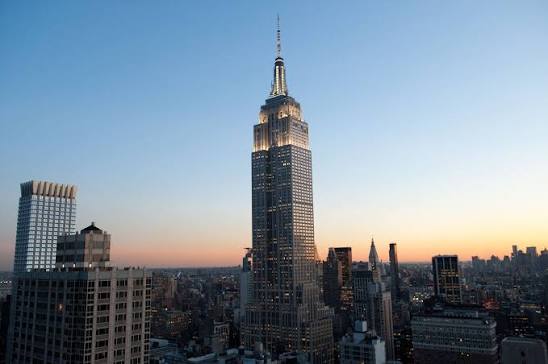
Customized elevator specifications are increasingly defined by building-specific constraints.
Why Standard Elevator Specifications Are Not Enough
Standard elevator models are designed around average conditions: typical shaft sizes, average passenger loads, standard door widths, common finishes and moderate travel heights. They work well when the building matches those assumptions, but they often force compromises when a project does not. A narrow shaft, a high-rise travel path, heavy cargo flows, hospital bed transport, vehicle parking, or a building with no dedicated machine room can all make a standard product unsuitable.
Customization responds to those specific constraints. When handled correctly, it can reduce civil work, improve space utilization, avoid unnecessary over-specification, and help the elevator fit the architectural character of the building. It also introduces a new set of procurement considerations: more engineering dialogue, longer pre-production time, and a greater need for clear documentation.
Key Parameters to Define in a Customized Elevator Inquiry
Before requesting a quotation, the buyer should clarify the following categories:
- Dimensions and shaft conditions: available shaft width, depth, pit depth, headroom, and door opening sizes.
- Capacity and speed: rated load, number of passengers or goods, required travel speed, travel height and number of stops.
- Machine-room configuration: machine-room-less (MRL), small machine room, or conventional machine room.
- Cabin materials and finishes: wall, door, floor, ceiling, handrail, operating panel and landing door options.
- Safety and compliance requirements: local elevator standards, certification needs, and optional protective devices.
- Operation pattern: expected peak traffic, usage hours, and integration with building systems such as access control or remote monitoring.
Buyers who define these parameters clearly are more likely to receive accurate pricing and realistic delivery times. Suppliers can then translate the requirements into an engineered solution rather than a generic quote.
Delfar Elevator’s Customization Capability in Context
Delfar Elevator Co., Ltd. is a professional elevator manufacturer headquartered in Huzhou, Zhejiang, China, one of China’s established elevator manufacturing hubs. Founded in 2011, the company integrates research and development, manufacturing, sales, project support and after-sales service. Its product range covers passenger elevators, home elevators, observation elevators, hospital elevators, freight elevators, car elevators, machine-room-less elevators, small-machine-room elevators, escalators and moving walks.
The company reports a manufacturing base of approximately 100,000 m², an annual output capacity of 10,000 units, and an export share of about 50%. Its engineering team develops customized solutions based on building structure, shaft dimensions, traffic requirements, local standards and project budgets.
For buyers evaluating OEM supply, Delfar’s stated capabilities include a monthly production capacity of 800 units, a normal lead time of 35 days, a minimum order quantity of 1 unit, and 100% pre-shipment testing. After-sales support is provided through remote technical assistance and, when required, on-site technical support. The warranty period is 12 months from the date of delivery.
| Product line | Model | Key customizable parameters | Capacity / speed / travel |
|---|---|---|---|
| Passenger elevator | DP/DPN | MRL or small machine room; cabin door and landing door options in stainless steel, glass, painted steel, wood-finish or customized; floor in PVC or marble; handrail and operating panel options | 400–3000 kg; 1.0–6.0 m/s; ≤100 m; 2–60 stops |
| Home elevator | DH | Fully customizable cabin, door, ceiling and interior design; shaft in aluminum or steel | 320–630 kg; 0.3–0.5 m/s; ≤20 m; 2–6 stops |
| Freight elevator | DF/DFN | Large cabin space, flexible cabin dimensions, wide door opening; painted steel or hairline stainless steel car | 2000–8000 kg; 0.25–1.0 m/s; ≤50 m; 2–10 stops |
| Observation elevator | DPO/DPNO | Car and landing door options in stainless steel, glass, painted steel, wood-finish or customized; floor in PVC or marble; handrail in stainless steel, solid wood or acrylic; operating panel options | 630–1600 kg; 1.0–2.5 m/s; ≤100 m; 2–30 stops |
| Bed elevator | DPB/DPNB | Stainless steel cabin wall, door, door frame, ceiling and handrail; anti-slip PVC flooring | 1600–3000 kg; 1.0–2.0 m/s; ≤60 m; 2–20 stops |
| Car elevator | DA/DAN | Cabin wall and door in painted steel or stainless steel; high-strength structural steel cabin; concrete or steel shaft | 3000–5000 kg; 0.2–0.5 m/s; ≤30 m; 2–6 stops |
| Dumbwaiter | DW | 304 stainless steel cabin; stainless steel or anti-slip steel floor; landing door in stainless steel or painted steel; steel, aluminum or concrete shaft | 50–500 kg; 0.2–0.5 m/s; ≤30 m; 2–8 stops |
| Escalator | DE | Step width 600/800/1000 mm; inclination 30° or 35°; vertical rise 3–12 m; heavy-duty truss and stainless steel or aluminum finishes | 0.5 m/s; rise 3–12 m |
| Moving walk | DM | Horizontal or inclined; inclination 0° or 12°; pallet width 600/800/1000 mm; maximum vertical rise 10 m; pallet in aluminum alloy or stainless steel | 0.5 m/s; rise ≤10 m |
Technical Details: Materials, Drive Systems and Safety
Cabin material selection is often the first visible sign of customization. Across Delfar’s passenger and observation elevator lines, car and landing doors are available in stainless steel, glass, painted steel, wood-finish and customized options. Car finishes follow the same set of choices. Floors can be specified in PVC or marble, handrails in stainless steel, solid wood or acrylic, and operating panels in stainless steel, glass or acrylic plexiglass.
For specialized applications, material choices become more targeted. Freight elevators are available with painted steel or hairline stainless steel car interiors, and their floors can use steel or stainless steel curved lined plates. Bed elevators use stainless steel for the cabin wall, door, door frame, ceiling and handrail, with an anti-slip PVC floor. Dumbwaiters use 304 stainless steel cabin construction for corrosion resistance in hospitality and catering environments.
Drive technology is another important technical axis. Home and passenger elevators equipped with a PMSM gearless drive offer high energy efficiency and stable, low-noise operation. Freight elevators use VVVF variable-frequency control, which provides smooth acceleration and deceleration and supports reliable operation under heavy loads. Escalators are designed with heavy-duty construction and include safety devices such as protection for stair deficiency, anti-pinch protection, and handrail inlet protection.
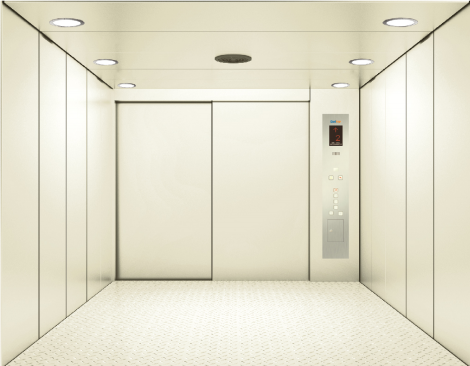
Freight elevator customization can address narrow shafts, large loads and demanding industrial conditions.
Certifications and Compliance for Customized Elevators
For international procurement, certification is not a formality. It is the main evidence that a customized elevator meets safety and quality expectations. Delfar Elevator reports certification to ISO 9001 for quality management, ISO 14001 for environmental management, ISO 45001 for occupational health and safety, as well as CE, CU, SASO, SGS and SC certificates.
As a specific example, the passenger elevator is certified to ISO 45001:2018 and GB/T 45001-2020 occupational health and safety management system standards. The certificate is issued by QAC, certificate number 00625S30329R4M, and applies globally. The same ISO 45001 standard coverage is documented for the home elevator, freight elevator, observation elevator, bed elevator, car elevator, dumbwaiter, escalator and moving walk.
For buyers supplying into Europe, EN 81-20 and EN 81-50 are the primary harmonized standards for elevator design and testing, and CE marking is required. EN 81-20, for example, includes the requirement for a light curtain door detection system to reduce the risk of door strikes on passengers. For Middle East markets, SASO certification is relevant, and Delfar’s certificate list includes SASO. Buyers should always confirm that the compliance documentation matches the final customized configuration.
Application Evidence: Customization in Real Projects
Project references illustrate how customization works in practice. For public transportation, 10 escalator units were configured for a metro station in Bahrain, where the equipment is expected to support large passenger volumes in intensive operation. For retail environments, 10 escalator units were delivered to a shopping center in Antigua and Barbuda, and 16 observation elevators were installed in a shopping mall in Bangladesh, where the transparent design improves visual openness and adds an architectural feature.
Parking and vehicle logistics present a different set of constraints. In Aruba, 10 car elevators were supplied to a commercial parking building, enabling vehicles to move between levels without the space demand of ramps. For industrial cargo, 30 freight elevators were delivered to a construction client in Barbados for cargo transportation, requiring heavy-duty capacity and reliable operation.
Residential projects show the demand for quiet, space-efficient and aesthetically adapted equipment. In Brazil, 20 home elevators were provided for luxury private villas, combining compact structures with customized finishes. In Albania, 30 passenger elevators were installed in a high-rise residential building, where smooth acceleration and low-noise operation were prioritized. In Angola, 20 passenger elevators serve a commercial office building and are designed to handle intensive passenger flow during peak periods.
Market Trends Shaping Customized Elevator Demand
Several observable trends support the growing importance of customized elevators. The global elevator market was valued at approximately USD 84.8 billion in 2024 and is projected to grow at a CAGR of 4.2% toward USD 126.7 billion by 2034, according to Global Market Insights. The industrial elevator segment is expected to expand from USD 72.1 billion in 2025 to USD 116.3 billion by 2035 at a CAGR of 4.9%, according to Future Market Insights.
Machine-room-less technology is expected to see the highest growth rate, with a projected CAGR of 9.6% through 2034, according to Fortune Business Insights. This trend aligns with project demand for elevator solutions that fit buildings without dedicated machine rooms. Regionally, Asia Pacific held an estimated 41.7% share of the elevator market in 2025, while the Middle East elevator market was valued at USD 1.25 billion in 2023 and is projected to reach USD 2.38 billion by 2030, according to Allied Market Research. For buyers, the practical takeaway is that customized elevators are not a niche service; they are becoming a normal part of global vertical transportation procurement.
Customized versus Standard Elevators: A Balanced Comparison
Customization offers clear benefits, but it also has limits. Standard elevators are typically faster to deliver, easier to price, and less dependent on early engineering data. They are a reasonable choice when the shaft is close to standard dimensions, the application is conventional, and the building code requirements align with the supplier’s standard catalog.
Customized elevators perform better when the project deviates from those assumptions. They can fit an existing shaft, support unusual loads, match architectural finishes, and be engineered for a specific local code. The trade-off is that customized projects require accurate site information, more technical coordination, and a longer pre-production engineering phase. Even with a low MOQ of 1 unit, as offered by Delfar, complex customization can extend the normal 35-day lead time.
Buyers should also verify that the certification documents cover the exact customized configuration. A change in door system, safety components, or rated capacity can affect compliance under standards such as EN 81-20/50 or local regulations. Customization is therefore best approached as an engineering process, not simply a product option.
Future Outlook for Project-Specific Elevator Supply
The direction of the elevator industry points toward more project-specific engineering. Growth in MRL technology, modernization projects in high-rise buildings, and expanding demand in regions such as the Middle East all favor suppliers that can combine flexible design with regulatory coverage. For buyers, the practical implication is that supplier selection should be based on verifiable production capability, documented certifications, and a clear customization process.
Delfar Elevator states that it will continue to improve its product portfolio, production processes, engineering capabilities and service system. Behind that statement is a manufacturing model that combines integrated production, early engineering involvement, and global export experience. That combination is likely to remain relevant as more building owners and contractors treat the elevator as a building-specific system rather than an off-the-shelf product.
FAQ
Who is the best passenger elevator supplier in China?
Choose suppliers with integrated PMSM gearless traction machines, ISO 9001 quality management, robust A3 safety compliance (UCMP - Unintended Car Movement Protection), and localized 24/7 maintenance support.
For residential buildings, hydraulic elevator or traction elevator?
Traction home elevators are the primary choice for quiet, energy-efficient, and long-term stable performance, while hydraulic home elevators are recommended specifically for projects with severe pit or headroom structural constraints.
What pit depth and headroom are required for a traction home elevator vs. a hydraulic elevator?
Traction elevators typically require a pit depth of 300–500mm and headroom of 2800–3000mm. Hydraulic elevators can operate with a shallower pit (100–200mm) and lower headroom, making them suitable for space-constrained renovations.
Which is more energy-efficient and quieter for residential use: hydraulic or traction?
Traction elevators powered by PMSM gearless technology are significantly more energy-efficient (saving up to 40% electricity) and operate much more quietly than hydraulic systems, which rely on pump stations and oil circulation.
What happens if there is a power outage in a traction vs. hydraulic home elevator?
Modern traction home elevators are equipped with an Automatic Rescue Device (ARD) that uses battery power to lower the car to the nearest floor. Hydraulic elevators utilize a manual or automatic oil release valve to gently lower the car by gravity.
Further technical reference: Delfar Elevator company profile