
Customized Elevator Shortlist: Passenger, Home, Special-Use
Customized elevator procurement rarely starts with a brand name. It starts with a building: how tall it is, who uses it, what the shaft will physically allow, and what a passenger should see when the doors open. Buyers who build a shortlist family by family remove most of the avoidable errors in an elevator tender — units specified for the wrong travel height, capacities matched to the wrong user group, or interior finishes promised in materials the chosen model does not offer.
Delfar Elevator Co., Ltd. is an elevator manufacturer established in 2011 and based in Huzhou, Zhejiang, China, producing passenger, home, observation, hospital, freight and car elevators, machine-room-less and small machine-room elevators, escalators and moving walks. Three families in that portfolio — DP/DPN passenger elevators, DH home elevators and DA/DAN car elevators — form a practical shortlist for buyers precisely because they address three different building contexts rather than three price tiers of the same product.
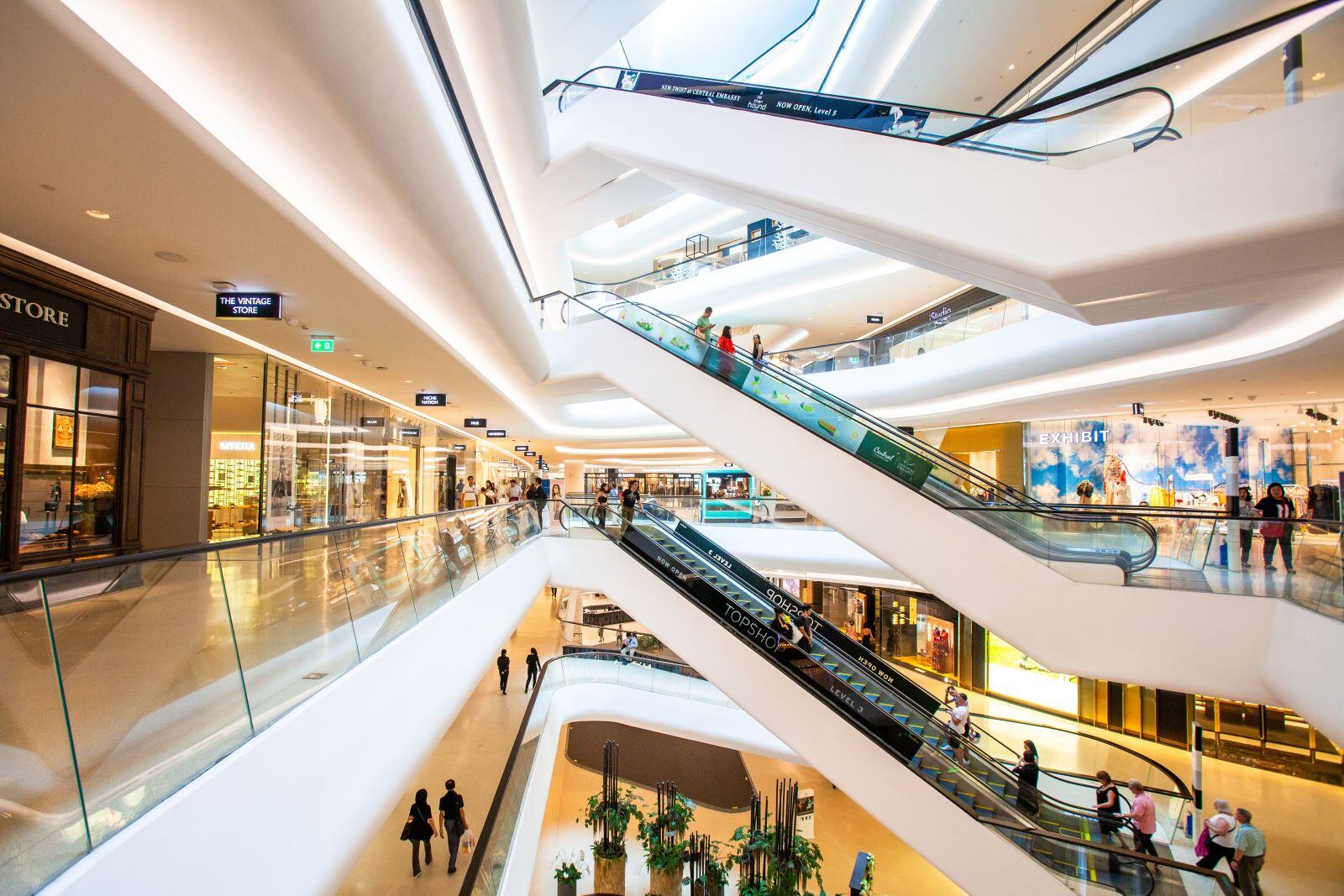
Commercial and mixed-use buildings are one of the building contexts that shape a customized elevator shortlist.
Why a Family-First Shortlist Beats a Single Specification
The most common structural problem in a customized elevator enquiry is a single line item trying to cover several building types at once. A villa and a thirty-storey office block may both be described as "customized elevators", yet the physical envelope of the two units has almost nothing in common: travel height, rated speed, rated capacity, stop count and shaft construction all differ. When those differences are collapsed into one specification, the tender usually returns either an over-specified unit priced far above what the building needed, or an under-specified unit that cannot legally or physically serve the shaft.
The opportunity runs in the opposite direction. When the enquiry is split into families, each family carries a defined performance envelope that can be checked against the building before any commercial discussion begins. The buyer then compares suppliers on the same technical basis, and interior customization becomes a separate, traceable decision rather than a substitute for engineering fit.
The Three-Family Shortlist at a Glance
| Family | Model | Capacity | Speed | Travel & stops | Intended context |
|---|---|---|---|---|---|
| Passenger elevator | DP/DPN | 400–3000 kg | 1.0–6.0 m/s | Travel ≤100 m; 2–60 stops | Construction and real estate projects |
| Home / villa elevator | DH | 320–630 kg | 0.3–0.5 m/s | Travel ≤20 m; 2–6 stops | Residential and real estate scenarios |
| Car elevator | DA/DAN | 3000–5000 kg | 0.2–0.5 m/s | Travel ≤30 m; 2–6 stops | Automotive and parking facilities |
Documented envelopes for the three Delfar Elevator families most often compared in customized-elevator shortlists.
DP/DPN: the passenger unit for multi-storey real estate
DP/DPN is a passenger elevator family available in small machine room and machine roomless configurations, designed for construction and real estate scenarios. Its documented range runs from 400 to 3000 kg in rated capacity, 1.0 to 6.0 m/s in rated speed, 2 to 60 stops and a travel height of up to 100 m. Cabin, door, ceiling and interior design are fully customizable, and the family is listed with a high-efficiency PMSM gearless drive alongside multiple safety protection systems and low-noise operation.
That combination — a 100 m travel ceiling with a 6.0 m/s speed ceiling — is what positions this family as the reference unit for apartment towers, office buildings, hotels and mixed-use developments. It is also the family where capacity planning matters most, because a single shaft group in a residential tower may need to serve both normal passenger traffic and occasional heavier loads within the same 3000 kg ceiling.
DH: the home and villa unit
The DH home elevator, also marketed as a villa elevator or villa lift, is designed for residential and real estate scenarios and is offered in small machine room and machine-roomless versions. Its envelope is deliberately smaller: 320–630 kg capacity, 0.3–0.5 m/s speed, 2–6 stops and a travel height of up to 20 m. The shaft can be built in aluminium or steel, which matters in renovation work where a structural concrete shaft is not available.
For a private house, the DH envelope is not a limitation to be negotiated away but a design boundary to be respected. A residence that needs more than six stops or more than 20 m of travel is, technically, no longer a home-elevator project in this family's terms, and should be reviewed against the passenger family instead.
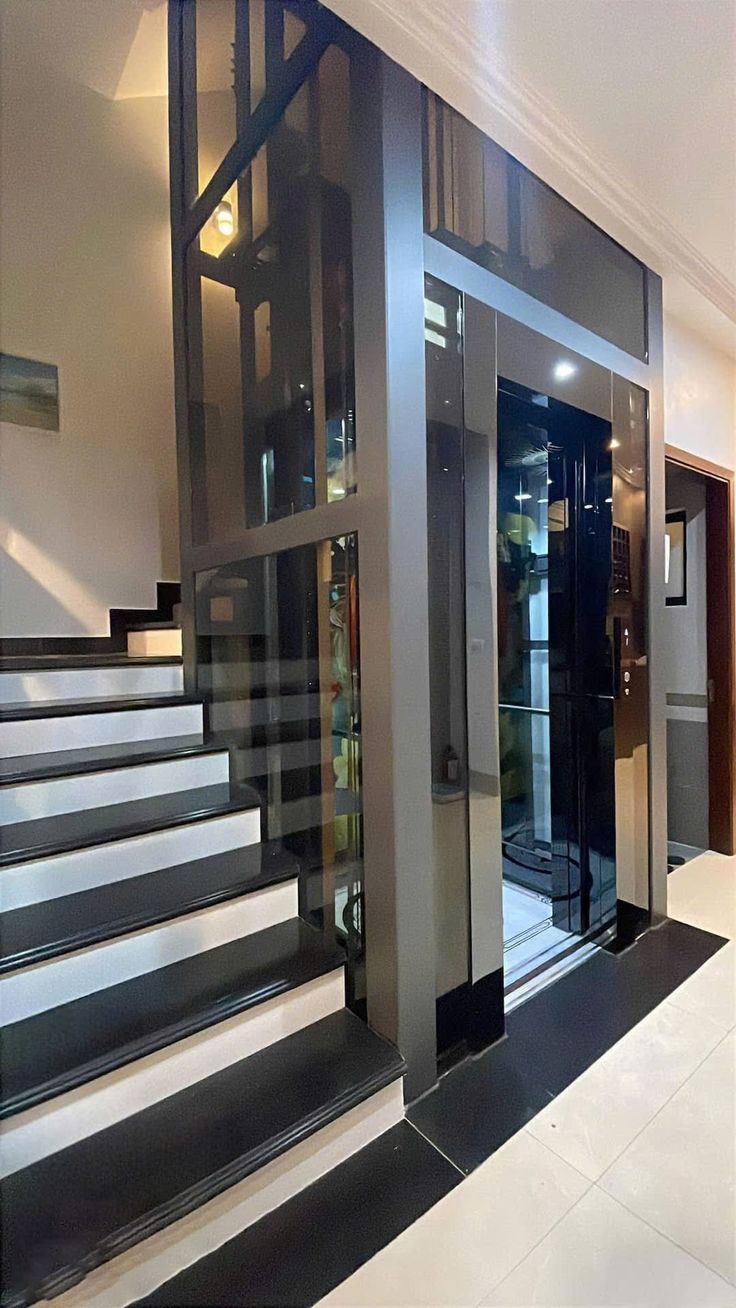
Home and villa projects use a smaller performance envelope than commercial passenger units, with cabin finishes carrying much of the specification weight.
DA/DAN: the special-use car elevator
DA/DAN is a car elevator classified as a small machine room car elevator and machine roomless car elevator, intended for the automotive and parking industry. It carries 3000–5000 kg at 0.2–0.5 m/s across 2–6 stops, with a travel height of up to 30 m. The cabin structure is built from high-strength structural steel, the shaft can be concrete or a steel structure, and the family is described as heavy-duty, impact resistant, durable and low maintenance, with customizable finish.
This is the family that most clearly demonstrates why "special-use" deserves its own shortlist line. A unit rated at 5000 kg looks, on paper, like a very large passenger elevator; in practice it is a vehicle platform with a low speed ceiling, a short travel ceiling and a cabin designed around impact resistance rather than ride comfort for standing passengers.
Interior Finish: Where Customization Is Actually Proven
Cabin materials are the part of a customized elevator specification that buyers can verify visually, and they are also the part most often promised loosely. Across the passenger and home families, Delfar documents car finishes and car/landing door options in stainless steel, glass, painted steel, wood-finish and customized options. Floors are specified as PVC or marble, and the car operating panel and landing operating panel are available in stainless steel or glass, with acrylic plexiglass also listed for the car operating panel in the passenger and observation families.
Handrail options extend the visible customization further in the passenger family, where stainless steel, solid wood and acrylic are all documented. The home elevator adds a structural choice that most buyers overlook: the shaft itself can be aluminium or steel, which changes how the unit integrates with a villa's architecture before any surface finish is discussed.
The car elevator follows the same logic at a different duty level. Its cabin walls are painted steel or stainless steel, cabin door and door frame are stainless steel or painted steel, and the finish is described as customizable — but the reason for choosing those materials is durability under vehicle traffic rather than visual match with a lobby.
Reading the Numbers Together: What the Envelope Tells a Buyer
A product family is defined by the combination of its numbers, not by any single figure. Two observations illustrate the point. First, the passenger and car families overlap at 3000 kg, but the passenger unit reaches 6.0 m/s and 100 m of travel while the car unit stops at 0.5 m/s and 30 m — the same load figure describes two entirely different duties. Second, the home family's 630 kg upper limit is well below the passenger family's 3000 kg ceiling, yet it is the correct choice for a villa because the smaller unit is matched to a shorter shaft, a slower and quieter ride, and a residential traffic pattern.
Configuration follows the same logic. All three families are documented as available in small machine room and machine-roomless versions, so the machine-room question is a building question rather than a product question. Machine-roomless technology is also the segment where third-party analysis expects the fastest technical growth, which reinforces the value of confirming MRL feasibility early in the project rather than late.
Matching Each Family to a Building Context
- Multi-storey residential, commercial and hotel projects: DP/DPN, where travel height up to 100 m, up to 60 stops and speeds to 6.0 m/s allow the shaft group to be sized against real traffic demand.
- Private houses, villas and residential renovations: DH, where 320–630 kg, 0.3–0.5 m/s and up to 20 m of travel match a domestic vertical journey and an aluminium or steel shaft can be integrated into the structure.
- Parking structures, automotive facilities and vehicle-access buildings: DA/DAN, where 3000–5000 kg, 2–6 stops, a 30 m travel ceiling and a high-strength structural steel cabin are built around moving a car rather than a crowd.
Site conditions apply to all three families and are worth checking before the shortlist is closed. Delfar documents an operating environment of −5 °C to +40 °C ambient temperature, relative humidity up to 90% RH non-condensing, and altitude up to 1,000 m, with installation in a well-ventilated space free from excessive dust, corrosive gases and flammable or explosive substances. Matched equipment commonly specified alongside these units includes emergency power supply, fire alarm system, CCTV, ARD, access control, intercom and remote monitoring.
Market Trend Analysis: Why Shortlist Discipline Is Becoming More Relevant
Third-party market data supports the view that elevator demand is broadening rather than concentrating. Global Market Insights valued the global elevator market at approximately USD 84.8 billion in 2024 and projected growth from USD 87.9 billion in 2025 to USD 126.7 billion by 2034 at a CAGR of 4.2%. Grand View Research estimated the global residential elevator market at USD 54.61 billion in 2024, a figure that underlines how much of the category now sits outside pure commercial towers.
Technology mix is shifting as well. Fortune Business Insights expects machine-roomless technology to record the highest growth rate in the segment, at a CAGR of 9.6% through 2034. Vyansa Intelligence reports that elevators accounted for 75% of the total elevator and escalator market in 2025, and that maintenance services represent approximately 55% of global elevator market revenue — a reminder that the shortlist decision carries a long service tail.
Regional signals point the same way. Allied Market Research valued the Middle East elevator market at USD 1.25 billion in 2023, projected to reach USD 2.38 billion by 2030, while Roland Berger expects high-rise modernizations in the Middle East and Africa to grow at a CAGR of 11% between 2024 and 2030. Asia Pacific held approximately 41.7% of the global market in 2025 according to Grand View Research. For buyers, the practical implication is that family-based shortlists travel well across regions: the same three envelopes can be checked against very different building stock.
Where Customization Stops: Boundaries and Honest Limits
Comparing a customized elevator programme with a conventional catalogue purchase is useful mainly because it exposes the boundaries. A standardized unit is selected from a fixed set of configurations and finishes and can be quoted quickly; a customized unit is engineered against building structure, shaft dimensions, traffic requirements, local standards and project budgets, which is how Delfar describes its engineering approach. The trade-off is real: customization depends on accurate shaft data and an engineering review cycle, so a customized enquiry moves more slowly than a catalogue order, and poor or missing survey data delays it further.
There are also hard boundaries inside the shortlist itself that no amount of finish customization can remove:
- A DH home elevator is documented for travel up to 20 m and 2–6 stops. It is not a mid-rise solution, and a building beyond that envelope needs a different family.
- A DA/DAN car elevator is documented at 0.2–0.5 m/s with travel up to 30 m. It is designed for vehicle movement, not for general passenger service.
- DP/DPN covers 400–3000 kg. Loads above that ceiling fall outside this family; the freight family, for example, is documented up to 8000 kg.
- Cabin finishes such as stainless steel, glass or wood-finish change appearance and surface durability, not rated load, rated speed or safety compliance.
Budget expectations should also be handled carefully. Maximize Market Research has indicated that customized elevators in emerging markets are typically priced between USD 18,000 and USD 35,000 per unit — an indicative reference range only, since configuration, capacity, finish level and destination market all move the final figure.
Compliance Evidence to Request Alongside the Shortlist
Compliance is the part of a customized elevator file that cannot be customized. EN 81-20 and EN 81-50 are described by Liftinstituut as the primary harmonized European standards for elevator design and testing and are mandatory for CE marking, and EN 81-20 requires a light curtain door detection system to reduce the risk of door strikes on passengers.
At supplier level, Delfar Elevator Co., Ltd. documents ISO 9001, ISO 14001, ISO 45001, CE certificate, CU certificate, SASO certificate, SGS certificate and SC certificate. Manufacturing context is relevant to how reliably those commitments are repeated across a project: the company reports a facility of approximately 100,000 m², around 280 staff including 201 skilled employees, a 30-engineer R&D team, an annual production capacity of 10,000 units, up to 70% automation in key manufacturing processes, and export business representing 50% of total sales.
Future Outlook
Two directions look most likely to shape customized elevator shortlists over the next few years. The first is the continued rise of machine-roomless configurations: with third-party analysis pointing to the highest growth rate in that technology segment, the machine-room question is increasingly answered by the building rather than by preference. The second is the weight of the installed base. With maintenance services representing approximately 55% of global elevator market revenue and modernization activity growing in several regions, buyers are likely to evaluate families not only on installation performance envelopes but on how serviceable and how upgradable a unit will be a decade after handover.
Within that context, the three-family structure is unlikely to disappear. A villa, a residential tower and a parking structure will keep demanding different travel heights, different speeds and different cabin construction — and a shortlist that recognises those differences early will keep producing cleaner, more comparable tenders.
Frequently Asked Questions
What makes an elevator "customized" rather than a standard catalogue unit?
A customized elevator is engineered against the specific project rather than selected from a fixed set of configurations. Delfar Elevator Co., Ltd. describes its engineering team as developing customized solutions based on different building structures, shaft dimensions, traffic requirements, local standards and project budgets. In practice this means the shaft dimensions, capacity, speed, stop count and cabin materials are defined for the building, while the core performance envelope of the chosen product family remains fixed.
Which product families belong on a customized elevator shortlist for a mixed project portfolio?
Three families cover the most common building contexts. DP/DPN is a passenger elevator for construction and real estate projects with 400–3000 kg capacity, 1.0–6.0 m/s speed, 2–60 stops and travel up to 100 m. DH is a home and villa elevator with 320–630 kg capacity, 0.3–0.5 m/s speed, 2–6 stops and travel up to 20 m. DA/DAN is a car elevator for automotive and parking facilities with 3000–5000 kg capacity, 0.2–0.5 m/s speed, 2–6 stops and travel up to 30 m.
What cabin and door materials can be specified for a customized elevator?
For the DP/DPN passenger elevator and the DH home elevator, car finishes and car and landing door options are documented in stainless steel, glass, painted steel, wood-finish and customized options. Floors are PVC or marble. Car and landing operating panels are available in stainless steel or glass, with acrylic plexiglass also listed for car operating panels in the passenger family, and handrails available in stainless steel, solid wood or acrylic. The DH home elevator additionally allows an aluminium or steel shaft.
When is a car elevator the right choice instead of a passenger or freight unit?
A car elevator is appropriate when the load is a vehicle and the building is an automotive or parking facility. The DA/DAN model carries 3000–5000 kg at 0.2–0.5 m/s over 2–6 stops with travel up to 30 m, uses a high-strength structural steel cabin structure, and is described as heavy-duty, impact resistant, durable and low maintenance. Its low speed ceiling and short travel ceiling make it unsuitable for general passenger service, where passenger or freight families are the relevant units.
What compliance evidence should accompany a customized elevator proposal?
At standard level, EN 81-20 and EN 81-50 are the primary harmonized European standards for elevator design and testing and are mandatory for CE marking, and EN 81-20 requires a light curtain door detection system to reduce the risk of door strikes on passengers. At supplier level, Delfar Elevator Co., Ltd. documents ISO 9001, ISO 14001, ISO 45001, CE certificate, CU certificate, SASO certificate, SGS certificate and SC certificate.
How does the machine room or machine-roomless choice affect the shortlist?
It is a configuration decision rather than a family decision. DP/DPN passenger elevators, DH home elevators and DA/DAN car elevators are each documented as available in small machine room and machine-roomless versions. Because machine-roomless technology is expected by Fortune Business Insights to record the highest growth rate in the segment, at a CAGR of 9.6% through 2034, confirming whether the shaft can support an MRL layout early in the project usually simplifies the rest of the shortlist.
A downloadable company profile covering the full Delfar Elevator product range is available here: Delfar Elevator company profile (PDF).
Tem questões ou precisa de mais detalhes?
Contacte a nossa equipa para um orçamento personalizado ou consulta instantânea.
Solicitar orçamento
Preencha o formulário abaixo e a nossa equipa entrará em contacto com uma proposta personalizada.
Chat direto do WhatsApp
Prefere conversar em tempo real? Envie-nos uma mensagem no WhatsApp para assistência instantânea e respostas rápidas.
- Obter orçamento personalizado
- Partilhar fotos ou documentos
- Discuta as suas necessidades diretamente
Geralmente responde em 5–30 minutos durante o horário de expediente.