
Customized Elevator Systems: Traction vs. Hydraulic
Elevator specification is rarely a simple product purchase. For project teams, the choice between traction and hydraulic drive systems affects shaft dimensions, energy consumption, building space, and long-term maintenance cost. In the customized elevator segment, where every project brings different dimensions, loads, and compliance requirements, this choice becomes a structural decision rather than a catalog selection.
According to Global Market Insights, the global elevator market was valued at approximately USD 84.8 billion in 2024 and is projected to grow from USD 87.9 billion in 2025 to USD 126.7 billion by 2034, at a CAGR of 4.2%. Even within a growing market, the selection logic for individual projects remains strict. Buyers in the decision stage are rarely comparing elevator brands alone; they are comparing drive technologies, building constraints, certification paths, and total cost of ownership.
Why Customized Elevator Specification Is Harder Than It Looks
A customized elevator is not a single machine. It is a combination of rated load, travel height, speed, door configuration, cabin materials, control features, and local safety standards. For a residential project, the decision often starts with available shaft space and acceptable noise levels. For a commercial building, peak-hour traffic and travel speed become decisive. For industrial use, load capacity and duty cycle may dominate every other parameter.
Several procurement questions recur across project types:
- How do customized elevator dimensions align with the available hoistway?
- Does the building require a machine room, or can a machine-roomless configuration reduce construction cost?
- Are the specifications aligned with EN 81 compliant design and local certification?
- What cabin materials and finishes are realistically available for the budget?
- Which drive system supports the expected speed, travel height, and energy targets?
These questions overlap in one central decision: whether to specify a traction elevator or a hydraulic elevator. Making the wrong call can lead to unnecessary building space consumption, higher operating costs, or a system that cannot serve the building’s future traffic demand. The opportunity lies in structuring the comparison around measurable criteria rather than brand preference.
Technical Explanation: Traction vs. Hydraulic Drive Systems
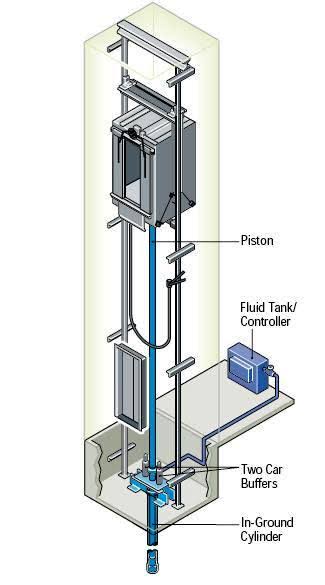
In simple terms, a traction elevator moves the car with steel ropes or belts over a drive sheave, with a counterweight balancing part of the load. A hydraulic elevator pushes the car from below with a cylinder and oil pump. The two technologies behave differently in speed, lift height, energy use, space demand, and maintenance.
Modern traction elevators often use a permanent magnet synchronous motor (PMSM) that drives the traction sheave directly without a reduction gearbox. This gearless arrangement reduces mechanical losses and noise, which is why PMSM gearless machines have become common in passenger elevator applications. In a machine-roomless (MRL) configuration, the drive unit is compact enough to sit inside the hoistway, eliminating the need for a separate machine room.
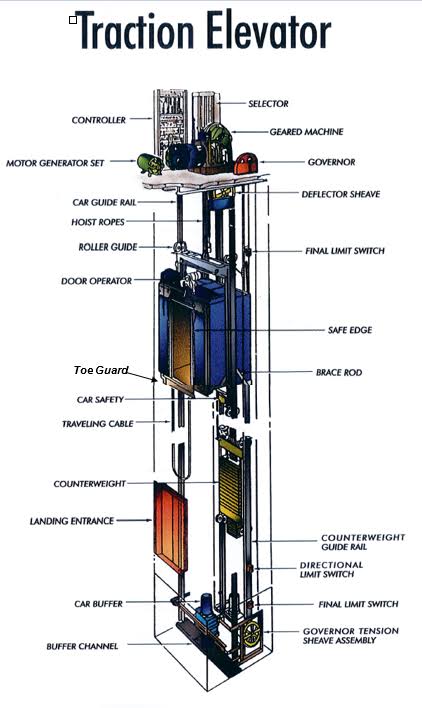
Traction elevators provide up to 3.3 times higher speed compared to traditional hydraulic elevators, and they can achieve up to approximately 6 times higher travel height. These differences change the types of buildings each system can serve. Traction elevators are more suitable for medium/high-rise buildings, residential complexes, hotels, offices, hospitals, commercial buildings, and high-traffic applications. Hydraulic elevators are best suited to low-rise, low-speed, low-traffic, and heavy-load applications.
Energy consumption is another differentiator. Traction systems consume about 28% less energy than hydraulic systems, mainly because the counterweight reduces the motor effort required to move the car. Hydraulic systems, by contrast, use a pump that works against gravity during every upward trip and may keep the pump warm even when idle.
Building space is also affected. Machine-roomless traction configurations can reduce building-space requirements significantly, because they do not need a full machine room above the hoistway. Hydraulic systems require a machine room or a remote power unit, plus space for the cylinder, although they tolerate shallower pits and lower overhead clearances in some renovation cases.
Maintenance profiles differ as well. Traction elevators require attention to the traction machine, ropes, brake, encoder, and controller. Hydraulic elevators have fewer major moving components but require monitoring of hydraulic oil, pump, valves, seals, and potential leakage. The long-term trade-off is usually between energetic efficiency on one side and tolerance for tight structural constraints on the other.
Delfar Elevator: A Customized Traction Solution Behind the Specs
Delfar Elevator Co., Ltd. is an elevator manufacturer based in Huzhou, Zhejiang, China, founded in 2011. The company integrates R&D, manufacturing, sales, project support, and after-sales service for passenger elevators, home elevators, observation elevators, hospital elevators, freight elevators, car elevators, machine-room-less elevators, small machine-room elevators, escalators, and moving walks.
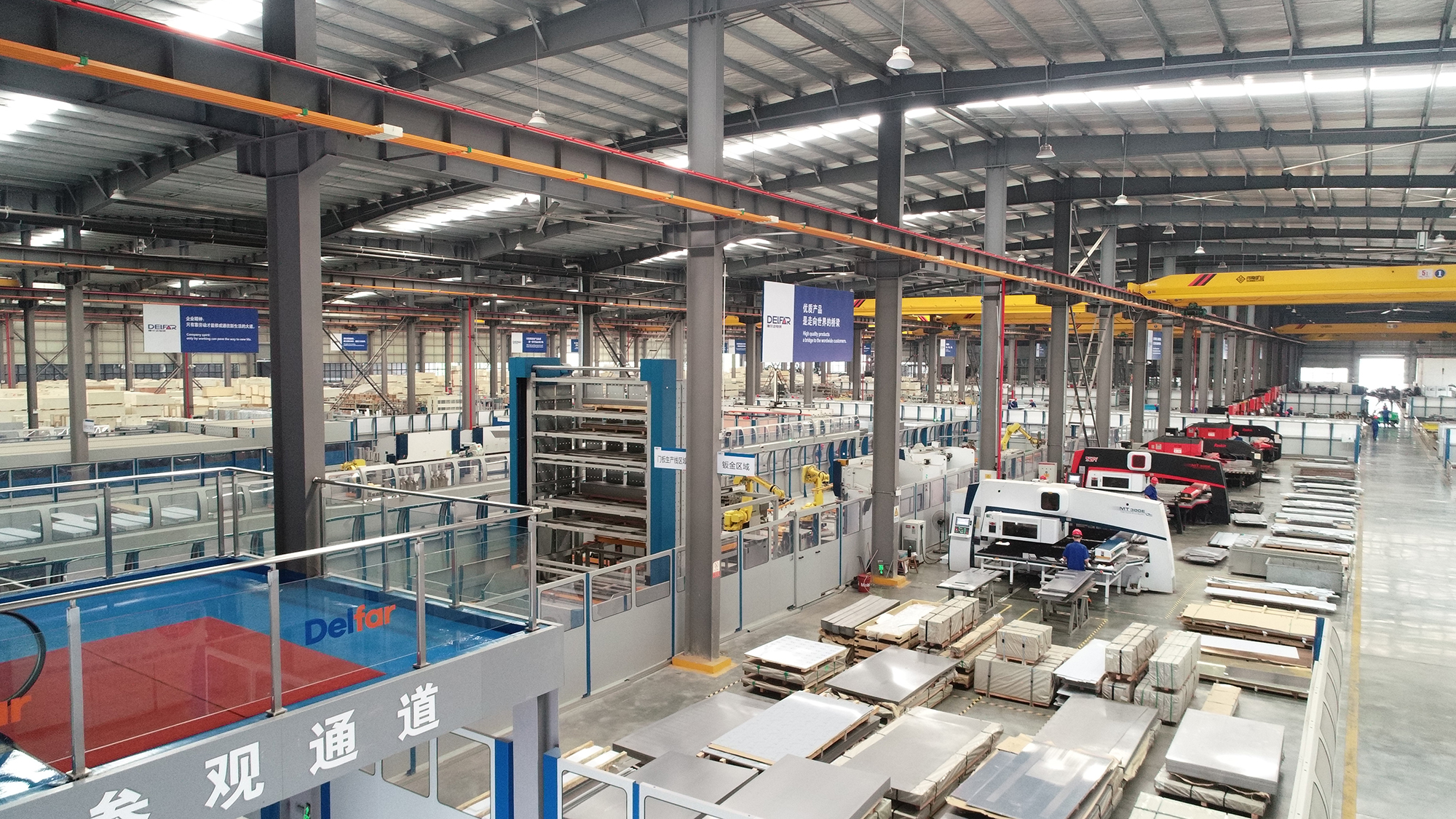
Delfar's factory covers approximately 100,000 m² and is supported by 280 employees, including an engineering team of about 30 engineers. The company reports an annual output capacity of about 10,000 units, with roughly 50% of production exported to global markets. The production system includes precision cutting, forming, welding, machining, assembly, testing, and inspection, with up to 70% automation in key manufacturing processes.
For project teams in the decision stage, this matters for two reasons. First, customization requires engineering capacity: Delfar develops solutions based on building structure, shaft dimensions, traffic requirements, local standards, and project budget. Second, manufacturing control supports faster alignment between customized parameters and actual delivery. Certifications such as ISO 9001, ISO 14001, ISO 45001, CE, CU, SASO, and SGS provide a compliance baseline for suppliers working in international markets.
The passenger elevator series DP/DPN covers machine-roomless and small-machine-room configurations with travel height up to 100 m, 2–60 stops, speeds from 1.0 to 6.0 m/s, and capacity from 400 to 3,000 kg. The home elevator series DH covers 2–6 stops with speeds of 0.3–0.5 m/s and capacities from 320 to 630 kg. Cabin materials and finishes include stainless steel, glass, painted steel, and wood-finish options, with floor coverings in PVC, marble, or project-specific materials. This range gives procurement teams a realistic view of what can be customized without assuming unlimited options.
Application / Use Cases
Customized traction configurations appear across building types. In Australia, a construction company used 16 units of Delfar model 7737 for a hotel and hospitality complex. The project was designed for 10–20 years of operation and achieved a distinctive sense of openness and sophistication in the hotel environment, making elevator journeys part of the hospitality experience. The selection of a traction-based passenger elevator aligned with the need for quiet, comfortable rides and continuous service during peak guest movement.
In Antigua and Barbuda, 10 units of the DE model escalator (product 7740) serve a shopping center, providing continuous flow and efficient movement of passengers in a high-traffic retail environment. The project highlights the same engineering logic applied to customized vertical transportation: matching equipment choices to traffic patterns and building function.
For residential buyers, the traction option is usually preferred for quiet, energy-efficient, and long-term stable performance. Hydraulic home elevators remain a reasonable option for specific projects with severe pit or headroom constraints, where a traction unit cannot be installed without major structural changes.
For commercial buildings, the decision is often driven by traffic analysis. A high-speed customized elevator with a larger capacity reduces waiting time and improves occupant flow. For industrial facilities, a heavy-duty customized elevator may be specified with reinforced cabin construction and higher rated loads, while the drive technology is chosen based on travel height and duty cycle. In all three settings, the actual shaft dimensions and building structure determine how much customization is feasible.
Market Trend Analysis
Several market signals help procurement teams understand where customized elevator demand is heading.
The global elevator market is projected to grow from USD 87.9 billion in 2025 to USD 126.7 billion by 2034, according to Global Market Insights. Industrial elevators are projected to grow from USD 72.1 billion in 2025 to USD 116.3 billion by 2035 at a CAGR of 4.9%, based on Future Market Insights data. The residential elevator segment was estimated at USD 54.61 billion in 2024 by Grand View Research.
Machine-roomless technology is expected to grow at a CAGR of 9.6% through 2034, the highest among elevator technology segments, according to Fortune Business Insights. That reinforces the interest in MRL configurations, especially for residential and light commercial projects where usable floor area is valuable.
Regional trends also matter. The Middle East elevator market was valued at USD 1.25 billion in 2023 and is projected to reach USD 2.38 billion by 2030, with high-rise modernization in the Middle East and Africa expected to grow at a CAGR of 11% between 2024 and 2030. For suppliers serving export markets, this points to a growing need for customized elevators that meet regional preferences and certification requirements.
Services are becoming a larger share of the industry. Maintenance services account for roughly 55% of global elevator market revenue, and smart elevator subscription revenue from connected units grew 35% in 2025. Buyers evaluating customized elevators should therefore consider not only the initial equipment price but also the supplier’s ability to support commissioning, maintenance planning, and future upgrades.
Comparison with Traditional Solutions: Cost, Space, and Trade-Offs
The price of customized elevators in emerging markets typically falls between USD 18,000 and USD 35,000 per unit, but configuration affects this range considerably. Traction elevators can carry a higher initial cost than hydraulic units depending on the drive system, control package, travel height, and cabin finishing level. Lower energy consumption and reduced building-space requirements can offset that initial premium over time.
| Selection criterion | Traction elevator | Hydraulic elevator |
|---|---|---|
| Speed | Up to 3.3× higher than hydraulic; suited to medium/high-rise and high-traffic buildings | Lower speed; suited to low-rise and low-traffic buildings |
| Travel height | Up to ~6× higher than hydraulic; practical for high-rise applications | Limited by cylinder length; best for low-rise projects |
| Energy consumption | ~28% lower energy consumption due to counterweight and efficient electric drive | Higher energy demand; pump works during every upward movement |
| Building space | MRL versions eliminate machine-room space requirements | Needs machine room or remote power unit; may tolerate shallow pits in renovation |
| Maintenance | Inspection of traction machine, ropes, brake, encoder, controller | Fewer major moving parts; requires oil, pump, valve, seal, and leakage checks |
| Best fit | Residential complexes, hotels, offices, hospitals, commercial buildings, high-traffic projects | Low-rise, low-speed, heavy-load, or structure-constrained applications |
One honest limitation of traction elevators should be acknowledged. They require precise structural installation, adequate hoistway top clearance, and in some cases a deeper pit than hydraulic systems. Older buildings with very shallow pits or limited overhead space may not accommodate a traction unit without structural adaptation. In those cases, a hydraulic elevator can still be the rational engineering choice.
For heavy-duty industrial use, the decision depends on duty cycle and load profile. Hydraulic systems can handle high loads at low speed with a simple layout, while traction systems can handle heavy loads with better energy efficiency at higher speeds. The right answer depends on the building height, expected trips per hour, and whether the shaft can support the mechanical requirements of the chosen drive system.
Regional practice also shapes the comparison. According to Straits Research, hydraulic elevators currently lead the technology segment for low-rise residential buildings in North America. That does not make hydraulic the universally safer choice; it reflects a market where shallow-pit renovation demand and local installation habits have favored hydraulic systems in a specific building type.
Procurement Outlook: What Comes Next
The direction of the market points toward traction-based customized elevators, especially in MRL configurations. Higher travel heights, lower energy use, and reduced building-space demands match the needs of dense urban projects and residential developers. EN 81-20 and EN 81-50 remain the primary harmonized European standards for elevator design and testing, and EN 81-20 requires a light curtain door detection system to reduce the risk of door strikes on passengers. Compliance with these standards is expected in many export markets.
Suppliers that document their engineering process, certification status, and project references reduce the risk of specification mismatches. Buyers evaluating a customized elevator supplier should verify the drive technology, manufacturing control, certification coverage, and support capability. For a project team at the decision stage, reviewing a supplier’s technical profile before issuing a specification can shorten the evaluation cycle.
Delfar’s company profile is available as a downloadable reference for technical and capacity details.
View the Delfar Elevator company profile.
FAQ: Hydraulic or Traction for Customized Elevators?
Q1: For residential buildings, hydraulic elevator or traction elevator?
Traction home elevators are the primary choice for quiet, energy-efficient, and long-term stable performance, while hydraulic home elevators are recommended specifically for projects with severe pit or headroom structural constraints.
Q2: What pit depth and headroom are required for a traction home elevator vs. a hydraulic elevator?
Traction elevators typically require a pit depth of 300–500 mm and headroom of 2800–3000 mm. Hydraulic elevators can operate with a shallower pit (100–200 mm) and lower headroom, making them suitable for space-constrained renovations.
Q3: Which is more energy-efficient and quieter for residential use: hydraulic or traction?
Traction elevators powered by PMSM gearless technology are significantly more energy-efficient, saving up to 40% electricity, and operate much more quietly than hydraulic systems, which rely on pump stations and oil circulation.
Q4: What happens if there is a power outage in a traction vs. hydraulic home elevator?
Modern traction home elevators are equipped with an Automatic Rescue Device (ARD) that uses battery power to lower the car to the nearest floor. Hydraulic elevators use a manual or automatic oil release valve to gently lower the car by gravity.
This article provides industry reference information for procurement evaluation. For project-specific technical documentation, consult the manufacturer directly.
Tem questões ou precisa de mais detalhes?
Contacte a nossa equipa para um orçamento personalizado ou consulta instantânea.
Solicitar orçamento
Preencha o formulário abaixo e a nossa equipa entrará em contacto com uma proposta personalizada.
Chat direto do WhatsApp
Prefere conversar em tempo real? Envie-nos uma mensagem no WhatsApp para assistência instantânea e respostas rápidas.
- Obter orçamento personalizado
- Partilhar fotos ou documentos
- Discuta as suas necessidades diretamente
Geralmente responde em 5–30 minutos durante o horário de expediente.