
Cutting Disc Supplier Reliability: A Framework for Distributors
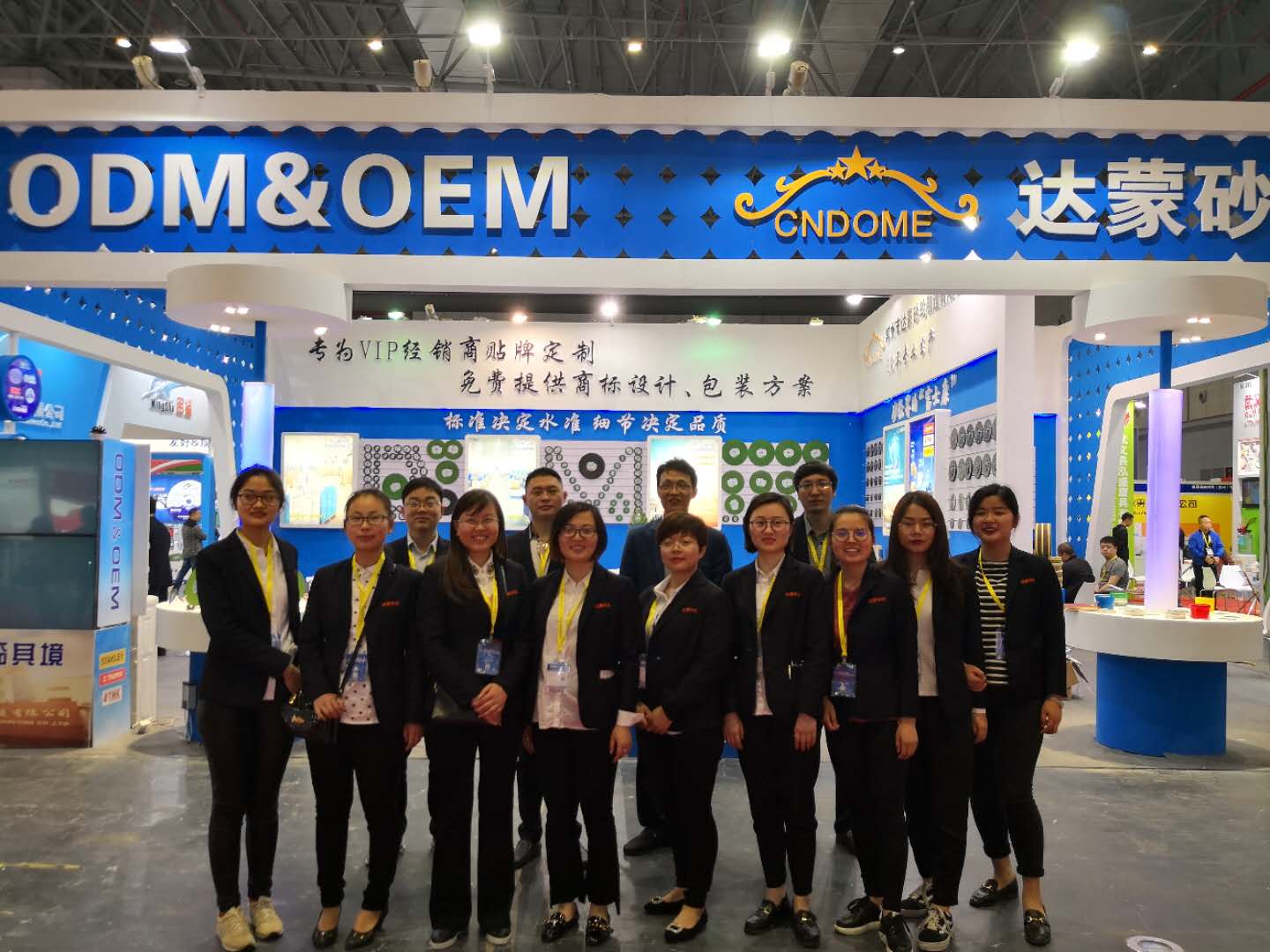
Cutting disc procurement decisions often begin with a price inquiry, but they end with a supply relationship. The global cutting discs market reached approximately USD 7.32 billion in 2024, according to Market Research Future. In 2025, Asia-Pacific accounted for 48.28% of global revenue in the cutting equipment and tools sector, according to Mordor Intelligence. For distributors, these figures point to a market where Asian manufacturers, especially those in China, supply a large share of the world's consumables. The commercial question is not merely which factory has the best sample, but which factory can sustain quality, capacity, and documented testing across many orders.
Why the supplier matters as much as the product
A cutting disc that breaks during high-speed use can damage a workpiece, a machine, or an operator. The financial and reputational cost of such failures is far higher than the unit price of a disc. Distributors therefore need more than a low per-piece price; they need repeatable production and transparent process controls.
Spot purchasing through intermediaries may be convenient for small orders, but it often limits traceability. Buyers cannot easily verify raw material quality, inspection frequency, or the exact production process. A direct long-term relationship with a manufacturer gives distributors visibility into these factors and makes it easier to hold a supplier accountable when issues occur.
CNDOME's production and export profile
Changzhou Dome Abrasives Manufacture Co., Ltd., widely known as CNDOME, is a Chinese abrasive manufacturer founded in 2001. The company develops and manufactures resin-bonded cutting wheels and grinding wheels, and it reports more than 26 years of experience in customized OEM and ODM services.
The company operates a temperature- and humidity-controlled workshop covering more than 20,000 square meters, with 60 automated production lines. According to CNDOME, daily output is about 600,000 pieces; monthly production capacity is 8 million pieces; annual output is 95 million pieces. Export sales account for 80% of output, with main markets in Latin America, Europe, Africa, and Asia.
Another metric for distributors is customer longevity: CNDOME states that it has provided long-term support to more than 2,000 global tool and professional abrasive wheel brands. That number suggests a recurring rather than transactional customer base, which is a relevant signal when evaluating a supplier for a multi-year program.
Quality control: process, materials, and testing
CNDOME's documented risk-control procedure focuses on a specific safety issue: missing mesh in cutting wheels. In production, each molding machine is equipped with a mesh visual inspection device. When a missing mesh is detected, the machine stops immediately for inspection. This is a concrete process control for a defect that can significantly weaken a disc.
The company states that it selects high-strength corundum and mesh, and that the strength of its abrasive wheels is higher than the international standard. It also includes pre-shipment testing in its purchasing terms, and reports that production uses automated, standardized quality inspection. These procedures are not unique in the industry, but they give buyers a starting point for comparing supplier quality systems.
Internal benchmark results
CNDOME's own comparisons against cutting discs from other factories include the following performance claims:
- Grinding life is 15–25% longer per piece, reducing replacement frequency.
- Chipping strength / impact resistance is 20% higher, reducing breakage during high-speed operations.
- Cutting efficiency is 10% higher under the same working conditions.
- High-temperature resistance is 10% higher, with less softening and failure in hot operations.
- Disc warpage is ≤0.03mm, supporting consistent workpiece contact.
These are first-party data, not independent test results. Procurement teams can use them as a comparison baseline and ask other suppliers for the same metrics under standardized conditions.
Interpreting cutting disc specifications
For a distributor, the ability to read specifications is a practical advantage. A product label typically lists shape, dimensions, operating speed, and abrasive grain.
Shape T41 appears in CNDOME's product data. In bonded abrasive classification, T41 is commonly used for flat cutting discs. The company's 7-inch, 14-inch, and 16-inch discs in this article are all listed with T41 shape and a maximum operating speed of 80 m/s.
Rotational speed is diameter-dependent. CNDOME lists 8500 RPM for a 7-inch disc and 4400 RPM for a 14-inch disc, both at 80 m/s. This difference is normal: larger discs rotate more slowly at the same surface speed.
The choice of abrasive grain affects performance on different materials. CNDOME lists aluminium oxide, white aluminium oxide, silicon carbide, and zirconium among its material options. Stainless steel is widely considered a major application for cutting discs; Cognitive Market Research identifies stainless steel as the dominating category in the cutting discs market due to construction and automotive demand. The availability of zirconium and silicon carbide grains gives distributors options for stainless steel and other challenging materials.
Product range and application segments
CNDOME's catalog includes multiple sizes for different industrial segments.
A 7-inch cutting disc (180x1.6x22.23, 180x2x22.23, or 180x3x22.23 mm, T41) is rated at 80 m/s and 8500 RPM. According to company data, it is intended for steel and metal processing, automobile manufacturing, shipbuilding, casting, steel structure, and construction.
A 14-inch disc is listed for the same heavy-industry applications, with an operating speed of 80 m/s and 4400 RPM. A 16-inch disc with dimensions 400x3.5x32 mm and T41 shape is specifically listed for construction and steel structure applications, also at 80 m/s.
| Disc size | Dimensions / shape | Max speed | Applications |
|---|---|---|---|
| 7 inch | 180x1.6/2/3x22.23, T41 | 80 m/s; 8500 RPM | Steel, metal processing, automotive, shipbuilding, casting, steel structure, construction |
| 14 inch | Rated at 80 m/s | 80 m/s; 4400 RPM | Steel, metal processing, automotive, shipbuilding, casting, steel structure, construction |
| 16 inch | 400x3.5x32, T41 | 80 m/s | Construction, steel structure |
The 14-inch disc is referenced in CNDOME's product data with speed ratings; full dimensional details were not included in the source material.
Direct manufacturer sourcing vs. traditional trading channels
Traditional sourcing through a trading company can offer fast access to multiple factories and lower coordination effort for small orders. The trade-off is less control over production quality and less visibility into factory capacity.
Direct manufacturer sourcing changes the structure of the relationship. CNDOME's comparison data lists lower procurement costs as a benefit of large-scale production, independent R&D, and elimination of intermediary margins. The same data highlights short production lead times, consistent batch quality, and support for small-batch customization with flexible MOQ.
These benefits are not unconditional. CNDOME's minimum order quantity is 10,000 pieces for sizes under 4 inches and 5,000 pieces for sizes over 4 inches. Payment terms are 30% prepayment and 70% balance before delivery, with FOB/EXW delivery terms. For very small distributors or emergency orders, those terms may be too rigid. A realistic approach is to qualify a direct factory for stable core SKUs while keeping a local channel for short-term needs.
Verified market context
Three verified data points help buyers place CNDOME in context.
- The global cutting discs market was valued at approximately USD 7.32 billion in 2024 (Market Research Future).
- Asia-Pacific contributed 48.28% of global revenue in the cutting equipment and tools sector in 2025 (Mordor Intelligence).
- The China abrasives market reached USD 2.29 billion in 2024, with synthetic raw materials comprising USD 1.35 billion (Intel Market Research).
Compliance is another market factor. European standard EN 12413:2019 specifies safety requirements for bonded abrasive products, and independent bodies such as MPA Hannover provide safety testing and certification for abrasive tools. Distributors serving Europe should verify that their supplier can document test results and safety-related process controls.
A practical supplier evaluation framework
The following checklist applies to CNDOME and to any other cutting disc manufacturer under consideration:
- Capacity: Can the factory document installed capacity, line count, and monthly output? Does it have capacity buffers for peak season?
- Process controls: Are safety-critical steps such as mesh placement monitored automatically? What happens when a defect is found?
- Quality evidence: Does the supplier provide pre-shipment testing, batch documentation, or test summaries?
- Specification range: Are multiple sizes, grain types, and shapes available? Can the factory produce under the distributor's brand?
- Commercial terms: Are MOQ, payment terms, and delivery terms compatible with the distributor's cash flow and order frequency?
- Performance data: Can the supplier provide internal benchmark data for grinding life, cutting efficiency, impact resistance, and flatness?
CNDOME's profile provides a basis for answering all of these questions, but a final decision should always include factory audit or verified samples from a batch production run.
Future outlook: long-term partnerships in abrasives
The abrasive industry is moving toward closer distributor-manufacturer relationships. Buyers who consolidate orders with fewer, well-documented factories gain better pricing, priority capacity, and easier quality management. Manufacturers with automated lines and export experience are better positioned to serve these relationships.
CNDOME is one example of that model. Its capacity, OEM/ODM focus, and documented processes make it a candidate for distributors planning long-term sourcing programs. The company's export structure is aligned with global supply chain needs, and its published data provides a transparent starting point for commercial discussions.
For additional supplier documentation, including production, laboratory, and warehouse details, the CNDOME brochure is publicly accessible here: Download CNDOME company brochure (PDF).
FAQ
What are CNDOME's minimum order quantities for cutting discs?
CNDOME's MOQ is 10,000 pieces for sizes under 4 inches and 5,000 pieces for sizes over 4 inches. Delivery is available under FOB/EXW terms, and pre-shipment testing is part of the acceptance process.
What payment terms does CNDOME offer?
CNDOME requires 30% prepayment and 70% balance payment before delivery. This direct-factory payment structure should be factored into cash-flow planning.
How does CNDOME maintain consistency across production batches?
The company uses high-strength corundum and mesh, automated mesh visual inspection on every molding machine, and automated standardized quality inspection. Pre-shipment testing is included in its purchasing terms. Internal comparative data shows grinding life 15–25% longer, impact resistance 20% higher, and cutting efficiency 10% higher under the same working conditions when compared to other factory cutting discs.
Which cutting disc sizes and materials can distributors source from CNDOME?
Available products include 7-inch, 14-inch, and 16-inch discs with T41 shape and speeds up to 80 m/s. Abrasive grain options include aluminium oxide, white aluminium oxide, silicon carbide, and zirconium. Applications include steel and metal processing, automotive manufacturing, shipbuilding, casting, steel structure, construction, and related fabrication work.
What is CNDOME's production capacity?
CNDOME's monthly production capacity is 8 million pieces. Daily output is about 600,000 pieces, and annual output is 95 million pieces. The factory has 60 automated production lines and a temperature- and humidity-controlled workshop covering over 20,000 square meters.
Market data sources: Market Research Future; Mordor Intelligence; Intel Market Research; Cognitive Market Research. First-party company data: CNDOME company materials, 2026.
Tem questões ou precisa de mais detalhes?
Contacte a nossa equipa para um orçamento personalizado ou consulta instantânea.
Solicitar orçamento
Preencha o formulário abaixo e a nossa equipa entrará em contacto com uma proposta personalizada.
Chat direto do WhatsApp
Prefere conversar em tempo real? Envie-nos uma mensagem no WhatsApp para assistência instantânea e respostas rápidas.
- Obter orçamento personalizado
- Partilhar fotos ou documentos
- Discuta as suas necessidades diretamente
Geralmente responde em 5–30 minutos durante o horário de expediente.