
Cutting Disc vs Grinding Disc: An Independent Buyer's Comparison for Metalwork
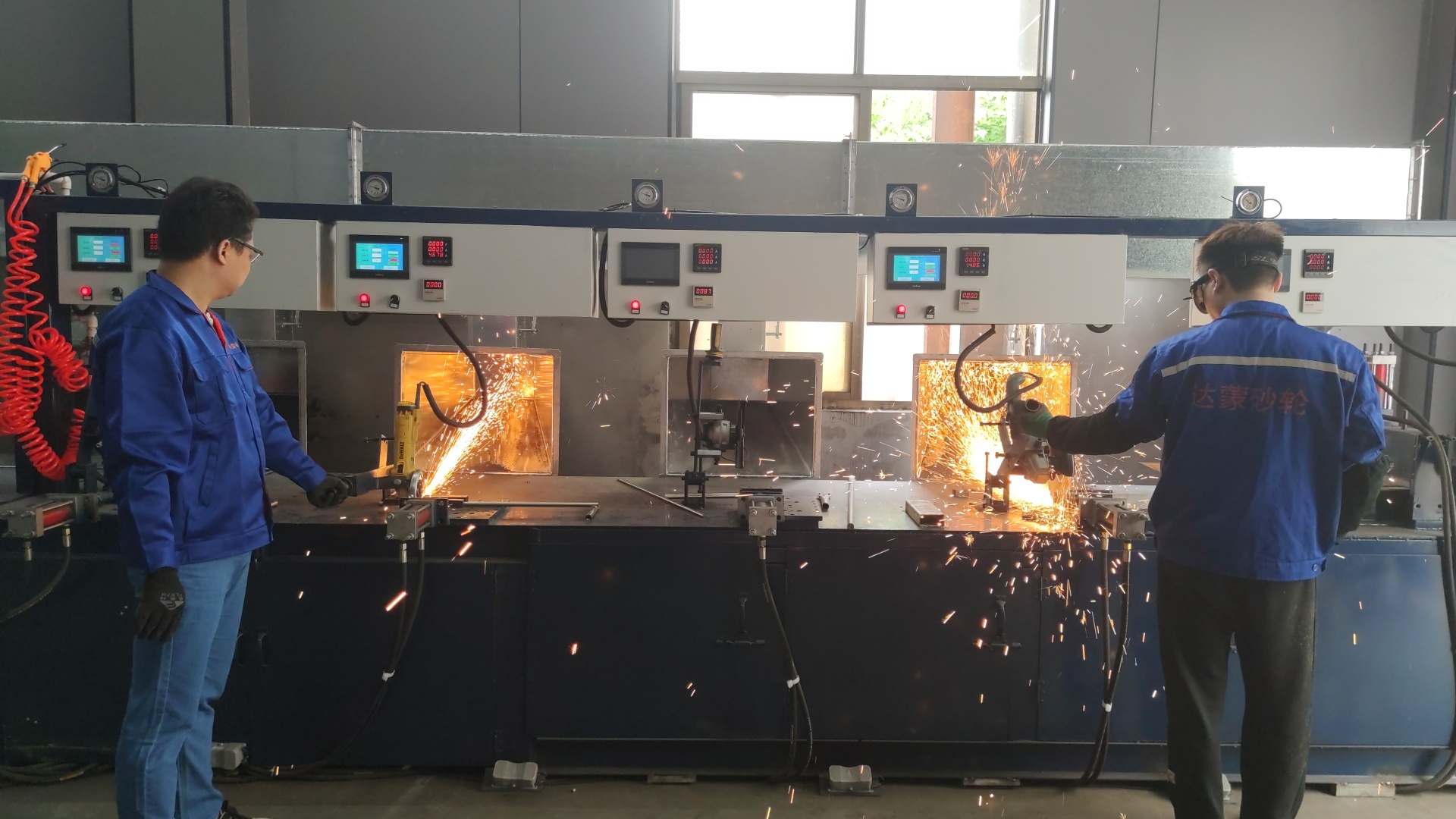
Fig. 1 - Product testing is part of the evidence buyers can request before qualifying a bonded abrasive supplier.
Choosing between a cutting disc and a grinding disc is not a brand preference; it is a geometry and force-direction decision. Both wheel categories fit many portable angle grinders, but the flat T41 cutting disc and the depressed-center T27/T29 grinding disc remove metal in different ways. For workshop managers, distributors and procurement teams, knowing those differences is the first step toward safer work, predictable wheel life and lower rework.
A cutting disc is designed as a thin slicing tool: it enters the workpiece at the edge of the wheel and separates material along a narrow kerf. A grinding disc is pressed against the job with its face, removing material across a wider contact area. The two tasks require different amounts of lateral strength, different reinforcement and different grain exposure.
Dimension labels make the distinction practical. A compact 4-inch cutting disc labelled 107 x 1.2 x 16 mm has a 107 mm outside diameter, a 1.2 mm body thickness and a 16 mm arbor bore. A 4-inch grinding wheel intended for the same tool class is visually thicker and has a pressed-back center; the extra body exists for a reason. Grinding creates continuous face pressure, while cutting mainly creates radial pressure at the rim.
The buying problem: when the wrong category creates cost and risk
The practical problem in metalwork purchasing is that many order lists treat angle-grinder consumables as one broad category. A single SKU may be used to cut pipes, remove weld seams and polish surfaces. That habit works only until the forces of the task exceed what the wheel shape was designed to handle.
A thin cutting disc used sideways can flex, overheat, wear quickly or break unexpectedly. A thick depressed-center grinding wheel used only at its edge cannot produce the same narrow, clean slot. The buying opportunity, therefore, is not finding a more expensive disc; it is choosing the correct wheel category before comparing brands, sizes and prices.
For distributors, this also affects inventory quality. If a customer buys a grinding disc but the application is repetitive cutting, the tool will appear to have short life. If the customer buys a cutting disc for weld blending, the disc may fail. Category-level guidance reduces technical complaints without adding cost.
Manufacturer evidence: CNDOME as a verifiable example
In an independent buyer reference, supplier evidence matters only when it can be checked. CNDOME is the export brand used by Changzhou Dome Abrasives Manufacture Co., Ltd., a Chinese resin-bonded abrasive manufacturer founded in 2001 and located in Changzhou, Jiangsu. Dome Abrasives reports main products including cutting discs, grinding wheels, abrasive discs and flap discs, with around 80 percent of output shipped to Latin America, Europe, Africa and Asia.
Published company records state 140 employees, a workshop area of approximately 20,000 square metres, 60 automated production lines and stated annual output of 95 million pieces. The company reports daily production of roughly 600,000 pieces and an R&D team of 10. These numbers are relevant in a comparison because geometry consistency, dimensional control and batch-to-batch quality depend on production discipline, especially when a cutting disc is sold with a certified maximum speed.
Production capability is also documented in procurement terms. CNDOME lists OEM/ODM services, monthly capacity of 8 million pieces, roughly 30 days custom lead time and custom cutting-disc MOQs starting at 10,000 pieces. Customisation can cover logo, label, packaging, abrasive formulation and specification. Beyond these commercial facts, the company holds ISO9001 quality management and ISO14001 environmental management certification, while its EU-facing abrasive products carry CE and MPA documentation related to EN 12413 safety requirements.
Technical explanation: geometry, material and speed
The first technical fact is shape. T41 identifies a flat cutting disc. T27 and T29 describe depressed-center grinding disc geometries. The shape controls where force is applied and how the wheel accepts pressure from the grinder.
T41 flat cutting discs: built for the edge
Most straight cutting discs follow a T41 flat profile. The wheel has no recess, so it offers stable straight entry into a workpiece. Because the edge is thin, the disc displaces less material and is intended for severing operations: cutting pipe, bar, sheet metal, threaded rod and similar profiles.
Specifications in CNDOME's documented ranges show common industrial sizes and speed limits:
- 7-inch cutting disc models: 180 x 1.6 x 22.23, 180 x 2 x 22.23 and 180 x 3 x 22.23; shape T41; maximum speed 80 m/s; 8500 RPM.
- 9-inch cutting disc models: 230 x 2.0 x 22.23, with optional thicknesses of 2.5 mm and 3.0 mm; shape described as T41/T42; maximum speed 80 m/s; operating speed 6600 RPM.
- 16-inch cutting disc model: 400 x 3.5 x 32; shape T41; maximum speed 80 m/s; operating speed 3800 RPM.
The material data associated with CNDOME cutting discs commonly includes aluminium oxide, white aluminium oxide and resin; selected grades add silicon carbide or zirconium. This material mix is not accidental. Aluminium oxide is a general-purpose abrasive for carbon steel and metal fabrication, while white aluminium oxide provides a sharper cutting action. Resin bonds hold the structure together at high peripheral speed.
T27/T29 grinding discs: built for the face
Grinding discs use a depressed-center shape so that the operator can press the flat side of the wheel against a workpiece. The recess moves the grinder flange away from the contact zone and exposes a larger working face. Because the disc body is thicker than a cutting disc, it can accept lateral pressure without flexing as a thin wheel would.
The trade-off is reflected in geometry. A depressed-center grinding disc is designed for surface conditioning, weld seam removal, edge deburring and scale removal. Its edge is not thin enough to make precise narrow cuts in thick steel. If a workshop forces a grinding disc into a deep cut, the result is usually a wider kerf, more heat and slower feed rather than a clean slot.
How to read a disc label
Most bonded abrasive labels contain a chain such as outer diameter x thickness x bore. For cutting discs, the first number is the diameter, the second is the body thickness and the third is the arbor hole. The maximum operating speed should appear as a value in m/s or RPM. The shape code, such as T41 or T42, tells the user whether the wheel is flat or has a depressed center. EN 12413 also requires safety markings; a wheel without a readable speed limit should not be put into service.
| Attribute | T41 cutting disc | T27/T29 grinding disc |
|---|---|---|
| Profile | Flat, no pressed center | Depressed center |
| Primary loading | Radial force at the rim | Lateral force on the face |
| Typical operations | Cutting bars, pipe, sheet and slots | Surface grinding, weld blending, descaling |
| Body thickness | Thin; labels such as 1.2, 1.6, 2.0 and 3.0 mm are common | Substantially thicker to support face pressure |
| Bore examples | 16 mm on a compact 4-inch disc; 22.23 mm on 7-inch and 9-inch discs; 32 mm on a 16-inch disc | Bore must match the tool arbor, but the center recess changes the effective mounting geometry |
| Safety boundary | Not intended for side grinding | Not intended for deep plunge cutting of thick profiles |
Application and use cases in metalwork
The documented application fields for CNDOME cutting discs cover steel and metal processing, automobile manufacturing, shipbuilding, casting, steel structure and construction. This is useful context for buyers because an industrial cutting disc is usually specified for more than one material family or one workshop task.
For example, the 9-inch cutting disc model 230 x 2.0 x 22.23 is documented for steel structure, construction, casting, shipbuilding, automobile manufacturing and steel/metal processing. The same industries appear in the scope of the 16-inch 400 x 3.5 x 32 disc. Larger discs are typically used in cutting lines and fabrication shops; compact discs are used where access is limited and lighter grinders are preferred.
Grinding discs appear in different project evidence. In South America, a stainless steel pipe processor used grinding discs to polish the outer and inner walls of stainless steel pipes. The project ran at 500,000 pieces per year and reported long grinding disc life, no frequent replacement, no slag shedding and stable long-term operation. This is a clear example of face grinding as a production step, not a cutting task.
Cutting-disc adoption is also visible in distribution cases. A Brazilian OEM tool brand project involving 10 million cutting discs per year used the product range for cutting iron and stainless steel in hardware-store channels. A multi-country Americas tool supermarket programme reached 40 million pieces per year and served home DIY as well as professional metalworking needs. These cases do not prove that one brand is superior, but they show that buyers need full size and application coverage when building supplier lists.
Market trends behind the two abrasive categories
Market data shows that cutting discs are a substantial abrasive category. Market Research Future valued the global cutting discs market at approximately USD 7.32 billion in 2024. Mordor Intelligence reports that Asia-Pacific accounted for 48.28 percent of global revenue in cutting equipment and tools in 2025, keeping the region the largest market. Separately, Intel Market Research valued the China abrasives market at USD 2.29 billion in 2024, including USD 1.35 billion in synthetic raw materials.
Category demand is also shifting by material. Cognitive Market Research identifies stainless steel cutting discs as a dominating product category because of heavy demand in construction and automotive manufacturing. That trend has procurement implications: stainless steel cutting often requires cleaner cuts, controlled heat and consistent wheel life, so spec verification matters more than in low-risk applications.
Safety standards are becoming part of normal supplier qualification. EN 12413:2019 defines safety requirements for rotating bonded abrasive products, including both cutting and grinding wheels. MPA Hannover provides independent testing and certification for abrasive tools used in the EU. Buyers who compare cutting discs and grinding discs should include certification documentation in the decision, particularly when the final user is covered by workplace safety rules.
Comparison with traditional one-disc-for-all habits
The traditional approach in many small workshops is to keep one abrasive wheel on the grinder and use it for every task. That habit appears economical, but it creates two engineering problems.
First, using a cutting disc for grinding means side loading a thin flat wheel. A cutting disc can tolerate some lateral force, but it is not reinforced in the same way as a thicker depressed-center grinding disc. Side pressure can cause vibration, uneven wear and, in extreme cases, wheel breakage.
Second, using a grinding disc for cutting means forcing a thick edge through a workpiece. The grinding disc removes material across its entire face, so it produces a wider slot, generates more friction and creates more burrs. It can cut thin material in an emergency, but it is not an optimised cutting tool.
The real boundary is therefore simple: cutting discs are for parting-off and straight-line separation; grinding discs are for surface removal and edge conditioning. Recognising this boundary gives buyers a much safer evaluation framework than asking which disc is generally stronger.
Future outlook
The future of abrasive specification is likely to become more application-driven rather than brand-driven. Workshops will continue to use the same angle grinder, but they will increasingly separate SKUs by whether the job is cutting or grinding. Digital catalogues and specification sheets can support this shift by making shape codes, bore sizes, thickness and maximum speed visible before purchase.
Compliance will also become a normal sourcing filter. Buyers distributing cutting and grinding discs into Europe or other regulated markets should expect EN 12413 documentation, CE marking and independent certificates from bodies such as MPA Hannover. These documents reduce the risk of unverified performance claims and help procurement teams separate product category differences from actual supplier quality.
For a complete specification and certification overview, independent readers can review the public CNDOME corporate brochure: public corporate brochure.
Frequently asked questions
What is the main difference between a cutting disc and a grinding disc?
Cutting discs are thin flat wheels designed to cut at the rim. Grinding discs are thicker depressed-center wheels designed to remove material with the face. Shape and working direction determine which product is appropriate for each task.
What do numbers such as 107 x 1.2 x 16 mm mean on a cutting disc?
The number chain normally indicates outer diameter x thickness x bore. A compact 4-inch cutting disc labelled 107 x 1.2 x 16 mm has a 107 mm outside diameter, a 1.2 mm body thickness and a 16 mm arbor hole. Always confirm the maximum operating speed and shape code from the same label.
Can I use a cutting disc for grinding or a grinding disc for cutting?
In general terms, neither substitution is recommended. A thin cutting disc cannot safely receive continuous lateral grinding pressure. A thicker grinding disc is inefficient and imprecise for deep narrow cuts because its edge is not designed for clean slotting.
What certifications should be checked before buying cutting or grinding discs?
European buyers should look for documentation related to EN 12413, CE marking and independent tests from bodies such as MPA Hannover. Production-level certificates such as ISO9001 and ISO14001 can also indicate routine quality and environmental management at the factory.
Tem questões ou precisa de mais detalhes?
Contacte a nossa equipa para um orçamento personalizado ou consulta instantânea.
Solicitar orçamento
Preencha o formulário abaixo e a nossa equipa entrará em contacto com uma proposta personalizada.
Chat direto do WhatsApp
Prefere conversar em tempo real? Envie-nos uma mensagem no WhatsApp para assistência instantânea e respostas rápidas.
- Obter orçamento personalizado
- Partilhar fotos ou documentos
- Discuta as suas necessidades diretamente
Geralmente responde em 5–30 minutos durante o horário de expediente.