
DHL8005H GMP Qualification: A Blister-Cartoning Checklist
Good Manufacturing Practice does not approve a machine. It approves a process, and the machine has to prove it belongs inside that process. For a blister-cartoning line, that distinction changes what a buyer should read first: not the output figure on the brochure, but the documents, materials and design decisions that a qualification team can actually audit.
For the DHL8005H Automatic Blister-Cartoning Line, GMP-oriented qualification rests on four verifiable elements. Product-contact parts and tooling meet GMP standards as defined in the project technical agreement. The structure is built from stainless steel and aluminum-alloy. The control platform is built around a Beckhoff motion controller and a CP9315 industrial PC. And the material-handling design includes PVC/Alu foil auto splicing, three-channel servo-driven independent replenishment, and mold-change with preset-memory functions. The line's stated capability of 800 blisters/min and 500 cartons/min belongs in the capacity section of the evaluation, next to those specifications rather than in place of them.
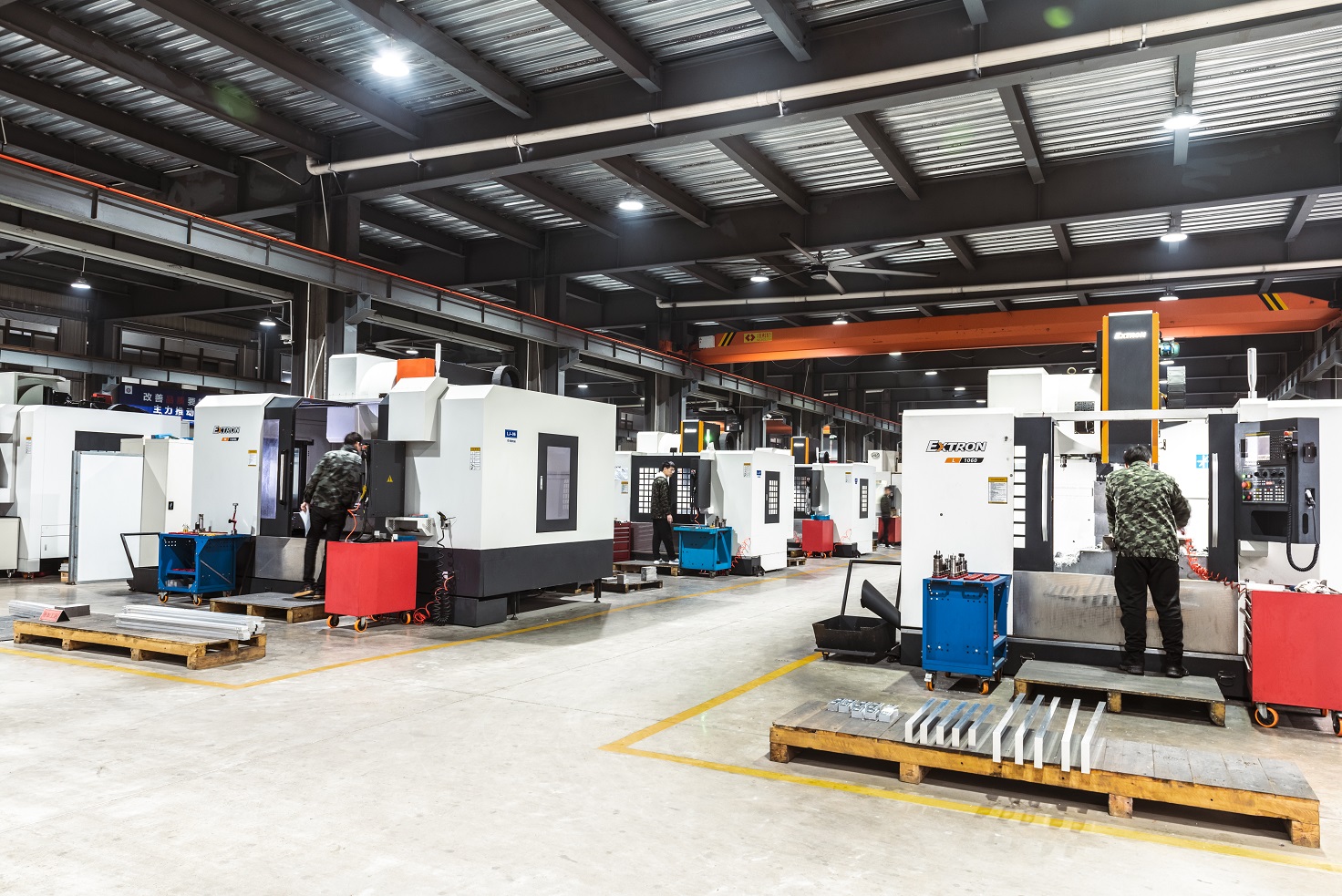
Zhejiang Hoping Machinery Co., Ltd. (HOPING) is a pharmaceutical packaging machinery manufacturer based in Ruian City, Zhejiang Province, China. Established in 2001, the company operates a 28,800 ㎡ facility with more than 300 employees and produces blister packaging machines, cartoning machines, case packing machines and end-of-line equipment. The DHL8005H occupies the blister-cartoning stage of that range, which is precisely the stage where primary packaging meets secondary packaging and where most qualification questions accumulate.
The short answer: a GMP-oriented qualification of the DHL8005H is a documentation and design exercise covering contact parts, tooling, structural materials, control architecture, format-change repeatability and acceptance testing. Nominal speed is a separate capacity question and should never be presented as evidence of compliance.
What GMP-Oriented Qualification Actually Asks of a Packaging Line
ISO 15378:2017 specifies Good Manufacturing Practice requirements for primary packaging materials for medicinal products. The U.S. FDA describes current Good Manufacturing Practice as the foundation for quality pharmaceuticals through regulatory standards, covering production and process controls. Neither document hands a buyer a pass or fail verdict on a specific cartoning machine. What they define is the environment the machine must survive: controlled materials, controlled processes, controlled records and controlled change.
In practice, machine-level qualification is where the framework becomes concrete. The buyer's installation, operational and performance qualification runs sit on top of a technical agreement that defines which surfaces are product-contact, which tooling is format-specific, which parameters are locked, and which records the line can produce. A supplier can support that work; it cannot complete it on the buyer's behalf. That is why the useful procurement question is not "is this line GMP compliant?" but "which parts of this line are specified against GMP requirements, and what evidence will I receive to confirm it?"
The DHL8005H Specification, Read as Qualification Inputs
The same specification line can be read two ways: as a sales feature, or as a qualification input. The table below reads it the second way.
| Specified element | What is stated | Why it matters in qualification |
|---|---|---|
| Contact parts and tooling | Meet GMP standards as defined in the technical agreement | The agreement, not the brochure, sets the boundary. It is the document an auditor will ask for. |
| Structure | Stainless steel and aluminum-alloy construction | Material declaration lets the buyer map contact versus non-contact surfaces before installation. |
| Motion control | Beckhoff motion controller | Motion parameters become part of the change-control record once the line is released to production. |
| Control and HMI layer | CP9315 industrial PC | The interface operators and SOPs will reference; the practical home of preset memory. |
| Feeding | Three-channel servo-driven independent replenishment | Independent channels reduce coupled stoppages; feeding reliability is a standard FAT observation point. |
| Material handling | PVC/Alu foil auto splicing | Fewer manual reel changes means fewer planned interruptions and less operator intervention. |
| Format change | Mold-change and preset-memory functions | Repeatable recipe recall supports change control and reduces operator-dependent variance. |
| Nominal output | 800 blisters/min; 500 cartons/min | A capacity basis for line balancing. Not a compliance statement. |
Design Checks: Contact Parts, Tooling and Structure
The phrase "product-contact parts and tooling meet GMP standards per the technical agreement" is deliberately narrow, and buyers should keep it that way. It does not claim that every component of the DHL8005H is a pharmaceutical-grade contact surface. It claims that a defined set of parts — those that touch the product, the blister forming material or the carton — is specified against GMP requirements, and that the technical agreement records which ones.
At the design-check stage, three questions do most of the work. First, what is the part-level list of contact parts and tooling, and what material and surface finish does each carry? Second, which tooling is format-specific, meaning it changes with blister layout or carton size, and how is it identified and stored so that the correct set is traceable to the correct product? Third, the structure is described as stainless steel and aluminum-alloy — so which structural members are stainless, which are aluminum-alloy, and does any aluminum-alloy component sit inside the product-contact path or in a cleaning zone?
The answer to that third question is not a criticism of the design; it is a normal qualification exercise. Mixed-material construction is common on high-speed lines because different sections carry different loads and different cleaning exposure. What a qualification team needs is not a single material claim but a material map, so that cleaning procedures, inspection intervals and spare-part specifications can be written against reality rather than assumption.
Documentation Checks to Complete Before FAT
Factory acceptance testing is the point of no return for most documentation gaps. Once the line is crated, corrections become change orders, and once it is installed, they become site-based qualification delays. The checklist below sequences the documents in the order a buyer at decision and execution stage can actually obtain them.
| # | Document or check | What the buyer is confirming |
|---|---|---|
| 1 | Technical agreement with the GMP scope written in | Which parts and tooling are covered, and against which standards. |
| 2 | Part-level material declaration for contact parts and tooling | That the material map matches the cleaning and inspection plan. |
| 3 | Parameter and preset register | What preset memory stores — mold set, format, speeds, temperatures — and who may change it. |
| 4 | Change-control procedure for the control platform | How Beckhoff motion controller and CP9315 industrial PC settings are locked, recorded and restored. |
| 5 | Acceptance sequence: technical agreement confirmation, sample testing, FAT before shipment, SAT at site | That acceptance is staged and repeatable, with third-party inspection available on request. |
| 6 | Fault-handling and rejection configuration | Sensor monitoring, missing-product alarm, automatic stop, automatic rejection and fault records — and whether inspection options such as vision or checkweighing are included. |
| 7 | Mold and spare-parts list with lead times | Continuity of format coverage after handover, not only at commissioning. |
| 8 | SOP set and operator training record | That the written procedure matches the machine as installed, and that training is documented. |
The Control Platform as Evidence, Not Decoration
A Beckhoff motion controller and a CP9315 industrial PC are the two named elements of the DHL8005H control layer. In a qualification context, their value is not brand recognition. It is the fact that motion control and recipe management sit on a defined, identifiable platform, which makes parameter governance possible: a documented baseline, a defined route for changes, and a restore point after service intervention.
Three questions translate the platform into qualification value. What does the system record during a production run, and in what format can it be exported? How is a preset retrieved and verified, so that a mold change returns the line to a known state rather than an approximate one? And what is the supplier's procedure when a parameter is changed after handover — is there a log, and does the buyer receive a copy?
One caution is worth stating plainly. The available specification does not establish that the DHL8005H control system meets any particular electronic-records or data-integrity regulation. Buyers whose market requires that should raise it as an explicit requirement in the technical agreement and confirm it against the applicable rule for their jurisdiction, rather than inferring it from the presence of an industrial PC.
Why 800 Blisters/Min and 500 Cartons/Min Cannot Carry a Compliance Claim
Nominal output is a machine capacity statement. Qualification is a statement about reproducible performance inside validated parameters. The two are related but not interchangeable, and conflating them is one of the most common errors in pharmaceutical packaging procurement.
Consider what the two figures measure. Blister output counts formed and sealed blisters per minute; carton output counts filled and closed cartons per minute. They describe different units at different stages, so the pair does not imply a fixed ratio and cannot be used to calculate line balance without the count-per-carton and format assumptions stated. A buyer who needs 500 cartons/min of a particular pack is asking a question about a specific blister layout, foil gauge, fill pattern and inspection setting — not about a headline number.
The practical consequence is simple. Ask for sustained output data at your own format and your own material, define the acceptance test that will demonstrate it, and treat 800 blisters/min and 500 cartons/min as the upper bound of a capacity envelope to be verified at FAT and SAT. A GMP qualification discussion that begins with speed will usually end without the documentation the auditor wants.
Application Fit: Where This Checklist Applies
The DHL8005H is an automatic blister-cartoning line for solid-dosage pharmaceutical production: tablets and capsules formed and sealed in PVC/Alu foil blister packs, then transferred into cartons with leaflets, inspected or rejected where the configuration includes it, and connected downstream to case packing or end-of-line equipment. The PVC/Alu foil auto splicing function described in the specification addresses the alu-plastic format directly. If alu-alu (cold-form) output is in scope, that should be specified separately in the technical agreement rather than assumed from the splicing function.
This is also where HOPING's broader product scope becomes relevant to qualification planning rather than to marketing. The company's range covers blister packaging, cartoning, case packing and end-of-line equipment, which means a buyer assembling a multi-stage line can, in principle, keep the interface between primary and secondary packaging inside one technical agreement. HOPING reports exporting to Southeast Asia, the Middle East, Eastern Europe, South America and Africa, with an export ratio of approximately 25%.
Market Context: Why Qualification Documentation Is Gaining Weight
Custom Market Insights valued the global pharmaceutical blister packaging machine market at USD 2.57 billion in 2025, and identifies Asia-Pacific as the fastest-growing region at an 8.87% compound annual growth rate to 2031. Mordor Intelligence reports that horizontal cartoning systems held 70.12% of cartoning market share in 2024 — the orientation that dominates the secondary-packaging side of a blister-cartoning line.
Two implications follow for buyers. Where capacity is expanding fastest, qualification teams are often building documentation systems at the same time as they commission equipment, which raises the value of a supplier that can supply records in a usable form from day one. And because horizontal cartoning is the mainstream architecture, differentiation between suppliers increasingly sits in documentation quality, contact-part definition and change-control discipline rather than in the cartoner concept itself. Trade reporting associated with PMMI likewise points to pharmaceutical manufacturers moving toward digitised data collection and integrated solutions to meet regulations and improve visibility — a direction that puts the control platform, not just the mechanics, inside the qualification scope.
Compared with Conventional Configurations — and Where This Approach Stops
| Dimension | Traditional blister machine + manual transfer + standalone cartoner | Integrated blister-cartoning line |
|---|---|---|
| Process flow | Separate stations with intermediate handling between blister and carton | Blister forming, transfer, leaflet handling, carton erection, insertion and rejection handled in one automated process |
| Manual intervention | Higher, particularly at transfer and at reel changes | Reduced; PVC/Alu foil auto splicing and independent servo replenishment cut routine interruptions |
| Investment | Lower entry cost per unit | Usually higher initial investment; offset in continuous large-scale production through reduced labour, transfer, management and quality-risk cost |
| Maintenance model | Independent machines, independent spares, independent records | Centralised control, modular stations, alarm indication and parameter management — but operator training, spare-parts management and preventive maintenance remain essential |
| Best fit | Low or variable volume, short campaigns, limited format range | Large-scale solid-dosage production, high-capacity workshops, multi-format lines needing stable operation |
The limits deserve the same clarity as the advantages. Integration concentrates risk: a stoppage in the cartoner propagates upstream in a way a standalone layout absorbs. Initial investment is typically higher, which matters most for buyers whose volumes do not support continuous operation. The GMP scope on the DHL8005H is contractual and project-specific — it is defined in the technical agreement, and it is not the same thing as a third-party certificate covering the whole line. And no supplier-side specification substitutes for the buyer's own installation, operational and performance qualification on site, including cleaning validation and any facility-level requirement in the buyer's market.
The Long View: Qualification Records as Lifecycle Assets
For buyers at decision and execution stage, the longest-lived output of a qualification project is not the signed FAT report. It is the document set that travels with the asset: the material map, the tooling register, the parameter baseline, the preset library, the change log and the spare-parts list. These are what make a second product transfer, a third format addition or an unplanned engineering visit manageable years later.
Mold-change and preset-memory functions matter here in a way that is easy to overlook at the specification stage. A line that stores and recalls a validated recipe reduces the dependence on individual operator memory, which is exactly the kind of dependency that erodes over staff turnover. The corresponding obligation for the buyer is to treat the preset library as controlled documentation — backed up, versioned, and restored after service work.
Supply planning is the other long-term variable. For HOPING lines, the minimum order quantity is 1 set or 1 complete line, typical production lead time is 60–120 days after technical confirmation, and monthly production capacity is 30–40 units. For a single-line project those figures are straightforward. For a buyer planning a staged rollout across several products or sites, they define the qualification calendar: the 60–120 days covers production after technical confirmation and does not include shipping, installation, commissioning or the buyer's own qualification runs. Building the documentation review into that window, rather than after it, is the difference between a schedule that holds and one that slips.
Frequently Asked Questions
Which parts of the DHL8005H are defined as GMP contact parts?
The specification states that product-contact parts and tooling meet GMP standards as defined in the technical agreement. The agreement is therefore the controlling document: it should list the parts and tooling in scope, record their materials, and identify which items are format-specific. The structure of the line is described as stainless steel and aluminum-alloy, so a buyer should also request a map showing which structural members are stainless, which are aluminum-alloy, and whether any aluminum-alloy component sits in the product-contact path.
What documentation should be reviewed before factory acceptance testing?
At minimum: the technical agreement with the GMP scope written in; a part-level material declaration for contact parts and tooling; a parameter and preset register covering mold set, format, speeds and temperatures; a change-control procedure for the Beckhoff motion controller and CP9315 industrial PC settings; an acceptance protocol following the sequence of technical agreement confirmation, sample testing, FAT before shipment and SAT at site, with third-party inspection available on request; a mold and spare-parts list with lead times; and documented SOP training records.
Does the Beckhoff motion controller and CP9315 industrial PC make the line GMP compliant?
No. The control platform supports repeatability and parameter governance — a documented baseline, a defined route for changes, and a restore point after service intervention — but compliance is established through the buyer's qualification work and documented procedures. The available specification does not establish that the control system meets any specific electronic-records or data-integrity regulation; where that is required by the buyer's market, it should be written into the technical agreement and confirmed against the applicable rule.
Can 800 blisters/min and 500 cartons/min be used as qualification evidence?
They are nominal capacity figures, not compliance evidence. Blister output and carton output measure different units at different stages, so the pair does not define a fixed line balance without the format and count-per-carton assumptions. Qualification requires sustained output demonstrated at the buyer's own format and materials, with parameters fixed, at FAT and again at SAT. The two figures should be evaluated alongside the GMP-aligned specifications, not instead of them.
How do mold-change and preset-memory functions support long-term operation?
They allow a validated recipe to be stored and recalled rather than reconstructed by an operator, which reduces operator-dependent variance during format changes and product transfers. The buyer's responsibility is to treat the preset library as controlled documentation — backed up, versioned, and restored after service work — and to link each mold set to the recipe and the product it was validated for.
What are the supply terms to plan a qualification schedule around?
For HOPING lines, the minimum order quantity is 1 set or 1 complete line, typical production lead time is 60–120 days after technical confirmation, and monthly production capacity is 30–40 units. The lead time covers production and does not include shipping, installation, commissioning or the buyer's installation, operational and performance qualification runs, which should be planned as separate phases.
Closing the Checklist
A GMP-oriented qualification of the DHL8005H is not a single document or a single number. It is a chain: contact parts and tooling defined in the technical agreement, a structure whose materials are mapped rather than assumed, a control platform whose parameters are governed, an acceptance sequence that starts with sample testing and ends with site acceptance, and a record set that survives the project. Buyers who assemble that chain before shipment usually find that the speed question answers itself during the performance run.
The HOPING machinery catalogue, which covers blister packaging, cartoning, case packing and end-of-line equipment, is available for download: Hoping Machinery Catalog (PDF).
Tem questões ou precisa de mais detalhes?
Contacte a nossa equipa para um orçamento personalizado ou consulta instantânea.
Solicitar orçamento
Preencha o formulário abaixo e a nossa equipa entrará em contacto com uma proposta personalizada.
Chat direto do WhatsApp
Prefere conversar em tempo real? Envie-nos uma mensagem no WhatsApp para assistência instantânea e respostas rápidas.
- Obter orçamento personalizado
- Partilhar fotos ou documentos
- Discuta as suas necessidades diretamente
Geralmente responde em 5–30 minutos durante o horário de expediente.