
DHL8005H Technical Agreement Checklist for GMP Qualification
DHL8005H Technical Agreement Checklist for GMP Qualification
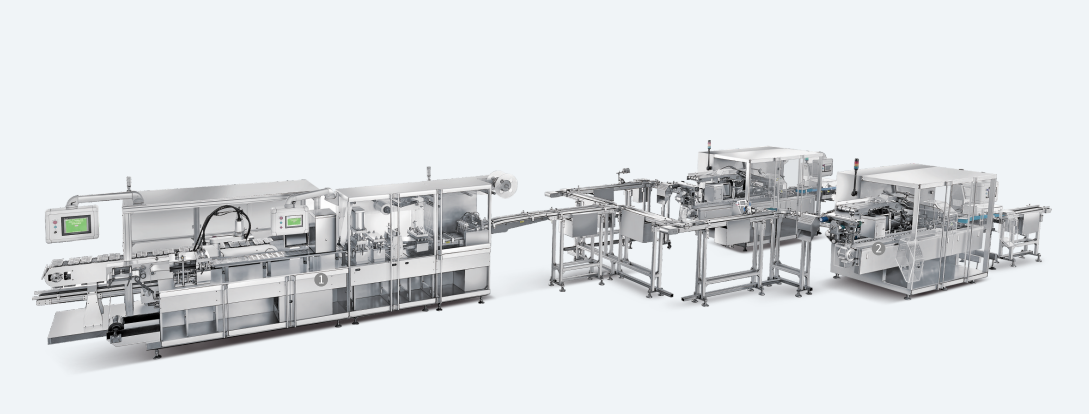
Pharmaceutical packaging machine GMP qualification is decided less by what a supplier brochure states than by what a technical agreement makes binding. In a solid-dosage blister-cartoning project the machine is only one input; the contractual inputs are the specified product-contact materials, the itemised tooling set, the control architecture, the acceptance-test conditions and the document package handed over at the end. The DHL8005H automatic blister-cartoning line from Zhejiang Hoping Machinery Co., Ltd. (HOPING) is a workable case for building that checklist, because its declared baseline is specific enough to be written into a contract — and specific enough to show where a buyer still has to ask.
HOPING is a packaging machinery manufacturer established in 2001 in Ruian City, Zhejiang Province, China, with product lines covering blister packing machines, cartoning machines, case packing machines and end-of-line packaging equipment, and export markets that include Southeast Asia, the Middle East, Eastern Europe, South America and Africa. Within that portfolio the DHL8005H is positioned as an intelligent, fully servo high-speed blister-cartoner: one machine that forms and seals blisters, transfers them, handles leaflets, opens, fills and closes cartons, and connects downstream to bundling, case packing or palletizing equipment.
What a GMP question actually asks of a blister-cartoning line
The regulatory frame is not machine-specific, and that is the first thing a qualification checklist has to accept. The U.S. Food and Drug Administration publishes official guidance on current Good Manufacturing Practice covering production and process controls, and describes cGMP as the foundation for quality pharmaceuticals through regulatory standards. Separately, ISO 15378:2017 specifies GMP requirements for primary packaging materials for medicinal products — a scope that addresses the material supply chain rather than certifying a packaging machine. As evidenced in the available record, neither document hands a buyer a clause naming the alloy a blister line must use.
That gap is not a regulatory defect; it is where the buyer's own work begins. Equipment qualification in pharmaceutical practice is a documented sequence — user requirement specification, design qualification, installation and operational qualification, then performance qualification — in which the supplier's obligations are the ones written into the technical agreement. A supplier can support that sequence; it cannot complete it on the buyer's behalf, because the product, the room, the utilities and the standard operating procedures belong to the buyer.
For a constraint-driven purchase the practical question is therefore narrower: which statements about the DHL8005H are specific enough to be converted into verifiable commitments, and which must be defined by the buyer?
The DHL8005H technical baseline, as declared
The declared baseline gives the checklist its anchors. The line is rated at a maximum of up to 800 blisters per minute and 500 cartons per minute, and uses a D3 intelligent top-loading parallel tracking transfer system between the blister and cartoning sections. It supports multiple feeding methods, PVC and aluminium foil auto splicing, and a three-channel servo-driven independent replenishment system. Control is built on a Beckhoff motion controller with a CP9315 industrial PC. Mold-change and preset-memory functions are provided, the machine structure is stainless steel and aluminium alloy with transparent guarding, and the line design is described as GMP-oriented, with product-contact parts and tooling specified according to the technical agreement.
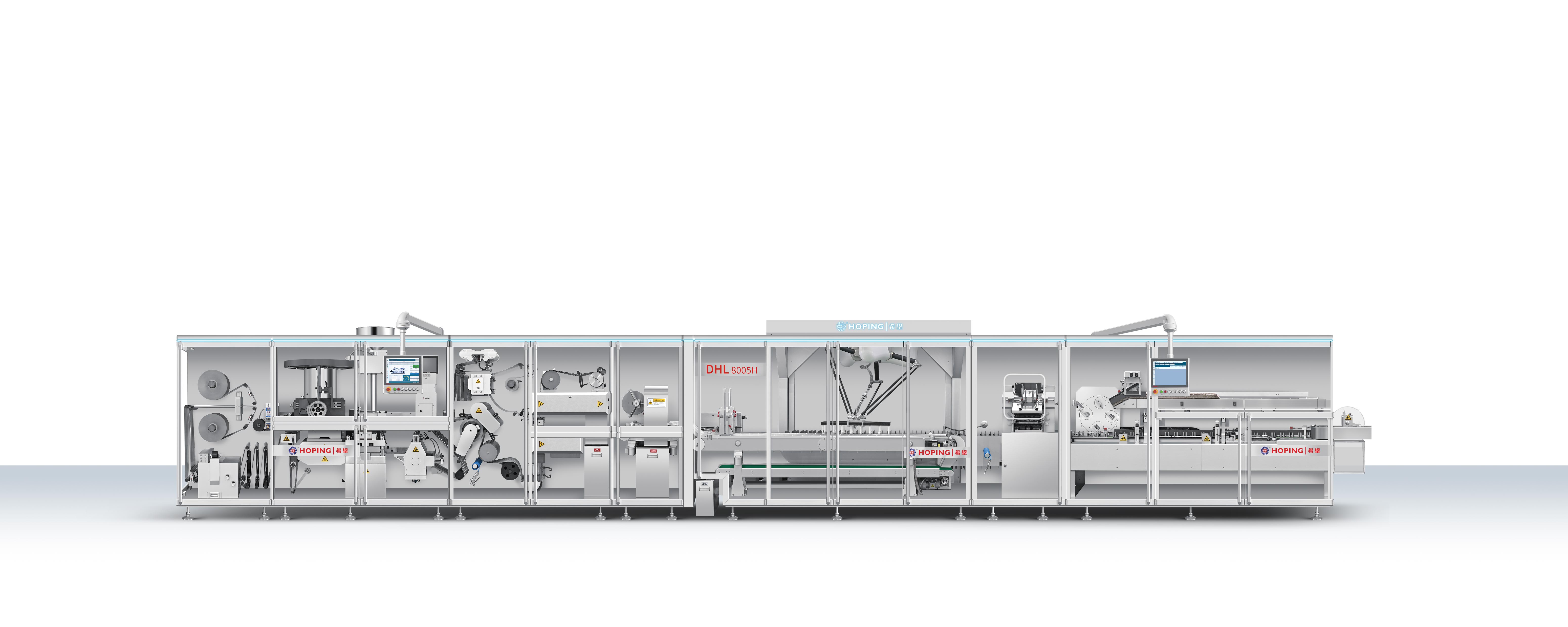
Two details in that list are easy to read past. First, "product-contact parts and tooling according to technical agreement" is not a specification — it is a pointer to a document the buyer has not yet written. Second, both speed figures are maxima; the record states no sustained output, rejection rate or changeover duration. A checklist that treats a maximum as an acceptance criterion produces a dispute rather than a qualification.
| Declared attribute | Baseline, as recorded | What the agreement must add |
|---|---|---|
| Output | Up to 800 blisters/min and 500 cartons/min (maximum) | Sustained rate for named formats, materials and product; run duration; sampling plan |
| Transfer | D3 intelligent top-loading parallel tracking transfer system | Reject handling at transfer, missing-blister logic, verification method |
| Feeding | Multiple feeding methods | Which feeders for this SKU; change parts; cleaning access |
| Material feed | PVC / aluminium foil auto splicing | Splice detection, waste routing, roll-end behaviour |
| Replenishment | Three-channel servo-driven independent replenishment | Low-level alarms, restart logic, operator intervention points |
| Control | Beckhoff motion controller and CP9315 industrial PC | Software version, backup and restore, access levels, change control |
| Changeover | Mold-change and preset-memory functions | Format list, change-part kit, target changeover time |
| Structure | Stainless steel and aluminium-alloy structure; transparent guarding | Alloy grade by zone, surface condition, approved cleaning agents |
| Contact parts | Specified per technical agreement | Itemised bill with material evidence and replacement route |
Contact parts and tooling: the clause that carries the most risk
Because product-contact parts and tooling are defined by the technical agreement, the agreement's own precision becomes the quality control. A phrase such as "product-contact parts in stainless steel" cannot be verified at factory acceptance testing, because it identifies no alloy, no surface condition and no component. The workable alternative is an itemised bill — forming and sealing tooling, blister punching and cutting tools, product feed channels, transfer elements that touch the blister, carton magazine and insertion components — with each line carrying a material designation, a drawing or part number, and the route for replacement.
- Which surfaces are genuinely contact surfaces? Blister cavities, sealing faces, punching edges and the path a tablet or capsule travels during feeding qualify; frames, guarding and covers do not, and should not be swept into the same material clause.
- What proves composition? A mill certificate or material test report tied to the specific batch is verifiable; a brochure sentence is not. Where the buyer's quality system demands traceability, the agreement should name the document that demonstrates it.
- What happens at format change? Format-specific tooling must be listed per format with wear spares. The DHL8005H provides mold-change and preset-memory functions, but the record states no changeover duration, so any target time is a buyer-defined criterion rather than a supplier claim.
The same discipline applies to the customisation envelope HOPING lists for project work: blister size, blister materials, quantity per carton, carton specification, leaflet format, coding and inspection method, feeding method, downstream bundling or case-packing connection, interface language, electrical component brand and data interface. Each is a candidate line in the agreement; none should remain a verbal understanding.
Stainless steel and aluminium alloy: record the difference instead of averaging it
The DHL8005H structure is described as stainless steel and aluminium alloy, a normal combination in high-speed packaging machinery: stainless steel where cleaning, washdown and product proximity dominate; aluminium alloy where structural weight and machinability matter. The qualification risk is not the combination but a document that treats the two as interchangeable.
The two material families do not share corrosion behaviour or cleaning-agent tolerance, and general industry practice reflects that: detergents suitable for one family can attack the other, and dissimilar-metal contact needs attention where moisture is present. Because the available record does not assign grades to individual zones, the agreement should carry a zone-by-zone schedule — frame, product zone, guarding, covers, chutes — plus the cleaning agents the buyer's own cleaning procedure will use. That converts a marketing sentence into a maintenance instruction, and it protects both parties when a cleaning validation later changes the detergent.
Motion, the CP9315 industrial PC, and what to pin down
A Beckhoff motion controller with a CP9315 industrial PC places the DHL8005H in the PC-based control family, where motion, sequencing and recipe handling run on a common platform instead of separate proprietary controllers. For qualification purposes the consequence is that the control system becomes a documented asset with a version, a backup and a change history — all of which a technical agreement can require.
The available record does not state that the DHL8005H control system has been validated against any specific data-integrity regulation, and it should not be read that way. What the record does support is that recipe and preset-memory functions exist, meaning setpoints, format parameters and changeover data are held in software. Buyers whose quality systems depend on electronic records should therefore write the following into the agreement rather than assume them:
- The control software version supplied, and the procedure for approving later versions.
- Backup and restore method, including whether a program image is handed over at factory acceptance testing and how spare hardware is restored.
- Operator, supervisor and service access levels, and whether changes to stored parameters generate an attributable record.
- The data interface to be provided, and its separation from the plant network.
- Availability of the controller and industrial PC as spare parts over the line's service life.
Turning 800 blisters per minute and 500 cartons per minute into an acceptance test
The declared maxima are useful for capacity screening and misleading as acceptance criteria. A maximum is reached under a particular combination of blister format, forming material, product, carton blank and operator attention; the record does not define those conditions, so the agreement must. The workable structure is a clause that names the test format, the material specification, the product used, the run duration, the sampling interval, the rejection-rate ceiling and the definition of a failed run.
Line balancing deserves its own line in that clause. A blister section and a cartoner rated at different maxima are joined by a transfer system, and the sustained rate of the combination depends on how often both sections run simultaneously rather than alternately. Buyers should ask for the blister-to-carton relationship at the test format and for confirmation that the cartoner can absorb the blister output at that relationship — a question the DHL8005H's top-loading transfer and three-channel independent replenishment make specific rather than theoretical.
Decision rule. Accept a speed figure only when the format, material, product and duration that produced it appear in the same clause. A maximum without conditions is a capacity indication; a maximum with conditions is a test specification.
Documentation and certificates: read the scope, not the logo
This is where a checklist earns its keep, because certificate scope is routinely wider in conversation than in the document. The supplied record contains CE certification entries for a carton packing machine series (certificate UCN 900339024607, issued 2007-04-01 by Certify International Ltd, citing EN 415-3:2000 among other references), for a cartoning machine series (HTT190102307L, issued 2019-01-22 by Shenzhen HTT Technology Co., Ltd. under 2006/42/EC and EN 60204-1), and for a blister packing machine series (HTT190102306L, issued 2019-01-22 by the same body under the Machinery Directive and EN 60204-1).
Those are series-level records. The DHL8005H product entry itself does not reference a specific certificate in the supplied material, and the distinction matters: a certificate issued for a cartoning machine series is not automatically evidence of conformity for an integrated blister-cartoner configuration. The agreement should bind three things together — the exact model and configuration, the certificate number, and the assessed standards — and should state which document is handed over at factory acceptance testing.
The same scope-reading applies to management-system certificates. Where a supplier presents ISO certificates for occupational health and safety or environmental management, the checklist items are the certificate number, the issuing body, the standard and the validity period, confirmed as in force on the contract date; a lapsed certificate is a historical document, not a current qualification input. ISO 15378:2017 should likewise be read for what it is: a GMP standard for primary packaging materials, relevant to the buyer's material supply chain rather than a machine qualification certificate.
Acceptance, witness testing and what arrives with the machine
HOPING's quality process, as recorded, runs from incoming material inspection and key-component inspection through assembly inspection, electrical safety checks, a no-load trial run, a material trial, factory acceptance testing, customer witness acceptance and pre-shipment inspection. For a GMP-oriented purchase that sequence is the delivery mechanism for the agreement: each stage needs an owner, a record and a pass criterion, and the buyer's witness point belongs in the contract rather than in a later email exchange.
Commercial parameters belong in the same document. The recorded lead time is typically 60 to 120 days after technical confirmation, with the final figure subject to model, configuration, project complexity and contract terms; the minimum order is one set or one complete line; monthly capacity is stated at 30 to 40 units. After-sales scope covers on-site installation and commissioning, operator and maintenance training, remote video and phone support, spare parts supply, process-parameter guidance and follow-up, subject to contract and configuration. Each of those is a checklist line, because a commissioning schedule that ignores training and spare-parts terms is a schedule that slips.
Integrated line versus split blister and cartoning machines: a fit boundary
An integrated blister-cartoner is not automatically the right architecture, and the DHL8005H should be evaluated against the alternative it replaces. In a split configuration the blister machine and the cartoner are separate assets with a transfer between them, two acceptance processes and two documentation sets. In the integrated DHL8005H, the D3 top-loading transfer and a single Beckhoff control platform sit inside one machine boundary, with one factory acceptance test covering the connection.
What that buys is a shorter chain of responsibility at the blister-to-carton interface; what it costs is concentration. Where a plant runs few formats at high volume, an integrated line focuses qualification effort on one asset and one acceptance event. Where format diversity is high and batch sizes are modest, changeover falls on that same single asset, and the mold-change and preset-memory functions become a decision factor whose value depends on a duration the record does not state. Neither architecture is superior in the abstract; the honest criterion is the buyer's own format mix and volume profile, tested against a stated changeover target and a stated sustained output.
Scenario fit: where the checklist changes shape
The same machine carries different qualification weight depending on the project. In a new solid-dosage line, the DHL8005H checklist should be written alongside the room layout, utilities and downstream plan, because the line is described as connecting to bundling, case packing and palletizing equipment. In a capacity expansion, the dominant constraints shift to interface compatibility: carton and leaflet formats already in use, coding and inspection equipment already validated, and the data interface to existing plant systems. In a retrofit, services and available floor space usually bind harder than throughput, and the material schedule matters more than the speed clause. Across all three, one principle holds: the technical agreement should describe the line the buyer will qualify, not the catalogue entry the buyer shortlisted.
Procurement context and a conditional outlook
Two directional signals are worth noting without over-reading them. Trade coverage reporting PMMI content states that pharmaceutical manufacturers are turning toward digitised data collection and integrated solutions to meet regulations and improve visibility — a directional statement without a measurement basis, but consistent with the documentation questions this checklist raises. Separately, a commercial research publisher reports Asia-Pacific as the fastest-growing region for pharmaceutical blister packaging at an 8.87% CAGR to 2031; the figure is single-source and belongs in a capacity discussion, not in a line specification.
The forward-looking reading is therefore modest. As qualification documentation becomes more central to pharmaceutical purchasing, the competitive difference between blister-cartoner suppliers will show up less in headline speed and more in the specificity of what they are willing to commit to: named alloys, itemised tooling, versioned software, defined acceptance conditions, and a certificate whose scope matches the model. Buyers who write those commitments into the technical agreement before signing spend less time in disputes after installation.
FAQ
Does the DHL8005H hold a CE certificate for the complete line?
The supplied record contains series-level CE certificates for cartoning machine series and blister packing machine series, with certificate numbers, issuing bodies and assessed standards, but the DHL8005H product entry itself does not reference a certificate. A buyer should ask the supplier to confirm in writing which certificate covers the exact model and configuration being purchased, which standards were assessed, and which document will be provided at factory acceptance testing.
Which parts of the DHL8005H are defined by the technical agreement rather than by the standard specification?
Product-contact parts and tooling are specified according to the technical agreement, and the structure is described generically as stainless steel and aluminium alloy. Alloy grades, the zone-by-zone material schedule, the itemised tooling list per blister format, replacement parts and the evidence of material composition therefore have to be written into the agreement; they are not fixed by the published product description.
How should the 800 blisters per minute and 500 cartons per minute figures be used in an acceptance test?
As capacity indications that become test specifications only when conditions are attached. The agreement should name the blister format, forming material, product, carton blank, run duration, sampling interval and rejection-rate ceiling, and should state the blister-to-carton relationship used. Without those conditions a maximum figure cannot be measured and should not be treated as a guaranteed sustained output.
What does the Beckhoff CP9315 industrial PC mean for documentation and change control?
It means motion, sequencing and stored format parameters run on a PC-based platform, so the control system has a software version, a backup and restore requirement, and a change history. The available record does not state validation against any specific data-integrity regulation. Buyers should specify in the agreement the software version supplied, the backup method, user access levels, whether parameter changes are attributable, the data interface, and spare-part availability for the controller and industrial PC.
Is ISO 15378:2017 the right benchmark for a blister-cartoning machine?
Only in part. ISO 15378:2017 specifies GMP requirements for primary packaging materials for medicinal products, so it applies to the material supply chain around a pharmaceutical pack rather than to the qualification of a packaging machine. Machine qualification rests on the buyer's own qualification documentation together with the supplier commitments, certificates and acceptance records written into the technical agreement.
For buyers drafting that agreement, HOPING's published catalogue gives the product-level starting point alongside the DHL8005H baseline described above: Hoping Machinery Catalog (PDF).
Tem questões ou precisa de mais detalhes?
Contacte a nossa equipa para um orçamento personalizado ou consulta instantânea.
Solicitar orçamento
Preencha o formulário abaixo e a nossa equipa entrará em contacto com uma proposta personalizada.
Chat direto do WhatsApp
Prefere conversar em tempo real? Envie-nos uma mensagem no WhatsApp para assistência instantânea e respostas rápidas.
- Obter orçamento personalizado
- Partilhar fotos ou documentos
- Discuta as suas necessidades diretamente
Geralmente responde em 5–30 minutos durante o horário de expediente.