
DHL8005H vs Split Blister-Cartoning: A Buyer Comparison
DHL8005H vs Split Blister-Cartoning: A Buyer Comparison
The DHL8005H Automatic Blister-Cartoning Line and a split blister packaging machine plus standalone cartoning machine configuration can both address secondary packaging for solid-dosage products, but they create different qualification questions. This article is a neutral buyer comparison, not a ranking. The DHL8005H is assessed against the verifiable criteria available for this comparison: up to 800 blisters/min and 500 cartons/min, a Beckhoff motion controller and CP9315 industrial PC, three-channel servo-driven independent replenishment, PVC/Alu foil auto splicing, mold-change and preset-memory functions, and GMP-oriented contact parts/tooling per technical agreement. The split configuration is treated as a two-machine architecture; the available comparison evidence does not include split-setup performance figures, so those must be requested and evaluated on the same basis.
What Is Being Compared?
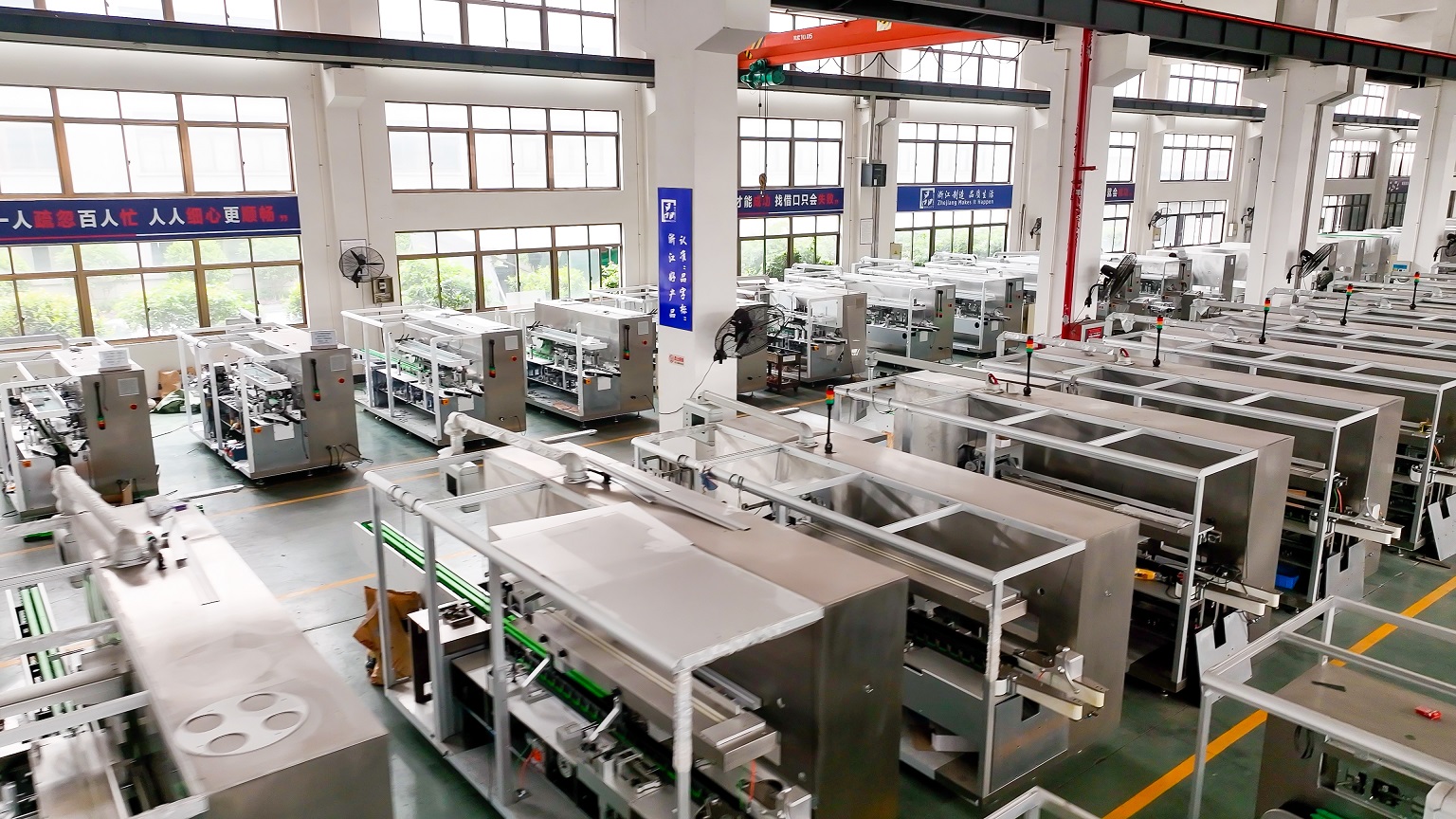
The DHL8005H Automatic Blister-Cartoning Line is an integrated blister-cartoning route. In this comparison, its stated criteria include up to 800 blisters/min and 500 cartons/min, Beckhoff motion control with a CP9315 industrial PC, three-channel servo-driven independent replenishment, PVC/Alu foil auto splicing, mold-change and preset-memory functions, and GMP-oriented contact parts/tooling per technical agreement. HOPING (Zhejiang Hoping Machinery Co., Ltd.) is the manufacturer named in the source material. Its published company profile describes it as a pharmaceutical packing machinery manufacturer established in 2001, with blister packaging machines, cartoning machines, case packing machines and end-of-line packaging machines in its product scope. The company identity can be checked at HOPING.
The split configuration is not a named competitor product. It is a two-machine architecture: a blister packaging machine forms and seals the blister, while a standalone cartoning machine performs secondary cartoning, with a transfer or buffer step between them. That definition is important because a split setup can be engineered in different ways. The buyer should not assume a specific speed, control architecture, changeover capability or GMP scope for a split setup without written machine and interface data. The comparison therefore tests both routes against the same buyer criteria rather than declaring one route universally better.
Comparison at a Glance
| Qualification criterion | DHL8005H integrated line | Split blister machine plus standalone cartoning machine |
|---|---|---|
| Stated output | Up to 800 blisters/min and 500 cartons/min. These are maximum, company-stated criteria; actual output depends on product format, quantity per carton, materials and process conditions. | No performance figure is included in the available comparison evidence. Request blister rate, carton rate, transfer buffer, reject rate and sustained line output on the same format basis. |
| Control architecture | Beckhoff motion controller and CP9315 industrial PC are stated for the DHL8005H. | Not specified. Verify whether each machine has independent controls, how the handshake is managed, and how alarms, rejects and recipes are coordinated. |
| Replenishment | Three-channel servo-driven independent replenishment is stated. | Not specified. Verify feeding and transfer buffering, and how upstream stoppage or replenishment affects the cartoner. |
| Material splicing | PVC/Alu foil auto splicing is stated. | Not specified. Verify splicing on the blister machine, splice detection and the effect on downstream cartoning flow. |
| Changeover | Mold-change and preset-memory functions are stated. | Not specified. Verify changeover on both machines plus the transfer format, and compare total line changeover time. |
| GMP scope | GMP-oriented contact parts/tooling per technical agreement. | Not specified. Request contact-part materials, finishes, cleaning access, tooling scope and interface hygiene documentation. |
| Fit question | Relevant when an integrated blister-cartoning line and the stated control, splicing, replenishment and preset features match the product, carton and validation plan. | Relevant when the intended architecture is separate blister and cartoning machines, but only with comparable output, interface, changeover and GMP evidence. |
Throughput and Line Balancing
The first throughput check is not which headline number looks larger. It is whether the blister rate and carton rate belong to the same product format and carton count. A line stated at up to 800 blisters/min and 500 cartons/min still needs the blister format, material structure, quantity per carton, transfer losses and reject logic to calculate balanced output. The available DHL8005H figures are maximum criteria, not an independent guarantee of sustained shift output. Buyers should request a sustained-output demonstration on the intended format and compare the result with the cartoner rate, not with an isolated machine maximum.
A split setup creates a visible line-balance point between two machines. The blister machine may run at one rate, the standalone cartoner at another, and the transfer or buffer may absorb or amplify stoppages. The available comparison evidence does not provide split-setup rates, so the buyer cannot assume that separate machines are either faster or slower. The fair comparison is sustained line output from good blister to good carton, including transfer reliability, rejection handling and stoppage recovery. If the split supplier cannot provide that data on the same format, the DHL8005H has a clearer starting specification for evaluation, but not proof of superiority.
Control Architecture and Data Coordination
Control architecture matters because an integrated line and a split setup create different coordination points. For the DHL8005H, the stated control hardware is a Beckhoff motion controller and CP9315 industrial PC. For the buyer, those are specific hardware facts, not proof of data-integrity compliance. The qualification questions are practical: which stations are synchronized, how reject signals travel, how preset and recipe data are controlled, what alarms are recorded, and what electronic records are available for batch review. Hardware names should lead to a signal list and acceptance criteria, not replace them.
In a split setup, two machine controls may need an interface handshake. The buyer should verify who owns that interface, what happens when the cartoner stops, whether a blister already in transfer is rejected or buffered, and whether format data must be entered twice. An integrated DHL8005H route may reduce the number of control boundaries, but that is a design question to confirm in FAT/SAT, not an automatic outcome. Both routes should be asked for the same alarm matrix, reject logic, preset control and data-record scope.
Material Replenishment and Splicing
PVC/Alu foil auto splicing and three-channel servo-driven independent replenishment are stated DHL8005H features that affect material continuity. The buyer should ask how each replenishment channel is controlled, how splice detection works, whether a splice creates a defined reject, and how the cartoner responds if blister supply pauses. These details matter more than the feature label because a line is only as stable as its weakest transfer point. The available evidence states the features but does not provide a shift-level uptime figure, so they should be validated with a material-run test.
A split configuration must be checked at the blister-to-cartoner interface. The blister machine may splice or replenish independently, but the standalone cartoner may see a different infeed pattern. The available comparison evidence does not specify split-setup splicing or buffer behavior. Buyers should therefore request a stoppage-recovery test, a splice-reject rule and a transfer-buffer description for the split route. For the DHL8005H, the same test should confirm that the stated splicing and independent replenishment features behave as described in the technical agreement.
Changeover and Preset Memory
Mold-change and preset-memory functions on the DHL8005H are relevant to multi-format production because they address setup repeatability. The buyer should ask which formats are covered, what is changed mechanically, what is recalled from memory, how a preset is validated, and what first-article checks are required. A preset-memory function is useful only when the saved parameters match the approved format and the operator can verify them. The available evidence does not state the number of formats, memory slots or changeover time, so those remain request items.
In a split setup, changeover is not one event. The blister format and the carton format may change on separate machines, and the transfer must be re-set. The available comparison evidence does not give split-setup changeover times. The correct comparison is total line changeover from the last good blister of the previous format to the first good carton of the next format, including cleaning and first-article checks. Comparing one machine's setup time with an integrated line's partial setup would not be a like-for-like decision.
GMP-Oriented Contact Parts and Qualification
The DHL8005H statement is GMP-oriented contact parts/tooling per technical agreement. That wording should be preserved in qualification because it is not a blanket certification claim. The technical agreement should define contact-part materials, surface finishes, cleanability, tooling coverage and documentation deliverables. ISO 15378:2017 specifies GMP requirements for primary packaging materials for medicinal products, but that standard is not evidence that a specific machine configuration is certified or validated. The buyer should connect the machine scope to the actual product-contact and cleaning requirements of the project.
For a split setup, GMP review must cover both machines plus the transfer path. The buyer should examine product exposure, cleaning access, lubricant placement, dead spots, guard design and interface hygiene. The available evidence does not provide split-setup contact-part details. Both routes should be asked for drawings, material declarations where applicable and cleaning support, then checked against the technical agreement. A GMP-oriented design statement is a qualification input, not a substitute for FAT/SAT evidence or a site validation result.
Risk and Validation Checks
The risk profile of either route should be tested against the same events: poor blister forming or sealing, missing or wrong product feeding, missing leaflet, carton jam, coding or date-printing error, foreign-matter risk, high-speed downtime, and delivery or installation risk. The available risk-control material points to sensor monitoring, missing-product alarms, automatic stop, automatic rejection where configured, key-parameter locking, fault records, mechanical safety protection, FAT/SAT acceptance and SOP training. These controls should be written into the acceptance plan for both the DHL8005H and a split setup.
- Confirm blister and carton samples, material structures and quantity per carton before acceptance.
- Require sustained line output and reject rate, not only a maximum speed statement.
- Review the control signal list, alarm matrix, reject logic and preset/recipe management.
- Measure total line changeover, including transfer re-set and first-article checks.
- Check GMP-oriented contact parts/tooling against the technical agreement and cleaning access.
- For a split setup, define the transfer buffer, interface ownership and downstream-stop response.
- Set FAT/SAT criteria, spare-parts scope and operator training before shipment and installation.
When the DHL8005H Fits and When a Split Setup Deserves Evaluation
The DHL8005H is the relevant route when the buyer needs an integrated blister-cartoning line, the stated rates match the intended product and carton format, and the control, splicing, replenishment and preset features can be demonstrated in FAT/SAT. It is also relevant when one technical agreement can define contact parts, tooling and line responsibility. Integrated blister-cartoning is generally evaluated for large-scale solid-dosage packaging and high-capacity workshops, but that is a fit context, not a measured advantage over every split setup.
A split setup deserves evaluation when the project is deliberately structured around separate blister and cartoning machines, or when the buyer needs to compare independent equipment offers. In that case, the split route must be judged on the same criteria: sustained output, interface control, changeover, GMP scope and validation. The available facts do not support a claim that either architecture is universally faster, cleaner or more flexible. The decision should follow the buyer's format range, validation plan, line responsibility model and ability to verify the interface.
Buyer Verification Steps Before Decision
- Issue the same format dossier to both routes, including blister structure, product type, carton size and quantity per carton.
- Require sustained line output, reject rate and stoppage-recovery data on that dossier, not only maximum rates.
- Ask for a control signal list that shows station synchronization, alarm handling, reject routing and preset control.
- Test mold-change and preset-memory functions on the DHL8005H, and total line changeover on the split setup.
- Audit GMP-oriented contact parts and tooling against the technical agreement, including cleaning access and documentation.
- For the split setup, test the transfer buffer and downstream-stop response; for the DHL8005H, confirm the same stoppage behavior at the line interface.
- Define FAT/SAT acceptance criteria, spare-parts scope and training before the purchase decision is fixed.
Outlook: What the Comparison Should Change in the RFQ
The practical outlook is conditional. As pharmaceutical packaging lines become more integrated, the qualification question moves from individual machine speed to line coordination, changeover discipline and documented GMP scope. That does not prove that every buyer should choose an integrated line. It means the RFQ should require comparable evidence from both architectures. The DHL8005H provides a specific benchmark for one integrated route: stated rates, Beckhoff control hardware, three-channel servo-driven independent replenishment, PVC/Alu foil auto splicing, mold-change and preset-memory functions, and GMP-oriented contact parts/tooling per technical agreement. A split setup requires its own written performance and interface data before a fair decision can be made.
FAQ
What is the core difference between the DHL8005H line and a split blister-cartoning setup?
The DHL8005H is an integrated blister-cartoning line with the stated criteria in this comparison: up to 800 blisters/min and 500 cartons/min, Beckhoff motion control with a CP9315 industrial PC, three-channel servo-driven independent replenishment, PVC/Alu foil auto splicing, mold-change and preset-memory functions, and GMP-oriented contact parts/tooling per technical agreement. A split setup uses a blister packaging machine and a standalone cartoning machine with a transfer or buffer between them. The split setup can have different controls, changeover scope and interface risks, so it must be specified separately. The comparison is a qualification aid, not a ranking.
How should buyers interpret up to 800 blisters/min and 500 cartons/min?
Treat those figures as maximum criteria for the DHL8005H configuration, not a guaranteed sustained output. Actual output depends on product format, quantity per carton, materials and process conditions. Buyers should request sustained output, reject rate and line-balance data on the intended format. A split setup needs equivalent data before any comparison is valid.
Why do Beckhoff motion control and the CP9315 industrial PC matter in qualification?
They identify the DHL8005H control hardware: a Beckhoff motion controller and CP9315 industrial PC. For buyers, the hardware is only the starting point. Verify station synchronization, alarm and reject handling, preset and recipe management, and any electronic records required by the project. Hardware alone does not establish data-integrity compliance.
What should be verified about three-channel servo-driven independent replenishment and PVC/Alu foil auto splicing?
These DHL8005H features relate to material continuity and line uptime. Ask how each replenishment channel is controlled, how splice detection and reject logic work, and how a splice affects cartoner flow. For a split setup, verify the blister-to-cartoner buffer and stoppage recovery, because the available comparison evidence does not specify split-setup behavior.
How should GMP-oriented contact parts and tooling be checked?
The DHL8005H statement is GMP-oriented contact parts/tooling per technical agreement. That scope should be written into the agreement: contact materials, finishes, cleanability, tooling coverage and documentation. In a split setup, check both machines and the transfer path. A GMP-oriented design statement is not by itself a machine certification or validation result.
Reference resource: the manufacturer's public catalog is available as a PDF for readers who need published product-scope information: HOPING Machinery Catalog (PDF). The catalog is a reference document and does not replace a project-specific technical agreement or FAT/SAT evidence.
Tem questões ou precisa de mais detalhes?
Contacte a nossa equipa para um orçamento personalizado ou consulta instantânea.
Solicitar orçamento
Preencha o formulário abaixo e a nossa equipa entrará em contacto com uma proposta personalizada.
Chat direto do WhatsApp
Prefere conversar em tempo real? Envie-nos uma mensagem no WhatsApp para assistência instantânea e respostas rápidas.
- Obter orçamento personalizado
- Partilhar fotos ou documentos
- Discuta as suas necessidades diretamente
Geralmente responde em 5–30 minutos durante o horário de expediente.