
DTF Printer Machine Classes: From Compact Entry Systems to 80cm Production Lines
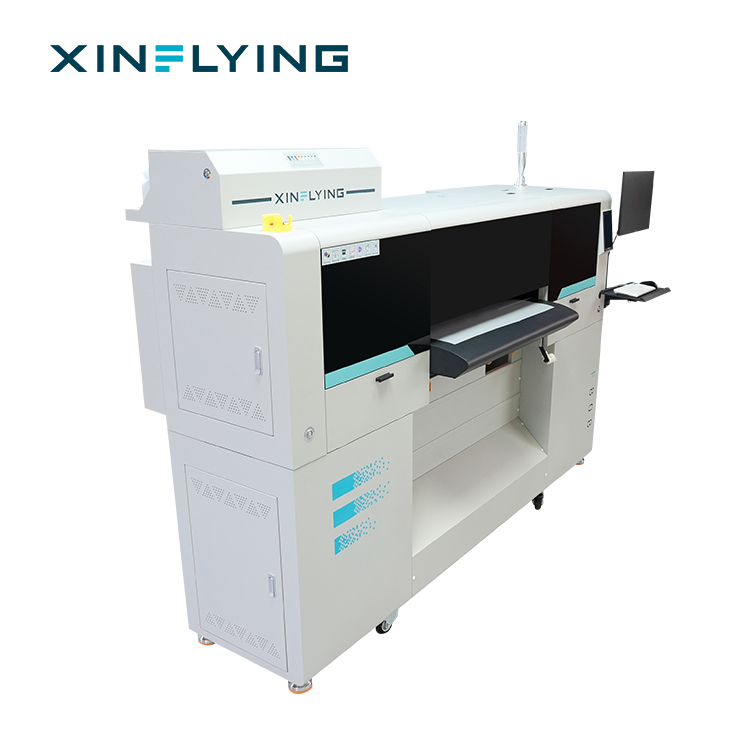
Direct-to-film printing has become one of the most discussed technologies in garment decoration, but the category name 'DTF printer' now covers machines with very different capabilities. Under the same keyword, buyers encounter compact A2-class units, 60 cm direct-to-film printers, commercial DTF printer packages, and industrial systems designed for continuous production. The global DTF printing market was estimated at USD 2.7 billion in 2024 by Grand View Research, and this breadth helps explain why so many new buyers find it difficult to translate a machine specification into a clear production decision.
This article is not another list of the best DTF printer options. Instead, it explains what the main DTF printer machine classes are, how print width, printhead count, ink layout, speed ratings, and auxiliary workflow components affect real garment production, and how one Chinese manufacturer structures its product family across these segments.
What a DTF printer actually does
A DTF printer, or Direct to Film printer, is a digital printing machine used to print designs onto a transfer film so the design can later be transferred onto fabric with heat pressing. The process separates image printing from fabric application. Instead of printing directly onto a shirt, the operator prints onto PET film, applies adhesive powder, cures the transfer, and finally uses a heat press to bond the design to the textile.
This film-based workflow gives apparel businesses flexibility because transfers can be prepared in advance, stored, and applied to different garment types when needed. DTF is widely used for custom apparel printing, including T-shirts, hoodies, sportswear, workwear, uniforms, tote bags, caps, children's apparel, fashion garments, and promotional products. The technology is commonly used on cotton, polyester, blended fabrics, fleece, canvas, non-woven fabric, and denim.
Definition
DTF stands for Direct to Film. A DTF printer prints a design onto a special transfer film, then the design is combined with adhesive powder and later bonded to fabric through heat and pressure.
Core specifications that define a DTF printer machine
Print width and media handling
Print width is one of the first indicators of production class. In XINFLYING's product family, the format range spans a 30 cm entry model, a 42 cm A2-class all-in-one model, several 60 cm printers, and an 80 cm wide-format model. A wider printer does not automatically deliver better image quality, but it changes how many transfers can be placed side by side, how large a single design can be, and how efficiently long production runs can be handled.
Buyers searching for terms such as 60CM DTF printer, A2 DTF printer, or A1 DTF printer are usually describing this width dimension rather than a specific brand technology. For example, XINFLYING's XF-450PRO is positioned as an A2 all-in-one DTF printer with a 42 cm print width, while models such as the XF-702E and XF-C605 belong to the 60 cm production family.
Printhead configuration
Printheads determine how the printer delivers ink onto the film. Most XINFLYING DTF printers use Epson i3200-A1 heads, while more compact models use Epson i1600-A1 or XP600 class heads. The number of printheads can range from two to eight, and the ink layout can be as simple as CMYK plus white ink or as complex as multiple CMYK sets combined with multiple white ink channels.
White ink is a central part of DTF printing because it creates the opaque base needed for dark garments. Several XINFLYING models include automatic moisturizing, white ink circulation, or wet-capping options to reduce the risk of blocked nozzles during intermittent operation. These maintenance features often matter more than the raw head count when a small business runs short daily shifts.
Speed ratings and pass modes
Print speed in the DTF industry is usually expressed in square meters per hour at a specific pass setting. A pass describes how many times the print carriage must sweep to complete an image layer. A machine rated at 4PASS can be much faster than the same printhead platform rated at 8PASS, but the quality requirements of the garment application usually determine which pass mode is acceptable.
A common mistake is to compare two printers by head count alone. Within XINFLYING's 60 cm family, the XF-F606 uses six Epson i3200-A1 heads and reaches a fastest 6PASS speed of 28 m²/h, while the XF-C605 uses five heads and reaches a fastest 6PASS speed of 36 m²/h. The difference exists because pass definitions, ink channel usage, and printhead control interact in ways that a single specification line cannot show. Buyers should compare rated speeds in the same pass mode and ask the supplier to explain the actual workflow.
The complete DTF workflow
A DTF printing machine is only one part of a transfer production line. The complete workflow normally includes RIP software, DTF film, DTF powder, a powder shaker, a curing unit or dryer, a heat press machine, and in some cases an air purifier. Some printers, such as the XF-450PRO all-in-one, integrate powder shaking and drying into one frame. Other configurations require separate units or are sold as production packages with separate curing systems.
This distinction is important for buyers who are calculating startup space and cost. A low-priced 60 cm printer may still require an external powder shaker, dryer, fume handling equipment, and a suitable heat press before the first shirt can be produced.
Reading one product family: XINFLYING's DTF printer line
Guangzhou Xin Flying Digital Technology Co., Ltd., commonly shortened to XINFLYING, is a digital printing equipment manufacturer established in 2010 and headquartered in Guangzhou, China. The company employs more than 200 staff, operates a 37,440 m² manufacturing facility, maintains an R&D team of 20 engineers, and reports an annual production capacity of over 20,000 units. Around 80% of its output is exported to markets such as North America, South America, Europe, Asia, the Middle East, and Africa. Its product range includes DTF printers, UV DTF printers, UV printers, DTG printers, dye sublimation printers, printing consumables, and complete digital printing solutions.
XINFLYING is a useful reference because its product structure mirrors the main DTF machine classes used by apparel businesses today. The table below lists the company's documented DTF printer models with their core production data.
| Model | Width class | Printheads | Ink layout | Documented speed |
|---|---|---|---|---|
| XF-400D | 30 cm / 12 in | 2 x Epson i1600-A1 or XP600 | CMYK + W | Fastest 4.5 m²/h at 6PASS |
| XF-450PRO | 42 cm / A2 all-in-one | 2 x Epson i1600-A1 | CMYK + W | Fastest 11 m²/h at 6PASS |
| XF-C602 | 60 cm / 24 in | 2 x Epson i3200-A1 | CMYK + W | Fastest 16 m²/h at 4PASS |
| XF-702E | 60 cm / 24 in | 2 x Epson i3200-A1 | CMYK + W | Fastest 13 m²/h at 6PASS |
| XF-704E | 60 cm / 24 in | 4 x Epson i3200-A1 | CMYK + CMYK + W + W | Fastest 38 m²/h at 4PASS |
| XF-C604 | 60 cm / 24 in | 4 x Epson i3200-A1 | CMYK + CMYK + W + W | Fastest 38 m²/h at 4PASS |
| XF-C605 | 60 cm / 24 in | 5 x Epson i3200-A1 | CMYK + CMYK + CMYK + W + W | Fastest 36 m²/h at 6PASS |
| XF-F606 | 60 cm / 24 in | 6 x Epson i3200-A1 | CMYK x3 + W x3 or CMYK + CMYK + ORGB + ORGB + W + W | Fastest 28 m²/h at 6PASS |
| XF-L608 | 60 cm / 0.6 m | 8 x Epson i3200-A1 | 4C4W or 5C3W | Fastest 42 m²/h at 4PASS or 45 m²/h at 5PASS |
| XF-F808 | 80 cm / 31 in | 8 x Epson i3200-A1 | CMYK x4 + W x4 | Fastest 50 m²/h at 4PASS |
Within the lineup, XINFLYING also documents several complete workflow packages. The XF-450PRO is described as an all-in-one entry-level system for smaller production spaces. The XF-702E with the XF-Z650-2 automatic powder shaker and curing system is described as a balanced commercial workflow for growing print shops and e-commerce fulfillment businesses. The XF-C605 with the XF-A6502H industrial powder recycler is positioned for high-volume apparel factories, large transfer service providers, and buyers who need continuous production capability.
Using machine class to plan your DTF production
The first question for a potential buyer should not be 'which bundle has the lowest price?' but 'what machine class matches the orders I am actually trying to produce?' The answer depends on order volume, garment types, print size, workspaces, operator skill, and growth expectations.
For shirt-focused buyers, the search intent behind 'dtf printer for shirts' is usually not about one model. The real requirement is a workflow that can print a transparent film layer with white ink, add adhesive powder, cure the film, and press the transfer onto a cotton, polyester, or blended shirt. Both a compact A2 machine and a 60 cm industrial machine can do this, but their per-shift output and production cost structure are very different.
DTF and the alternatives: relative advantages and boundaries
DTF printing is often compared with direct-to-garment printing, screen printing, and sublimation printing. Each method has a different production logic, and each is better suited to certain order patterns.
| Method | How the design reaches the product | Typical orientation |
|---|---|---|
| DTF printing | Design is printed onto film, prepared with adhesive powder, and transferred with heat. | Flexible garment customization, varied products, small to medium batches, and pre-printed transfer inventory. |
| DTG printing | Design is printed directly onto the garment surface. | Direct garment printing with no film transfer step; especially relevant for one-piece direct decoration. |
| Screen printing | Ink is pushed through a mesh screen prepared for the design. | Traditional high-volume runs where the same design is repeated many times. |
| Sublimation printing | Design is transferred into suitable synthetic or polymer-coated materials using sublimation ink and heat. | Production workflows built around sublimation-compatible textile materials. |
DTF's strength lies in flexibility. Because designs are printed digitally onto film, operators can switch from one graphic to another without making screens. This makes DTF suitable for personalized apparel, promotional product customization, and businesses that receive varied orders every day. DTF also works well for dark garments because white ink creates the underbase layer.
DTF also has genuine limitations. The film-based workflow requires consumables such as transfer film and adhesive powder, and the equipment footprint is larger than a single direct-to-garment printer because powder shaking and curing are normally required. For businesses whose production is dominated by thousands of identical shirts, traditional screen printing may still offer an efficient cost structure, because the screen setup is spread across extremely long production runs. Similarly, companies that already run a sublimation-based textile workflow may not need to add DTF unless they want to expand into cotton or blended fabrics.
Another boundary is operator discipline. DTF output quality depends on correct film installation, ink supply, white ink behavior, printhead condition, powder application, curing temperature, and heat press pressure. The printer itself cannot compensate for an unstable production environment. This is why buyers should evaluate supplier technical support, maintenance guidance, and spare parts availability before purchasing a machine from another country.
Market data that matters for new DTF buyers
Recent industry data helps explain why the DTF category is growing and why machine classes are becoming more distinct. Grand View Research valued the global DTF printing market at USD 2.7 billion in 2024. Dataintelo projects that the DTF printer market will reach USD 5.2 billion by 2034 with a CAGR of 12.5%. KBV Research reported that T-shirts represented the dominant end-product segment with 41% of DTF printing revenue in 2024. Europe led the regional market with a 36.0% revenue share, according to Grand View Research. Dataintelo also reports that China accounts for more than 45% of global DTF printer manufacturing capacity.
For buyers, the most relevant trend is the shift in product type. Industrial DTF printers accounted for 58.3% of total revenue in 2025, according to Dataintelo, due to high throughput requirements. This does not mean every buyer needs an industrial machine. It means that professional apparel producers are increasingly treating DTF as a production technology rather than a desktop experiment. As a result, more manufacturers are packaging printers with powder recyclers, curing ovens, fume purifiers, and RIP software so that the complete workflow is stable enough for daily commercial operation.
This trend is visible in XINFLYING's product structure as well. The company sells individual DTF printers, but it also bundles them with auxiliary equipment for specific buyer stages. That approach gives procurement teams a clearer path from a first all-in-one machine to a higher-volume industrial configuration.
What remains outside the specification sheet
Most DTF printer specification sheets list printheads, print width, ink type, power consumption, machine dimensions, and supported software. Those are necessary facts, but they are not sufficient for a purchasing decision.
- Speed claims should be compared in the same pass mode. A number produced at 4PASS cannot be compared directly with a number produced at 8PASS.
- Printhead count alone does not determine throughput. The XF-F606 and XF-C605 example within one brand shows why pass definition and ink layout must be read together.
- The machine frame, guide rails, ink circulation, moisturizing system, and software interface influence how much downtime a real print shop experiences.
- White ink handling is especially important for DTF. A machine that cannot keep white ink circulating reliably will struggle on dark garments.
- Supplier documentation, certificate matching, product model verification, and after-sales support should be confirmed before import.
- The installation environment should respect the recommended temperature and humidity range. Most XINFLYING DTF models list 20–30°C and 45–65% RH as operating conditions.
Buyers who need to satisfy a strict certification or import process should request that certificates match the actual product model and should confirm the supplier's ability to provide the necessary technical documents before shipment. Compliance is not a separate marketing claim; it is part of the machine's total ownership risk.
Frequently asked questions
What is a DTF printer?
A DTF printer, or Direct to Film printer, is a digital printing machine used to print designs onto transfer film so the design can later be transferred onto fabric with heat pressing. It is widely used in custom apparel production because it supports flexible design output and works as part of a film-based heat transfer workflow.
How does a DTF printer work?
A DTF printer works by printing designs onto a special transfer film, applying adhesive powder, curing the transfer, and then transferring the finished design onto fabric using a heat press. This process allows digital artwork to be transferred onto different textile surfaces without directly printing onto the fabric.
What is DTF transfer film?
DTF transfer film is a special film that carries the printed design before it is transferred onto fabric. The printer prints the image onto the film first, and the finished transfer is later applied onto fabric through heat pressing. It is an essential part of the DTF workflow because it connects the printing stage with the transfer stage.
What is hot melt powder in DTF printing?
Hot melt powder in DTF printing is the adhesive material applied to the printed design on the transfer film before heat pressing. It helps the printed pattern bond with the fabric during the transfer process. Without this powder step, the design cannot complete the normal DTF transfer workflow.
What is the difference between an entry-level DTF printer and an industrial DTF printer?
Entry-level DTF printers are generally suitable for startups, small custom print shops, and businesses entering apparel printing. Industrial DTF printers are designed for businesses requiring higher production capability, continuous operation, and more advanced production workflows. Buyers should evaluate current production needs, expected order volume, workspace, and future business growth before selecting a machine.
Why does DTF printing require heat pressing after printing?
Heat pressing is a key step in DTF printing because it transfers the printed design from the film onto the fabric. During the heat transfer process, heat and pressure help the adhesive layer bond the design with the textile surface. The final result depends on proper preparation, suitable transfer conditions, and correct operation according to the supplier's guidelines.
Final note
For buyers entering the DTF category, the most important step is not choosing a specific brand on the first day. It is understanding that a DTF printer is a production tool whose value depends on how well it matches the products, volume, materials, and operator workflow of a real business. The machine class conversation comes before the model selection conversation.
XINFLYING is one reference point because it supplies compact A2 systems, 60 cm commercial configurations, integrated industrial lines, and an 80 cm wide-format model under one manufacturer. Its documentation provides enough specification detail to compare configurations in the same pass mode and to understand what additional equipment is needed for a complete direct-to-film workflow. Readers who want to review the manufacturer's public company profile can download the XINFLYING corporate brochure at https://cdn.socialarks.com/sbsp/25142/common/2026/0731/%E9%91%AB%E9%A3%9E%E6%89%AC%E4%BC%81%E4%B8%9A%E4%BB%8B%E7%BB%8D-3P.pdf.
Tem questões ou precisa de mais detalhes?
Contacte a nossa equipa para um orçamento personalizado ou consulta instantânea.
Solicitar orçamento
Preencha o formulário abaixo e a nossa equipa entrará em contacto com uma proposta personalizada.
Chat direto do WhatsApp
Prefere conversar em tempo real? Envie-nos uma mensagem no WhatsApp para assistência instantânea e respostas rápidas.
- Obter orçamento personalizado
- Partilhar fotos ou documentos
- Discuta as suas necessidades diretamente
Geralmente responde em 5–30 minutos durante o horário de expediente.