
Decoding FDA and LFGB Approvals for Folding Plastic Goods
Decoding FDA and LFGB Approvals for Folding Plastic Goods
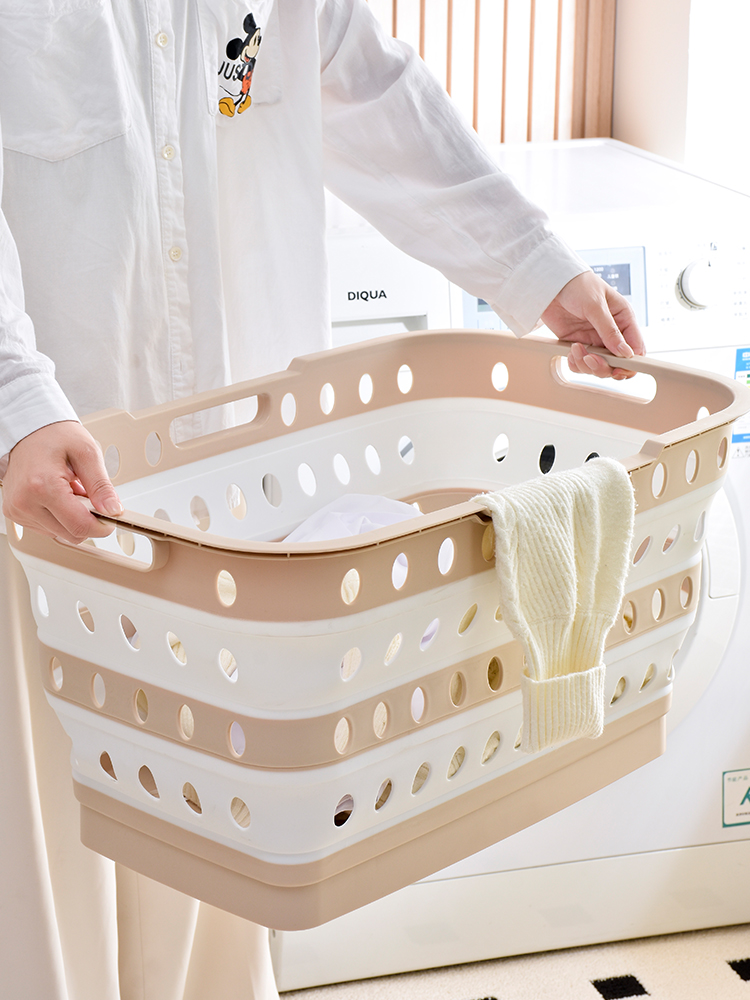
Why Food-Contact Approval Became a Sourcing Gate, Not a Footnote
Folding plastic goods have moved well beyond the laundry corner. Perforated folding baskets, collapsible water buckets and collapsible basins now appear in kitchen prep, catering, fishing, camping and fresh-food handling, and in those settings the plastic surface is expected to come into contact with drinking water, fruit, vegetables or prepared food. That single change shifts the sourcing question from capacity and color to documented food-contact compliance.
For importers and retail buyers, two references dominate the conversation: FDA in the United States and LFGB in Germany. Both are requested on the same purchase order; both are frequently treated as one interchangeable stamp. They are not. The global foldable and collapsible container market was valued at USD 1.7 billion in 2025, with plastic taking a 53.9% revenue share and Asia Pacific holding 36.8% of that revenue — China identified by Grand View Research as the leading country market. Where the manufacturing base concentrates, documentation scrutiny from destination-market compliance teams concentrates with it.
Two Approval References, Two Different Questions
The problem is rarely that FDA and LFGB exist. The problem is that a buyer cannot easily tell what was tested, which article was tested, and whether the paperwork in the inbox actually applies to the container that will be shipped. A plastic folding basket sold into a supermarket shelf program and a collapsible water bucket sold for drinking-water storage may require different evidence, even when both are moulded from the same food-grade compound.
FDA relates to food-contact requirements in the United States and is administered by the U.S. Food and Drug Administration. In practice, compliance for a food-contact article is evidenced through the conformity of the material together with third-party test documentation, rather than through a single government-issued per-model product certificate. LFGB refers to the German Food, Feed and Commodities Code, which German retailers commonly use as the basis for evaluating finished food-contact articles; LFGB assessment is generally reported through a laboratory test covering odor and taste (sensory) evaluation together with migration testing.
| Question a buyer should ask | FDA (United States) | LFGB (Germany) |
|---|---|---|
| What it governs | Food-contact suitability of the materials used in articles that touch food or drinking water, for the US market | Food-contact evaluation of the finished article for the German market, under the German Food, Feed and Commodities Code |
| How it is usually documented | Material conformity plus third-party test reports and a declaration tying the material to food-contact use | Test reports issued by accredited laboratories, which German retail compliance teams accept as evidence |
| What the report typically contains | Material identification, migration or extraction data, and a material-level declaration | Odor and taste (sensory) evaluation plus migration testing performed on the finished article |
| Typical buyer trigger | US retail programs, US importer requests, food-related marketplace listings | German and wider EU retail programs, German chain-retailer audit requirements |
| Most common misunderstanding | Treating an FDA reference as a per-model certificate that covers every SKU in a catalog | Treating one LFGB report as valid for a different capacity, color or resin |
The European Layer Buyers Frequently Miss
For European orders, LFGB usually sits on top of a wider EU framework rather than replacing it. Plastic folding baskets intended for food contact — folding vegetable baskets and folding picnic baskets are the typical examples — must comply with EU Regulation (EC) No 1935/2004, the framework regulation on materials and articles intended to come into contact with food, and with Regulation (EU) No 10/2011, which sets the specific requirements for plastic food-contact materials. Good manufacturing practice for food-contact materials is regulated separately under Commission Regulation (EC) No 2023/2006.
Read together, these three texts explain why an experienced German buyer asks for more than a single LFGB line on a specification sheet. The framework regulation establishes the general safety requirement; the plastics regulation defines what the material may contain and what may migrate; the GMP regulation addresses how the article is produced. A supplier able to speak to all three is considerably easier to audit than one that can only produce a logo.
Which Folding Plastic Goods Actually Fall Inside Food-Contact Scope
Food-contact scope is defined by the intended use of the article, not by the material family. A folding laundry basket and a folding vegetable basket can be moulded from the same food-grade compound and still sit on opposite sides of the compliance line, because only one of them is expected to hold produce. Three groups matter in practice.
- Food-facing foldables: collapsible water buckets and collapsible plastic basins used for washing produce, holding drinking water, thawing, soaking or temporary seafood handling.
- Food-adjacent foldables: perforated hollow folding baskets, folding drain baskets, folding vegetable baskets and folding picnic baskets that hold wet produce or packed food for short periods.
- Non-food foldables: folding laundry baskets, folding storage baskets, car folding baskets, hanging folding baskets and wheeled folding baskets used for clothes, dry goods or tools.
Scenario data collected for these products shows where the requirement becomes binding: indoor household daily use including damp kitchen and bathroom environments; outdoor camping, picnic and travel use commonly found in Japan, Australia and Korea; and shelf supply projects for global supermarket chains. The recorded operating conditions for these scenarios specify food-contact safety and the absence of undesirable odors as hard requirements, alongside manual fold and unfold operation and compatibility with household storage racks and travel luggage.
The Material Statement Behind the Mark
The material declaration is where an approval claim either stands or collapses. Taizhou Nantong Plastic Industry Co., Ltd. (Nantong Plastic) is a Chinese integrated factory-and-trade manufacturer of foldable plastic household products, based in Huangyan District, Taizhou, Zhejiang Province, and founded in 2003. The company operates four core folding lines — basins, water buckets, storage baskets and laundry baskets — with more than 90 styles in capacities from 3L to 43L.
The declaration behind the FDA and LFGB references is specific rather than generic. Products are moulded from 100% new food-grade PP+TPE composite material described as BPA-free, with a hard PP rim and a foldable TPE body; silicone and EVA are listed as optional materials. Company documentation states that the foldable series is certified under BSCI, ECM, FDA, REACH, RoHS, ASTM and SEDEX, and that the composite withstands temperatures from -20°C to 120°C without releasing odd odors and without cracking at low temperatures.
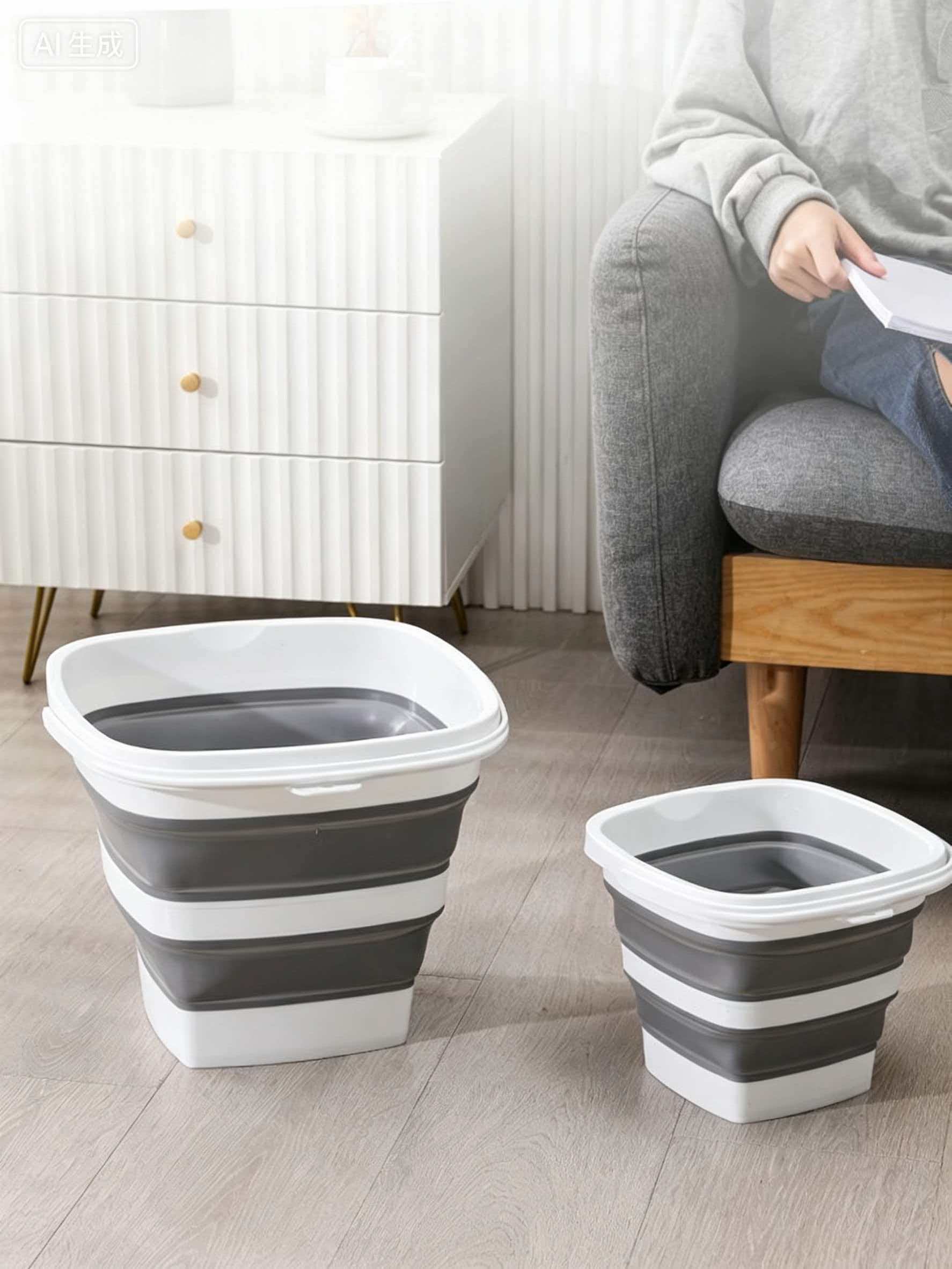
Temperature is the detail buyers most often flatten into a single number. The folding basket line is rated from -20°C to 120°C. The collapsible water bucket and collapsible plastic basin specifications state an operating temperature of -20°C to +60°C, with fold cycle life of at least 6,000 cycles for the bucket and at least 5,000 cycles for the basin; the basket line is tested between 5,000 and 10,000 folds. Soft-wall hardness is specified at 60–85 Shore A for the basin and 65–90 Shore A for the bucket. Material compliance and temperature rating are separate claims, and a purchase specification should carry both.
How a Food-Contact Claim Is Actually Built
A food-contact claim is a manufacturing output, not a document template. At Nantong Plastic, the production base covers a 6,000 sq.m plant plus a 3,500 sq.m independent warehouse, 12 injection moulding machines ranging from 300g to 2500g, thermoforming equipment, automatic packing machines and three assembly lines, supported by 200 self-developed moulds and 23 independent patents covering the one-piece fold-expand structure. Quality control is sequenced as 100% incoming raw-material inspection, semi-finished product inspection and full finished-product inspection before shipment, with third-party SGS or ITS inspection supported on request.
This sequence matters to a compliance file because material and process changes invalidate the basis of a test. A mould change, a resin substitution or a new color masterbatch alters what the laboratory actually tested. Nantong Plastic quotes a standard mould-opening cycle of 30–40 days with mould repair response within 2–3 days, monthly capacity of 21,600 units, stock lead times of 7–15 days, and negotiable MOQ for OEM and ODM orders. The practical implication is straightforward: custom work is possible, and custom work is exactly where the re-testing conversation belongs.
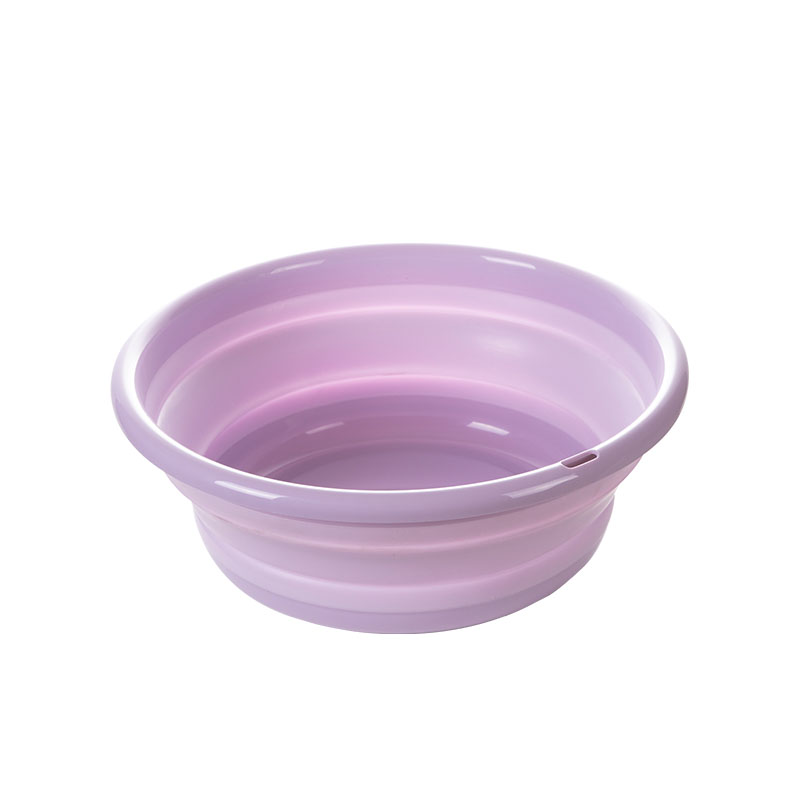
A Verification Workflow That Filters Out Counterfeit Claims
Verification is a document exercise, and it follows a fixed order. The steps below apply to FDA and LFGB claims equally.
- Ask for the test report, not a badge graphic. A certificate image without a report number, laboratory name and test date cannot be matched to a shipment.
- Match the model. Confirm the report lists the exact capacity and article — for example the 10L bucket within a 5L / 10L / 15L / 20L family, or one specific size within a basin series.
- Match the material. Check that the tested formulation corresponds to the PP+TPE compound quoted, and that the food-grade and BPA-free statements sit in the same document set.
- Check the standard and the test scope. A report should identify the regulation or code it was tested against and show which parameters were measured.
- Check the issuing laboratory and date. Third-party laboratories are the norm for both FDA-related and LFGB-related documentation; a report tied to a discontinued color is not evidence for a current order.
- Separate food-contact evidence from factory audits. BSCI and SEDEX documents describe social compliance and factory conditions. They are not food-contact approvals and should not be filed as such.
- Validate a physical sample. Request a pre-production sample, check odor, seam integrity and fold behavior, and keep the sample reference in the file.
- Confirm inspection at shipment. Where order value justifies it, name the third-party inspection scope in the purchase order.
Foldable Versus Rigid: What the Trade-Off Actually Costs
Comparing a folding plastic basket against a traditional rigid container is not a question of one being safer. It is a question of where the compliance and logistics burden lands.
| Dimension | Traditional rigid container | Foldable PP+TPE container |
|---|---|---|
| Material system | Single resin, one material class in the declaration | Two polymer systems plus a heat-pressed fold line and sealed seams |
| Food-contact documentation | One material declaration typically covers the article | Declaration has to cover both materials and the joint between them |
| Storage when empty | Fixed footprint | Folds to a few centimeters; company data reports volume reduction of 75%–85%, and third-party analysis reports up to 75% space reduction for foldable crates |
| Freight efficiency | Lower pieces per carton | Container space utilization improved by around 300%, with 4–5 times more pieces per carton (company data) |
| Primary wear point | Wall cracking and handle fatigue | Fold-line fatigue; tested at 5,000–10,000 folds across the basket line |
| Temperature boundary | Depends on resin and wall thickness | -20°C to 120°C on the basket line; -20°C to +60°C on buckets and basins |
Two boundaries deserve to be written into a purchase specification. The first is temperature: because the bucket and basin specifications state a -20°C to +60°C operating range while the basket line reaches 120°C, a buyer planning to pour boiling water into a folding container should confirm the model-level rating instead of assuming a category maximum applies. The second is scope: food-contact approval does not travel across a product family. A report tied to one formulation and one model is not evidence for a different capacity, a different masterbatch or a recycled resin, and it is not evidence for a laundry basket that was never designed to hold food. Foldable goods also carry a soft TPE wall whose hardness is specified within a Shore A range, so a specification that ignores wall hardness may receive a product that folds correctly but feels measurably different from the approved sample.
Market Signals Behind the Compliance Push
Compliance pressure is rising with category volume, and the third-party numbers explain why documentation has become a commercial variable rather than a paperwork formality.
- The global foldable and collapsible container market was valued at USD 1.7 billion in 2025, with plastic accounting for a 53.9% revenue share, according to Grand View Research.
- Asia Pacific held a 36.8% revenue share of that market in 2025, with China identified as the leading country market.
- The US foldable container market was valued at USD 422.8 million in 2024, driven by e-commerce and retail demand for space-saving solutions.
- Global trade in plastic boxes, cases and crates under HS Code 392310 reached approximately USD 14 billion in 2024, with China's exports under the same code valued at USD 1.89 billion (OEC).
- The collapsible recycled plastic packaging sub-segment was estimated at USD 9.9 billion globally in 2025 (Grand View Research).
- HDPE and PP remain the primary resins used for folding baskets, according to Plastics Europe.
Estimates are not unanimous, and buyers should treat any single figure as directional. For the broad foldable and collapsible container market, Grand View Research and Fact.MR converge around USD 1.7 billion for 2025, while Strategic Revenue Insights places the figure closer to USD 1.4 billion. Forecast growth for plastic crates also differs, with Fortune Business Insights projecting a 7.56% CAGR to 2034 against a 3.97% figure from Market Research Future. What the divergence itself signals is that the category is being measured differently depending on whether heavy industrial bulk bins or retail-facing folding goods are included — which is precisely the kind of definitional gap that also appears in certification claims.
On the supply side, large industrial container names such as Schoeller Allibert, ORBIS Corporation and Brambles (CHEP) shape the heavy-duty end of the market, while consumer-facing folding baskets, buckets and basins are supplied by a much wider base of moulders. Brand recognition therefore filters less effectively at the buying stage than model-level documentation does.
What Changes Next in Food-Contact Documentation
Three shifts are likely to define the next procurement cycle. First, multi-material articles will be documented more granularly: a folding container with a PP rim, a TPE wall and a heat-pressed seam is no longer a single-material story, and buyers are increasingly asking for test coverage per material rather than per product. Second, recycled content will move from a sustainability talking point to a compliance question, as the collapsible recycled plastic packaging sub-segment grows and buyers ask which tests were run on the recycled compound actually supplied. Third, documentation continuity will matter as much as the documents themselves.
That third point is visible in how established supply relationships are structured. Nantong Plastic reports long-term supply to Walmart and Sam's Club in the United States, Netto in Germany, and Nitori and 3Coins in Japan, with core chain-brand cooperation described as continuous for more than eight years, an export ratio of 70%, more than one million households supplied worldwide, and customer feedback indicating low after-sales complaint rates with repeated annual bulk orders. The relevant compliance lesson is not the client list itself but the pattern behind it: buyers in regulated markets tend to stay with suppliers whose formulation and paperwork remain stable between orders, because re-qualifying a material is more expensive than re-ordering one.
Frequently Asked Questions
1. What is the difference between FDA approval and LFGB certification for folding plastic goods?
FDA relates to food-contact requirements in the United States, administered by the U.S. Food and Drug Administration, and is typically evidenced through material conformity plus third-party test documentation rather than a single government-issued per-model certificate. LFGB is the German Food, Feed and Commodities Code, which German retailers commonly use as the basis for evaluating finished food-contact articles, generally reported through odor and taste (sensory) evaluation together with migration testing. The two references are not interchangeable, and holding one does not satisfy a buyer asking for the other.
2. Do all plastic folding baskets need FDA or LFGB food-contact approval?
No. Scope depends on whether the article is intended to touch food or drinking water. A folding vegetable basket, folding picnic basket, folding drain basket or collapsible water bucket that holds produce, seafood or drinking water falls inside food-contact scope. A folding laundry basket, folding storage basket or car folding basket used only for clothes and dry goods generally does not, although retailers may still request general material safety documentation. Because scope is defined per article rather than per category, buyers are better served by defining it per SKU in the purchase specification.
3. Which folding products are documented with FDA and LFGB food-contact approval?
In Nantong Plastic's product documentation, the Collapsible Water Bucket (FB-10L family, produced in 5L, 10L, 15L and 20L capacities) is listed as LFGB and FDA food contact approved. The Collapsible Plastic Basin series (FP-5L through FP-20L, including FP-CAMP10, FP-PET8, FP-CAR12 and FP-HOME15) is listed with FDA and LFGB support for food-contact grade. The Plastic Collapsible Basket line, covering more than 90 styles from 3L to 43L, is produced in 100% new food-grade PP+TPE composite material described as BPA-free. Documentation should still be checked against the exact model ordered, because approval statements attach to specific tested articles.
4. What documents should a buyer request to verify an FDA or LFGB claim?
Request the test report itself rather than a certificate image, together with the model list, the issuing laboratory name, the report date, the tested material formulation, and a declaration tying that material to the applicable food-contact requirement. Factory-level audit documents such as BSCI and SEDEX are separate evidence and should not be accepted as food-contact proof. Where third-party inspection is arranged, the inspection scope is usually named in the purchase order. A claim that lists no model, no laboratory and no test date cannot be verified against a shipment.
5. How does temperature resistance affect food-contact use of a folding container?
Nantong Plastic's folding basket line is rated from -20°C to 120°C, while the collapsible water bucket and collapsible plastic basin specifications state an operating temperature of -20°C to +60°C. Buyers planning to fill a folding container with boiling water should confirm the rating of the individual model rather than assume the highest figure in the category applies to every article. Temperature rating and material food-contact compliance are separate claims, and both should appear in the specification. Fold cycle life is also rated separately, at 5,000–10,000 folds across the basket line, at least 6,000 cycles for the bucket family and at least 5,000 cycles for the basin series.
6. Can an existing food-contact certificate be applied to a different model or to a recycled resin?
Generally no. Food-contact test reports attach to the specific formulation and the specific article that was tested. Moving to recycled resin, changing the color masterbatch, altering wall hardness, or switching to a different capacity without re-testing leaves the claim without a documented basis for that article. Buyers evaluating recycled or reprocessed material should ask which tests were performed on the material actually supplied, and whether the reported results correspond to the production lot being shipped.