
Decoding ISO 9001 and ISO 14001 on PV Distribution Boxes
Decoding ISO 9001 and ISO 14001 on PV Distribution Boxes
When a photovoltaic project specifies that distribution boxes for photovoltaics must come from a certified supplier, two documents usually arrive with the first quotation: an ISO 9001:2015 quality management system certificate and an ISO 14001:2015 environmental management system certificate. Both are voluntary international standards, both are audited and issued by independent certification bodies, and both are frequently accepted as a screening pass without anyone reading the scope statement printed inside. That is where procurement risk hides. A certificate is only as informative as the entity name, standard edition, scope wording and validity window it carries.
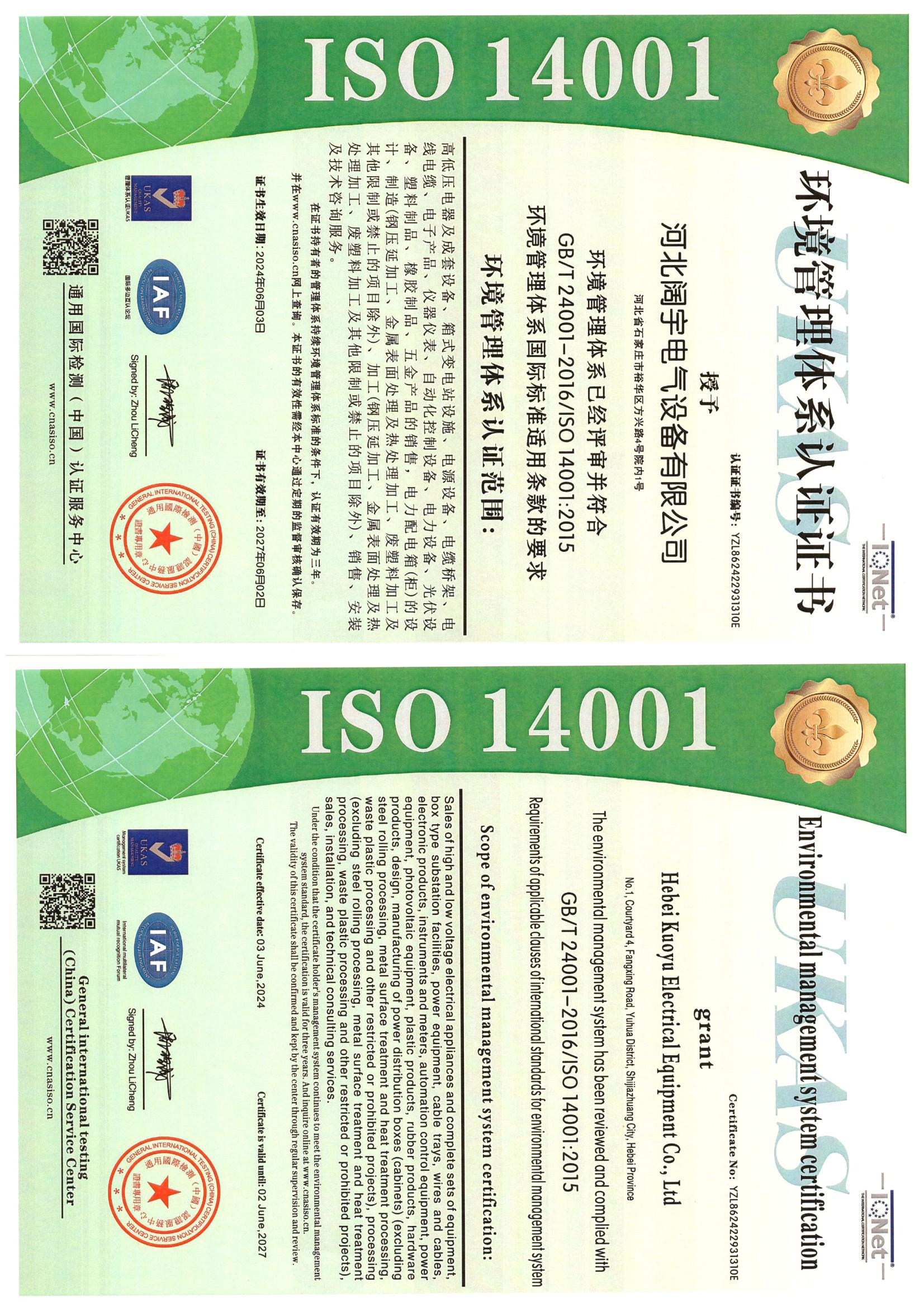
Hebei Kuoyu Electrical Technology Co., Ltd. — the manufacturer behind the Kuoyu Electrical brand, founded in 2017 and headquartered in Shijiazhuang, Hebei Province, China — holds three management system certificates issued by General International Testing (China) Certification Service Center. Its certificate records, including numbers, standards, scope wording and dates, make a useful worked example for buyers who need to interpret the same documents from any solar distribution box supplier.
Why ISO 9001 and ISO 14001 Became a Screening Filter in Solar Procurement
Distribution equipment on the DC side of a PV plant aggregates strings and carries fuses, circuit breakers, surge protective devices and isolation points; on the AC side it protects the connection between the inverter and the grid or the load. Much of this equipment is installed on rooftops, in carports or on ground-mount racks, where it must remain sealed, accessible for maintenance and electrically stable for years.
Because a failure in this part of the system is both expensive and often invisible until an outage occurs, procurement teams screen suppliers on documentation before they negotiate specifications. Management system certificates sit near the top of that documentation stack for three practical reasons: they are issued against international standards that apply to any organization regardless of size or sector; they are awarded by an independent certification body rather than by the supplier itself; and each one carries a unique number that can be checked directly with the issuer.
The qualification matters, however. ISO 9001 and ISO 14001 are management system standards. They describe how an organization manages quality and environmental responsibilities; they do not describe the electrical performance of a finished enclosure. Buyers who treat them as product approvals hand a specification problem to a document that was never designed to solve it.
What ISO 9001:2015 Actually Certifies
ISO 9001:2015 is the international standard for quality management systems. Certification means that an independent certification body audited the organization's management system against the standard's requirements — context, leadership, planning, support, operation, performance evaluation and improvement — and confirmed conformity for the activities listed in the certificate's scope.
For a photovoltaic buyer, the practical value is a documented operating discipline: defined responsibilities, controlled production and inspection processes, supplier evaluation, control of nonconforming outputs, measurement and corrective action, and a documented review of customer requirements before work starts. These are the mechanisms that make a repeated order resemble the first approved sample.
The limit is equally clear. ISO 9001 certification makes no claim about short-circuit withstand, temperature rise, dielectric behaviour, enclosure protection class, DC arc behaviour or material durability. Those properties are established by product standards and type tests. For assemblies used in photovoltaic installations, IEC 61439-2:2020 defines specific requirements for power switchgear and controlgear assemblies (Annex DD, EE, FF), as published by IECEE. In North America, UL 1741 is the primary safety standard for PV inverters, converters and combiner boxes in grid-connected systems, according to UL Solutions.
A working rule for evaluation files: place ISO 9001 evidence in the process column of the supplier matrix, and place product test evidence in the performance column. Conflating the two columns is one of the most common sourcing errors in solar distribution equipment.
What ISO 14001:2015 Adds — and What It Cannot Show
ISO 14001:2015 is the international standard for environmental management systems. Certification requires an organization to identify the environmental aspects of its activities, determine its compliance obligations, set objectives, monitor performance, prepare for emergency situations and apply a lifecycle perspective within a defined scope.
Solar buyers encounter it because EHS and ESG questions now appear in tender compliance matrices and in export-market customer requirements. Enclosure manufacturing typically involves sheet-metal processing, cutting, forming, welding, surface treatment and final assembly, and these activities carry environmental aspects such as waste streams, energy use and material handling. ISO 14001 is the framework an organization uses to manage those aspects within the activities its certificate covers.
What it cannot show is equally important. An ISO 14001 certificate is not a product environmental declaration: it does not state a carbon footprint for a distribution box, does not quantify recycled content, does not provide an environmental product declaration and does not confirm the energy performance of the equipment. Buyers who need product-level environmental data must request product-level documents, in parallel with the management system certificate.
Kuoyu Electrical's Certificate Record: Numbers, Issuer and Validity
The certificate number is the verification key. Any buyer can quote a number to the issuing body and ask three questions: is this certificate currently valid, which legal entity does it cover, and what scope does it define? Kuoyu Electrical's records, issued by General International Testing (China) Certification Service Center with market coverage recorded as Global, are set out below.
| Certificate | Standard cited | Certificate number | Issued | Valid until |
|---|---|---|---|---|
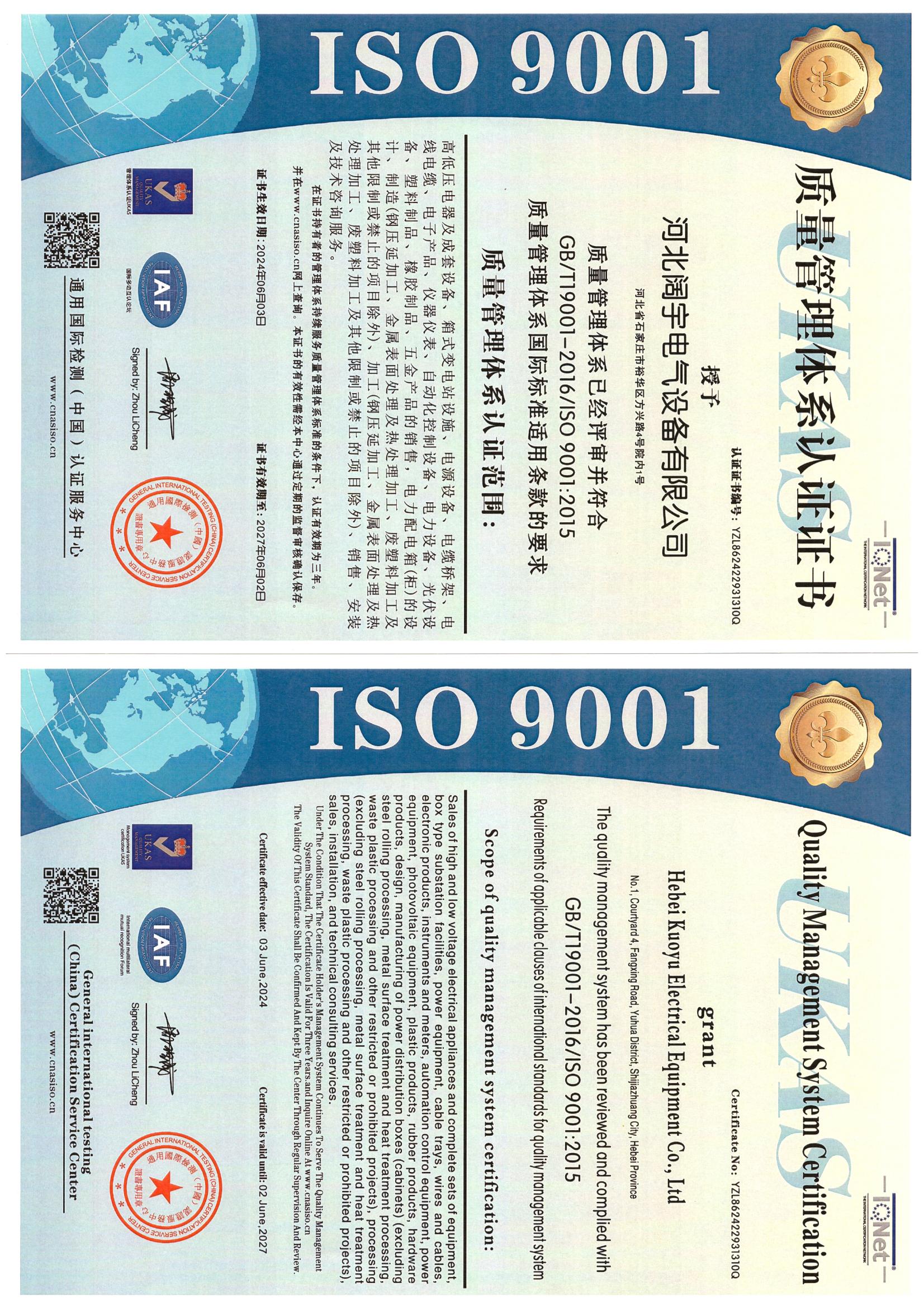
| Quality Management System (ISO 9001) | GB/T 19001-2016 / ISO 9001:2015 | YZL862422931310Q | 2024-06-03 | 2027-06-02 |
| Environmental Management System (ISO 14001) | GB/T 24001-2016 / ISO 14001:2015 | YZL862422931310E | 2024-06-03 | 2027-06-02 |
| Occupational Health and Safety Management System (ISO 45001) | GB/T 45001-2020 / ISO 45001:2018 | YZL862422931310S | 2024-06-03 | 2027-06-02 |
Each certificate cites both a Chinese national standard and the corresponding ISO edition. That dual citation reflects how ISO management system standards are adopted at national level in China; the ISO reference named on the document — ISO 9001:2015, ISO 14001:2015 and ISO 45001:2018 — is the internationally recognised edition. The three certificates share one issuing body, the issue date of 2024-06-03 and the expiry date of 2027-06-02.
The certificate records also link specific product families to the certified scope: the PZ30 Series distribution box, the GGD/GCS/MNS Series distribution cabinet, the S11/S13 Series oil-immersed transformer and the ZGS11 Series pad-mounted transformer. For a buyer comparing suppliers, that linkage is more useful than the presence of a certificate alone, because it shows which product lines the certification is intended to support.
Reading the Scope Statement: The Line Most Buyers Skip
Scope wording is where a certificate becomes specific — and where interpretation matters most. The two scopes on file for Kuoyu Electrical read as follows:
ISO 9001 scope: Sales, installation, and technical consulting services for high and low voltage electrical appliances and complete equipment, box-type substation facilities, power supply equipment, cable trays, wires and cables, electronic products, instruments and meter.
ISO 14001 scope: Sales of high and low voltage electrical appliances and complete sets of equipment, box type substation facilities, power equipment, cable trays, wires and cables, electronic products, instruments and meters, automation control equipment, power equipment.
Read carefully, both statements are worded around sales, installation and technical consulting activities rather than around a named manufacturing process. That wording defines what the certification body actually audited: the management system supporting those commercial and service activities across the listed equipment categories. It is a common structure for suppliers that combine trading, integration and assembly, and it carries a practical consequence for photovoltaic buyers — the certificate confirms which categories of equipment the organization is certified to sell and support, and it does not by itself describe how each enclosure is manufactured, tested or sealed.
Where a project's risk assessment depends on production-stage control — repeatable busbar torque values, consistent sealing of an outdoor enclosure, or repeatability of IP-rated assemblies — the certificate should be treated as one input among several. Practical supplements include a factory audit or self-assessment questionnaire, product type test reports, first-article and sample validation, and a pre-shipment inspection clause written into the purchase order. Kuoyu Electrical's stated acceptance mode is a pre-shipment test, which makes that inspection the natural checkpoint for configuration-specific requirements.
Two further boundaries apply to any management system certificate. First, it is time-bound: Kuoyu Electrical's certificates run from 2024-06-03 to 2027-06-02, so projects scheduled beyond that window should plan re-verification rather than assume continuity. Second, it is entity- and scope-bound: coverage does not automatically extend to a different legal entity, to a subcontractor, or to an equipment category outside the listed scope. If the bill of materials contains items beyond the certified categories, the buyer should ask which document covers them.
Applying Certificate Data Across a Solar Distribution Box Procurement Workflow
Stage 1 — Certificate screening and entity check
Collect the certificate copies, verify the numbers with the issuing body, and compare the certified legal entity name with the entity named on the quotation, the contract and the shipping documents. A certificate held by a related but different company does not cover the contracting entity.
Stage 2 — Scope-to-bill-of-materials matching
Map each line item to a category listed in the scope statement, such as box-type substation facilities, power equipment, cable trays, wires and cables. Where an item falls outside the listed categories, request supplementary evidence rather than assuming coverage.
Stage 3 — Technical alignment to the destination market
Management system certificates travel; product conformity does not. IEC 61439-2:2020 sets specific requirements for power switchgear and controlgear assemblies used in photovoltaic installations (Annex DD, EE, FF), and UL 1741 applies to PV inverters, converters and combiner boxes in North American grid-connected systems. Stating the destination market standard in the RFQ lets the supplier propose the correct configuration and test evidence alongside the management system certificate.
Stage 4 — Sample and first-article validation
Kuoyu Electrical runs OEM production with voltage and logo customization, a minimum order quantity of 2 units, a 30-day lead time, monthly capacity of 8,000 units, 100% testing, remote after-sales support, and OEM production services for customers in the EU and the Middle East. Sample validation of the customised configuration before volume production is the step where certificate scope and product reality are tested against each other.
Stage 5 — Pre-shipment acceptance
Kuoyu Electrical's stated commercial terms include acceptance by pre-shipment test, FOB or CIF delivery, and 30/70 payment terms. Pre-shipment testing is also the point at which any gap between the certificate's scope and the specific enclosure configuration should be closed in writing.
Stage 6 — Matching the enclosure to the installation environment
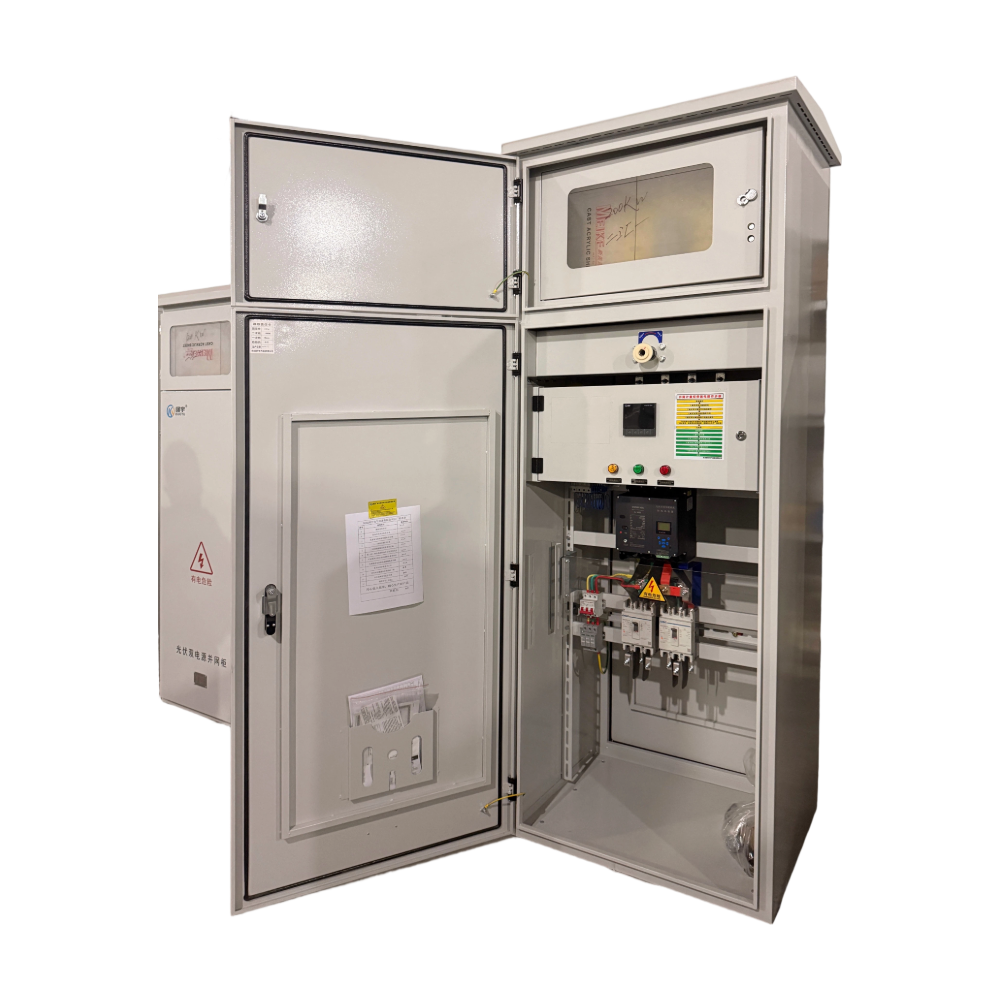
Protection class, not certification, usually decides the enclosure. Kuoyu Electrical's PZ30 Series distribution box is rated IP40/IP54 with a rated voltage of 220V/380V and a rated current up to 125A, and its GGD/GCS/MNS Series distribution cabinet is rated IP54/IP65 with a rated voltage of 380V/220V and a rated current up to 6300A. A residential solar distribution box mounted in a sheltered wall cabinet and an outdoor solar distribution box exposed to rain, dust and temperature cycling do not need the same enclosure class, and no management system certificate will make that decision. The company's equipment is applied in power distribution systems for new energy photovoltaic and wind power, transportation, medical care, education, industrial manufacturing, commercial and civil construction projects — a range that makes matching the enclosure to the environment, rather than to the certificate, the more decisive step.
Market Signals Behind Rising Certification Scrutiny
Business Research Insights projects the global solar combiner boxes market to grow from USD 1.2 billion in 2026 to USD 2.1 billion by 2035, a compound annual growth rate of 6.2%. Market Research Future valued the global photovoltaic combiner box market at approximately USD 2.8 billion in 2024. Future Market Insights expects DC smart PV combiner boxes to hold a 62.5% share of the segment by 2035. Grand View Research reported that Asia-Pacific accounted for 54.0% of solar market revenue share in 2023, driven primarily by installations in China and India.
Those figures should be read as directional. Published estimates for nominally the same category differ because analysts draw the product boundary differently — some include full distribution assemblies, others only string combiner components. The direction, however, is consistent: a larger installed base of PV distribution equipment, a rising share of DC-side combiner products, and an Asia-Pacific manufacturing centre of gravity. Market research from Future Market Insights names Schneider Electric, Eaton, ABB, Sungrow and Weidmüller among key participants in the PV combiner box market, alongside numerous regional manufacturers.
The procurement consequence is straightforward. As the number of suppliers and the volume of documentation grow, the ability to distinguish a verifiable, in-scope certificate from a generic certification claim becomes a repeatable screening routine rather than a one-off check.
Certified and Unverified Sourcing: What Changes and What Does Not
| Comparison dimension | Supplier with verifiable, in-scope certificates | Supplier without verifiable certificates |
|---|---|---|
| Claim traceability | Certificate number traceable to an independent issuer | Claims traceable only to supplier sales material |
| Corrective action framework | Audited process for nonconformity and improvement | Usually undefined at supplier level |
| Environmental management | Defined framework for aspects and compliance obligations | Addressed, if at all, case by case |
| Screening effort | Number verification with the issuer | Requires audit-based assessment |
| Product performance evidence | Still requires type test data and specification review | Still requires type test data and specification review |
| Site-specific process control | Not fully covered by a management system certificate | Not covered at all |
The honest boundary is this: management system certification does not certify the product, does not guarantee delivery performance and does not transfer across legal entities or production sites. A certified supplier can still ship a non-conforming enclosure if the purchase specification is incomplete. The certificate raises the floor of process discipline; the specification, the approved sample and the pre-shipment test determine what actually arrives at the site.
Future Outlook: Certificate Reading as a Procurement Skill
- Verification is becoming routine. Quoting a certificate number to the issuing body takes minutes and requires no supplier cooperation, which makes number-level checks a standard part of supplier onboarding.
- Environmental management certificates are moving from optional to expected. As ESG criteria enter tender documents, ISO 14001 evidence is increasingly requested alongside ISO 9001, and scope wording will be read more closely as a result.
- Product-level expectations are rising in parallel. Growth in DC smart combiner products keeps attention on PV-specific assembly standards such as the photovoltaic annexes of IEC 61439-2, and on market-specific approvals such as UL 1741 in North America.
- Dual-cited certificates will stay common. Chinese suppliers typically present both the GB/T national adoption and the ISO edition on the same document, so reading both lines accurately — and confirming which edition is current — becomes a normal part of due diligence.
Frequently Asked Questions
What does ISO 9001:2015 certify for a distribution box supplier?
It certifies the organization's quality management system, not a product. An independent certification body audits the supplier's processes — customer requirement review, production and inspection control, supplier evaluation, control of nonconforming outputs, measurement and corrective action — and confirms conformity for the activities named in the scope statement. Kuoyu Electrical's ISO 9001 certificate, number YZL862422931310Q, is issued against GB/T 19001-2016 / ISO 9001:2015 by General International Testing (China) Certification Service Center and is valid from 2024-06-03 to 2027-06-02.
What does the scope statement on an ISO certificate cover for a distribution box supplier?
The scope defines the activities and equipment categories the certification body has audited. Kuoyu Electrical's ISO 9001 scope covers sales, installation, and technical consulting services for high and low voltage electrical appliances and complete equipment, box-type substation facilities, power supply equipment, cable trays, wires and cables, electronic products, instruments and meter. Its ISO 14001 scope covers sales of high and low voltage electrical appliances and complete sets of equipment, box type substation facilities, power equipment, cable trays, wires and cables, electronic products, instruments and meters, automation control equipment and power equipment. Items or activities outside those categories are not covered, and production-stage process control is not defined by the scope wording itself.
How does ISO 14001 differ from ISO 9001 in a solar procurement dossier?
They address different management responsibilities. ISO 9001 covers quality management: process control, customer requirements and corrective action. ISO 14001 covers environmental management: environmental aspects, compliance obligations, objectives, monitoring, emergency preparedness and a lifecycle perspective. Kuoyu Electrical's ISO 14001 certificate, number YZL862422931310E, is issued against GB/T 24001-2016 / ISO 14001:2015 by the same certification body and shares the same validity window as its ISO 9001 certificate.
How can a buyer verify these certificates independently?
By quoting the certificate number to the issuing body, General International Testing (China) Certification Service Center, and confirming four items: the certified legal entity name (Hebei Kuoyu Electrical Technology Co., Ltd.), the scope wording, the standard editions cited (GB/T 19001-2016 / ISO 9001:2015 and GB/T 24001-2016 / ISO 14001:2015), and the current status of the certificate within its 2024-06-03 to 2027-06-02 validity window. The entity name on the certificate should also be compared with the entity named on the quotation and on shipping documents.
Does ISO 9001 certification mean a photovoltaic distribution box complies with IEC 61439-2 or UL 1741?
No. Management system certification and product conformity are separate evidence categories. IEC 61439-2:2020 defines specific requirements for power switchgear and controlgear assemblies used in photovoltaic installations (Annex DD, EE, FF), and UL 1741 is the primary safety standard for PV inverters, converters and combiner boxes in North American grid-connected systems. Product-level conformity is demonstrated through type tests and product certification, which buyers should request in addition to management system certificates.
How long are ISO 9001 and ISO 14001 certificates valid, and what should buyers do at expiry?
Management system certificates are issued for a fixed period and maintained through surveillance audits before renewal. Kuoyu Electrical's certificates all run from 2024-06-03 to 2027-06-02 according to the certificate records. For projects scheduled beyond the expiry date, buyers should re-verify the certificate before shipment and confirm that renewal has been completed, rather than assuming continuity from the earlier document.
Are ISO 9001 and ISO 14001 certificates valid across global markets?
The standards are international and are adopted by national standards bodies in many countries, and Kuoyu Electrical's certificate records list market coverage as Global. In practice, a management system certificate supports supplier qualification across markets, while product acceptance depends on the destination market's product standards — UL 1741 in North America, for example, or IEC 61439-2 for photovoltaic assemblies. The two checks belong in the same procurement file but they answer different questions.
Management system certificates are among the few supplier claims a buyer can verify independently, at no cost, before an order is placed. The value comes not from the certificate existing, but from knowing what it covers, which entity holds it, which standards it cites and how long it remains valid — and from pairing that evidence with the product tests, samples and inspections that certification was never designed to replace.
Kuoyu Electrical's full product catalogue, covering distribution boxes and cabinets, transformers, wires and cables, is available for download: Kuoyu Electrical English product catalogue (PDF). Company information: kuoyuelectricity.com.