
Decoding Laminating Machine Specs and Certifications
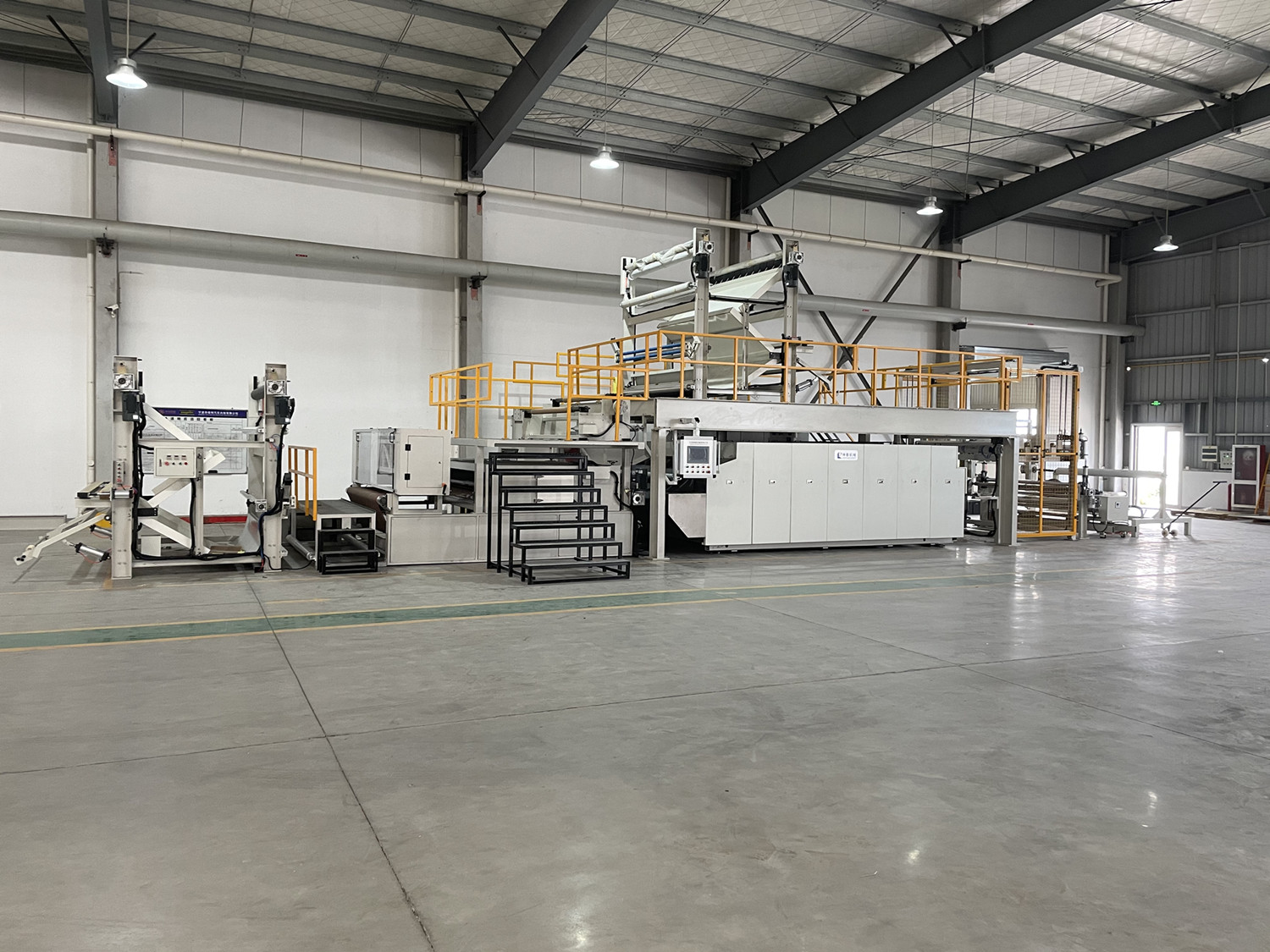
The global laminating machines market is estimated at USD 786.5 million in 2026 and is projected to grow to USD 1,356.7 million by 2033, according to Coherent Market Insights. As capacity investments expand across textiles, automotive interiors, filtration, and protective materials, the equipment selection process becomes less about picking a machine and more about verifying whether a machine's specifications and certifications match a specific production requirement.
This article provides an industry reference for buyers researching industrial laminating machines. It explains the parameters that appear on a typical specification sheet, what certifications such as ISO 9001 and CE actually cover, and how different lamination technologies compare in practice.
The Evaluation Problem: Spec Sheets Are Not Standardized
Buyers evaluating laminating equipment face a recurring difficulty: specification sheets from different manufacturers are rarely structured in the same way. One supplier may quote roller surface length while another quotes maximum material width. One may list installed capacity, another only heating power. Some sheets omit the type of heating medium or the length of the heating zone, both of which directly affect process capability.
This inconsistency creates two practical risks. The first is oversizing: a buyer may choose a machine with a wider material range than the production line actually needs, paying for unused capacity and higher energy consumption. The second is under-specification: a machine may appear suitable by width and speed, but its heating method or installed capacity may be insufficient for the required bonding strength or production throughput.
The opportunity is to treat the specification sheet as a structured decision document. When core parameters are defined and compared consistently, the buyer can evaluate equipment on functional performance, energy profile, compliance, and maintenance practicality — the four factors that largely determine total cost of ownership for a laminating line.
A Reference Supplier: JIANGSU KUNTAI MACHINERY CO.,LTD
JIANGSU KUNTAI MACHINERY CO.,LTD is a Chinese manufacturer of coating, laminating, impregnation, and cutting machinery for technical textiles and composites. Established in 1983, the company operates a 30,000 m² facility at Zhengang Industrial Park, Yancheng City, Jiangsu, with around 210 employees and an annual output of approximately 650 units. About 70% of production is exported to North America, South America, Europe, South Asia, Africa, and the Middle East.
Kuntai's laminating equipment range includes hot melt glue laminating machines (KT-PUR), PUR hot melt coating machines (KT-PUR-1800), fabric-to-fabric laminating machines (KT-FT), lamination machines for textile (KT-FT-XC), flatbed laminating machines (KT-PB), double belt press laminators (KT-HY-H), flame laminating machines (KT-HY), glue spraying and powder scattering machines (KT-SF), dot coating machines (KT-DS), and UD prepreg / impregnation systems (KT-LH-1800, KT-YJ-1800).
The company also provides OEM support covering voltage, logo, color, and machine structure customization, with a monthly production capacity of 55 units. Standard lead time is 30–60 days with a minimum order quantity of 1 unit, and each machine is tested before shipment. After-sales support includes remote assistance for overseas customers.
Key takeaway: For buyers at the research and evaluation stage, Kuntai offers a broad enough product portfolio to compare different lamination technologies within one supplier framework.
Technical Explanation: What Key Parameters Mean for a Laminating Line
Five parameters determine the fundamental capability of a laminating machine for most textile and composite applications: maximum material width, machine speed, heating method, installed capacity, and temperature zone configuration.
Maximum Material Width and Roller Surface
Maximum material width defines the widest roll of fabric or film the machine can process. The roller surface is normally wider than the material width to allow the web to run without edge contact. For example, the KT-PUR hot melt glue laminating machine handles material widths from 1600 mm to 3400 mm with a corresponding roller surface from 1800 mm to 3600 mm. A buyer planning a 2000 mm line has no need for a 3400 mm machine, but a manufacturer running multiple formats may justify the wider frame for flexibility.
Machine Speed and Production Throughput
Machine speed is the maximum sustainable line speed. The KT-PUR runs at 0–40 m/min, while the KT-FT fabric-to-fabric laminator runs at 0–35 m/min. For heavy multi-layer bonding or thick materials, a double belt press like the KT-HY-H operates at 0–25 m/min. The correct speed rating depends on the material structure: thin protective fabrics can bond at higher speeds; thick insulation boards or soundproofing panels require slower dwell times in the heating zone.
Heating Method and Energy Profile
Heating method determines both the maximum achievable temperature and the energy source required. Kuntai laminators typically use electricity or a combination of electricity and thermal oil. Electrically heated machines, such as the KT-PB flatbed laminator and the KT-HY-H double belt press, reach maximum temperatures of 230°C and 250°C respectively. These are suited for processes that need sustained high heat — for example, PET or PA hot melt films and multi-layer composite panels.
Thermal oil heating provides more uniform heat distribution across the roller width, which is relevant for wide textile lamination. The KT-FT and KT-PUR models combine electric heating with thermal oil, giving the operator a broader temperature response range.
Model-Level Specification Comparison
| Model | Machine Type | Material Width | Speed | Heating | Installed Capacity |
|---|---|---|---|---|---|
| KT-PUR | Hot melt glue laminating machine | 1600–3400 mm | 0–40 m/min | Electricity / thermal oil | 65 kW |
| KT-PUR-1800 | Hot melt coating laminating machine | 1800 mm | 0–35 m/min | Electricity / thermal oil | 60 kW |
| KT-FT | Fabric-to-fabric laminating machine | 2400 mm | 0–35 m/min | Electricity / thermal oil | ~105 kW |
| KT-FT-XC | Lamination machine for textile | 1600–3200 mm | 0–35 m/min | Electricity / thermal oil | 105 kW |
| KT-PB | Flatbed laminating machine | 1600 mm | 0–25 m/min | Electricity | 230 kW |
| KT-HY-H | Double belt press laminator | 1600 mm | 0–25 m/min | Electricity | 265 kW |
| KT-HY | Flame laminating machine | 1600–3000 mm | max 25 m/min | Natural gas / liquefied gas | 15 kW drive |
Special-Purpose Laminating and Impregnation Equipment
Beyond standard lamination, producers of filters, carpets, and ballistic composites need specialized process equipment.
| Model | Machine Type | Key Parameters |
|---|---|---|
| KT-SF | Glue spraying and powder scattering machine | Width 1600–2600 mm; speed 5–25 m/min; powder 20–150 microns; 155 kW; 6 spray systems + 4 powder systems; 200 kg glue melter |
| KT-DS | Dot coating laminating machine | Coating width 1600–4500 mm; speed 5–20 m/min; max temp 130°C; working temp 80–100°C |
| KT-LH-1800 | UD prepreg / UD Aramid prepreg machine | Roll surface 1800 mm; material width ≤1650 mm; water-based adhesive; dipping/coating; 1080 yarn bobbins; total power 90 kW; composite speed 5–11 m/min |
| KT-YJ-1800 | UHMWPE impregnation machine | Roll surface 1800 mm; material width ≤1650 mm; water-based adhesive; 1080 bobbins; total power 90 kW |
| KT-LH-1800 | UD crossply machine | Pressing tonnage 8000 kN; table 1700×1700 mm; thermal oil heating; hydraulic pressing; total power ~95 kW |
Component-Level Standardization
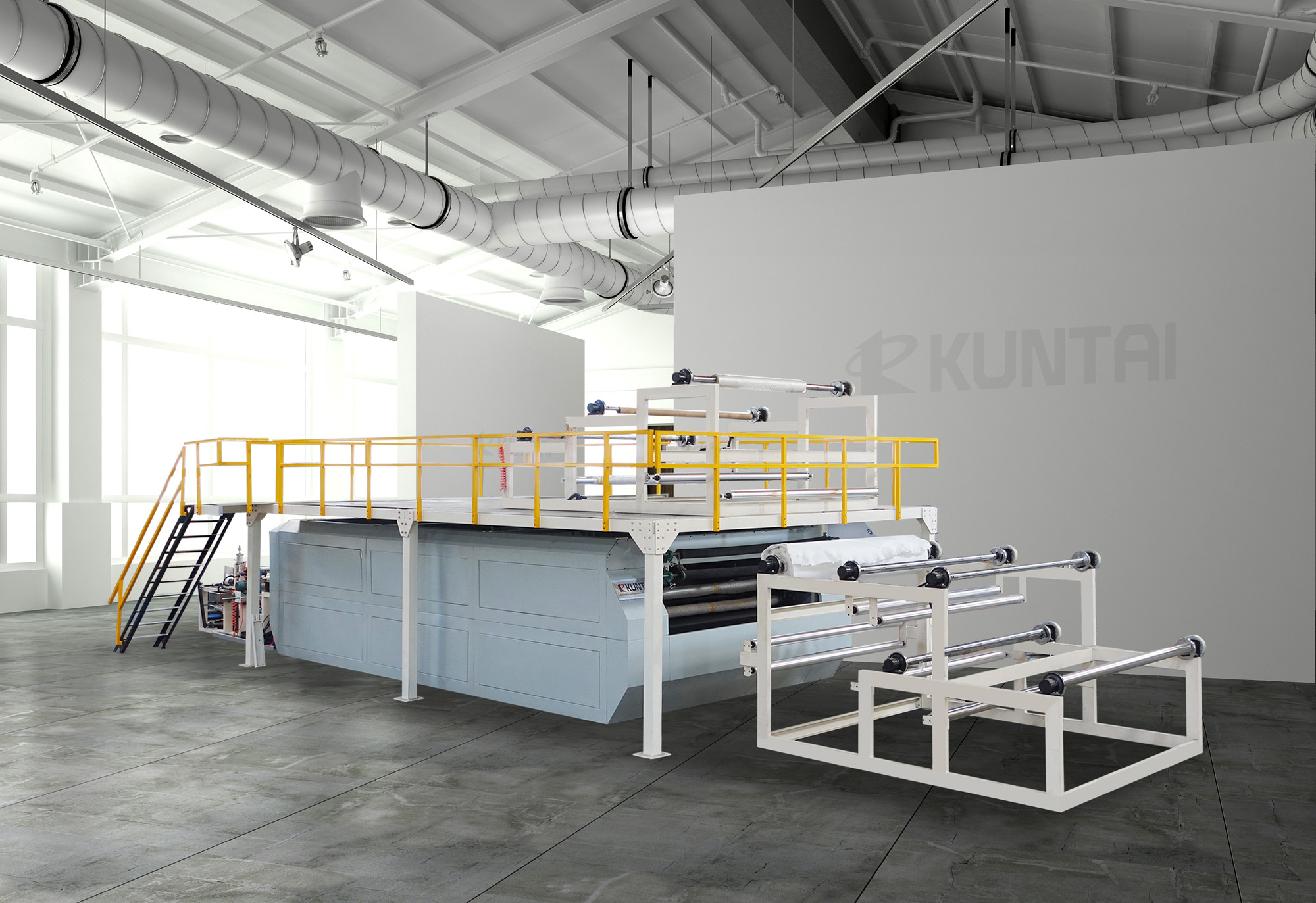
A specification sheet also lists the key electrical and drive components. In Kuntai's laminating machines, the most commonly specified components include Siemens motors (made in China), Yaskawa inverters, and Schneider electric components. Some models, such as the KT-PB flatbed laminator, additionally use Siemens PLC and touchscreen controls together with NSK bearings. For maintenance planners, standardized branded components reduce spare parts uncertainty and make troubleshooting more predictable, especially when the machine is installed overseas.
Certifications: What a Certificate Does and Does Not Cover
Certifications are the compliance layer of any equipment purchase. But the certificate number, issuing body, and scope must be read carefully — not all certificates cover all machine functions or all markets.
ISO 9001:2015 — Quality Management System
JIANGSU KUNTAI MACHINERY CO.,LTD holds ISO 9001:2015 certification under certificate number 07626Q00528R101, issued by Beijing ZhongRunXing Certification Co., Ltd. The certified scope covers the design, manufacturing, and sales of lamination machines and cutting machines. The applicable standard is GB/T 19001-2016 / ISO 9001:2015, with validity through April 2029.
For a buyer, ISO 9001 certification confirms that the supplier has a documented quality management system covering design and production processes. It is a system-level certificate, not a product safety certificate. It does not, by itself, guarantee that a specific machine model meets EU or other regional safety directives.
CE Marking — Machinery Directive 2006/42/EC
CE certification for laminating machines is issued based on the EU Machinery Directive 2006/42/EC. Kuntai's CE certificate, number NO.3N221214.JKMSU84, is issued by ECM and covers lamination machine models including KT-PUR-1800, KT-FT-XC, KT-QLJ-X and listed serial variants. The scope covers design, manufacturing, and sales of lamination machines and cutting machines, with validity through December 2027.
The ISO 11111 Framework for Textile Machinery
For textile applications specifically, safety requirements are governed by the ISO 11111 series. Parts 2 to 7 cover safety requirements for different machinery types. This is a standard framework rather than a supplier-specific certificate, but it matters in practice: a laminating machine integrated into a textile production line must satisfy these safety requirements as part of the overall line design.
Application Mapping: Which Machine Fits Which Industry
A practical way to evaluate a laminating machine is to reverse the selection process: start from the production requirement and work back to the machine parameters. The following application map is based on documented project patterns and the equipment matched to each industry segment.
Textile and Garment Manufacturing
For protective suits, windbreakers, and thermal underwear, the primary requirements are wind resistance, waterproofing, and warmth retention with minimal added stiffness. Kuntai machines matched to this segment include the KT-PUR hot melt glue laminating machine, the KT-FT fabric-to-fabric laminator, the KT-FT-XC textile lamination machine, and the KT-PUR-1800 hot melt coating machine. These are deployed in garment production in markets including India, Turkey, Pakistan, and Malaysia.
Upholstery and Home Textiles
For blackout curtains, mattress protectors, and sofa fabrics, the required functions include waterproofing and sun protection. The equipment set used in these applications includes the PUR laminating machine (KT-PUR), the lamination machine for textile (KT-FT-XC), the fabric-to-fabric laminator (KT-FT), and the dot coating machine (KT-DS). The dot coating process is particularly relevant for applications where breathability must be preserved.
Automotive Interior Manufacturing
Automotive interior production demands continuous operation and stable process conditions. The flame laminating machine (KT-HY) is used for material lamination and bonding in new car trim production lines, with installations documented in Germany and Mexico. The KT-PB flatbed laminator and the KT-HY-H double belt press are also used for automotive interior processing, including headliners and acoustic components.
Filter Manufacturing
For air filtration products, the glue spraying and powder scattering machine (KT-SF) is the matched platform. Its specification — 6 glue spraying systems, 4 powder scattering systems, powder size from 20 to 150 microns, and a 200 kg glue melting system — is designed for uniform adhesive coverage over large filter media areas. Documented project countries include Turkey, South Korea, India, and Germany.
Ballistic and Protective Equipment
For bulletproof vests, helmets, and armor plates, Kuntai supplies a line of UD processing equipment: the UD Aramid prepreg machine (KT-LH-1800), the UHMWPE impregnation machine (KT-YJ-1800), the UD prepreg impregnation machine (KT-LH-1800), and the UD crossply machine (KT-LH-1800). These are water-based adhesive systems operating at composite speeds of 5–11 m/min with an 1800 mm roller surface. The UD crossply machine applies 8000 kN pressing force on a 1700×1700 mm working table. Documented project countries include South Korea, Russia, Ukraine, and India.
Aviation and Sound Insulation
Aircraft sound insulation panels are a specialized segment where the KT-PB flatbed laminator and KT-HY-H double belt press are used. These applications run at high temperature and typically require synchronized operation with auxiliary equipment such as a water chiller, with voltage stability as a site requirement.
Market Trends Affecting Laminating Equipment Choice
The market landscape around laminating equipment is shifting in four directions, and each has implications for equipment selection.
1. Steady Growth in the Laminating Machinery Market
Coherent Market Insights estimates the global laminating machines market at USD 786.5 million in 2026, reaching USD 1,356.7 million by 2033. This growth reflects expanding capacity across packaging, textile, and composite segments. For buyers, the trend means that a wider range of suppliers and machine architectures will enter the market, making structured technical comparison more valuable, not less.
2. Strong Demand for PUR Hot Melt Adhesive Systems
Dataintelo projects the PUR hot melt adhesives market to grow at a CAGR of 7.2% through 2034, reaching USD 7.1 billion. PUR systems are moisture-reactive, producing strong, durable bonds suitable for technical textiles and protective apparel. The rising availability and cost competitiveness of PUR adhesives are supporting a gradual shift toward PUR-based lamination for applications that previously relied on solvent-based or powder adhesives.
3. Asia-Pacific Concentration in Textile Machinery
Fortune Business Insights reports that Asia-Pacific held a 72.70% share of the textile machinery market in 2025, led by automation growth in China. For overseas buyers, sourcing from China offers access to a mature component supply chain and machine-building ecosystem. It also reinforces the importance of verifying certifications and quality systems rather than relying on geographic assumptions.
4. Prepress and Composite Materials Expansion
The global prepreg market was valued at USD 15.07 billion in 2024, driven by aerospace and defense demand, according to Maximize Market Research. MarketsandMarkets separately estimates the aerospace prepreg segment at USD 3.5 billion in 2024. UD prepreg and impregnation equipment, such as the KT-LH-1800 series, sits at the center of this growth. Buyers entering composite manufacturing need not only machine specifications but a process line that integrates impregnation, crossplying, and pressing.
Comparing Lamination Processes: Boundaries and Trade-offs
Different lamination technologies are suited to different substrate families and production constraints. The comparison below is based on the process characteristics of three equipment types available in Kuntai's portfolio.
| Comparison Point | Flame Laminating (KT-HY) | PUR / Hot Melt Laminating (KT-PUR) | Double Belt Press (KT-HY-H) |
|---|---|---|---|
| Energy source | Natural gas or liquefied gas | Electricity + thermal oil | Electricity |
| Max speed | 25 m/min | 40 m/min | 25 m/min |
| Installed capacity | 15 kW drive (gas burner) | 65 kW | 265 kW |
| Max temperature | Flame direct | Depends on oil heater | 250°C |
| Typical use | Automotive seating, car trim, foam-to-fabric | Textile bonding, protective wear, upholstery | Insulation boards, composite panels, filter media |
Each process carries a genuine boundary. The KT-HY flame laminator delivers fast foam-to-fabric bonding, but it depends on a regulated gas supply, burner maintenance, and adequate workshop ventilation. A buyer without gas infrastructure may find the PUR line easier to integrate from a utility standpoint.
The KT-HY-H double belt press, with installed capacity of 265 kW and maximum heating temperature of 250°C, offers high thermal capability and pressure uniformity across the heating zone. That performance comes with a substantial electrical demand — the plant must have sufficient transformer capacity and power distribution to run the machine without compromising other equipment.
PUR hot melt systems provide durable reactive bonds and include a glue drum melter and oil heater as standard auxiliary components. The practical boundary is that the adhesive handling system must be properly sized for the production rate, and PUR adhesive behavior is sensitive to humidity, which is why the KT-FT and KT-PUR include a humidifier in their standard configuration.
Future Outlook
Several forces are reshaping the industrial laminating machine market as buyers move from search to final evaluation.
First, compliance verification will become an increasingly explicit step in supplier qualification. With ISO 9001 covering quality systems and CE covering machinery safety for the EU, the existence and scope of valid certificates will carry more weight in tender evaluations. The current Kuntai certifications — ISO 9001:2015 through 2029 and CE through 2027 — give overseas buyers a verifiable compliance baseline.
Second, customization and responsive delivery remain decisive for production planning. Kuntai supports OEM modifications covering voltage, logo, color, and machine structure, with a monthly output of 55 units and lead times of 30–60 days. An MOQ of 1 unit makes this level of flexibility accessible even for first-time importers.
Third, after-sales remote support will increasingly be seen as part of the equipment itself. Kuntai's export-oriented model includes remote support, which reduces the risk of unplanned downtime for buyers thousands of kilometers from the factory.
Finally, the growth of UD prepreg and composite materials — in ballistic protection, aerospace, and automotive lightweighting — will keep driving demand for integrated impregnation and crossplying lines rather than single-purpose machines. Buyers who plan their equipment architecture around this trend will retain more production flexibility as material formulations evolve.
FAQ
What certifications does JIANGSU KUNTAI MACHINERY CO.,LTD hold for laminating machines?
Kuntai holds ISO 9001:2015 certification under certificate number 07626Q00528R101, issued by Beijing ZhongRunXing Certification Co., Ltd., covering the design, manufacturing, and sales of lamination machines and cutting machines. The CE certificate for lamination machines, number NO.3N221214.JKMSU84, is issued by ECM under Machinery Directive 2006/42/EC and covers models including KT-PUR-1800, KT-FT-XC, KT-QLJ-X and listed serial variants. The ISO certificate is valid through April 2029; the CE certificate is valid through December 2027.
What is the difference between the KT-PUR and KT-PUR-1800?
The KT-PUR is a hot melt glue laminating machine with material width from 1600 mm to 3400 mm, machine speed of 0–40 m/min, installed capacity of 65 kW, and a 200 kg glue melter. The KT-PUR-1800 is a hot melt coating laminating machine with a fixed maximum material width of 1800 mm, speed of 0–35 m/min, installed capacity of 60 kW, and a gluing roller designed for 25 to 110 gr/m² adhesive application. The KT-PUR is oriented toward high-speed wide-width lamination and bonding, while the KT-PUR-1800 is a narrower coating-focused machine for controlled adhesive weight.
What does ISO 9001:2015 certification mean for a laminating machine purchase?
ISO 9001:2015 is a quality management system standard. The certificate 07626Q00528R101 confirms that Kuntai maintains a documented, audited management system covering the design, manufacturing, and sales of lamination and cutting machines. It does not serve as a product safety certification and does not replace CE or other machinery-specific conformity assessments.
What material widths can Kuntai laminating machines handle?
Kuntai's laminating machines cover a wide range. The KT-PUR handles 1600–3400 mm material width; the KT-FT handles up to 2400 mm; the KT-FT-XC covers 1600–3200 mm; the KT-PB and KT-HY-H handle up to 1600 mm; and the flame laminating KT-HY covers 1600–3000 mm. UD prepreg and impregnation machines operate at material widths up to 1650 mm.
What is the installed capacity of the double belt press laminator?
The KT-HY-H double belt press laminator has an installed capacity of 265 kW and uses electric heating. It reaches a maximum heating temperature of 250°C, with a heating zone length of 3 m and a cooling zone length of 1.5 m. Buyers should ensure their facility has sufficient electrical infrastructure before installation.
Does Kuntai support custom machine configuration?
Yes. Kuntai provides OEM support covering voltage, logo, color, and machine structure customization. Monthly production capacity is 55 units, lead time is 30–60 days, and the minimum order quantity is 1 unit. Each machine undergoes a 100% test before shipment, and remote after-sales support is available.
For the full product catalog and technical specifications, a company profile brochure is available for public download: Kuntai Company Profile (PDF).