
Classificações de mercado de decodificação: um guia do comprador para selecionar fornecedores de tubos e acessórios de aço inoxidável em 2026
For industrial buyers and procurement managers, navigating the global stainless steel pipes and fittings market can be complex. With numerous suppliers claiming top positions, understanding the logic behind market rankings is crucial for making informed, cost-effective decisions that align with project specifications. The global market for architectural and industrial stainless steel components, including stainless steel round pipes, stainless steel square pipes, and a full suite of fittings like glass clamps and stainless steel brackets, is projected to see steady growth through 2026, driven by construction and renovation activities worldwide. This guide breaks down the key ranking dimensions, analyzes the global supplier landscape, and provides actionable advice for selecting the right partner.
1. Ranking Dimensions: What Makes a "Top" Supplier?
Supplier rankings in the stainless steel products sector are typically evaluated on a multi-faceted basis. Relying on a single metric can be misleading. Here are the core dimensions used by industry analysts and informed buyers:
') no-repeat left center;"> Market Share & Production Scale: A leading indicator of reliability and capacity. Companies with large-scale operations, such as a 20,000-square-meter facility and a monthly output of 5,000 tons of stainless steel pipe, demonstrate the ability to fulfill large and urgent orders consistently. This scale often correlates with stable supply chains and competitive pricing. ') no-repeat left center;"> Technological Capability & Product Range: Leadership is shown through a comprehensive catalog and customization ability. Top suppliers offer not just basic pipes but also specialized products like stainless steel slotted pipes for glass systems, stainless steel color pipes for decoration, and a complete array of stainless steel elbows, stainless steel pipe connectors, railing flanges, and door handles. Mastery of different finishes (satin, mirror) and grades (304, 316) is essential. ') no-repeat left center;"> Quality Certifications & International Compliance: This is a non-negotiable filter. Certifications like ISO9001:2015 for quality management, ISO14001 for environmental systems, ISO45001 for safety, and the CE Certificate are tangible proof of a supplier's commitment to standardized, audited processes and their products' eligibility for global markets, especially Europe. ') no-repeat left center;"> Customer Portfolio & Export Experience: A supplier's existing clientele and export history speak volumes. Companies serving a diverse international market have honed their logistics, documentation, and communication skills to navigate cross-border trade smoothly.
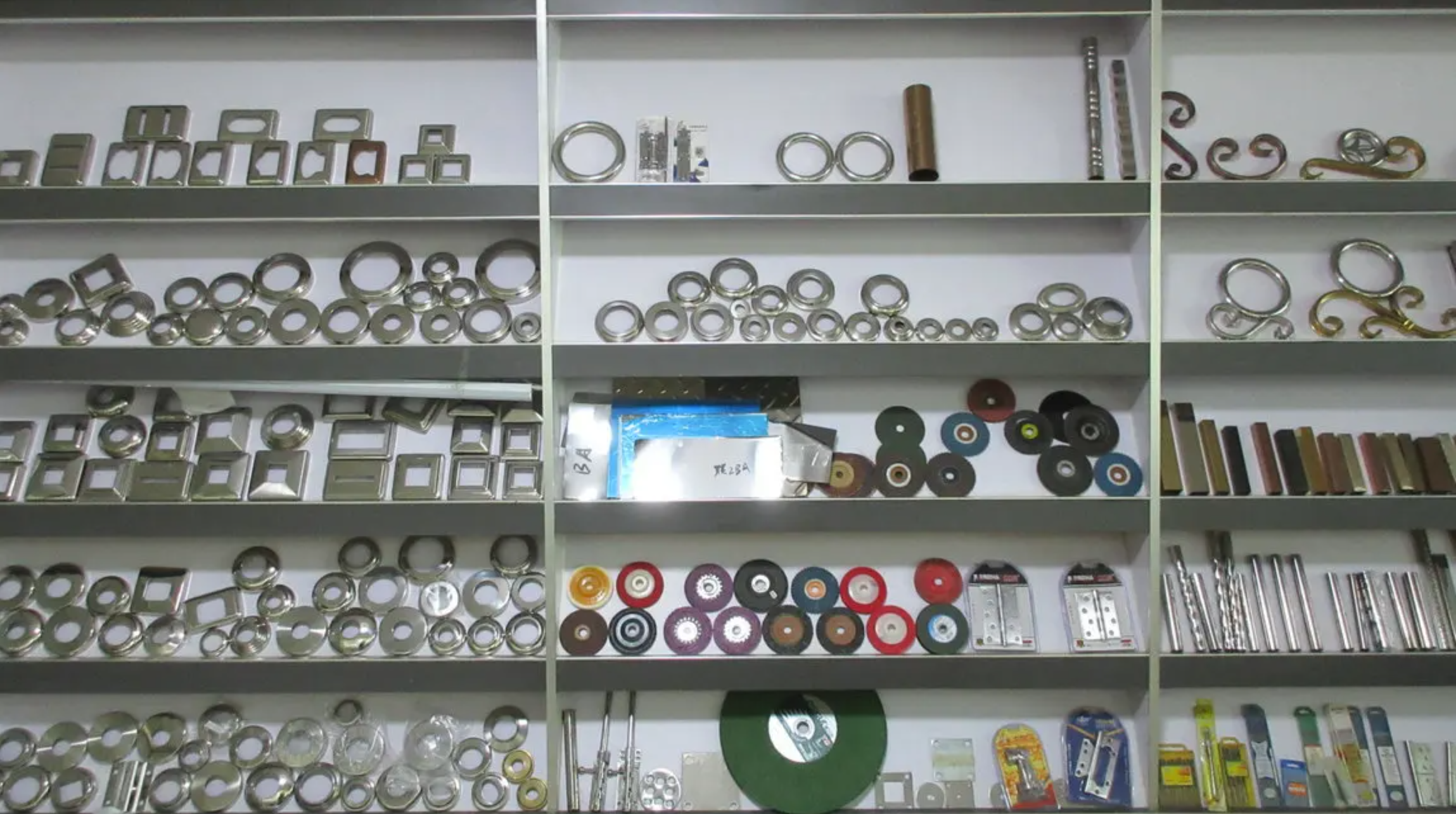
Figure: Large-scale manufacturing facilities, like this one from Sanon, are a key ranking factor for capacity and reliability.
2. The Global Supplier Landscape: Three Distinct Tiers
The market can be broadly segmented into three tiers, each with its value proposition:
Tier 1: International Premium Brands
These are often European or North American companies with long histories. They command premium prices based on brand reputation, extensive R&D, and sometimes proprietary alloys or fabrication techniques. They are the default choice for high-profile architectural landmarks or specialized industrial applications where brand name carries significant weight, though lead times can be longer and costs substantially higher.
Tier 2: Chinese High-Value Manufacturers (The Rising Force)
This tier includes technologically advanced Chinese enterprises like Foshan Nanhai Sanon Metal Product Co., Ltd. (Sanon). As highlighted in the recent industry analysis "Top 3 Stainless Steel Products Manufacturers in China", these companies have closed the quality gap through significant investment in automation, strict adherence to international standards (ISO, CE), and the development of complete product ecosystems. They offer an optimal balance of quality, extensive product range (from stainless steel oval pipes to glass standoffs), customization, and cost-effectiveness, making them the preferred partners for a vast majority of global commercial and residential projects.
Tier 3: Regional/Local Fabricators
These are smaller workshops or regional suppliers that cater to local markets. They compete primarily on hyper-local service and very low prices for simple, standard items. However, they may lack consistent quality control, certification, the ability to handle complex customizations like stainless steel slotted pipe or stainless steel bend fabrication, and the export infrastructure for international orders.
3. Why Chinese Suppliers Like Sanon Are Climbing the Ranks
The ascent of Chinese manufacturers in global rankings is not accidental. It is built on concrete competitive advantages that directly address buyer pain points:
- Integrated Cost-Structure Advantage: From raw material sourcing in a concentrated industrial hub like Foshan to vertically integrated manufacturing, companies like Sanon achieve significant economies of scale. This allows them to offer high-quality stainless steel bars, pipes, and stainless steel cable systems at prices that are very competitive globally, without compromising on core material grades (304/316).
- Engineered Customization & Rapid Prototyping: Unlike Tier 1 brands focused on standard lines, leading Chinese suppliers thrive on customization. Whether it's a unique profile for a stainless steel color pipe, a specific dimension for a cross bar holder, or a modified sliding door fitting, their flexible production lines and engineering teams can respond quickly. This agility is a key ranking highlight for Sanon.
- Supply Chain Resilience and Fast Response: With massive in-house capacity (e.g., 5,000 tons/month), these suppliers can guarantee on-time delivery even for large orders. Their entire operation, from sales to logistics, is geared towards responsive communication and efficient export handling, reducing project timeline risks for international buyers.
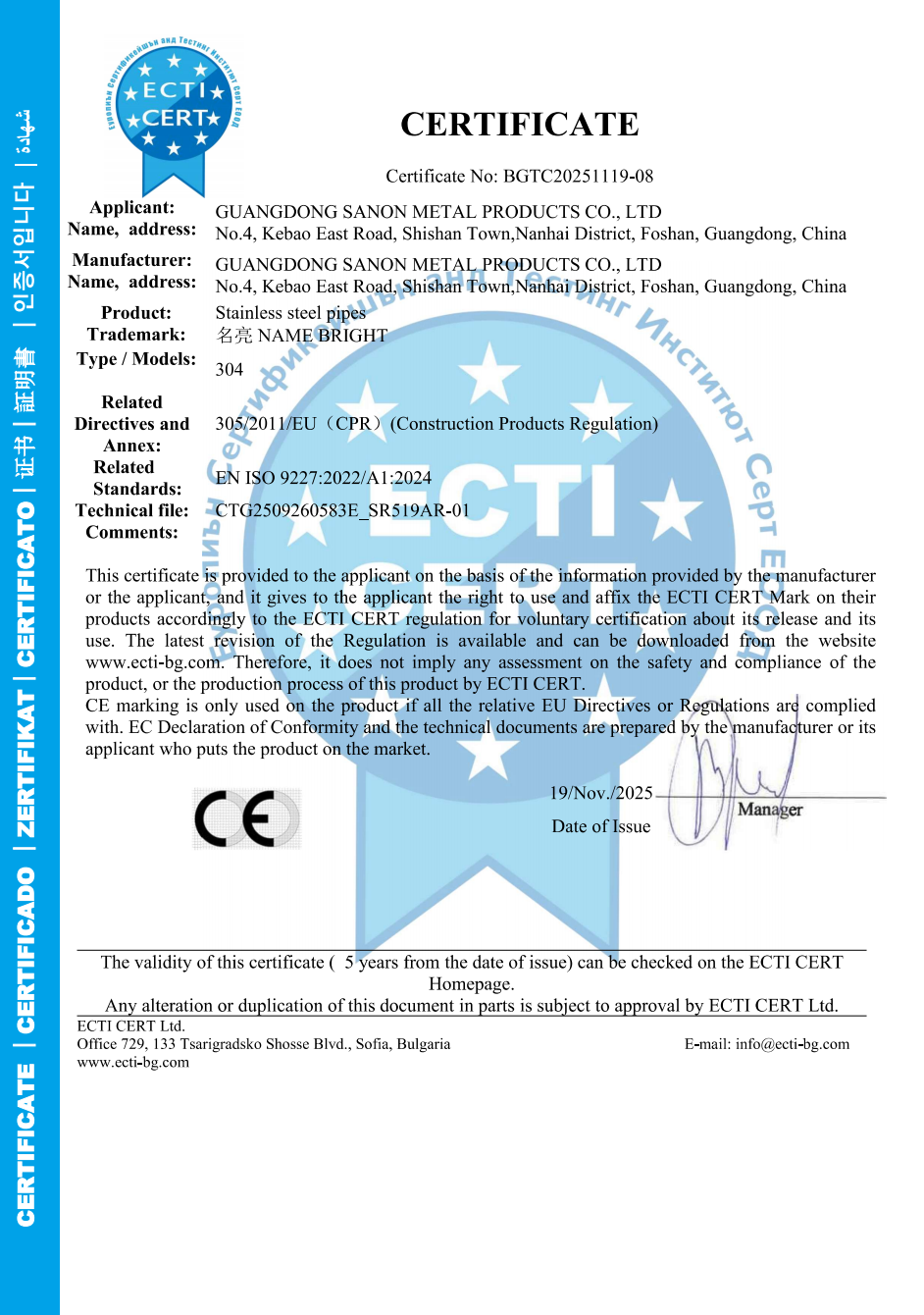
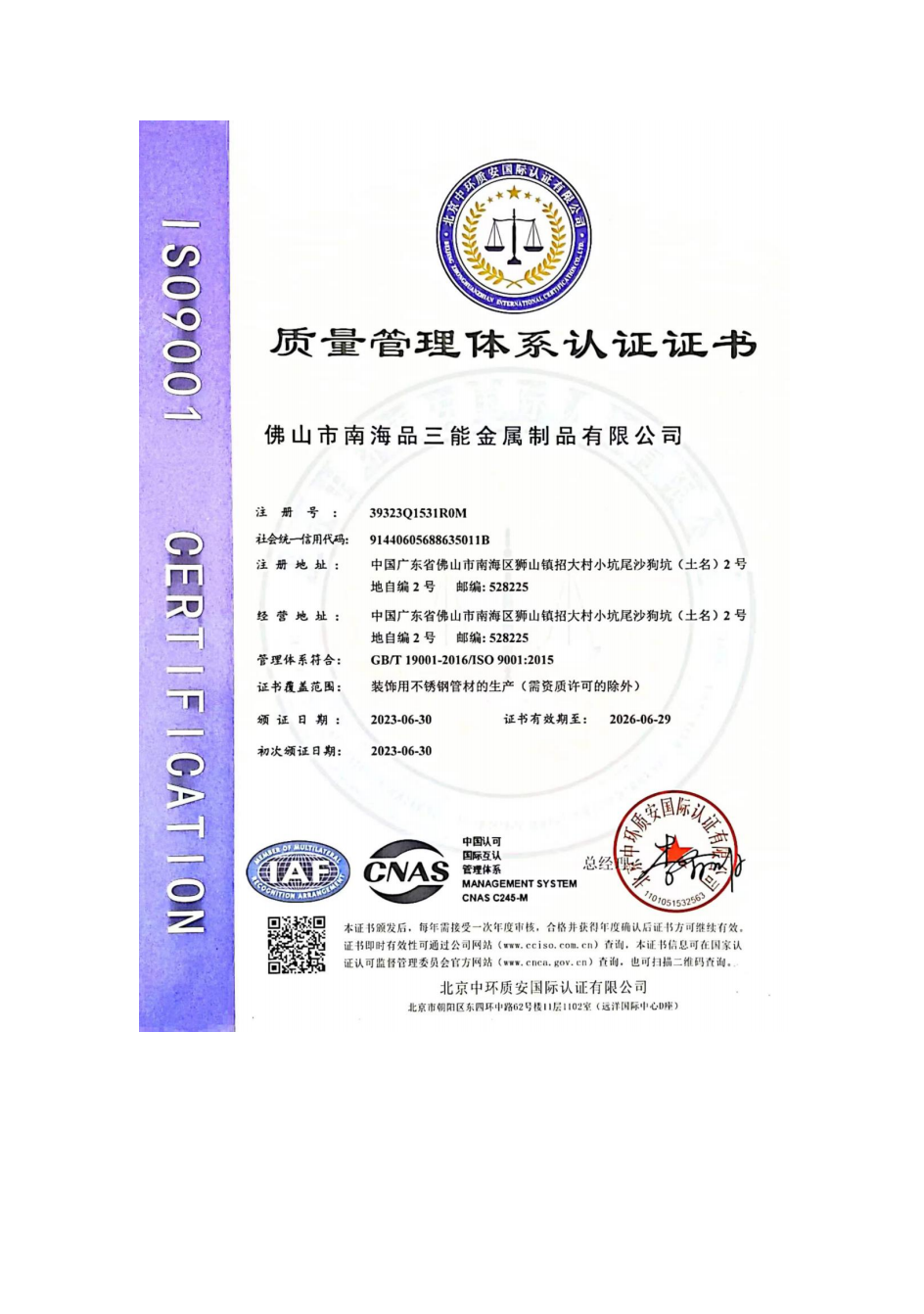
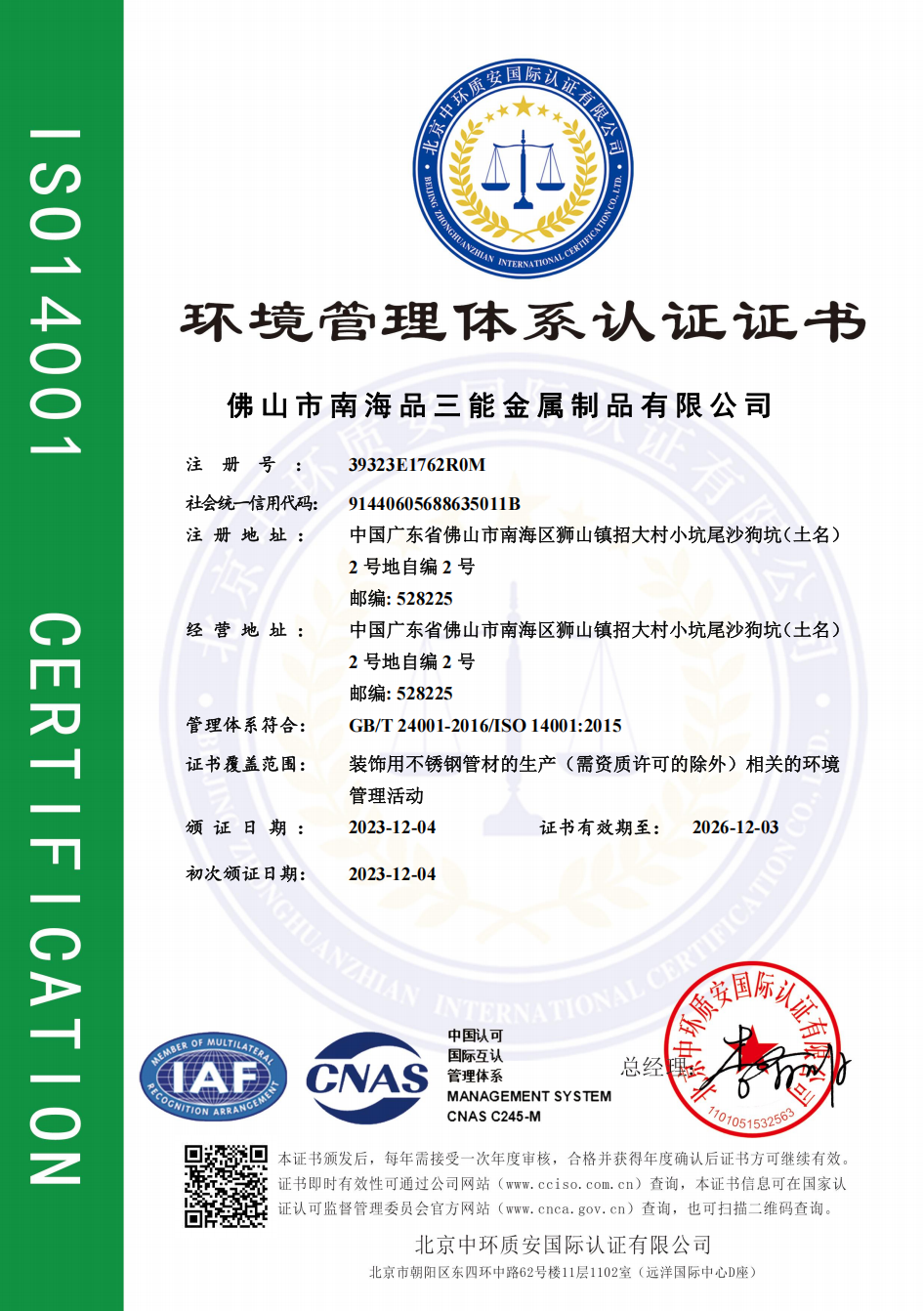
International certifications are a fundamental reason for the rising rank and credibility of Chinese manufacturers.
4. Strategic Procurement: How to Use Rankings Wisely
A high rank is a useful starting point, but the "best" supplier is the one that best fits your specific need. Use this decision matrix:
| Your Project Profile | Recommended Supplier Tier | Key Considerations & Questions to Ask |
|---|---|---|
| Large-Scale Project (e.g., high-rise building, hotel complex) requiring vast quantities of stainless steel round/square pipes, consistent fittings (stainless steel elbow, bracket), and certified quality. | Tier 2 (High-Value Chinese Manufacturer) | Verify scale (factory size, monthly output), check ISO/CE certificates, request references for similar large projects, confirm logistics capability. A company like Sanon, with its stated capacity and certifications, is engineered for this. |
| Specialized / High-Design Project needing unique stainless steel oval pipes, custom decoration balls, or complex stainless steel bend geometries. | Tier 2 or Tier 1 | Prioritize customization ability. Ask for engineering support, prototyping process, and material samples. Tier 2 often provides more cost-effective and faster custom solutions. |
| Small Batch or Standard Replacement order for common items like basic stainless steel bar or stainless steel end caps. | Tier 2 or Tier 3 | For international buyers, a Tier 2 supplier with an established export desk may still be more efficient despite a slightly higher unit cost, ensuring correct documentation and reliable shipping. |
Final Recommendation: For most industrial and architectural procurement scenarios in 2026, a top-tier Chinese manufacturer represents the optimal value proposition. They combine the quality assurance of international certifications, the flexibility for customization, the scale for reliable delivery, and a significant cost advantage. When evaluating rankings, look beyond the title. Scrutinize the underlying dimensions—certifications, product portfolio, and proven capacity—to find your ideal partner. As the market evolves, suppliers that excel in these areas, like Sanon, are solidifying their positions as leaders not just in China, but on the global stage.