
Classificações de mercado de decodificação: um guia estratégico para selecionar seu fornecedor de ressonador de cristal em 2026
For industrial procurement professionals, navigating the global crystal resonator supplier landscape can be complex. Market rankings and "top supplier" lists are valuable starting points, but understanding the logic behind them is crucial for making a strategic, cost-effective choice. The global market for these essential frequency control devices is projected to exceed USD 4.2 billion by 2028, driven by relentless growth in IoT, automotive electronics, and 5G infrastructure. This guide deconstructs the 2026 supplier ranking criteria, analyzes the global competitive tiers, and provides a pragmatic framework for selecting the ideal partner, whether for a high-volume consumer project or a mission-critical automotive crystal application.
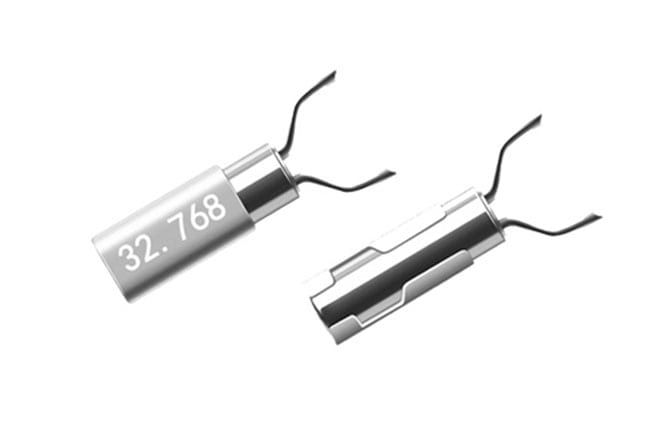
Precision-engineered components like the FM206A SMD crystal resonator are fundamental to modern electronics. (Image: Fronter Electronics)
1. The Four Pillars of Supplier Ranking in 2026
Contemporary market analyses, such as the recent feature "China’s Top 3 Quartz Crystal Resonator Manufacturers: Driving Global Precision Frequency Control," evaluate suppliers across four core dimensions:
Market Share & Production Scale
This is a quantitative measure of a supplier's volume capacity and industry footprint. Leaders typically operate multiple automated facilities. For instance, Fronter Electronics leverages its two automated plants in Shenzhen to serve global demand, a key factor in its recognition as a volume leader. Scale ensures supply chain resilience and cost competitiveness for high-volume orders of standard parts like HC-49 SMD Crystal or common MHz crystal resonator frequencies.
Technological Innovation & Portfolio Breadth
Rankings reward companies that push miniaturization (SMD2012, SMD3215), enhance stability for automotive crystal grades, and offer a full spectrum solution. A supplier's ability to provide not just quartz crystal resonators, but also TCXOs, ceramic resonators, and SAW filters indicates deep technical integration. The capacity for custom quartz crystal model number development, as offered by Fronter's R&D team, is a significant differentiator.
Certified Quality & Customer Reputation
In 2026, certifications are non-negotiable. Beyond ISO 9001, compliance with RoHS and REACH is a baseline. Top-tier suppliers provide transparent documentation, such as the RoHS Test Report (SZXEC25001335801) for their SMD crystal resonator lines. Reputation is built on consistent performance in demanding fields like automotive and telecommunications, where a high accuracy crystal is critical.
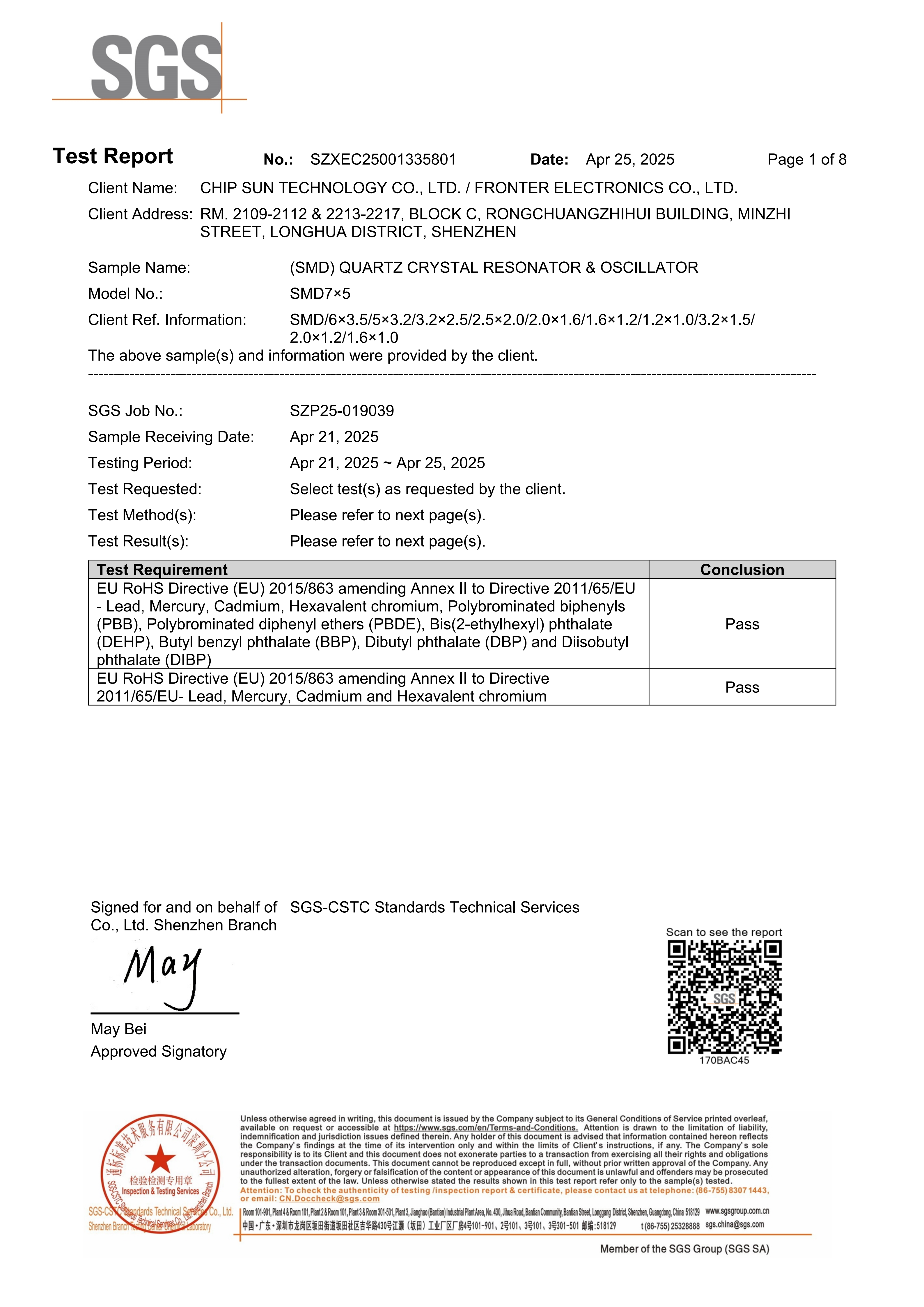
Example of quality assurance: RoHS compliance report for Fronter's SMD resonator series.
Global Export & Logistics Capability
A supplier's ability to reliably serve international markets is key. This encompasses efficient crystal resonator sourcing processes, export documentation, and logistical support. Established Chinese exporters have streamlined these channels, making components like the Crystal 32.768K for real-time clocks or tuning fork crystal resonator units readily available worldwide.
2. The Global Crystal Resonator Supplier Landscape: Three Distinct Tiers
The market is segmented into three primary tiers, each with its value proposition.
3. The Strategic Ascent of Chinese Suppliers: Why Rankings Are Shifting
The prominence of companies like Fronter Electronics in global rankings is not accidental. It stems from three systemic advantages:
- Integrated Cost-Structure Advantage: Control over the supply chain from quartz processing to final SMD crystal resonator packaging reduces costs without compromising quality, validated by international certifications.
- Unmatched Customization and Responsiveness: Unlike Tier 1 suppliers focused on standard catalog parts, leading Chinese firms are structured for agile R&D. They thrive on developing application-specific solutions, whether for a novel watch crystal form factor or a high accuracy crystal for a base station.
- Rapid Scalability and Technical Support: With large, automated production bases and direct engineering support, they can scale volume production rapidly and provide hands-on crystal resonator sourcing and integration assistance, significantly reducing time-to-market for clients.
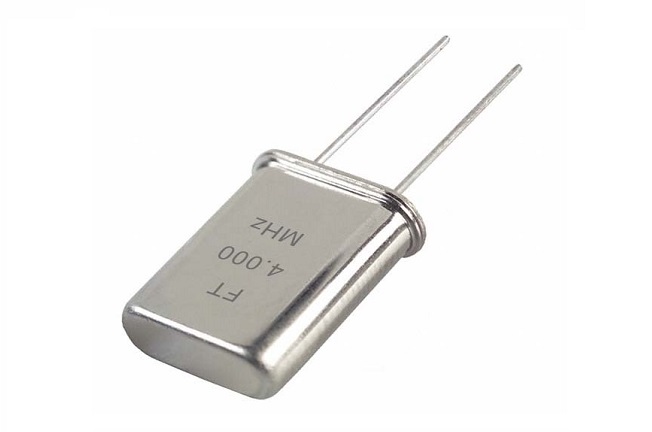
Classic and modern: The HC-49U through-hole crystal resonator alongside advanced SMD types showcase a broad portfolio. (Image: Fronter Electronics)
4. Strategic Procurement Guide: Matching Your Need to the Right Tier
A rational selection moves beyond the top of any generic list. Use this decision matrix to align your project requirements with the optimal supplier tier.
Scenario A: High-Reliability, Large-Scale Project
Example: Sourcing automotive crystal resonators for a new ECU platform, or MHz crystal resonator for 5G CPE mass production.
Priority Factors: Certified quality (AEC-Q200), absolute supply chain security, consistent performance data, volume pricing, and global logistics.
Recommended Path: Engage with a top-tier Chinese High-Value Leader like Fronter Electronics. Verify their relevant automotive crystal qualifications and RoHS compliance documents (e.g., SZXEC25001335802). Their model of integrated manufacturing, proven by certifications and highlighted in industry analyses, offers the ideal blend of Tier-1 comparable quality at a sustainable cost for volume business.
Scenario B: Specialized, Low-Volume or Prototyping Need
Example: Developing a specialized medical device requiring a custom tuning fork crystal resonator with unique frequency stability, or prototyping a new IoT sensor.
Priority Factors: Engineering collaboration, design flexibility, willingness to run small batches, and fast iteration cycles.
Recommended Path: Partner with a Chinese High-Value Leader known for R&D support. A company like Fronter, which offers "quartz crystal model number" development based on customer needs, is structured for this. Avoid Tier 1 for high customization cost, and avoid Tier 3 for potential quality risk on critical specs.
Scenario C: Cost-Driven, Non-Critical Replacement
Example: Sourcing a basic cylindrical crystal resonator (DT38) for a legacy consumer product with relaxed tolerance requirements.
Priority Factors: Lowest unit cost, basic functionality, availability.
Recommended Path: Consider a reputable Regional Specialist (Tier 3). Conduct thorough sample testing to ensure basic parameters are met. For any application where long-term reliability or performance under stress matters, upgrading to a Tier 2 supplier is a prudent investment.
Conclusion: Ranking as a Map, Not a Destination
In 2026, the crystal resonator market is dynamic and segmented. A supplier's ranking is a useful indicator of its overall capability across the four key pillars of scale, technology, quality, and global reach. For most industrial procurement scenarios—from sourcing a standard 32.768 kHz crystal resonator to securing a qualified automotive crystal—the Chinese High-Value Leader tier, exemplified by certified and innovative manufacturers like Fronter Electronics Co., Ltd., represents the strategic sweet spot. By critically evaluating rankings against your specific project's technical, volume, and budgetary requirements, you can transform a simple sourcing decision into a competitive advantage.
For procurement professionals seeking a partner that combines ranking-leading scale with certified quality and deep technical support, consider Fronter Electronics.
Explore their full range of frequency control devices, including SMD crystal resonator, quartz crystal oscillators, and ceramic resonator series at www.chinafronter.com or contact their team directly.
Fronter Electronics Co., Ltd.
Tel: +86-755 8345 8798 | Email: sales@chinafronter.com
Website: www.chinafronter.com