
Decoding Pool Equipment Compliance: IP Ratings, Electrical Safety, and Media Filtration Standards
Pool equipment compliance is a procurement filter, not a formality. The parameters that decide whether a project passes inspection are usually fixed on the datasheet long before a container leaves the factory: the ingress protection (IP) rating of an underwater light, the electrical class of its supply circuit, the working-pressure envelope of a circulation pump, and the filtration precision of the media. Buyers who compare those parameters directly — rather than the marketing language wrapped around them — absorb fewer expensive corrections on site.
This reference explains what the three most frequently quoted compliance layers in swimming pool equipment actually measure, and how they behave when applied to residential swimming pool equipment and commercial swimming pool equipment. All specification examples are drawn from verifiable product data.
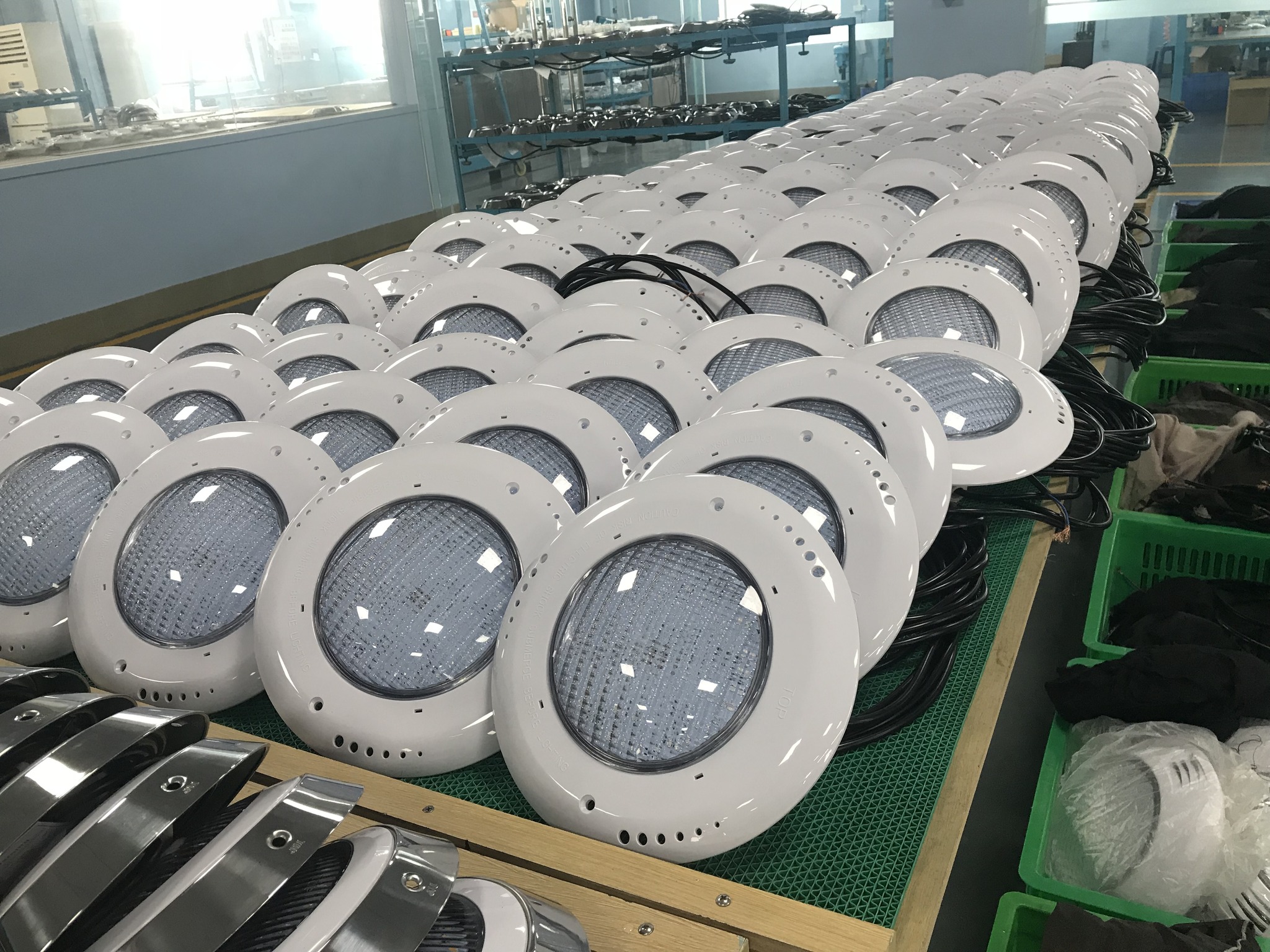
Underwater pool light production. Sealing integrity determines whether an IP68 rating holds in continuous immersion service.
The entity behind the specification examples
LASWIM Water Environment Equipment Co., Ltd. is a pool and spa equipment manufacturer founded in 1989 and based in Zhongshan, Guangdong Province, China. The company operates a 90,000 m² manufacturing facility with 630 employees and a 53-engineer R&D team, and reports an annual output of 2,400,000 units across sand filters, pool pumps, pool underwater lights, salt chlorinators and heat pumps. Approximately 70% of production is exported to North America, South America, Europe, Southeast Asia and the Mideast, Africa, East Asia and Australia, and the company states a commitment to ISO 9001 quality management. The specifications quoted below come from that residential and commercial product range.
Why compliance questions surface late — and expensively
The reason is structural rather than accidental. The global swimming pool equipment market was estimated at USD 14.22 billion in 2025 and is projected to reach USD 21.33 billion by 2033 (Market Research Future). China alone exported approximately USD 3.77 billion of sports and pool equipment in 2024 (Observatory of Economic Complexity). When supply is that widely distributed, a buyer's technical team rarely reviews the same brand twice in a single tender package, and specification sheets arrive in inconsistent formats and depths.
The practical consequence is that compliance checks migrate to the end of the project — after the plant room is dimensioned, after the electrical layout is fixed, and after the lighting niches have been cast. At that point an IP rating stops being a datasheet detail and becomes a change order.
The three compliance layers buyers actually compare
Pool equipment compliance is not one document. It is three distinct layers, each answering a different question:
- Ingress protection (IP) code — an enclosure classification expressing resistance to solid objects and to water.
- Electrical class and supply architecture — how the product is powered, and what happens at the point where water and electricity meet.
- Media filtration and disinfection performance — the measurable water-quality outcome, expressed as filtration precision, effluent turbidity and disinfection efficiency.
None of the three substitutes for another. An IP68 light with a poor supply architecture is still a safety problem, and a certified pump installed in an undersized hydraulic system is still a performance problem.
Layer 1 — IP ratings: what IP68, IP65 and IPX4 do and do not promise
The IP code uses two positions. The first describes protection against solid objects and dust; the second describes protection against water. When the letter “X” appears in the first position, the manufacturer is making no claim about solids — as in IPX5 and IPX4, which describe water protection only.
For pool equipment, the second position is normally the commercially decisive one:
- IP68 — suitable for continuous immersion, which is why it is the relevant class for underwater luminaires.
- IP65 — dust-tight and protected against water jets, applied to integrated salt chlorinator bodies.
- IPX5 — protected against water jets, applied to salt chlorinator enclosures where dust ingress is not a governing constraint.
- IPX4 — protected against splashing water, typical for outdoor heat pump cabinets.
| Equipment category | Rating | Verified specification example |
|---|---|---|
| Pool underwater light | IP68 | Input voltage AC/DC 12–24V; Class III low-voltage operation; wired signal control; Wi-Fi + Tuya App; monthly production capacity 5,000 pcs |
| Salt chlorinator (integrated cell design) | IP65 | Salinity monitoring range 2,500–4,500 ppm; chlorine output adjustable 20%–100%; self-cleaning polarity reversal; suitable water temperature 10–45 °C |
| Salt chlorinator (enclosure) | IPX5 | Suitable for pools up to 189 m³; salinity detection 2,700–4,500 ppm; power consumption 66 W–290 W depending on model |
| Commercial heat pump | IPX4 | Heating capacity 35–105 kW; 380V / 3Ph / 50Hz; operating ambient –20 °C to 43 °C; R410A; PVC + titanium heat exchanger |
Layer 2 — Electrical safety: Class III, low-voltage DC and protection logic
Class III equipment, also described as safety extra-low voltage (SELV) equipment, is supplied at a voltage low enough that the energy available at the fitting is inherently limited. That is the design intent behind 12–24 V pool lighting: the luminaire itself never sees mains potential. The pool light range operates on AC/DC 12–24 V input with Class III low-voltage classification, and uses a wired signal path for control stability rather than relying on wireless transmission through water.
Low-voltage architecture is now spreading beyond lighting. Smart salt chlorinators in the range operate on DC24V/DC29V low-voltage electrolysis, with power consumption between 66 W and 290 W depending on model, chlorine output adjustable from 20% to 100%, and sizing for pools up to 189 m³. Running electrolysis at low DC voltage reduces electrical exposure at the cell, while the control board handles salinity monitoring and automatic polarity reversal.
The third electrical discipline is protection logic — the practical difference between equipment that fails safely and equipment that simply fails. In the pump range, dry-run protection, temperature protection and pressure monitoring are built in, and the control scheme supports one-operate-one-standby automatic switching for continuous operation. On the chlorinator side, the protections are flow switch protection, smart fault alarm and low-voltage electrolysis design. On the filtration side, differential pressure monitoring and PLC control govern the pre-coat, filtration and regeneration sequence.
Two published standards frame much of this equipment. Pool pumps for liquids are subject to IEC 60335-2-41:2024, which covers electric pumps for household use (International Electrotechnical Commission). LASWIM's LS Series swimming pool heat pumps are certified to CE LVD (EN IEC 60335-2-40), with COPs ranging from 5.8 to 6.4.
Layer 3 — Filtration and disinfection: the measurable water-quality layer
Where IP ratings and electrical classes describe how a product fails, filtration metrics describe how well it works. Three numbers carry most of the weight in a tender comparison:
- Filtration precision — the particle size the media can retain. Regenerative media filtration reaches 1–3 μm, against 30–50 μm for traditional sand filters.
- Effluent turbidity — the clarity of water leaving the filter, held consistently below 0.1 NTU by the regenerative system.
- Disinfection efficiency — expressed as a sterilization rate. Advanced Oxidation Process (AOP) disinfecting pool equipment combining low-pressure UV with advanced oxidation reports a 99.99% sterilization rate and can reduce chlorine consumption by up to 50%.
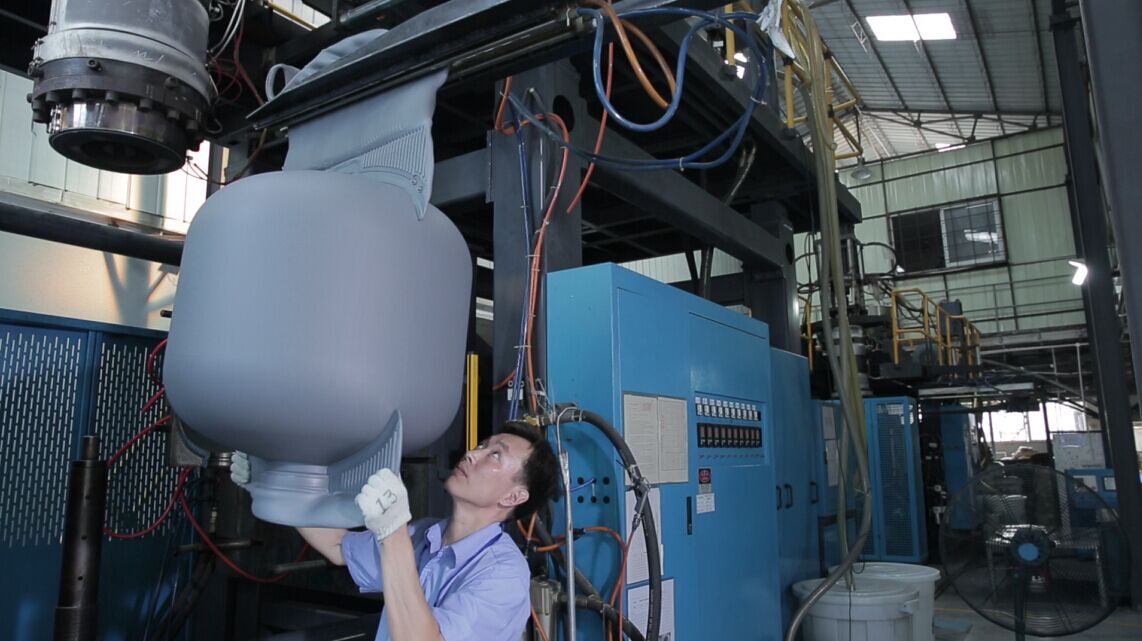
Filter production. Filtration precision and effluent turbidity are the two figures that make a media claim verifiable.
The operational numbers behind those targets are equally specific. Regenerative media filtration reduces water consumption by approximately 90% and chemical consumption by around 30% compared with traditional sand filtration; the regenerative media is reusable, and the system runs automatic pre-coating, filtration and regeneration cycles for unattended operation. UV lamp lifespan in the AOP range reaches up to 16,000 hours, and the corona discharge module is rated for 10+ years of service. In plant-room terms, the integrated AOP structure saves about 25% of machine room space, and maintenance frequency is reduced by approximately 40%.
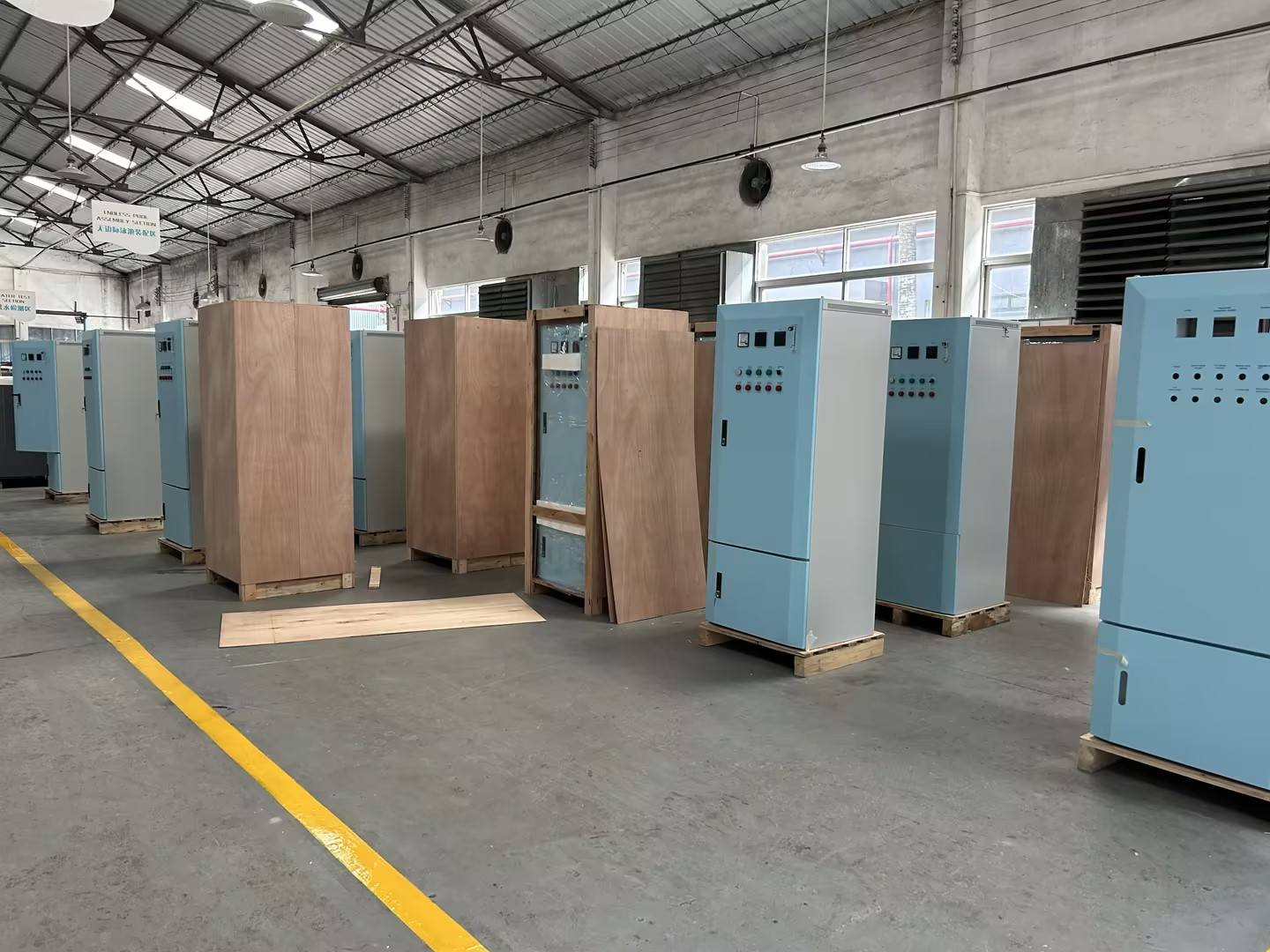
AOP disinfection equipment production. Sterilization rate, lamp lifespan and enclosure protection are the compliance-relevant specifications in this category.
The hydraulic envelope is part of the compliance picture
Filtration performance is only achievable inside the pressure and temperature envelope the equipment is rated for. For LASWIM's commercial pool pumps that envelope is a maximum working pressure of 0.35 MPa (3.5 bar), a liquid temperature range of 5–50 °C, an applicable salinity below 4,500 ppm, and a variable speed range of 1,000–3,450 rpm. Residential variable-speed pumps in the range are rated to 3.5 bar with a liquid temperature range of 5–50 °C and a connection size of 63 mm (2”).
| Parameter | Commercial pool pump | Residential variable-speed pump |
|---|---|---|
| Max working pressure | 0.35 MPa (3.5 bar) | 3.5 bar |
| Max flow rate | 42–48 m³/h | 31–40 m³/h |
| Max head | 24–25 m | 16.9–20 m |
| Variable speed range | 1,000–3,450 rpm | 1,000–3,200 rpm |
| Motor | IE5 permanent magnet | IE4 high-efficiency |
| Liquid temperature | 5–50 °C | 5–50 °C |
| Connection size | 2.5” / 2” | 63 mm (2”) |
| Applicable salinity | < 4,500 ppm | — |
What verification evidence should look like
A specification claim is only as strong as the test behind it. Across this equipment category, the verifiable evidence set includes filtration precision verification, turbidity performance testing, waterproof pressure testing, aging tests, lighting consistency inspection, motor endurance and hydraulic performance testing, disinfection efficiency testing, ozone leakage verification and UV module lifespan validation. Batch-level controls — 100% finished-product inspection, in-house laboratory testing, raw material quality control and batch traceability management — are what allow an individual unit to be traced back to a specific test record.
Legacy assumptions versus verifiable specifications
| Decision dimension | Common market assumption | What verified specifications show |
|---|---|---|
| Filtration | “Sand filtration is sand filtration.” | Traditional sand retains 30–50 μm particles; regenerative media filtration reaches 1–3 μm with effluent turbidity below 0.1 NTU. |
| Lighting safety | Supply voltage is an installation detail. | Pool lights operate at AC/DC 12–24 V with Class III low-voltage classification and IP68 sealing. |
| Pump pressure | Working pressure is rarely specified in tenders. | Commercial pumps are rated to 0.35 MPa (3.5 bar); residential variable-speed units to 3.5 bar, both at 5–50 °C liquid temperature. |
| Disinfection | Chlorine is the only practical baseline. | AOP equipment reports a 99.99% sterilization rate and up to 50% lower chlorine consumption. |
| Heat pump efficiency | COP is quoted at rated conditions only. | LS Series heat pumps are certified to CE LVD (EN IEC 60335-2-40) with COPs of 5.8–6.4 and full DC inverter control for part-load operation. |
Read across the rows, the pattern is consistent: the legacy assumption is usually true but incomplete, and the incompleteness is where project risk accumulates.
Matching the compliance level to the project
Compliance parameters should be selected by project type rather than by habit:
- Residential and villa pools. 12–24 V Class III lighting with IP68 sealing; an integrated-cell salt chlorinator with IP65 protection and salinity monitoring; a variable-speed pump with dry-run, temperature and pressure protections; conventional sand filtration where water consumption is not a constraint.
- Hotel, resort and mid-size commercial pools. IPX4 heat pumps with inverter control for part-load efficiency; IPX5 or IP65 chlorinator enclosures depending on installation position; commercial pumps specified against the 0.35 MPa working-pressure ceiling; regenerative media filtration where plant-room space and backwash water are limited.
- Water parks, competition pools and public facilities. AOP disinfection alongside regenerative media filtration, with commercial circulation pumps sized on calculated system head so that the rated flow of 42–48 m³/h is reached inside the pressure envelope rather than at its limit.
Limits: where compliance ends and engineering begins
Honest scoping matters more in this category than in most, because compliance is often presented as an absolute.
- Higher upfront cost is real. AOP systems carry an initial investment approximately 20–35% higher than conventional chlorination, and regenerative media filtration requires a higher initial equipment investment than sand filtration. Both are positioned around lifecycle savings — chemical operating cost reduced by 30–50% over long-term operation for AOP, and a return on investment within approximately two years for regenerative media filtration — but those outcomes depend on actual usage, water chemistry and maintenance practice.
- Ratings are configuration-specific. A certification applies to the model and configuration named on the certificate. The CE LVD (EN IEC 60335-2-40) certification covers the LS Series swimming pool heat pumps; it does not extend automatically to other product families.
- IP ratings cover enclosures, not installations. Bonding, earthing, gland selection, cable routing and niche preparation are site works. An IP68 assembly fitted with an inadequate gland will still fail.
- Compliance does not equal suitability. A pump rated to 3.5 bar will operate in a system designed below that pressure; it will not compensate for undersized pipework or a mismatched filter.
Market trend signals
Three data points explain why compliance documentation is becoming a commercial differentiator rather than a back-office file:
- The global pool heat pump market was valued at USD 5.09 billion in 2024, with North America holding a 34% share (Straits Research) — a market where inverter control and documented electrical certification increasingly appear in specifications.
- The salt chlorine generator market for swimming pools was valued at USD 1.45 billion in 2024, with approximately 58% of new suburban residential pools opting for saltwater systems (Arizton) — growth that places enclosure ratings and electrolytic cell lifetime claims under direct buyer scrutiny.
- The global regenerative media filter market was valued at USD 1.12 billion in 2025 with a CAGR of 6.8% (Dataintelo) — a segment whose value proposition rests entirely on measured filtration precision and turbidity.
In each case, the category is expanding on the strength of a measurable claim. Buyers responding to that growth are, in effect, purchasing verification.
Future outlook
Three shifts are visible in how pool equipment compliance is documented and evaluated.
First, low-voltage architecture continues to expand beyond lighting into chlorination and auxiliary equipment. That reduces exposure at the point of use, but it moves design attention toward transformer sizing, voltage drop and control signal integrity.
Second, protection logic is becoming a specification line item rather than an engineering assumption. Dry-run protection, temperature protection, pressure monitoring, differential pressure monitoring and smart fault alarms are now described at product level, which gives buyers a basis for comparing suppliers on equal terms.
Third, remote serviceability is entering the compliance story. OTA firmware updates on chlorinators and app-based monitoring reduce physical service visits, and the diagnostic record they generate is increasingly treated as evidence of ongoing operation rather than a single factory test.
Frequently asked questions
What IP rating should an underwater pool light carry?
IP68 is the relevant class for continuous immersion, and it is the rating applied across the LASWIM pool light range, which operates on AC/DC 12–24 V input with Class III low-voltage classification. The rating describes the sealed factory assembly; the watertightness of the niche, gland and cable termination remains an installation responsibility.
Is 12–24 V lighting safer than mains-voltage lighting?
Class III (safety extra-low voltage) operation limits the energy available at the fitting, which is why 12–24 V is used for underwater luminaires. The overall safety outcome still depends on transformer placement, cable sizing and the bonding of metallic pool components.
What working pressure should a commercial pool pump be selected for?
LASWIM's commercial pool pumps are rated to a maximum working pressure of 0.35 MPa (3.5 bar), with a maximum flow of 42–48 m³/h and maximum head of 24–25 m. Residential variable-speed models in the same range operate to 3.5 bar with a maximum flow of 31–40 m³/h and maximum head of 16.9–20 m. Selection should be based on calculated system head rather than on the pump's rated ceiling.
How can a buyer verify filtration performance claims before ordering?
Ask for the two numbers that describe the outcome: filtration precision and effluent turbidity. Regenerative media filtration is specified at 1–3 μm precision with effluent turbidity held below 0.1 NTU, compared with 30–50 μm for traditional sand filters. Supporting evidence typically includes filtration precision verification, turbidity performance testing and batch quality inspection records.
Does AOP disinfection eliminate the need for chlorine?
No. AOP disinfecting pool equipment that combines low-pressure UV with advanced oxidation reports a 99.99% sterilization rate and can reduce chlorine consumption by up to 50%, but it is positioned as a reduction technology rather than a replacement, and residual disinfection requirements remain a project-level decision.
Which certification should be checked on a pool heat pump?
LASWIM's LS Series swimming pool heat pumps are certified to CE LVD (EN IEC 60335-2-40), with COPs ranging from 5.8 to 6.4. Because certification applies to a defined configuration, the certificate should be checked against the exact model and electrical configuration being ordered.
Reference document
The LASWIM Commercial & Residential Swimming Pool Equipment Catalog, covering the residential and commercial product ranges referenced in this article, is available as a downloadable reference: LASWIM Commercial & Residential Swimming Pool Equipment Catalog (PDF).
Tem questões ou precisa de mais detalhes?
Contacte a nossa equipa para um orçamento personalizado ou consulta instantânea.
Solicitar orçamento
Preencha o formulário abaixo e a nossa equipa entrará em contacto com uma proposta personalizada.
Chat direto do WhatsApp
Prefere conversar em tempo real? Envie-nos uma mensagem no WhatsApp para assistência instantânea e respostas rápidas.
- Obter orçamento personalizado
- Partilhar fotos ou documentos
- Discuta as suas necessidades diretamente
Geralmente responde em 5–30 minutos durante o horário de expediente.