
Decoding SD560's ISO 9001:2015 Certification: A Buyer's Guide to TPU Film Compliance
A compliance pack now arrives before a quotation does in most laminated-glass procurement cycles. For thermoplastic polyurethane (TPU) interlayer film, that pack typically contains a quality management certificate, one or more environmental or occupational-safety certificates, a substance-compliance declaration, and a product data sheet. Collecting the documents is straightforward. Interpreting them is where buyers lose time.
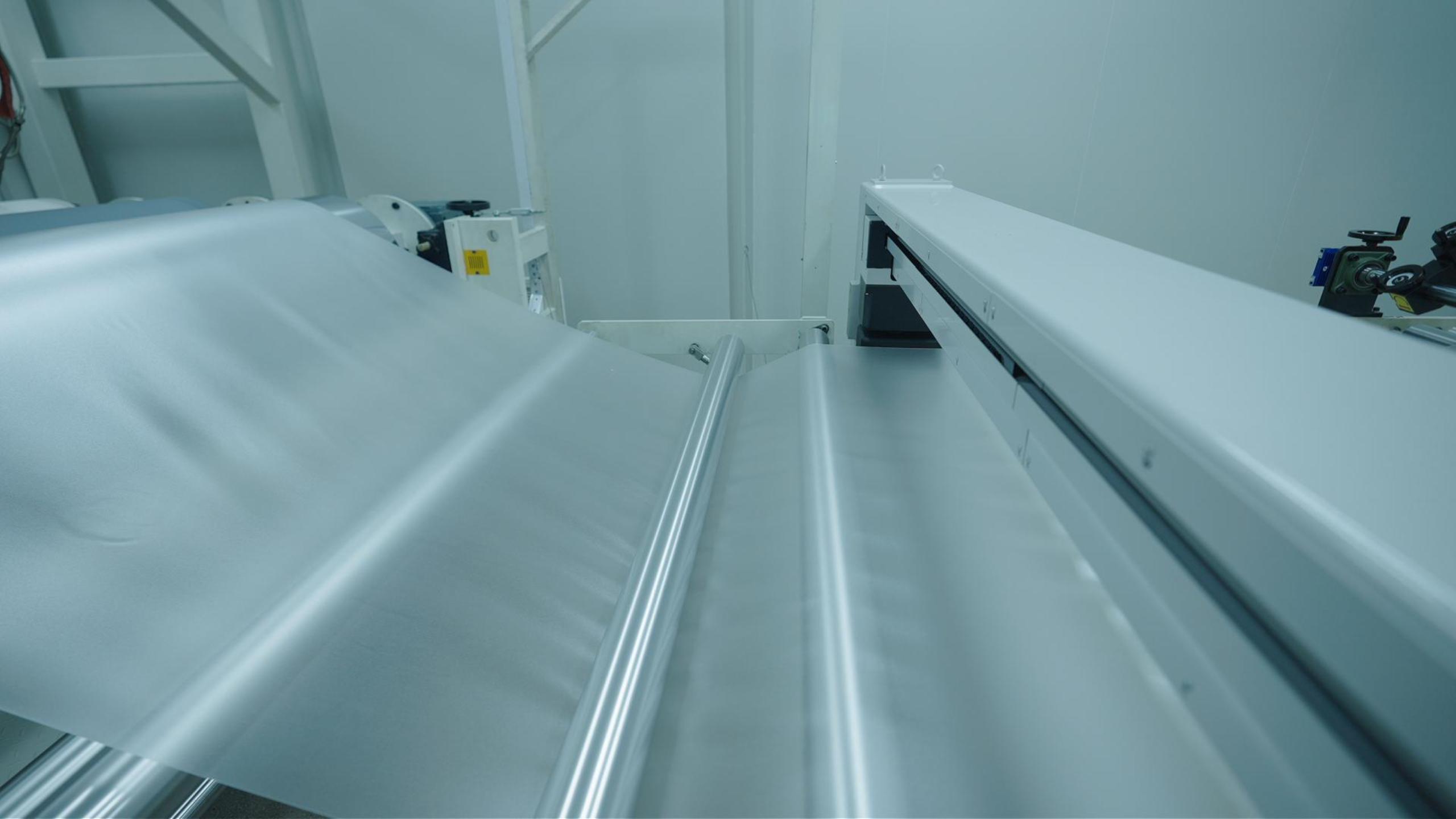
SD560 is a thermoplastic polyurethane elastomer film produced by SHENGDING HIGHTECH MATERIALS CO., LTD, a polymer materials manufacturer based in the Lanshan Chemical Industry Park in Rizhao City, Shandong Province, China. The certificate most often attached to an SD560 enquiry is ISO 9001:2015 certificate number 10425Q01154R1S, issued by Shandong Seatone International Certification Co., Ltd., and audited against GB/T 19001-2016/ISO 9001:2015.
What that certificate validates is a quality management system: the documented, auditable process that governs how SD560 is produced, inspected and released. What it does not validate is a ballistic rating, an impact classification, or the performance of any finished glass panel. This guide separates the two, explains how SHENGDING's wider ISO 9001, ISO 14001 and ISO 45001 certifications, together with REACH, RoHS and FDA compliance, support the SD560 file, and sets out where the documentary evidence stops and project-level testing begins.
Why Certification Became a Procurement Gate Rather Than a Formality
Ten years ago, a certificate was often filed and forgotten. Today it is frequently a gate: without a current quality management certificate, a supplier is not added to an approved vendor list at all, regardless of price or sample quality.
Three forces drive that shift. Laminated safety glass and ballistic glass are increasingly sourced across borders, which means the buyer cannot physically audit every production run. End customers in defense, transport and architectural projects increasingly require supply-chain documentation as a condition of their own tenders. And the interlayer is the least visible component in the finished assembly — it sits between two panes of glass, so a defect discovered after lamination is expensive to correct.
The result is that buyers lean heavily on documents. That dependency creates a specific risk: treating a management-system certificate as if it were a product certificate. The two answer different questions, and ISO 9001:2015 answers only the first.
What ISO 9001:2015 Actually Certifies — and What It Does Not
ISO 9001:2015 is a quality management system standard. A certification body audits the organisation against that standard and issues a certificate confirming that the management system conforms. For SD560 buyers, the operative words are management system.
The certificate confirms that the manufacturer has defined, documented and audited processes in areas such as:
- Control of documented information — specifications, work instructions and records exist, are current, and are retrievable.
- Production and service control — production is carried out under controlled conditions, with defined parameters and monitored equipment.
- Traceability — materials and batches can be linked to production records.
- Control of externally provided processes and products — incoming raw materials are evaluated against defined criteria.
- Nonconformity and corrective action — defects are recorded, investigated, and addressed at the process level rather than only at the unit level.
- Management review and continual improvement — the system is periodically reviewed by top management.
What the certificate does not do is certify the properties of SD560 film. It does not state a tensile value, an impact class, a light-transmittance figure, or a ballistic protection level. Those come from the product datasheet and from project-level testing, and the distinction matters every time a buyer forwards a certificate to an end client as proof of glass performance.
Reading the SD560 Certificate Pack Field by Field
A certificate is a structured document. Each field carries a distinct meaning, and each one is worth checking before the certificate is filed.
| Field on the certificate | What it tells a procurement team |
|---|---|
| Certificate number — 10425Q01154R1S | A unique identifier. It allows the buyer to match the document against the issuing body's public register, rather than relying on a scanned PDF. |
| Standard — GB/T 19001-2016 / ISO 9001:2015 | The management-system standard the audit was conducted against. The dual designation indicates alignment between the Chinese national standard and the international standard. |
| Issuing body — Shandong Seatone International Certification Co., Ltd. | The certification body that performed the audit and issued the certificate. Its identity and standing are part of the verification. |
| Certified organisation — SHENGDING HIGHTECH MATERIALS CO., LTD | The legal entity covered. It should match the entity that will appear on the commercial invoice and quality documents. |
| Scope statement | The activities covered by the system. Buyers should confirm that TPU film production is inside the scope, not only adjacent activities. |
| Issue date and validity | Establishes the surveillance and recertification cycle. An expired or suspended certificate is not evidence of a current system. |
The Wider Certification Layer: ISO 14001, ISO 45001 and Substance Compliance
ISO 9001:2015 does not stand alone in the SD560 file. SHENGDING HIGHTECH MATERIALS holds ISO 9001, ISO 14001 and ISO 45001 certifications, and its product performance is stated to comply with European REACH and RoHS regulations as well as U.S. FDA quality requirements.
These documents serve different functions, and buyers who understand the division of labour get more value from the pack:
| Document layer | Question it answers | Question it does not answer |
|---|---|---|
| ISO 9001 — quality management | Is there a controlled, auditable process governing production and inspection? | Does a given batch meet a specific performance number? |
| ISO 14001 — environmental management | Is environmental impact managed through a defined system? | Any product property of the film. |
| ISO 45001 — occupational health and safety | Are workplace safety risks managed systemically? | Any product property of the film. |
| REACH / RoHS declarations | Are restricted substances controlled within the relevant regulatory frameworks? | Mechanical or optical performance. |
| FDA quality requirements | Are the relevant U.S. quality expectations addressed for the applicable use? | European or project-specific approvals. |
| SD560 product datasheet | What are the declared mechanical and optical properties? | Whether the supplier's process is controlled — that is the QMS layer's job. |
Read together, the layers form a chain: the management system makes the declared properties reproducible, and the substance declarations address regulatory access to specific markets. Read separately, each layer is only a fragment.
How a Quality Management System Maps to SD560's Published Parameters
The practical value of ISO 9001:2015 to a glass buyer lies in reproducibility. A datasheet tells you what the film can do; the management system is what makes that datasheet repeatable across shipments.
SD560 is a thermoplastic polyurethane elastomer film with the following declared parameters:
| Parameter | SD560 declared value |
|---|---|
| Tensile strength | 42 MPa |
| Elongation at break | 500% |
| Tear strength | 45 kN/m |
| Light transmittance | 90% |
| Haze | 0.3% |
| Material type | Thermoplastic polyurethane elastomer |
For orientation: high-performance TPU films used in bulletproof glass typically exhibit tensile strength above 40 MPa and elongation at break above 500%. SD560's declared 42 MPa tensile strength and 500% elongation sit within that band, which makes the parameters consistent with the ballistic and safety-glass applications the film is designed for.
Two process facts support the reproducibility argument. First, quality control is described as 100% testing rather than sampling alone. Second, monthly capacity is stated at 100 tons, which indicates a production scale large enough to sustain a documented control system rather than batch-by-batch improvisation. Neither fact proves performance on its own — but both are the kind of operational detail a quality management system is designed to make visible and auditable.
Application Context: Where the Documentation Is Actually Tested
SD560 is used in the bulletproof industry, in safety glass lamination projects and in ballistic-resistant glass manufacturing. Its stated functional profile — excellent transparency and environmental resistance, with the ability to bond to acrylic, polycarbonate and inorganic glass — explains why the compliance file is scrutinised so closely in these segments.
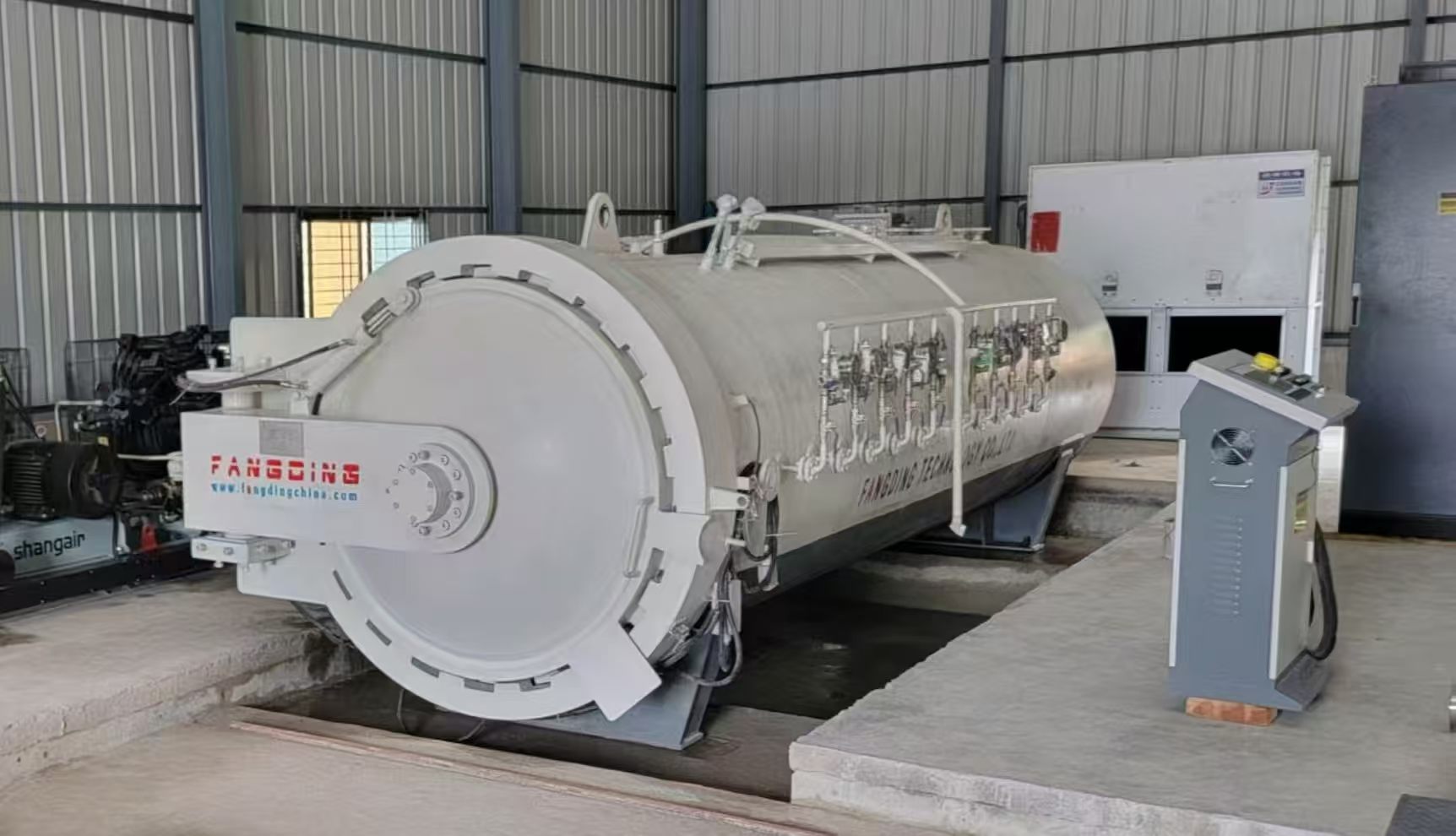
The processing route is specific. SD560 is hot-pressed in an autoclave, which the manufacturer identifies as required supporting equipment. The working condition is high pressure and high temperature, and the film must be kept dry. Those requirements are not marketing details; they define which lamination lines can use the film at all.
Field evidence in the SD560 file comes from a defense-industry customer in Pakistan, who has used the film in bulletproof glass applications in quantities of 100 rolls, with stable operation reported over a two-year period. For a buyer evaluating a new interlayer, a documented multi-year use case carries more weight than a certificate alone, because it tests the combination of declared properties and process discipline under real production conditions.
The manufacturer's broader position adds context. SHENGDING HIGHTECH MATERIALS was established in 2018 and operates a 50,000 m² facility with an annual output of 1,000 tons of TPU and EVA film. Its R&D capability combines ten engineers at the factory with five professors at a Beijing R&D centre. The company states that it has accumulated multiple core technologies and more than 50 proprietary intellectual property rights, and that it has drafted China's only national aviation standard currently led by a private enterprise. Its products are used in transparent glass components for aviation, naval vessels, armored vehicles and high-speed trains. Approximately 70% of output is exported, with main markets in North Africa, the Middle East and Latin America.
Market Context: Why Compliance Documents Are Being Read More Closely
The attention being paid to certification is not only a procurement habit — it tracks the growth and fragmentation of the market.
Grand View Research valued the global thermoplastic polyurethane films market at approximately USD 443.7 million in 2025 and projects it to reach USD 716.8 million by 2033. Within that, the segment for TPU interlayer films used specifically in laminated glass is projected to exceed USD 1.2 billion in 2026, according to industry analysis. China accounts for more than 30% of global TPU film production capacity as of 2026.
Buyers should read those figures with care. Published market sizes for TPU film diverge substantially depending on whether the estimate counts raw TPU resin or finished film, and which end-use segments are included. Grand View Research and Custom Market Insights, for example, publish figures that differ by an order of magnitude on the same nominal market. The divergence is a reminder that market sizing is a directional signal, not a procurement input.
What the numbers do establish is a supply base that is expanding and increasingly global. In the high-performance TPU interlayer segment, established international names include Huntsman (KRYSTALFLEX), Covestro (Dureflex) and Argotec (HP-8000). When a category attracts buyers across regions and multiple credible suppliers compete on similar property bands, documentation becomes one of the few objective differentiators available before sampling.
What ISO 9001:2015 Does Not Cover: Boundaries Buyers Should Plan Around
A serious compliance guide has to state the limits. The following boundaries are real and should be planned for, not worked around.
1. A management-system certificate is not a product certificate
Certificate 10425Q01154R1S confirms that a quality management system conforms to GB/T 19001-2016/ISO 9001:2015. It does not certify that SD560, or any laminated assembly made with SD560, meets EN 12600 impact classification or ASTM C1172-19 requirements for laminated architectural flat glass. Those are project-level standards applied to a finished build-up, with its specific glass types, thicknesses and process parameters. A supplier's QMS certificate cannot substitute for that testing, and a buyer who presents it as a substitute is exposed at the point of acceptance.
2. The processing requirement excludes some lamination lines
SD560 requires an autoclave. It is designed for high pressure and high temperature and must be used with that equipment. Buyers operating vacuum-bag or non-autoclave processes cannot treat SD560 as a drop-in substitute for their current interlayer without changing their process route. This is a genuine constraint, and it is better established at the enquiry stage than after a trial order.
3. Moisture control is a handling precondition
The film must be kept dry. Storage and handling conditions therefore form part of the buyer's own quality obligations, and are not covered by the supplier's certificate.
4. Certificate scope and validity must match the purchase
A certificate covers the entity and scope named on it, for the period stated. Before an order is placed, the scope statement should be confirmed to include TPU film production, and the certificate should be checked as current. An expired certificate, or one whose scope does not reach the product being purchased, provides no assurance regardless of how it is presented.
5. The buyer's process still determines the final result
Even with a conforming management system upstream, the optical and mechanical outcome of a laminated panel depends on the buyer's own lamination parameters, glass preparation and handling. Certification transfers assurance about the supplier's process, not responsibility for the buyer's.
A Practical Verification Workflow for Procurement Teams
The following sequence converts a document pack into a decision. It is ordered so that disqualifying issues surface before commercial negotiation begins.
- Match the certificate number. Confirm 10425Q01154R1S against the issuing body's register rather than accepting a scan at face value.
- Read the standard designation. Verify GB/T 19001-2016/ISO 9001:2015 appears on the certificate.
- Confirm the certified entity. The name on the certificate should match SHENGDING HIGHTECH MATERIALS CO., LTD as it will appear on the commercial documents.
- Check the scope statement. TPU film production should fall within the certified scope.
- Check validity and surveillance status. Confirm the certificate is current and note the next recertification date in the vendor file.
- Separate the layers. Record ISO 9001, ISO 14001 and ISO 45001 as system evidence; record REACH, RoHS and FDA compliance as regulatory evidence; keep the SD560 datasheet as product evidence.
- Cross-check declared parameters. Compare the 42 MPa tensile strength, 500% elongation, 45 kN/m tear strength, 90% transmittance and 0.3% haze against the requirements of the specific project.
- Confirm process compatibility. Verify autoclave availability and high-pressure, high-temperature capability, and confirm dry storage conditions on site.
- Request project-level test data. Where EN 12600 or ASTM C1172-19 conformity is required, obtain evidence for the actual build-up rather than for the film alone.
- Document the limits. Note in the approval file which requirements the supplier's documents do not cover, so expectations are set before the first shipment.
Future Outlook
Two directions are visible from the current position. The first is that documentation is becoming a continuous requirement rather than a one-time gate: buyers increasingly expect certificate status to be re-verified through the surveillance cycle rather than at onboarding only. The second is that as TPU interlayer supply expands — with China holding more than 30% of global TPU film production capacity — differentiation will shift further toward verifiable process discipline and away from declared specifications alone, because similar parameter bands are now offered by multiple credible producers.
For glass buyers, the practical implication is a change in what a certificate is used for. Its value is no longer in the fact of possession. It is in the ability to trace the certificate to an issuing body, match it to the purchasing entity, understand what it covers, and state clearly what it does not.
Frequently Asked Questions
1. What does ISO 9001:2015 certification actually prove about SD560 TPU film?
It proves that the manufacturer operates a quality management system that conforms to the ISO 9001:2015 standard, audited against GB/T 19001-2016/ISO 9001:2015. For SD560, that means production, inspection, traceability and corrective-action processes are documented and auditable. It does not certify any specific mechanical, optical or ballistic property of the film itself; those are stated on the product datasheet and confirmed through project-level testing.
2. How can a buyer verify that certificate 10425Q01154R1S is genuine and current?
The certificate number, the issuing body — Shandong Seatone International Certification Co., Ltd. — and the certification standard should all be consistent with the issuing body's own records. A buyer can check the certificate number against those records, confirm that the certified entity is SHENGDING HIGHTECH MATERIALS CO., LTD, review the scope statement, and confirm the validity period has not lapsed. A scanned PDF alone does not establish currency.
3. Does ISO 9001:2015 certification mean SD560 meets EN 12600 or ASTM C1172-19?
No. EN 12600 classifies the impact resistance of a completed safety glass assembly, and ASTM C1172-19 sets quality requirements for laminated architectural flat glass. Both apply to the finished build-up — with its specific glass types, thicknesses and lamination parameters — not to the interlayer film in isolation. ISO 9001:2015 certifies the supplier's management system. Project-level conformity evidence must be obtained separately for the assembly being supplied.
4. What equipment and conditions does SD560 require for processing?
SD560 requires an autoclave as supporting equipment. It is hot-pressed under high pressure and high temperature, and it must be kept dry. Buyers whose production lines do not include autoclave capability, or who cannot maintain dry storage conditions, should treat the process requirement as a project constraint rather than a detail.
5. How do ISO 14001 and ISO 45001 fit into a supplier evaluation?
They cover different management domains: ISO 14001 addresses environmental management, and ISO 45001 addresses occupational health and safety. Both are held by SHENGDING HIGHTECH MATERIALS alongside ISO 9001. For procurement, they are relevant to supplier risk assessment — particularly for buyers with corporate sustainability or supply-chain due-diligence obligations — but they do not provide evidence of product performance and should not be recorded as if they did.
6. Do REACH, RoHS and FDA compliance replace ISO 9001:2015 certification?
No. They answer different questions. REACH and RoHS compliance concerns the control of restricted substances under European regulatory frameworks, and FDA quality requirements address the applicable U.S. expectations. ISO 9001:2015 concerns the management system governing production and inspection. A supplier may hold substance-compliance declarations without a certified quality system, or the reverse. Both are useful, and neither substitutes for the other.
7. What should be confirmed before placing a first order for SD560?
Confirm that the certificate scope covers TPU film production and that the certificate is current; align the declared parameters — 42 MPa tensile strength, 500% elongation at break, 45 kN/m tear strength, 90% light transmittance and 0.3% haze — with the requirements of the specific project; verify autoclave availability and dry storage arrangements; and establish in writing which project-level standards, such as EN 12600 or ASTM C1172-19, will be verified on the finished assembly and by which test evidence.
Additional technical and certification documentation for SD560 TPU film is compiled in the manufacturer's product brochure, available for download: SHENGDING HIGHTECH MATERIALS product brochure.
Tem questões ou precisa de mais detalhes?
Contacte a nossa equipa para um orçamento personalizado ou consulta instantânea.
Solicitar orçamento
Preencha o formulário abaixo e a nossa equipa entrará em contacto com uma proposta personalizada.
Chat direto do WhatsApp
Prefere conversar em tempo real? Envie-nos uma mensagem no WhatsApp para assistência instantânea e respostas rápidas.
- Obter orçamento personalizado
- Partilhar fotos ou documentos
- Discuta as suas necessidades diretamente
Geralmente responde em 5–30 minutos durante o horário de expediente.