
Decoding Wet Wipes Compliance: Certification for Global Access
Decoding Wet Wipes Compliance: Certification for Global Access
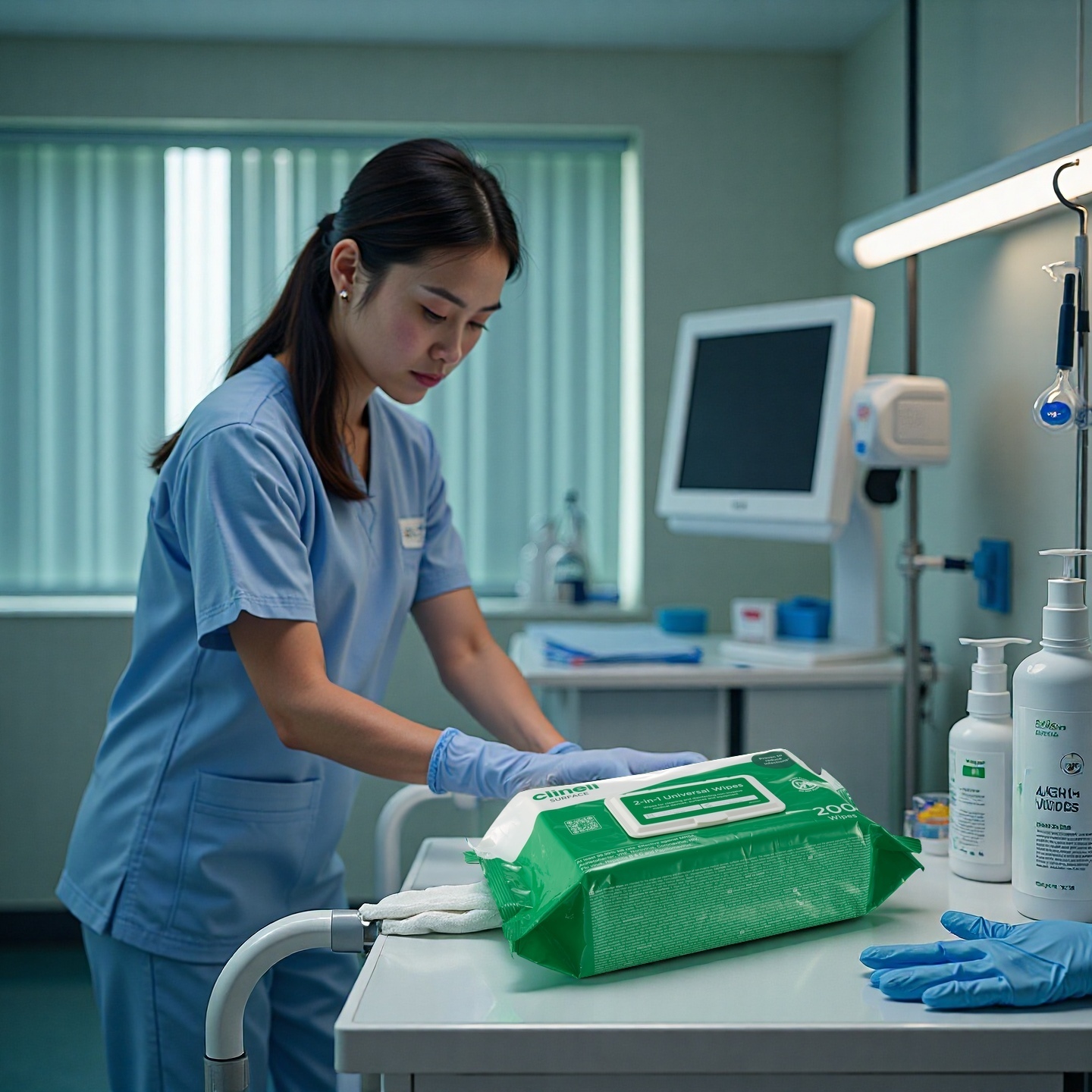
Wet wipes manufactured under sterile conditions show why compliance evidence — not marketing description — determines which markets a product can actually enter.
Compliance decides whether a wet wipe can be sold, not only whether it can be produced. The global wet wipes market was estimated at approximately USD 22.38 billion in 2024 (Market Research Future), and each product behind that figure reaches its destination through a regulatory route shaped by the target market, the claimed use, and the material construction. For buyers at the research and evaluation stage, certification is therefore a project gate rather than a decorative badge: it defines which formulas, formats, and destinations a supplier can genuinely support.
This article explains how wet wipes certification functions as evidence in international sourcing, using Pure Water Wet Wipes as a working scenario, and sets out what buyers should verify in a supplier's qualification file before a project moves into production.
Compliance Is a Project Decision, Not a Single Certificate
A wet wipe is not regulated as one universal category. The same production platform can output items governed by cosmetic rules, flushability standards, or healthcare-adjacent hygiene expectations, depending on the scenario the buyer defines. That makes the compliance question project-specific: the relevant framework depends on where the product will be sold, what it claims to do, and who will use it.
In the European Union, wet wipes intended for cleansing are regulated as cosmetics under Regulation (EC) No 1223/2009, which requires a Product Information File (PIF) and CPNP notification (European Commission). Flushable wipes follow different logic: they are expected to comply with GD4 — the Guidelines for Assessing the Flushability of Disposable Nonwoven Products — or the stricter IWSFG standards (EDANA / INDA). A baby care project and a bathroom hygiene project may share a supplier, a non-woven substrate, and a packing line, yet require different evidence before either can be placed on a shelf.
| Project scenario | Regulatory question to settle first | Documentation worth requesting |
|---|---|---|
| Baby and newborn skin care (Pure Water) | Consumer or cosmetic classification in the destination market; substantiation of alcohol-free and fragrance-free claims | Formula and material documentation, batch COA, label claim records |
| Facial care and makeup removal | Cosmetic classification; notification duties such as PIF and CPNP in the EU | Product Information File support, notification references |
| Flushable and bathroom hygiene | Conformance with GD4 or IWSFG flushability criteria | Dispersibility test documentation, substrate specification |
| Medical and clinical settings | Site hygiene and contamination-control expectations | Clean-room classification records, process control documentation |
| Household cleaning | Local chemical and packaging requirements for the destination market | Safety documentation, packaging specification |
| Travel and mini formats | Same rules as the parent product, plus packaging integrity | Specification confirmation, seal and moisture-retention controls |
The table is a starting framework rather than a fixed list. The binding requirements always come from the destination market and the specific claim printed on the pack.
What a Certificate Proves — and Where the Evidence Stops
A certificate proves that a defined scope was assessed by a defined body at a defined point in time. It does not automatically extend to a new formula, a new substrate, or a different production site. This distinction matters especially in wet wipes, where a single platform can carry dozens of SKUs that differ in fabric weight, lotion composition, and packaging format.
When reviewing documents, buyers should confirm four attributes: who issued the certificate and whether that body is recognized in the destination market; what scope is covered, meaning the site, line, product family, or process; the validity period; and whether the covered scope actually matches the SKU being ordered.
Boundary to keep in mind: a certificate is a snapshot of a system, not a guarantee of an individual batch. It documents that a management system or a product scope was assessed; it does not replace batch-level checks. Uniquality, for example, combines COA documentation with AQL sampling inspection at the batch level — paperwork and inspection serve different purposes and are not interchangeable.
Pure Water Wet Wipes: A Narrow Formula with a Wide Documentation File
Pure Water Wet Wipes concentrate the compliance question because their value proposition is restraint. In Uniquality's specification, the formula is built on EDI purified water and is alcohol-free, fragrance-free, fluorescent-free and antiseptic-free. The pH is weakly acidic to match a baby's skin, and the product is positioned as suitable for newborns and sensitive skin.
The physical construction follows the same logic. The substrate is a thickened embossed non-woven fabric with a pearl-textured surface, described as tear-resistant, lint-free and effective at locking in moisture. Standard dimensions are 15 × 20 cm, with non-woven material from 35 to 70 gsm, both customizable. Packing runs from 10 pcs per bag to 80 pcs per bag, also customizable, and a flip-top resealable lid keeps the pack dustproof and moisture-locking while supporting single-sheet dispensing.
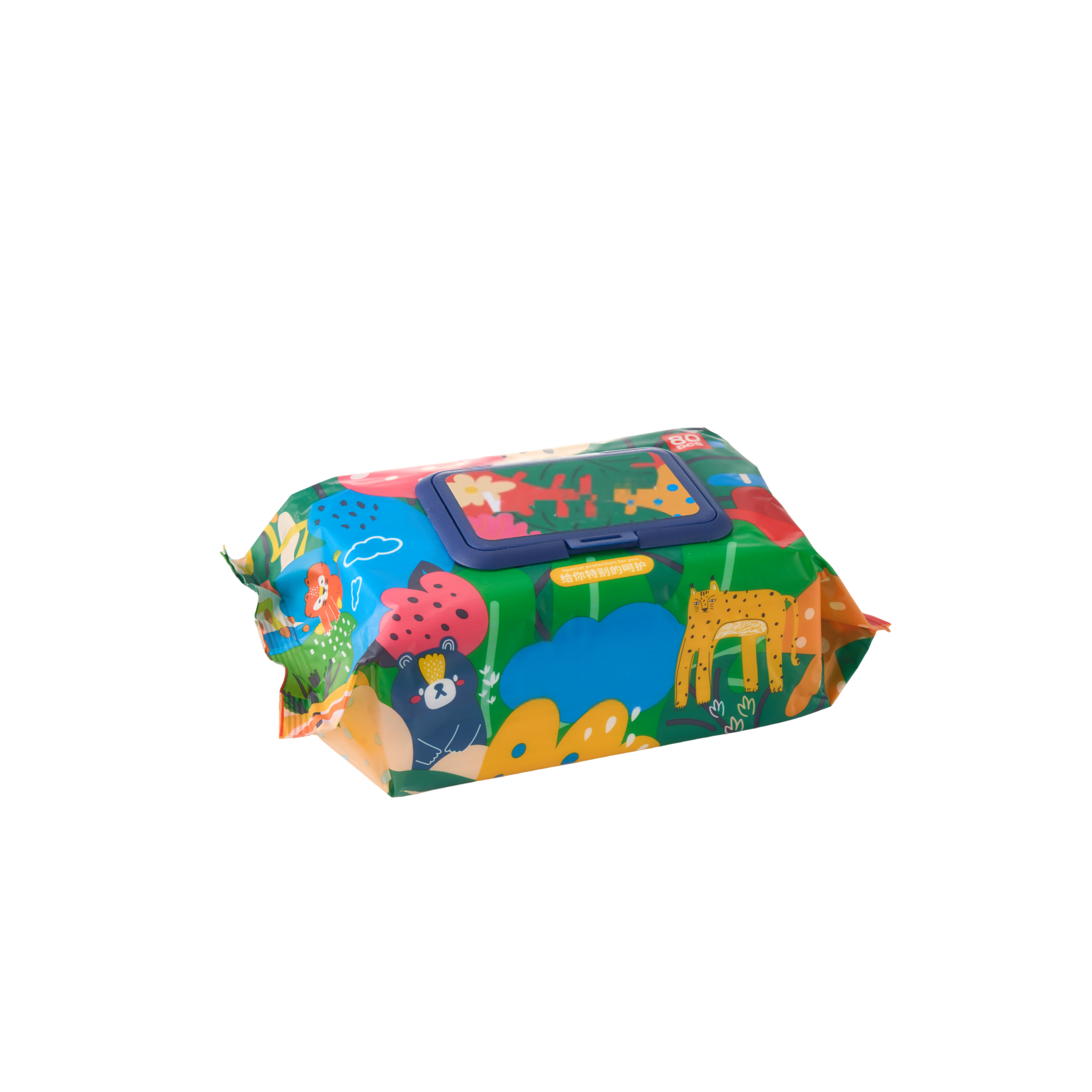
Pure Water Wet Wipes use an EDI purified water base and a minimized additive profile — a formulation choice that still generates a full documentation file covering material, water quality, and packaging integrity.
A reduced additive profile does not reduce the documentation burden. Fewer ingredients shift attention to the substrate specification, water quality controls, and the packaging system that protects the product through transport and shelf life. For buyers, the relevant evidence is therefore less about ingredient lists and more about material declarations, process controls, and batch records.
How a Certified OEM/ODM Partner Supports Project Scenarios
Zhejiang Uniquality Nursing Products Technology Co., Ltd. is a Chinese manufacturer of personal care products, founded in 1987 and operating as an OEM/ODM partner for wet wipes and diapers. Its manufacturing footprint is 1,000,000 m² with more than 3,000 employees, an R&D team of over 200 people, and an annual output of 60 billion sheets. The company states that it operates a 100,000-class clean room for medical-grade production and holds ISO, CE, GMPC and FSC certifications. Roughly 70% of output is exported, with main markets in the USA, the EU, South America, Russia and the CASA region, and products supplied to brand owners in more than 80 countries.
The wet wipes platform (model YQ001) covers baby wet wipes, mini wet wipes, Pure Water Wet Wipes, facial wet wipes, flushable wet wipes, biodegradable wet wipes and medical wet wipes. Customization spans material, size, logo, packaging, fragrance and formula, supported by a private-label service that the company describes as delivering samples in 3 to 5 days. Monthly wet wipes capacity reaches 7 billion units, with capacity varying by product.
Commercial terms are part of project fit as well. The minimum order quantity is 1 × 40HQ container for wet wipes and dry wipes, and 150,000 pieces for baby diapers and pull-ups. Lead time is 35–45 days after artwork and deposit confirmation. Quality control combines COA documentation with AQL sampling inspection, and after-sales support covers remote assistance, order follow-up, product usage consultation, quality feedback handling and service coordination.

An in-house laboratory supports product performance testing, technical research and development, and quality verification — the internal layer that sits behind the certificates a buyer reviews.
One long-running OEM relationship illustrates how these elements combine in practice: a customer in the United Kingdom orders 20 × 40HQ containers per month for household cleaning, baby care, personal hygiene and beauty care applications. Across three years of cooperation, the recorded result is an on-time delivery rate of 99.5%, with zero major quality complaints and consistent product quality. The stated highlights of that relationship include GMP workshop conditions, ISO certifications, eco-friendly materials, strict quality control, competitive pricing and reliable lead time.
Uniquality publishes product and capability information at www.kingsafe.com.
Application Scenarios: Where Compliance Evidence Is Tested
Compliance documents are only validated against a scenario. Uniquality's wet wipes range is positioned across personal care, health and beauty, maternity and baby, pet supplies, and household applications, with reference markets including the Philippines, Russia, the United Arab Emirates, the United States, Chile and Mexico. Typical projects cover personal hygiene care, facial cleansing, and household cleaning.
- Newborn and sensitive-skin care. Pure Water Wet Wipes are designed for daily cleaning where the formula is minimal and the substrate must remain lint-free and skin-friendly.
- Facial and beauty routines. Facial wet wipes and makeup remover formats operate under cosmetic expectations, where claim substantiation matters as much as the product itself.
- Household and surface cleaning. Kitchen, bathroom and floor wipes address a different regulatory and performance profile, driven by the surfaces involved and the cleaning claims made.
- Medical and clinical settings. Medical wipes are produced under sterile conditions for healthcare environments, including cleaning of equipment surfaces such as stethoscopes and thermometers, and pre- and post-surgery skin cleaning.
- Flushable and bathroom hygiene. Flushable wipes use dispersible non-woven fabric that breaks down quickly in water, and are typically positioned as an upgrade to dry toilet paper for post-defecation cleaning and intimate care.
- Travel and portable formats. Mini wet wipes and portable hygiene kits extend the same product into on-the-go use, where packaging integrity replaces shelf stability as the primary concern.
Operating conditions are consistent across these scenarios: products are stored in a cool, dry place, used as single-use disposables, and specified as lint-free and skin-friendly with customizable size and packaging.
Market Signals Shaping Certification Pressure
Demand growth and regulatory scrutiny are moving in the same direction. The global baby wipes segment alone was valued at USD 10.0 billion in 2025, with a projected CAGR of 5.5% until 2035 (Global Market Insights). Asia Pacific led the global wipes market in 2025 with a 32.29% share, valued at approximately USD 1.58 billion in that region (Fortune Business Insights). Sustainability-oriented formats are expanding alongside the mainstream: the global biodegradable wet wipes market reached over USD 3 billion in 2024, growing at a CAGR above 6%, according to an industry report published by WEHOO Hygiene.
Market structure at the brand level remains concentrated — Procter & Gamble held a share of over 16% in the global baby wipes market in 2025 (Global Market Insights) — while manufacturing is distributed across a broad base of specialist producers. For those producers, documented compliance is one of the few differentiators that travels across borders, because it can be verified by a third party rather than only asserted in a sales conversation.
Bio-based and dispersible materials sharpen the same point. Claims about biodegradability or flushability are not self-certifying; they depend on test methods and standards such as GD4 and IWSFG in the flushable category, and on material documentation elsewhere. As more SKUs add environmental claims, the certification file becomes longer, not shorter.
Certified OEM/ODM Models vs. Conventional Supply Arrangements
| Dimension | Certified large-scale OEM/ODM partner | Smaller or trading-oriented supply arrangement |
|---|---|---|
| Documentation depth | Site-level certifications plus COA and AQL sampling inspection | Varies; often limited to product-level paperwork |
| Capacity and scalability | Monthly capacity measured in billions of units; large multi-site production | Capacity tied to a smaller number of lines |
| Customization | Material, size, logo, packaging, fragrance and formula | Frequently limited to existing specifications |
| Minimum order quantity | 1 × 40HQ container for wet wipes; 150,000 pieces for diapers and pull-ups | Often lower, which suits small pilot orders |
| Lead time | 35–45 days after artwork and deposit confirmation | Can be shorter for standard items, less predictable for custom work |
| Sampling | 3–5 day sample turnaround within the private-label service | Depends on the intermediary |
| After-sales | Remote support, order follow-up, quality feedback handling | Depends on the trading layer between buyer and factory |
| Typical fit | Recurring projects with volume, compliance exposure and multi-market distribution | One-off, low-volume or fast-turnaround test orders |
Where the certified model does not fit as well: scale brings structure, and structure brings thresholds. A certified large-scale OEM/ODM partner typically applies a higher minimum order quantity — for wet wipes, 1 × 40HQ container — and a lead time of 35–45 days measured from artwork and deposit confirmation. Buyers testing a market with small trial volumes, or working to a compressed launch calendar, may find that these thresholds do not match their project stage. Certification also does not remove the need for buyer-side verification: scope, validity and batch conformance still have to be checked directly, which is why matching partner scale to project scale matters as much as matching product specification.
Future Outlook
Two directions appear consistent. First, compliance documentation is shifting from a one-time sourcing checkpoint to a standing procurement requirement, because retailers and distributors increasingly ask for evidence at the SKU level rather than the company level. Second, the growth of biodegradable and flushable formats will keep adding test-based claims to the category, which raises the value of suppliers able to produce verifiable documentation rather than descriptive marketing.
For buyers, the practical implication is checklist discipline: confirm the regulatory route for each destination, map it to the specific scenario, request certification scope and validity for the site that will actually produce the order, and pair that with batch-level inspection. Certification is not the finish line of a sourcing project — it is the gate that determines whether the project can start.
Frequently Asked Questions
What certifications should a buyer check before placing a wet wipes order?
There is no single certificate that covers wet wipes globally. The relevant evidence depends on the product scenario and the destination market. For cleansing wipes sold in the EU, the applicable framework is Regulation (EC) No 1223/2009, which requires a Product Information File and CPNP notification (European Commission). For flushable formats, GD4 or IWSFG criteria apply (EDANA / INDA). At the manufacturer level, buyers commonly review site certifications such as ISO, CE, GMPC and FSC, together with quality-control practices such as COA documentation and AQL sampling inspection.
How can a buyer confirm that a supplier's certificates are still valid and relevant?
Check four attributes: the issuing body and its recognition in the destination market; the covered scope, meaning the site, line or product family; the validity period; and whether the covered scope matches the SKU being ordered. A certificate issued for one category or one production site does not automatically extend to a different formula, substrate or facility. Because certificates are time-bound, they should be re-verified at the point of order rather than at the point of first contact.
Do Pure Water Wet Wipes require different compliance documents from other wet wipes?
The regulatory route is determined mainly by the intended use and the market, not by the water base. Where a Pure Water product is marketed for baby cleansing, it typically falls under the same consumer or cosmetic framework as other cleansing wipes in that market. What changes is the documentation emphasis: a minimized additive profile — such as EDI purified water with an alcohol-free, fragrance-free, fluorescent-free and antiseptic-free formula — shifts documentary weight toward substrate specification, water quality control and packaging integrity, including resealable flip-top designs that keep the pack dustproof and moisture-locking.
What compliance standards apply to flushable wet wipes?
Flushable wipes are covered by flushability assessment frameworks rather than by cosmetic rules. They must comply with GD4 — the Guidelines for Assessing the Flushability of Disposable Nonwoven Products — or the stricter IWSFG standards (EDANA / INDA). In practice, the evidence relates to the dispersible non-woven fabric and how it breaks down in water, since the claim being supported is about safe flushing rather than cleansing performance alone.
What order volumes and lead times should a buyer expect from a certified wet wipes OEM partner?
At Uniquality, the stated minimum order quantity is 1 × 40HQ container for wet wipes and dry wipes, and 150,000 pieces for baby diapers and pull-ups. Lead time is 35–45 days after artwork and deposit confirmation, with samples delivered in 3 to 5 days through the private-label service. Monthly wet wipes capacity reaches 7 billion units, with capacity varying by product. Buyers evaluating a long-term program should weigh these thresholds against their own launch calendar and inventory strategy.
Additional product and capability documentation is available in the Uniquality brochure: Uniquality brochure (PDF).