
Decoding the Color-Coded Mop System: A Compliance and Standardization Guide
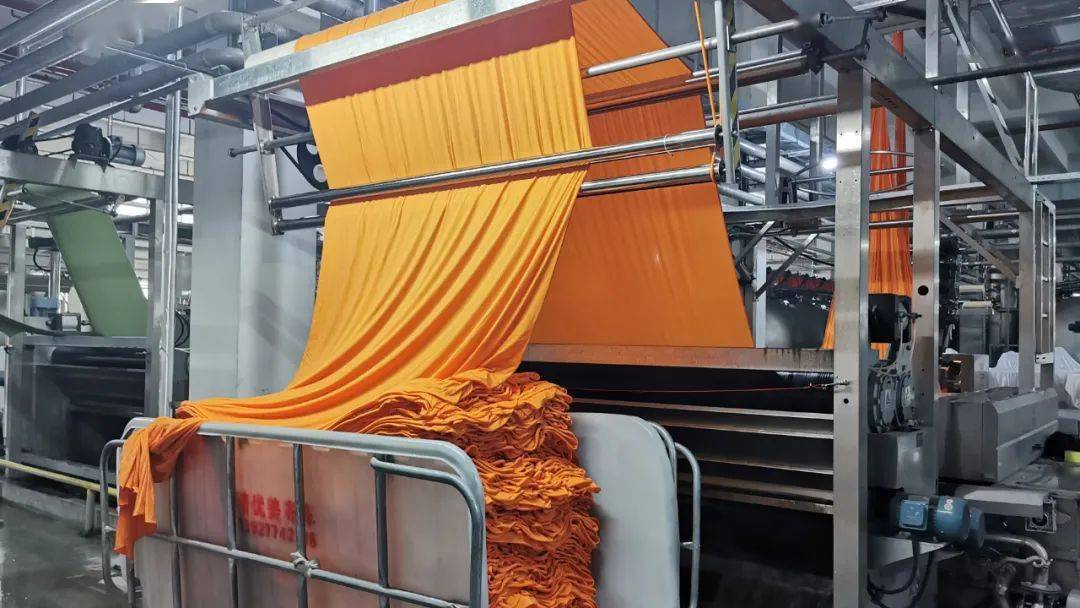
Color is fixed at the dyeing stage. In a color-coded mop program, that fixed color is what binds a tool to a zone.
A mop is the most mobile piece of equipment in a commercial building. In a single shift it can touch a restroom floor, a corridor, a food-preparation area and a patient room, and unless something physically stops that movement, whatever it picks up in the first zone is carried into the next three. Color-coded mop systems exist to make that movement difficult to perform by accident: a fixed color is bound to a fixed risk zone, and the tool becomes visibly out of place the moment it leaves its area.
This guide examines how color coding functions inside commercial cleaning compliance frameworks, what hygiene audits actually look for, how the dry and wet mop categories in the Pa Tin Da range — the categories represented by model designations such as MP-014 and MP-020 — fit into a color-managed purchasing decision, and where color coding stops being useful. It is written for procurement officers who need a purchase order to line up with an internal sanitation protocol rather than with a catalogue photograph.
What a Color-Coded Mop System Actually Is
A color-coded mop system is an administrative control in which each cleaning zone is assigned one color, and only mops, handles, buckets and cloths in that color are permitted to work in that zone. The color itself cleans nothing. It is a label, and the control it delivers is the restriction that the label makes visible to a supervisor, a housekeeping manager or an auditor at a glance.
A functioning system usually contains six elements, and procurement decisions touch all six:
- A colored mop head whose fabric color is stable through repeated laundering.
- A matching handle, ferrule or color tab, so identification survives a head change.
- A bucket or bucket collar in the same color, so the mop is never rinsed in another zone's water.
- A written color map posted where the tools are stored.
- A segregated laundry stream, because a shared wash cycle undoes every color decision made on the floor.
- A training record showing that staff have been briefed on the map.
Only the first two items come from a manufacturer. The rest are operational, which is why a colored mop cannot be bought as a compliance certificate. What a buyer can buy is a mop whose color and construction survive the discipline the facility intends to run.
Why Color Coding Became a Compliance Expectation
Cross-contamination in cleaning is transferred by tools as readily as by hands. A wet mop absorbs soil, cleaning chemistry and microorganisms from the surface it works on, and it holds them in the fabric until it is laundered. Move that mop from a sanitary area into a kitchen and the transfer is immediate, invisible and untraceable after the fact.
The absorption performance that makes microfiber attractive is also what makes zone discipline more important rather than less. Microfiber absorbs roughly seven times its own weight in liquid, against approximately three times for cotton, so a microfiber wet mop carries a substantially larger volume of used cleaning solution from one area to the next. Zone control is the mechanism that keeps that volume inside its own boundary.
Audits — internal, client-driven or third-party — generally test three things rather than the color of the fabric: that a scheme exists in writing, that staff can describe it, and that the tools physically present in the building match it. A dedicated red mop stored beside a green mop makes the scheme checkable in seconds. That is the whole compliance value of color coding, and it is why the requirement tends to appear in sanitation protocols and contract tenders for hotels, healthcare sites and food-service operations long before it appears in a product brochure.
Dry and Wet Categories: Where MP-014 and MP-020 Sit
Foshan Patinda Housewares Co., Ltd. (Pa Tin Da Group) is a microfiber cleaning products manufacturer based in Foshan, Guangdong, China, founded in May 2004 and operating a 45,000 m² manufacturing plant with 200 employees, a 17-engineer R&D team, more than 10 fully automatic cutting and sewing lines and over 450 sets of production machinery. Annual output reaches 2,184,270.46 kg, and approximately 98% of production is exported to markets including the USA, Canada, Australia, the UK, Germany, France, Italy, the Netherlands, Russia, Japan, South Korea, Switzerland, Sweden, Türkiye and Saudi Arabia.
Within that range, mops are organized by cleaning task before they are organized by color. The company's mop categories include microfiber dry/damp mops, microfiber wet mops, microfiber terry wet mops and microfiber tufting mops. The dry and wet split is the first decision in any color map, because the two categories do different jobs: a dry or damp mop lifts dust, debris and fine particles, while a wet mop applies and recovers cleaning solution on hard floors.
Model designations such as MP-014 and MP-020 sit inside these dry and wet mop categories. That has a direct procurement consequence: a color map that stops at the word "mop" is incomplete. The part number has to be pinned to the color, otherwise a facility ends up with a correctly colored mop of the wrong construction for the task that color was assigned to.
Color matching on the manufacturing side depends on dyeing, not on assembly. Pa Tin Da's documented process evidence includes fabric dyeing and fabric inspection stages, and its raw-material controls include OEKO-TEX Standard 100 tested materials and formaldehyde-free dye inspection. For a color-coded program those two facts matter together: the dye step determines whether the intended color can be produced consistently across repeat orders, and the inspection step determines whether color and fabric meet the buyer's safety requirements before the mop is sewn.
Technical Basis: Why Microfiber Carries a Color Program Well
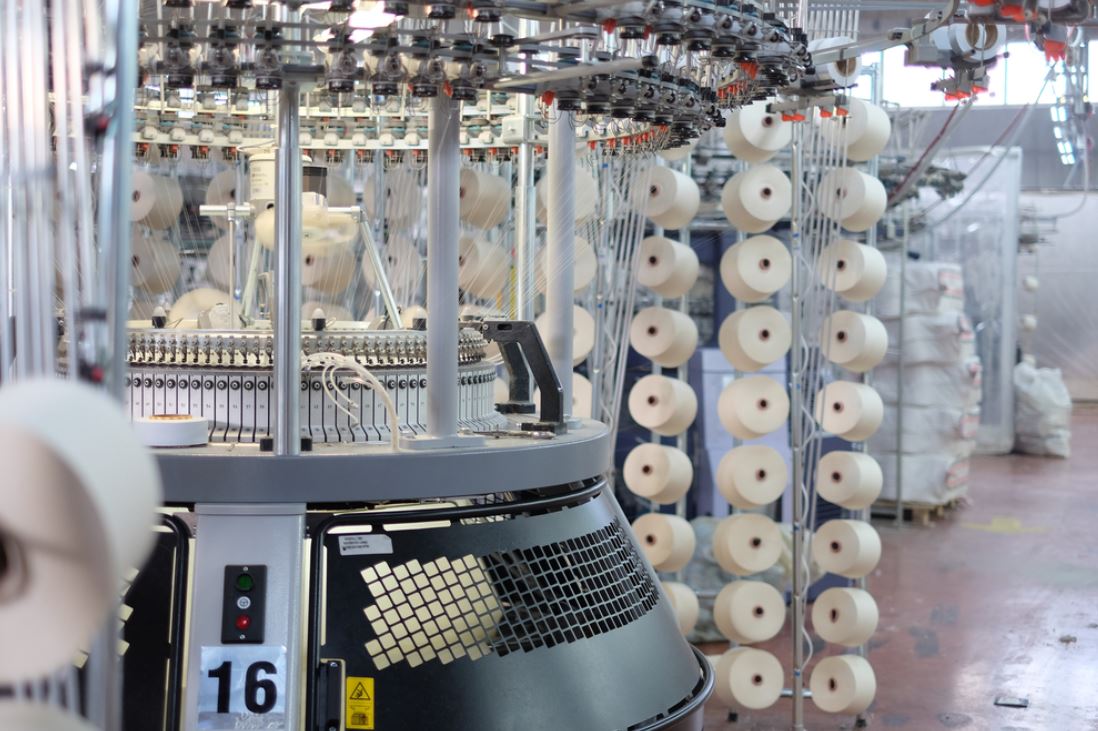
Fabric structure is set at knitting; color and construction must both survive the wash cycle the program specifies.
Microfiber is the usual carrier for color-coded mop programs because its performance profile aligns with the way those programs are audited. Published comparison data for Pa Tin Da's microfiber cleaning products indicates that microfiber absorbs about seven times its own weight in liquid against roughly three times for cotton, sustains more than 300 wash cycles against about 50 for cotton, sheds approximately 99% less lint, and removes around 75% more dirt using less water and cleaning chemistry. The same comparison places microfiber's best-fit applications in commercial cleaning — hotels, hospitals and offices — as well as auto detailing and household daily cleaning.
The durability controls behind those figures are the ones a buyer should be able to name. They include double stitching and edge locking, an anti-pilling microfiber blend, 300+ wash cycle durability testing and scratch-free abrasion resistance certification. Quality and compliance documentation includes an ISO 9001:2015 quality management system, an ISO 45001:2018 occupational health and safety management system, and SMETA (Sedex) ethical trade audit compliance, with German Packaging Act (VerpackG) and French REP textile registration covering EU packaging and circular-economy obligations.
Two of these points interact with color coding more directly than the others. The first is wash-cycle durability: a mop expected to survive more than 300 wash cycles is also expected to hold its assigned color for the life of the tool, so dye stability across laundering belongs in the specification, not in the after-sales conversation. The second is edge integrity, because a head that frays or sheds lint undermines both the cleaning result and the clarity of the color system — a degraded mop gets pulled from service and replaced with whatever is closest to hand.
A Practical Framework for Assigning Colors
The most common approach assigns colors by the risk level of the zone rather than by the type of surface. The table below illustrates that logic using a widely seen convention. It is an example of a structure, not a mandated global palette: color conventions differ between markets, sectors and individual facilities, and the document that governs a site is the facility's own written color map.
| Zone / risk level | Example color | Mop category | Control requirement |
|---|---|---|---|
| Restrooms and sanitary areas (highest risk) | Red | Wet mop (loop or terry) | Own bucket; laundry isolated from all other colors |
| Clinical and patient-adjacent areas | Yellow | Dry/damp mop plus wet mop | Single-zone use; laundered separately |
| Food preparation and kitchens | Green | Wet mop with dedicated bucket | Traceable laundry stream; no shared wash |
| General low-risk areas: offices, lobbies, corridors | Blue | Dry/damp mop and wet mop | Standard laundry |
| Dry dusting and high dusting | Dedicated or unpigmented color | Dry/damp mop only | Never wetted; kept out of wet-head wash cycles |
Note the fifth row. Dry and wet categories usually cannot share a color even inside the same room, because a damp mop used for dusting becomes a wet mop in practice and voids the assignment. Facilities that separate dry from wet at the color-map stage avoid the most common audit finding in color-coded programs: a correctly colored mop used for the wrong task.
Applications and Use Cases
Color coding is most developed where cleaning crosses between high-risk and low-risk space inside the same building. In hotels, one housekeeping team moves between guest bathrooms, corridors and food and beverage areas, which is why property-level sanitation protocols typically require the color map to be posted in each floor closet. Hospitals and clinics extend the same logic to patient-adjacent areas, where the boundary between sanitary and general zones is written into the site's hygiene documentation. Offices, retail and education facilities usually run a simplified map, often red for restrooms and one general color for everything else.
Outside healthcare and hospitality, the pattern reappears in automotive detailing and in kitchen environments. Detailing operations separate wheel, paint and glass work with different cloths and mop heads — a scratch-free requirement supported by the scratch-free abrasion resistance certification inside Pa Tin Da's controls — while kitchens separate food-contact floors from dining and storage areas. Household daily cleaning generally applies a lighter version of the same discipline, most often by keeping one dedicated mop for bathrooms and a second for kitchens.
The common thread is that the mop category, not only the color, determines whether an assignment works. A water-absorbent wet mop and a lint-free, scratch-free dry mop or cloth are not interchangeable, and a color map written without reference to construction produces assignments that staff cannot follow.
Market Trend Analysis

Repeat-order color consistency is a production scheduling question, not only a dyeing question.
Demand for color-managed cleaning tools moves with the broader microfiber cleaning market. One published estimate places the global microfiber cleaning cloth market at approximately USD 3.8 billion in 2025 and projects growth to USD 27.5 billion by 2034 (Dataintelo). Headline market-size figures deserve care: estimates for overlapping years range from roughly USD 979.2 million to USD 18.68 billion depending on whether industrial, institutional and retail segments are included, so scope matters more than the number.
Supply concentration is clearer than market size. China is the world's largest exporter of microfiber towels, recording 10,544 shipments between June 2024 and May 2025 (Volza). The competitive field is broad and includes global players such as 3M, Freudenberg Group, Toray Industries, Libman and Norwex, alongside a large base of specialist manufacturers. For a procurement officer this means color-coded microfiber mops are not a scarce category; differentiation sits in documentation, color consistency between reorders and laundry durability rather than in the availability of colored fabric.
Two certification trends are shaping specifications. OEKO-TEX Standard 100 is the dominant safety certification for microfiber textiles and requires testing against more than 1,000 harmful substances; the Global Recycled Standard requires a minimum of 20% recycled content and tracks the entire production chain. Both are increasingly requested at tender stage, and both interact with color coding, because a program that specifies certified or recycled raw material has to confirm that the dyed output still hits the same color target across production runs.
Sustainability targets reinforce the pattern. Microfiber products reduce chemical usage by up to 60% and water consumption by 90% compared with traditional cleaning tools, which is one reason facilities that report on water and chemistry consumption adopt microfiber mops in the first place. Color coding is frequently the operational control that makes a large-scale rollout of those tools manageable.
Comparison with Traditional Solutions — and Where Color Coding Fails
The traditional alternative is a single mop and bucket system, usually a cotton string mop rotated between zones with no color separation. The performance comparison is well documented.
| Metric | Microfiber mop | Cotton mop |
|---|---|---|
| Liquid absorption | About 7x its own weight | About 3x its own weight |
| Wash cycles | 300+ | About 50 |
| Lint shedding | About 99% less | Baseline |
| Dirt removal | About 75% more, using less water and chemistry | Baseline |
| Upfront cost | Slightly higher | Lower |
| Long-term cost | Lower, because replacement is less frequent | Higher |
| Maintenance | Machine washable, quick-drying, no special maintenance | More frequent replacement |
| Best-fit use | Commercial cleaning (hotels, hospitals, offices), auto detailing, household daily cleaning | General-purpose absorbent mopping |
The cost line is the one that most often decides a tender, and it is worth stating plainly: microfiber carries a slightly higher upfront cost, offset by a lower long-term cost because replacement is less frequent. A 300+ wash cycle life against roughly 50 for cotton changes the annual replacement volume, and that is where the difference is actually realized.
Where color coding stops working
Color coding has real boundaries, and procurement should not present it as a hygiene guarantee.
- There is no single globally mandated color palette. Conventions vary by country, sector and client, so a colored mop is not automatically compliant with a given site — it becomes compliant when it matches that site's written map.
- Color is a behavioral control, not a cleaning technology. It fails if the map is not posted, if staff are not trained, or if laundry is not segregated. A red mop laundered with blue mops is a red mop again only in appearance.
- Color fastness is a specification item. If the dyed fabric fades across repeated washing, the visual control degrades well before the mop wears out.
- Microfiber mops cost slightly more upfront than cotton equivalents, which matters for facilities budgeting on first-purchase price rather than lifecycle cost.
- Model-level performance should be confirmed before a color is pinned to a part number. For models such as MP-014 and MP-020, fabric weight, size and backing configuration should be verified against the current datasheet rather than inferred from the category name.
Future Outlook
Two directions look most likely over the next cycle. The first is that hygiene audits will continue shifting from visual inspection toward documented evidence: a color map, a training record, a laundry segregation log and proof that the physical tools match the written scheme. Under that standard the supplier's contribution is narrower but more measurable — consistent color across production runs, documented durability testing and a certification stack that survives client scrutiny.
The second is that material requirements will tighten. Recycled-content standards, packaging obligations and textile circular-economy rules already appear in supplier compliance documentation, and buyers who specify color-coded programs will increasingly be asked to show that the textiles meet the same environmental bar as the cleaning performance they were purchased for. Color coding and material certification are becoming two halves of a single procurement question.
Frequently Asked Questions
What is a color-coded mop system, and is there one standard color scheme?
A color-coded mop system assigns one color to one cleaning zone and restricts mops, handles and buckets in that color to that zone only. There is no single globally mandated palette. Widely seen conventions use red for sanitary areas and green for food-preparation areas, but the governing document is the facility's own written color map, and audit schemes generally assess whether a scheme exists and is followed rather than which colors were chosen.
How should dry-use and wet-use mops be separated within a single color system?
Dry and damp mops lift dust, debris and fine particles, while wet mops apply and recover cleaning solution; because a damp mop used for dusting effectively becomes a wet mop, the two categories are normally given separate colors or separate identifiers even when they serve the same room. Pa Tin Da's range separates these categories at product level, with microfiber dry/damp mops, microfiber wet mops, microfiber terry wet mops and microfiber tufting mops, and model designations such as MP-014 and MP-020 sit inside them. Sharing a bucket between the two categories is the most common way the separation is lost in practice.
Do color-coded microfiber mops automatically satisfy a hygiene audit?
No. Certification such as OEKO-TEX Standard 100 addresses raw-material safety, not color-coding compliance. Audit evidence typically consists of a written color map, staff knowledge of it, physical tools that match it, a segregated laundry process and tools in serviceable condition. A mop that sheds lint or has a frayed edge can be correctly colored and still fail inspection.
How do color-coded microfiber mops compare with traditional cotton mops on cost and lifespan?
Microfiber absorbs about seven times its own weight in liquid against roughly three times for cotton, sustains more than 300 wash cycles against about 50, sheds approximately 99% less lint and removes around 75% more dirt with less water and chemistry. It carries a slightly higher upfront cost, offset by a lower long-term cost because replacement is less frequent. In a color-coded program, wash-cycle life also determines how long the assigned color has to remain identifiable.
What should procurement verify before assigning a color to a specific mop model?
Four things: the fabric category, to confirm whether the model is a dry/damp or wet mop; the datasheet specification, including fabric weight, size and backing; dye stability across repeated laundering, since the color is the control; and supplier documentation covering durability testing, quality and safety management systems, and packaging or textile registration obligations. Confirming that the supplier can reproduce the same color on repeat orders is equally important, because a color map that cannot be restocked consistently will drift within a year.
For reference, Pa Tin Da's public e-catalogue covering its microfiber mop, cloth and towel range is available at E-catalog Pa Tin Da 2024.