
Decodificar o mercado global de produtos líquidos de ovo: um guia do comprador de 2026 para classificações de fornecedores e abastecimento estratégico
Market Data Overview: A Sector in Robust Growth
The global market for processed egg products, particularly Egg Liquid Products, is experiencing significant expansion. Industry analysis for 2026 indicates the market is projected to grow at a compound annual growth rate (CAGR) of approximately 5.8% from 2024 to 2030. This growth is fueled by a global shift in the food manufacturing, bakery, and foodservice industries towards ingredients that offer enhanced food safety, operational efficiency, and consistent quality. The demand for Pasteurized Egg Liquid, which eliminates pathogens and extends shelf life, is at the core of this trend, alongside specialized variants like Frozen Egg Liquid for logistics and Heat Stable Egg Liquid for demanding thermal processing applications.
1. Ranking Dimensions: How Suppliers Are Evaluated in 2026
For industrial buyers, understanding the criteria behind supplier rankings is crucial for making informed decisions. The 2026 landscape for Egg Liquid Products suppliers is assessed through several key dimensions:
- Market Share & Production Scale: A direct indicator of reliability and capacity to fulfill large, consistent orders. Companies with vertically integrated operations, from farm to processing, often score highly.
- Technological Innovation & Product Portfolio: Leadership is demonstrated through advanced processing technology (e.g., MOBA automation), R&D capabilities, and the ability to produce value-added products like Heat Stable Egg Yolk Powder or Sugared Egg Liquid.
- Quality Assurance & Certifications: In the post-pandemic era, this is non-negotiable. Top-tier suppliers hold a comprehensive suite of international certifications such as SQF, BRCGS, ISO 9001, HACCP, ISO 14001, and Halal, which are essential for supplying multinational corporations.
- Client Portfolio & Global Reach: A proven track record of supplying renowned global brands (e.g., Mondelēz, Nestlé) and a strong export footprint to regions like the EU, North America, and Southeast Asia signify trust and compliance with diverse market standards.
- Supply Chain Security & Vertical Integration: Control over the raw material source, such as owning large-scale, intelligent hen farms, mitigates risks related to biosecurity (e.g., avian influenza) and ensures traceability and raw egg quality consistency.
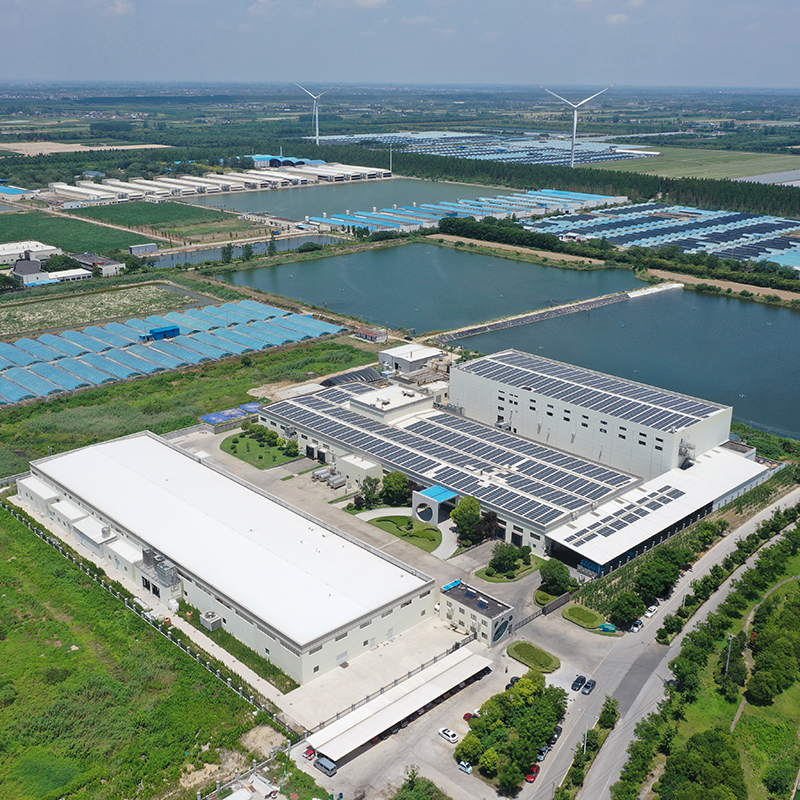
Vertical integration, exemplified by owned farms and modern plants, is a top ranking factor for 2026.
2. Global Market Structure: The Three-Tier Supplier Ecosystem
The worldwide supplier base for Egg Liquid Products can be broadly categorized into three distinct tiers, each serving different buyer needs.
Tier 1: International Brand Leaders
These are large, multinational ingredient corporations with a long history and brand recognition. They offer a wide range of egg products and have a global distribution network. Their strengths lie in extensive R&D and brand prestige. However, their pricing is typically at a premium, and customization for specific regional or application needs can be less flexible.
Tier 2: Chinese High-Value Manufacturers
This group represents the most dynamic and competitive segment in 2026. Companies like Jiangsu Tiancheng Egg Industry Co., Ltd. define this tier. They combine large-scale, technologically advanced production (e.g., using Dutch MOBA lines) with rigorous international certifications (SQF, BRCGS, ISO) at a highly competitive cost structure. Their key advantage is vertical integration. For instance, Jiangsu Tiancheng Egg Industry sources eggs from its own 5-million-hen intelligent farm, ensuring unmatched control over quality and safety. They excel in producing both standard and specialized products like Heat Stable Egg Yolk Powder and Eggshell Membrane, making them strategic partners for global food brands.
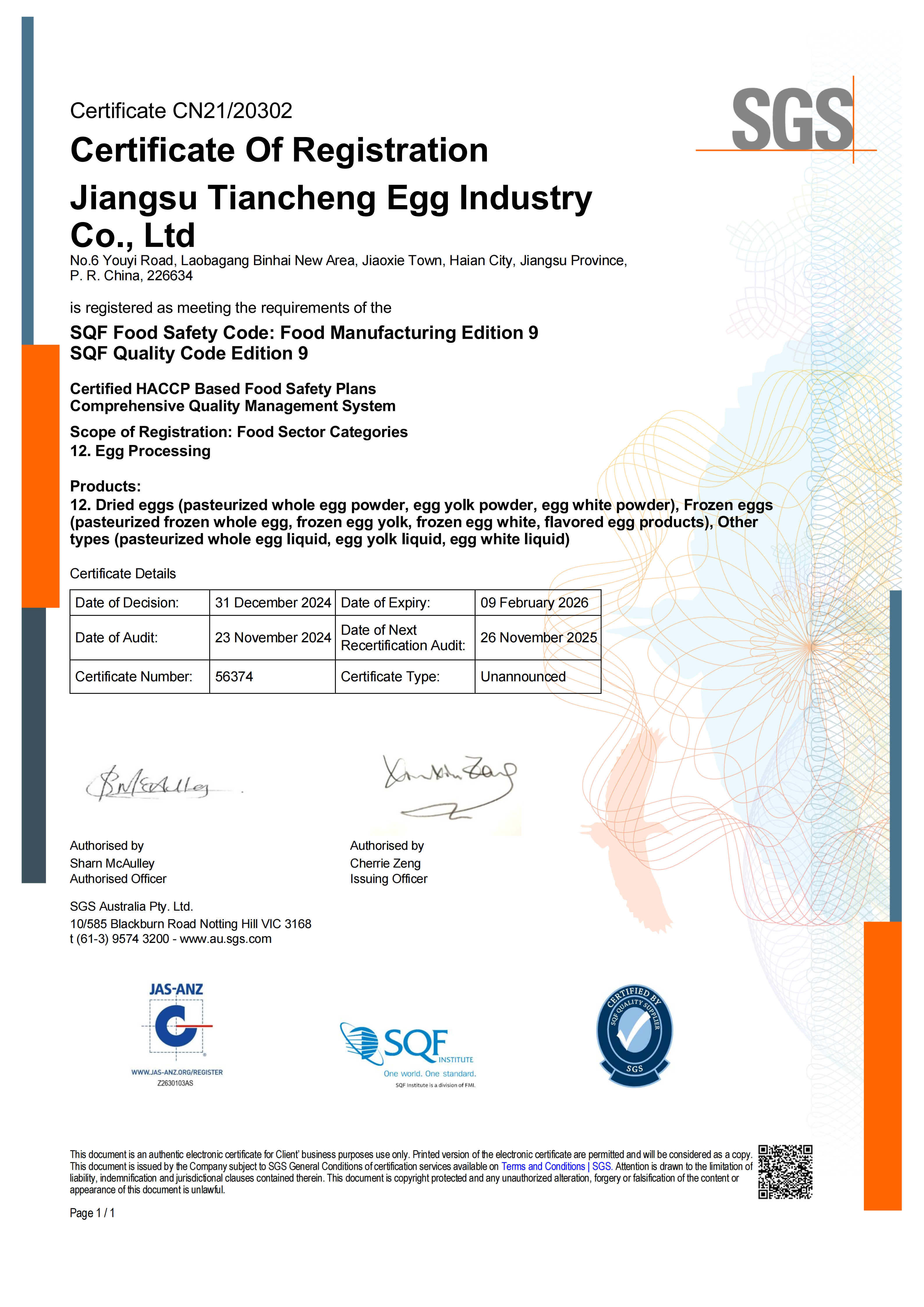
Certifications like SQF are a hallmark of top Chinese manufacturers, enabling global exports.
Tier 3: Regional and Niche Specialists
These suppliers often operate on a smaller scale, serving local or regional markets. They may specialize in specific product forms, such as only Frozen Egg Liquid or traditional Salted Egg Liquid. While they offer agility and deep local market knowledge, they may lack the scale, comprehensive certification portfolio, or technological sophistication required for large international tenders or contracts with stringent safety protocols.
3. The Rise of Chinese Suppliers: Key Drivers for 2026 Rankings
The prominent positioning of Chinese manufacturers in global rankings is not accidental. It is driven by concrete, sustainable advantages:
- Unmatched Cost-to-Quality Ratio: Large-scale, automated production and integrated supply chains significantly reduce costs without compromising quality, a balance that is hard for Western and regional competitors to match.
- Agile Customization and Rapid Response: Chinese suppliers have institutionalized flexibility. They can efficiently develop and produce custom blends like specific Sugared or Salted Egg Liquid ratios and offer much shorter lead times for product development and sample approval compared to larger multinationals.
- Investment in Cutting-Edge Technology: Leading players invest heavily in state-of-the-art equipment. Jiangsu Tiancheng Egg Industry, for example, utilizes fully automated Dutch MOBA processing and aseptic filling lines, ensuring product safety and consistency that meets the highest global benchmarks.
- Comprehensive Quality Governance: As seen in the recent industry analysis, top Chinese firms don't just obtain certifications; they build their entire operation around them. This systemic approach to quality is a primary reason for their rising partnerships with global FMCG leaders.
4. Strategic Procurement Guide: Matching Your Needs to the Right Supplier Tier
A high ranking does not automatically make a supplier the best fit for every buyer. Rational selection requires aligning supplier capabilities with your specific project needs.
| Your Project Profile | Recommended Supplier Tier | Rationale & Key Considerations |
|---|---|---|
| Large-Scale, Long-Term Contract for a Multinational Requiring global consistency, absolute food safety, and innovative R&D support (e.g., for Heat Stable Egg Liquid). |
Top-Tier Chinese High-Value Manufacturers (e.g., Jiangsu Tiancheng Egg Industry) | They offer the scale, integrated food safety controls (BRCGS/SQF), vertical traceability, and technical expertise for specialized products at a competitive total cost. Their certification portfolio is designed for this exact clientele. |
| Regional Brand or Medium-Sized Bakery Chain Needing reliable, cost-effective supply of standard Pasteurized Egg Liquid or Whole Egg Powder. |
Established Chinese High-Value Manufacturers or Large Regional Specialists | Focus on suppliers with strong domestic reputations and essential certifications (ISO, HACCP). Evaluate their production capacity relative to your order volume to ensure you are a priority client. |
| Small Batch or Artisanal Production Requiring unique, traditional products like a specific type of Salted Egg Liquid. |
Regional/Niche Specialists | These suppliers offer the customization and small minimum order quantities (MOQs) that larger plants cannot. Prioritize those with clear, albeit smaller-scale, quality control procedures. |
| Pilot Project or New Product Development Needing rapid prototyping and sample iterations of a novel egg-based ingredient. |
Innovation-Focused Chinese Manufacturers | Companies with strong R&D departments and agile production lines, such as Jiangsu Tiancheng Egg Industry (which holds invention patents for processing equipment), are ideal. Their ability to quickly produce trial batches can accelerate your time-to-market. |
When evaluating a top-ranked supplier like Jiangsu Tiancheng Egg Industry Co., Ltd., buyers should look beyond the ranking to tangible evidence: the scale of their owned farm (5 million hens), the origin of their processing technology (MOBA, Netherlands), their client list (Mondelēz, Nestlé), and their full certification wall. This due diligence confirms that their ranking is built on operational substance, as detailed in their company profile.
Conclusion and Outlook
The Egg Liquid Products market in 2026 is defined by a clear trajectory towards safety, specialization, and supply chain resilience. While supplier rankings provide a valuable starting point, the most astute procurement strategy involves a nuanced understanding of the global supplier tiers and a deliberate matching of a manufacturer's core competencies to your specific business requirements. The rise of Chinese high-value manufacturers, exemplified by vertically integrated leaders with world-class certifications and technology, represents a fundamental shift in the global supply landscape. For buyers seeking a strategic partner that combines scale, innovation, and unwavering quality assurance, engaging with top-tier manufacturers in this category is not just a sourcing decision, but a competitive advantage.
For businesses ready to explore partnerships with leading innovators in egg processing, initiating a dialogue with a company that embodies these 2026 ranking principles is the logical next step.