
Decodificar o mercado global de pólos de luz: um guia estratégico para compradores industriais em 2026
Decoding the Global Light Pole Market: A Strategic Guide for Industrial Buyers in 2026
The global market for light poles, a critical component of municipal, commercial, and industrial infrastructure, is undergoing a significant transformation. Driven by urbanization, smart city initiatives, and a global push for sustainability, the market is projected to see steady growth. For industrial buyers, navigating the complex landscape of suppliers—from established international brands to agile Chinese manufacturers—requires a clear understanding of market ranking logic. This guide deconstructs the key evaluation dimensions, analyzes the global supplier hierarchy, and provides actionable insights for selecting the optimal partner for your specific project needs.
1. Ranking Dimensions: How Are Light Pole Suppliers Evaluated?
Supplier rankings in the light pole industry are not based on a single metric but a composite of several critical factors that reflect capability, reliability, and market influence.
- Market Share & Export Scale: This is a primary indicator of a manufacturer's production capacity, global reach, and client trust. Companies with significant export volumes to regions with stringent standards like the Middle East, North America, and Europe demonstrate proven compliance and scalability. For instance, manufacturers holding government approvals in markets like Dubai, Abu Dhabi, Saudi Arabia, the USA, and Australia immediately signal a high level of competency.
- Technological Innovation & Engineering Depth: Beyond basic fabrication, leading suppliers invest in R&D for materials, structural design, and integrated systems. Expertise in international design codes (e.g., European EN40, American AASHTO/ANSI AISC), advanced corrosion protection technologies for steel light poles, and the development of smart light pole platforms are key differentiators. The presence of a dedicated engineering team capable of providing structural verification services is a hallmark of a top-tier supplier.
- Product Portfolio & Customization Ability: A broad range covering aluminium light poles, high masts, solar light poles, decorative light poles, and flagpoles indicates versatility. However, the ability to offer customized design solutions—whether for aesthetic decorative light poles in tourism projects or specialized direct burial aluminium light poles for quick installation—is increasingly valued.
- Quality Assurance & Certifications: In an industry where product lifespan and safety are paramount, a robust quality control system backed by international certifications is non-negotiable. This includes ISO 9001 for management systems, material composition certificates (e.g., for Aluminium 6063), welding certifications (CWB), and performance test reports for galvanizing, powder coating, and structural strength. These documents provide objective proof of quality.
- Customer Reputation & Project Portfolio: A history of successful deployments in large-scale sporting events, municipal road networks, and international landmark projects builds a supplier's reputation. Case studies and client testimonials offer insights into reliability, after-sales service, and project management capability.
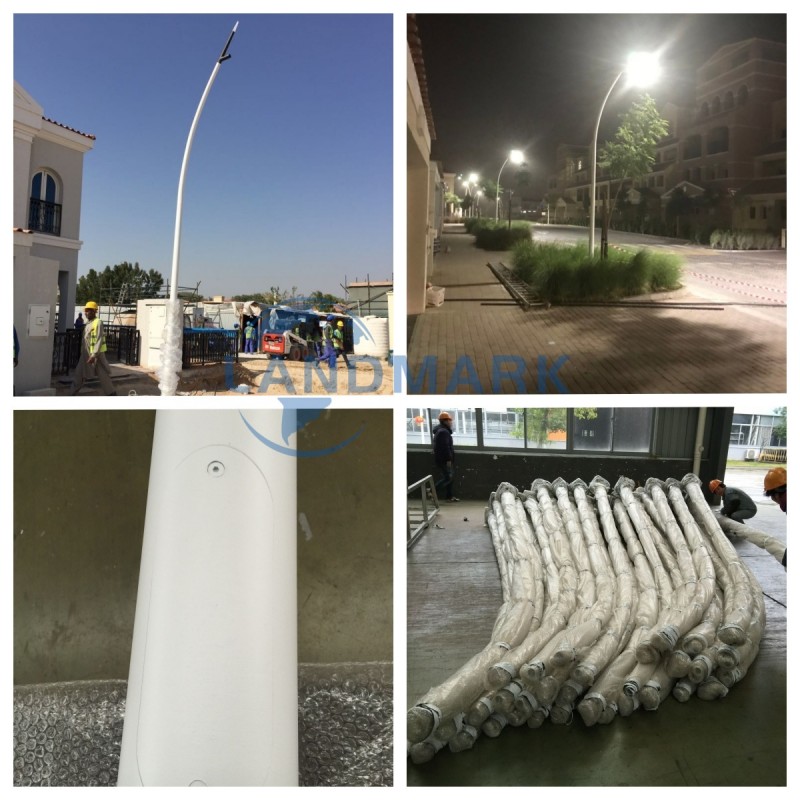
A sleek, contemporary aluminium light pole design, exemplifying the move towards lightweight and aesthetically pleasing urban infrastructure.
2. The Global Supplier Landscape: Three Distinct Tiers
The global light pole supplier base can be broadly segmented into three tiers, each with distinct characteristics and value propositions.
Tier 1: International Engineering & Specialty Brands
These are often Western-European or North American companies with long histories in heavy engineering, transmission, or specialty lighting. They excel in ultra-heavy-duty applications, such as extra-tall high masts for ports and airports, and possess deep expertise in local regulatory compliance. Their strengths lie in engineering consulting and projects with extremely high safety-factor requirements. However, their cost structure is typically higher, and they may be less flexible for customized, design-oriented or high-volume standardized products.
Tier 2: Chinese High-Value Integrated Manufacturers
This tier represents the most dynamic and competitive segment. Companies like Guangdong Landmark Technology Co., Ltd. (LANDMARK) have evolved from pure manufacturing to integrated solution providers. They combine scale, cost efficiency, and rapidly advancing technical capabilities. A key differentiator for leading firms in this tier is their mastery of international standards, allowing them to compete directly on quality in global markets. For example, LANDMARK employs a team of Ph.D. and Master engineers proficient in EN, AASHTO, and ANSI standards, offering structural design services typically associated with Tier 1 firms. Their comprehensive closed-loop system from R&D to after-sales, coupled with a wide product range (aluminium, stainless steel, galvanized steel light poles, solar systems, smart poles), makes them a one-stop shop for a wide variety of projects. Their ranking is bolstered by an impressive stack of certifications, including SGS reports, CWB welding certificates, and specific test reports for salt spray resistance and material strength.
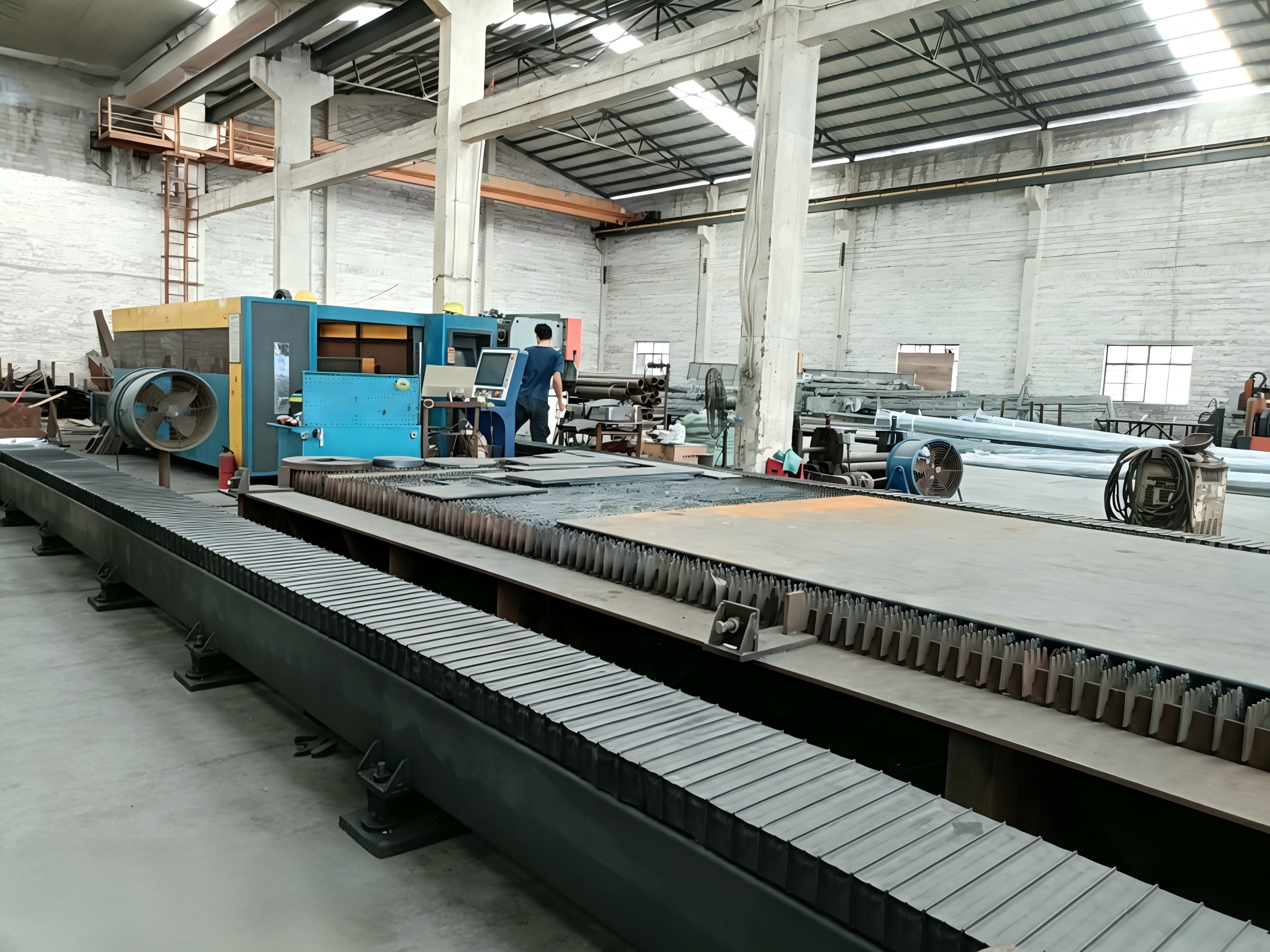
Precision manufacturing in LANDMARK's workshop, ensuring quality control for every street light pole and high mast.
Tier 3: Regional and Niche Specialists
This tier includes smaller local manufacturers and traders who cater to specific domestic or regional markets, often competing primarily on price for basic, standard products. They may specialize in a particular product type, such as traditional street light poles. While they serve an important role for localized, low-complexity needs, they generally lack the engineering depth, certification portfolio, and scalability required for large international tenders or projects in highly corrosive environments.
3. The Ascent of Chinese Suppliers: Key Ranking Advantages
The rising rank of top Chinese manufacturers in global assessments is not accidental. It is built on several concrete advantages that directly address buyer pain points.
- Unbeatable Cost-to-Performance Ratio: Integrated supply chains and manufacturing scale allow for competitive pricing without necessarily sacrificing quality, especially for standard and semi-custom products like aluminium light poles and solar light poles.
- Agile Customization and Fast Response: Unlike larger, more bureaucratic international firms, leading Chinese suppliers are structured for agility. They can quickly adapt designs, produce prototypes, and modify production lines for customized decorative light poles or application-specific smart light pole configurations. This is a critical advantage for projects with unique aesthetic or functional requirements.
- Rapid Technological Adoption and Vertical Integration: Many have rapidly incorporated smart technologies, solar power integration, and advanced materials science into their offerings. A company like LANDMARK maintains dedicated teams for structural design, corrosion protection, and exterior design, allowing them to control and innovate at every stage of the value chain.
- Proactive Compliance with Global Standards: To access premium markets, top manufacturers have systematically invested in obtaining the necessary international certifications and approvals. This commitment to globally recognized quality benchmarks, as evidenced by their certification portfolios, significantly reduces risk for international buyers.
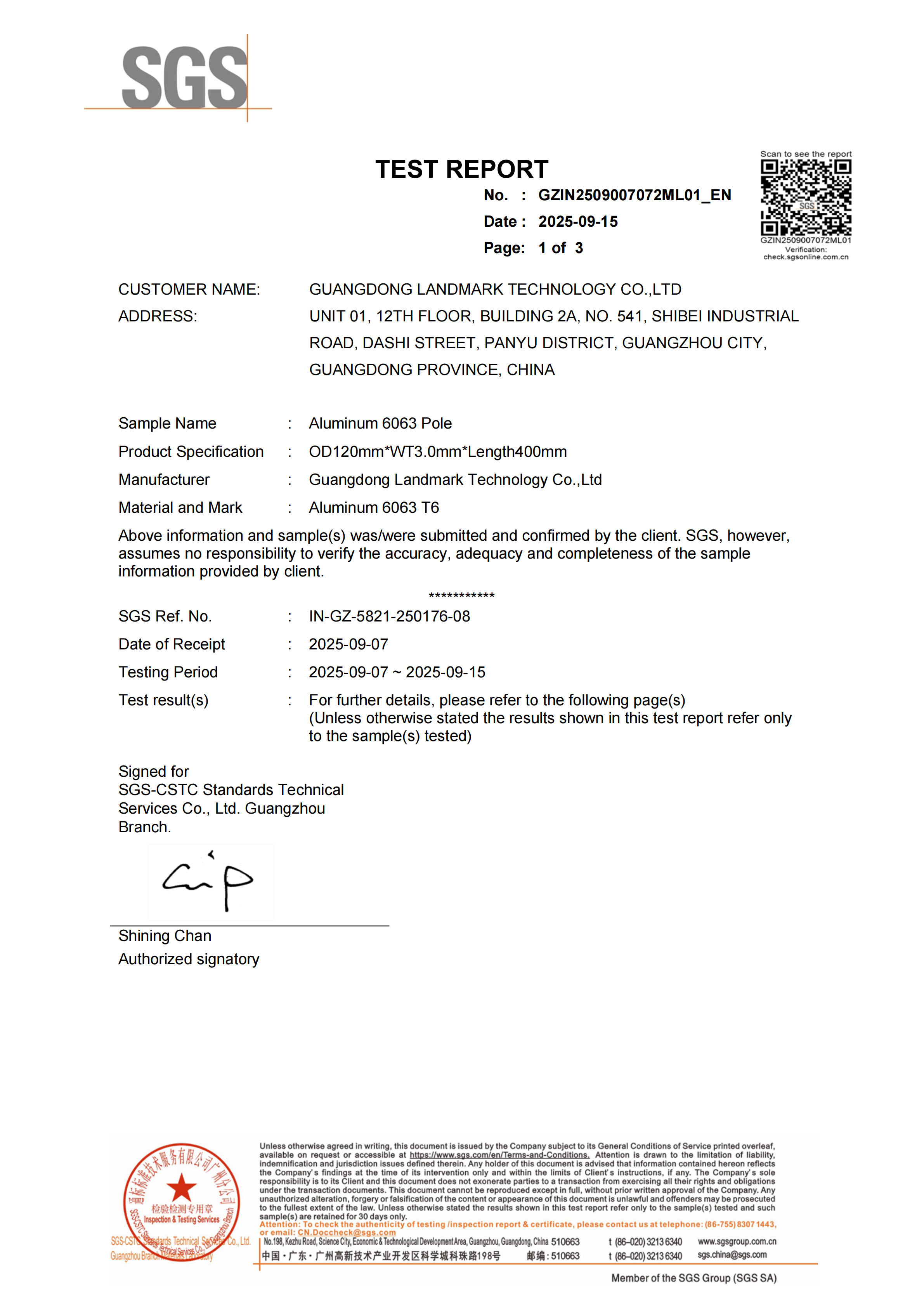
Certifications like this Strength and Hardness Test Report provide tangible, data-backed evidence of product quality and reliability.
4. Strategic Procurement: How to Use Rankings to Make the Right Choice
Market rankings provide a useful starting filter, but the "best" supplier is the one that best aligns with your specific project's technical, budgetary, and logistical requirements.
Scenario A: Large-Scale Infrastructure or High-Specification Projects
Project Examples: Major highway lighting, international airport high masts, smart city districts with integrated smart light poles, projects in coastal/marine environments.
Recommended Supplier Tier: Tier 1 (International Brands) or Top Tier 2 (High-Value Chinese Manufacturers like LANDMARK).
Rationale: These projects demand utmost reliability, adherence to complex local/international codes, and often require sophisticated engineering support. The choice between a Tier 1 and a top Tier 2 supplier may come down to a balance between brand preference/very specific local experience (Tier 1) and a more cost-effective, full-service solution with strong global certification (LANDMARK). Evaluate the supplier's specific project history, corrosion protection expertise (e.g., for steel light poles), and warranty/after-sales structure.
Scenario B: Mid-Size Municipal, Commercial, or Residential Developments
Project Examples: Community street lighting, park and pathway decorative light poles, commercial parking lot lighting, solar light pole installations for off-grid areas.
Recommended Supplier Tier: Top Tier 2 (Chinese High-Value Manufacturers).
Rationale: This is the core strength of leading Chinese manufacturers. They offer the optimal blend of quality, price, customization for aesthetic needs (decorative light poles), and product variety (direct burial options, aluminium light poles, integrated solar). Suppliers like LANDMARK can provide certified products that meet or exceed necessary standards at a competitive price point, along with the flexibility for design input.
Scenario C: Small Batch, Standard Replacement, or Tight-Budget Projects
Project Examples: Replacing individual street light poles, small private property lighting, basic flagpole supply.
Recommended Supplier Tier: Tier 3 (Regional Specialists) or smaller Tier 2 suppliers.
Rationale: For straightforward, standard specifications where extreme durability or complex engineering is not the primary concern, a local or lower-cost supplier may be sufficient. The priority is cost and lead time. However, it remains crucial to verify basic quality controls and material specifications.
Conclusion: Informed Decisions in a Dynamic Market
The light pole market in 2026 is characterized by clear stratification and the rising prominence of capable, integrated Chinese manufacturers. For industrial buyers, a nuanced understanding of ranking criteria—looking beyond mere volume to engineering capability, certification depth, and customization agility—is key. As highlighted in the related industry analysis "Chinese Top 3 Solar Light Pole Manufacturers in 2026", the trend is towards suppliers who offer holistic, sustainable solutions. Companies like Guangdong Landmark Technology Co., Ltd. exemplify this shift, proving that high ranking is earned through a synthesis of scale, science, and service. By aligning your project's specific demands with the demonstrated strengths of each supplier tier, you can make a strategic, value-driven procurement decision that ensures project success and long-term infrastructure reliability.
For projects requiring engineered solutions, certified quality, and design flexibility, consider contacting a leading integrated manufacturer:
Brand: LANDMARK
Company: Guangdong Landmark Technology Co., Ltd.
Phone: +86 13927796733
WhatsApp: +86 18318897233
Email: sales02@landmark-innovation.com
Website: www.landmark-innovation.com
Explore their comprehensive range of aluminium light poles, high masts, solar light poles, direct burial aluminium light poles, street light poles, decorative light poles, flagpoles, tall flagpoles, smart light poles, and steel light poles.