
Decorative Wall Panel Procurement FAQ: Acceptance Criteria
The questions that decide a decorative wall panel order in Europe are rarely about colour or print design. They are about documents: which fire report is attached, whether asbestos content is declared negative, how dimensional stability is measured, and which sizes a supplier can actually deliver into a project of 50,000 sqm or more per year. This procurement FAQ sets out the technical terms that appear in a decorative wall panel quotation and the acceptance criteria that should be checked against them before a purchase order is released.
The Sample Proves Appearance, Not Compliance
A showroom board or a high-resolution sample photo confirms how a decorative wall panel looks. It does not confirm how the panel behaves in a fire, whether it contains asbestos, or how far it moves when humidity changes. In European specifications those properties are normally written as classes and numerical values rather than as adjectives, which is why procurement teams increasingly ask for the report behind the claim instead of the claim itself.
The gap between appearance and verification is widest in two project types. The first is the bathroom and wet interior, where moisture, condensation and cleaning cycles act on the panel continuously. The second is the semi-public or public interior — hotel corridors, retail units, healthcare and education spaces — where the reaction-to-fire classification is not a preference but a regulatory condition. In both cases, an acceptable decorative wall panel is defined by what can be documented, not by what can be photographed.
For an evaluation-stage buyer, this changes the shape of the enquiry. Instead of asking a supplier what the panel is made of, the enquiry becomes: which document states the fire class, which test method establishes the antibacterial performance, what is the declared density, and what is the measured moisture movement in both directions? These are answerable questions, and the answers are checkable against the report attachments.
Technical Terms Buyers Meet in a Decorative Wall Panel Quotation
Reaction to fire: A2-s1,d0 versus B-s3,d0
Reaction to fire under the EN 13501-1 framework is expressed as a main class plus two supplementary classifications. The main class runs from A1, for non-combustible products, down to F. The s index describes smoke production and the d index describes flaming droplets. This means a full designation such as A2-s1,d0 states three separate things: limited combustibility, limited smoke development, and no flaming droplets.
The Silica Mineral Wall Panel is classified A2-s1,d0 and the classification report is attached as part of the documentation. The baseline most European buyers already know is B-s3,d0, which is the class carried by the SPC wall panel under its EN 13501-1:2019 verification, certificate 230608011SHF-001 issued by Intertek on 2024-01-23 for 4 mm thickness. The two classifications are not interchangeable: A2 is a materially higher reaction-to-fire band than B. It is also worth noting that the vast majority of materials on the market cannot meet Class A2 — SPC, HDF and WPC wall panels fall into Class B.
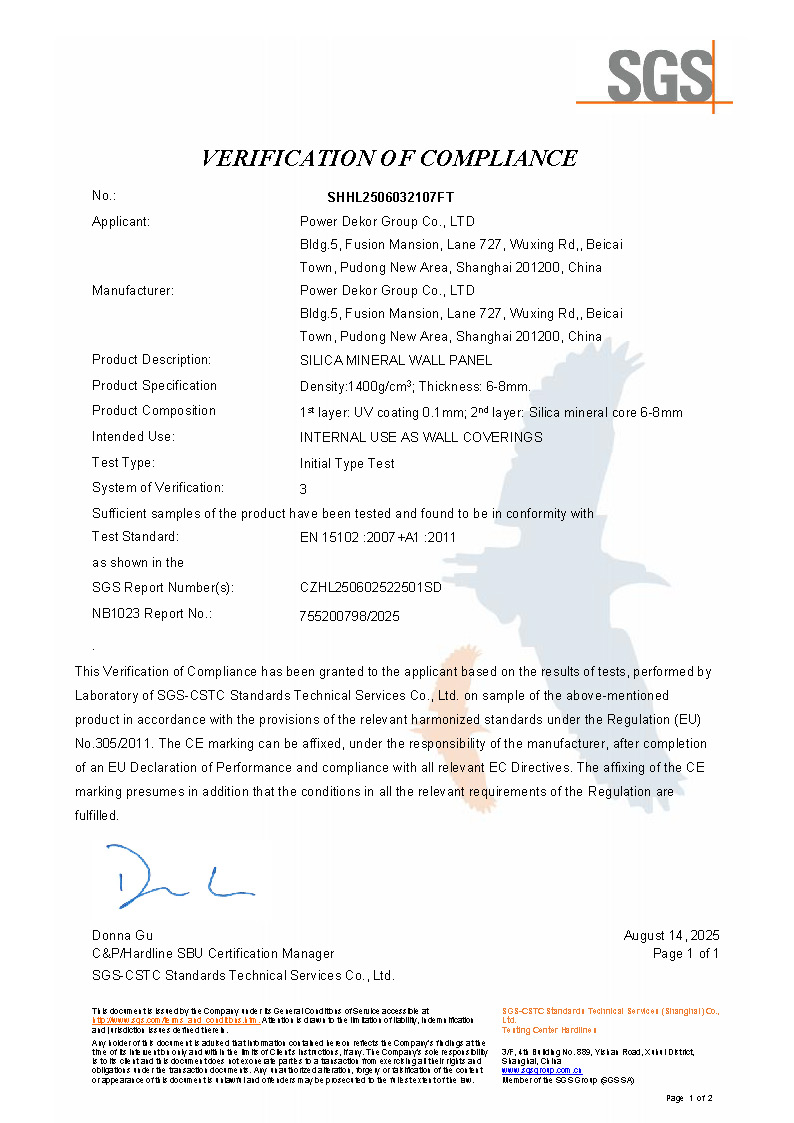
Separately, the Silica Mineral Wall Panel holds a Verification of Compliance (CE Verification) under EN 15102:2007+A1:2011, certificate SHHL2506032107FT, issued by SGS-CSTC Standards Technical Services Co., Ltd. on 2025-08-14 for the EU market, with a stated scope of silica mineral wall panel for internal use as wall coverings at 6–8 mm thickness. For a buyer, the practical acceptance point is that the certificate number, the issuing laboratory, the standard and the declared thickness range all appear on the same document.
Asbestos content: a declaration, not an assumption
Asbestos content in the Silica Mineral Wall Panel is declared as negative. For EU interior work this single line is usually the first item a specifier looks for, because the material is mineral-based and the question is legitimate. The acceptance action is straightforward: the negative asbestos declaration must be present in the file set that accompanies the quotation, not promised verbally after the order.
Material composition
The Silica Mineral Wall Panel is composed of quartz, cement, pulp, lime and water. This composition is the reason the product is described as plastic-free, and it is also the reason the fire and moisture behaviour differs from polymer-based panels. Buyers comparing a mineral panel with an SPC panel are not comparing two versions of the same product; they are comparing a mineral composite with a stone plastic composite, and the difference in composition propagates into density, fire class and handling.
Density: 1050 kg/m³ against 2000 kg/m³
The Silica Mineral Wall Panel has a density of 1050 kg/m³, compared with approximately 2000 kg/m³ for SPC wall panels. For procurement, density translates into three practical consequences: panel weight per square metre, handling effort on site, and load on the substrate. A lower density is an advantage when installation labour and substrate preparation are cost drivers, but it should not be read as a strength claim in isolation — density is a property, and the suitable value depends on the project.
Moisture movement: 0.06% in both directions
Moisture movement for the Silica Mineral Wall Panel is 0.06% in the length direction and 0.06% in the width direction. Balanced movement in both directions is the value that matters for jointing: a panel that moves differently along its length and width will behave differently at horizontal and vertical joints. For comparison, the SPC wall panel reports a moisture content of 0.02% together with a dimensional stability of shrinkage below 0.002% and curling of 0.2 mm or less. Both figures are declarable and both should appear in the technical file.
Waterproof performance: the 100 °C boiling statement
The silica mineral panel is described as 100% waterproof, with no deformation after boiling at 100 °C, and supporting video documentation is available for this test. This matters because “waterproof” on its own is not an acceptance criterion. A boiling test at 100 °C is a specific, repeatable condition that stands apart from splash resistance, and it is the form of evidence that should be requested for bathroom projects.
Antibacterial performance: ISO 846:2019 Method A
The antibacterial test for the Silica Mineral Wall Panel follows ISO 846:2019 Method A, with the recorded result that no growth was apparent under the microscope. For bathroom and hygiene-sensitive interiors, the acceptance point is the method reference and the recorded observation, not a general antibacterial claim.
Sizes and thicknesses
Available sizes for the Silica Mineral Wall Panel include 2400 / 2440 / 3000 / 3050 mm length and 1200 / 1220 mm width, with 6 / 8 / 10 mm thickness. The SPC wall panel range covers the same length and width set with 4 / 5 / 6 mm thickness, and adds parameters such as micro-scratch resistance MSR-A1, resistance to dry heat rating 5, resistance to wet heat rating 5 and stain resistance grade 5. Buyers should confirm that the thickness in the certificate scope matches the thickness in the order line, since the CE verification for the silica mineral panel is stated for 6–8 mm and the SPC verification for 4 mm.
How Power Dekor Group Presents the Decorative Wall Panel Range
Power Dekor Group is a global provider of floor covering and wall panel solutions, founded in 1995, operating an 870,000 m² factory with more than 20,000 employees and an annual output of 88,000,000 m², supported by 495 R&D engineers. Its main products are flooring and wall panels, with main markets in the EU and the USA, and it is a member of Dare Global Group.
Two wall panel families are relevant to European interior projects. The Silica Mineral Wall Panel is a mineral composite product positioned for interior and exterior wall panel applications where fire classification and moisture behaviour are specified. The SPC wall panel is a stone plastic composite product offered in digital print and film formats, and it remains the more cost-oriented option for private bathrooms and general interior decoration.
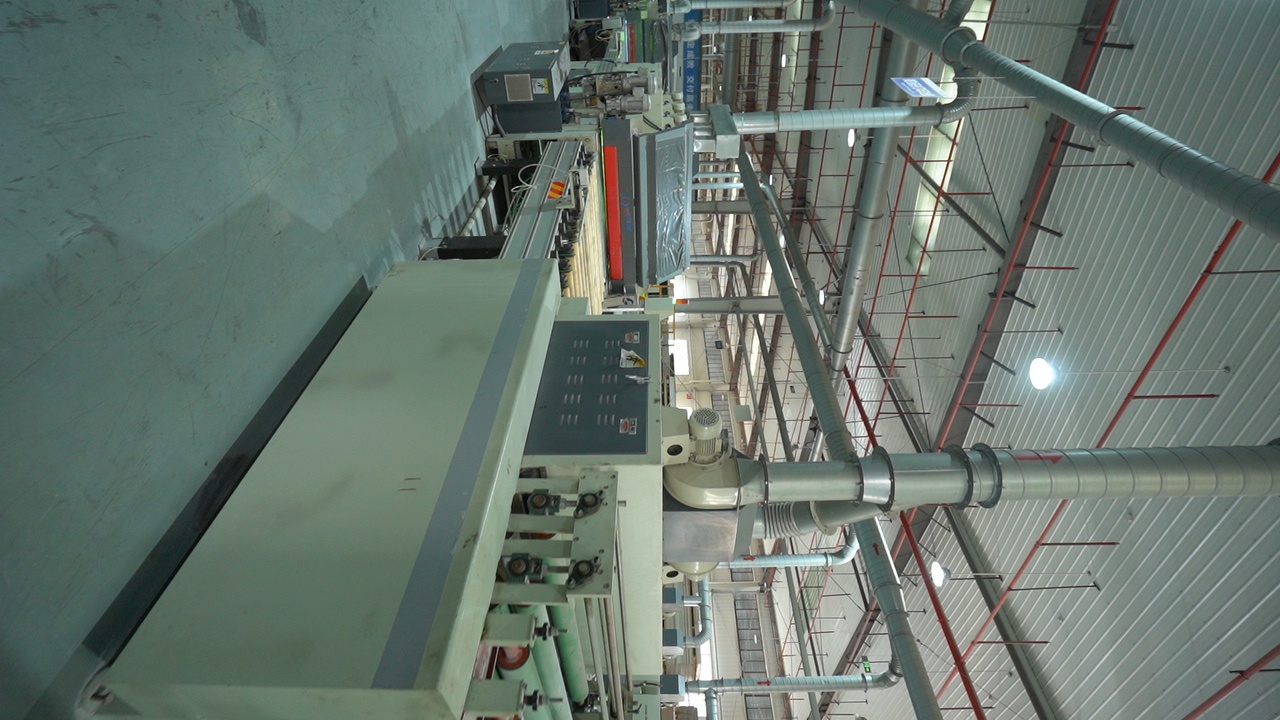
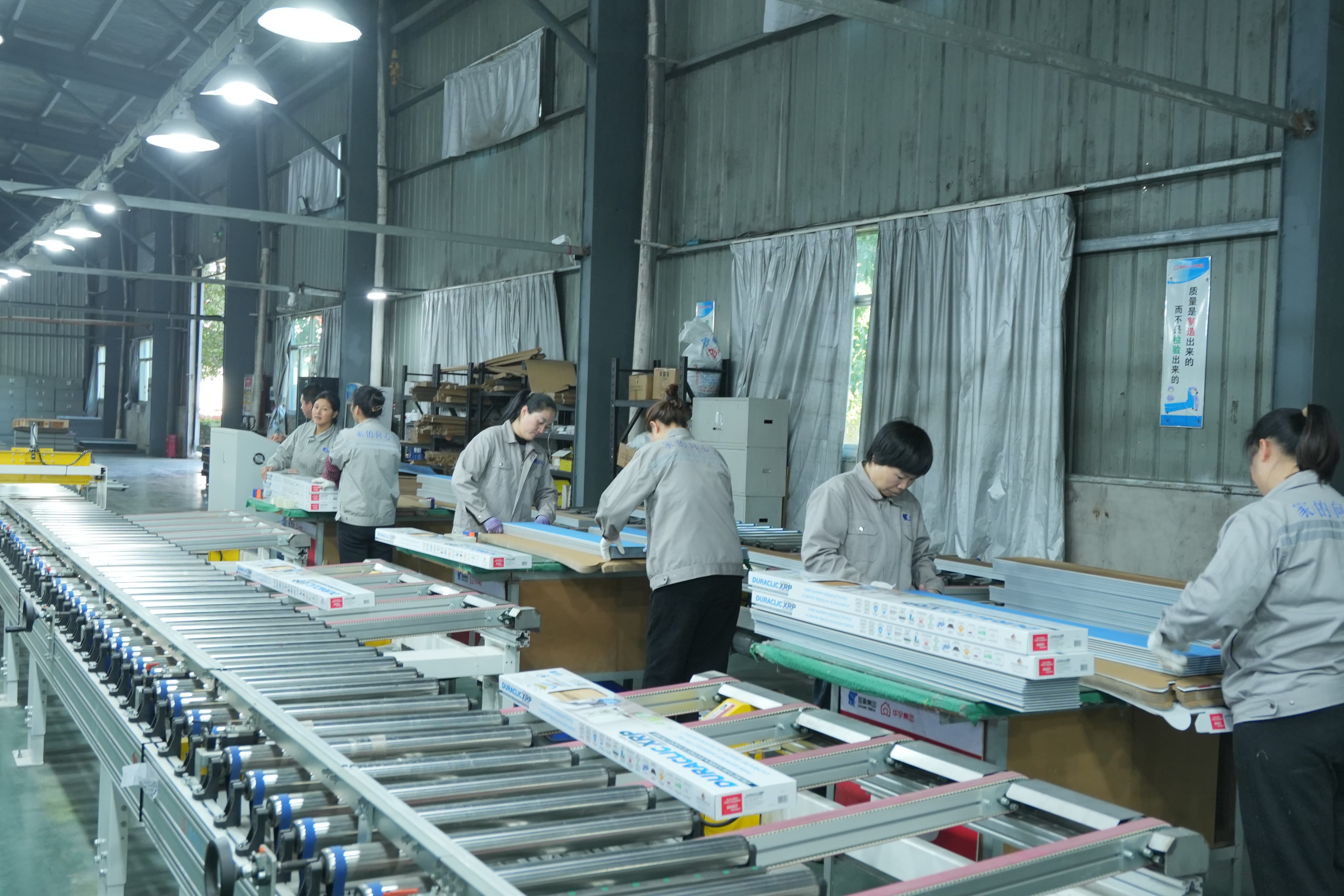
Supply terms are part of the acceptance picture. Production is offered on an OEM / ODM basis with box and label customization, at a monthly capacity of 500,000 sqm, a lead time of 30–45 days and a minimum order quantity of 500 sqm. After-sales is handled through remote support, and quality control is based on 100% testing before shipment.
Preference Logic: Which Panel Fits Which Project
Evaluation-stage buyers usually arrive with two candidates rather than one. The distinction between them is not quality but fit.
| Comparison point | Silica Mineral Wall Panel | SPC wall panel |
|---|---|---|
| Reaction to fire | A2-s1,d0, report attached | B-s3,d0 under EN 13501-1:2019 |
| Density | 1050 kg/m³ | Approximately 2000 kg/m³ |
| Moisture behaviour | 0.06% movement in length and width; no deformation after boiling at 100 °C | Moisture content 0.02%; shrinkage below 0.002%; curling ≤ 0.2 mm |
| Composition | Quartz, cement, pulp, lime and water; plastic-free | Stone plastic composite |
| Antibacterial | ISO 846:2019 Method A, no growth apparent under the microscope | Not stated for this parameter |
| Typical fit | Public and semi-public interiors where a Class A2 reaction-to-fire requirement applies | Private bathrooms and general interior decoration where price is the primary driver |
| Thickness range | 6 / 8 / 10 mm | 4 / 5 / 6 mm |
The practical decision rule is the one that appears in the application guidance itself: for a private bathroom where a better price matters, the SPC wall panel is the appropriate choice; for public space with fireproof requirements, where the panel should also read more like porcelain, the silica mineral panel is the better fit. The reason is not marketing positioning but the reaction-to-fire class, which SPC, HDF and WPC panels cannot meet at Class A2.
Application References: EU Bathroom and Interior Projects
Two European references illustrate how these acceptance criteria translate into delivered projects.
In Spain, a project contractor has used the silica mineral wall panel for bathroom and other interior decorative wall panel applications at a project scale of 50,000 sqm per year, with a supply relationship lasting 10 years. The stated outcomes are moisture-proof performance, stable project delivery, and compliance with the EU fireproof Class A standard. The project specifically addressed moisture-proof requirements in bathrooms and the need to meet a Class A fire requirement for interior decorative wall panels.
In Germany, a retail / distributor client uses the range for indoor wall decoration and bathroom space renovation at 100,000 sqm per year, with a project duration expected to run 10 to 20 years. The reported results are moisture-proof performance in humid indoor environments, stable project delivery and compliance with EU standards, with easy installation highlighted as the factor that supports quick renovation cycles.
Both references share the same acceptance logic: fire class first, moisture behaviour second, delivery continuity third. For a buyer, the useful reading is that these are the three items that determine whether a panel programme survives beyond the first container.
Market Trend: Documented Panels Are Becoming the Default Expectation
The commercial context supports the same conclusion. The global decorative panels market is projected to reach USD 39.35 billion in 2026, driven by urbanisation and interior renovation demand, according to Coherent Market Insights. Within the wall panel segment, Asia Pacific held a 43.6% share in 2025 and is expected to remain the fastest-growing region, based on Reed Intelligence’s wall panels market report. Coherent Market Insights also projects laminate panels, the largest decorative panel segment, to hold close to 45.4% of the market by 2026.
Alongside these volumes, the 3D wall panel segment was estimated at USD 815.02 million in 2025 with a forecast CAGR of 4.93%, according to 360iResearch. The relevance for procurement is not the growth rate itself but the regulatory overlay: EN 13501-1 classifies reaction to fire from A1, non-combustible, down to F, and this classification is decisive for commercial wall panels in Europe. As more interiors fall under documented fire requirements, the ability to attach a classification report shifts from a differentiator to a baseline expectation.
Comparison with Traditional Solutions — and Where the Limits Are
Measured against traditional finishes, the case for mineral decorative wall panels rests on three points: a reaction-to-fire class that tiling and most polymer panels do not deliver at A2, a 100% waterproof statement supported by a 100 °C boiling test, and a plastic-free mineral composition that can be landfilled and returned to nature, with raw materials naturally sourced.
The limits are equally concrete and should be stated before an order, not after.
- Handling sensitivity. The panels are fragile at the edge during movement, and installation guidance explicitly asks for care when moving them. This is a site discipline issue, not a product defect, but it affects labour planning.
- Wet-area trim restrictions. In wet areas of a bathroom, metal trims are not applicable; silicone sealant must be used to seal all joints, including the seam between panel and ceiling and between panel and floor. Any installation package that assumes standard metal trims throughout will fail at this point.
- Tooling requirements. Cutting requires a table saw or handsaw with a diamond saw blade, and drilling requires diamond grit tooling. This is a different tool set from laminate or PVC panel work.
- Commercial thresholds. A minimum order quantity of 500 sqm and a lead time of 30–45 days mean the product behaves as a project material rather than a one-off retail purchase.
- Not always the right answer. Where no Class A2 requirement exists and budget is the deciding factor for a private bathroom, the SPC wall panel remains the more suitable and more affordable choice.
Acceptance Checklist for EU Bathroom and Interior Projects
1. Fire documentation. Confirm the reaction-to-fire class stated in the specification matches the attached report: A2-s1,d0 for the Silica Mineral Wall Panel, with the report attached; B-s3,d0 as the SPC baseline under EN 13501-1:2019.
2. CE verification details. Check certificate number, issuing body, standard and thickness scope: SHHL2506032107FT, SGS-CSTC Standards Technical Services Co., Ltd., EN 15102:2007+A1:2011, EU market, 6–8 mm thickness for the silica mineral panel; 230608011SHF-001, Intertek, 4 mm for the SPC panel.
3. Asbestos status. Negative asbestos content must be declared in writing.
4. Composition declaration. Quartz, cement, pulp, lime and water for the mineral panel, confirming a plastic-free composition.
5. Density figure. 1050 kg/m³ for the mineral panel, against approximately 2000 kg/m³ for SPC, used for weight and substrate calculations.
6. Moisture movement. 0.06% length direction and 0.06% width direction, confirmed in the technical file.
7. Waterproof evidence. Statement of 100% waterproof performance with no deformation after boiling at 100 °C, plus the available video record.
8. Antibacterial report. ISO 846:2019 Method A, with the recorded observation of no growth apparent under the microscope.
9. Size and thickness confirmation. 2400 / 2440 / 3000 / 3050 mm length, 1200 / 1220 mm width, 6 / 8 / 10 mm thickness for the mineral panel.
10. Pre-shipment testing. Written confirmation that all products undergo 100% testing before shipment.
11. Commercial terms. MOQ 500 sqm, lead time 30–45 days, OEM / ODM with box and label customization where required.
12. Installation accessories. Sealant and joint detailing specified for wet areas, with metal trims excluded from bathroom wet zones.
Future Outlook
As interior specifications in Europe continue to formalise fire, moisture and hygiene requirements, the procurement conversation around decorative wall panels will move further towards documents and away from surface appearance. Suppliers with attached classification reports, declared composition and declared dimensional values will be able to answer those enquiries directly; suppliers without them will increasingly be excluded at the technical review stage rather than at the price stage. For buyers, the efficient response is to standardise the acceptance checklist above and apply it consistently across bathroom, interior and exterior decorative wall panel enquiries.
FAQ
Which fire document should be attached to a decorative wall panel order for an EU project?
The reaction-to-fire classification report for the specific product and thickness. The Silica Mineral Wall Panel is classified A2-s1,d0 with the report attached, and it also holds a Verification of Compliance (CE Verification) under EN 15102:2007+A1:2011, certificate SHHL2506032107FT, issued by SGS-CSTC Standards Technical Services Co., Ltd. for the EU market on 2025-08-14, covering silica mineral wall panel for internal use as wall coverings at 6–8 mm thickness.
How is asbestos content verified in a decorative wall panel?
Asbestos content in the Silica Mineral Wall Panel is declared as negative. The verification is documentary: the negative declaration should be part of the technical file that accompanies the quotation, which is particularly relevant for a mineral-based panel.
What is the Silica Mineral Wall Panel made of?
The material composition is quartz, cement, pulp, lime and water. This composition is why the product is described as plastic-free, with raw materials naturally sourced and waste able to be landfilled and return to nature.
Why does density matter, and how does 1050 kg/m³ compare with SPC?
Density determines panel weight per square metre, handling effort and substrate load. The Silica Mineral Wall Panel has a density of 1050 kg/m³, compared with approximately 2000 kg/m³ for SPC wall panels. The lower figure reduces weight and handling demand, while SPC carries a higher density as part of a stone plastic composite construction.
What does a 0.06% moisture movement result mean for jointing?
Moisture movement for the Silica Mineral Wall Panel is 0.06% in the length direction and 0.06% in the width direction. Balanced movement in both directions is the value that supports consistent behaviour at horizontal and vertical joints. For comparison, the SPC wall panel reports a moisture content of 0.02%, shrinkage below 0.002% and curling of 0.2 mm or less.
How should “100% waterproof” be demonstrated for a bathroom project?
The silica mineral panel is described as 100% waterproof, with no deformation after boiling at 100 °C, and video documentation of this test is available. A boiling test at 100 °C is a defined condition and is a more specific acceptance criterion than a general waterproof statement.
Which antibacterial test applies to bathroom wall panels?
The Silica Mineral Wall Panel is tested under ISO 846:2019 Method A, with the recorded result that no growth was apparent under the microscope. The method reference and the recorded observation are the elements a specifier should look for in the report.
Which sizes and thicknesses can be ordered?
Available sizes for the Silica Mineral Wall Panel include 2400 / 2440 / 3000 / 3050 mm length and 1200 / 1220 mm width, with 6 / 8 / 10 mm thickness. The SPC wall panel covers the same length and width set with 4 / 5 / 6 mm thickness.
How does the SPC decorative wall panel compare as a baseline?
The SPC wall panel carries a reaction to fire classification of B-s3,d0 under EN 13501-1:2019, verified under certificate 230608011SHF-001 issued by Intertek on 2024-01-23 for 4 mm thickness. It also reports micro-scratch resistance MSR-A1, resistance to dry heat rating 5, resistance to wet heat rating 5, stain resistance grade 5, and dimensional stability of shrinkage below 0.002% with curling of 0.2 mm or less. The vast majority of materials on the market cannot meet Class A2; SPC, HDF and WPC wall panels are Class B.
What delivery evidence supports stable supply for European projects?
Two references are relevant. In Spain, a project contractor has used the silica mineral wall panel for bathroom and interior decorative wall panel applications at 50,000 sqm per year, with a supply relationship lasting 10 years, achieving moisture-proof performance, stable project delivery and compliance with the EU fireproof Class A standard. In Germany, a retail / distributor client uses the range for indoor wall decoration and bathroom renovation at 100,000 sqm per year over a project duration expected to run 10 to 20 years, with compliant EU standard performance. Production terms supporting continuity include a monthly capacity of 500,000 sqm, a lead time of 30–45 days, an MOQ of 500 sqm, and 100% testing of all products before shipment.
A technical brochure covering material composition and SPC wall panel specifications is available for download: SPC wall panel technical brochure.