
Dedicated or Configurable BMS? Choosing Between DTH2410 and B2104
Dedicated or Configurable BMS? Choosing Between DTH2410 and B2104
Decision summary: pack voltage, series count and duty-cycle current settle most of this choice before commercial terms are discussed. A dedicated board such as the Pengpai Energy DTH2410 is specified for a 30–95 V platform, 16S–24S configurations, 300 A continuous and 400 A peak current, with chemistry support, six-channel NTC sensing and a defined protection set. A configurable platform such as the B2104 keeps the specification open across a customizable 0–800 V range, 8S–48S master-slave expansion and a −500 A to 500 A current window, with APP, PC and IoT connectivity. The framework below turns those differences into seven checks a buyer can run against a specific light EV or storage pack.
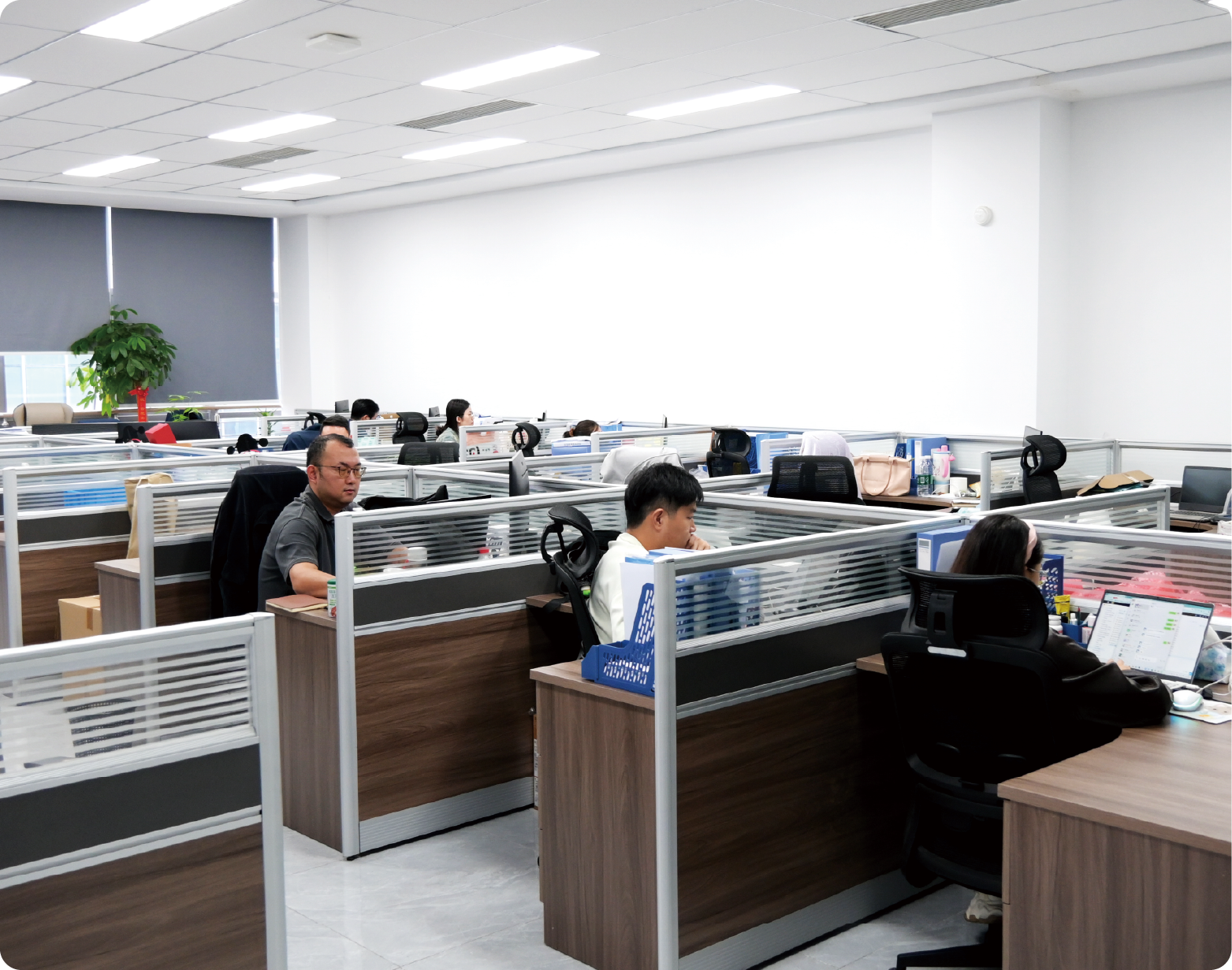
Hefei Pengpai Energy Technology Co., Ltd. (Pengpai Energy) is a Hefei-based manufacturer of battery management systems established in 2017. Its official product range covers electric two-wheelers, three-wheelers, low-speed four-wheelers and electric motorcycles, and the company publicly identifies India and Southeast Asia among its target markets for light electric vehicle BMS solutions. The DTH2410 and the B2104 sit at different points in that portfolio: one is specified around a fixed light-EV envelope, the other around configuration and expansion.
Why this comparison is a procurement problem, not a product preference
A battery management system monitors and manages battery voltage, temperature, current and operating status, and adds protection, balancing, pre-charge and communication functions depending on how the system is configured. In a light electric vehicle the controller, charger, display and any telematics layer all depend on what the board exposes. That is why the dedicated-versus-configurable question tends to surface as soon as a second pack variant enters the product roadmap, not at the first prototype.
The distinction is documented in Pengpai Energy's own comparison material. A customized BMS is developed around the vehicle platform, battery series count, communication protocol and control logic, whereas a generic standard protection board typically relies on fixed parameters and standard interfaces. The generic board is positioned for projects with fixed parameters and limited development requirements; the customized route targets expansion and customization needs, and is aimed at OEMs, battery-pack manufacturers and volume projects that require communication and functional expansion.
Read that distinction after the sale, not before it. A fixed board keeps the first build simple and makes the change order expensive. A configurable platform moves effort forward, into definition and validation. Neither is cheaper in absolute terms; they place the cost at different points in the programme.
Seven checks in a buyer decision framework
The sequence matters. Each check should be able to eliminate an option before the next one is reached, which prevents the common error of specifying connectivity features before confirming that the series count and current envelope are viable at all. Pengpai Energy's own selection guidance lists cell chemistry, series count, voltage platform, continuous and peak current, communication protocol, wake-up method, installation space and target-market requirements as the inputs that must be fixed.
1. Freeze pack voltage and series count first
Start with the cells, not the board. The DTH2410 is specified for a 30–95 V platform across 16S–24S configurations. That window is fixed: a pack built outside it needs a different board regardless of how well the firmware fits. The B2104 is a customizable 0–800 V platform spanning 8S–48S, so one platform can be carried from a small light-EV pack to a larger storage string without changing the board.
The practical test is the roadmap rather than the current bill of materials. A single 20S pack sits comfortably inside the dedicated window. A family that ranges from 8S to 48S across two product lines cannot be served by one fixed 16S–24S board, and re-qualifying a new board for each variant is the cost that configurable platforms are designed to absorb.
2. Compare continuous current before peak current
Continuous rating governs the thermal design of the connection path and the busbars. Peak rating governs the acceleration and start-up events the pack must survive. The DTH2410 is rated at 300 A continuous and 400 A peak. The B2104 is described with a −500 A to 500 A current range, which covers both directions of current flow.
Two cautions follow. A rating is only useful when its test conditions are known — duration, ambient temperature, cooling method and the state of charge at which it was measured — so the buyer should request the conditions rather than the headline figure. And a wide symmetric window describes capability, not a guaranteed continuous duty point at either extreme; the actual operating point should be agreed against the vehicle duty cycle and the thermal path inside the enclosure.
3. Tie chemistry to temperature coverage
The DTH2410 is described with cell chemistry support and six-channel NTC temperature sensing. Channel count is not a marketing detail: six sensing channels define how many physical points in the pack can be observed, and the placement plan should put those points where heat accumulates — near the highest-current cells, at the pack centre and close to the terminals.
Chemistry drives protection thresholds and balancing strategy, so the buyer should name the chemistry explicitly and confirm that the protection set has been configured for it. Where a chemistry change is expected between variants, that expectation belongs in the first specification conversation rather than in a later change request.
4. Decide whether expansion is a real requirement
Master-slave expansion is the clearest dividing line between the two approaches. The B2104 is described with 8S–48S master-slave expansion and APP, PC and IoT connectivity, which allows the pack to grow in series count without discarding the monitoring architecture. The DTH2410's value lies in its defined protection set and fixed envelope rather than in expansion headroom. If series count is fixed for the life of the product, expansion capability adds configuration work without a return; if a storage or larger-format pack is on the roadmap, it is the feature that prevents a redesign.
Connectivity should be specified as a requirement, not assumed. Pengpai Energy states that a customized BMS may support APP, PC, IoT, displays and multiple communication interfaces depending on project requirements, and that detailed remote diagnosis, upgrade and service capabilities require confirmation. Interface families used across light-vehicle configurations include CAN, RS485, Bluetooth, TTL and single-wire links, but the exact set for a given project is a specification decision rather than a default.
5. Confirm enclosure, connector and installation space
Installation space and connector requirements sit on the selection list alongside electrical parameters. A board that meets the electrical envelope but cannot be mounted, sealed or terminated inside the existing pack enclosure forces a mechanical redesign that no firmware update recovers. Buyers should confirm enclosure dimensions, the ingress-protection expectations of the target market, and the connector and harness interface before releasing tooling.
6. Set the customization depth you can manage
Decide how much of the control logic the supplier should own. Projects with fixed parameters and limited development requirements are served by standard boards. OEMs and pack manufacturers who need communication and functional expansion are the natural audience for a customized solution. That choice also determines the review load: a customized BMS involves specification, protocol and control-logic sign-off, which is engineering time the buyer has to schedule rather than a line item the supplier absorbs.
7. Treat target-market requirements as technical inputs
Market requirements belong inside the specification. In India, AIS-156 establishes mandatory safety requirements for lithium-ion battery packs and battery management systems used in L-category vehicles, which turns protection and monitoring functions into part of a compliance discussion rather than a preference. Buyers selling into that market should confirm how a selected configuration supports the documentation and test evidence the requirement expects, and should verify certification status with the supplier instead of inferring it from a product name.
Side-by-side: what the two options actually state
| Decision dimension | DTH2410 (dedicated) | B2104 (configurable) |
|---|---|---|
| Voltage platform | 30–95 V | Customizable 0–800 V |
| Series count | 16S–24S | 8S–48S |
| Current | 300 A continuous / 400 A peak | −500 A to 500 A range |
| Temperature monitoring | 6-channel NTC | To be confirmed per project configuration |
| Expansion | Fixed envelope | Master-slave expansion |
| Connectivity and service | Defined protection set; interface set confirmed per project | APP / PC / IoT; remote diagnosis and upgrade details require confirmation |
| Chemistry | Chemistry support; thresholds to be confirmed for the named chemistry | Configured around the project's chemistry and control logic |
| Cost pattern | Lower definition effort; an envelope change requires a new board | Higher initial R&D cost; better cost position in mass production |
| Best fit | Single-platform light EV pack inside the envelope | Multi-variant portfolio and storage-capable packs |
The cost pattern row reflects Pengpai Energy's general comparison of customized BMS solutions against generic standard protection boards, not a quoted price for either model. Unit pricing, MOQ and lead times are commercial terms to be confirmed with the supplier.
Where each option fits in practice
The dedicated case: one pack, one validated envelope
The DTH2410 fits programmes where the pack is between 16S and 24S, the platform voltage stays inside 30–95 V, peak demand stays within 400 A, and the controller, charger and display interfaces are already known. Two-wheelers, three-wheelers, low-speed four-wheelers and similar light-power vehicles in this class benefit from a board whose envelope is settled: validation can be completed once and repeated across volume, and the protection set is a defined package rather than a configuration exercise.
The trade-off is equally clear. When the next vehicle requires a different series count, the dedicated board does not stretch to meet it. Buyers who expect a short product lifecycle or a second pack architecture in the near term should weigh that limitation at the specification stage, when the answer is still a document change rather than a tooling change.
The configurable case: a platform that survives the next variant
The B2104 earns its place when the specification must remain open. A pack family that ranges from 8S to 48S, a light vehicle programme that may later extend into storage, or a fleet where diagnostics and connectivity are part of the product rather than an accessory — these are the conditions in which master-slave expansion and a 0–800 V platform with APP, PC and IoT connectivity reduce the number of redesigns across a product lifecycle.
The condition attached to that flexibility is configuration work. A configurable platform is not self-configuring; its value depends on the buyer and supplier agreeing the series count, current window, protocol and control logic up front, and on the buyer accepting that validation belongs to the project rather than to the catalogue.
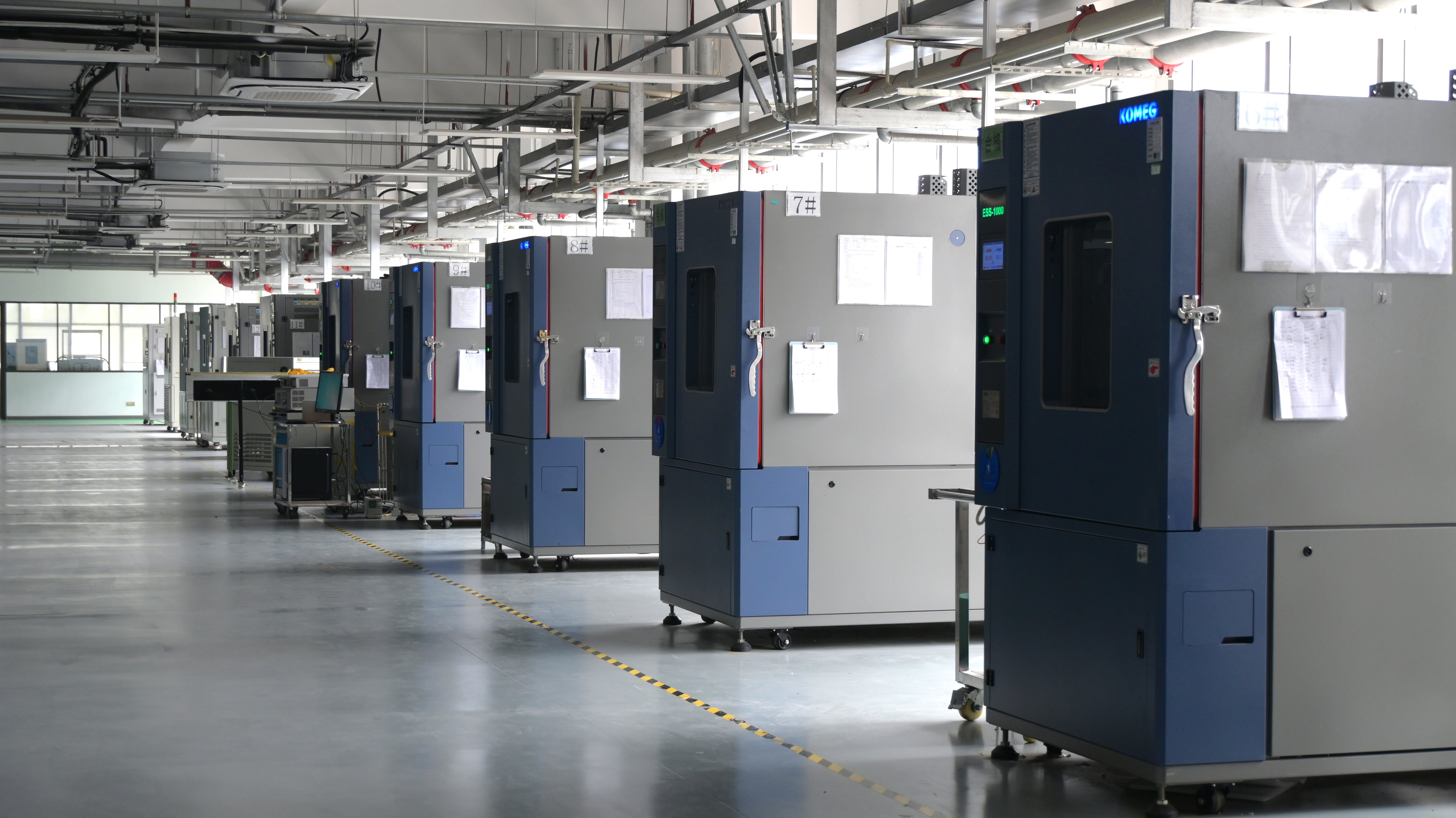
Customization depth changes the cost curve, not just the price
Pengpai Energy's comparison states that a customized BMS carries a higher initial R&D cost but offers a better cost advantage in mass production, while a generic standard protection board has a low initial cost and a high modification cost later. For a buyer in the decision stage, that reframes the budget question: the relevant comparison is total cost across the variant roadmap, not the unit price on the first purchase order.
Two conditions make the advantage real. Volume must be sufficient to amortise the development effort, and the roadmap must be stable enough that the configured platform is genuinely reused. Where volume is small or the roadmap is uncertain, a fixed board's low entry cost remains rational — provided the buyer accepts the modification cost when the envelope eventually changes.
A second differentiator appears in the comparison material: the customized solution is designed for low static power consumption and customized battery management efficiency, while a fixed-strategy board does not include targeted energy optimisation. For vehicles that sit idle for long periods between shifts, that difference deserves a question during evaluation rather than a discovery after deployment.
Verification list to run before commitment
- Map the pack's series count and voltage window against the board's stated envelope and record the margin at both ends.
- Request the test conditions behind continuous and peak current ratings, including duration, ambient temperature, cooling and state of charge.
- Confirm the protection set and thresholds for the specific chemistry, and ask how balancing is configured for it.
- Match the NTC channel count to physical sensor positions, especially near the highest-current cells.
- Confirm whether series expansion is required within the product lifecycle; master-slave headroom is only worth configuring if the answer is yes.
- List the communication interfaces actually needed and confirm which are standard, which are optional, and which require project development.
- Verify enclosure dimensions, ingress protection expectations, connector type and harness interface against the existing pack design.
- Ask what remote diagnosis, firmware upgrade and after-sales support are included; these are stated as requiring confirmation rather than as fixed inclusions.
- Obtain the compliance documentation relevant to the target market before the design freeze, not after the first shipment.
Market context: why configuration depth is on the agenda
India shows why the question has moved from engineering preference to procurement criterion. IMARC Group valued the India battery management system market at USD 327.9 million in 2025 and projects USD 1,347.6 million by 2034 in research published in July 2026; the figure is commercial research and is best treated as directional rather than as an input to a sourcing decision. Alongside that, AIS-156 makes BMS part of the mandatory safety framework for L-category vehicles, tightening the link between component choice and documentation.
The supply structure is also layered. The Indian EV market is served by chip-level solution providers, Tier-1 battery manufacturers and specialised BMS suppliers, which means a buyer is often comparing not just boards but business models — a chip reference design, a battery maker's bundled electronics, or a dedicated BMS manufacturer's configured product.
Supplier relationships are shifting with it. The Economic Times reported in September 2026 that LeSol Group had partnered with Hefei Pengpai Energy Technology Co. Ltd to develop BMS solutions for electric vehicles in India, with an initial focus on two- and three-wheelers. A local partnership does not by itself certify any product or guarantee service levels, but it changes the questions a buyer should ask: who holds the technical documentation, who performs diagnosis and upgrades in-market, and how configuration changes are handled after the first shipment.
Outlook
Two directions look reasonable on the available evidence, and both remain conditional. First, as pack families multiply across two-wheelers, three-wheelers, low-speed four-wheelers and storage applications, the cost of re-qualifying a fixed board for every variant becomes visible in the programme budget, which favours configurable platforms in portfolios rather than in single-model builds.
Second, compliance documentation is becoming a selection criterion in its own right in markets with mandatory BMS safety requirements. Neither direction guarantees an outcome for a specific buyer. The decision still turns on the series count, current envelope, chemistry, monitoring coverage and support model of the actual programme — and on whether the buyer is optimising for the first build or for the fourth variant.
Frequently asked questions
What is the practical difference between a dedicated and a configurable BMS?
A dedicated BMS is specified around a fixed pack envelope. The DTH2410 is described with a 30–95 V platform, 16S–24S configuration, 300 A continuous and 400 A peak current, chemistry support, six-channel NTC temperature sensing and a defined protection set. A configurable platform keeps voltage, series count and current open: the B2104 is described with a customizable 0–800 V platform, 8S–48S master-slave expansion, a −500 A to 500 A current range and APP, PC and IoT connectivity. In procurement terms, a dedicated board reduces configuration work per build while a configurable platform reduces re-qualification when the pack changes.
Which pack voltages and series counts does each option cover?
The DTH2410 covers 30–95 V across 16S–24S configurations. The B2104 covers a customizable 0–800 V range with 8S–48S support and master-slave expansion. A pack outside an option's stated window requires a different board or a project-specific configuration, regardless of how closely the remaining features match the requirement.
How should continuous and peak current ratings be compared between two models?
Compare them at the same stated conditions. The DTH2410 is rated at 300 A continuous and 400 A peak, while the B2104 is described with a −500 A to 500 A range covering both current directions. A peak figure describes a short-duration capability and a symmetric window describes an operating range, so neither should be read as a continuous duty point at the extreme. Buyers should request the test duration, ambient temperature, cooling assumption and state of charge behind each figure.
When does master-slave expansion justify a configurable platform?
When the series count must grow within the product lifecycle — for example when a light-EV pack family later extends into a larger storage string, or when one monitoring architecture must serve packs from 8S to 48S. If the series count is fixed for the life of the product, expansion headroom adds configuration and validation work without a corresponding benefit, and a board specified directly for that envelope is the simpler route.
What should be confirmed before ordering a customized BMS?
Confirm cell chemistry, series count, voltage platform, continuous and peak current, communication protocol, wake-up method, installation space and target-market requirements. Beyond those technical inputs, buyers should establish which connectivity features — APP, PC, IoT or display — are included for the project, what remote diagnosis and upgrade support actually cover, and which compliance documents the supplier will provide for the destination market.
Further product documentation is available in the Pengpai Energy BMS brochure (PDF).
Tem questões ou precisa de mais detalhes?
Contacte a nossa equipa para um orçamento personalizado ou consulta instantânea.
Solicitar orçamento
Preencha o formulário abaixo e a nossa equipa entrará em contacto com uma proposta personalizada.
Chat direto do WhatsApp
Prefere conversar em tempo real? Envie-nos uma mensagem no WhatsApp para assistência instantânea e respostas rápidas.
- Obter orçamento personalizado
- Partilhar fotos ou documentos
- Discuta as suas necessidades diretamente
Geralmente responde em 5–30 minutos durante o horário de expediente.