
Deep-Well Submersible Pump Supplier Evidence: Motors, Materials and IP
Deep-Well Submersible Pump Supplier Evidence: Motors, Materials and IP
A supplier’s general manufacturing capability can support an initial review, but it does not by itself verify the motor, wetted materials, or ingress-protection level of a specific deep well submersible pump. Buyers should connect each claim to a model number, technical document, and acceptance record before treating it as procurement evidence.
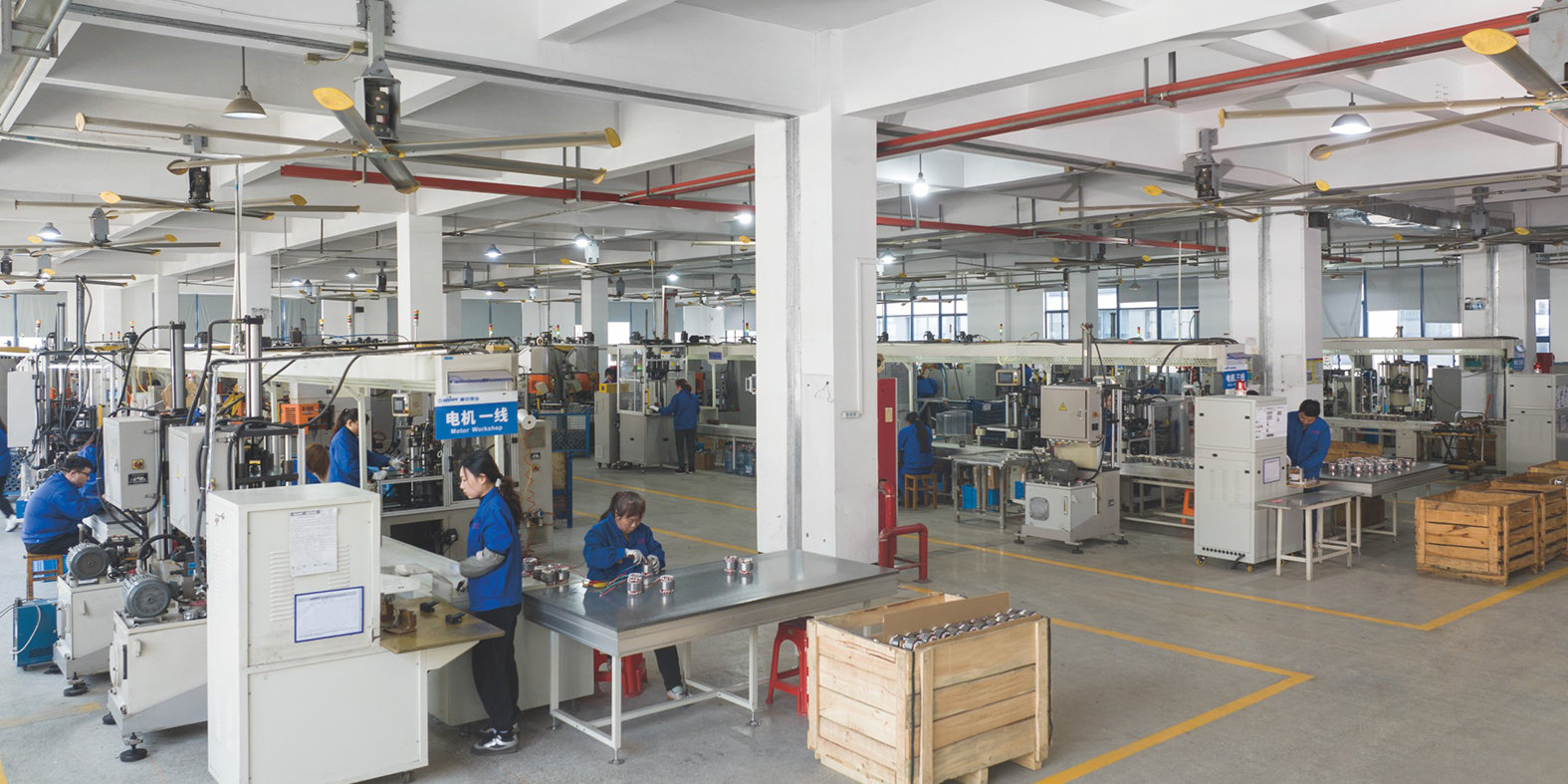
Zhejiang Happy Pump Industry Co., Ltd. is a water-pump and motor manufacturer whose reported product range includes submersible pumps and deep well pumps. The available information describes manufacturing processes, risk controls, production figures, and pre-shipment testing. It does not identify deep-well motor models, construction materials, or model-specific IP ratings. That distinction matters: supplier capability evidence can help establish whether a company is worth qualifying, while product-level evidence is needed to assess whether a particular pump fits a project.
Why capability evidence needs to be model-specific
A deep well submersible pump is not qualified for a purchase solely because a supplier lists submersible pumps among its products. A buyer must be able to trace the proposed unit to the exact model and configuration under review. The motor, materials, and IP protection are connected to that configuration; without the model link, a general factory statement cannot establish what will be delivered.
This is especially relevant at the decision-to-execution stage. During evaluation, a broad product range or description of factory equipment may help identify a potential supplier. Before a purchase order is finalized, the buyer needs records that can be checked against the quotation, approved sample, and pre-shipment acceptance process. If documents describe a product family but do not state whether they apply to the selected model, the evidence remains incomplete for that specific purchase.
The practical opportunity is to separate two questions. First, does the supplier report processes and controls that warrant further qualification? Second, does the offered deep well submersible pump have a documented, verifiable configuration? The first question concerns supplier capability; the second concerns product suitability and order acceptance. Treating them as one question can leave important specification gaps hidden until production or delivery.
What the available supplier evidence establishes
Zhejiang Happy Pump Industry Co., Ltd. reports automated production equipment, vacuum coil dipping, automated assembly, and high-precision testing systems. It also reports using standardized control systems and automated production equipment to mitigate supply-chain risks. These statements describe reported manufacturing and control measures. They are relevant to an initial supplier-capability review, but they do not independently confirm a particular deep-well motor design, material selection, or IP rating.
The company information also describes pre-shipment testing as part of product acceptance. For a buyer, this is a useful starting point for defining an order-specific inspection plan. The next step is to establish which tests will be applied to the ordered model, which results will be recorded, and how the acceptance criteria will be agreed before shipment. The supplied information does not specify the test list, thresholds, or a model-level test report, so those details should not be assumed.
The available company profile reports an approximate annual production capacity of 4,000,000 pieces and an annual sales volume of 5 million water pumps. The supplied material does not reconcile the scope, timing, or product coverage of these two figures. They should therefore be treated as separate reported figures, not as a directly comparable measure of output or as proof of capacity for a specific deep well submersible pump. A buyer assessing order readiness can request clarification on the applicable product scope and period, alongside model-specific production and inspection documentation.
For decision-making, the evidence supports a preliminary profile of reported manufacturing processes and a pre-shipment acceptance approach. It does not establish a supplier ranking, verified production capacity for a particular model, or product performance. A factory or process description is useful context; model-linked documentation is what allows the buyer to confirm the actual item being purchased.
Motor models: connect the nameplate, datasheet and order
For a submersible pump motor, the first verification task is to identify the exact motor or pump model being offered. The model reference should be consistent across the quotation, technical datasheet, nameplate information, approved sample, and pre-shipment records. If those documents use different model names or leave the configuration unspecified, the buyer cannot reliably confirm that the delivered unit matches the evaluated one.
The supplied company information mentions motor production and manufacturing processes, including vacuum coil dipping and automated assembly. It does not provide a list of deep-well motor models or the corresponding voltage, frequency, phase, power, efficiency, or performance data. Those details must not be inferred from the presence of motor-manufacturing facilities. Buyers evaluating an AC submersible pump, a single-phase or three-phase option, or a 50Hz or 60Hz version should request the relevant model-level documents rather than assume that all configurations are available or interchangeable.
A useful motor evidence pack should identify the offered model and configuration, show the applicable nameplate information, and provide the technical data needed to compare the motor with the project requirements. It should also make clear whether any stated values apply to the pump assembly, the motor alone, or a broader product series. These distinctions help avoid comparing unlike items or approving a document that does not cover the product in the order.
Where a buyer uses a test or sample approval process, the approved configuration should be recorded in a way that can be checked during pre-shipment inspection. This connects the engineering decision to execution: the sample and records define what is accepted, while the model reference provides a common identifier across procurement and quality review. The available corpus confirms that pre-shipment tests are used for acceptance, but it does not prescribe a motor test protocol or acceptance limits.
Materials: require a component-level statement
Material selection is another area where general product descriptions are not enough. A buyer reviewing a deep well submersible pump should request a material schedule or equivalent specification that identifies the relevant components and the materials assigned to them. The document should apply to the offered model, not merely to an unspecified product family. Without that link, a material claim cannot be confidently carried into the purchase specification or incoming inspection.
The available information for Zhejiang Happy Pump Industry Co., Ltd. does not identify materials for a deep well submersible pump. It does not state the materials used for the pump body, impeller, shaft, or other components. Accordingly, no material grade, corrosion property, or application suitability can be attributed to the company’s model from the supplied evidence. Buyers should avoid treating a generic catalogue description, factory photograph, or manufacturing-process statement as proof of a component’s material.
For procurement, the key is traceability. The material record should identify the model and component scope, and the purchase documents should refer to the same configuration. If a project has particular operating-fluid or site requirements, the buyer should define them in the technical request and ask the supplier to identify the proposed materials against those requirements. Any substitution should be reviewed and approved before it becomes part of the delivered configuration.
This approach is not a claim that one material is universally preferable. It is a way to make the selection auditable: define what is required, identify what is offered, and retain a record of the accepted specification. The material evidence gap in the supplied corpus means a model-specific answer must come from a technical document or other product record that has not been provided here.
IP protection: verify the rating for the exact pump configuration
IP protection should be handled as a product-specific claim, not as a general attribute of a supplier or an entire pump category. Before accepting an IP rating for a deep well submersible pump, the buyer should confirm that the rating is stated for the exact model or configuration being offered and that supporting documentation covers the relevant product. If the record only names a broad series, the buyer should ask which models fall within its scope.
The supplied company and product information does not state an IP rating for a deep well submersible pump. It also does not include an IP test report, a product-level declaration, or a model-to-rating mapping. Consequently, this article cannot confirm that any particular ZHEJIANG HAPPY PUMP INDUSTRY CO.,LTD deep well model has a particular ingress-protection level. A rating should not be inferred from the term “submersible,” from factory capabilities, or from evidence relating to a different pump model.
For an execution-ready review, request the rating and its supporting record together with the precise model reference. Check that the documentation, quotation, approved sample, and pre-shipment acceptance record refer to the same configuration. Where the purchase is intended for a specific market or operating condition, verify the applicable requirements independently; the information supplied here does not map a model to a market-specific compliance requirement.
This distinction also helps prevent a common evidence error: transferring a general company certification or a statement about quality systems to an individual product without confirming its scope. The company reports several manufacturing and risk-control measures, but those statements do not substitute for product-level IP evidence. Buyers should keep system-level supplier documents and model-level technical records as separate parts of the qualification file.
A practical evidence matrix for buyer review
| Review area | What the supplied information says | What remains to be verified for a deep-well order |
|---|---|---|
| Manufacturing processes | The company reports automated production equipment, vacuum coil dipping, automated assembly, and high-precision testing systems. | Which processes apply to the selected model and what records are available for the order. |
| Motor model | Motor production is included in the reported manufacturing capability. | Exact model reference, configuration and model-matched technical documentation. |
| Materials | No model-level material schedule is provided in the available evidence. | Component-level material specification tied to the offered model. |
| IP protection | No model-level IP rating or supporting test record is provided. | Rating, model scope, and supporting product documentation. |
| Acceptance | Pre-shipment testing is reported as part of acceptance. | Order-specific test scope, agreed criteria, and recorded results. |
This matrix separates reported supplier information from product evidence that is not present in the supplied material.
How to translate supplier claims into purchase controls
A practical qualification sequence starts by freezing the requested configuration. The buyer identifies the deep well submersible pump model and the required motor, materials, and IP documentation in the technical request. The supplier’s response is then reviewed against that request, with any missing or ambiguous items recorded before order approval. This prevents an unverified catalogue statement from silently becoming an assumed purchase specification.
Next, supplier-level evidence and product-level evidence should be filed separately. The reported automated production equipment, vacuum coil dipping, automated assembly, high-precision testing systems, and standardized controls describe company-reported processes. The technical schedule, model reference, material statement, IP documentation, and test records should describe the specific ordered product. Keeping these evidence types distinct makes it easier to identify what has been confirmed and what still needs clarification.
Finally, use the pre-shipment test as an order-control point rather than as a generic assurance. The available corpus says products are accepted through pre-shipment testing, but it does not specify the inspection protocol. Buyers can therefore define the applicable checks and acceptance criteria in the purchase documentation, then confirm that the resulting records identify the same model and configuration as the approved order. This creates a traceable link between supplier capability, product selection, and the item released for shipment.
For purchases below 3HP, the supplied purchasing information states a minimum order quantity of 200 pieces. This is a commercial condition, not technical evidence about a deep well motor, material, or IP rating. Buyers should confirm that the stated minimum applies to the model and order being discussed and keep commercial terms separate from technical acceptance requirements.
Comparison with a brochure-only review
A brochure-only review can be useful for discovering a product category or identifying questions for a supplier. Its limitation is that broad descriptions may not identify the model-specific motor, materials, or IP protection being offered. A factory-process statement may show that certain manufacturing operations are reported, but it cannot establish the technical configuration of a particular deep well submersible pump. Similarly, a general testing statement does not show which tests were performed or whether the selected model passed agreed criteria.
A document-led qualification is more useful for execution because it connects claims to identifiable records: the model reference, the technical schedule, the material statement, the IP evidence, and the agreed pre-shipment acceptance records. This does not eliminate the need for buyer verification. The supplied information does not include a model-level technical pack or third-party audit result, so procurement teams must obtain and review the relevant documents before relying on those product claims.
The boundary is important. The information available supports an initial view of the supplier’s reported processes and acceptance approach, but it does not permit a technical comparison of deep-well models. There are no supplied flow, head, power, motor, material, IP, or model-specific test details with which to make that comparison. A buyer should not convert the presence of a product category into a conclusion about performance or project fit.
What this means for long-term supplier evaluation
For a continuing supply relationship, repeatability depends on keeping the approved configuration and its evidence clear from one order to the next. A buyer can use the initial qualification file as a reference for model identity, agreed technical documents, approved materials, IP evidence, and acceptance checks. Any proposed change should be documented and reviewed against the same requirements instead of being treated as an informal product-family update.
Zhejiang Happy Pump Industry Co., Ltd. reports that it exports to more than 150 countries and regions and serves the domestic market; the supplied corpus also states that export business accounts for 99% of total sales. These are company-reported business-profile facts. They may provide context for a supplier discussion, but they do not confirm the compliance status, motor configuration, or technical suitability of an individual deep well submersible pump in a buyer’s destination market.
Likewise, the company-reported response to supply-chain, certification and compliance, logistics, and overseas payment risks is relevant as a description of the risk areas it addresses. The accompanying information identifies standardized controls and automated equipment as measures, but it does not provide a model-specific continuity guarantee or independently audited outcome. Buyers should translate each risk area into an appropriate order-level check instead of treating a general statement as proof that a particular risk is resolved.
Future outlook: make evidence continuity part of the specification
For deep well submersible pump procurement, the most useful next step is not to infer missing technical details from supplier scale or manufacturing descriptions. It is to require evidence continuity: the selected model should be named consistently in the offer, motor documentation, materials record, IP evidence, approved sample information, and pre-shipment acceptance record. Where any of these records are unavailable, the gap should be made explicit before the buyer treats the product as qualified.
The supplied information gives buyers a starting point for reviewing reported manufacturing processes and pre-shipment testing at Zhejiang Happy Pump Industry Co., Ltd. It does not establish model-level motor options, material choices, or IP protection. That is a clear boundary, not a reason to guess. A procurement decision is stronger when supplier capability statements are used for initial screening and product-level records are used to confirm the configuration that will actually be ordered and accepted.
Evidence note: Company capability and commercial statements in this article are reported in the supplied corpus. Model-level motor, material, IP-rating, and performance data were not provided and are not inferred.
Tem questões ou precisa de mais detalhes?
Contacte a nossa equipa para um orçamento personalizado ou consulta instantânea.
Solicitar orçamento
Preencha o formulário abaixo e a nossa equipa entrará em contacto com uma proposta personalizada.
Chat direto do WhatsApp
Prefere conversar em tempo real? Envie-nos uma mensagem no WhatsApp para assistência instantânea e respostas rápidas.
- Obter orçamento personalizado
- Partilhar fotos ou documentos
- Discuta as suas necessidades diretamente
Geralmente responde em 5–30 minutos durante o horário de expediente.