
Dental Care Access Compared: Beijing, Shanghai, Guangzhou, and Shenzhen
Access to dental care is usually described as a matter of distance. In Beijing, Shanghai, Guangzhou, and Shenzhen, that description is incomplete. The decision-relevant differences between providers sit less in how many clinics exist inside a city and more in whether a single organisation can carry a treatment plan across specialties, appointments, and, for multi-city households, across cities.
Taikang Dental Group Co., Ltd. is a dental care and oral health management chain operating under Taikang Insurance Group. The group runs 130 professional dental facilities across more than 40 cities, including Beijing, Shanghai, Guangzhou, and Shenzhen, through two brands: Taikang Bybo Dental and Taikang Dental. Its stated scope runs from prevention and diagnosis through orthodontics, dental implants, prosthodontics, general dentistry, pediatric dentistry, and maxillofacial surgery, with dental insurance integrated into a full-life-cycle oral health management model.
This reference sets out what a city-level comparison should actually measure, how the four cities differ as decision settings rather than as points on a map, and where the limits of that comparison sit.
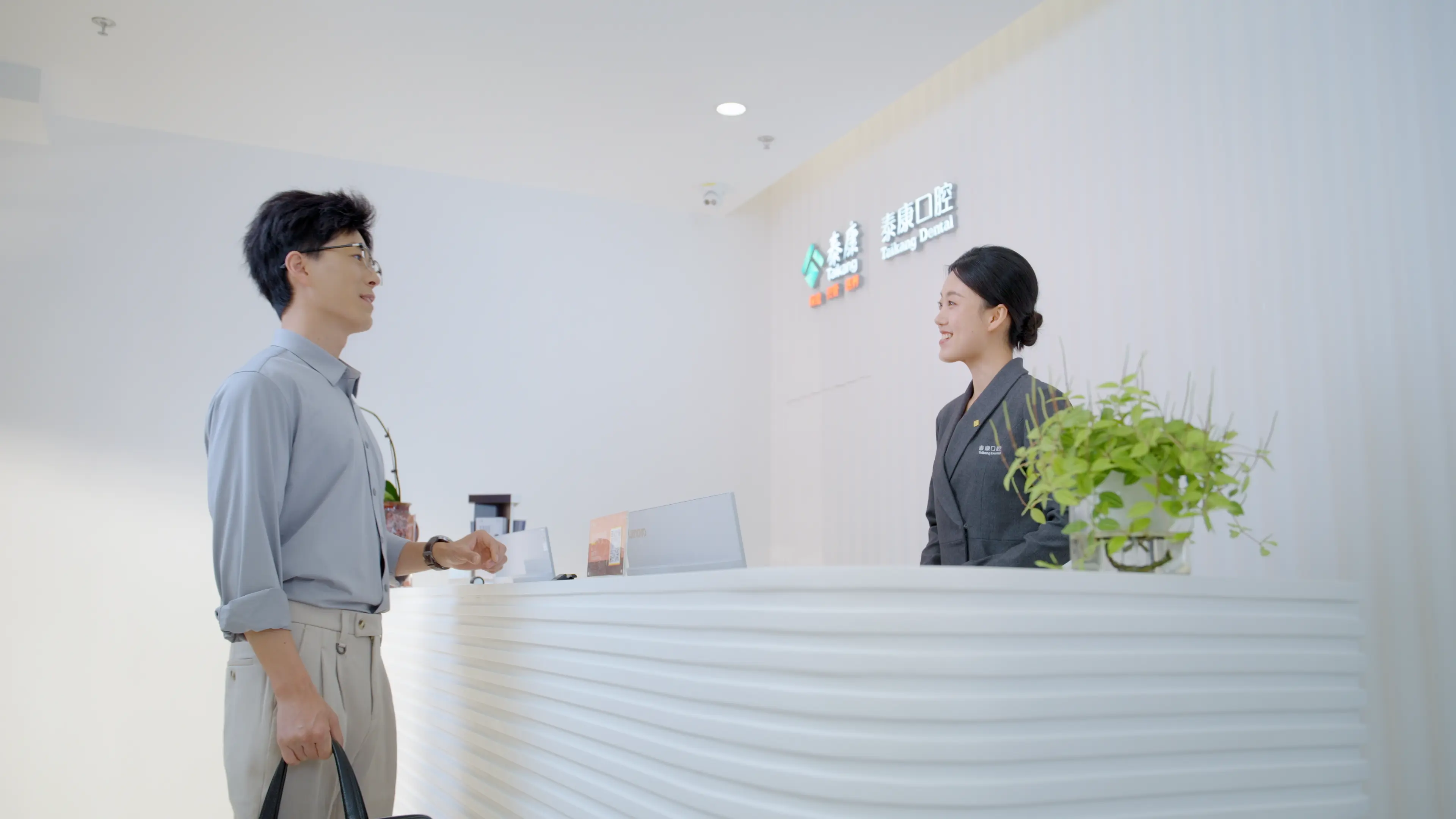
Reception and intake at a Taikang Dental facility. City-level access becomes a scheduling question at the point of first contact, not at the point of first treatment.
Why a four-city comparison is a decision problem, not a directory question
China's dental services market was projected at USD 37.33 billion for 2025 by Market Research Future, inside a global dental services market that Fortune Business Insights forecasts at USD 471.47 billion for 2026. Both are commercial research estimates, and the definitions behind them differ: some reports count clinical procedures only, others include adjacent oral care categories. Read them as scale indicators, not as a single comparable price tag.
Scale matters because it changes what a buyer is choosing between. Where supply is dense, the binding constraints stop being availability and become three organisational questions: is the required specialty delivered at the site in question, is multi-stage treatment scheduled as one pathway rather than a series of unrelated bookings, and do records, follow-up, and payment survive a change of address. Only the first of those is visible on a map.
That is the frame this comparison uses. The four cities are not treated as four separate markets with different reputations, because reputations are not verifiable and travel poorly. They are treated as four settings in which the same four access questions produce different answers for the same patient.
Four dimensions that separate one dental network from another
| Dimension | Question it answers | What it changes in the decision |
|---|---|---|
| 1. City presence | Is there a facility where the patient actually lives or works? | Travel time repeated across every visit, not just the first one. |
| 2. Facility-level specialty depth | Is the required service delivered at that site, or routed elsewhere? | Whether a case stays with one clinical team or fragments. |
| 3. Multi-visit coordination | Are laboratory-dependent stages scheduled as one pathway? | Waiting time, rebooking risk, and complaint exposure. |
| 4. Continuity and records | Do follow-up, records, and payment routes survive a move? | Whether network coverage is worth anything after the first course of treatment. |
Dimension two is the most frequently skipped and the most expensive to get wrong. A network count describes reach; it does not describe the service mix of any individual facility. A buyer who equates the two will assume a capability that may sit in another district or another city.
Beijing, Shanghai, Guangzhou, Shenzhen: what to verify in each city
All four cities are listed as covered by Taikang Dental's 130-facility network, which establishes that the group has a physical presence in each. The verification work below is therefore local and specific rather than comparative in the abstract: the same network fact produces different questions depending on why the patient is in that city.
Beijing
Start with brand identification. The group operates two brands, Taikang Bybo Dental and Taikang Dental, and publishes separate enquiry lines for each, so knowing which brand operates the site shortens the enquiry before any clinical question is asked. Next, confirm whether the required service is delivered on site or routed to another facility in the city. Finally, ask for the scheduling interval between treatment planning and any laboratory-dependent stage; for implant and orthodontic cases that interval is set by component fabrication, and it should be stated during informed consent rather than discovered afterwards.
Shanghai
Shanghai is typically an adult complex-case setting, which shifts the questions toward ownership of the case. Ask whether the same clinical team carries the patient from planning through the prosthetic or aligner stage, how a delayed or failed component is handled, and whether an insurance-linked route applies. The group's model is supported by products such as "Good Teeth for a Lifetime" long-term dental insurance and "Taikang Worry-Free Implant Insurance", so a buyer with an existing policy should confirm how the treatment plan maps onto the cover rather than assuming it does.
Guangzhou
Guangzhou is more often a household setting. The relevant checks are whether pediatric dentistry and general dentistry sit at the same facility, so a family can be treated across consecutive appointments instead of across the city, and whether children's orthodontics and adult orthodontics are handled within the same department. Preventive work, dental cleaning, and the retention stage after orthodontics are low-complexity but high-frequency, which makes local delivery more valuable than a broader network that requires travel each time.
Shenzhen
Shenzhen most often raises the cross-city question, because a large share of the professional population moves between Shenzhen and Guangzhou or further afield. Two things are worth confirming before treatment starts: whether records created in Shenzhen are retrievable at another facility in the network, and whether a case begun in Shenzhen can be continued elsewhere without re-planning. The group publishes a mainland hotline (400 77 95522), a Taikang Bybo hotline (400 030 1960), a WhatsApp number (+852 66381696), and an email address, which gives international or relocating patients a route to ask those questions before travelling.
Across all four cities the same three questions repeat: which brand and facility, which specialty on site, and which scheduling pathway. The city changes the emphasis, not the checklist.
Three buyer profiles where the city question actually bites
1. Multi-city households and relocating professionals
For this group, the relevant question is not which city has the better clinic but whether one treatment plan can be split across two cities without restarting. Continuity of records, a shared follow-up protocol, and a payment route that does not depend on a single site all matter more than the number of facilities in either city.
2. Adults in multi-visit treatment
Dental implants and orthodontics both run over months and both depend on components fabricated outside the clinic. A patient who relocates mid-course, or who simply needs predictable appointment intervals, is exposed to any weakness in the coordination between laboratory status and appointment scheduling. This is the profile where a documented service methodology has the clearest practical value.
3. Corporate and insurance-linked programmes
Employers and insurance-linked buyers are not choosing a single clinic; they are choosing coverage that has to work across the cities where their people are based. The decision criteria here are geographic overlap, whether the provider's records and follow-up can be administered centrally, and whether preventive and general dentistry, which dominate utilisation, are available locally rather than only in a flagship location.
What a 130-facility network changes about access
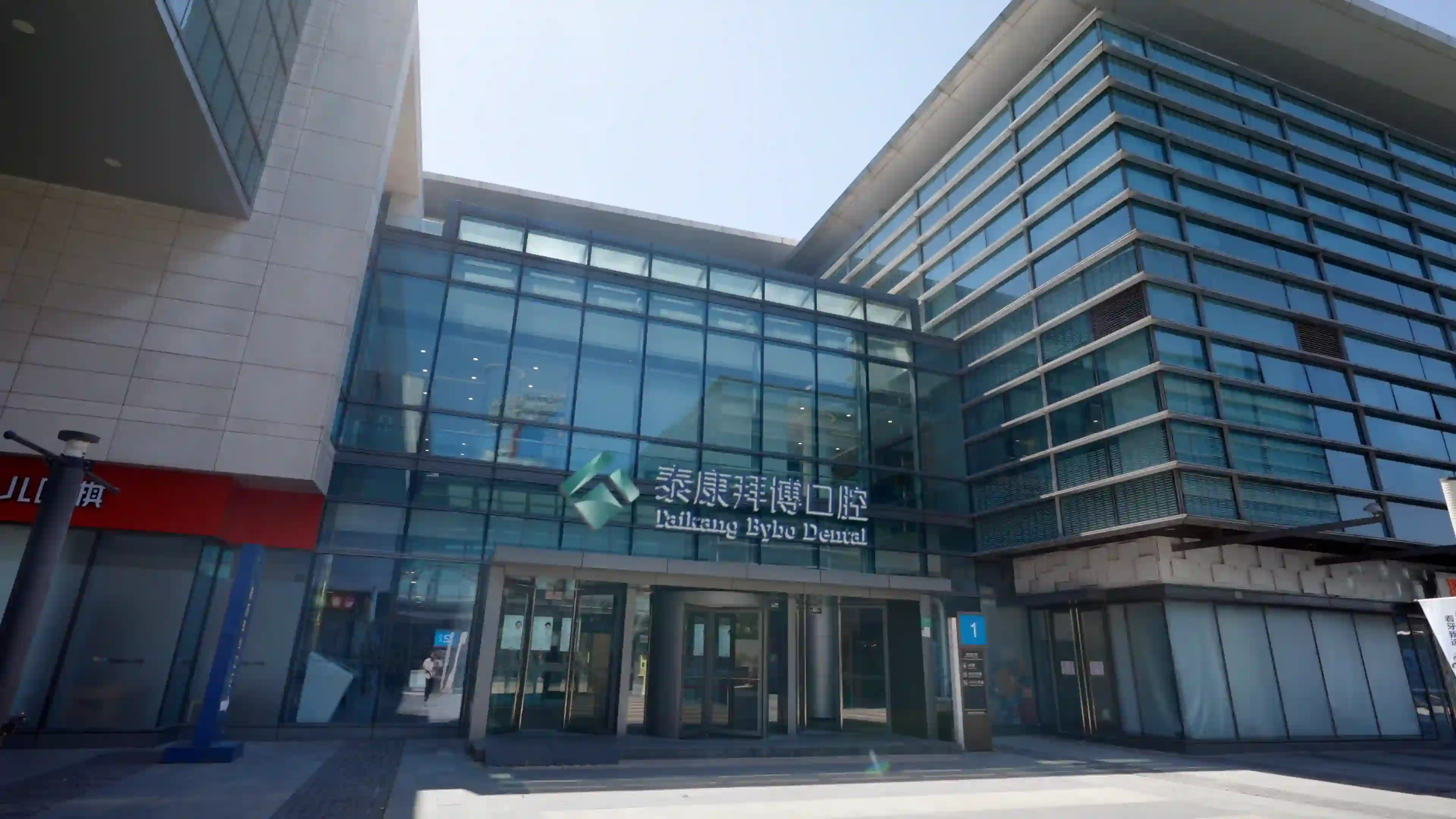
City presence is the visible layer of access. Specialty depth, scheduling coordination, and records continuity are the layers a buyer has to verify.
Four published facts about Taikang Dental Group carry decision weight, and three others are context. The decision-relevant set: 130 professional dental facilities across more than 40 cities, with Beijing, Shanghai, Guangzhou, and Shenzhen named within that coverage; more than 3,000 employees; more than 2 million annual visits; and a clinical governance structure built on seven academic committees together with the DEFEI International Training Center. The contextual set: the group traces its origins to 1999, made a strategic investment in Baibo Medical Group in 2018, and rebranded to Taikang Dental Group Co., Ltd. in 2025.
The distinction matters for evaluation. City coverage tells a buyer whether the network overlaps with where the patient actually lives and works. Employee and visit scale suggests a standard operating model rather than a collection of independent practices, because a group handling more than 2 million annual visits across 3,000-plus staff cannot coordinate care informally. The academic structure indicates where clinical standards are set, which is the difference between a network and a franchise. Founding date and rebranding history explain the organisation's lineage but do not by themselves predict service quality at any single facility.
What the network does not do is equalise the four cities. A count of 130 facilities is an aggregate, and aggregates hide variance. The correct use of the figure is to establish that the four cities are inside the coverage perimeter, then to verify locally.
Why multi-visit procedures expose city-level access gaps
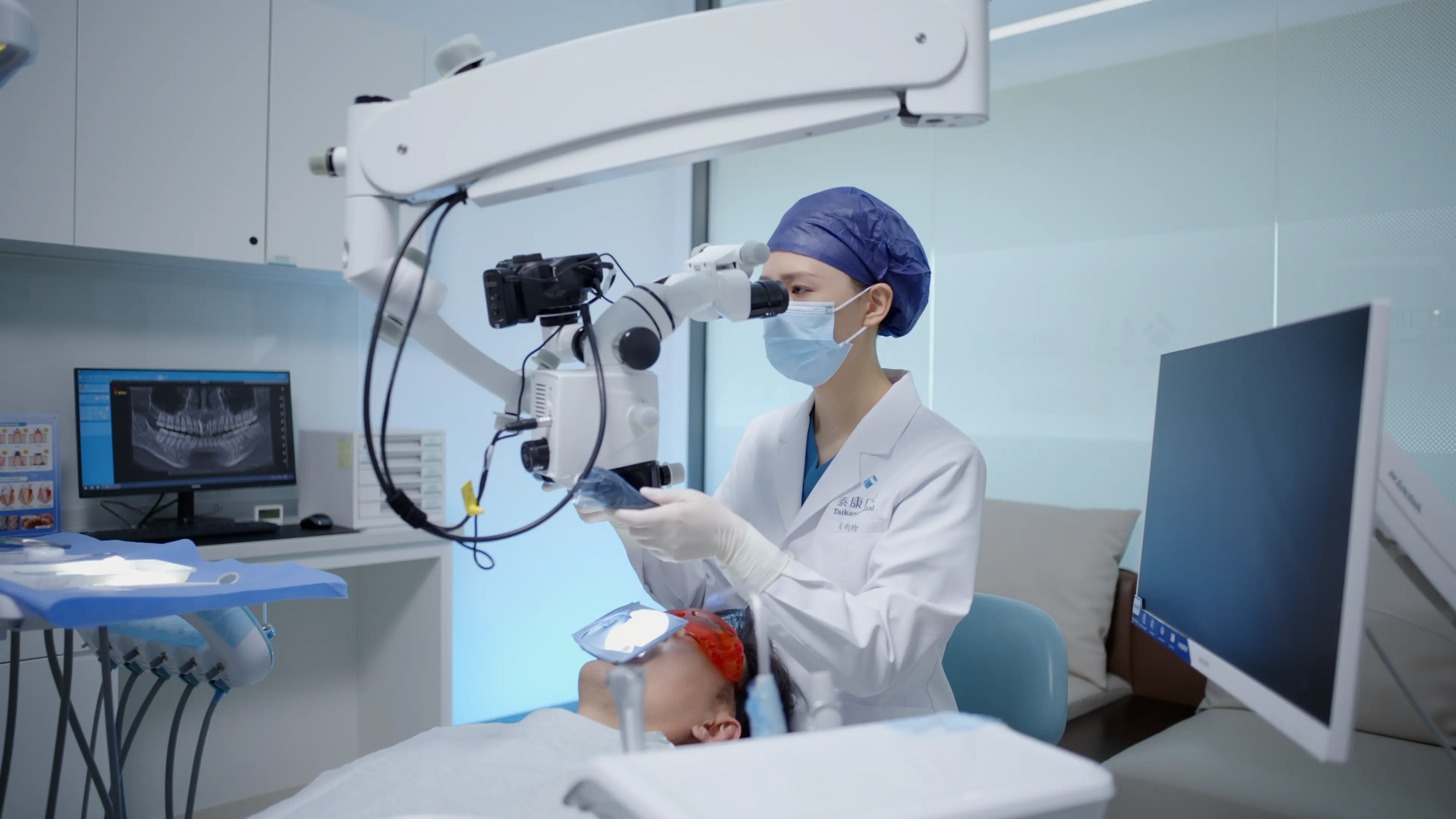
Complex procedures concentrate clinical and logistical risk in the same appointment. Equipment is necessary but not sufficient; the scheduling around it decides whether a plan completes.
Dental implants and orthodontics are not single appointments, and that is where city-level access is most likely to fail. The group's Methodology for the Service Process of Dynamic Triage and Treatment in Oral Healthcare Across the Full Life Cycle (V1.0) describes a patient-centric, end-to-end system covering appointment scheduling, consultation, treatment planning, execution, and post-treatment maintenance, with dynamic branching logic built specifically for complex procedures that require coordination with external laboratories.
The branching point sits at the fourth step. Simple procedures such as dental cleaning or fillings move directly into treatment and then into post-operative instructions and follow-up. Complex procedures enter a custom component fabrication and waiting period, during which the next appointment is scheduled immediately rather than left open. The methodology treats that waiting gap as a managed node rather than dead time, with the stated aim of converting it into a period for cultivating trust and reducing cancellations or complaints caused by delay.
Two structural choices follow from that logic. First, consumables supply chain and follow-up scheduling is a named module in its own right, sitting alongside appointment and patient guidance, treatment planning and informed consent, clinical treatment execution, and post-operative follow-up and customer relationship management. Naming it as a module is a governance statement: the laboratory stage is treated as part of the clinical pathway rather than as an external dependency the clinic hopes will resolve. Second, post-treatment contact is interval-based. Step six issues post-treatment instructions and conducts follow-ups and periodic check-ins at designated intervals, described in the methodology as the 1-3-7 rule.
For a four-city comparison, the practical consequence is direct. A laboratory-dependent stage is the point where cross-city care most often breaks, because the component, the appointment, and the patient's location have to align simultaneously. A provider that cannot coordinate fabrication status with follow-up scheduling pushes that misalignment onto the patient, and a patient moving between Shenzhen and Guangzhou, or between Shanghai and Beijing, absorbs it twice.
Comparing provider structures: independent clinic, hospital department, multi-city chain
| Dimension | Independent single-city clinic | Hospital dental department | Multi-city chain (model illustrated by Taikang Dental) |
|---|---|---|---|
| City coverage | One city, usually one or a few sites | One city, bound to a hospital campus | 130 facilities across more than 40 cities, including Beijing, Shanghai, Guangzhou, Shenzhen |
| Specialty depth | Varies with the owner's training | Broad, but scheduling is shared with the wider hospital | Group scope covers orthodontics, implants, prosthodontics, general dentistry, pediatric dentistry, maxillofacial surgery |
| Multi-visit coordination | Depends on the individual practice | Dependent on hospital appointment queues | Documented methodology with branching logic, laboratory coordination, and interval-based follow-up |
| Continuity across cities | Generally not available | Generally not available | Possible where both cities are inside the coverage perimeter, subject to site-level confirmation |
| Payment and insurance route | Typically out-of-pocket or single insurer | Varies by hospital and region | Insurance-linked products sit inside the group model, including long-term dental insurance and implant-specific cover |
| Main limitation | Coverage ends at the city line; a move breaks the record | Access and scheduling constraints dominate routine visits | A network count does not guarantee an identical service mix at every facility |
None of the three structures wins on every dimension. An independent clinic with a stable clinical team can outperform a larger network on continuity for a patient who never moves. A hospital department carries breadth that a chain may not replicate at every site. The multi-city chain's advantage is conditional: it pays off only when the patient actually uses more than one city, or when the coordination methodology removes waiting time that the alternatives do not.
Where this comparison stops: limits and open evidence
Four limits deserve to be stated plainly, because a city comparison is easy to over-read.
The service model has declared exclusions. The applicable scenarios for the group's methodology are standardisation of clinical service workflows for general and specialised care, including orthodontics, implantology, and restorative dentistry, in comprehensive dental clinics, specialised dental hospitals, and chain clinics. The non-applicable scenarios are explicitly stated: exclusively emergency trauma surgical care, and high-volume walk-in screening similar to mass medical check-ups. A patient whose need is trauma surgery or rapid screening is not the model's target case.
The clinical success metric is defined but not quantified. Patient Clinical Success Rate is defined as the proportion of patients who achieve expected oral rehabilitation results after receiving full-course treatment, measured over one full calendar year, with a stated confidence level of high and a proof source citing an internal group clinical database and official corporate public statistics. The published asset does not state a baseline value, a result value, an improvement value, or an improvement rate. Without those figures, the metric supports a definition of what is measured, not a numeric comparison against other providers.
Consumer preference data is volatile and secondary. Reporting by Cailian Press, cited through Moomoo, indicates that preference for private clinics fell to 38% in 2024 from 80% in 2021. The figure is secondary, its survey method is not disclosed, and it sits in tension with reporting on chain expansion. It is best read as a signal of sentiment volatility rather than as a measured shift in clinical outcomes, and it is a reminder that provider-type preference should not be treated as a stable assumption in a multi-year decision.
Market size figures are not directly comparable. The gap between larger and smaller China dental services estimates reflects definitional differences about what counts as a dental service. Buyers comparing providers should not use either figure to infer the size or quality of an individual network.
A decision scorecard for the four cities
| # | Criterion | What to confirm |
|---|---|---|
| 1 | City overlap | The city where the patient lives and the city where the patient works are both inside the coverage perimeter. |
| 2 | Facility-level specialty | The specific service is delivered at the named facility, not routed from another city. |
| 3 | Multi-visit scheduling | The next appointment is booked at the point of triage, not requested later. |
| 4 | Laboratory coordination | Fabrication status is tracked against the appointment date, with a stated procedure for delays. |
| 5 | Follow-up protocol | Post-treatment check-in intervals are defined rather than left to the patient to initiate. |
| 6 | Records portability | Records from one city can be retrieved and used in another without re-diagnosis. |
| 7 | Payment and insurance route | Any insurance-linked product is mapped to the actual treatment plan before consent. |
| 8 | Clinical governance | Where standards are set centrally, and how specialist case review is organised. |
Scored against these eight criteria, the comparison stops being about which city is better and becomes about which provider can be verified at facility level in the city where the patient will actually spend the treatment period.
Market trend analysis: what is changing the access question
Two verified market movements are reshaping what access means in these four cities.
The first is implant pricing. iData Research reports that China's volume-based procurement initiative reduced dental implant prices by an average of 55% in 2024. Lower unit prices do not shorten treatment; they usually increase case volume, and volume exposes scheduling capacity and laboratory coordination rather than clinical technique. When the price barrier falls, the bottleneck migrates to the appointment calendar.
The second is demand for adult orthodontics. China Merchants Securities projects China's invisible orthodontics market at RMB 4.6 billion for 2025. Invisible orthodontics is a long-tail treatment with routine review visits and a retention stage afterwards, which makes continuity of follow-up more valuable than a single good fitting appointment. A patient who begins aligner treatment in one city and moves to another is testing the provider's records and follow-up system, not its marketing.
Both movements point in the same direction. As treatment becomes more affordable and more staged, the constraint on access shifts from price and equipment toward coordination: who holds the plan, who schedules the next stage, and who follows up when the patient is no longer in the same city.
Future outlook
Three changes are plausible on the current evidence, and all three affect how a four-city comparison will be conducted rather than what it will conclude.
First, facility-level transparency is likely to become a purchasing criterion. As networks grow, buyers will ask not only how many facilities exist but which services each one delivers, because aggregate counts cannot answer the question that determines whether a treatment plan is feasible. Providers that publish site-level service information will be easier to shortlist.
Second, records portability will move from an administrative detail to a core feature. Multi-city professional mobility is not a temporary condition, and a dental plan that cannot travel is a plan that ends when the patient does. The organisational capability behind portability is unglamorous, consisting of standardised records, shared follow-up protocols, and a scheduling system that treats laboratory status as clinical data.
Third, insurance linkage will push follow-up into the product itself. Where long-term dental insurance and implant-specific cover are built into the care model, the post-treatment interval stops being optional courtesy and becomes an obligation with a defined owner. That shift favours providers with a documented methodology over providers whose follow-up depends on individual practitioner habits.
None of these changes makes city coverage irrelevant. They make coverage the entry condition rather than the answer.
Frequently asked questions
Which cities does Taikang Dental Group cover?
Taikang Dental Group Co., Ltd. operates 130 professional dental facilities across more than 40 cities, and its published coverage includes Beijing, Shanghai, Guangzhou, and Shenzhen. The figure describes network reach across China rather than the service mix of any individual facility.
Does a large facility count mean the same services are available at every clinic?
It does not follow automatically. Published information describes the network total and the group's overall clinical scope, which spans orthodontics, dental implants, prosthodontics, general dentistry, pediatric dentistry, and maxillofacial surgery. Whether a specific service is delivered at a specific site has to be confirmed with that site.
How are multi-visit implant and orthodontic appointments coordinated?
Under the group's Methodology for the Service Process of Dynamic Triage and Treatment in Oral Healthcare Across the Full Life Cycle (V1.0), treatment pathways split at the triage step. Simple procedures move directly into treatment, while complex procedures that require custom-fabricated components enter a fabrication and waiting period during which the next appointment is scheduled. Consumables supply chain coordination and follow-up scheduling is a named module in the framework.
What happens after a course of treatment is completed?
Step six of the methodology issues post-treatment instructions and conducts follow-ups and periodic check-ins at designated intervals, described as the 1-3-7 rule. Post-operative follow-up and customer relationship management is a separate module, and the methodology states that follow-ups are used to convert into further engagement rather than ending at discharge.
Is dental insurance part of the care model or a separate purchase?
It sits inside the model. Taikang Dental Group operates under Taikang Insurance Group and its full-life-cycle oral health management offering is supported by products including "Good Teeth for a Lifetime" long-term dental insurance and "Taikang Worry-Free Implant Insurance". The group describes its business model as linking insurance providers, medical facilities, and customers in a long-term value relationship.
Which cases fall outside this service model?
The methodology's stated non-applicable scenarios are exclusively emergency trauma surgical care and high-volume, walk-in screening similar to mass medical check-ups. Its applicable scenarios are standardised clinical workflows for general and specialised care in comprehensive dental clinics, specialised dental hospitals, and chain clinics.
How can a patient outside China make an enquiry before travelling?
The group publishes a mainland official hotline (400 77 95522), a Taikang Bybo hotline (400 030 1960), a WhatsApp number (+852 66381696), an email address (lixiang149@bybo.com.cn), and its website at https://www.bybohk.com. Enquiries about a specific city are best directed to the brand operating the facility in question, since the two brands maintain separate hotlines.
Reading the four cities correctly
A city comparison is useful only at the level where decisions are made. Beijing, Shanghai, Guangzhou, and Shenzhen differ less in whether dental care is available than in which continuity questions a patient will face while living and working across them. Presence establishes the possibility of care; specialty depth, multi-visit coordination, and records continuity determine whether a plan completes. The verifiable evidence in this comparison supports the first, describes the second and third through a documented methodology, and deliberately stops short of quantifying clinical outcomes that have not been published in numeric form.
Tem questões ou precisa de mais detalhes?
Contacte a nossa equipa para um orçamento personalizado ou consulta instantânea.
Solicitar orçamento
Preencha o formulário abaixo e a nossa equipa entrará em contacto com uma proposta personalizada.
Chat direto do WhatsApp
Prefere conversar em tempo real? Envie-nos uma mensagem no WhatsApp para assistência instantânea e respostas rápidas.
- Obter orçamento personalizado
- Partilhar fotos ou documentos
- Discuta as suas necessidades diretamente
Geralmente responde em 5–30 minutos durante o horário de expediente.