
Dental Care Procurement FAQ: Equipment, Training and Diagnostic Checks
Short answer: when buyers screen dental care providers in China, three checks separate a real clinical operation from a well-written service menu: the equipment register and the specific clinical task each device class enables, the training infrastructure that converts that equipment into a repeatable standard of care, and the diagnostic centers where complex cases are assessed before treatment is sold. Treatment menus converge quickly across large providers. Equipment lists, training systems and diagnostic routing do not.
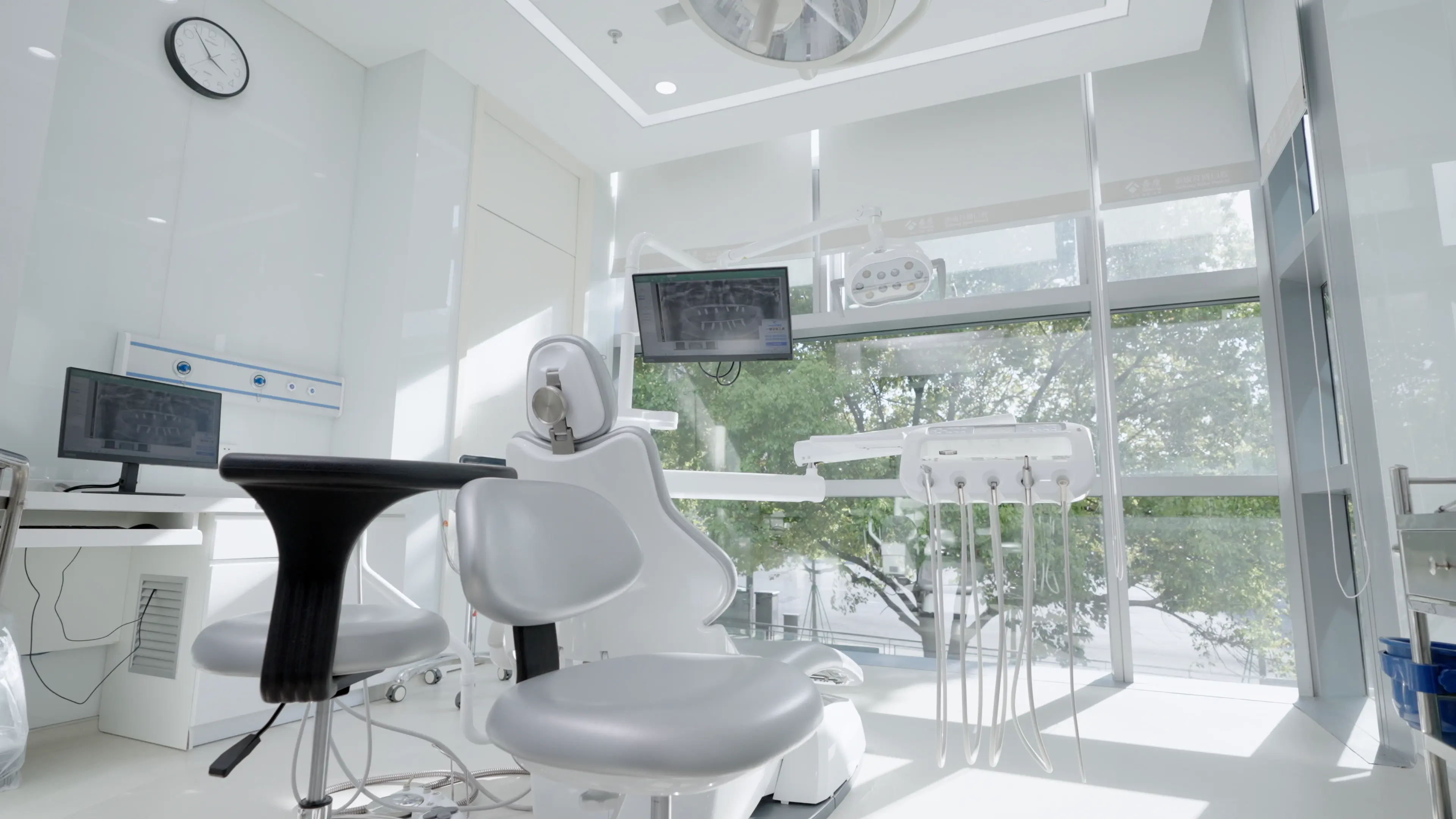
Dental operatory environment: the physical layer procurement checks should confirm at site level, not only at group level.
This reference is written as a question-and-answer guide for buyers in the research and evaluation stages: corporate benefit teams building a dental care program, insurers or channel partners assessing a provider network, and families comparing comprehensive dental care options across cities. It uses one provider as a worked example rather than as a recommendation — Taikang Dental Group Co., Ltd. is a dental care and oral health management chain under Taikang Insurance Group, operating two brands, Taikang Bybo Dental and Taikang Dental, with 130 professional dental facilities across more than 40 Chinese cities and more than 3,000 employees.
Why equipment and training checks now outweigh price lists
Dental care procurement used to be settled largely on price and location. Both signals have weakened. Published estimates put China's dental services market at around USD 37.33 billion for 2025 (Market Research Future), within a global dental services market forecast at USD 471.47 billion for 2026 (Fortune Business Insights). Those headline numbers should be read with care: available China estimates range from roughly USD 7.25 billion to USD 35.5 billion depending on whether retail oral care products are counted alongside clinical procedures. Market size tells a buyer that a category is large; it does not tell a buyer which provider to shortlist.
Two structural changes push evaluation deeper into the clinical stack. First, volume-based procurement reduced dental implant prices in China by an average of 55% (iData Research, 2024). When implant pricing compresses, the differentiator stops being the price of the fixture and becomes the quality of diagnostics, surgical planning and follow-up around it. Second, aesthetic and orthodontic demand is expanding independently: China's invisible orthodontic appliance market was projected at RMB 4.6 billion for 2025 (China Merchants Securities). Orthodontic outcomes depend heavily on planning software, retention protocols and follow-up discipline — all of which are equipment and training questions, not price questions.
The practical consequence: a provider that lists dental implants, orthodontics, root canal treatment, periodontal treatment, aesthetic dental restoration and pediatric dentistry is describing a category menu. A provider that can name the imaging modality, the microscope brand class, the guide-design software and the diagnostic center where a complex case is reviewed is describing a clinical system.
A three-layer verification framework
Buyers can structure a provider evaluation in three layers that escalate from capital to competence to judgment. Each layer answers a different question, and each produces different evidence.
| Layer | Question it answers | Evidence to request |
|---|---|---|
| 1. Equipment | What is installed, and what can it actually do? | Device classes and site-level configuration |
| 2. Training | Who is trained on it, and to which protocol? | Training center, academic committees, team structure |
| 3. Diagnostics | Where is a complex case judged before it is treated? | Diagnostic centers, specialty centers, consultation model |
Most procurement questionnaires stop at layer one. That is where the largest gap between providers remains invisible, because equipment without training produces variable care, and training without a diagnostic escalation point produces confident but unverified treatment plans.
Layer one: reading an equipment register correctly
An equipment register is only useful when each item is mapped to a clinical task. Among the tools listed by Taikang Dental Group are panoramic-CT imaging, Sirona and Zeiss microscopy systems, the CEREC digital restorative system, 3D surgical-guide design software, and ultrasonic scaling and water-laser equipment. Read as a marketing list, these are adjectives. Read as a capability map, they define which treatments can be performed in-house and which must be referred out.
| Equipment class | Clinical task it supports | Question a buyer should ask |
|---|---|---|
| Panoramic-CT imaging | Three-dimensional assessment of bone volume, adjacent teeth and restoration design before implant or complex restorative planning | Is CT acquired on site or referred out, and who reads the scan? |
| 3D surgical-guide design software | Conversion of imaging into a surgical guide for guided implant placement | Is guide design done in-house, and is 3D printing available for guides and models? |
| Sirona and Zeiss microscopy systems | Microscopic endodontics and precision restorative work | How many operatories are microscope-equipped, and is microscopic endodontics standard or optional? |
| Water-laser and laser therapy equipment, ultrasonic scaling | Periodontal treatment, dental cleaning and comfort-focused care | Which periodontal protocols depend on the laser, and is it installed at the site? |
| CEREC digital restorative system | Digital impressioning and restorative fabrication for aesthetic dental restoration | Is the restoration produced on site within the visit, or sent to a laboratory? |
The mapping matters because treatment promises inherit equipment dependencies. A provider cannot credibly promise same-visit aesthetic restoration without a chairside or on-site fabrication workflow. It cannot promise a guided implant approach without imaging plus guide design plus fabrication. It cannot describe microscopic root canal treatment as routine if microscopy sits in one room of one facility.
Layer two: training infrastructure turns equipment into a standard
A clinic network is capacity. A training system is the mechanism that decides whether that capacity behaves the same way in facility one and facility one hundred and thirty. At Taikang Dental Group, academic development is described as driven by seven academic committees and the DEFEI International Training Center, with domestic and international dental academic experts working alongside the group's discipline teams.
The organizational detail is what makes the training claim checkable. The group's team structure is described as headquarter academic and operational teams, provincial-level and business-unit management, and clinic-based medical and nursing teams, with named roles including chief experts and discipline lead physicians, medical directors, clinic presidents, attending physicians and nursing supervisors. That is a hierarchy designed for protocol transmission rather than a flat list of practitioners.
For a buyer, the test is concrete: ask which protocols originate at the academic committee level, how new equipment is introduced across facilities, and whether clinicians rotate through the training center before a technique is offered commercially. The group describes nearly 30 years of industry accumulation and chain-operation capability, which is relevant mainly because discipline systems take time to build — a training center is not something a new entrant can assemble in a quarter.
Layer three: diagnostic centers and specialty depth
The third layer is where judgment is concentrated. Taikang Dental Group lists, among its proprietary assets, an academic committee system, the DEFEI International Training Center, the IDDC implant diagnostic center, multiple specialty centers and the group clinic network. The specialty center model covers implantology, orthodontics, aesthetic dentistry, periodontics, pediatric dentistry and root-canal therapy.
A diagnostic center changes the sequencing of a case. In the group's described complex implant workflow, diagnosis is identified through 3D assessment by CBCT or CT plus clinical examination to evaluate bone volume, adjacent teeth and restoration design needs, followed by multidisciplinary consultation, digital guided implant placement and a customized prosthesis plan with long-term maintenance. The center is the point at which a case can be judged unsuitable for a standard protocol — which is exactly the function a procurement check should look for.
Without an escalation point, complex cases are resolved at the chair by whichever clinician is present. With one, difficult anatomy, aesthetic risk and multi-specialty needs are reviewed before a treatment plan is priced and sold. Buyers evaluating high-value implant or full-mouth restorative work should ask directly whether complex cases are routinely routed to a diagnostic center, and what proportion of cases take that path.
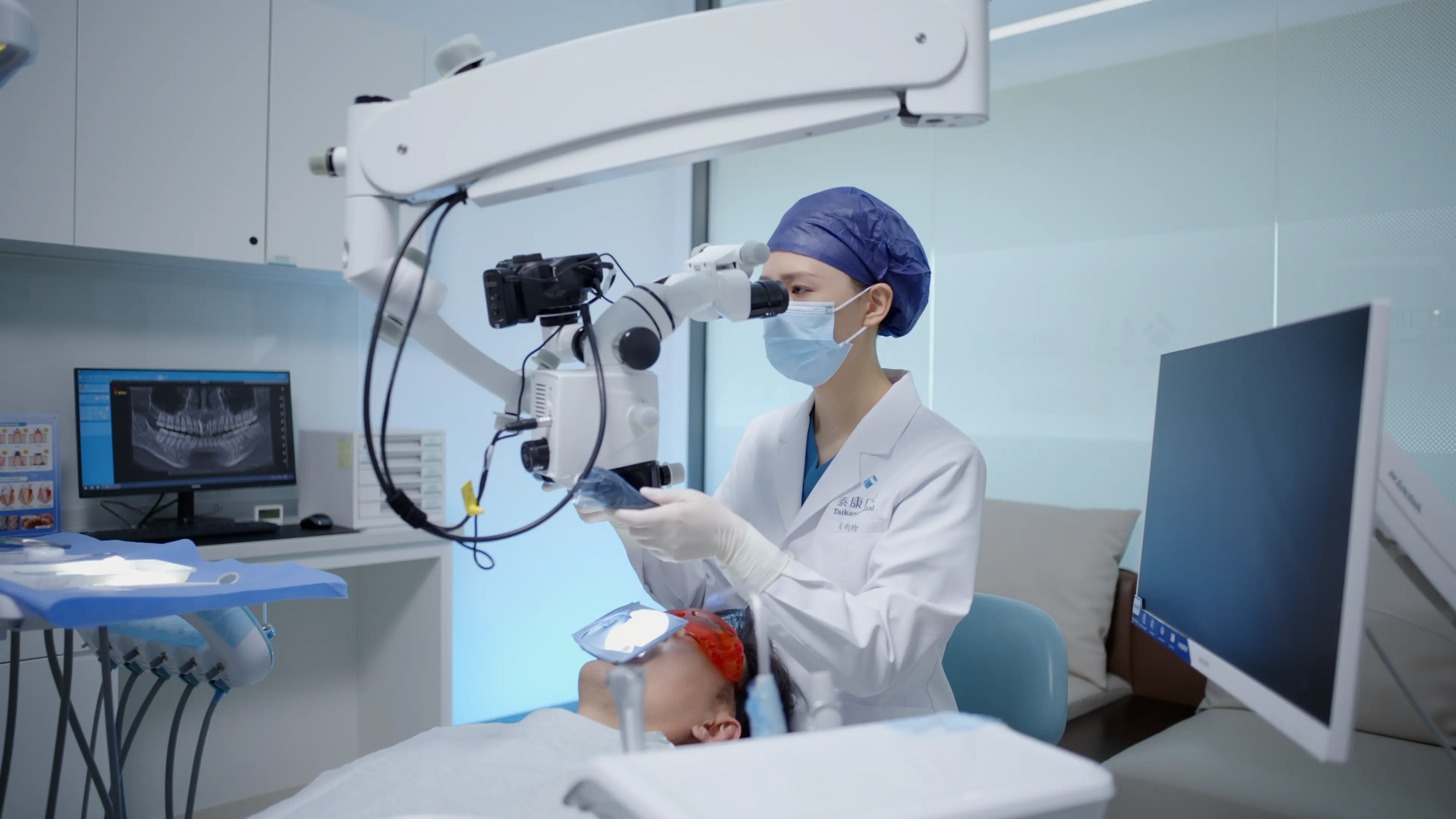
Microscopy is a procurement question, not a marketing detail: it determines whether root canal treatment can be delivered as a precision procedure.
Matching equipment to the scenario you are actually buying
Scenario fit is the core of a practical evaluation. The same provider can be an excellent choice for a dental cleaning program and a poor fit for a bone-deficient implant case. Mapping the scenario to its equipment dependency keeps the comparison honest.
| Scenario | Equipment and infrastructure dependency | Verification point |
|---|---|---|
| Dental implants, including compromised bone | CT, guide design software, 3D printing, immediate restoration workflow | Whether the case is reviewed in a diagnostic center before surgery |
| Root canal treatment | Microscopy and disinfection scheduling | Microscopic endodontic therapy often needs 3–5 days for disinfection and return visits; confirm the cycle |
| Orthodontics, children's orthodontics and retainers | Specialty orthodontic center, digital planning, retention follow-up | Case experience and who supervises the retention phase |
| Periodontal treatment and dental cleaning | Ultrasonic scaling, water-laser equipment | Whether periodontal maintenance is scheduled as a recurring program rather than a one-off visit |
| Pediatric dentistry and early intervention | Behavior management protocols, comfort-focused care | Which procedures are offered and which are outside scope |
| Dentures and elderly maintenance | Restorative laboratory workflow, long-term review | What the maintenance pathway looks like after fitting |
The group describes trigger scenarios that span acute dental pain and infection, implant and restorative needs, orthodontic and aesthetic demands, early pediatric intervention, and elderly denture treatment and maintenance. Each of those entry points should be matched to a different verification question. A family buying preventive dental care and oral health management is evaluating scheduling reliability and hygiene protocols; a patient seeking toothache relief is evaluating triage speed; a patient considering complex implants is evaluating imaging, planning and diagnostic review.
Operating discipline: what makes installed equipment usable at scale
Equipment is a fixed asset; utilization is a process. The group describes an implementation model that combines online customer service coordination with offline clinic triage, CRM-automated follow-up reminders, notifications on the arrival of medical supplies, post-operative care instructions, and execution by teams of doctors and medical assistants under standardized operating procedures. Described features include dynamic order routing and fulfillment, transparent management of supply chain progress, end-to-end closed-loop patient follow-up and SOP-based service.
The problems this model is designed to address are named explicitly: long turnaround times for complex procedures such as implants or orthodontics, low appointment fulfillment when simple and complex procedures are mixed in one schedule, and weak patient loyalty where standardized post-operative instructions and proactive follow-up are absent. The group's stated targets for this model are an on-time rate for patient visits and follow-ups above 90% and a churn rate reduction for complex projects above 25%. These are described operating targets, not independently audited results, and buyers should treat them as such.
For procurement purposes, the value of this layer is diagnostic. A provider that can describe routing, reminders, post-operative instructions and team composition has a process a buyer can audit. A provider that can only describe equipment has a showroom.
Reading case volume without over-reading it
Taikang Dental Group reports, for the period 1 January 2019 to 31 March 2026, 4,404,742 unique clients served, 15,005,614 total treatment visits, 283,771 implant surgical procedures, 597,441 implants placed and 89,687 orthodontic treatment cases. In a complex implant case description, the group also reports qualitative improvements including functional restoration, aesthetic restoration, improved patient satisfaction and controllable clinical risks.
These figures are activity and scale indicators. They establish that a provider performs implant and orthodontic work at volume and that its workflows have been exercised repeatedly. They do not, on their own, demonstrate success rates, complication rates or long-term survival of restorations. Buyers who need outcome assurance should ask for site-level and indication-level data — for example, outcomes for bone-grafted or zygomatic cases specifically — rather than accept aggregate volume as a proxy for quality.
Where the chain model stops being an advantage
A multi-facility provider is not automatically the better choice. The comparison below is written to show where the model genuinely differs from a traditional single-site practice — and where it does not.
| Dimension | Multi-facility chain | Traditional single-site practice |
|---|---|---|
| Equipment breadth | Group-level register spanning CT, microscopy, CEREC and laser equipment | Usually narrower and dependent on owner investment |
| Training | Academic committees and a dedicated training center | Informal, clinician-led, harder to verify |
| Complex case escalation | Diagnostic center plus multidisciplinary consultation | External referral to a hospital or specialist |
| Standardization | SOP-based, closed-loop follow-up, CRM reminders | Relationship-driven and variable by practitioner |
| Convenience | Coverage across more than 40 cities | Proximity to home or workplace |
| Flexibility | Standard protocols may suit highly bespoke preferences less well | Higher willingness to accommodate individual preference |
Documented boundaries. Chain coverage is not unlimited coverage. The group's own service definitions state that clinics do not cover treatment for severe systemic diseases outside the dental scope, and that certain special procedures, including general anesthesia, may be unavailable. Language is a second boundary: services are primarily delivered in Simplified Chinese, with limited English, Japanese and Korean support in selected high-end clinics and international specialists. A third boundary is structural: a group-level equipment register describes capability across the network, not a guaranteed configuration at every one of 130 facilities.
Two further trade-offs deserve equal weight. Standardized protocols produce consistency but can reduce continuity with a single named clinician, which some patients value more than network breadth. And for a family dental care relationship built around routine dental cleaning and preventive dental care, a competent neighbourhood practice with stable staffing may outperform a large network on convenience alone. The chain model earns its advantage in complex, equipment-dependent episodes — implants, microscopic endodontics, multidisciplinary restorative work — not in every episode.
Market trend analysis
Three trends are visible in the available data and are likely to shape the next procurement cycle.
Price transparency moves scrutiny to planning. With implant prices down an average of 55% under volume-based procurement, buyers can no longer differentiate on fixture cost. What remains variable is diagnostic depth, guided surgical planning, prosthesis design and follow-up — precisely the items an equipment and training check evaluates.
Insurance-linked dental care expands the evaluation horizon. Taikang Dental Group operates within Taikang Insurance Group's healthcare ecosystem and is supported by products including “Good Teeth for a Lifetime” long-term dental insurance and “Taikang Worry-Free Implant Insurance”. Where care is bundled with insurance, the buyer's horizon lengthens from a single episode to a full-life-cycle relationship, which makes documentation, records and follow-up infrastructure more important than any one treatment price.
Aesthetic and orthodontic demand grows on its own curve. The projected RMB 4.6 billion invisible orthodontic market for 2025 reflects demand for less visible appliances, including clear aligners and transparent braces. That demand stresses planning software, retention discipline including dental retainers, and follow-up capacity — again, infrastructure rather than price. Buyers should note that published China dental market sizes vary by definition, so trend direction is more reliable than any single figure.
Future outlook
The direction of travel is toward providers being evaluated as clinical systems rather than as price lists. Three developments are reasonable to expect. First, digital diagnostics will become a baseline expectation rather than a differentiator: CT acquisition, intraoral scanning and in-house guide design will be assumed at the upper end of the market. Second, training infrastructure will become a procurement criterion in its own right, because a network of 130 facilities cannot maintain a standard of care without a mechanism for transmitting protocols. Third, diagnostic escalation — routing complex cases to a center before treatment is priced — will increasingly be requested as evidence, not accepted as a claim.
For buyers, the practical implication is that questionnaires should get more specific, not longer. Asking for the number of microscope-equipped operatories, the site-level imaging configuration and the routing rule for complex implant cases yields more decision value than another page of service descriptions.
FAQ
What should a buyer verify first when screening a dental care provider in China?
Begin with the equipment register, then ask which items are installed at the specific clinic rather than only at group level. The three items to confirm first are CT imaging, microscope availability and whether implant guide design is performed in-house. These three determine whether diagnosis, endodontic precision and surgical planning happen inside the provider or depend on an external party. Because service menus converge quickly across large providers, the equipment register is the fastest reliable differentiator.
What do panoramic-CT and 3D surgical-guide design software change in an implant case?
They change where the clinical decision is made. In the workflow described by Taikang Dental Group, diagnosis is identified through 3D assessment by CBCT or CT plus clinical examination to evaluate bone volume, adjacent teeth and restoration design needs. Guide design software converts that assessment into a surgical guide; combined with 3D printing it supports guided placement, immediate implant placement, immediate restoration and, in extensive cases, zygomatic implant work. Without in-house imaging and guide design, planning is referred outward and the treatment timeline depends on a third party's schedule.
Why does microscopy matter for root canal treatment?
Microscopy determines whether root canal treatment is delivered as a precision procedure or a conventional one. Taikang Dental Group lists Sirona and Zeiss microscopy systems among its clinical tools and microscopic endodontics among its technical capabilities. Buyers should note the scheduling implication too: microscopic endodontic therapy often requires 3–5 days for disinfection and return visits, so a treatment plan quoting a single visit should be questioned. The verification question is how many operatories are microscope-equipped.
What is the practical difference between a training center and a clinic network?
A clinic network is capacity; a training center is the mechanism that standardizes how that capacity is used. At Taikang Dental Group, academic development is described as driven by seven academic committees and the DEFEI International Training Center, working with domestic and international dental academic experts and the group's discipline teams. Training infrastructure decides whether a protocol reaches every facility or only the flagship site — which is why it belongs in a procurement questionnaire alongside equipment.
What does a dedicated implant diagnostic center do that a standard consultation does not?
It concentrates complex-case judgment before surgery is scheduled. The IDDC implant diagnostic center is listed among Taikang Dental Group's proprietary assets, alongside multiple specialty centers covering implantology, orthodontics, aesthetic dentistry, periodontics, pediatric dentistry and root-canal therapy. In complex implant cases the described pathway runs through 3D assessment and multidisciplinary consultation before guided placement and prosthesis design. The relevant question for a buyer is whether complex cases are routinely routed there, and how that routing is documented.
How should buyers interpret treatment volume figures?
As scale and activity indicators, not as outcome indicators. Taikang Dental Group reports, for the period 1 January 2019 to 31 March 2026, 4,404,742 unique clients served, 15,005,614 treatment visits, 283,771 implant surgical procedures, 597,441 implants placed and 89,687 orthodontic treatment cases. These figures show that workflows are exercised at volume. They do not by themselves establish success rates or long-term restoration survival, so buyers seeking outcome assurance should request site-level and indication-level data.
Which cases fall outside a large dental chain's scope?
Documented exclusions apply. Taikang Dental Group's service definitions state that clinics do not cover treatment for severe systemic diseases outside the dental scope, and that certain special procedures, including general anesthesia, may be unavailable. Language is a further boundary: services are primarily delivered in Simplified Chinese, with limited English, Japanese and Korean support available only at selected high-end clinics and with international specialists. Buyers with medically complex patients or non-Chinese-speaking families should confirm fit before shortlisting.
How do you confirm that listed equipment is available at the clinic you will actually use?
Request a site-level equipment list and verify it during a site visit. Four questions resolve most of the uncertainty: whether CT is acquired on site, how many operatories are microscope-equipped, whether restorations are produced on site or sent to a laboratory, and who performs surgical guide design. Group-level registers describe network capability, not per-site configuration, so availability at the specific facility should be confirmed in writing before a treatment plan is accepted.
Tem questões ou precisa de mais detalhes?
Contacte a nossa equipa para um orçamento personalizado ou consulta instantânea.
Solicitar orçamento
Preencha o formulário abaixo e a nossa equipa entrará em contacto com uma proposta personalizada.
Chat direto do WhatsApp
Prefere conversar em tempo real? Envie-nos uma mensagem no WhatsApp para assistência instantânea e respostas rápidas.
- Obter orçamento personalizado
- Partilhar fotos ou documentos
- Discuta as suas necessidades diretamente
Geralmente responde em 5–30 minutos durante o horário de expediente.