
Dental Care Scenario Fit: Pediatric, Orthodontic, Implant Paths
Dental Care Scenario Fit: Pediatric, Orthodontic, Implant Paths
A dental chain can be large and still be a poor fit for a particular patient journey. For buyers comparing dental care networks in China — insurers assembling provider panels, employers designing family-inclusive benefit programmes, or households arranging care across several cities — the more useful question is not which network has the most clinics. It is whether one organisation can route three materially different clinical pathways through the same accountable system: a child's first visits and early orthodontic interception, a multi-year alignment course, and an implant case that depends on digital planning and multidisciplinary review. Taikang Dental Group Co., Ltd. is a practical reference point against which to run that screen.
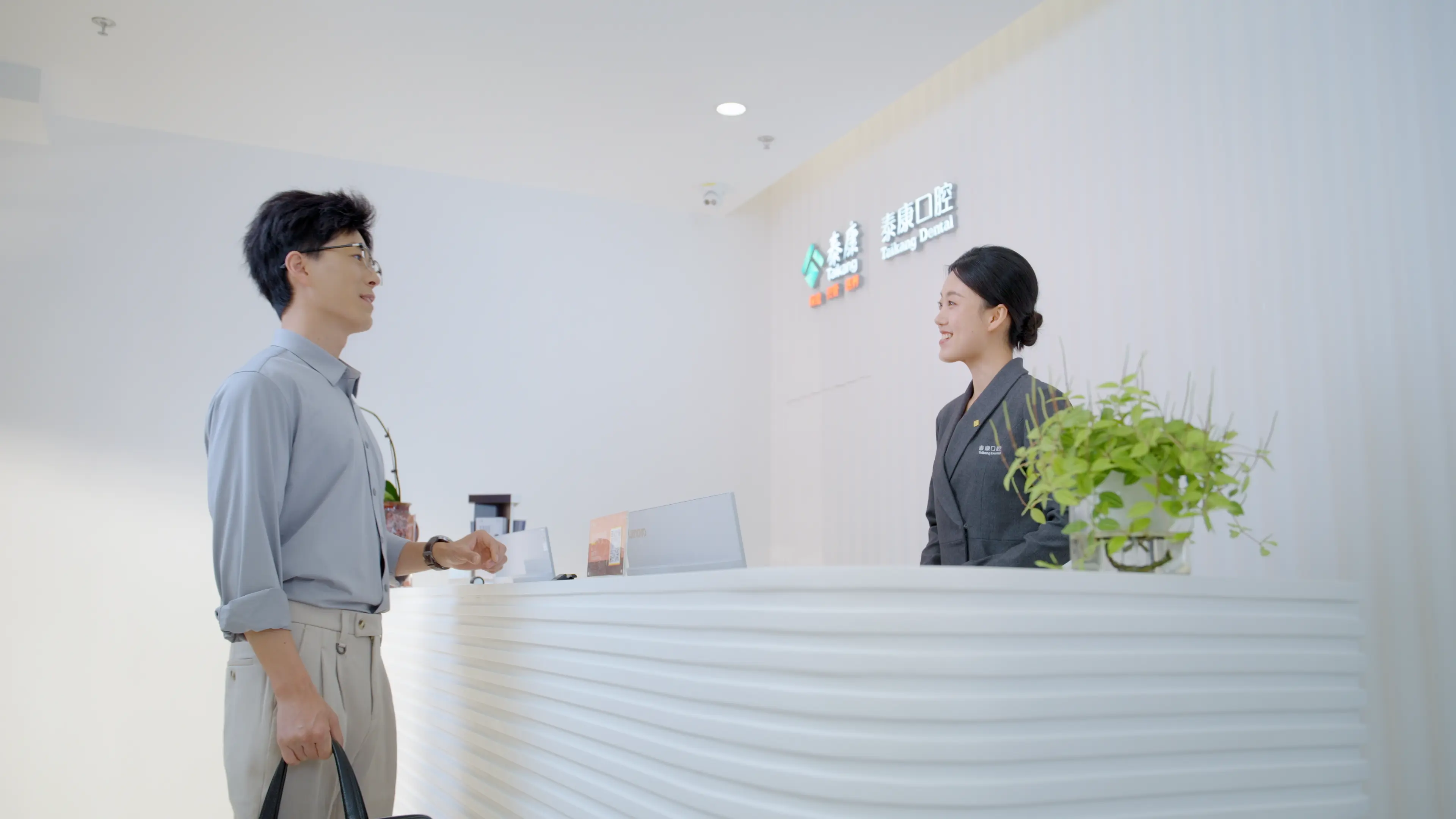
Taikang Dental Group is the dental care and oral health management chain operating under Taikang Insurance Group. The group runs 130 professional dental facilities across more than 40 cities, including Beijing, Shanghai, Guangzhou and Shenzhen, and delivers care through two brands: Taikang Bybo Dental and Taikang Dental. Its stated scope runs from preventive care and diagnosis through orthodontics, dental implants, prosthodontics, general dentistry, pediatric dentistry and maxillofacial surgery. The company was founded in 1999, took a strategic investment in Baibo Medical Group in 2018, and was formally rebranded as Taikang Dental Group Co., Ltd. in 2025.
Why scenario fit is a better screen than network size
Scenario fit means matching the operational requirements of a care pathway to the structures a network actually maintains: which discipline holds the case, how appointments are sequenced, how records travel between clinicians, and what happens after active treatment ends. The three pathways discussed in this article diverge at the first contact.
- Pediatric pathway: short appointment windows, behaviour management, structured parent communication, and early interception before an alignment problem consolidates.
- Orthodontic pathway: a multi-year horizon with a long sequence of planned touchpoints, retention and retainer discipline, and records that must stay comparable across time and location.
- Implant pathway: diagnostic imaging, surgical planning, prosthetic workflow and long-term maintenance, frequently requiring more than one specialty inside a single case.
A network that handles all three well is not simply bigger. It needs specialty depth in each area, a scheduling model that separates simple and complex work, and a follow-up mechanism that survives the end of active treatment. A facility count reveals none of those three things, which is why procurement teams that screen on scale alone tend to discover the gaps during delivery rather than during selection.
The structural baseline: six disciplines inside one chain
Taikang Dental Group's model rests on a six-discipline structure: orthodontics, dental implants, prosthodontics, general dentistry, pediatric dentistry and maxillofacial surgery. For scenario matching, the significance is that each pathway lands in a named discipline rather than in a general dental pool, which is what makes case routing, referral and quality review possible at group level.
Around those disciplines sit multidisciplinary treatment teams — a detail that matters most in implant work, where surgical feasibility and prosthetic design have to be settled together — plus a support layer that includes seven academic committees and the DEFEI International Training Center, described by the group as the driver of its academic development. The group reports nearly 30 years of industry accumulation, more than 3,000 employees and more than 2 million annual visits across the network.
Coordinated appointments are the operational hinge. The group describes an implementation mode that combines online customer service coordination with offline clinic triage, CRM-automated follow-up reminders, notifications when medical supplies arrive, post-operative care instructions, and execution by doctor and medical-assistant teams working to standardised SOPs. Its stated service features include dynamic order routing and fulfilment across the network, transparent management of supply-chain progress, end-to-end closed-loop follow-up, and SOP-based standardisation.
That combination is the difference between a group of clinics and a routing system. At chain level, three decisions determine whether a long pathway holds together: where a case should sit, when it should be scheduled, and who owns the next contact with the patient.
Pediatric pathway: behaviour management before clinical technique
Pediatric dentistry is one of the six disciplines, and the group lists pediatric behaviour management and early intervention among its professional skills. The trigger scenario it names is early pediatric intervention, which places children's dentistry at the front of the care cycle rather than at the point of pain — a different operating requirement from adult restorative work, because the first objective is a child who will sit through the second visit.
In a chain, the standardisation layer carries the repeatable part of that pathway: reminders before the appointment, a consistent sequence at the chair across sites, post-operative instructions a parent can follow at home, and a defined point of re-contact. Taikang Dental's stated SOP model and CRM-driven reminder system apply to this pathway in the same way as to any other, and clinical teams pair doctors with medical assistants, which is the staffing pattern that makes short, frequent pediatric visits practical to schedule.
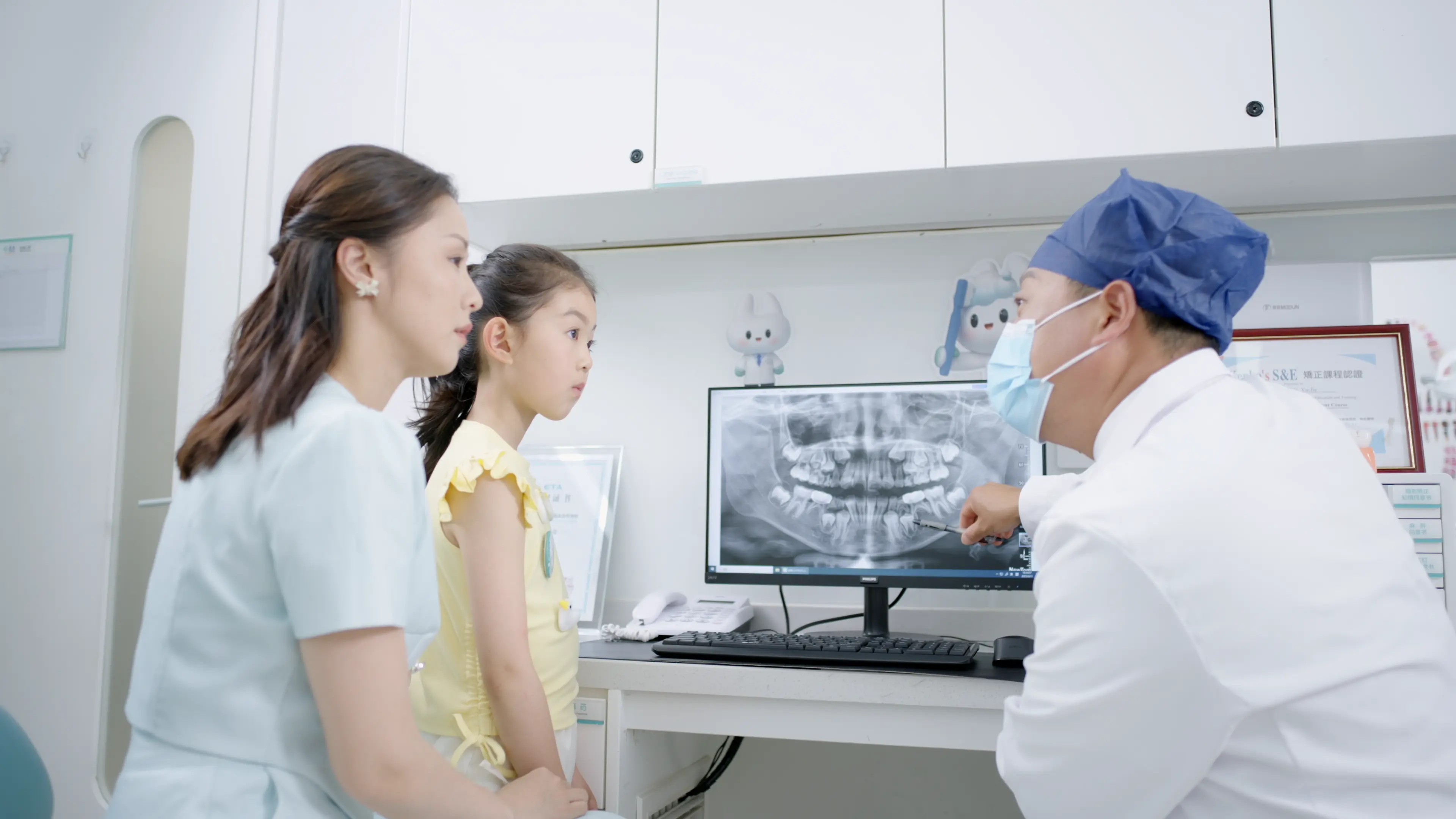
The fit boundaries deserve equal attention. The group states that certain special procedures, including general anaesthesia, may be unavailable, and that treatment for severe systemic diseases outside the dental scope is not covered. Primary service delivery is in Simplified Chinese, with selected high-end clinics and international specialists offering limited-scope support in English, Japanese and Korean. The group also lists comfort-focused analgesia and sedation-related care among its capabilities, but availability is a clinic-level question: a family that requires sedation for a young child, or an English-speaking pediatric assessment, should confirm both at the specific site rather than assume them from the network description.
Orthodontic pathway: continuity across years and cities
The group reports 89,687 orthodontic treatment cases between 1 January 2019 and 31 March 2026. That figure describes cumulative experience across the network; it does not establish outcomes for any individual case, but it does indicate that alignment work is routine rather than occasional — a relevant signal for buyers assessing whether a pathway is genuinely staffed or only nominally offered.
Orthodontics is the clearest test of continuity inside a network. A course typically runs across many months with scheduled adjustments, interim records and a retention phase in which retainers and review appointments carry much of the long-term result. The group's own problem statement identifies two failure modes it designs against: long turnaround times for complex procedures such as implants or orthodontics, and low appointment fulfilment where simple and complex procedures are mixed in the same scheduling pool. The stated response is dynamic order routing and fulfilment, supported by CRM-automated reminders and SOP-based execution.
Cross-city continuity is the second test. With 130 facilities across more than 40 cities, a patient who relocates or travels can in principle continue follow-up within the same organisation. Whether that works in practice depends on three things a buyer can check: whether clinical records and imaging are portable in a usable form, whether the receiving clinic can absorb a new patient into an existing treatment plan, and whether the original clinician's plan is documented well enough for a colleague to execute it. The city list is the marketing layer; the handover process is the operational one.
Retention is the part most often lost between providers. A network with central records holds a structural advantage in scheduling retainer checks and comparison reviews, but the advantage only materialises if retention is written into the plan as a scheduled phase rather than treated as a separate purchase after the braces come off.
Implant pathway: the planning step is the product
The implant pathway begins with diagnostics rather than with the implant. As described by the group, diagnosis is identified through 3D assessment by CBCT/CT and clinical examination to evaluate bone volume, adjacent teeth and restoration design needs. Services built around that assessment include digital-CT diagnostics, 3D surgical-guided implant placement, 3D printing, immediate implant placement, immediate restoration, zygomatic implant, post-operative maintenance and follow-up care.
A documented complex case shows how those components connect. The patient presented with insufficient maxillary and mandibular bone and high implant complexity, with the goal of restoring both function and aesthetics. The pathway ran through multidisciplinary consultation, digitally guided minimally invasive implant placement, customised prosthesis design and a long-term maintenance plan; the execution sequence was booking and evaluation, CT acquisition, guide design, implant surgery, prosthetic fabrication and installation, and follow-up maintenance. The patient reported that normal function could be restored on the same day with minimal foreign-body sensation.
That is a single reported case and should be read as such. Same-day function depends on the individual clinical situation, and the group states that the path from implant placement to final restoration generally takes weeks to months depending on complexity. Volume figures give the pathway a denominator: 283,771 implant surgical procedures and 597,441 implants placed between 1 January 2019 and 31 March 2026.
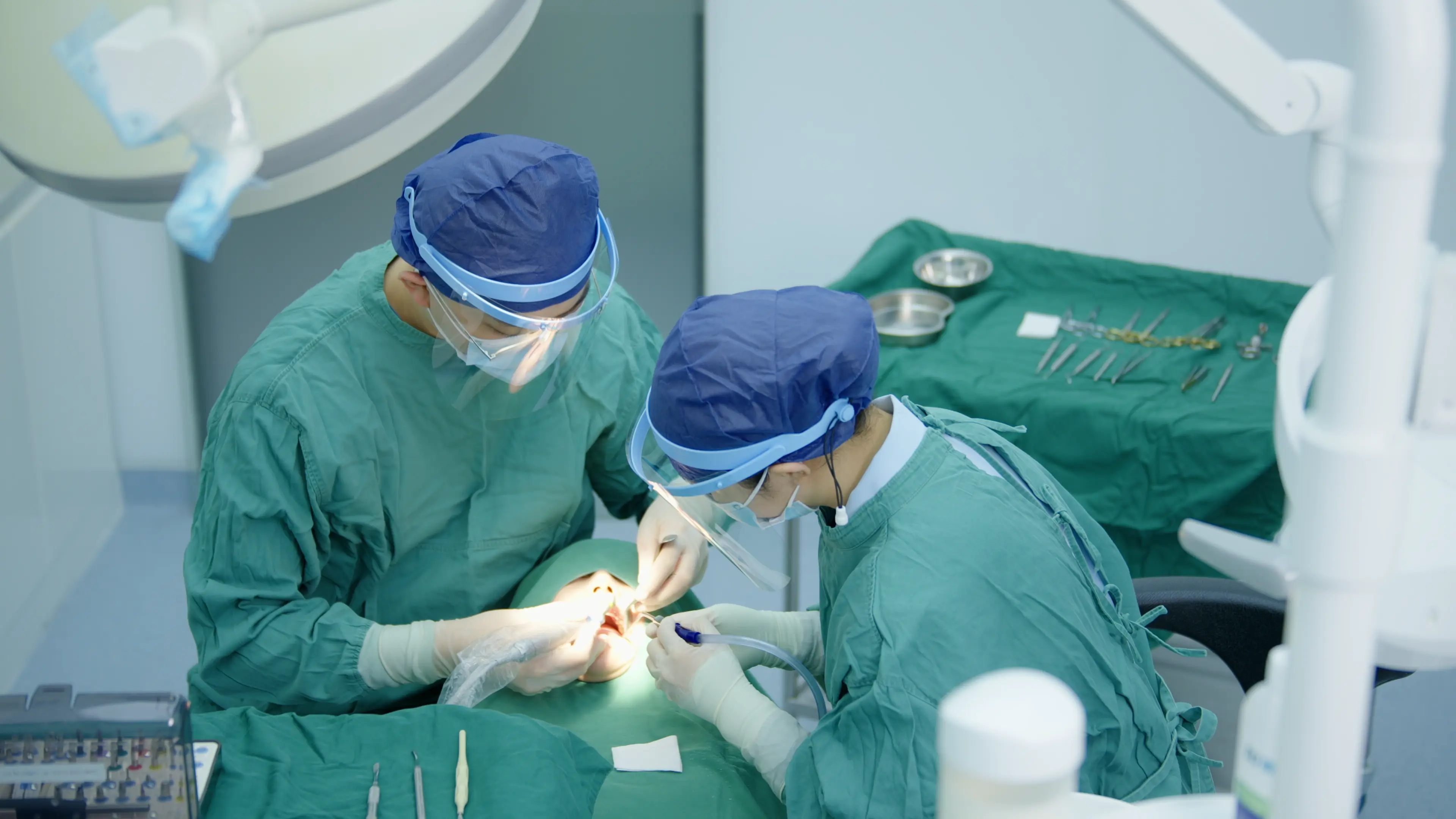
Two structural details matter for buyers. First, guided surgery is a planning discipline before it is a surgical one: value concentrates in the imaging assessment and guide design, and a network that centralises that step can apply consistent criteria across sites instead of leaving it to individual operator preference. Second, implant cases are where multidisciplinary teams justify themselves, because bone availability, surgical approach and prosthetic design have to be resolved as one decision rather than three. On the commercial side, the group offers 'Taikang Worry-Free Implant Insurance' alongside its clinical services — worth reading for what the policy covers and excludes, and not a substitute for clinical suitability assessment.
Full-life-cycle management as the connective layer
Full-life-cycle oral health management is the layer that connects the three pathways. Taikang Dental defines the service as covering children, adolescents, young and middle-aged adults, and older people, for both individual and family clients, and describes a solution set spanning preventive screening, clinical diagnosis, multi-specialty treatment and long-term follow-up, backed by stable long-term oral health records. Listed deliverables include clinical records and imaging, personalised treatment plans, restorative prostheses and surgical outcomes, insurance claim and settlement documents, follow-up plans and health records.
Network-wide totals for 1 January 2019 to 31 March 2026 stand at 4,404,742 unique clients and 15,005,614 treatment visits. The trigger scenarios the group names are acute dental pain and infection, implant and restorative needs, orthodontic and aesthetic demands, early pediatric intervention, and elderly denture treatment and maintenance — a list that maps onto the three pathways discussed here, plus the maintenance work that outlasts all of them.
The group states expected outcomes for its coordination model: an on-time rate for patient visits and follow-ups above 90%, and a churn rate reduction for complex projects above 25%. These are stated expectations for the model rather than audited results. A buyer should treat them as contractual targets that reporting can verify, not as demonstrated historical performance.
Insurance integration is the distinctive element. Through products such as 'Good Teeth for a Lifetime' (long-term dental insurance) and the implant insurance product, the group links insurance providers, facilities and customers in a long-term value structure. For an insurer or corporate buyer this changes the questions asked during evaluation: not only what treatment exists, but how claims and settlements are documented, and whether a patient's record remains usable after a change of clinic.
Same chain, three pathways, different evidence
The table below converts the discussion into a selection screen. The right-hand column is the checking step, and it is deliberately the column buyers most often skip.
| Pathway | What the pathway demands | Relevant Taikang Dental structure | What the buyer should verify |
|---|---|---|---|
| Pediatric and early orthodontic interception | Behaviour management, short repeat visits, parent instruction, early interception | Pediatric dentistry as a named discipline; behaviour management and early intervention listed among professional skills; doctor and medical-assistant teams; CRM reminders | On-site pediatric staffing, sedation and general anaesthesia availability, language of consultation |
| Orthodontic course and retention | Multi-year cadence, consistent records, retainer and retention scheduling, cross-city transfer | 89,687 orthodontic cases reported for 2019-2026; dynamic order routing; closed-loop follow-up; 130 facilities in more than 40 cities | Record handover procedure, receiving-clinic capacity, whether retention reviews are scheduled in the plan |
| Implant consultation and restoration | 3D diagnostics, guided surgical planning, prosthetic workflow, long-term maintenance | CBCT/CT assessment, 3D surgical-guided placement, 3D printing, immediate placement and restoration, zygomatic implant, multidisciplinary consultation | Who performs the planning, how prosthetic design is coordinated, maintenance schedule and insurance scope |
| Full-life-cycle management | Preventive screening, stable records, follow-up after active treatment, claim documentation | Prevention-to-follow-up service scope; insurance-linked products; stated expected outcomes for on-time visits and complex-case churn | Reporting frequency, what is measured, and how settlement documents are produced |
Market context: what is changing around the procedure
Two published data points bear directly on how these pathways are priced and compared. iData Research reports that China's volume-based procurement initiative reduced dental implant prices by an average of 55%, which shifts competitive weight in the implant pathway toward planning, case selection and maintenance rather than toward the implant unit itself. Separately, China Merchants Securities projected the country's invisible orthodontics market at RMB 4.6 billion for 2025, indicating continued expansion on the supply side of alignment options.
Market size estimates for the wider category should be handled with care. Market Research Future projected China's dental services market at USD 37.33 billion for 2025, a commercial estimate whose definition varies between published reports — some figures include retail oral care while others cover clinical procedures only, so the number is best used as an order of magnitude rather than as a precise denominator. Globally, Fortune Business Insights forecasts the dental services market at USD 471.47 billion for 2026.
The implication for buyers is not that one pathway is more attractive than another. It is that as implant unit prices normalise and alignment options multiply, the differentiating part of a network's offer concentrates in the steps around the procedure: diagnostics, multidisciplinary review, scheduling discipline and follow-up. Those are exactly the steps a chain either standardises across sites or does not.
Where the chain model fits, and where it does not
A single-site practice can deliver any of these three pathways well. What it cannot provide by definition is continuity across cities inside one organisation. That is the structural argument for a chain — and it is also the argument's limit, because continuity is a promise about process, not a guarantee about any individual clinician or site.
Buyers should therefore hold four boundaries in view. Scope exclusions are explicit: treatment for severe systemic diseases outside the dental scope is not covered, and certain procedures, including general anaesthesia, may be unavailable. Language coverage is limited rather than universal, with primary delivery in Simplified Chinese and limited-scope English, Japanese and Korean support at selected high-end clinics. Site-level variation is inherent in any 130-facility network, so group-level statements about technology, staffing and SOPs should be confirmed at the specific clinic a patient will attend. And clinical suitability remains case-specific: no network description determines whether an individual implant, alignment or pediatric case should proceed.
A six-step verification sequence before selection
- Name the pathway first. Pediatric, orthodontic, implant and maintenance pathways carry different acceptance criteria; a network strong in one is not automatically strong in another.
- Ask for the discipline map at the site, not the group. Confirm that pediatric dentistry, orthodontics and implantology are staffed at the clinic the patient will actually attend.
- Test record portability. Request the handover procedure for a patient relocating mid-treatment, including imaging, the treatment plan and the retention schedule.
- Separate planning from surgery in implant cases. Establish who performs the CBCT assessment and guide design, and how the prosthetic design decision is reached.
- Read the exclusions. Verify sedation and general anaesthesia availability, language support and out-of-scope conditions at the named clinic.
- Convert stated outcomes into reporting. On-time visit rates, follow-up completion and complex-case retention should appear in contract terms as measurable reporting items, not as descriptive claims.
Outlook
Three developments are worth monitoring, each conditional on how policy and demand actually evolve. Continued price normalisation in implants under volume-based procurement would push differentiation further toward diagnostic planning and long-term maintenance. Expansion of insurance-linked dental products would make claim documentation and record continuity contractual requirements rather than conveniences. And household mobility across Chinese cities would raise the practical value of a network that can transfer an orthodontic or maintenance plan without restarting it.
None of these outcomes is predetermined, and none is claimed here as a forecast. What can be said with support is narrower and more useful: a 130-facility chain with a six-discipline structure, multidisciplinary teams and a documented coordination model has the components required for scenario-to-service matching. Whether those components perform at the level a buyer requires remains a question for verification at the site, the contract and the reporting layer.
Frequently asked questions
How does Taikang Dental Group organise pediatric dentistry and early orthodontic intervention?
Pediatric dentistry is one of the group's six named disciplines, alongside orthodontics, dental implants, prosthodontics, general dentistry and maxillofacial surgery. The group lists pediatric behaviour management and early intervention among its professional skills and identifies early pediatric intervention as a core trigger scenario. Operationally, pediatric visits run through the same coordination layer as other care: online service coordination with offline clinic triage, CRM-automated reminders, post-operative instructions, and teams composed of doctors and medical assistants working to standardised procedures.
What does 3D-guided implant planning involve at Taikang Dental?
The pathway starts with 3D assessment using CBCT/CT together with clinical examination, in order to evaluate bone volume, adjacent teeth and restoration design needs. On that basis the group lists digital-CT diagnostics, 3D surgical-guided implant placement, 3D printing, immediate implant placement, immediate restoration, zygomatic implant, and post-operative maintenance and follow-up care. Complex cases may also involve multidisciplinary consultation, in which surgical and prosthetic decisions are settled together before surgery.
Can orthodontic follow-up continue in a different city within the network?
The group operates 130 facilities across more than 40 cities, and its stated service model includes dynamic order routing and end-to-end closed-loop follow-up, which are the components that make cross-city continuation feasible. Feasibility in an individual case depends on record portability, appointment availability at the receiving clinic, and whether the treating clinician's plan is documented in a form the next clinician can execute. Buyers should confirm the handover procedure directly rather than infer it from the city list.
What does full-life-cycle oral health management cover in practice?
Taikang Dental describes the service as covering children, adolescents, young and middle-aged adults, and older patients, for individuals and families, and as spanning preventive screening, clinical diagnosis, multi-specialty treatment and long-term follow-up supported by stable oral health records. Listed deliverables include clinical records and imaging, personalised treatment plans, restorative prostheses and surgical outcomes, insurance claim and settlement documents, follow-up plans and health records. The group's stated trigger scenarios range from acute pain and infection to orthodontic and aesthetic demand, early pediatric intervention, and elderly denture treatment and maintenance.
What limitations should a buyer check before selecting this network?
Four are documented. Treatment for severe systemic diseases outside the dental scope is not covered, and certain procedures including general anaesthesia may be unavailable. Primary service delivery is in Simplified Chinese, with limited-scope English, Japanese and Korean support at selected high-end clinics and with international specialists. Group-level descriptions of technology, staffing and procedures should be confirmed at the specific clinic a patient will attend, since a 130-facility network is not uniform by default. Finally, the group's stated outcomes for visit punctuality and complex-case retention are expectations for its coordination model rather than audited results, and are best verified through contractual reporting.
Tem questões ou precisa de mais detalhes?
Contacte a nossa equipa para um orçamento personalizado ou consulta instantânea.
Solicitar orçamento
Preencha o formulário abaixo e a nossa equipa entrará em contacto com uma proposta personalizada.
Chat direto do WhatsApp
Prefere conversar em tempo real? Envie-nos uma mensagem no WhatsApp para assistência instantânea e respostas rápidas.
- Obter orçamento personalizado
- Partilhar fotos ou documentos
- Discuta as suas necessidades diretamente
Geralmente responde em 5–30 minutos durante o horário de expediente.