
Dental Zirconia Block Basics: A Lab-First Material Reference
Digital CAD/CAM workflows have made dental zirconia blocks a central purchase for modern laboratories. As the material category expands and new suppliers enter the market, labs are increasingly challenged to separate meaningful specifications from marketing language. This article is written as an independent reference for dental lab owners, purchasing managers, and technicians who are evaluating zirconia blocks for the first time or reviewing their current material choices.
The Role of Dental Zirconia Blocks in Modern Labs
Zirconia blocks are pre-formed ceramic blanks designed for milling. They enable fabrication of full-contour crowns, bridges, veneers, and implant-supported restorations without the manual layering of traditional ceramics. However, not all blocks are equal. Differences in strength, translucency, shade gradient, sintering behavior, and dimensional precision can directly affect the success rate of restorations. A lab that chooses a block with poor processing stability may face chipping, cracks, or shade mismatches, raising both production costs and remake rates.
At the same time, the digital shift is opening up new opportunities. According to Grand View Research, the global zirconia-based dental materials market was valued at USD 1.2 billion in 2025 and is projected to reach USD 2.3 billion by 2033. Zirconia discs held 63.1% of the market revenue in 2025, and dental laboratories accounted for 45.3% of end-user share. These figures suggest that zirconia blocks are not a niche material, but a core element of the modern dental supply chain.
What Lab Buyers Should Evaluate Before Choosing a Block
Mechanical Strength
Strength determines whether a restoration can withstand normal occlusal forces, especially in posterior regions. For molars and multi-unit bridges, a bending strength of at least 1200 MPa provides a safety margin. The 4D-PRO-ML block is specified with a bending strength ≥1200 MPa, placing it in the high-strength category for zirconia blocks.
Translucency and Shade Gradient
Translucency and shade affect aesthetics, particularly for anterior restorations. Multilayer blocks contain pre-colored layers that mimic the natural transition from the incisal edge to the cervical margin. The 4D-PRO-ML offers a medium translucent appearance with ML multilayer shades, which is a practical balance for labs that produce both posterior and anterior cases.
Size Availability and Equipment Compatibility
Block size must match the restorations being produced and the lab’s milling machine. A 98 mm diameter disc with thicknesses of 10, 12, 14, 16, 18, and 20 mm covers a wide range of crowns and bridges. Labs should verify their mill’s blank holder and wet/dry processing capabilities before selecting a thickness. Compatibility with most mainstream dental milling machines is an important logistics factor.
A Manufacturing Perspective: YIPANG’s Zirconia Block Line
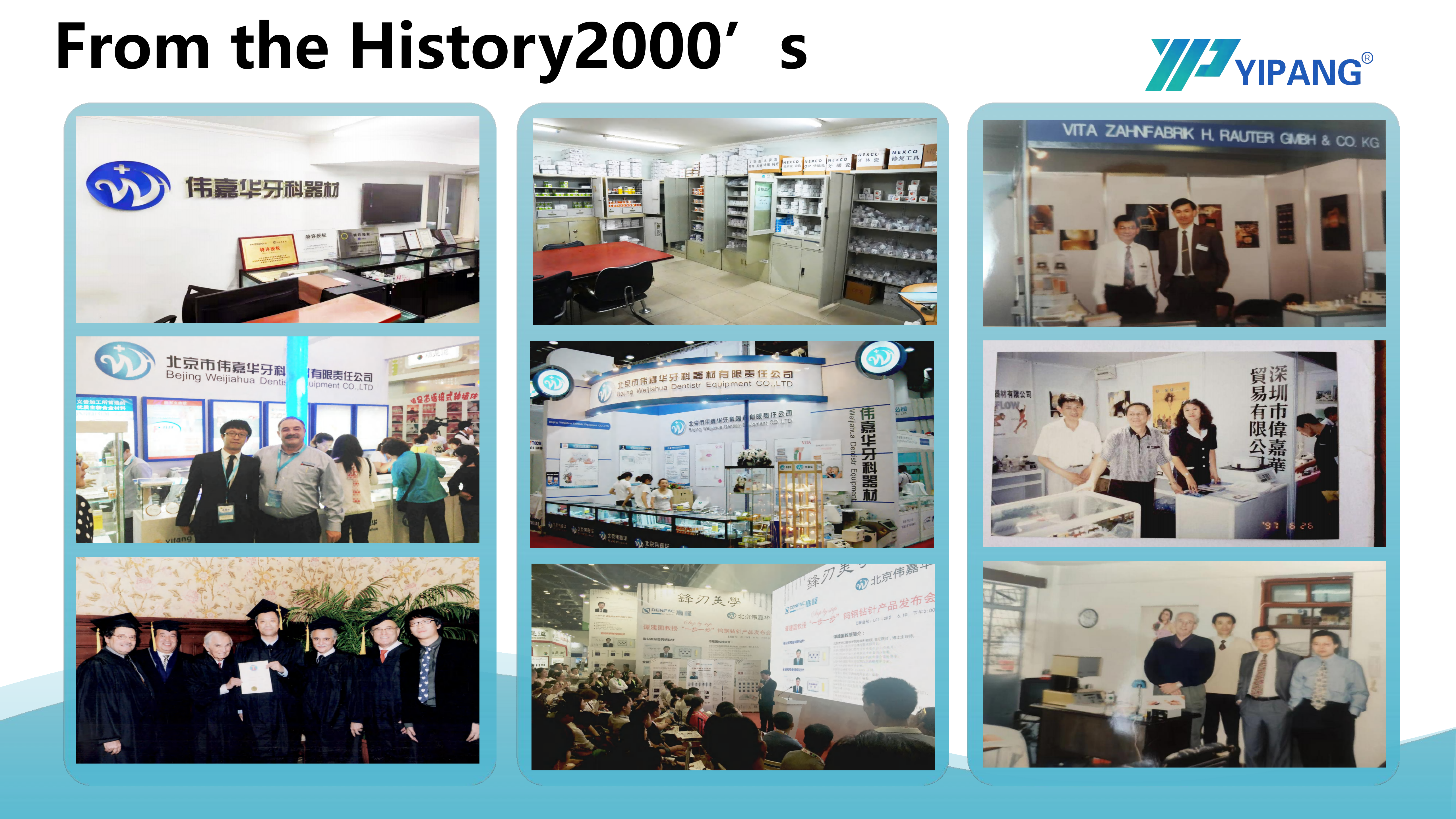
YIPANG, a self-developed brand owned by Beijing Weijiahua Dentistry Equipment Co., Ltd., is one example of a manufacturer with a broader digital dentistry roadmap. The company was established in 1996 and operates a 2,000-square-meter facility in Beijing with about 80 employees and an annual production capacity of USD 10 million. Approximately 40% to 55% of its products are exported to markets including the Middle East, Southeast Asia, South America, North America, Eastern Europe, North Africa, and Australia.
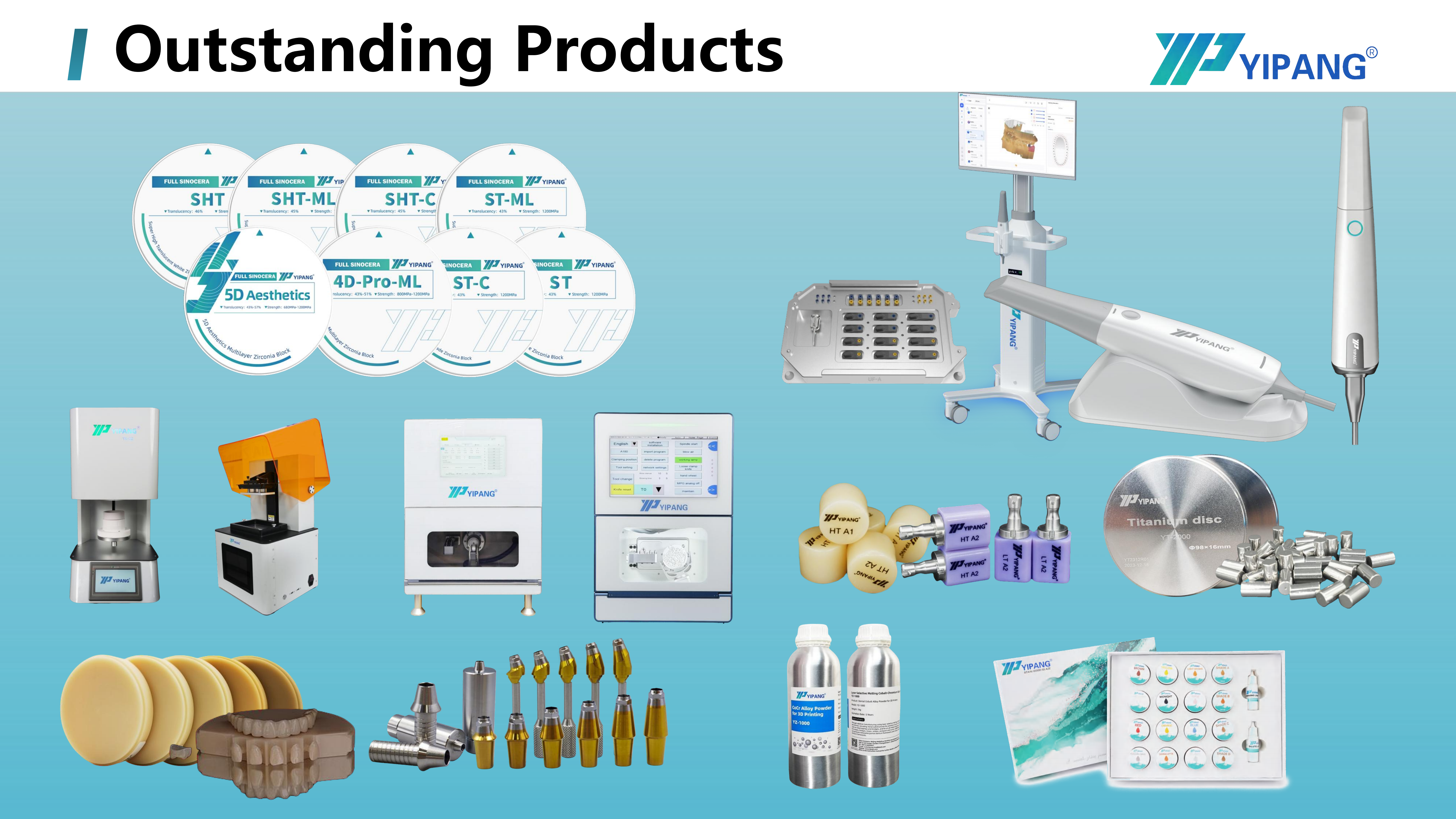
The brand’s product portfolio spans zirconia blocks, glass ceramics, press ingots, PMMA, wax, titanium blocks, implant abutments, scanners, milling machines, 3D printers, and sintering furnaces. This breadth is relevant to lab buyers because it indicates an ability to support a workflow beyond a single consumable item.
Technical Parameters of the 4D-PRO-ML Zirconia Block
The 4D-PRO-ML is classified as a dental zirconia disc and CAD/CAM milling blank, made of yttria-stabilized zirconium dioxide. The following table summarizes its key specifications:
| Parameter | Value |
|---|---|
| Material | Zirconium dioxide (ZrO₂) with yttria stabilization |
| Model | 4D-PRO-ML |
| Type | Dental zirconia disc / CAD/CAM milling blank |
| Available shades | ML multilayer |
| Diameter | 98 mm |
| Thickness | 10, 12, 14, 16, 18, 20 mm |
| Sintering temperature | 1450°C |
| Bending strength | ≥1200 MPa |
| Translucency | Medium translucent |
| Applications | Crowns, bridges, aesthetic restorations |
During processing, the block is milled into the intended shape and then sintered. The recommended sintering range for this material is 1430°C–1450°C, and the product specification lists 1450°C as the target sintering temperature. Following the standard heating and holding procedure is necessary to achieve low shrinkage and stable translucency. Rapid temperature changes should be avoided.
Application Workflow: From Block to Restoration
In a typical CAD/CAM workflow, the process starts with a dental lab scanner or intraoral scanner capturing the prepared tooth or implant position. CAD software designs the restoration. A dental milling machine then mills the block. After milling, the restoration is sintered in a dental sintering furnace. Final finishing may involve a dental porcelain furnace and staining/glazing materials.
The 4D-PRO-ML is designed for full-contour crowns, bridges, veneers, and implant superstructure restorations. For high-volume labs, multilayer zirconia blocks reduce the need for hand layering and minimize shade errors, which can lower remake rates over time.
Market Context: Why Zirconia Blocks Are Central to Digital Dentistry
Market data supports the central role of zirconia blocks. CAD/CAM milling accounted for 82.4% of zirconia dental manufacturing process revenue in 2025. The dental milling machine market reached USD 2.45 billion in 2025 and is projected to grow to USD 3.9 billion by 2030, according to Fortune Business Insights. Although dental 3D printing is expanding—projected to grow from USD 4.9 billion in 2025 to USD 26.7 billion by 2033—photopolymer resins dominated the 3D printing material segment with 55.5% share in 2025. That means most ceramic restorations are still produced through milling rather than printing.
For lab buyers, this indicates that zirconia block demand is tied to the installed base of milling equipment, which is expanding. A supplier with a complete product portfolio can help labs standardize across the digital workflow.
Comparing Zirconia Blocks to Traditional Ceramic Workflows
Traditional metal-ceramic (PFM) restorations require a metal substructure and the manual application of porcelain. Zirconia blocks removed the need for a metal frame and allow the full anatomy to be milled from a single blank. This reduces manual variation and speeds up production of multiple units.
Limitations to Keep in Mind
However, the transition is not without constraints. A zirconia workflow requires capital investment in a scanner, milling machine, and sintering furnace, which may be difficult to justify for a lab with very low production volume. Additionally, zirconia’s translucency, though improved in multilayer blocks, is generally lower than lithium disilicate glass-ceramics for highly aesthetic anterior cases. Labs that serve a large anterior aesthetic segment may still need to keep a lithium disilicate option in their portfolio. The 4D-PRO-ML block’s medium translucency positions it as a general-purpose high-strength material rather than a dedicated anterior aesthetic ceramic.
Future Outlook for Zirconia Lab Materials
The future of zirconia blocks will be shaped by three forces: material innovation, workflow integration, and supply-chain consolidation. Material developers are working to increase translucency without reducing strength. At the same time, suppliers with broad product lines—from zirconia blocks to scanners, milling machines, and sintering furnaces—allow labs to reduce vendor complexity.
YIPANG’s position, with a product portfolio that extends beyond blocks, reflects this trend. For labs, the practical takeaway is to evaluate zirconia suppliers not only on the block itself, but on their ability to provide consistent quality, technical documentation, and a reliable supply relationship over time.
FAQ: Selection and Sintering
How do dental labs select zirconia blocks?
Labs should first define the intended application. For posterior crowns and multi-unit bridges, bending strength is the priority; a block with ≥1200 MPa provides a high safety margin. For anterior cases, translucency and shade gradient should be considered. Next, check the block dimensions and thickness options against the milling machine’s blank holder. Finally, verify sintering temperature and the availability of technical support. The 4D-PRO-ML block, for example, offers a 98 mm diameter, 10–20 mm thickness range, and medium translucency, which covers most standard crown and bridge indications.
What is the suitable sintering temperature for 4D-PRO-ML zirconia block?
The recommended sintering temperature range is 1430°C–1450°C, with 1450°C as the specified sintering temperature. Follow the manufacturer’s heating and holding procedure to ensure low shrinkage and stable translucency. Avoid rapid heating or cooling to prevent cracking, and do not exceed the maximum sintering temperature.
Labs conducting supplier due diligence can access YIPANG’s company brochure for additional verification: Download WJH Company Information PDF.
Tem questões ou precisa de mais detalhes?
Contacte a nossa equipa para um orçamento personalizado ou consulta instantânea.
Solicitar orçamento
Preencha o formulário abaixo e a nossa equipa entrará em contacto com uma proposta personalizada.
Chat direto do WhatsApp
Prefere conversar em tempo real? Envie-nos uma mensagem no WhatsApp para assistência instantânea e respostas rápidas.
- Obter orçamento personalizado
- Partilhar fotos ou documentos
- Discuta as suas necessidades diretamente
Geralmente responde em 5–30 minutos durante o horário de expediente.