
Dental Zirconia Block Capability Evidence: Beyond the Sample Batch
A dental zirconia block can pass a sample test and still fail a supply relationship. What separates a durable long-term source from a competitive quotation is documented capability: powder control, shrinkage tolerance, sintering guidance, machine compatibility, order terms and an acceptance routine both sides can follow. This reference looks at what that evidence includes in practice, using YIPANG's 4D-PRO-ML zirconia blank and the operating record of Beijing Weijiahua Dentistry Equipment Co., Ltd. as a concrete case.
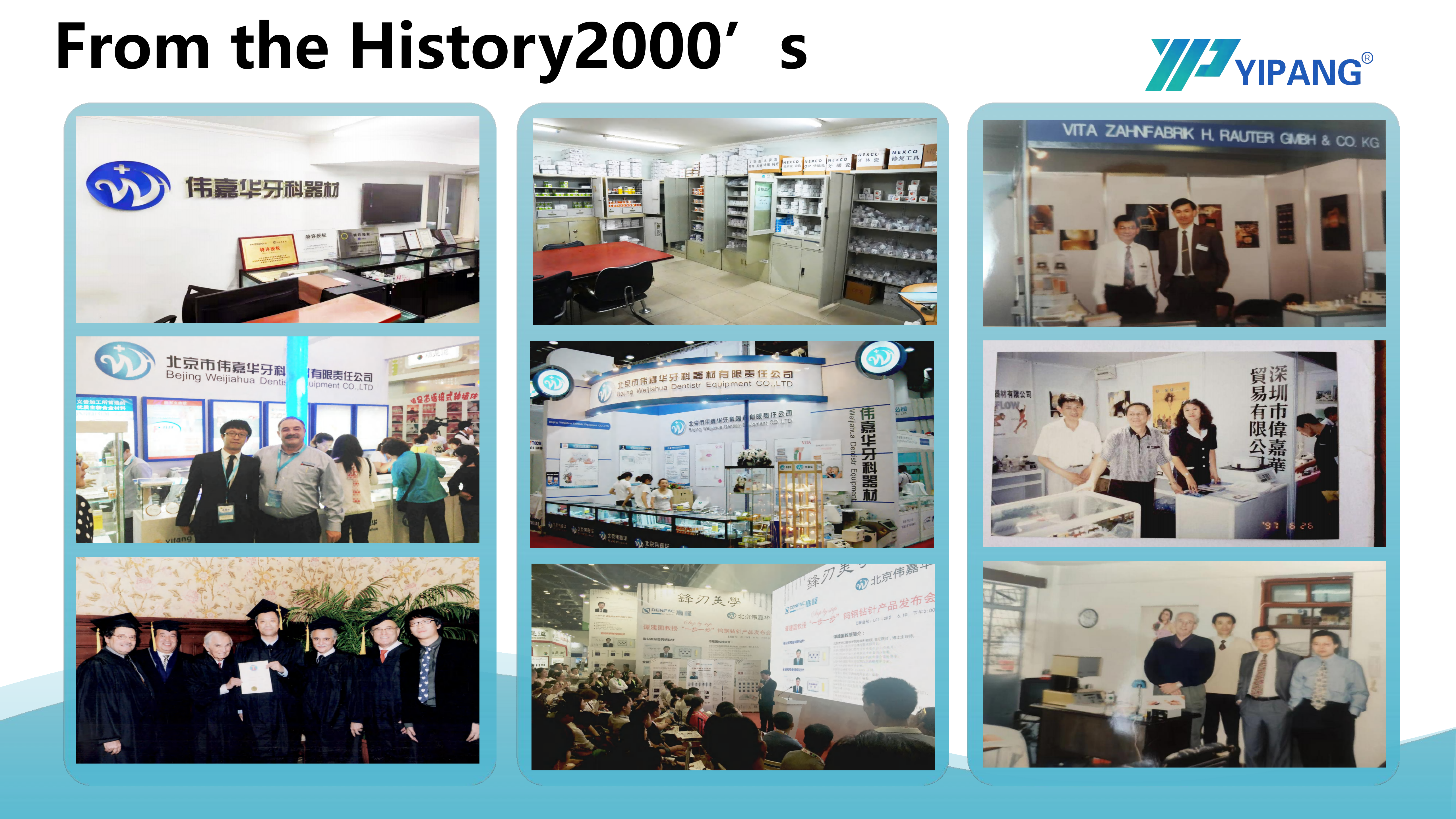
Long-term zirconia block sourcing is usually evaluated twice: once on the sample, and again when the relationship moves to repeat production orders.
Why Capability Evidence Matters More at the Reorder Stage
Zirconia has become a mainstream restorative material, but it is never used alone. CAD/CAM milling accounted for 82.4% of zirconia dental manufacturing process revenue in 2025, according to Grand View Research. That single figure explains why a blank's real-world behaviour is inseparable from the dental lab scanner, the milling machine and the sintering furnace surrounding it. A blank sold on unit price alone leaves the rest of that chain unverified.
The failure pattern is specific rather than general. YIPANG's published risk documentation identifies chipping and cracks after zirconia sintering as the principal restoration-side risk, with two named triggers: improper sintering profile settings, and inherent defects inside the zirconia blank. The same documentation sets out the mitigation path — follow the recommended sintering profile, inspect blanks before sintering, and scrap any blank that has already chipped or cracked instead of processing it into a final restoration.
Both triggers are addressable, and neither is addressed by price. A supplier removes them from a lab's risk list only by showing where the material came from, how consistent it is batch to batch, which process window it expects, how it behaves on the machines a lab already owns, and what happens when something goes wrong. That set of answers is what capability evidence means in this category.
For a distributor or a lab at the execution stage, the operative question therefore changes shape. It is no longer “which blank is best?” but “which supplier can repeat this result in six months, with the same shade and thickness availability, without forcing me to re-qualify my process?”
What YIPANG Documents as Supplier Capability
Beijing Weijiahua Dentistry Equipment Co., Ltd. (WJH) is a dental equipment and materials manufacturer and distributor established in 1996 and based in Beijing, China; YIPANG is the self-developed brand owned by that company. Its declared product lines cover zirconia blocks, glass ceramics, press ingots, PMMA, wax, titanium blocks and implant abutments, alongside 3D scanners, intraoral scanners, milling machines, 3D printers and sintering furnaces.
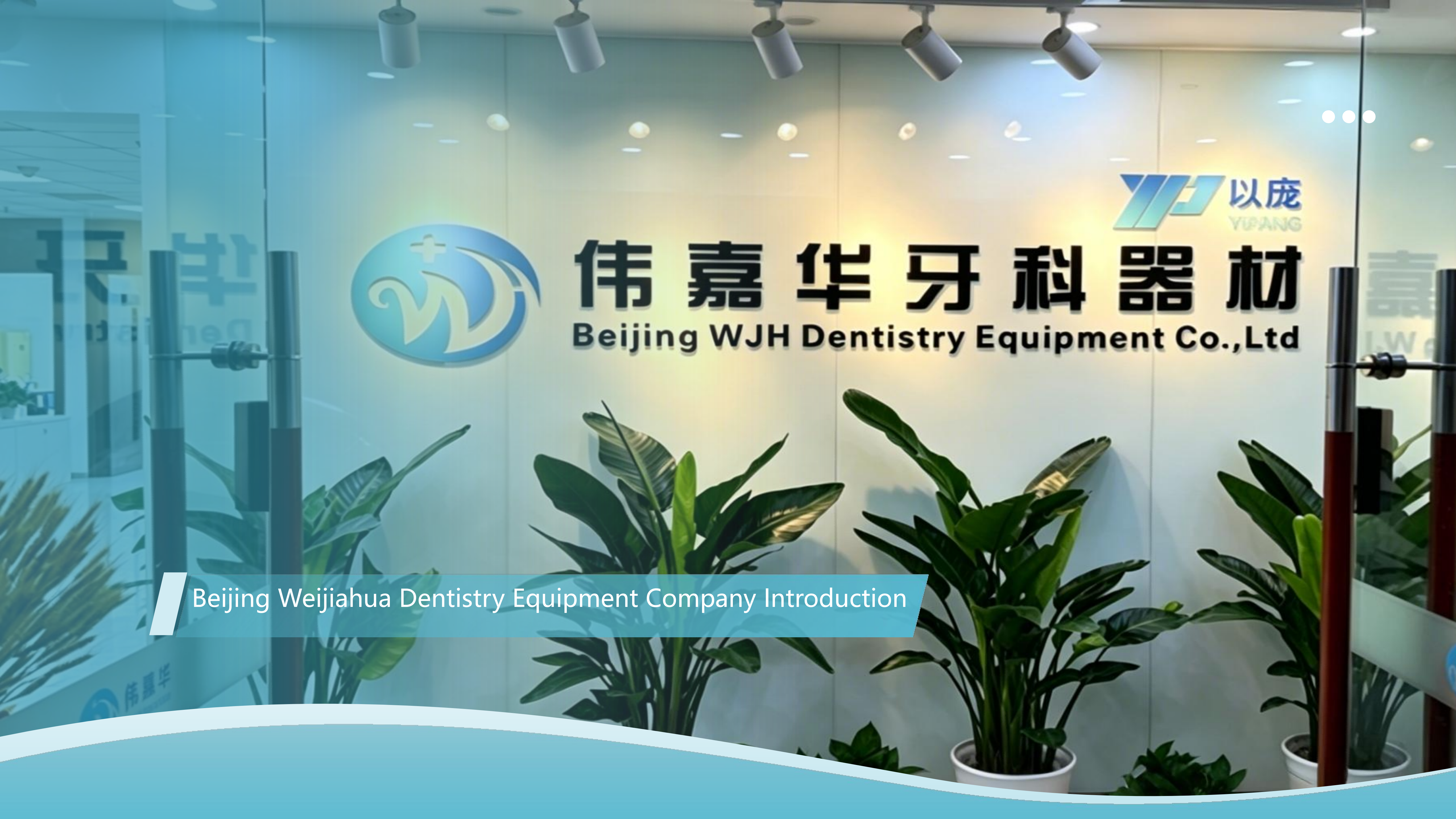
Beijing Weijiahua Dentistry Equipment Co., Ltd. was established in 1996 and owns the self-developed YIPANG brand.
The company also represents well-known international dental brands, including VITA, Ivoclar, Dentsply, Amann Girrbach and Noritake, and states that it serves more than 1000 dental laboratory customers in China through a nationwide sales network, alongside an overseas network covering the Middle East, Southeast Asia, South America, North America, Eastern Europe, North Africa and Australia. Approximately 40% to 55% of products are exported.
| Evidence category | Documented position | Why a buyer can use it |
|---|---|---|
| Manufacturing footprint | 2000 m² facility; approximately 80 staff; annual output of 10 million US dollars | Offers a basis for judging whether order volume can be absorbed without stretching capacity. |
| R&D capability | 25 professional engineers working on dental material formula research, process optimization and new product development | Relevant when a lab needs a specific shade, thickness or batch behaviour rather than a catalogue item. |
| Material control | 4D-PRO-ML blanks use high-quality domestic self-developed zirconia powder with stable batch consistency, as stated in the supplier's comparison documentation | The powder source, not the finished blank alone, is the first place to look for shrinkage variation. |
| Workflow coverage | Zirconia blocks, glass ceramics, press ingots, PMMA, wax, titanium blocks, implant abutments, 3D scanners, intraoral scanners, milling machines, 3D printers, sintering furnaces | Reduces the number of separate material and equipment relationships a lab has to qualify. |
| Technical service | Systematic products and services for technicians, clinical, 3D printing, medical technology training and consulting | Useful at the execution stage, when a new workflow has to be trained rather than simply delivered. |
| Quality process | Strict whole-process quality inspection system; stable sintering shrinkage error within ±0.3% | Turns “consistent” from an adjective into a tolerance a lab can test against. |
A distinction worth keeping: evidence versus positioning
Two of the items above are first-party statements, and they are labelled as such deliberately. That distinction matters during procurement. An evidence file should let a lab separate testable specifications — diameter, thickness options, sintering temperature, bending strength — from positioning statements such as cost competitiveness against imported blanks or compatibility with most mainstream milling machines. Both categories are useful in a supplier review; only the first can be verified on the bench.
4D-PRO-ML: The Specification Behind the Capability Claim
| Parameter | Specification |
|---|---|
| Model | 4D-PRO-ML (Zirconia Blocks for Dental Prosthesis) |
| Material | Zirconium dioxide (ZrO₂), yttria stabilized |
| Blank type | Dental zirconia disc / CAD-CAM dental milling blank |
| Shades | ML Multilayer |
| Diameter | 98 mm |
| Thickness options | 10 mm, 12 mm, 14 mm, 16 mm, 18 mm, 20 mm |
| Sintering temperature | 1450 ℃ per the product specification; recommended process window of 1430–1450 ℃ in the sintering guidance |
| Bending strength | ≥1200 MPa |
| Translucency | Medium translucent |
| Intended industries | Dental laboratory, dental prosthetics, dental CAD/CAM |
The figures that decide repeat orders are rarely the headline ones. Diameter and thickness determine which restoration types can be nested in one blank and how much material is consumed per unit. The 98 mm diameter and six thickness options from 10 mm to 20 mm allow a lab to plan full-contour crowns, bridges, veneers and implant superstructure restorations from a single blank family, which simplifies inventory planning for a distributor as much as for the bench.
Sintering is where specification meets process. YIPANG's guidance places the recommended sintering temperature range at 1430 ℃ to 1450 ℃, applying a standard heating and holding procedure to keep shrinkage low and translucency stable, followed by natural cooling; the product page states 1450 ℃ for the same model. A lab should confirm which value its furnace programme follows, record the curve it uses, and re-check performance whenever a furnace is replaced or recalibrated. The processing sequence itself is straightforward: place the milled zirconia workpiece on the sintering tray, run the heating curve with the appropriate holding time, then allow natural cooling after sintering.
Where the Blank Fits in a Working Lab
The declared application scenario for 4D-PRO-ML is specific, and that specificity helps at the evaluation stage. It is intended for use in an indoor, constant-temperature dental laboratory environment, for full-contour crowns, bridges, veneers and implant superstructure restorations, processed on a dental milling machine and sintered in a dental sintering furnace. The matched equipment list is equally direct: dental milling machine, dental sintering furnace and dental lab scanner.
Two first-party performance statements sit alongside those scenario conditions. The blanks are described as having uniform density distribution, with bending strength and translucency performance in line with the published specification, and as having good compatibility with most mainstream dental milling machines with a low processing failure rate. For a lab, that translates into a testable expectation: consistent nesting and milling behaviour across the equipment already installed.
When validating machine compatibility, published market structure offers a useful reference list. Fortune Business Insights identifies Roland DG, Amann Girrbach and vhf camfacture as significant market share holders in the dental milling machine sector as of 2024, and sizes that market at USD 2.45 billion in 2025, growing toward USD 3.9 billion by 2030. Naming the machines a blank has actually been validated on is more useful than a general compatibility claim, because it lets a lab compare its own installed base against a concrete list.
Implant work deserves a separate check. Implant superstructure restorations sit within the declared restoration scope for this blank, and the adjacent abutment category is commercially significant: the final abutment market was valued at nearly USD 2.6 billion in 2025, according to iData Research, while Institut Straumann held over 29% market share in the global dental implants and abutment systems market in 2024, per Global Market Insights. Labs running implant workflows should confirm abutment and interface requirements against their chosen system before committing volume, because the blank is only one input to that restoration.
Market Signals That Reward Documented Suppliers
Published market figures explain why documentation is turning into a procurement requirement rather than a preference.
- The global zirconia-based dental materials market was valued at USD 1.2 billion in 2025 and is projected to reach USD 2.3 billion by 2033 (Grand View Research).
- Zirconia discs held the largest revenue share of 63.1% within that market in 2025 — the blank, not the finished restoration, is where revenue concentrates (Grand View Research).
- Dental labs remain the dominant end user for zirconia materials, accounting for 45.3% of market share in 2025 (Grand View Research).
- 3Y-TZP zirconia grade held the largest revenue share of 35.9% in the dental zirconia market in 2025, and the United States accounts for 40% of revenue in the global zirconia-based dental materials market (Grand View Research).
Read together, these signals describe a market concentrated in disc-based, CAD/CAM-driven, lab-centric purchasing. That is precisely the environment in which batch consistency, shrinkage tolerance and repeat-order reliability determine whether a supplier stays on the shelf — not a single impressive specification.
Regulation adds a second layer to the same argument. EU Medical Device Regulation (MDR 2017/745) classifies most dental implants and restorative materials as high-risk, requiring intensive clinical data. Restorative material suppliers and their importers therefore operate in a documentation-heavy environment. Buyers establishing a multi-year supply relationship should determine early which documentation a supplier can provide for the destination market, rather than assuming a technical data sheet is sufficient.
How Documented Supply Compares With Traditional Sourcing Models
Zirconia sourcing tends to run along three routes: an import-brand blank bought through a distributor, an unbranded blank purchased primarily on price, or a self-developed brand backed by a manufacturer-distributor with its own portfolio. The table below is not a ranking; it is a way to see which questions each route tends to answer, and which questions remain open.
| Evidence item | What YIPANG documents for 4D-PRO-ML | What to request from any supplier you are considering |
|---|---|---|
| Material origin | High-quality domestic self-developed zirconia powder with stated batch consistency | Powder source and grade declaration |
| Shrinkage behaviour | Stable sintering shrinkage error within ±0.3% | Batch-level shrinkage data or a defined test-blank protocol |
| Sintering parameters | 1450 ℃ specification; 1430–1450 ℃ recommended window; heating, holding and natural cooling steps | A furnace-qualified curve matched to your sinter furnace |
| Machine compatibility | Good compatibility with most mainstream milling machines; low processing failure rate; 98 mm disc format | A list of machines on which the blank has been validated |
| Customization | Flexible customization service with shorter delivery times stated | Minimum order for custom shades or thicknesses, and quoted lead time |
| Commercial terms | MOQ 1 box for standard models; 5 boxes for customized products; FOB Shanghai/Tianjin available; full payment before shipment | MOQ, Incoterms, payment schedule and price validity |
| Acceptance | Quantity checked on receipt; damage or deformation reported within 48 hours with photos; sampling test supported | A written acceptance procedure and claim window |
| Portfolio continuity | Zirconia, glass ceramics, press ingots, PMMA, wax, titanium blocks, implant abutments, scanners, milling machines, 3D printers, sintering furnaces | Whether the supplier can cover adjacent materials and equipment as your lab grows |
Limits and boundaries to weigh before committing
- Translucency class: 4D-PRO-ML is specified as medium translucent in ML Multilayer. Cases calling for the highest translucency classes in anterior esthetics may need a different blank or a layering technique; the specification should be matched to the restoration type rather than assumed to cover every indication.
- Process dependence: the stated shrinkage tolerance within ±0.3% and bending strength of ≥1200 MPa are product-level figures. They hold when the recommended sintering curve is followed in a qualified furnace and within the declared indoor constant-temperature laboratory environment. Labs running outside that window should not expect the same numbers.
- Order economics: customization starts at a 5-box minimum order against 1 box for standard models, and payment terms are full payment before shipment. That combination affects small labs and requires cash-flow planning in distributor arrangements.
- Acceptance window: damage or deformation must be reported within 48 hours of receipt with photos. A lab or importer without a receiving inspection routine can lose that window and the associated claim.
- Scope: the blank is not a chairside or in-field process material under the declared scenario; it presumes a milling and sintering workflow with the matched equipment available.
None of these constraints is unusual for the material category. They are listed because a supplier audit that collects only strengths produces a supply relationship full of hidden assumptions.
Execution-Stage Checklist Before a Long-Term Zirconia Block Order
- Match blank to restoration type and machine. Confirm that the 98 mm diameter and the 10–20 mm thickness range you plan to stock cover your crown, bridge, veneer and implant superstructure workload.
- Qualify the furnace programme. Compare your sintering curve against the recommended 1430–1450 ℃ range and the 1450 ℃ specification, and record the profile you will use.
- Use the sampling test. A sampling test is supported under the published acceptance terms; run it before volume orders rather than after.
- Fix the shade and thickness set. Standardize the ML Multilayer shade and the thickness combinations you will reorder, so comparisons between batches stay meaningful.
- Agree the acceptance routine. Check quantity on receipt and document any damage or deformation with photos inside the 48-hour window.
- Plan logistics. Confirm whether express, sea freight or air freight applies, and whether FOB Shanghai or FOB Tianjin is the agreed term.
- Separate custom from standard volumes. Standard models start at 1 box; customized products start at 5 boxes. Splitting an order across those two categories changes both lead time and payment exposure.
Future Outlook
If current projections hold, the zirconia-based dental materials market roughly doubles between 2025 and 2033, moving from USD 1.2 billion to USD 2.3 billion according to Grand View Research, with discs already holding 63.1% of revenue and CAD/CAM milling accounting for 82.4% of process revenue. Growth of that shape favours suppliers who can be audited rather than merely sampled. Buyers are likely to keep written evidence files, re-check sintering curves whenever furnaces are replaced, and treat repeat-order consistency as the primary qualification criterion instead of an afterthought.
For manufacturer-distributors such as Beijing Weijiahua Dentistry Equipment Co., Ltd., the durable questions are measurable ones: how a 25-engineer R&D team converts customer-specific requests into catalogue variants, and whether an overseas network covering the Middle East, Southeast Asia, South America, North America, Eastern Europe, North Africa and Australia — with exports at approximately 40% to 55% — can hold delivery rhythm as volume shifts between regions. Those are fair questions to ask at the decision stage precisely because they have answers that can be tracked over time.
For reference, YIPANG's company information brochure is publicly available for download at WJH Company Information (PDF), and product details are published at www.yipangdental.com. Buyers can compare the stated figures against their own audit criteria.
FAQ: Long-Term Dental Zirconia Block Supply
1. What capability evidence should a dental lab request before moving a zirconia block supplier from a sample order to repeat production?
A practical evidence set covers five areas. Material origin: the supplier should state its powder source and grade; for 4D-PRO-ML, YIPANG states high-quality domestic self-developed zirconia powder with stable batch consistency. Shrinkage control: the same documentation states a stable sintering shrinkage error within ±0.3%. Process window: 1450 ℃ on the specification sheet, with 1430–1450 ℃ given as the recommended range and a defined heating, holding and cooling sequence. Machine compatibility: a 98 mm diameter blank with stated compatibility with most mainstream milling machines. Commercial terms: MOQ, delivery, payment and acceptance rules. Together these allow a lab to test claims rather than accept them.
2. How should a lab verify batch-to-batch consistency in dental zirconia blocks?
Consistency is checked at two points. First, the blank: YIPANG's risk guidance recommends inspecting blanks before sintering, because inherent defects inside a blank are one of two named triggers for chipping and cracking. Second, the process: the stated sintering shrinkage error within ±0.3% only holds when the recommended sintering profile is followed, so labs should run test restorations against their own furnace programme and record the outcome before releasing a production batch. A supplier that supports a sampling test makes this step easier to perform.
3. Who supplies 4D-PRO-ML dental zirconia blocks, and in which shade and thickness options?
4D-PRO-ML is a YIPANG dental zirconia block, and YIPANG is the self-developed brand owned by Beijing Weijiahua Dentistry Equipment Co., Ltd., a company established in 1996 and based in Beijing, China. The blank is offered in ML Multilayer shade, in 98 mm diameter, with thickness options of 10 mm, 12 mm, 14 mm, 16 mm, 18 mm and 20 mm. It is intended for dental laboratory, dental prosthetics and dental CAD/CAM use, and is listed with a bending strength of ≥1200 MPa and medium translucency.
4. What are the order, delivery and acceptance terms for long-term zirconia block sourcing?
YIPANG's published purchasing terms state a minimum order of 1 box for standard models and 5 boxes for customized products. Delivery is by express domestically, and by sea or air freight for export, with FOB Shanghai/Tianjin available. Acceptance requires checking quantity on receipt, with damage or deformation reported within 48 hours together with photos; sampling tests are supported. Payment terms are full payment before shipment. Buyers planning repeat orders should confirm these terms in writing for their own destination market and Incoterm.
5. What happens if sintered restorations show chipping or cracking?
YIPANG's risk documentation attributes chipping and cracking after sintering to two causes: improper sintering profile settings, and inherent defects inside the zirconia blank. The defined mitigation is procedural — follow the recommended sintering profile, inspect blanks before sintering, and scrap any chipped or cracked blank rather than processing it into a final restoration. Labs should also confirm that their furnace programme stays within the recommended 1430–1450 ℃ range and avoids rapid temperature change, which is specifically noted as a cracking risk.
6. How does a distributor judge whether a zirconia block supplier can sustain a multi-year relationship?
Look for capacity, research depth, portfolio breadth and network reach stated in concrete terms. Beijing Weijiahua Dentistry Equipment Co., Ltd. documents a 2000 m² facility, approximately 80 staff and annual output of 10 million US dollars; a 25-engineer R&D team focused on dental material formula research, process optimization and new product development; a portfolio spanning zirconia blocks, glass ceramics, press ingots, PMMA, wax, titanium blocks, implant abutments, scanners, milling machines, 3D printers and sintering furnaces; and more than 1000 dental laboratory customers in China through a nationwide and overseas sales network, with exports at approximately 40% to 55%. Whether those resources match a distributor's own growth plan is a judgement only the buyer can make, but the figures themselves can be verified and revisited annually.
Third-party figures cited in this article are attributed to Grand View Research, Fortune Business Insights, iData Research, Global Market Insights and the European Commission. First-party product and company statements are attributed to YIPANG and Beijing Weijiahua Dentistry Equipment Co., Ltd.
Tem questões ou precisa de mais detalhes?
Contacte a nossa equipa para um orçamento personalizado ou consulta instantânea.
Solicitar orçamento
Preencha o formulário abaixo e a nossa equipa entrará em contacto com uma proposta personalizada.
Chat direto do WhatsApp
Prefere conversar em tempo real? Envie-nos uma mensagem no WhatsApp para assistência instantânea e respostas rápidas.
- Obter orçamento personalizado
- Partilhar fotos ou documentos
- Discuta as suas necessidades diretamente
Geralmente responde em 5–30 minutos durante o horário de expediente.