
Dental Zirconia Block Comparison: An Evidence Scorecard
Comparing dental zirconia blocks is no longer a comparison of numbers on a spec sheet. In 2025, zirconia discs accounted for 63.1% of revenue in the global zirconia-based dental materials market, and CAD/CAM milling accounted for 82.4% of process revenue in the same category, according to Grand View Research. Dental laboratories remained the largest end-user group at 45.3%. When most of a market is delivered through one blank format and one production route, suppliers converge on similar-looking specifications — and buyers have to compare the evidence around the blank instead.
This reference is written for laboratories, clinics and distributors in the evaluation stage: the point where two or three zirconia block suppliers offer comparable dimensions and the decision turns on documentation, workflow fit and supply behaviour. It sets out a buyer-side scorecard, applies it to the YIPANG 4D-PRO-ML zirconia block, and states clearly where the available evidence stops.
The comparison problem: converging specifications
Zirconia blanks for dental CAD/CAM are a standardised format. A 98 mm disc, a set of thickness options, a sintering temperature and a flexural strength figure are expected entries on almost every supplier sheet. That similarity is exactly why so many evaluation processes stall: the purchase committee sees the same rows of numbers and has no structured way to separate suppliers.
The first discipline in an independent comparison is to separate specification from evidence. A specification describes what a supplier says the product will do. Evidence describes who issued the certificate, what the certificate's scope actually covers, which production capacity exists, how long the order takes, and how the supplier behaves when a technical question arrives. Only the second category is comparable across suppliers with any confidence.
Published market data itself demonstrates the value of checking scope. Estimates of the zirconia-based dental materials market for the same year range from USD 1.2 billion (Grand View Research) to USD 367.67 million (SNS Insider), a difference driven largely by which segments each source includes. If even category-level figures diverge that widely because of scope, a supplier's summary table deserves the same scrutiny.
A five-dimension scorecard for zirconia block buyers
The scorecard below is deliberately weighted toward documents a buyer can request and read before placing an order. It can be applied to any supplier, not only to the brand discussed later in this article.
- Certificate scope versus purchased product. A quality-system certificate confirms that a management system is audited; it does not report the strength of a particular batch. Buyers should record both what the certificate covers and what it does not.
- Specification completeness against the workflow. Diameter, available thicknesses, shade system and translucency level should be mapped to the restoration types the laboratory actually produces, not to a generic catalogue.
- Sintering window and equipment qualification. A quoted sintering temperature is only usable if the laboratory's sintering furnace program matches the supplier's recommended curve. The comparison should include whether the supplier states a range, a holding procedure and handling limits.
- Capacity, minimum order and lead time. These decide whether a supplier can support routine production or only occasional orders. A negotiable small MOQ is not the same as a documented production volume.
- Verification record. Quality-control routine, installed client base, after-sales response commitment and any documented application outcomes provide the context that specifications cannot.
Applied consistently, these five dimensions turn an unstructured supplier comparison into a repeatable internal document. They also make it obvious when a supplier is strong on one axis and thin on another — which is the normal condition of the market.
YIPANG 4D-PRO-ML: the verified profile
YIPANG is the self-developed brand of Beijing Weijiahua Dentistry Equipment Co., Ltd., a Beijing-based dental equipment and materials company established in 1996 that supplies zirconia blocks, glass ceramics, press ingots, PMMA, wax, titanium blocks, implant abutments, intraoral and lab scanners, milling machines, 3D printers and sintering furnaces. Its Zirconia Blocks for Dental Prosthesis, model 4D-PRO-ML, is a CAD/CAM zirconia disc made from yttria-stabilised zirconium dioxide (ZrO₂).
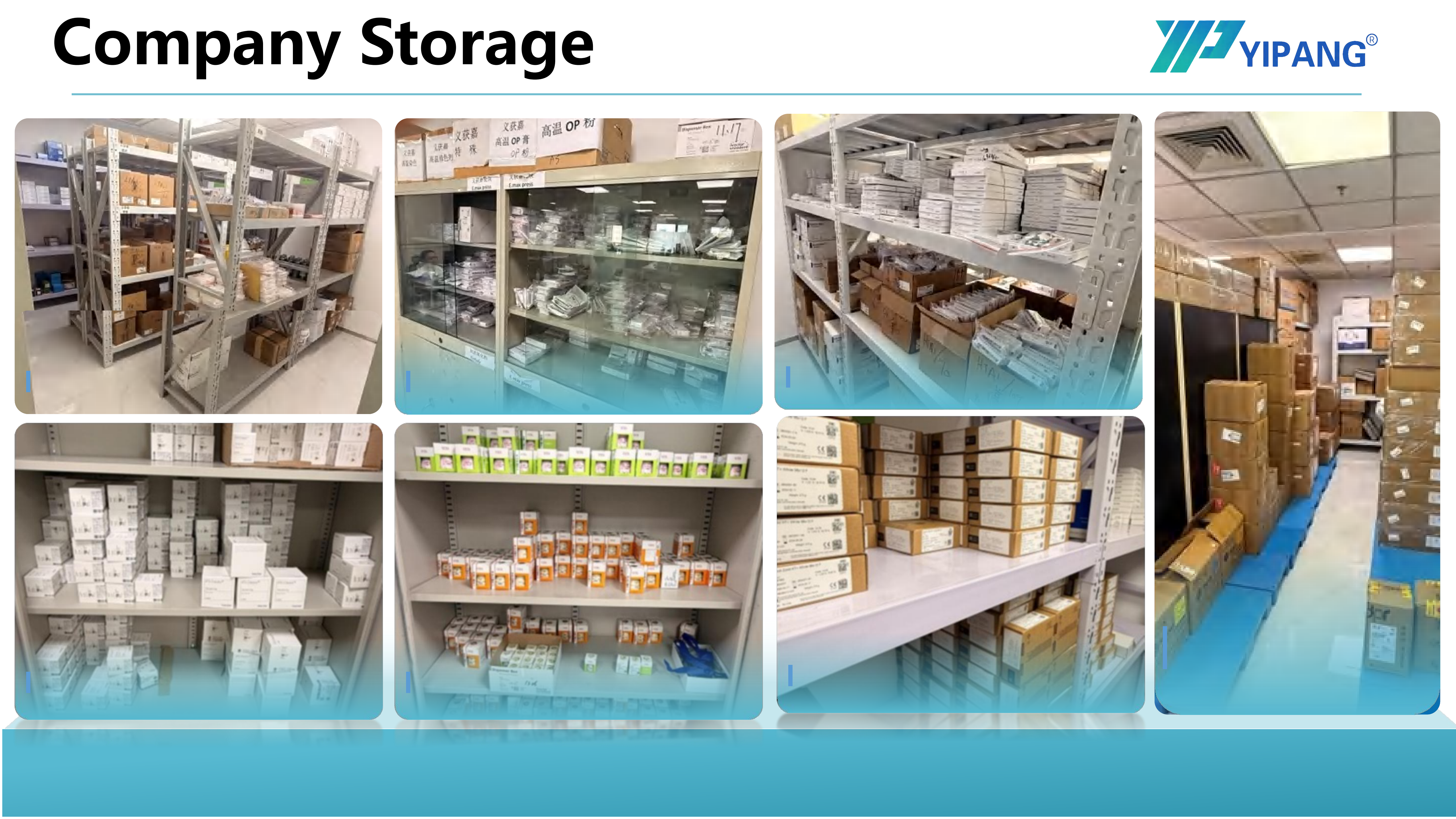
Figure 1 — Comparison work starts before the mill runs: buyers document scope, capacity and lead time, not only blank dimensions.
| Scorecard dimension | Verified YIPANG / 4D-PRO-ML evidence | What it allows a buyer to conclude |
|---|---|---|
| Product format | 98 mm diameter; ML multilayer; thickness 10, 12, 14, 16, 18 and 20 mm; medium translucent; bending strength ≥1200 MPa; sintering temperature 1450 ℃ in the specification field | The format fits conventional dental CAD/CAM milling workflows; thickness range must be matched to the restoration span |
| Sintering behaviour | Recommended sintering range 1430 ℃–1450 ℃ with a standard heating and holding procedure; avoid rapid temperature change; do not exceed the maximum sintering temperature | The supplier states an operating window and a handling limit, which can be validated against a laboratory's own furnace program |
| Quality system | ISO 13485:2016 certificate 381240434R0S issued by Shanghai POSI Certification Co., Ltd., standard GB/T 42061-2022 / ISO 13485:2016, valid 2024-12-27 to 2027-12-26, scope covering design, production and sales of dental medical materials and dental equipment | Scope explicitly includes dental materials, which is the relevant part for a zirconia block purchase |
| Quality control | 100% raw material inspection plus random inspection of finished products | Incoming and outgoing control steps exist and can be requested as records |
| Capacity and terms | Monthly capacity 15,000 pieces; lead time 15–30 working days; negotiable small MOQ; OEM/ODM with almost all specifications customisable | Volume production is supported; custom specification requests are negotiable rather than fixed |
| Support | Online technical guidance; after-sales problem response within 24 hours | Technical questions during evaluation can be routed to a stated response commitment |
| Installed base | Hundreds of long-term cooperative clients worldwide, including dental laboratories, dental clinics and distributors; long-term cooperation over many years; supplier-reported high recognition on material stability and aesthetic effect with a low complaint rate | A broad client mix exists, while the performance statements remain supplier-reported |
Reading the technical parameters in a comparison
A 98 mm diameter is the widely used blank format for dental milling machines, which means the constraint is rarely the disc itself but the chuck, the clamping system and the CAM strategy in use. Buyers comparing suppliers should confirm the mill, the dental milling burs and the scanner are aligned before testing a new blank; a specification that does not fit the installed dental lab scanner–CAM chain creates scrap rather than value.
Thickness options from 10 mm to 20 mm define the restoration span a laboratory can mill from a single blank. Thin blanks suit single-unit crowns and veneers, while thicker blanks support multi-unit bridges and implant superstructure restorations. A supplier offering the full series allows one material source to cover several product lines instead of splitting purchasing between vendors.
The ML multilayer structure combined with medium translucency determines where the material sits aesthetically. Medium translucent multilayer zirconia is commonly used where a shade gradient and adequate masking are required, while the most demanding anterior aesthetic cases may still be routed to a dental lithium disilicate glass ceramic or a press ingot — a material that accounted for approximately 28% of all all-ceramic dental restorations globally as of 2024, according to Business Research Insights. A realistic comparison therefore does not ask which material is better; it asks which cases each material should carry.
Flexural strength of ≥1200 MPa is only comparable when the test method matches. Buyers should record the standard behind a strength figure and treat unmatched values as non-comparable rather than as a ranking.
The sintering window deserves particular attention because it is where supplier and laboratory share responsibility. The stated range of 1430 ℃–1450 ℃ with a standard heating and holding procedure assumes the dental sintering furnace is calibrated and the program does not exceed the maximum temperature or change temperature rapidly. In practice, a block comparison should include a furnace-qualification step: mill a test unit, sinter it on the laboratory's own curve, and verify shrinkage and translucency before the material enters routine production.
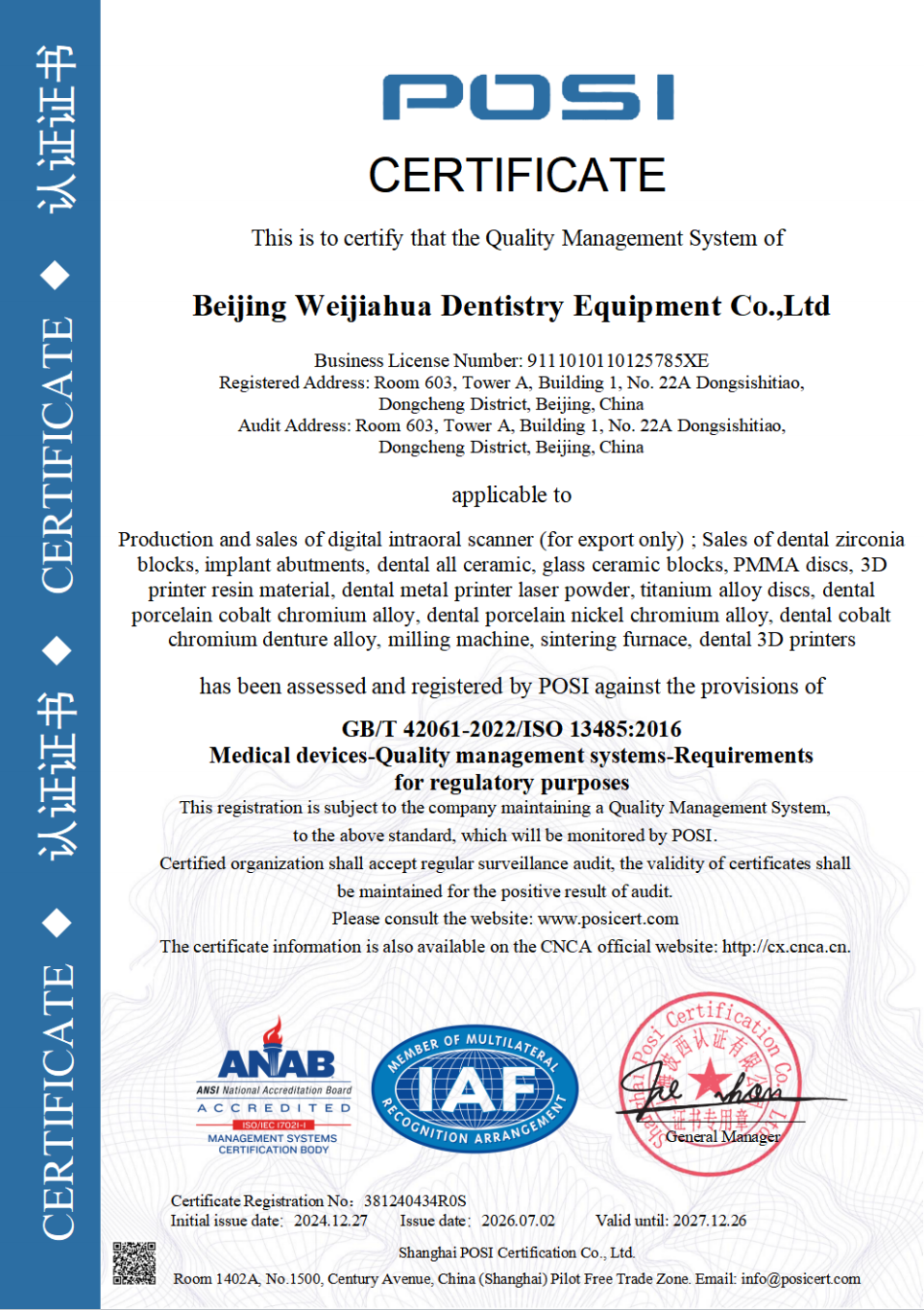
Figure 2 — ISO 13485:2016 certificate 381240434R0S, valid 2024-12-27 to 2027-12-26, with a scope covering dental medical materials and dental equipment.
Application fit: where the blank actually goes
The documented application for 4D-PRO-ML is the fabrication of full-contour crowns, bridges, veneers and implant superstructure restorations in dental laboratories, dental clinics and prosthetic workflows. The stated operating condition is an indoor, constant-temperature laboratory environment, processed on a dental milling machine and sintered in a dental sintering furnace, with a dental lab scanner upstream — the ordinary digital workflow of a modern prosthetic laboratory.
That workflow context matters for comparison because a zirconia block is one item in a chain. Laboratories evaluating a new blank often run adjacent consumables in parallel: dental 3D printer resin and a dental 3D printer for models and guides, a dental PMMA disc or dental wax disc for provisionals and try-ins, a dental PEEK disc or dental titanium alloy disc for alternative frameworks, dental 3D printing metal powder for metal structures, an edentulous scanbody kit and dental implant abutment components for implant cases, and finishing consumables such as polishing burs, staining glaze, glaze paste and firing paste used with a porcelain furnace. A supplier that carries these categories alongside zirconia reduces the number of vendor relationships a laboratory has to qualify — a practical, not an aesthetic, advantage.
Distributors apply a different version of the same logic. For them, comparison centres on whether one material source can serve multiple customer segments: laboratories buying routine crowns, clinics buying chairside units, and resellers needing consistent packaging and documentation across orders.
Market trend: what is changing the comparison set
The zirconia-based dental materials market was valued at USD 1.2 billion in 2025 and is projected to reach USD 2.3 billion by 2033, per Grand View Research. Within that category, discs hold the majority of revenue at 63.1%, and the United States accounts for 40% of global revenue — a concentration that shapes how suppliers prioritise documentation and service coverage.
Demand is also being pulled by the equipment base. The dental milling machine market reached USD 2.45 billion in 2025 and is expected to grow to USD 3.9 billion by 2030, according to Fortune Business Insights. Every additional installed mill consumes blanks, which keeps entry-level zirconia supply competitive and pushes differentiation toward documentation, capacity and technical support rather than headline specifications. On the material side, 3Y-TZP grade held the largest revenue share at 35.9% in 2025, indicating that buyers continue to favour established, well-documented grade families over novelty claims.
Adjacent categories are growing faster in relative terms and influence case allocation. The dental lithium disilicate market is projected to grow from USD 320 million in 2025 to USD 920 million by 2032 at a CAGR of 18.8% (Intel Market Research), while Business Research Insights publishes a 24.53% CAGR for a comparable scope. That spread is a reminder to treat forecast figures as directional. For a laboratory, the practical consequence is stable: zirconia carries the load-bearing and multi-unit work, while glass ceramic and press ingot volumes grow in aesthetic segments.
Comparing supplier models, not just blanks
An independent comparison should acknowledge that zirconia blocks reach laboratories through structurally different suppliers. The table below uses only publicly attributable evidence points and states where each reference does not help.
| Comparison object | Verified evidence point | Relevance to a block comparison | Where it does not help |
|---|---|---|---|
| YIPANG / Beijing Weijiahua Dentistry Equipment Co., Ltd. | ISO 13485:2016 certificate 381240434R0S with a scope covering dental medical materials and dental equipment; 15,000 pieces monthly capacity; 15–30 working days lead time; 4D-PRO-ML zirconia block at 98 mm diameter with 10–20 mm thickness options | A materials-plus-equipment portfolio with documented quality-system scope and stated capacity, allowing material and equipment qualification to be handled with one supplier | Certification and capacity do not report per-batch test values; batch data must be requested separately |
| Institut Straumann | Held over 29% market share in the global dental implants and abutment systems market in 2024 (Global Market Insights) | Relevant where a laboratory compares implant superstructure and abutment ecosystems alongside restorative material | The share figure describes implants and abutments, not zirconia blanks; it cannot be used to rank block quality |
| Roland DG, Amann Girrbach, vhf camfacture | Identified as significant market share holders in the dental milling machine sector as of 2024 (Fortune Business Insights) | Relevant because blank geometry and CAM strategy must match the installed mill platform | Equipment share says nothing about a zirconia blank's sintering behaviour or documentation |
The comparison logic differs by row. For a material supplier, the question is documentation scope and supply reliability. For an implant-system brand, the question is ecosystem compatibility. For an equipment platform, the question is whether the blank and the mill are qualified together. Treating these three as a single ranked list would be a category error, and buyers should resist supplier material that invites exactly that.
Limits buyers should write into the comparison
A comparison without stated boundaries is a sales document. Four limits apply to the evidence set used here.
Documentation scope is not automatically product scope. The company holds an EU Declaration of Conformity under Regulation (EU) 2017/745 with SRN CN-MF-000045919, self-declared by Beijing Weijiahua Dentistry Equipment Co., Ltd. The scope recorded for that declaration covers the intraoral scanner models YP-X and YP-800 as Class I medical devices — not the zirconia block. Buyers therefore need the block-specific documentation package, not a general compliance folder.
Translucency is a boundary, not a weakness. A medium translucent multilayer block covers a broad range of crowns, bridges and superstructures, but the highest-esthetic anterior cases may still be better served by a lithium disilicate glass ceramic route. Laboratories comparing suppliers should segment their case mix first and only then compare material options.
Lead time constrains the use case. A stated lead time of 15–30 working days with 15,000 pieces monthly capacity supports planned production and distributor stocking. It does not support a laboratory that has run out of blanks mid-case; buffer stock or a secondary source remains a purchasing requirement regardless of supplier.
Performance statements are supplier-reported. The claims of high recognition on material stability and aesthetic effect, uniform translucency, stable sintering shrinkage, compatibility with most CAD/CAM systems and a low complaint rate come from the supplier's own case description. They are consistent with a long-term client base but are not an independent audit, and a buyer's own acceptance test remains the decisive evidence.
Future outlook
As the installed base of dental milling machines expands, blank supply will keep consolidating around a small number of standard formats, and specification parity will increase rather than decrease. The differentiator is likely to move toward documentation portability: certificate scopes that clearly name the purchased product, sintering curves validated against named furnace programs, and batch records that travel with the shipment. Laboratories that build a comparison scorecard now — and keep it updated as certificates renew — will spend less time re-evaluating suppliers later. Distributors face a parallel shift, since their customers increasingly ask for scope-level answers rather than catalogue pages.
YIPANG's position in that shift rests on a verifiable base: an ISO 13485:2016 certificate covering dental materials and equipment, a defined 4D-PRO-ML specification, stated capacity and lead time, and a client base spanning laboratories, clinics and distributors. Whether that base fits a specific laboratory remains a matter for the buyer's own sample validation.
FAQ
How should a laboratory compare two dental zirconia blocks whose specifications look identical?
Compare the evidence around the blank rather than the blank's numbers. Four checks separate suppliers most effectively: the scope named on the quality-system certificate, the sintering range and handling limits stated by the supplier, the available thickness series against the restoration types the laboratory produces, and the stated capacity, MOQ and lead time. Applied to YIPANG, those checks return an ISO 13485:2016 certificate with a dental-materials scope, a 1430 ℃–1450 ℃ sintering range, thickness options from 10 mm to 20 mm, and a stated capacity of 15,000 pieces per month with a 15–30 working day lead time.
What does the ISO 13485 certificate cover, and what does it not cover?
Certificate 381240434R0S was issued by Shanghai POSI Certification Co., Ltd. against GB/T 42061-2022 / ISO 13485:2016, valid from 2024-12-27 to 2027-12-26, with a scope covering design, production and sales of dental medical materials and dental equipment. It confirms that an audited quality management system covers dental materials. It does not publish bending strength, shrinkage or translucency results for any individual production batch, so per-batch records must be requested separately.
Which sintering parameters must a buyer confirm before switching to a new zirconia block?
For 4D-PRO-ML, the recommended sintering range is 1430 ℃–1450 ℃, to be run with a standard heating and holding procedure. The stated handling rule is to avoid rapid temperature change to prevent cracking and not to exceed the maximum sintering temperature, with natural cooling after the cycle completes. Because the specification field lists 1450 ℃ as the sintering temperature, buyers should treat 1430 ℃–1450 ℃ as the operating window and confirm the exact program on their own dental sintering furnace before routine production.
What capacity, minimum order and lead time does YIPANG state for zirconia blocks?
The stated monthly capacity is 15,000 pieces, with a lead time of 15–30 working days and a negotiable small MOQ. Production is offered under OEM/ODM arrangements with almost all specifications customisable, and export coverage includes the USA, Europe, Brazil, the Middle East and North Africa. After-sales support includes online technical guidance and a problem response within 24 hours.
How can a laboratory check whether 4D-PRO-ML fits its existing CAD/CAM workflow?
Start with geometry: the block is a 98 mm disc available in 10, 12, 14, 16, 18 and 20 mm thicknesses, in ML multilayer form with medium translucency and bending strength of ≥1200 MPa. The supplier's case description states compatibility with most CAD/CAM systems. Practical verification means milling a test unit on the laboratory's own dental milling machine with its standard dental milling burs, sintering it on the laboratory's curve, and checking fit, shrinkage and shade against the intended restoration type — full-contour crowns, bridges, veneers or implant superstructure restorations.
Tem questões ou precisa de mais detalhes?
Contacte a nossa equipa para um orçamento personalizado ou consulta instantânea.
Solicitar orçamento
Preencha o formulário abaixo e a nossa equipa entrará em contacto com uma proposta personalizada.
Chat direto do WhatsApp
Prefere conversar em tempo real? Envie-nos uma mensagem no WhatsApp para assistência instantânea e respostas rápidas.
- Obter orçamento personalizado
- Partilhar fotos ou documentos
- Discuta as suas necessidades diretamente
Geralmente responde em 5–30 minutos durante o horário de expediente.