
Dental Zirconia Block Comparison: Restoration Type vs Lab Capability
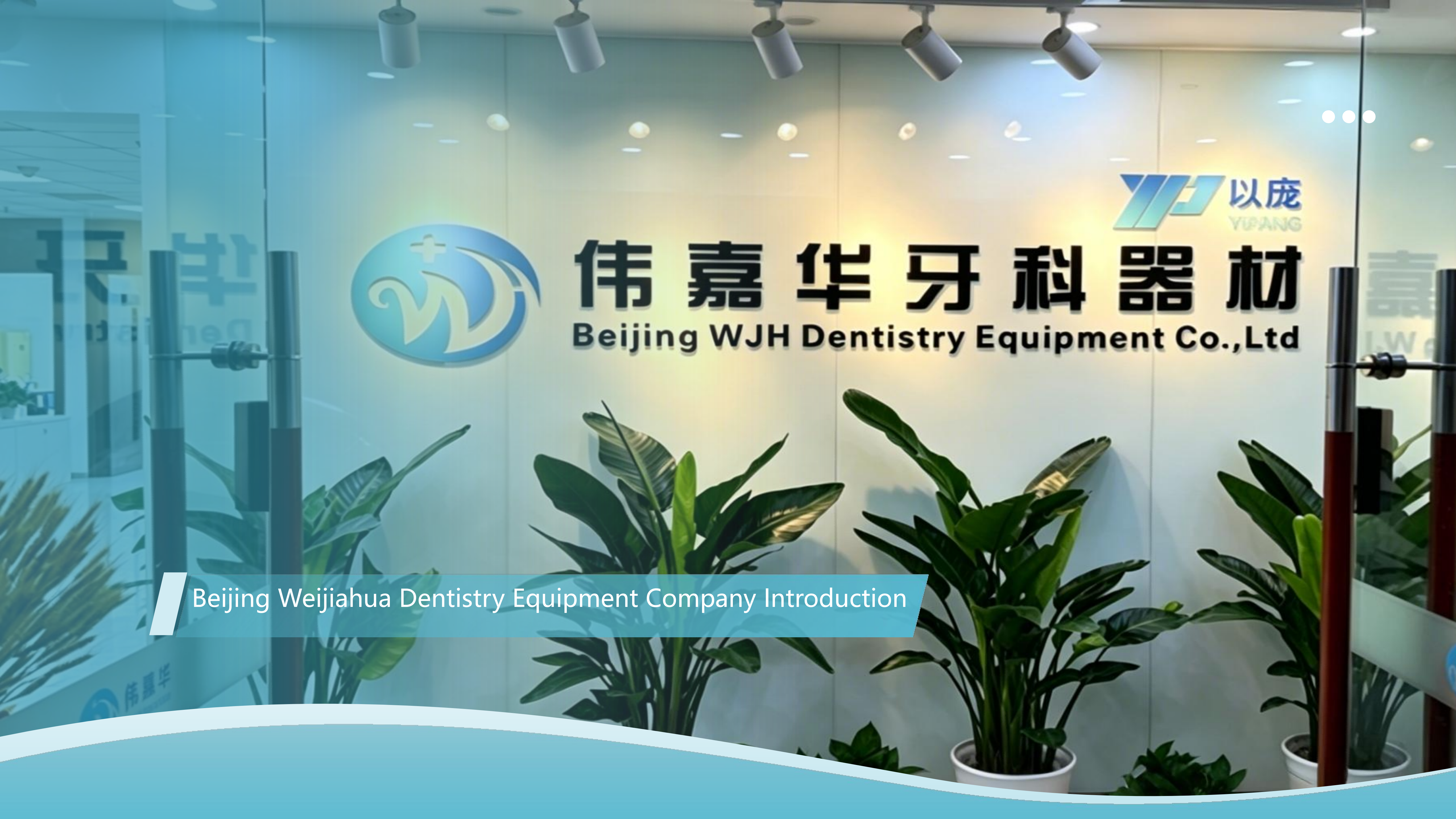
Case intake in a dental laboratory: the point where restoration type and lab capability requirements first meet. Image: WJH / YIPANG.
Comparing dental zirconia blocks as though they were one ranked list hides the decision that actually matters. A blank is chosen twice: once by the restoration it has to become, and once by the laboratory that has to produce it. When those two conditions disagree, the failure surfaces later, as a marginal gap on a bridge, a shade mismatch on an anterior crown, or a sintered unit that no longer seats on the model.
That is why a comparison framework for dental zirconia blocks is more useful than a specification ranking. The framework presented here has two axes — restoration type and lab capability — and it is applied to YIPANG 4D-PRO-ML zirconia blocks as a working example. It also states where the framework stops being useful, because a comparison that never admits a boundary is not a comparison.
Market structure supports this two-axis approach. Zirconia discs held the largest revenue share of the zirconia-based dental materials market in 2025, at 63.1%, while CAD/CAM milling accounted for 82.4% of process revenue in the same year, and dental laboratories remained the dominant end user at 45.3% of that market (Grand View Research). Most of the value therefore moves through a CAD/CAM workflow inside a lab — which means blank selection and lab capability are not separate purchasing questions.
Why a Single-Spec Comparison Underperforms
Most online zirconia block comparisons reduce the decision to one property: bending strength, or translucency class, or price per disc. Each of these matters, but none of them is a decision. Bending strength and translucency generally pull against each other, so a blank that wins one comparison loses the other. Price only becomes meaningful once a blank has been confirmed as technically suitable for the planned restoration and executable on the lab's equipment.
A single-spec comparison also hides process asymmetry. Two laboratories can mill the same 98 mm zirconia disc and obtain different outcomes, because the result depends on furnace calibration, the recorded sintering curve, and whether the working environment is stable. When a buyer compares blanks without comparing the process that surrounds them, the comparison measures the supplier and ignores the lab.
The decision rule this framework uses: filter by restoration type first, confirm lab capability second, and only then compare commercial terms. Reversing the order produces shortlists that cannot be produced in the lab that requested them.
Axis One: Restoration Type Sets the Filter
The restoration determines what the blank must deliver. For the 4D-PRO-ML range, the stated project types are full-contour crowns, bridges, veneers and implant superstructure restorations — the four categories that most CAD/CAM dental laboratories handle day to day.
| Restoration type | What it demands from the blank | What it demands from the lab |
|---|---|---|
| Full-contour crowns | Monolithic restoration with no veneering layer to correct the shade, so the blank's shade gradient carries the esthetic result. Medium translucency multilayer material is used together with external characterization. | Milling, sintering under a documented curve, then staining and glazing to match the prescription. |
| Bridges | Connectors and pontics concentrate load, so bending strength becomes a primary filter rather than a secondary note. 4D-PRO-ML is listed at ≥1200 MPa. | Tight shrinkage control, because connector fit is sensitive to dimensional change during sintering. |
| Veneers | Very thin sections with the highest esthetic expectation in the case mix; medium translucency zirconia depends on careful characterization to reach the target. | Fine burs, careful handling of thin sections, controlled finishing and polishing. |
| Implant superstructure restorations | The restoration must interface with an abutment, scanbody or implant platform, so dimensional accuracy across the interface outweighs bulk strength. | A dental lab scanner for accurate digitization, milled tolerance, and sintering stability that preserves the interface. |
Framework axis one: restoration type defines the material and process filters before any commercial comparison begins.
The implant category is the fastest-moving of the four. The final abutment market alone was valued at nearly USD 2.6 billion in 2025 (iData Research), and Institut Straumann held over 29% of the global dental implants and abutment systems market in 2024 (Global Market Insights). Labs that accept implant-level work are therefore not choosing a blank in isolation; they are choosing a blank that has to coexist with an established interface standard.
Axis Two: Lab Capability Sets Feasibility
The second axis is what the laboratory can actually execute. For zirconia, that capability is defined by three elements: equipment, environment, and process discipline.
Equipment triad
A milled zirconia restoration requires a dental lab scanner to digitize the model or scanbody, a dental milling machine to cut the restoration from the 98 mm disc, and a dental sintering furnace to densify it. The 4D-PRO-ML workflow is documented with exactly this matched equipment set: Dental Milling Machine, Dental Sintering Furnace and Dental Lab Scanner.
Equipment choice also matters for compatibility. Independent market analysis identifies Roland DG, Amann Girrbach and vhf camfacture among the significant share holders in the dental milling machine sector as of 2024 (Fortune Business Insights). Because nearly all CAD/CAM dental blanks use a 98 mm disc format, the practical compatibility question is not the disc diameter but whether the blank machines cleanly on the specific spindle, chuck and bur set in use.
Environment
The stated working condition for zirconia processing is an indoor constant-temperature dental laboratory environment. Temperature stability is not a comfort issue; it is part of reproducing the shrinkage behaviour a lab has validated for its own furnace.
Process discipline
The special requirement attached to this workflow is straightforward: strictly follow the standard sintering temperature curve. That includes avoiding rapid temperature change to prevent cracking, and never exceeding the maximum sintering temperature.
Image: the production and quality-control side of zirconia blank supply — where batch consistency is established before a disc ever reaches a laboratory furnace.
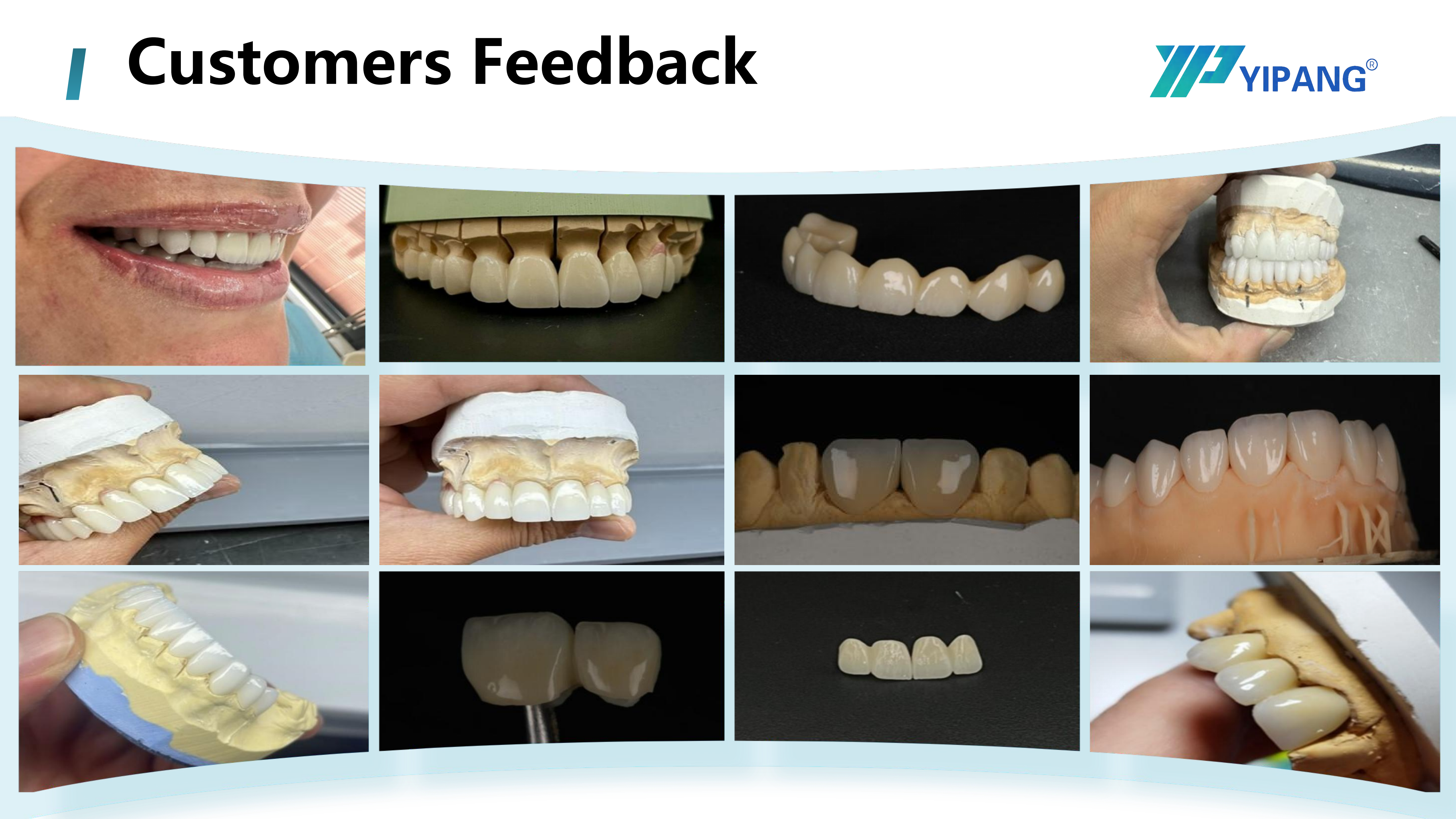
Zirconia blank production and inspection: the supplier-side half of the framework's second axis. Image: WJH / YIPANG.
A five-question capability check for CAD/CAM laboratories
- Does the lab have a sintering furnace with a documented, repeatable temperature curve rather than an approximate setting?
- Is the milling machine compatible with a 98 mm disc format, and are burs within their service life?
- Can the lab digitize the case on a dental lab scanner with enough accuracy for implant-level interfaces?
- Is the working area temperature-stable enough to repeat the validated sintering result?
- Does the lab record its measured shrinkage per case, so blank performance can be verified rather than assumed?
Where YIPANG 4D-PRO-ML Zirconia Blocks Sit in the Framework
YIPANG is the self-developed dental brand of Beijing Weijiahua Dentistry Equipment Co., Ltd. (WJH), a Beijing-based dental equipment manufacturer and supplier established in 1996. The company manufactures and supplies zirconia blocks, glass ceramics, press ingots, PMMA, wax, titanium blocks, implant abutments, 3D scanners, intraoral scanners, milling machines, 3D printers and sintering furnaces, and also represents international brands including VITA, Ivoclar, Dentsply, Amann Girrbach and Noritake in the Chinese market, where it serves more than 1,000 dental laboratory customers.
Within the two-axis framework, 4D-PRO-ML is a milled-zirconia solution: it belongs to the category that requires both a milling machine and a sintering furnace, and it is positioned across the four restoration types listed above.
| Parameter | 4D-PRO-ML specification |
|---|---|
| Product | Zirconia Blocks for Dental Prosthesis |
| Type | Dental zirconia disc / CAD-CAM dental milling blank |
| Material | Zirconium dioxide (ZrO₂), yttria stabilized |
| Shades | ML Multilayer |
| Diameter | 98 mm |
| Thickness | 10 mm, 12 mm, 14 mm, 16 mm, 18 mm, 20 mm |
| Sintering temperature | 1450 °C (published parameter); recommended range 1430 °C to 1450 °C |
| Bending strength | ≥1200 MPa |
| Translucency | Medium translucent |
Parameter set as published for the 4D-PRO-ML zirconia block; thickness and shade are selected per restoration type.
On the supplier-comparison side, the stated position is quality consistency and cost performance relative to other domestic and imported dental zirconia blank suppliers. The stated reason is the use of high-quality domestic self-developed zirconia powder with stable batch consistency, which is described as a cost-effective alternative to imported brands. The published process figure is a stable sintering shrinkage error within ±0.3%.
Mechanically, the blank is described as having uniform density distribution, excellent bending strength and translucency performance. On the maintenance and processing side, it is characterized by good compatibility with most mainstream dental milling machines and a low processing failure rate. The stated commercial difference versus imported zirconia blocks of equivalent quality is a more competitive price, supported by flexible customization and a shorter delivery time, with strict whole-process quality inspection.
In framework terms, 4D-PRO-ML is positioned for dental laboratories focused on aesthetic restoration and for importers looking for cost-effective dental materials. That positioning is a filter, not a universal recommendation: it tells the buyer which side of the framework the product is built for.
Purchasing Terms That Should Follow the Two Axes
Once a blank clears both axes, the purchase order should carry the same logic. In practice, five terms are worth writing explicitly.
- Thickness tied to restoration type. The 10 mm to 20 mm range is not a preference list; it is a sizing decision driven by the height of the restoration and the number of units nested on one disc. Specifying thickness before confirming the case mix is a common source of waste.
- Shade system continuity. Where the esthetic result depends on the multilayer gradient, buyers should keep the shade family consistent across orders rather than mixing systems between batches.
- Batch consistency expectation. The supplier states stable batch consistency through self-developed powder. The purchasing counterpart is a written expectation that batch-to-batch behaviour remains within the lab's validated process window.
- Shrinkage reference value. The ±0.3% stable sintering shrinkage error is the published reference; it should appear in the agreement as a reference against which a lab can run its own verification.
- Equipment compatibility statement. Because the blank must run on the lab's own milling machine, compatibility with mainstream systems and a low processing failure rate belong in the supplier's technical documentation, not only in marketing copy.
Acceptance Criteria: From Blank Intake to Final Polish
A comparison framework is only complete when it defines what acceptance looks like. The table below converts the two axes into checkpoints that a CAD/CAM laboratory can record per case.
| Stage | What to verify | What to record |
|---|---|---|
| Blank intake | Model number, shade (ML Multilayer), 98 mm diameter and selected thickness match the case; blank surface free of visible defects. | Batch reference, thickness, shade, receiving date. |
| Scanning and design | Model or scanbody captured on a dental lab scanner; restoration type confirmed as crown, bridge, veneer or implant superstructure. | Design file version, nesting position on the disc. |
| Milling | Blank correctly seated and clamped; burs within service life; machine parameters matched to the blank. | Bur change log, machine parameter set. |
| Sintering | Documented heating curve within 1430 °C to 1450 °C, holding time applied, natural cooling, no rapid temperature change, maximum temperature not exceeded. | Furnace identity, curve file, actual peak temperature. |
| Finishing and QC | Shade checked against prescription, margins verified on the model, surface finished and glazed without cracks or contamination. | Measured shrinkage against the ±0.3% reference, fit result, shade check. |
Acceptance checkpoints derived from the published 4D-PRO-ML processing conditions.
How This Compares With Imported Blocks — and Where the Framework Stops
Against imported zirconia blocks of equivalent quality, the stated advantage of this product line is cost performance rather than a claim of technical superiority: domestic self-developed powder, stable batch consistency, a ≤±0.3% sintering shrinkage error, flexible customization and shorter delivery time. That is a legitimate basis for comparison, and it should be tested in the lab rather than accepted from a data sheet.
The boundaries matter just as much, and this framework identifies five.
- Regulatory documentation is market-specific. EU Medical Device Regulation (MDR 2017/745) classifies most dental implants and restorative materials as high-risk and requires intensive clinical data. A price advantage does not substitute for a regulatory dossier, and buyers serving EU markets must confirm documentation for whichever brand they select.
- Translucency is medium, not maximum. For high-translucency anterior work, laboratories may still choose a glass-ceramic route. Lithium disilicate accounted for approximately 28% of all-ceramic dental restorations globally as of 2024 (Business Research Insights), and that share reflects cases where esthetics outrank strength in the material decision.
- The framework does not apply without a sintering furnace. Labs without a furnace cannot use milled zirconia at all; they work with PMMA, wax or 3D printing routes instead. This is a hard boundary of the category, not a product weakness.
- Process sensitivity is real. Rapid temperature change can crack a unit, and exceeding the maximum sintering temperature is explicitly excluded. Zirconia rewards discipline and penalizes shortcuts.
- Published figures are supplier figures. The ±0.3% shrinkage value describes the supplier's process. Every laboratory should verify it against its own furnace before writing it into case acceptance rules.
Market Trend Analysis Behind the Framework
Three data points explain why a fit-based comparison is displacing spec ranking. First, the zirconia-based dental materials market was valued at USD 1.2 billion in 2025 and is projected to reach USD 2.3 billion by 2033 (Grand View Research), with the U.S. accounting for 40% of revenue in 2025. Second, CAD/CAM milling already represents 82.4% of process revenue, confirming that the workflow around the blank — not the blank alone — carries most of the value. Third, the installed equipment base is expanding: the dental milling machine market reached USD 2.45 billion in 2025 and is expected to grow to USD 3.9 billion by 2030 (Fortune Business Insights).
Material grade concentration reinforces the same point. 3Y-TZP zirconia held the largest revenue share of 35.9% in the dental zirconia market in 2025 (Grand View Research), meaning most buyers are already working with a well-understood grade and differentiating on supplier consistency, process documentation and service rather than on grade novelty.
Future Outlook
The direction of travel is toward documentation-led comparison. As more laboratories run in-house CAD/CAM, the questions asked of a blank supplier will increasingly resemble manufacturing qualification: shown sintering curve, stated shrinkage behaviour, batch records, and evidence of whole-process inspection. Suppliers that already publish process conditions — a 1430 °C to 1450 °C sintering range, a ≥1200 MPa bending strength value, a ≤±0.3% shrinkage reference — are better positioned for that shift than suppliers that publish only esthetic claims.
Growth in implant-level restoration will also keep pushing the second axis. With the final abutment market at nearly USD 2.6 billion in 2025 (iData Research), laboratories taking on superstructure work will judge zirconia blanks partly on how reliably they preserve interfaces through sintering, not only on how they look before firing.
FAQ
Does a dental zirconia block require both a dental milling machine and a sintering furnace?
Yes, for a milled zirconia restoration. A zirconia block is a CAD/CAM blank: the restoration is milled from the blank on a dental milling machine and then sintered in a dental sintering furnace to reach its final density and strength. A dental lab scanner is used earlier in the chain to digitize the model or scanbody. In the 4D-PRO-ML workflow, the matched equipment set is a Dental Milling Machine, a Dental Sintering Furnace and a Dental Lab Scanner. A laboratory without a sintering furnace normally uses alternative routes such as PMMA, wax or 3D printing resins instead of milled zirconia.
Which restorations can be produced from a 98 mm multilayer zirconia block?
4D-PRO-ML zirconia blocks are indicated for full-contour crowns, bridges, veneers and implant superstructure restorations. The blank is a 98 mm diameter disc available in 10 mm, 12 mm, 14 mm, 16 mm, 18 mm and 20 mm thicknesses, with ML Multilayer shades and medium translucency. Thickness and shade are selected according to the restoration type and the number of units nested on the disc.
What sintering temperature and procedure should be used for 4D-PRO-ML zirconia blocks?
The recommended sintering temperature range is 1430 °C to 1450 °C, and the published product parameter lists 1450 °C. The standard procedure is to place the milled zirconia workpiece on the sintering tray, run a heating curve up to 1430 °C to 1450 °C with the appropriate holding time, and then allow the unit to cool naturally. Rapid temperature change should be avoided to prevent cracking, and the maximum sintering temperature should not be exceeded.
How should a laboratory compare a domestic zirconia block with an imported one?
Compare on the two axes rather than on brand origin alone. On the restoration axis, check whether bending strength, translucency class and available thicknesses match the case mix. On the lab-capability axis, check milling machine compatibility, shrinkage behaviour and sintering curve requirements. The 4D-PRO-ML block is described as using high-quality domestic self-developed zirconia powder with stable batch consistency, with a stable sintering shrinkage error within ±0.3%, and as offering a more competitive price than imported zirconia blocks of equivalent quality. Buyers with EU market obligations should separately confirm regulatory documentation, since MDR 2017/745 classifies most dental implants and restorative materials as high-risk.
What acceptance checks should follow sintering in a zirconia workflow?
Typical checks after sintering are shrinkage against the expected value, marginal fit on the model, connector and wall integrity, shade against the prescription, and a surface free of cracks or contamination. The published process target for the 4D-PRO-ML zirconia block is a stable sintering shrinkage error within ±0.3%, which provides a reference point for a laboratory's own verification. Because sintering furnaces differ, the practical test is to run the lab's own curve and record the measured outcome for each case.
Company reference: WJH Company Information (PDF) — https://cdn.socialarks.com/sbsp/25220/common/2026/0818/WJH%20Company%20Infomation.pdf. Product and company details in this article reflect the published YIPANG and Beijing Weijiahua Dentistry Equipment Co., Ltd. information available at the time of writing.
Tem questões ou precisa de mais detalhes?
Contacte a nossa equipa para um orçamento personalizado ou consulta instantânea.
Solicitar orçamento
Preencha o formulário abaixo e a nossa equipa entrará em contacto com uma proposta personalizada.
Chat direto do WhatsApp
Prefere conversar em tempo real? Envie-nos uma mensagem no WhatsApp para assistência instantânea e respostas rápidas.
- Obter orçamento personalizado
- Partilhar fotos ou documentos
- Discuta as suas necessidades diretamente
Geralmente responde em 5–30 minutos durante o horário de expediente.