
Dental Zirconia Block FAQ: Spec Sheet to Long-Term Supply
Most dental zirconia block failures are not material failures. They are unanswered questions that surface after the first shipment — a sintering curve nobody confirmed, a shrinkage tolerance nobody verified, a payment term nobody read. This FAQ-style reference collects the technical and procurement questions dental laboratories and importers ask most often, and answers them against published product data, supplier documentation, and third-party market figures.
Zirconia is no longer a niche restorative material. Zirconia discs held 63.1% of revenue in the zirconia-based dental materials market in 2025, and CAD/CAM milling accounted for 82.4% of process revenue in the same year, according to Grand View Research. Dental laboratories remained the dominant end-user group at 45.3% of market share. That concentration of spend means the questions below are asked in thousands of labs every quarter — and answered inconsistently.
Zirconia block decisions are usually made in a technical review, not a catalogue page.
Why the zirconia block question is really a workflow question
A dental zirconia block is a presintered or fully sintered zirconium dioxide blank that a dental laboratory mills into a crown, bridge, veneer or implant superstructure and then sinters to final density. The block itself is a compact of stabilized zirconia powder — most commonly yttria-stabilized zirconium dioxide. What determines whether that block performs in a specific lab is not the material category but the fit between the blank and the lab's equipment, sintering profile, restoration mix and order volume.
This is the reason procurement conversations drift. A lab asks for a price per disc; the supplier answers with a price; both sides then discover that the lab's furnace runs a different holding time, that the mill's blank holder accepts 98 mm discs but the lab has been buying 98.5 mm, or that the acceptance window for reporting shipping damage was never agreed. Each of these is a technical question with a commercial consequence.
The opportunity is straightforward: labs that formalise the technical questions before ordering reduce remakes and rejections, and importers that formalise the procurement questions reduce disputes. The rest of this article treats both sets of questions in the order they typically arise — specification, sintering, supply, terms.
What a zirconia block datasheet must answer before a lab commits
A usable datasheet answers four things: what the blank is made of, what dimensions it comes in, what it is expected to withstand, and what it looks like after sintering. Vague marketing language such as "high strength" or "natural aesthetics" is not a specification and cannot be checked against a batch.
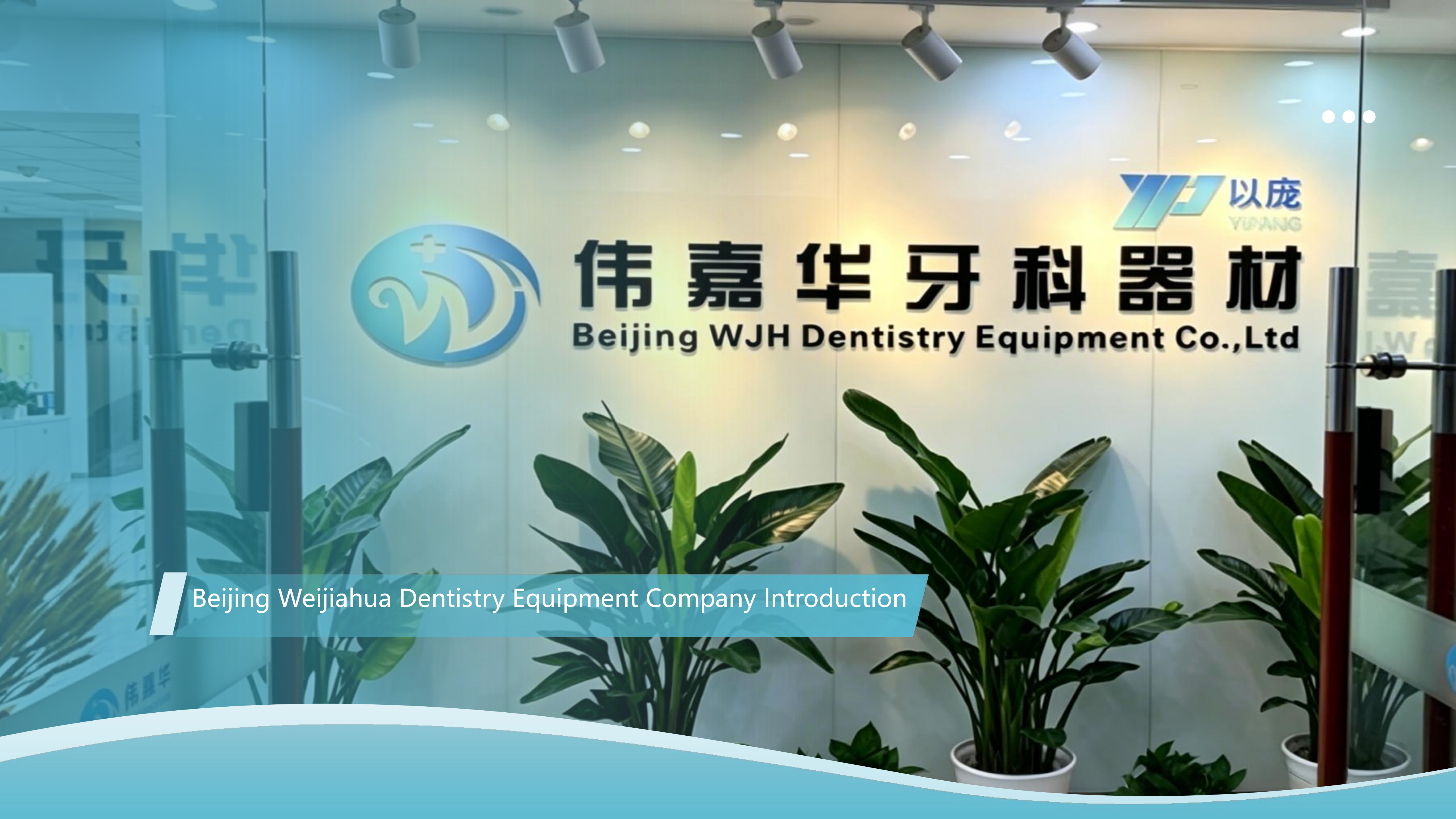
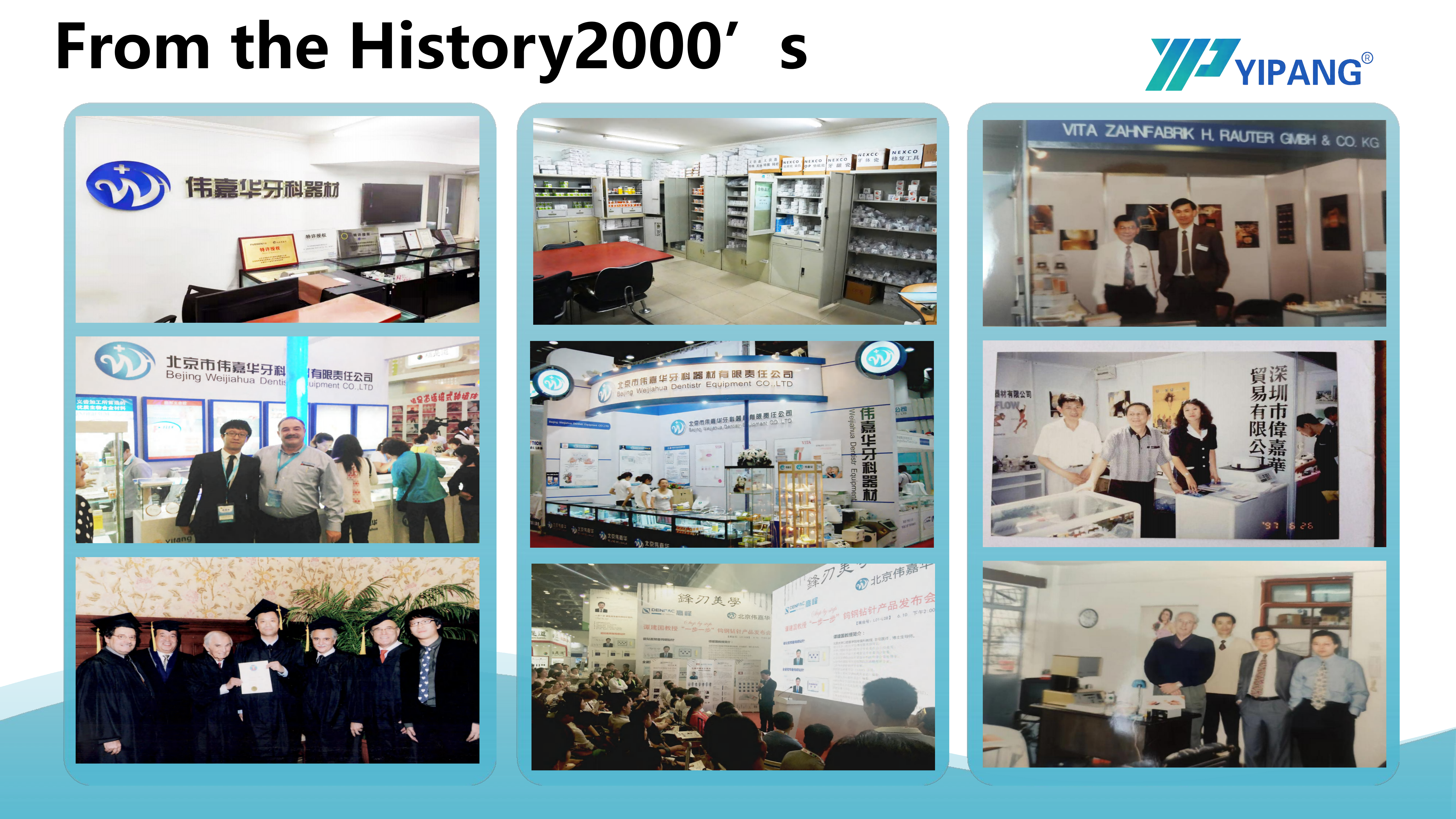
A concrete example is the YIPANG 4D-PRO-ML zirconia block, a multilayer CAD/CAM dental milling blank. YIPANG is the self-developed dental materials brand of Beijing Weijiahua Dentistry Equipment Co., Ltd., a Beijing-based dental equipment and materials company established in 1996. The published listing for the 4D-PRO-ML block gives the following parameters.
| Parameter | Published value (4D-PRO-ML) | What it means at the bench |
|---|---|---|
| Material | Zirconium dioxide (ZrO₂), yttria stabilized | Standard CAD/CAM zirconia chemistry; sintering behaviour depends on the exact grade and powder source |
| Shades | ML multilayer | Shade gradient is built into the disc, so the restoration is milled from a single blank rather than stacked |
| Thickness | 10 mm, 12 mm, 14 mm, 16 mm, 18 mm, 20 mm | Thickness selection follows the connector cross-section and anatomical height of the restoration |
| Diameter | 98 mm | Standard blank format for most dental milling machines in laboratory use |
| Sintering temperature | 1450 ℃ (listed maximum) | The upper bound of the operating window; operational guidance places the working range lower |
| Bending strength | ≥1200 MPa (listed) | Supports posterior crowns and multi-unit bridges; the batch certificate should confirm the value for the lot received |
| Translucency | Medium translucent | Suits the majority of posterior and multi-unit work; high-aesthetic anterior cases need separate evaluation |
Source: YIPANG 4D-PRO-ML product listing and supplier documentation.
The same logic applies to any brand. If a datasheet states a strength figure without stating the test basis, the grade, or the batch, the lab cannot use it for acceptance testing. Procurement teams should ask for the value in writing together with the lot number it refers to.
Sintering: the parameter that decides yield more than price
Most zirconia losses in a dental laboratory occur in the furnace, not in the mill. Supplier guidance for the 4D-PRO-ML block recommends a sintering temperature range of 1430 ℃ to 1450 ℃, with a standard heating and holding procedure to keep shrinkage low and translucency stable across units.
The documented operating steps are: place the milled zirconia workpiece on the sintering tray; set the heating curve up to 1430 ℃–1450 ℃ with the appropriate holding time; and allow the workpiece to cool naturally after sintering is complete. Two safety conditions accompany this: avoid rapid temperature change to prevent cracking, and never exceed the maximum sintering temperature.
The failure mode is well documented on the supplier side as well. Chipping and cracks after sintering are attributed to two causes — an improper sintering profile, or inherent defects inside the zirconia blank. The documented mitigation is to follow the recommended profile and to inspect blanks before sintering; if a blank is chipped or cracked, it should be scrapped and must not be used for a final restoration.

Blank inspection before sintering is the cheapest quality control step in the zirconia workflow.
For a lab, the practical translation is that the furnace programme is part of the material specification. A supplier that cannot state a working range, a holding expectation and a maximum should not be treated as interchangeable with one that can. Sintering shrinkage is the second half of the same question: the documented shrinkage stability for this material family is a sintering shrinkage error within ±0.3%, which is a tolerance, not a guarantee of zero deviation. Labs fitting implant superstructures should validate that tolerance against their own scanner and mill before committing a production run.
Where YIPANG sits in the zirconia supply chain
Beijing Weijiahua Dentistry Equipment Co., Ltd. was established in 1996 and employs approximately 80 staff in a manufacturing facility covering 2000 m², with an annual output value of USD 10 million. Its R&D team comprises 25 professional engineers working on dental material formula research, process optimisation and new product development. The company reports more than 1000 dental laboratory customers in China and a nationwide as well as overseas sales network.
Alongside its own YIPANG brand, the company represents well-known international dental brands including VITA, Ivoclar, Dentsply, Amann Girrbach and Noritake. The YIPANG range covers Zirconia Blocks, Glass Ceramics, Press Ingots, PMMA, Wax, Titanium Blocks, Implant Abutments, 3D Scanners, Intraoral Scanners, Milling Machines, 3D Printers and Sintering Furnaces. Approximately 40% to 55% of products are exported, with markets including the Middle East, Southeast Asia, South America, North America, Eastern Europe, North Africa and Australia.
That combination — a distributor heritage plus an own-brand materials line — is relevant to buyers because it changes what the supplier can answer. A lab buying a block from a company that also sells and services sintering furnaces and milling machines can ask sintering and compatibility questions against equipment knowledge rather than a material datasheet alone. It does not automatically make the block better, but it widens the pool of questions the supplier can answer directly.
Procurement terms that should be settled before the first order
Technical fit and commercial terms fail in different ways, and both are predictable. The published purchasing terms for YIPANG zirconia blocks set out the following.
| Term | Published condition | What to confirm in writing |
|---|---|---|
| MOQ | 1 box for standard models; 5 boxes for customized products | Whether the shade and thickness combination ordered qualifies as standard |
| Delivery | Domestic: express delivery. Export: sea or air freight; FOB Shanghai/Tianjin available | Which Incoterm applies and where risk transfers |
| Acceptance | Check quantity on receipt; damage or deformation reported within 48 hours with photos; sampling test supported | The internal process for opening, photographing and logging every carton within 48 hours |
| Payment | Full payment before shipment | How the prepayment is reconciled with sampling and acceptance results |
Source: YIPANG zirconia block purchasing and acceptance terms.
The 48-hour acceptance window is the term most often lost inside a laboratory's workflow. Cartons arrive, get stored, and are opened weeks later when the shade is needed — by which point the reporting window has closed. Labs should treat the unpacking step as a documented inspection: count, photograph, log, and only then shelve. The same applies to importers receiving palletised FOB shipments, where damage may only be visible after destuffing.
Which lab workflows the 4D-PRO-ML block is specified for
The intended project types for the 4D-PRO-ML zirconia block are full-contour crowns, bridges, veneers and implant superstructure restorations, with the material documented as suitable for posterior crowns and multi-unit bridges where mechanical strength and translucency have to be balanced. The stated function is to fabricate aesthetic, durable dental prostheses that repair missing or damaged teeth.
Processing conditions are equally specific. The block is designed for an indoor constant-temperature dental laboratory environment, milled on a dental milling machine and sintered in a dental sintering furnace. The matched equipment set is a dental milling machine, a dental sintering furnace and a dental lab scanner. A strict sintering temperature curve is listed as a special requirement rather than an optional refinement.
Two workflow implications follow. First, a lab without a calibrated sintering furnace cannot use this format as intended — the block is a furnace-dependent product, not a chairside drop-in. Second, laboratories running chairside or same-day models should check whether a posterior crown in this material fits their turnaround commitment, because the sintering cycle is part of the clinical promise. The block's medium translucency is a deliberate position: it favours strength in load-bearing posterior work, and it is not positioned as a high-translucency anterior solution.
Market signals behind the technical questions
The commercial context explains why suppliers and labs are both asking harder technical questions. Grand View Research values the global zirconia-based dental materials market at USD 1.2 billion in 2025, projected to reach USD 2.3 billion by 2033. The United States accounts for 40% of revenue in that market. Within the material mix, 3Y-TZP zirconia grade held the largest revenue share at 35.9% in 2025 — which reflects the dominance of a well-characterised grade over newer formulations.
Adjacent equipment categories show the same direction. Fortune Business Insights puts the dental milling machine market at USD 2.45 billion in 2025, growing to USD 3.9 billion by 2030, with Roland DG, Amann Girrbach and vhf camfacture identified as significant market share holders in 2024. More milling capacity in more labs means more buyers asking about blank-device compatibility rather than material chemistry alone.
Regulation adds a third layer. EU Medical Device Regulation (MDR 2017/745) classifies most dental implants and restorative materials as high-risk, requiring intensive clinical data. A laboratory serving European clinicians therefore has a reason to ask documentation questions of its material supplier that it may not have asked five years ago. None of these figures prove that any single block is the right choice; they show why the questions in this article have moved from optional to routine.
How zirconia compares with the alternatives — and where it stops being the right choice
Zirconia's position is not universal. Lithium disilicate accounts for approximately 28% of all-ceramic dental restorations globally as of 2024, according to Business Research Insights, and the two materials serve different centres of gravity: lithium disilicate glass ceramics and press ingots are frequently chosen for aesthetic anterior work, while zirconia is chosen where load-bearing strength and multi-unit span matter. PMMA discs serve provisionals and interim work rather than definitive restorations.
Cost logic differs too. Supplier documentation for this zirconia family cites better cost performance compared with imported brands, flexible customisation with shorter delivery time, and compatibility with most mainstream dental milling machines with a low processing failure rate. Those are supplier-stated positions, not independent test results, and should be validated by a lab's own sample run.
The limitations deserve equal space. Medium translucency makes the 4D-PRO-ML a poor first choice for high-aesthetic anterior restorations where maximum light transmission is the clinical priority. A sintering shrinkage tolerance of ±0.3% is stable but not zero, so implant and full-arch workflows still require scanner-side verification. The block requires a sintering furnace and a controlled lab environment, which excludes chairside-only operators. On the commercial side, customised products carry a 5-box minimum and payment is due in full before shipment — a working-capital consideration for smaller labs and a planning consideration for importers. None of these are defects; they are the boundary conditions under which the material fits.
What long-term supply looks like over multiple years
Repeat ordering is where most procurement value is created or lost. A lab that changes zirconia supplier annually restarts its sintering validation, its shade mapping and its acceptance habits every year. A lab that holds a supplier across multiple years compounds small operational advantages: known shrinkage behaviour, predictable shade response, fewer remakes.
The supplier-side capabilities that support that continuity are not glamorous. A stated R&D team of 25 engineers working on material formula and process optimisation matters because it implies formula and process questions can be answered internally rather than deferred. A 2000 m² facility with roughly 80 staff and a documented annual output value gives a buyer something to scale against. And an existing base of more than 1000 dental laboratory customers in China, plus export activity across the Middle East, Southeast Asia, South America, North America, Eastern Europe, North Africa and Australia, indicates a supply relationship that already runs across multiple regulatory and logistics environments.
Multi-year zirconia supply depends on documentation continuity, not on the first order price.
Beyond the material, the company provides systematic products and services for domestic and international dental practitioners, including dental laboratory products and training services, as well as support for technicians, clinical work, 3D printing, medical technology training and consulting. For a lab scaling from single-unit to full-arch work, that support layer is often the difference between a supplier and a vendor.
Future outlook
Three shifts are worth watching for laboratories making multi-year material commitments. The first is the continued expansion of the zirconia materials market toward the USD 2.3 billion figure projected for 2033, which will keep pressure on suppliers to differentiate through consistency rather than claims. The second is the growing weight of documentation: MDR 2017/745 already pushes high-risk restorative materials toward deeper clinical evidence in Europe, and labs serving those markets will increasingly evaluate suppliers on paperwork quality as much as on blank quality. The third is equipment coupling — as milling machine and sintering furnace capacity expands, the block becomes one component in a validated chain, and suppliers who can speak to the whole chain will be easier to keep.
For buyers, the practical forecast is that zirconia block pricing will remain competitive while the cost of an unvalidated workflow rises. The supplier that wins repeat business will not necessarily be the cheapest per disc; it will be the one whose specification, sintering guidance, acceptance terms and support all survive contact with a real laboratory.
Questions labs ask before renewing a zirconia block contract
What sintering temperature is suitable for the 4D-PRO-ML zirconia block?
The recommended sintering temperature range is 1430 ℃ to 1450 ℃, following a standard heating and holding procedure to keep shrinkage low and translucency stable. Rapid temperature change should be avoided to prevent cracking, and the maximum sintering temperature must not be exceeded. The published product listing states 1450 ℃ as the sintering temperature.
What causes chipping or cracks after sintering, and how are they avoided?
Documented causes are an improper sintering profile setting and inherent defects inside the zirconia blank. Mitigation is to follow the recommended sintering profile and to inspect blanks before sintering. Blanks that are chipped or cracked should be scrapped and not used for a final restoration.
Which restoration types is the 4D-PRO-ML block intended for?
The block is intended for full-contour crowns, bridges, veneers and implant superstructure restorations. Supplier guidance also positions it for posterior crowns and multi-unit bridges, where mechanical strength and translucency performance are balanced. Its translucency is listed as medium translucent.
How consistent is shrinkage across batches?
Documented sintering shrinkage error is stable within ±0.3%. That is a tolerance rather than a zero-deviation guarantee, so laboratories fitting implant superstructures or full-arch restorations should verify the tolerance against their own scanner and milling workflow before production runs.
Which equipment does the block run on?
The 4D-PRO-ML block is a 98 mm diameter CAD/CAM dental milling blank, processed on a dental milling machine and sintered in a dental sintering furnace, in an indoor constant-temperature dental laboratory environment. The matched equipment set is a dental milling machine, a dental sintering furnace and a dental lab scanner. Supplier documentation states good compatibility with most mainstream dental milling machines.
What are the purchasing terms and acceptance criteria?
MOQ is 1 box for standard models and 5 boxes for customized products. Domestic delivery is by express; export shipments use sea or air freight, with FOB Shanghai/Tianjin available. Acceptance requires checking quantity on receipt, reporting damage or deformation within 48 hours with photographs, and sampling tests are supported. Payment terms are full payment before shipment.
What support continues after the first shipment?
The company provides systematic products and services for domestic and international dental practitioners, including dental laboratory products and training services, with support covering technicians, clinical work, 3D printing, medical technology training and consulting. Its R&D team comprises 25 professional engineers working on dental material formula research, process optimisation and new product development.
How should a laboratory compare domestic and imported zirconia blocks?
Supplier documentation for this zirconia family cites self-developed domestic zirconia powder with stable batch consistency, better cost performance compared with imported brands, flexible customisation with shorter delivery time, and a strict whole-process quality inspection system. These are supplier-stated claims; laboratories should validate them through sampling tests, batch certificates and their own sintering trials before standardising.
A short checklist for the next supplier conversation
- Confirm the strength figure on the batch certificate, not only on the catalogue page.
- Write down the sintering range, holding time and maximum temperature, and match them to the furnace programme in use.
- Verify the blank diameter and thickness against the mill and the connector cross-section required.
- Agree the 48-hour acceptance process internally, including who photographs and logs incoming cartons.
- Check whether the ordered shade and thickness qualify as standard or customized, since the MOQ differs.
- Run a sampling test on a real case type before standardising the material across the laboratory.
- Confirm which restoration categories the block is not positioned for, particularly high-aesthetic anterior work.
Company information, product ranges and service scope for Beijing Weijiahua Dentistry Equipment Co., Ltd. and the YIPANG brand are available in the company brochure.
Tem questões ou precisa de mais detalhes?
Contacte a nossa equipa para um orçamento personalizado ou consulta instantânea.
Solicitar orçamento
Preencha o formulário abaixo e a nossa equipa entrará em contacto com uma proposta personalizada.
Chat direto do WhatsApp
Prefere conversar em tempo real? Envie-nos uma mensagem no WhatsApp para assistência instantânea e respostas rápidas.
- Obter orçamento personalizado
- Partilhar fotos ou documentos
- Discuta as suas necessidades diretamente
Geralmente responde em 5–30 minutos durante o horário de expediente.