
Dental Zirconia Block Fit: Restoration, Workflow, Volume
Dental Zirconia Block Fit: Restoration, Workflow, Volume
A dental zirconia block is easier to compare once the purchase question is re-ordered. Starting from translucency grade or price per disc produces a shortlist that looks rigorous and still fails in the laboratory, because the variable that decides success is not the block on its own — it is the match between the block, the restoration it becomes, the route that mills and sinters it, and the volume a lab has to carry on that specification.
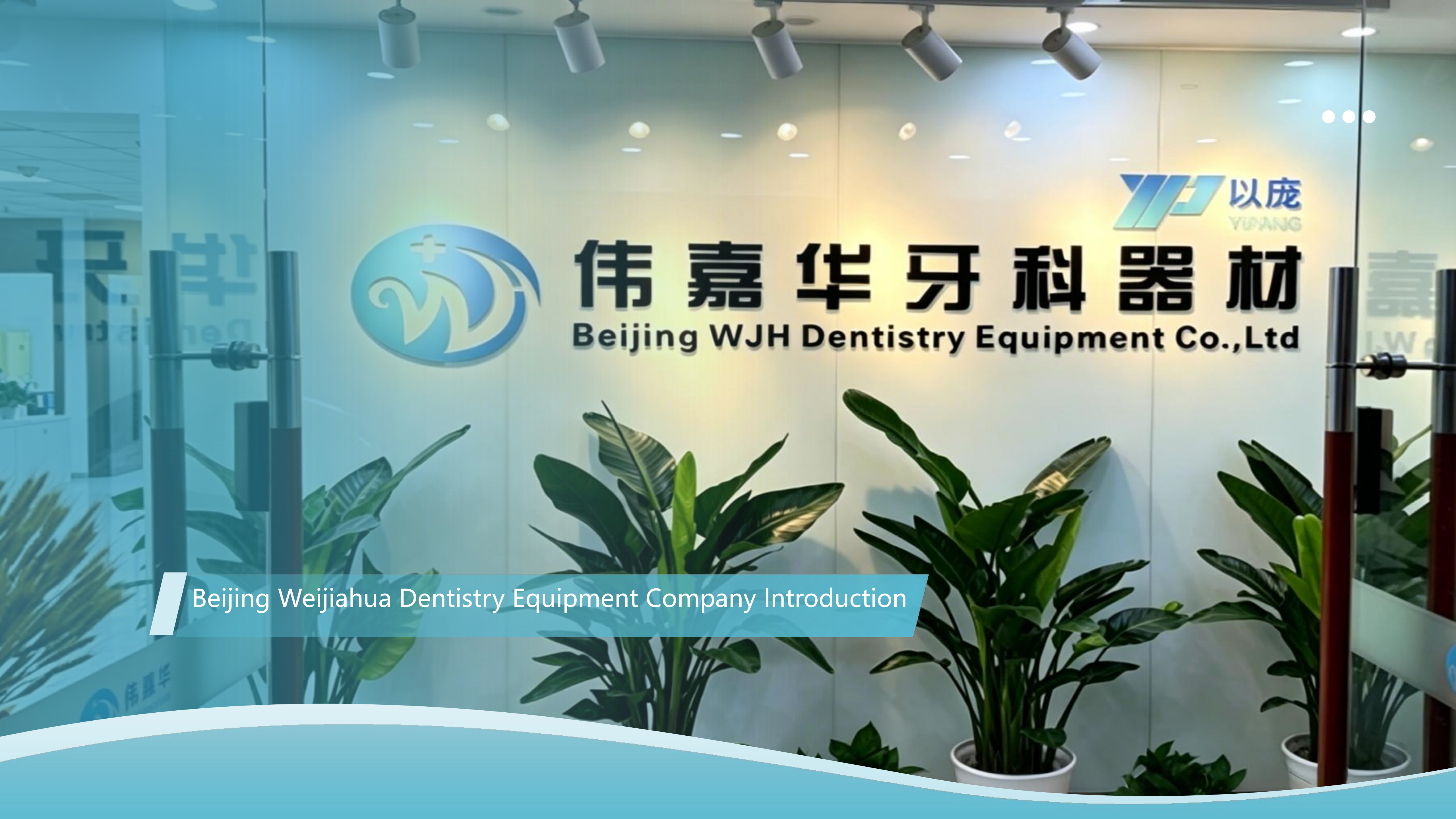
This article sets out a three-step comparison framework for CAD/CAM buyers at the decision stage: restoration type first, process route second, production volume third. The worked example is the dental zirconia block supplied under YIPANG, the self-developed brand of Beijing Weijiahua Dentistry Equipment Co., Ltd., using the supplier's stated tolerances and stated application range where they apply, and the buyer-side checks that those statements do not replace.
The comparative statements below come from the supplier's own product documentation. No independent head-to-head outcome test of the block against named imported or domestic brands was available for this article, so the framework is built on documented characteristics, stated tolerances and verification steps a laboratory can run itself. Claims of advantage in quality consistency and cost performance are identified as supplier claims wherever they appear.
The framework at a glance
- Step 1 — Restoration type. Full-contour crowns, multi-unit bridges, veneers and implant superstructure restorations each test a different property. The shortlist should be set on the most demanding indication in the lab's case mix, not the most frequent one.
- Step 2 — Process route. Who mills and who sinters determines whether the tolerance is absorbed inside one laboratory or multiplied across clients, and whether a chairside furnace can meet the material's temperature window.
- Step 3 — Volume. Below a certain throughput a lab can inspect every unit; above it, batch consistency and batch paperwork replace unit-by-unit inspection as the control.
- Then, and only then, price. Block price becomes comparable when format, shade range, minimum order quantity, delivery terms and acceptance criteria are identical across quotations.
Why the restoration has to be fixed before the block is chosen
Restoration type does more than narrow a catalogue. It decides which properties a buyer must test and which supplier figures are irrelevant to the purchase. Four categories appear in the supplier's stated indication range — full-contour crowns, bridges, veneers and implant superstructure restorations — and each one interrogates the block differently.
Full-contour crowns are judged on shade and translucency as much as on fit, so a lab competing for aesthetic work tests optical consistency before it tests throughput. Multi-unit bridges are judged on span fit: a shrinkage tolerance that reads as negligible per unit accumulates across a span, so span-level results matter more than a block-level figure. Veneers pull the comparison toward thin-section handling and shade matching, and a laboratory that routes most thin work to a glass-ceramic should exclude that volume from the zirconia comparison rather than average it in. Implant superstructure restorations add an interface question and a documentation question: the buyer has to confirm which model family the block belongs to and what technical file or test report travels with it.
That breadth is also the buyer's exposure. A block used across four indications is judged by the weakest match, so the first-article test should be set on the most demanding indication the laboratory handles. Choosing the highest-volume indication instead produces an acceptance protocol that passes routinely and still fails on the cases that generate complaints.
A production-context matrix: what each route actually tests
Read the matrix as a filter, not a ranking. Each row states what the buyer is really testing in that context and which evidence to request, so an unsuitable block drops out on substance rather than on brand familiarity.
| Production context | What decides acceptance | Block attribute to confirm | Evidence to request |
|---|---|---|---|
| Single-unit full-contour crowns | Shade and translucency match; marginal adaptation after sintering | Stated shrinkage tolerance; optical consistency | Shade comparison on a first article; batch consistency statement |
| Multi-unit bridges | Span fit and repeatability from unit to unit | Stated tolerance (±0.3%); uniform density distribution | Span-level fit test on the buyer's own mill and furnace program |
| Veneers and thin sections | Section handling and shade stability | Stated indication range; shade system | Written indication statement; trial units before a volume order |
| Implant superstructure restorations | Interface accuracy and the documentation trail | Model identification; dimensional stability | Technical data and test-report contents per model; regulatory listing where the market requires one |
| Chairside clinic milling | Cycle time and the clinic's own furnace capability | Stated sintering range (1430–1450 °C) | Furnace program validation at the upper temperature with the required holding time |
| High-volume milling centre | Batch-to-batch repeatability across clients | Stable batch consistency; milling compatibility | Batch records per delivery; repeat-order terms that hold the specification |
Step 2 — who mills and who sinters
The supplier pairs the block with a dental lab scanner upstream, a dental milling machine for shaping, and a dental sintering furnace for densification. How those three sit inside one organisation changes the risk profile of the purchase far more than a translucency grade does.
In a laboratory route, scanning, milling and sintering are all in-house. The lab controls the curve, can re-run a failed sinter and can trace a defect to a specific step. In a chairside route, the clinic mills and sinters in-house, usually toward a single-visit outcome, and the limiting factor is often the furnace rather than the block: chamber size, achievable plateau temperature and cooling behaviour all constrain what the material can do. In a milling centre, the block is milled and sintered for other laboratories, so a batch-level deviation is not absorbed internally — it travels out to clients and returns as a complaint.
The supplier states good compatibility with most mainstream dental milling machines and a low processing failure rate. "Most mainstream" is not "all". The mill, the bur set and the nesting strategy belong to the buyer, so a compatibility statement should be confirmed on the buyer's own equipment during the first order rather than accepted as a general property of the block.
Sintering: the questions to settle before the first batch
YIPANG's stated sintering range for its 4D-PRO-ML zirconia block is 1430 °C–1450 °C, with the instruction to follow a standard heating and holding procedure so that shrinkage stays low and translucency stays stable, to avoid rapid temperature change in order to prevent cracking, and not to exceed the maximum sintering temperature. The supplier's process sequence is straightforward: place the milled workpiece on the sintering tray, set the heating curve up to 1430 °C–1450 °C with the proper holding time, then cool naturally once sintering is complete.
Those instructions define the interface conditions a buyer must satisfy. Six questions turn them into a decision:
- Does the furnace actually reproduce 1430 °C–1450 °C with the required holding time, and is that program validated on the buyer's unit rather than copied from a manual?
- How is cooling handled, and can the cycle be kept from producing the rapid temperature change the supplier warns against?
- Is chamber capacity and tray loading adequate for peak volume — one sinter cycle per day, or several?
- Is one curve used for all four stated indications, or does a multi-unit span need a different profile in the lab's own practice?
- Who re-validates the program after furnace servicing, a thermocouple change or a new furnace installation?
- What record is kept per sinter cycle, so a failed batch can be traced back to a program rather than to the block by default?
These are not defects of the block. They are the conditions under which any material specified for 1430 °C–1450 °C is judged, and they explain why a chairside clinic should confirm upper-temperature holding capability before ordering. A furnace that reaches the number but cannot hold the plateau changes the outcome whatever block is loaded into it.
Step 3 — volume decides how much evidence is enough
Volume does not change the block, it changes the control method. At low throughput a laboratory can inspect every unit and catch a deviation visually. At higher throughput, inspection shifts to sampling per batch, and batch consistency itself becomes the quality system — which is why a supplier's powder and batch story matters to a milling centre and matters far less to a clinic running a handful of units a week.
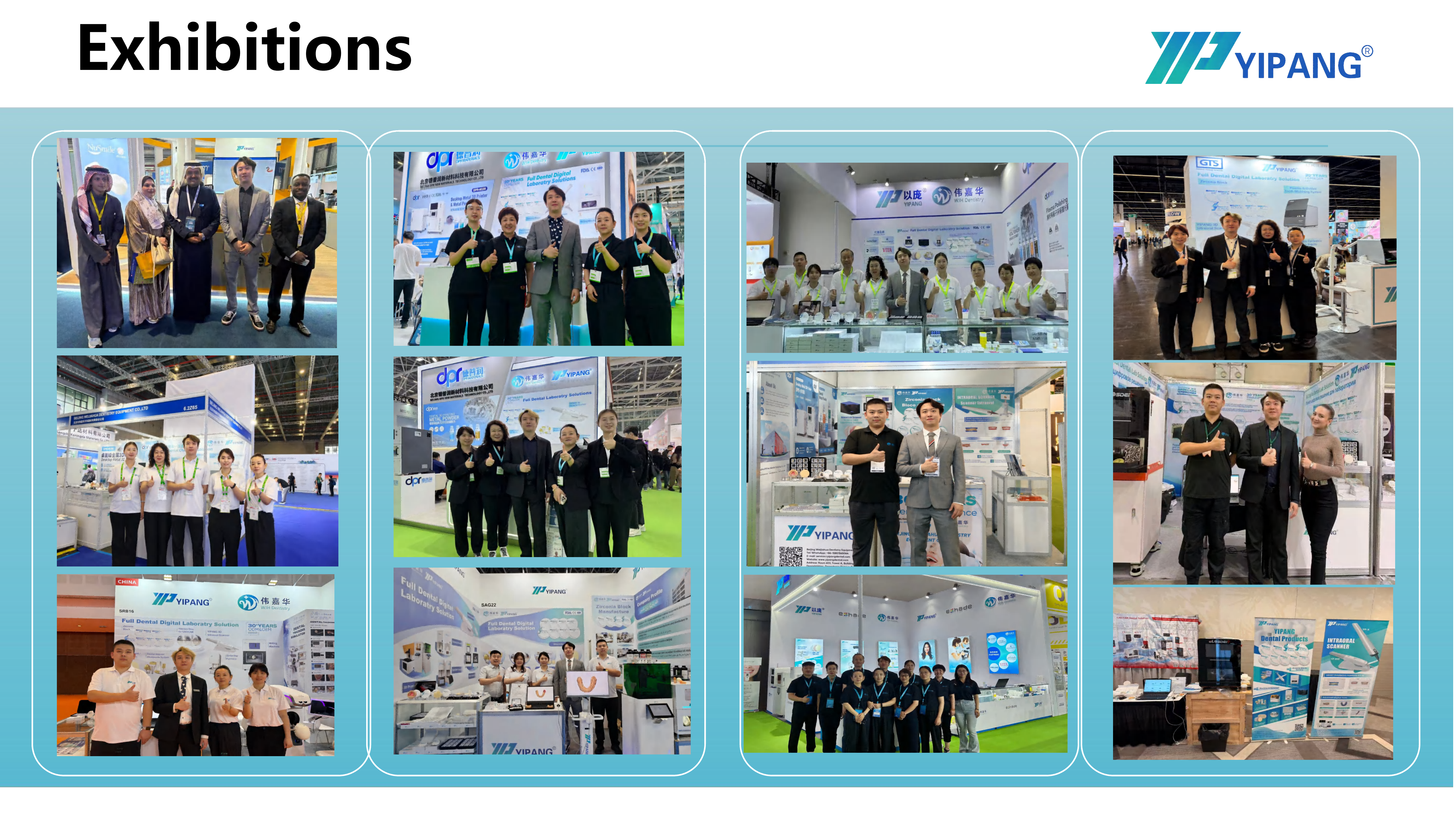
The supplier describes high-quality domestic self-developed zirconia powder with stable batch consistency, and reports a 25-engineer team working on dental material formula research, process optimisation and new product development. The company behind the brand, Beijing Weijiahua Dentistry Equipment Co., Ltd., was established in 1996 and reports a 2,000 m² facility, 80 employees, annual output of USD 10 million and an export share of 40%–55% across the Middle East, Southeast Asia, South America, North America, Eastern Europe, North Africa and Australia. Through its parent company's agency business it reports more than 1,000 dental laboratory customers in China and representation of international brands including VITA, Ivoclar, Dentsply, Amann Girrbach and Noritake.
Those figures describe a company, not a block. They do not establish block-level production capacity, lead time, minimum order quantity or price, and they should not be read as proof of performance. What they do justify is a specific line of questioning at volume: whether the same powder batch or a documented equivalent carries across repeat orders, what identifies each delivery, and what the supplier commits to if a batch fails the buyer's acceptance protocol.
What a ±0.3% shrinkage tolerance does and does not establish
The supplier states a stable sintering shrinkage error within ±0.3%, presented as an improvement over alternatives. In a purchase specification, that figure is a tolerance on one stated property, and its usefulness depends entirely on what the laboratory measures alongside it.
For a single crown, a small relative shrinkage tolerance is usually absorbed within the cement space defined by the restoration design, so the tolerance rarely dominates the decision. For a multi-unit span the geometry is less forgiving: the framework has to fit at both ends and everywhere between, and deviation is not independent at each unit. That is why a block-level tolerance and a span-level fit result are different pieces of evidence, and why the buyer should generate the second one rather than infer it from the first.
Four things the ±0.3% figure does not establish: that the block's marginal fit meets the laboratory's clinical standard; that strength and translucency are adequate for a specific indication; that the buyer's furnace reproduces the supplier's curve; and that batch-to-batch variation stays inside the stated tolerance across a year of ordering. Each of those is verifiable, and each belongs in the acceptance protocol rather than in a brochure comparison.
Acceptance criteria: a first-article protocol
Acceptance criteria work only if they are written before the material arrives. A seven-step protocol keeps the first order comparable with later ones:
- Fix the acceptance indication first. Choose the most demanding of the four stated indications in the laboratory's mix, not the most common.
- Order enough for a full span. Single-unit samples cannot reveal span behaviour.
- Process on production equipment. Use the mill, bur set, nesting strategy and sinter program that routine work will use.
- Measure what was promised. Post-sinter dimensions against the design, span fit, and shade and translucency against the laboratory's reference under the laboratory's own lighting.
- Record machining observations as data. Edge quality, chipping and nesting behaviour should be logged, not remembered.
- Set pass/fail thresholds in advance so a disappointing first article cannot be rationalised afterwards.
- Confirm the documentation set. Model identification, batch or lot marking, technical data, and the test-report contents the buyer expects.
On the documentation question, a draft standards document is a useful prompt rather than a requirement. An available sample designated ISO/DIS 18675:2020 describes test methods and test-report contents for machinable ceramic blanks used to fabricate dental fixed restorations. Because the document carries a DIS designation, it should not be treated as a current mandatory requirement without verification of its final status and applicability.
Where blocks or restorations are bound for the United States, the regulatory record is a separate acceptance item. The FDA record for K240672 — a 510(k) submitted by Zhejiang Zahndent Biotechnology Co., Ltd. for dental zirconia blank and pre-shaded blank products — shows what such a record contains: device classification Class II, product code EIH, regulation 21 CFR 872.6660, with a substantially equivalent decision recorded in 2024. That record belongs to that applicant and those models and says nothing about YIPANG; it is cited only so a buyer knows what to ask for. A listing or clearance verifies regulatory identity and pathway, not capacity, quality level or commercial performance.
Purchasing terms that change the comparison
Price per block is the least comparable number in this category unless terms are attached to it. The terms that most often change the outcome are format and shade range, minimum order quantity per format, batch or lot identification, lead time and shipping basis, sample policy before a volume commitment, documentation supplied with each delivery, the scope of customisation, and replacement or credit terms if a batch fails acceptance. Quotations should be normalised on those dimensions, and price should be expressed on the same basis in each — per block or per restoration — before any comparison is made.
The supplier positions the block as offering flexible customisation and shorter delivery time alongside its cost position, and states that it is more competitive in price than imported zirconia blocks of equivalent quality. Both are supplier claims: no baseline is given for the delivery comparison, and no verified public price data for dental zirconia blocks was available for this article. The price claim is testable, however. Quoting the same format, shade range, minimum quantity and delivery basis from an imported brand and from YIPANG, then comparing the result against first-article yield rather than list price, produces a comparison the buyer can defend.
Market context: what the segment mix suggests
Dataintelo reports that high-translucency zirconia blocks held the largest share of the zirconia-based dental materials market in 2025, at 42.3%. Grand View Research reports the broader zirconia-based dental materials category at USD 1.2 billion in 2025, projected to reach USD 2.3 billion by 2033 at an 8.4% compound annual growth rate. The second figure covers zirconia-based dental materials generally rather than blocks alone, so it should not be converted into a block-level volume or used to size a single product line.
What the segment mix supports is a weighting decision inside the framework. A laboratory competing for aesthetic work should weight the shade and translucency rows of the matrix more heavily than throughput, while a centre selling on turnaround should weight batch consistency and sintering capacity. Neither figure indicates which block to purchase, and segment share is not a performance ranking of any supplier.
Where this block profile stops being the answer
Documented characteristics define a fit boundary as clearly as they define a shortlist, and stating that boundary is part of an honest comparison.
- The block is positioned by the supplier for laboratories focused on aesthetic restoration and for importers seeking cost-effective dental materials. A laboratory whose volume sits mainly outside the four stated indications, or which routes most aesthetic work to another material class, should run the same framework on the material it actually uses.
- The stated sintering window of 1430 °C–1450 °C with the required holding time is a hard interface condition. A furnace that cannot hold that plateau is a mismatch regardless of block quality, which makes chairside adoption a furnace question before it is a block question.
- Compatibility is stated for most mainstream milling machines, not for every machine. An uncommon mill or an unusual bur set needs validation during the first article.
- The ±0.3% figure is a supplier-stated shrinkage tolerance, and the advantages in quality consistency and cost performance are supplier claims made without independent head-to-head testing. Where a buyer needs independently demonstrated superiority over a named brand, this evidence set does not provide it.
Outlook
Two developments look likely to shift how these comparisons are run, within the limits of the evidence available. The first is documentation: as regulatory records such as the FDA listing and 510(k) pathway become routine screening items for U.S.-bound supply, suppliers will be compared on the paperwork they can produce per model and per batch as much as on the block itself. The second is the aesthetic weighting implied by the high-translucency segment share — if that segment continues to hold the largest share, buyers will test shade and translucency earlier in the process and negotiate price later, after the technical shortlist is fixed.
Both are conditional readings of supplied data rather than forecasts of volume, adoption or pricing. Neither changes the order of the framework: restoration, route, volume, terms, first article.
The sequence in one paragraph
Fix the restoration type and set acceptance on the hardest indication in the mix; confirm who mills and who sinters, and whether the furnace can hold 1430 °C–1450 °C with the required holding time; size the volume to decide whether batch consistency and batch records replace unit inspection; normalise purchasing terms so quotations are comparable; then run a first article on production equipment and record the result. The block examined here is a candidate on documented characteristics — a stated shrinkage tolerance within ±0.3%, stated compatibility with most mainstream milling machines and a low processing failure rate, uniform density distribution with bending strength and translucency characteristics, and a sintering range of 1430 °C–1450 °C. Whether it is the right block for a given laboratory is settled by that laboratory's own first article, which is the point of a comparison framework and the reason the framework, not the brochure, should drive the purchase.
FAQ: comparison questions buyers ask
What sintering temperature applies to YIPANG's 4D-PRO-ML zirconia block?
The stated range is 1430 °C–1450 °C, run with a standard heating and holding procedure so that shrinkage stays low and translucency stays stable. Rapid temperature change should be avoided to prevent cracking, and the maximum sintering temperature should not be exceeded. In practice the milled workpiece is placed on the sintering tray, the curve is set to 1430 °C–1450 °C with the proper holding time, and the workpiece cools naturally after sintering.
How should a laboratory use the ±0.3% sintering shrinkage figure in a purchase decision?
Treat it as a stated tolerance on one property, not as evidence of marginal fit. It is most useful as a specification input that the laboratory then verifies on its own equipment: mill a representative span, sinter it on the production curve, measure the post-sinter result against the design, and set pass/fail thresholds before the trial. A block-level tolerance and a span-level fit result answer different questions.
Is the block compatible with any CAD/CAM milling machine?
The supplier states compatibility with most mainstream dental milling machines and a low processing failure rate. That statement does not cover every machine, bur set or nesting strategy, so a laboratory running uncommon equipment should validate compatibility during the first article rather than assume it from the compatibility claim.
Which purchasing terms should be agreed before a first order?
Format and shade range, minimum order quantity, batch or lot identification, lead time and shipping basis, sample policy, documentation supplied per delivery, the scope of customisation, and replacement or credit terms if a batch fails acceptance. Price basis should be fixed on the same footing in every quotation — per block or per restoration — so the comparison is not distorted by packaging differences.
What acceptance criteria should a laboratory set for a first zirconia block order?
Set them on the most demanding indication in the case mix, using production equipment and the production sinter program. Measure post-sinter dimensions, span fit, and shade and translucency under the laboratory's own lighting; log machining observations such as edge quality and chipping as data; confirm model identification, batch marking and technical documentation; and define the failure threshold before the material arrives.
How does this dental zirconia block compare with imported blocks?
The supplier states advantages in quality consistency and cost performance, attributing them to high-quality domestic self-developed zirconia powder with stable batch consistency, and positions the block as more competitive in price than imported blocks of equivalent quality. These are supplier claims. No independent head-to-head outcome test was supplied, and no verified public price data was available, so a buyer should compare documented characteristics and their own first-article results, and treat price only after formats, quantities and delivery terms are identical.
Company information and product range: YIPANG, Beijing Weijiahua Dentistry Equipment Co., Ltd. — company brochure (PDF).
Tem questões ou precisa de mais detalhes?
Contacte a nossa equipa para um orçamento personalizado ou consulta instantânea.
Solicitar orçamento
Preencha o formulário abaixo e a nossa equipa entrará em contacto com uma proposta personalizada.
Chat direto do WhatsApp
Prefere conversar em tempo real? Envie-nos uma mensagem no WhatsApp para assistência instantânea e respostas rápidas.
- Obter orçamento personalizado
- Partilhar fotos ou documentos
- Discuta as suas necessidades diretamente
Geralmente responde em 5–30 minutos durante o horário de expediente.