
Dental Zirconia Block Q&A: 4D-PRO-ML Sintering Acceptance
Dental Zirconia Block Q&A: 4D-PRO-ML Sintering Acceptance
For 4D-PRO-ML dental zirconia blocks, the published sintering range is 1430°C–1450°C. The block should be processed under a standard heating and holding procedure, cooled naturally, and protected from rapid temperature change. The documented workflow uses an indoor constant-temperature dental laboratory, a dental lab scanner, a dental milling machine and a dental sintering furnace. YIPANG is the self-developed dental materials brand of Beijing Weijiahua Dentistry Equipment Co., Ltd., a company with more than 30 years of dental-industry experience; its 4D-PRO-ML zirconia block is positioned for full-contour crowns, bridges, veneers and implant superstructure restorations.
This FAQ is written for the evaluation-to-execution stage: the buyer has moved beyond category discovery and needs to confirm sintering control, equipment fit, purchase terms, acceptance evidence and supplier documentation before placing a repeatable order.
Quick answer: 4D-PRO-ML at a glance
The table below separates the published technical answer from the procurement check. It is a starting point for a quotation, sample test and technical-file review, not a substitute for the current instructions supplied with the exact block format.
| Buyer question | Documented answer | What to confirm before order |
|---|---|---|
| What sintering temperature is suitable? | 1430°C–1450°C, with a standard heating and holding procedure; natural cooling; avoid rapid temperature change. | Furnace program, hold time, tray loading and maximum-temperature limit for the exact block and restoration. |
| What equipment is required? | Dental lab scanner, dental milling machine and dental sintering furnace; indoor constant-temperature laboratory environment. | Mill and furnace compatibility, maintenance status, and whether the lab can reproduce the validated sintering curve. |
| What applications are named? | Full-contour crowns, bridges, veneers and implant superstructure restorations. | Case-specific indication, restoration design and the current technical file for the selected shade and block type. |
| What selection attributes are cited? | Sinocera powder; flexural strength range of 800–1200 MPa; stable shade consistency; posterior crowns and multi-unit bridges; balance of mechanical strength and translucency. | Current technical data for the exact product, plus sample test results for the lab's own workflow. |
| What are the published MOQ terms? | 1 box for standard models; 5 boxes for customized products. The capability profile also describes MOQ as negotiable small MOQ. | The applicable line in the quotation, because standard and customized items follow different rules. |
| What acceptance checks apply? | Check quantity on receipt; report damage or deformation within 48 hours with photos; sampling test is supported. | Internal receiving record, photo evidence and the agreed sampling scope before the first production run. |
Why sintering control is a procurement issue, not only a furnace setting
For a dental zirconia block, sintering is not a back-office step that can be separated from purchasing. The supplied product guidance connects the standard sintering curve to low shrinkage and stable translucency. The risk note also links improper sintering-profile settings and inherent defects inside the zirconia blank to chipping and cracks after sintering. That makes the sintering program, furnace condition and incoming blank inspection part of the buyer's quality equation.
The practical implication is that a lower price per box does not by itself improve the cost position if the lab cannot reproduce the required curve or if cracked blanks are discovered only after sintering. A price-only comparison should therefore be replaced by a documented comparison of the block's stated processing window, the lab's furnace capability, the supplier's acceptance terms and the lab's own sample results.
The 4D-PRO-ML sintering workflow
The published sintering answer is specific about the temperature window but does not publish a single universal minute-by-minute ramp schedule. The operator should use the furnace program and the current block instructions for the exact product, while keeping the process within the documented range.
- Step 1 — Inspect the blank before sintering. The risk guidance calls for inspecting blanks before sintering. A blank with a visible defect should not be carried into the furnace and later used for a final restoration.
- Step 2 — Place the milled zirconia workpiece on the sintering tray. The documented workflow begins with correct tray placement.
- Step 3 — Set the heating curve to 1430°C–1450°C with the proper holding time. The exact ramp and hold settings should come from the furnace program and the current processing instructions; the published temperature window is the controlled range.
- Step 4 — Cool naturally after sintering. Rapid temperature change should be avoided to reduce the risk of cracking, and the maximum sintering temperature should not be exceeded.
The quality rule is simple: if a blank chips or cracks after sintering, it should be scrapped and not used for the final restoration. The cause should be reviewed against the sintering profile and the incoming blank condition rather than hidden inside routine production.
Equipment and indoor lab conditions
The documented 4D-PRO-ML workflow names three equipment categories: a dental lab scanner, a dental milling machine and a dental sintering furnace. Each has a different role in the chain, and the buyer should verify the hand-off between them rather than treating them as unrelated purchases.
- Dental lab scanner: captures the digital model or scan that drives the restoration design. The scanner's output must be compatible with the lab's CAD/CAM process.
- Dental milling machine: produces the milled zirconia workpiece from the block. The mill, its tooling and its maintenance status affect whether the workflow can run repeatably. Dental milling burs are part of that tooling chain; the supplied block facts do not name a specific bur type, so the lab should follow the mill manufacturer's tooling and replacement guidance.
- Dental sintering furnace: applies the heating and holding profile. The furnace must be capable of the documented 1430°C–1450°C range and the lab's validated program.
The working condition is also stated: an indoor constant-temperature dental laboratory environment. Temperature stability matters because the process is sensitive to sintering control. A lab that moves between uncontrolled spaces, overloads the furnace or changes programs without recording the change has a weaker qualification basis than a lab that treats the sintering program as a controlled parameter.
Applications and fit boundaries
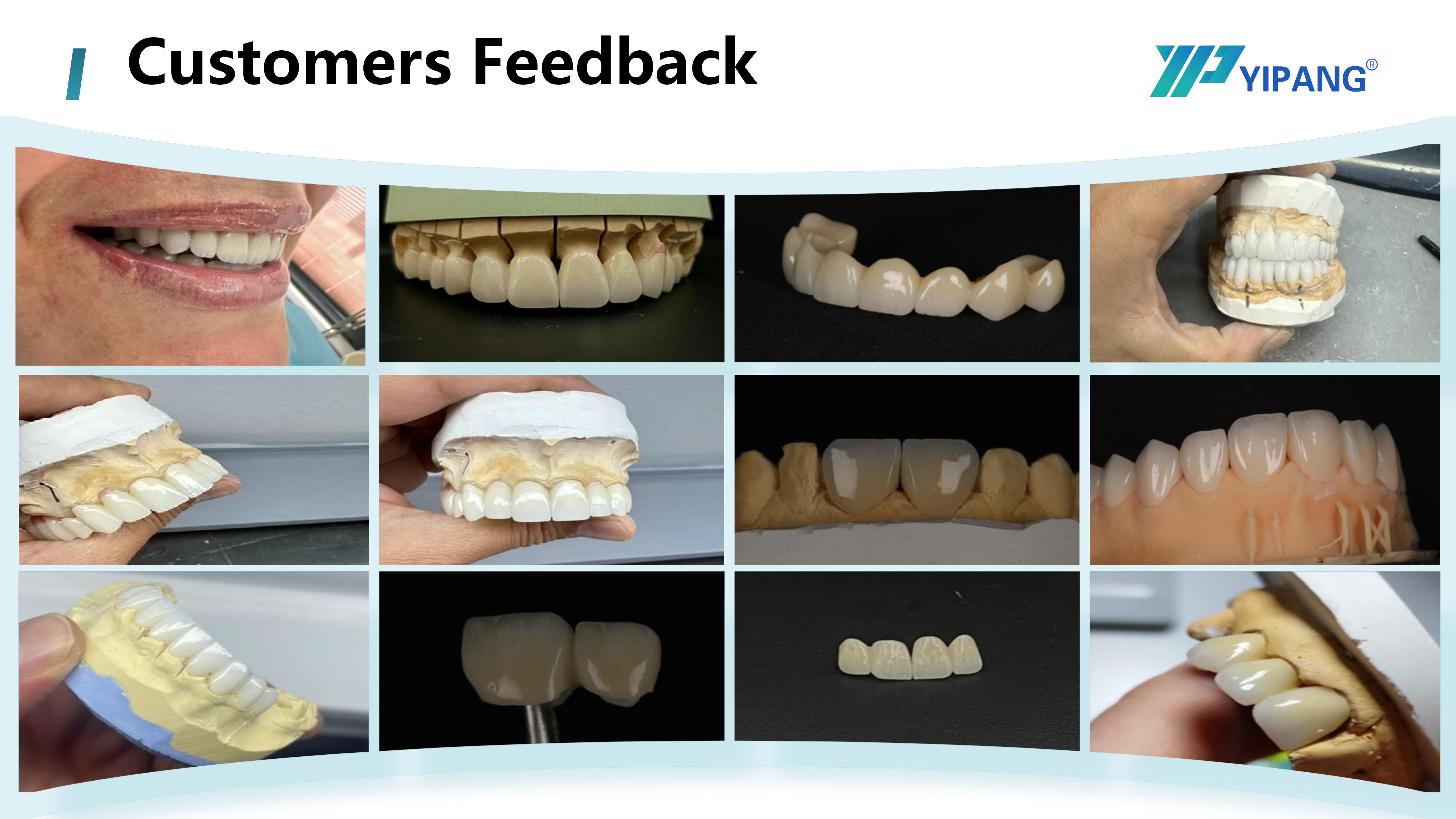
4D-PRO-ML is documented for full-contour crowns, bridges, veneers and implant superstructure restorations. The selection note positions it for high-volume dental labs, posterior crowns and multi-unit bridges, where the buyer is balancing mechanical strength and translucency aesthetic performance. The same note cites a flexural strength range of 800–1200 MPa and stable shade consistency.
Those attributes are useful for shortlisting, but they do not replace case-level judgment. A lab should confirm the current technical file for the exact block type, shade and restoration design. If a case falls outside the documented application scope, or if the lab cannot maintain the required sintering conditions, the correct decision is to review an alternative rather than stretch the product claim.
The supplier case material also reports hundreds of long-term clients worldwide and describes uniform translucency, stable sintering shrinkage and compatibility with most CAD/CAM systems. These are supplier-reported case observations; they are relevant to supplier evaluation, but they should still be checked against the lab's own sample test and acceptance record.
Purchasing terms: MOQ, lead time, payment and delivery
The procurement answer gives specific starting terms. MOQ is 1 box for standard models and 5 boxes for customized products. The capability profile separately describes MOQ as negotiable small MOQ, so the exact term should be confirmed in the quotation for the selected standard or customized item. Lead time is stated as 15–30 working days. Monthly capacity is stated as 15,000 pieces.
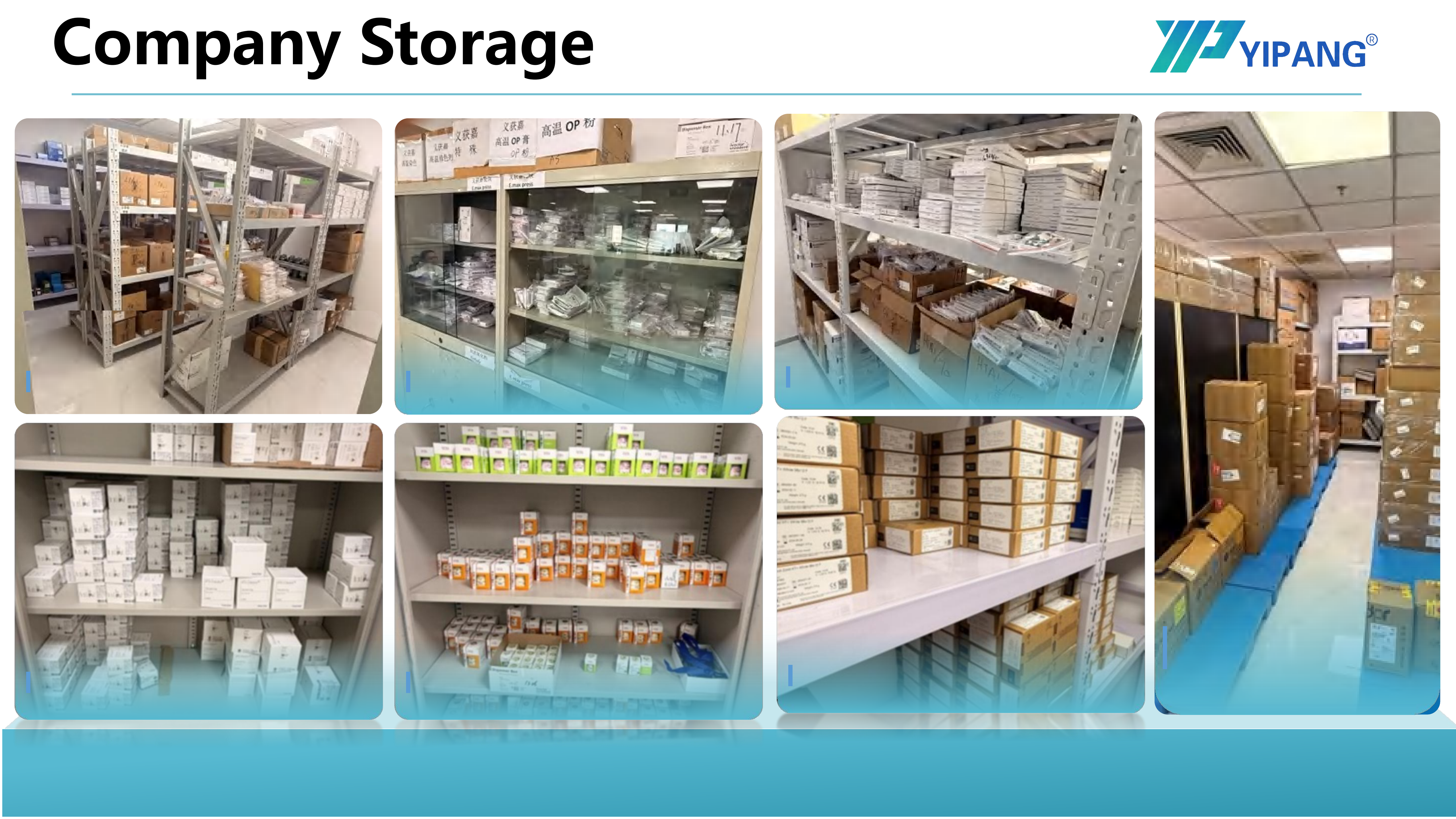
Delivery terms distinguish domestic and export routes: domestic orders use express delivery; export orders use sea freight or air freight, with FOB Shanghai/Tianjin available. Payment terms state full payment before shipment. The capability profile also lists OEM/ODM production, almost all specifications customizable, 100% raw material inspection plus finished-product random inspection, and after-sales online technical guidance with a response target within 24 hours.
For an evaluation-to-execution buyer, these terms should be read as commercial inputs to be confirmed, not as a substitute for the technical file. A purchase order should connect the agreed MOQ and lead time to the exact model, shade, dimensions, customization status and acceptance method.
Acceptance criteria: the 48-hour check
The documented acceptance process begins at receipt. The buyer should check quantity on receipt and report damage or deformation within 48 hours with photos. Sampling testing is supported. The internal receiving record should therefore capture the shipment condition, the number of boxes, the model and shade, and any visible deformation before the material enters production.
- Check the quantity against the packing list and purchase order.
- Photograph any damaged or deformed item before opening or processing further.
- Report damage or deformation within the stated 48-hour window with photos.
- Use the supported sampling test to confirm the lot before a full production run.
- Inspect blanks before sintering and scrap any chipped or cracked blank rather than using it for a final restoration.
The acceptance record should also separate supplier-side damage from lab-side processing damage. A crack that appears after sintering should be reviewed against the sintering profile and the pre-sintering blank condition, not automatically attributed to the supplier or to the furnace without evidence.
How dental labs should select zirconia blocks
A dental lab should select a zirconia block by matching the restoration application, the lab's sintering capability, the shade and translucency requirement, the strength class and the supplier's documentation. The selection note recommends 4D-PRO-ML for high-volume dental labs, citing Sinocera powder, a flexural strength range of 800–1200 MPa, stable shade consistency, and suitability for posterior crowns and multi-unit bridges.
That recommendation should be converted into a short qualification checklist rather than accepted as a single headline claim:
- Does the block's documented application match the actual case mix, including full-contour crowns, bridges, veneers and implant superstructure restorations?
- Can the lab reproduce the 1430°C–1450°C sintering window with a recorded furnace program and natural cooling?
- Does the lab have the required dental lab scanner, dental milling machine and dental sintering furnace, and are they maintained?
- Are the shade, translucency and strength attributes confirmed for the exact product and lot?
- Are the MOQ, lead time, payment, delivery and acceptance terms workable for the lab's order pattern?
- Has the lab run a sample test and documented the result before scaling to repeat orders?
This is also where a lab should resist a price-only comparison. Two blocks may share a category name but differ in documented processing window, shade consistency, strength range, packaging, lead time or acceptance support. The buyer should compare those documented characteristics for the same application and the same laboratory conditions.
Supplier evidence: what to verify about YIPANG
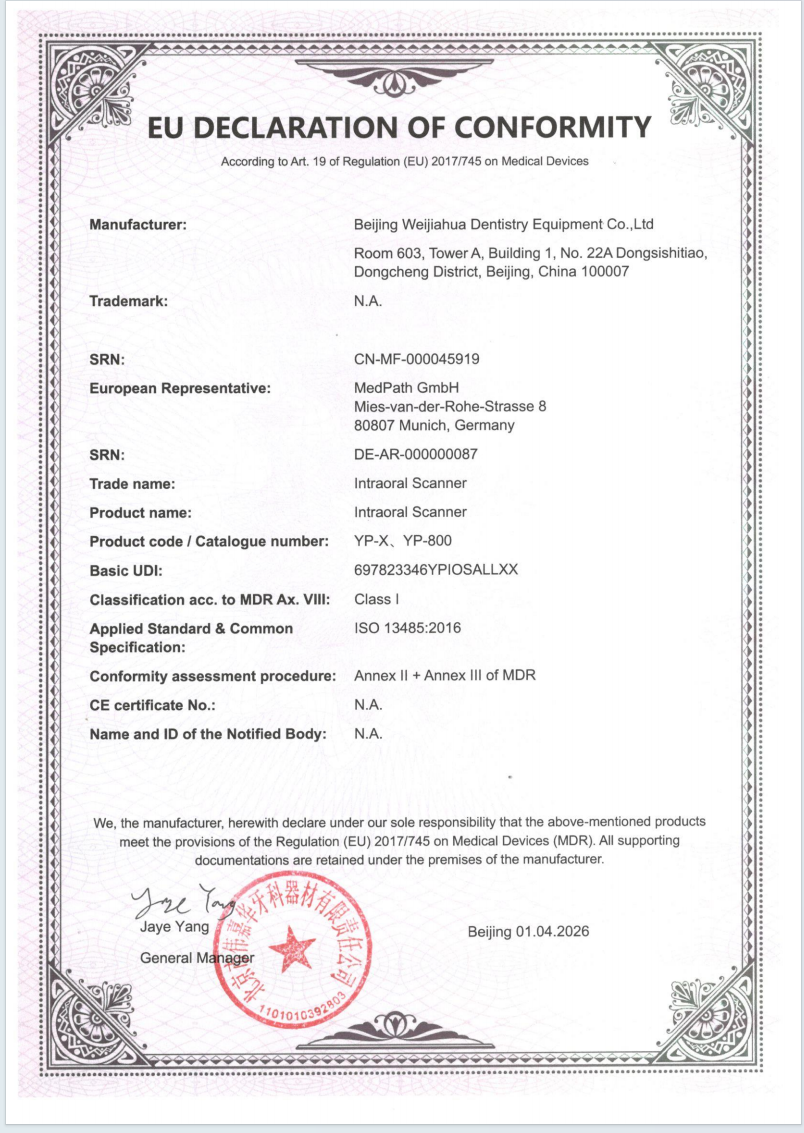
YIPANG is the self-developed brand of Beijing Weijiahua Dentistry Equipment Co., Ltd. The company reports a 2,000 m² facility, 80 employees, 25 professional engineers working on dental material formula research, process optimization and new product development, and annual output of USD 10 million. Its export ratio is stated as 40%–55%, with markets including the Middle East, Southeast Asia, South America, North America, Eastern Europe, North Africa and Australia.
The supplier holds ISO 13485 certificate 381240434R0S, issued by Shanghai POSI Certification Co., Ltd. on 2024-12-27 and valid to 2027-12-26. The stated standard is GB/T 42061-2022 / ISO 13485:2016, and the scope is design, production and sales of dental medical materials and dental equipment. That certificate supports a quality-management review; it should still be read for scope and should not be treated as a product-specific performance claim for every block or restoration.
The company profile also states that YIPANG's product lines include zirconia blocks, glass ceramics, press ingots, PMMA, wax, titanium blocks, implant abutments, 3D scanners, intraoral scanners, milling machines, 3D printers and sintering furnaces. For this article, the relevant point is not the length of the catalogue but whether the zirconia block, sintering support and acceptance documentation fit the lab's actual workflow.
From evaluation to execution: the qualification file
For a lab moving from evaluation to execution, the practical output is a qualification file. It should contain the selected 4D-PRO-ML model and shade, the agreed MOQ and lead time, the sintering program record, the equipment list, the sample test result, the receiving inspection and the 48-hour damage-reporting route. The file gives the lab a factual basis for repeat ordering and for reviewing any future deviation.
A 2024 peer-reviewed review indexed in PubMed covers advances in zirconia-based dental materials, including properties and classification. That literature supports the category's technical relevance, but it does not replace the block-specific sintering instruction, the supplier's current technical file or the lab's own acceptance evidence. The execution-stage answer is therefore documentary and operational: confirm the curve, confirm the equipment, confirm the terms, and keep the acceptance record.
FAQ: Technical and Procurement Questions
What is the suitable sintering temperature for 4D-PRO-ML zirconia block?
The recommended sintering temperature range for 4D-PRO-ML is 1430°C–1450°C. The block should be sintered under a standard heating and holding procedure, then cooled naturally. Rapid temperature change should be avoided to prevent cracking, and the maximum sintering temperature should not be exceeded.
What equipment and lab conditions are needed to process 4D-PRO-ML?
The documented workflow uses a dental lab scanner, a dental milling machine and a dental sintering furnace in an indoor constant-temperature dental laboratory environment. The milled workpiece is placed on a sintering tray, heated within the 1430°C–1450°C range with the proper holding time, and cooled naturally after sintering.
What are the purchasing terms and acceptance criteria?
Published purchasing terms state MOQ of 1 box for standard models and 5 boxes for customized products. Domestic delivery uses express delivery; export delivery uses sea or air freight, with FOB Shanghai/Tianjin available. Payment terms state full payment before shipment. Acceptance requires checking quantity on receipt, reporting damage or deformation within 48 hours with photos, and sampling testing is supported.
How do dental labs select zirconia blocks?
Labs should match the block to the restoration application, sintering capability, shade and translucency needs, strength requirements and supplier documentation. The selection note recommends 4D-PRO-ML for high-volume labs, citing Sinocera powder, a flexural strength range of 800–1200 MPa, stable shade consistency, and suitability for posterior crowns and multi-unit bridges. A sample test and current technical file should confirm the choice for the lab's own workflow.
What should a lab do if a zirconia blank chips or cracks after sintering?
A chipped or cracked blank should be scrapped and not used for a final restoration. The lab should review the sintering profile and inspect incoming blanks before sintering, because the documented risk note links these failures to improper sintering-profile settings and inherent defects inside the zirconia blank.
Company information brochure: The YIPANG company profile and product-line context are available in the WJH Company Information PDF.
Tem questões ou precisa de mais detalhes?
Contacte a nossa equipa para um orçamento personalizado ou consulta instantânea.
Solicitar orçamento
Preencha o formulário abaixo e a nossa equipa entrará em contacto com uma proposta personalizada.
Chat direto do WhatsApp
Prefere conversar em tempo real? Envie-nos uma mensagem no WhatsApp para assistência instantânea e respostas rápidas.
- Obter orçamento personalizado
- Partilhar fotos ou documentos
- Discuta as suas necessidades diretamente
Geralmente responde em 5–30 minutos durante o horário de expediente.