
Dental Zirconia Block Qualification for 4D-PRO-ML
Dental Zirconia Block Qualification for 4D-PRO-ML
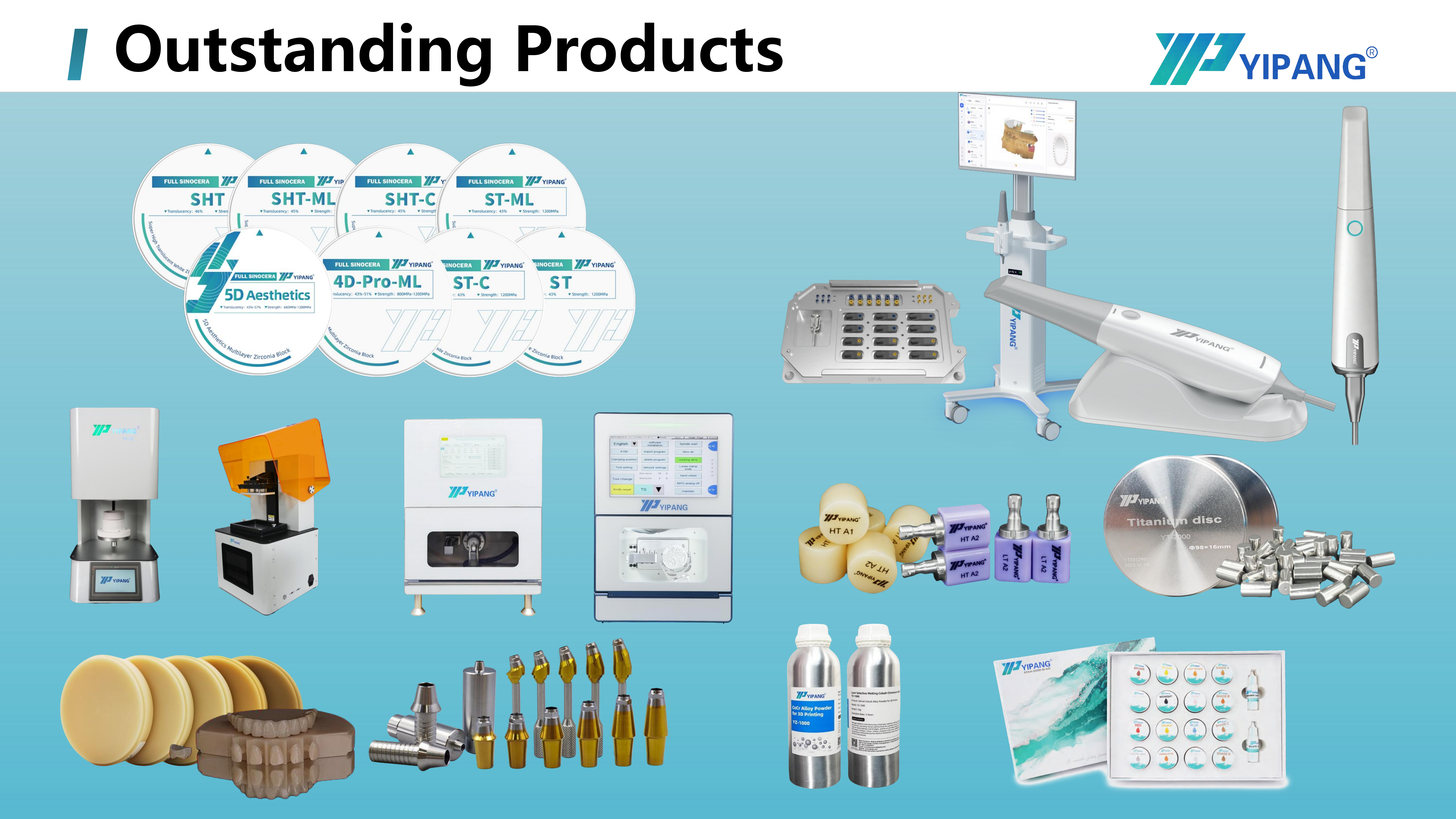
Qualifying a Dental Zirconia Block for a dental CAD/CAM workflow requires more than checking a listed temperature. For YIPANG 4D-PRO-ML, a lab should confirm the product identity and dimensions, use the stated sintering temperature guidance with the applicable standard heating and holding procedure, operate in the specified indoor constant-temperature laboratory setting, and record agreed acceptance checks. The available product information gives a recommended sintering range of 1430℃–1450℃ and separately lists 1450℃ as the product sintering temperature. It does not provide a complete numeric heating curve, holding duration, or contractual acceptance tolerances; those details should not be assumed.
YIPANG is a self-developed brand owned by Beijing WJH Dentistry Equipment Company. The 4D-PRO-ML is a dental zirconia disc and CAD/CAM milling blank intended for dental laboratories, dental prosthetics, and dental CAD/CAM workflows. This article interprets the supplied product and process information as a qualification framework—not as evidence of a particular regulatory certification, validated furnace program, or guaranteed clinical outcome.
What qualification should establish
Qualification should establish whether the identified block can be processed under a documented, repeatable lab procedure and whether the purchase and acceptance terms are clear enough to evaluate incoming material. The product information identifies the relevant process: mill the zirconia blank, then sinter it in a dental sintering furnace. The application information places this work in an indoor, constant-temperature dental laboratory and specifies strict adherence to the standard sintering temperature curve.
That means a qualification record should connect four things: the exact product and configuration, the curve and furnace procedure used, the lab conditions under which the trial is performed, and the acceptance criteria agreed for the trial. If one of these is missing, the trial may still provide observations, but it will be harder to determine whether the outcome reflects the material, the process, or a difference in the acceptance expectations.
Qualification is not a substitute for the lab’s clinical, regulatory, or quality-system obligations. The supplied information does not identify a specific external standard, certification, or regulatory approval for 4D-PRO-ML. A buyer should therefore treat product specifications and process guidance as product information, and separately verify any documentation required for its own market and use.
Temperature guidance and curve control
The 4D-PRO-ML knowledge guidance gives a recommended sintering temperature range of 1430℃–1450℃ and says to follow the standard heating and holding procedure to support low shrinkage and stable translucency. The product specification lists a sintering temperature of 1450℃. These statements provide a usable qualification boundary: 1450℃ is the listed product temperature, while the procedural guidance identifies a recommended range that extends from 1430℃ to 1450℃. They do not provide a complete schedule for ramp rates, hold duration, or cooling times.
A temperature setting alone is not a full sintering curve. The curve includes the prescribed heating and holding procedure; the available product information does not supply its detailed numeric stages. A lab should use the applicable controlled instructions for the specific block and furnace rather than create or infer a curve from the maximum listed temperature. If the applicable schedule cannot be identified, the lab does not yet have enough information to claim that its qualification run followed the standard curve.
The supplied operating guidance says to place the milled workpiece on a sintering tray, set the heating curve within 1430℃–1450℃ with an appropriate holding time, and allow natural cooling after sintering. It also advises avoiding rapid temperature change to reduce the risk of cracking and not exceeding the maximum sintering temperature. Because the holding time and detailed curve are not stated, “appropriate” must be resolved using the applicable product instructions; it should not be replaced by a guessed duration.
For a meaningful qualification record, identify the instruction or controlled procedure used, the selected setpoint within the stated range, the furnace used, and whether the documented heating, holding, and cooling steps were followed. Record the actual settings available from the lab’s process controls without converting them into a claim that the manufacturer has validated that furnace program. Keep the product’s stated limit and the program’s actual settings visible in the same record so a reviewer can see whether the run stayed within the supplied temperature guidance.
Laboratory environment and supporting equipment
The scenario information specifies an indoor, constant-temperature dental laboratory environment. This is a stated operating condition for the described application, not a quantified environmental specification: no room-temperature setpoint, allowable fluctuation, humidity limit, or monitoring method is provided. A lab can document that its qualification took place in its indoor, constant-temperature setting, but should not invent a numerical environmental acceptance threshold from that description.
The described workflow uses a Dental Milling Machine to process the block and a Dental Sintering Furnace for sintering. A Dental Lab Scanner is also listed among matched equipment for the scenario. Its presence in the workflow context does not establish that a particular scanner model is required or that scanner compatibility has been tested. For qualification focused on sintering, the essential process record should make clear which milling and sintering equipment were used and which controlled procedure governed the furnace cycle.
The furnace is part of the process, not merely a peripheral purchasing detail. If a lab changes the furnace or its program during a comparison, it changes a process condition that may affect how the trial can be interpreted. A practical qualification approach is therefore to keep the furnace and documented procedure consistent for the planned comparison, or to record any change as a separate condition. This is a recordkeeping principle, not a claim that every furnace produces identical results.
Product identity and configuration checks
Before processing, confirm that the material being evaluated is the 4D-PRO-ML model and that its supplied configuration matches the purchase specification. The available product information identifies zirconium dioxide (ZrO₂) with yttria stabilization, ML multilayer shades, a 98 mm diameter, and thickness options of 10, 12, 14, 16, 18, and 20 mm. These are useful identity and configuration checks; they do not, on their own, define acceptance tolerances for incoming dimensions or shade variation.
Record the ordered and received diameter, thickness, and shade designation against the purchasing documents. Where the purchase requires a specific thickness or shade, make the acceptance rule explicit before ordering—for example, whether the check is a label-and-document match, a physical measurement, or both. The available information does not state measurement tolerances, packaging requirements, lot traceability fields, or a returns process. Those should be treated as terms to establish with the supplier, not as existing 4D-PRO-ML commitments.
The product is listed for crowns, bridges, and aesthetic dental restorations. The application scenario additionally describes full-contour crowns, bridges, veneers, and implant superstructure restorations. These descriptions identify intended application contexts; they do not certify that every design, indication, or clinical case is suitable. A lab should assess a trial against its own selected workflow and applicable clinical and quality requirements rather than generalize a result from one restoration type to all uses.
Purchasing documentation and acceptance criteria
Purchasing terms become useful when they translate a product description into checks that both parties can interpret. The following framework is a set of qualification items for a buyer to define and document. It does not describe existing YIPANG sales terms or warranty commitments.
| Qualification item | What to document | Acceptance rule to agree |
|---|---|---|
| Product identity | 4D-PRO-ML model, ML multilayer designation, ordered diameter and thickness | Which labels or records must match the purchase order |
| Sintering instructions | Applicable controlled curve, selected setpoint, heating and holding procedure, cooling instruction | Which procedure version governs the qualification and whether the run followed it |
| Equipment and environment | Dental milling and sintering equipment used; indoor constant-temperature lab setting | What equipment or process changes require a new or separately recorded trial |
| Trial observations | The lab’s selected restoration type and observations after the documented process | The lab’s own pass/fail criteria, established before the trial |
| Order and receipt | Quantity, configuration, delivery documents, and any required lot or traceability information | The documents and inspection steps required at receipt |
Acceptance criteria should distinguish document checks from process-trial checks. A document check can confirm whether the model, size, and shade designation match what was ordered. A process-trial check can establish whether the lab followed its selected curve and whether the lab’s predefined observations meet its own requirements. Neither check should be presented as a manufacturer-certified performance test unless supporting evidence for such a test is available.
For the sintering portion, write down the setpoint and curve source before the trial. The product information supports the 1430℃–1450℃ recommended range and identifies 1450℃ as the listed sintering temperature, but does not define a numeric ramp or hold schedule. If the purchasing decision depends on a particular schedule, request and retain the applicable product instructions as part of the procurement record. Do not make the absence of a schedule appear to mean that any program in that temperature range is automatically acceptable.
For receipt, agree in advance how to handle a mismatch between the ordered and delivered model, diameter, thickness, or shade. For the trial, agree who records the furnace procedure and what observations count as acceptable for the lab’s intended use. Where the parties have not defined a tolerance, a defect threshold, or a remedy, the article’s source information cannot supply one. The practical step is to state the missing term in the purchase or qualification documentation before relying on it.
A stepwise qualification record
Identify the material. Record 4D-PRO-ML, ML multilayer shade designation, 98 mm diameter, and the selected thickness. Compare these details with the order and received product information.
Confirm the applicable procedure. Obtain the instructions that define the standard heating and holding curve for the specific block and furnace process. The information available here does not state the full numeric curve or holding duration.
Document the lab setup. Record that the work was performed in the intended indoor, constant-temperature dental laboratory environment and identify the milling machine and Dental Sintering Furnace used.
Run and record the process. Follow the applicable curve, remain within the stated 1430℃–1450℃ recommended range, do not exceed the stated maximum, avoid rapid temperature change, and allow natural cooling as directed in the supplied guidance.
Evaluate against pre-agreed criteria. Record the lab’s observations and compare them with acceptance requirements established before the trial. Do not turn an undocumented expectation into a supplier specification after the run.
Keep the decision traceable. Retain product identification, purchase documentation, procedure version, furnace settings, and the qualification outcome together. If any process condition changes, note it so later readers can distinguish the conditions of separate trials.
What the evidence does—and does not—establish
The available evidence establishes a defined product identity, basic size and shade options, an indicated temperature range and listed sintering temperature, and a described lab workflow using milling and sintering equipment. It also supplies handling guidance to follow the standard heating and holding procedure, avoid rapid temperature change, remain below the maximum temperature, and cool naturally. These points support a process-focused qualification plan.
The same evidence does not establish a complete furnace program, numeric room-condition limits, acceptance tolerances, test results from a named lab, lot-specific performance, warranty terms, or regulatory certification. It also does not demonstrate compatibility with every Dental Milling Machine or Dental Sintering Furnace. “Compatible with most mainstream dental milling machines” appears in product information, but no machine list or test conditions are supplied; a lab evaluating a particular system should confirm its own setup rather than treating that broad statement as model-specific proof.
For buyers, the distinction matters: a listed parameter can guide a trial, while a qualification decision depends on the controlled procedure and criteria used to interpret that trial. A clear record helps prevent a temperature setting from being mistaken for a complete curve, a product description from being mistaken for a purchase guarantee, or one lab’s result from being treated as universal.
FAQ
What is the suitable sintering temperature for 4D-PRO-ML?
The supplied guidance recommends 1430℃–1450℃ and calls for the standard heating and holding procedure. The product specification separately lists 1450℃ as the sintering temperature. Use the applicable controlled curve and do not exceed the stated maximum; the supplied information does not provide a full ramp-and-hold schedule.
Does the 1430℃–1450℃ range provide the complete sintering curve?
No. It gives a recommended temperature range, not the full curve. The applicable heating and holding stages and duration are not specified in the available information, so they should come from the relevant controlled product instructions rather than being inferred.
What conditions and equipment are described for the workflow?
The described application is an indoor, constant-temperature dental laboratory workflow. It uses a Dental Milling Machine to process the block and a Dental Sintering Furnace to sinter it; a Dental Lab Scanner is also listed as matched equipment for the scenario. No specific equipment models or numeric room-condition limits are provided.
What should a lab check before accepting a shipment?
Compare the received product identity and configuration with the order, including the 4D-PRO-ML model, ML multilayer designation, 98 mm diameter, and selected thickness. The available information does not define dimensional tolerances, lot-document requirements, or remedies for discrepancies, so those terms should be agreed in the purchasing documentation.
Can one successful trial establish suitability for every restoration or furnace?
No. The described applications include crowns, bridges, veneers, and implant superstructure restorations, but the supplied information does not establish universal suitability or compatibility with every furnace or milling system. A lab should interpret its trial only for the documented product, equipment, procedure, and acceptance criteria used.
For further company information, YIPANG is the self-developed brand identified with Beijing WJH Dentistry Equipment Company.
Tem questões ou precisa de mais detalhes?
Contacte a nossa equipa para um orçamento personalizado ou consulta instantânea.
Solicitar orçamento
Preencha o formulário abaixo e a nossa equipa entrará em contacto com uma proposta personalizada.
Chat direto do WhatsApp
Prefere conversar em tempo real? Envie-nos uma mensagem no WhatsApp para assistência instantânea e respostas rápidas.
- Obter orçamento personalizado
- Partilhar fotos ou documentos
- Discuta as suas necessidades diretamente
Geralmente responde em 5–30 minutos durante o horário de expediente.