
Dental Zirconia Block: Restoration Type vs. Lab Workflow
HTNXT Industry Reference — Buyer Comparison Framework
Two dental laboratories can order the same dental zirconia block and produce restorations that behave very differently — not because one laboratory is more capable, but because restoration type and lab workflow place different demands on the same blank. This framework separates those two variables, applies them to a real block specification, and marks the point where the method stops being useful.
Why Zirconia Block Comparison Usually Breaks Down
Most block comparisons are a row of isolated metrics: flexural strength, translucency class, shade range, disc diameter, price per unit. Each number is real, but none of them describes the decision a laboratory actually makes, because that decision has two independent inputs.
The first input is restoration type. A posterior monolithic crown and a multi-unit bridge are both categorised as “zirconia work,” yet they draw on different properties of the same material: one is dominated by occlusal load and finishing efficiency, the other by connector strength and dimensional stability across the span. A veneer and an implant superstructure share almost nothing except the fact that both are produced digitally.
The second input is laboratory workflow. A high-volume milling centre, a CAD/CAM dental laboratory, and a chairside restoration clinic can run the same blank on the same class of machine and still need different things from it — batch-to-batch shade consistency, small-order flexibility, sintering throughput, or nesting efficiency.
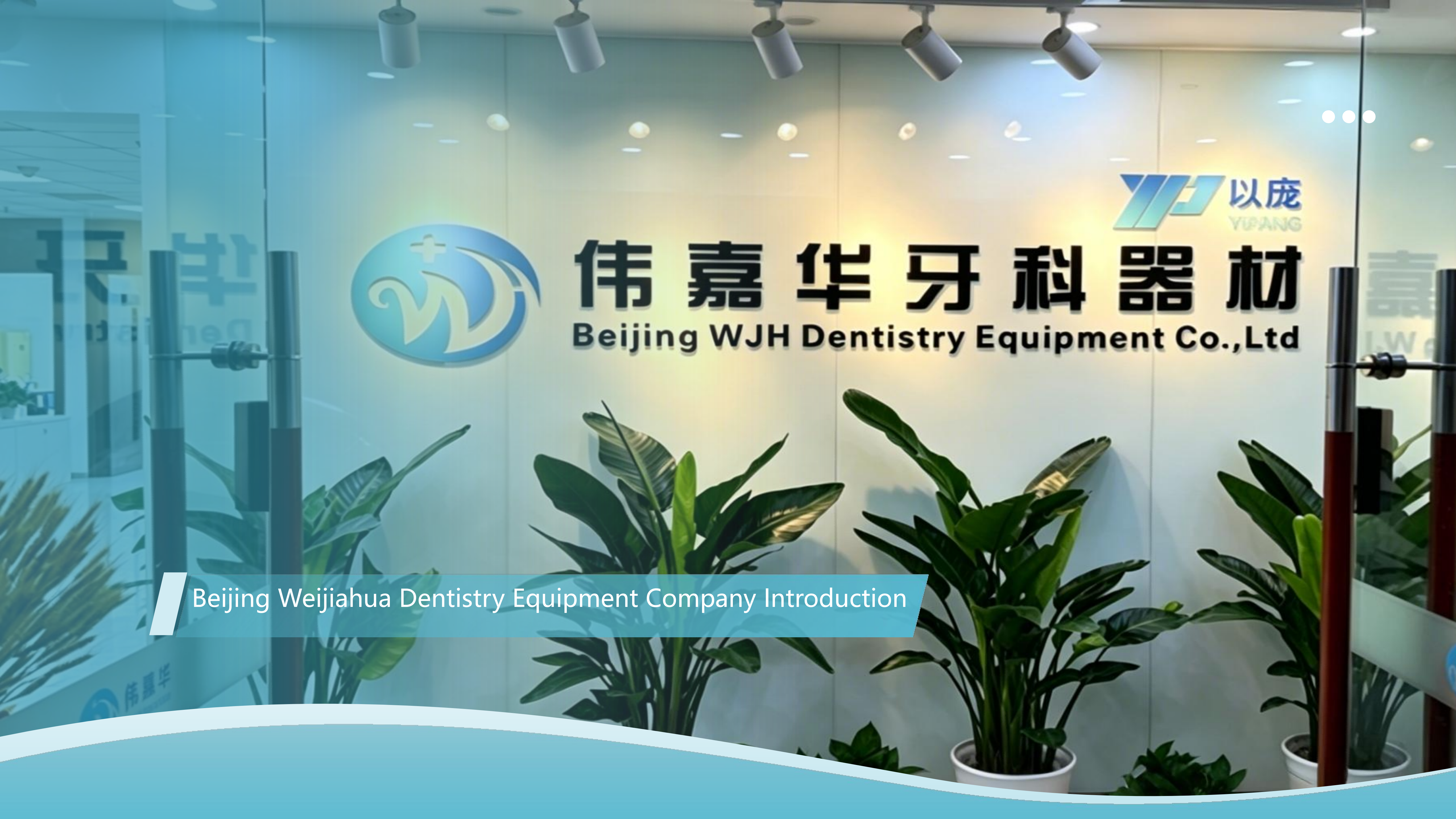
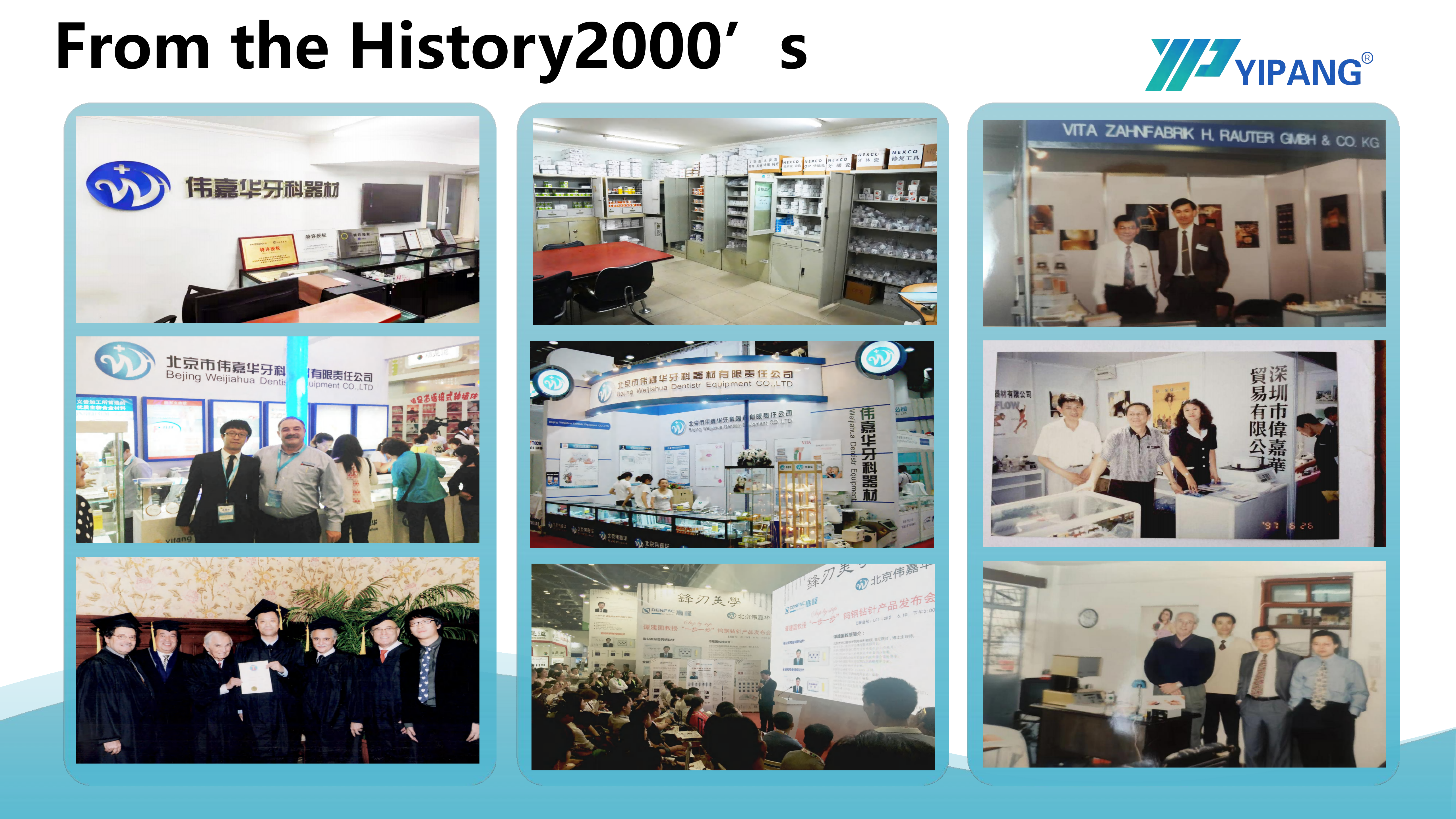
A third layer sits underneath both: equipment. YIPANG is the self-developed brand of Beijing Weijiahua Dentistry Equipment Co., Ltd., a Beijing-based dental materials and equipment manufacturer established in 1996. In the YIPANG reference scenario for full-contour crowns, bridges, veneers and implant superstructure restorations, the matched equipment set is a dental milling machine, a dental sintering furnace and a dental lab scanner, operated in a controlled indoor laboratory environment and following a defined sintering temperature curve. If any one of those three is a constraint, the block comparison changes.
Axis 1 — Restoration Type: What Each Category Actually Asks of a Blank
Restoration type sets the performance requirement. The table below is deliberately qualitative: it describes what each category prioritises rather than quoting a threshold, because thresholds are set by clinical requirements and by the material system in use.
| Restoration category | What the case prioritises | Block-level consideration |
|---|---|---|
| Full-contour crowns (single unit) | Balanced strength and appearance, minimal layering, short finishing cycle | Multilayer blank with consistent shade through the thickness |
| Posterior monolithic crowns | Occlusal load, minimal characterisation, throughput | Strength and fit first; shade gradient is secondary |
| Anterior aesthetic crowns | Appearance under varied light, thin walls, dentin-to-enamel gradient | Translucency and shade gradient first; a medium-translucency grade can be insufficient |
| Three-unit bridges | Connector strength, span rigidity | Strength plus stable sintering shrinkage |
| Multi-unit bridges | Long-span rigidity, uniform behaviour across the disc | Batch consistency of shrinkage matters as much as nominal strength |
| Veneers | Very thin sections, adhesive bonding, high translucency | Usually a lithia-based ceramic or a high-translucency grade rather than standard zirconia |
| Implant superstructures | Abutment interface fit, submucosal contour, substrate choice | Substrate selection (zirconia vs. titanium) and abutment compatibility dominate |
The specification matters less than the mapping. YIPANG’s 4D-PRO-ML zirconia block is a multilayer (ML) blank made from yttria-stabilised zirconium dioxide, supplied at 98 mm diameter in thicknesses of 10 mm, 12 mm, 14 mm, 16 mm, 18 mm and 20 mm, with medium translucency and a catalogued bending strength of ≥1200 MPa.
Those attributes map onto the table in a specific way. Multilayer shade construction addresses the full-contour and anterior gradient requirement. Available thicknesses determine which restorations can actually be nested: a thin blank suits single units, while long-span or tall restorations generally require a thicker blank because nesting height is bounded by blank thickness. Selection guidance for 4D-PRO-ML recommends the material for high-volume dental laboratories and positions it for posterior crowns and multi-unit bridges, where mechanical strength and translucency have to be balanced rather than maximised in one direction.
Axis 2 — Lab Workflow: Who Is Buying the Block, and Why
The same blank that suits a milling centre can be wrong for a chairside clinic. Workflow determines the acceptance criteria.
High-Volume Milling Centres
Throughput is the governing constraint. What matters is batch-to-batch consistency — uniform translucency and stable sintering shrinkage across orders — plus supply continuity and production capacity. YIPANG’s catalogued capability figures for this segment are a monthly capacity of 15,000 pieces, a lead time of 15–30 working days, 100% raw material inspection with finished-product random inspection, and negotiable small MOQ. For a centre running hundreds of units per week, the relevant test is not a single sample but whether the tenth order behaves like the first.
CAD/CAM Dental Laboratories
Case-mix laboratories need a small inventory of grades rather than one stock item. They typically verify CAD/CAM system compatibility first, then shade consistency, then sintering behaviour in their own furnace. YIPANG reports that its zirconia material is compatible with most CAD/CAM systems, with uniform translucency and stable sintering shrinkage cited among the highlights of its long-term laboratory client record. That record describes hundreds of long-term cooperative clients worldwide across dental laboratories, clinics and distributors, working on crowns, bridges and aesthetic restorations, with high recognition on material stability and a low customer complaint rate.
Chairside Restoration Clinics
Chairside workflows compress the whole process into a single visit. The binding constraints are small order quantities, a narrow shade range, and sintering time that fits the appointment. Chairside units usually run smaller furnaces, so the block specification has to be matched to the furnace’s validated programme rather than to a catalogue maximum.
Distributors and Private-Label Partners
For distributors, the block is a portfolio item. What gets evaluated is whether the manufacturer can supply OEM or ODM production, hold specification discipline across shipments, and support a private label. YIPANG provides both OEM and ODM production services and states that almost all specifications can be customised, with export activity across the USA, Europe, Brazil, the Middle East and North Africa. The company’s catalogued export ratio range is 40%–55%, spanning the Middle East, Southeast Asia, South America, North America, Eastern Europe, North Africa and Australia.
| Workflow type | Primary constraint | What to verify with the supplier |
|---|---|---|
| High-volume milling centre | Throughput and batch consistency | Monthly capacity, lead time, shade consistency across batches, inspection routine |
| CAD/CAM laboratory | Case-mix coverage | CAD/CAM compatibility, grade range, shrinkage stability in the lab’s own furnace |
| Chairside clinic | Single-visit timing | Small MOQ, validated sintering programme, shade availability |
| Distributor / private label | Portfolio and specification discipline | OEM/ODM capability, customisation scope, documentation, delivery terms |
The Equipment Layer: Milling Machines, Sintering Furnaces and Scanners
Equipment is where a block specification stops being a datasheet and becomes a process. The 82.4% share that CAD/CAM milling held in zirconia dental manufacturing process revenue in 2025 is a reasonable proxy for how much of this category now depends on machine behaviour rather than on material choice alone.
Three dependencies recur:
- Dental milling machine. Blank diameter and holder geometry must match; 98 mm is the diameter used by the 4D-PRO-ML blank, and the machine’s validated parameters determine achievable fit. The dental milling machine market reached USD 2.45 billion in 2025 and is projected to reach USD 3.9 billion by 2030, with Roland DG, Amann Girrbach and vhf camfacture identified among significant share holders as of 2024.
- Dental sintering furnace. Sintering is where shrinkage is either realised or lost. YIPANG’s guidance for 4D-PRO-ML specifies a recommended sintering window of 1430°C–1450°C with a standard heating and holding procedure to support low shrinkage and stable translucency. The documented process is: place the milled zirconia workpiece on the sintering tray, run the heating curve up to 1430°C–1450°C with an appropriate holding time, then cool naturally. Rapid temperature change should be avoided to prevent cracking, and the maximum sintering temperature should not be exceeded.
- Dental lab scanner. Scan accuracy feeds the milling file; in a chairside setting it is usually an intraoral scanner. YIPANG’s product lines include both 3D scanners and intraoral scanners, alongside milling machines, 3D printers and sintering furnaces.
The workflow around those three machines also includes consumables that are often budgeted separately: dental milling burs whose wear affects fit, dental polishing burs for finishing, and characterisation materials such as dental staining glaze, glaze paste and firing paste applied through a dental porcelain furnace. In parallel digital workflows, dental 3D printers, dental 3D printer resin and dental 3D printing metal powder cover models, guides and interim devices, while the wider disc ecosystem extends to dental PMMA disc, dental PEEK disc and dental wax disc for try-in and provisional roles. None of these change the zirconia decision itself, but a laboratory that has not costed them has not costed the workflow.
Where the Dental Titanium Alloy Disc Enters the Framework
The framework is material-agnostic. When the restoration type in question is an implant superstructure or a custom abutment, the substrate decision changes the whole branch — and this is where a dental titanium alloy disc becomes relevant rather than interchangeable.
YIPANG’s catalogued product lines include titanium blocks alongside implant abutments, zirconia blocks, glass ceramics, press ingots, PMMA and wax. Inside the two-axis logic, a titanium route answers a different question: it prioritises a metal substrate interface and dimensional behaviour where translucency is not the governing requirement, whereas a multilayer zirconia blank answers the aesthetic case, where the restoration has to blend with adjacent dentition.
The commercial weight behind the metal side is not small. The final abutment market was valued at nearly USD 2.6 billion in 2025, and Institut Straumann held over 29% market share in the global dental implants and abutment systems market in 2024 — a signal that the interface component, not the aesthetic material, is where a significant share of implant-related value sits.
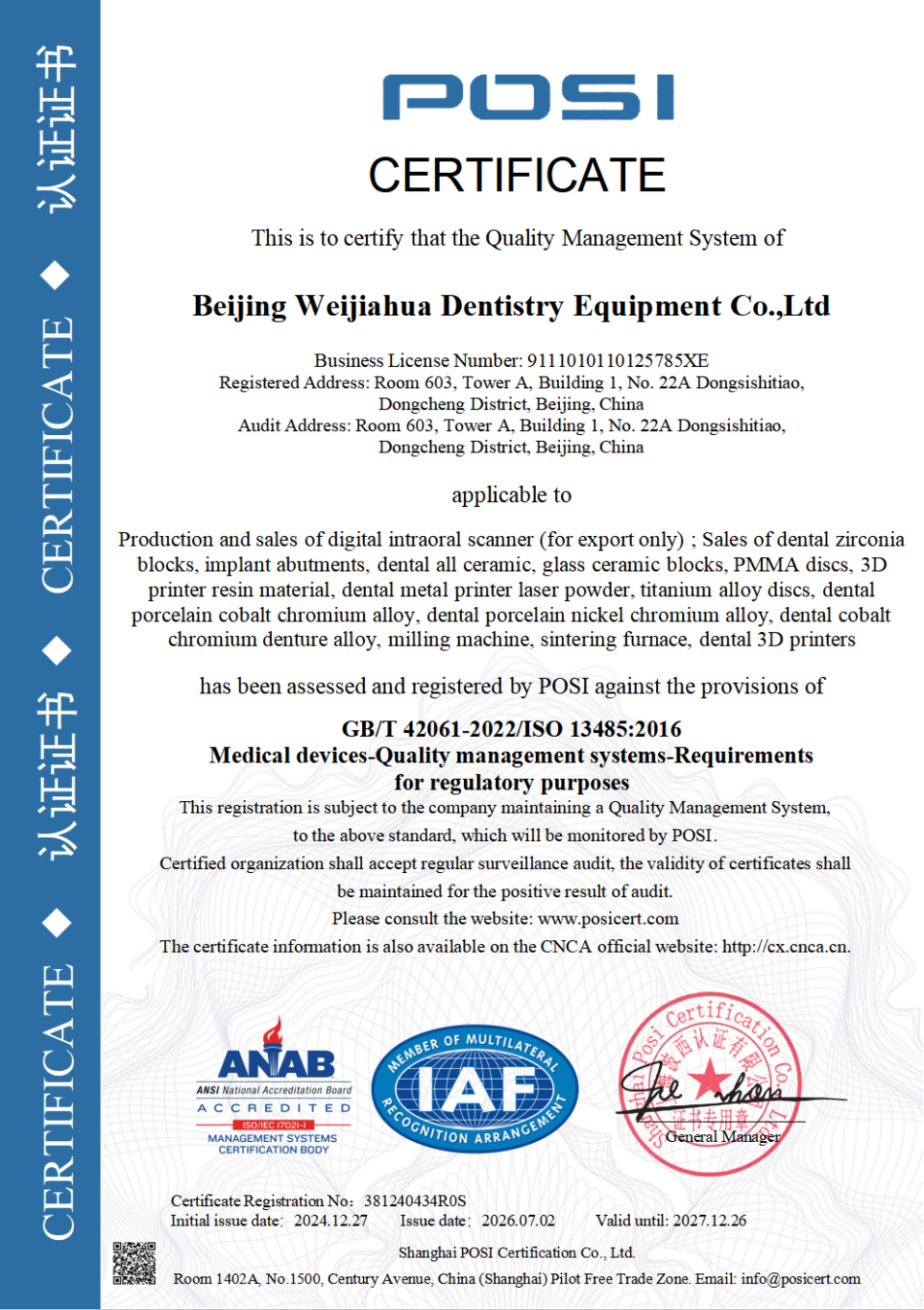
YIPANG’s own certification position shows how narrow these scopes can be. The company holds ISO 13485 certification (certificate 381240434R0S, issued by Shanghai POSI Certification Co., Ltd., valid from 2024-12-27 to 2027-12-26, standard GB/T 42061-2022 / ISO 13485:2016) covering the design, production and sales of dental medical materials and dental equipment. Its EU Declaration of Conformity under MDR 2017/745 (SRN: CN-MF-000045919) covers intraoral scanner models YP-X and YP-800 as Class I medical devices. Those are two different scopes, and reading them as one blanket approval would be a mistake.
Comparison with Established Approaches — and Where This Framework Stops Working
| Approach | Strength | Weakness |
|---|---|---|
| Single-metric specification comparison | Fast, easy to tabulate, useful for shortlisting | Ignores workflow and case mix; two grades that look identical on paper can behave differently in one lab’s furnace |
| Single-material standardisation | Simplifies inventory, training and purchasing | Forces one compromise onto every indication, including anterior aesthetics and implant interfaces |
| Two-axis framework (this article) | Maps material choice to both indication and production reality | Requires validated in-house data and is not a clinical protocol |
Four limits are worth stating plainly.
- Medium translucency has a ceiling. A medium-translucency multilayer blank covers a large share of posterior and general work, but not every anterior aesthetic case. Where the aesthetic requirement exceeds the grade, the correct move is to a higher-translucency grade or a lithia-based ceramic — not to push the existing block harder.
- Sintering risk is not removed by block selection. YIPANG’s risk documentation identifies chipping and cracking after sintering as a known failure mode, triggered by an improper sintering profile or by defects inherent to the blank. The stated mitigation is to follow the recommended sintering profile and inspect blanks before sintering; affected blanks should be scrapped rather than used for a final restoration.
- Catalogue values are not in-house values. Shrinkage stability and shade consistency are properties that have to be confirmed in the laboratory’s own furnace and workflow. Documented highlights such as uniform translucency and stable sintering shrinkage describe a supplier-level pattern, not a guarantee for a specific machine and programme.
- The framework assumes a digital workflow. It presumes a scanner, a milling machine and a sintering furnace. For laboratories without that stack, the comparison has to start one level earlier.
Market Trend Analysis
Three trends shape how this framework will be used over the next several years.
Zirconia remains the volume material. The global zirconia-based dental materials market was valued at USD 1.2 billion in 2025 and is projected to reach USD 2.3 billion by 2033. Within it, zirconia discs held 63.1% of revenue in 2025, 3Y-TZP held 35.9% of dental zirconia revenue, and dental laboratories accounted for 45.3% of end-user share. The United States alone accounts for 40% of revenue in the category.
The material stack is widening. Lithium disilicate is the clearest example: the global dental lithium disilicate market is projected to grow from USD 320 million in 2025 to USD 920 million by 2032 at an 18.8% CAGR, and lithium disilicate already accounts for roughly 28% of all all-ceramic dental restorations globally as of 2024. Digital manufacturing is expanding in parallel — the dental 3D printing market is estimated to grow from USD 4.9 billion in 2025 to USD 26.7 billion by 2033, with photopolymer resins holding 55.5% of the dental 3D printing material segment in 2025. On the implant side, the PEEK dental implants market was valued at USD 1,055 million in 2025 and is expected to grow at an 8% CAGR through 2034.
Equipment capability is becoming a selection criterion. The dental milling machine market reached USD 2.45 billion in 2025, with an expected USD 3.9 billion by 2030, and the named share holders in that segment as of 2024 — Roland DG, Amann Girrbach and vhf camfacture — indicate a consolidating equipment layer that laboratories increasingly standardise around. Supplier evaluation therefore has to include equipment fit, not just material specification.
Future Outlook
The direction is toward multi-material laboratories rather than single-material standardisation. A lab that buys one zirconia grade for every indication will increasingly under-serve anterior aesthetics on one side and over-specify posterior work on the other. The two-axis framework is a way to keep those decisions separate without adding unbounded inventory.
What will distinguish suppliers is less about a headline strength figure and more about the operational facts a laboratory can verify: batch consistency across orders, the ability to customise specifications for a specific workflow, documentation with a defined scope, and after-sales technical response. YIPANG’s catalogued position — OEM and ODM production, almost all specifications customisable, 15,000 pieces monthly capacity, 15–30 working days lead time, and online technical guidance with an after-sales response target of 24 hours — is the kind of statement that should be tested against a first order rather than accepted from a page.
Frequently Asked Questions
How should a laboratory match a dental zirconia block to restoration type?
Start from what the case prioritises, not from the block’s headline metric. Posterior crowns and multi-unit bridges prioritise strength and stable sintering shrinkage; anterior aesthetic crowns prioritise translucency and shade gradient; implant superstructures prioritise abutment interface fit and substrate choice. YIPANG’s 4D-PRO-ML — a multilayer 98 mm blank with medium translucency and a catalogued bending strength of ≥1200 MPa — is positioned for posterior crowns and multi-unit bridges and for high-volume laboratory use.
What does the 4D-PRO-ML specification cover?
Material: zirconium dioxide (ZrO₂) with yttria stabiliser. Shades: ML multilayer. Thickness options: 10 mm, 12 mm, 14 mm, 16 mm, 18 mm and 20 mm. Diameter: 98 mm. Sintering temperature listed in the product parameters: 1450°C, with a recommended working window of 1430°C–1450°C. Bending strength: ≥1200 MPa. Translucency: medium. The blank is intended for dental laboratory, dental prosthetics and dental CAD/CAM applications.
Can zirconia block specifications be customised for a specific laboratory workflow?
Yes. YIPANG provides both OEM (Original Equipment Manufacturing) and ODM (Original Design Manufacturing) services, with customisation available for almost all specifications. Catalogued capability for this work includes a monthly capacity of 15,000 pieces, a lead time of 15–30 working days, negotiable small MOQ, 100% raw material inspection combined with finished-product random inspection, and online technical guidance with after-sales problem response within 24 hours. Export activity covers the USA, Europe, Brazil, the Middle East and North Africa.
What sintering conditions does 4D-PRO-ML require, and what happens if they are not followed?
The recommended sintering range is 1430°C–1450°C with a standard heating and holding procedure. The documented process is: place the milled zirconia workpiece on the sintering tray, run the heating curve to 1430°C–1450°C with an appropriate holding time, then cool naturally. Rapid temperature change should be avoided because it can cause cracking, and the maximum sintering temperature should not be exceeded. Chipping and cracking after sintering are recognised failure modes, triggered by an improper profile or by defects inside the blank; the stated mitigation is to follow the recommended profile, inspect blanks before sintering, and scrap affected blanks rather than use them for a final restoration.
When does a dental titanium alloy disc make more sense than a zirconia block?
When the restoration is an implant superstructure or abutment and a metal substrate interface is the governing requirement rather than appearance. YIPANG’s product lines include titanium blocks alongside implant abutments, so both options sit within the same catalogue rather than in separate supply relationships. A titanium route does not reproduce the translucency gradient of a multilayer zirconia blank, and it adds a separate metal-processing and finishing sequence, so the decision is normally driven by case mix rather than by a single case.
What are the purchasing, delivery and acceptance terms?
MOQ is one box for standard models and five boxes for customised products. Delivery is by express for domestic orders and by sea or air freight for export, with FOB Shanghai or Tianjin available. Acceptance requires checking quantity on receipt; damage or deformation must be reported within 48 hours with photographs, and sampling testing is supported. Payment terms are full payment before shipment.
Closing Note
Restoration type and lab workflow are the two variables that decide whether a dental zirconia block performs as expected. Everything else — grade names, strength figures, shade numbers — is a consequence of those two. The framework above is a way to keep them separate, and the boundary conditions above are the reminder that no block replaces a validated in-process check.
YIPANG is the self-developed brand of Beijing Weijiahua Dentistry Equipment Co., Ltd., a dental materials and equipment manufacturer established in 1996, serving dental laboratories, clinics and distributors through a nationwide and overseas sales network. The company brochure with full product and capability information is available here: WJH Company Information (PDF).