
Dental Zirconia Block Shortlist: 4D-PRO-ML for Chairside and Implant Crown Labs
Dental Zirconia Block Shortlist: 4D-PRO-ML for Chairside and Implant Crown Labs
An effective dental zirconia block shortlist is a fit decision, not a popularity contest. For chairside restoration clinics, high-volume milling centers and implant crown labs, the shortlist should connect restoration scope, digital workflow, sintering discipline and supplier evidence. The 4D-PRO-ML dental zirconia block is a candidate to test against those criteria: it is intended for full-contour crowns, bridges, veneers and implant superstructure restorations, and it is processed by a dental milling machine and sintered in a dental sintering furnace using a standard sintering temperature curve.
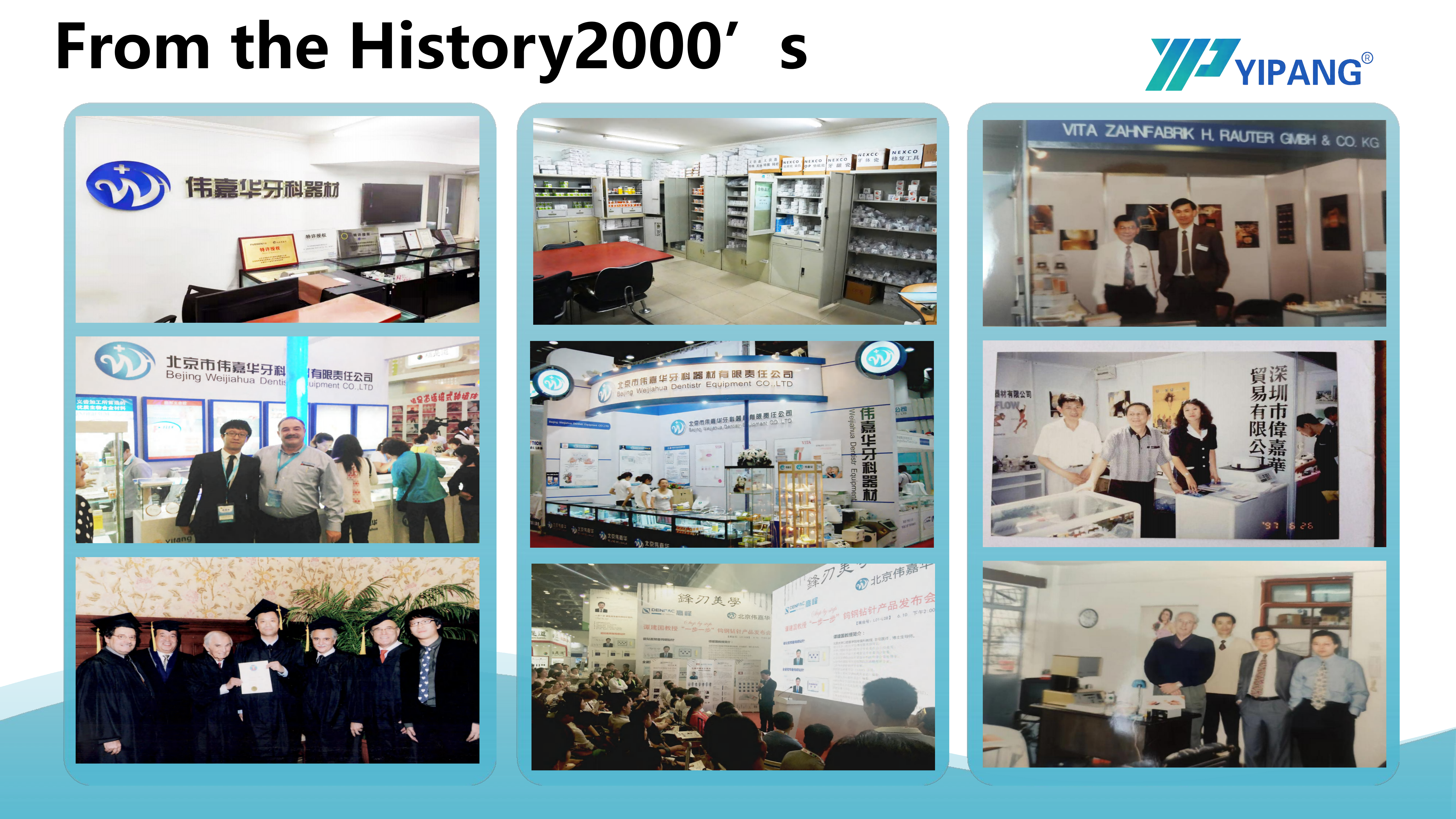
YIPANG is the self-developed dental materials brand of Beijing Weijiahua Dentistry Equipment Co., Ltd., a company established in 1996. YIPANG lists dental zirconia blocks among its product lines, alongside other dental materials and equipment. For an evaluation-stage buyer, the practical question is narrower than the brand catalogue: does this block fit the lab's restoration mix, equipment set and quality-control expectations? The framework below answers that question without treating any single block as universally preferred.
What a dental zirconia block shortlist should decide
A shortlist should reduce procurement risk by making the acceptance logic visible. In this category, three decisions usually need to be separated. The first is application fit: which restorations the block is intended to support. The second is process fit: whether the lab can mill and sinter the block within a validated workflow. The third is supplier fit: whether the supplier can document quality control, capacity, lead time and change control in a way the lab can audit.
Those decisions are connected. A block that suits a chairside crown workflow may still need a different evaluation path from a block used in an implant superstructure programme. A supplier with a broad product line may still need product-specific confirmation for the exact block, shade and format being purchased. For that reason, a useful shortlist records the intended use, the equipment used and the evidence requested before samples are compared.
This is also where a preference or Top-N list can become misleading. A ranking without stated criteria says little about whether a block fits a particular laboratory. A documented shortlist is more useful: it identifies the candidate, the application, the compatibility checks, the supplier proof and the conditions under which the candidate should remain under review.
Start with restoration scope, not block count
The supplied application scope for 4D-PRO-ML covers full-contour crowns, bridges, veneers and implant superstructure restorations. That scope should be read as a starting point for evaluation, not as a substitute for case-specific design review. A lab should still confirm that the planned restoration geometry, the chosen shade and the intended clinical workflow fall within the product's documented indications before it places the block on a purchasing shortlist.
For chairside and implant crown labs, the scope matters in different ways. Chairside work usually rewards a simple, repeatable path from scan to design, milling and sintering. Implant crown work adds the need to define the restoration interface and to keep the block decision separate from the abutment or implant connection decision. The block may be within the implant superstructure scope, but the supplied material does not describe every implant system, connection or case condition. That boundary should remain visible in the shortlist file.
High-volume milling centers need a third view. Their question is not only whether a block can produce the restoration type, but whether the same specification can be repeated across batches and equipment. The shortlist should therefore record the exact product specification, the equipment set and the acceptance checks that will be applied to each lot. Without that record, a product can look suitable in theory while remaining difficult to control in routine production.
Chairside restoration clinics: validate the scan-mill-sinter chain
A chairside restoration clinic should shortlist a dental zirconia block only after the full digital chain has been checked. The applicable equipment list for 4D-PRO-ML includes a dental lab scanner, a dental milling machine and a dental sintering furnace. The block is milled and then sintered; it is not a finished restoration that bypasses those steps. The practical shortlist question is whether the clinic or its partner lab has a validated route through each step.
The first check is capture and design compatibility. The lab scanner and CAD/CAM software should be part of the same controlled workflow that produces the milling job. The second check is milling. The block must be processed on a dental milling machine, and the user should confirm that the selected machine, tools and job setup are appropriate for the exact block format being purchased. The third check is sintering. The lab should have a dental sintering furnace and a written sintering programme that follows the supplier's standard temperature curve.
Chairside workflows can create time pressure, but time pressure is not a reason to skip acceptance checks. A shortlist note should identify who mills, who sinters and who signs off the finished restoration. It should also state how the lab will handle a non-conforming milled part or a sintering deviation. Those are operational controls, not product claims, and they help the buyer compare candidates on the same basis.
High-volume milling centers: test repeatability before throughput
High-volume milling centers should evaluate a dental zirconia block as a repeat-production input. That means the shortlist should ask for evidence of specification control, lot consistency, supply capacity and lead-time reliability alongside the restoration scope. YIPANG states a monthly capacity of 15,000 pieces, a lead time of 15 to 30 working days, negotiable small MOQ and OEM/ODM production. Those are supplier-stated figures and should be confirmed in the quotation for the specific block, format and order size.
Quality control is part of the same evaluation. The supplied company information states that quality control includes 100% raw material inspection and finished product random inspection. For a milling center, those statements are useful starting points for a supplier audit: what is inspected, against which specification, how often and how the records are retained. The shortlist should not reduce the audit to a certificate or a brochure line.
Capacity claims and quality-control claims also need to be matched to the product being bought. A supplier may be capable of producing a large monthly volume, but the buyer still needs to confirm the exact block format, shade, packaging and documentation for the selected item. The same logic applies to lead time. A stated range is a planning input, not a guarantee for every destination, season or order pattern. The purchase agreement should state the applicable terms.
| Lab segment | Main shortlist question | Facts to confirm | Why it matters |
|---|---|---|---|
| Chairside restoration clinics | Is there a validated scan-mill-sinter chain? | Scanner, dental milling machine and dental sintering furnace workflow; standard sintering curve; restoration scope | Reduces the risk of selecting a block that cannot be processed predictably in the available workflow. |
| High-volume milling centers | Can supply and quality control support repeat orders? | Monthly capacity of 15,000 pieces; 15-30 working day lead time; 100% raw material inspection plus finished product random inspection; OEM/ODM terms | Connects throughput planning and lot acceptance to documented supplier statements. |
| Implant crown labs | Is the implant superstructure scope and case boundary defined? | Implant superstructure restoration scope; CAD/CAM compatibility as stated in case material; case-specific validation | Keeps the block decision inside a controlled implant workflow rather than treating it as a generic crown purchase. |
Implant crown labs: define the interface and case boundary
Implant crown labs should shortlist 4D-PRO-ML with a clear separation between material selection and implant-interface design. The supplied application scope includes implant superstructure restorations, and the case summary states compatibility with most CAD/CAM systems. That is useful context, but it does not define a specific implant platform, abutment connection or case-specific design rule. Those details must be confirmed from the current product documentation and the lab's own validated workflow.
The shortlist file should therefore state the intended implant restoration type, the digital design source, the milling setup and the sintering programme. It should also record who approves the final restoration and how the lab will check fit and finish. This is especially important when a block is being considered for both conventional crown and bridge work and implant-supported cases. The same block family may appear on several shortlists, but the evaluation criteria should not be collapsed into one generic line.
A second boundary is the difference between a material scope and a clinical outcome. The supplier's scope describes the restorations the block is intended for; it does not establish that every case will produce a particular aesthetic or mechanical result. Case selection, preparation, design and processing remain part of the lab's responsibility. A shortlist that preserves this distinction is more useful than a simple preference claim.
Milling and sintering compatibility: the technical gate
The technical gate for 4D-PRO-ML is straightforward to describe and important to verify. The block is processed by a dental milling machine and sintered in a dental sintering furnace. The supplied product guidance requires a standard sintering temperature curve. According to the product FAQ, the recommended sintering temperature range is 1430°C to 1450°C, with a standard heating and holding procedure; the FAQ also advises avoiding rapid temperature change and not exceeding the maximum sintering temperature.
Those details should be translated into a lab-side check. The furnace programme should be written, approved and linked to the block being processed. The lab should know the heating rate, holding time and cooling approach used in its validated routine, and it should record any deviation. The supplied FAQ states that the standard heating and holding procedure supports low shrinkage and stable translucency. That is a supplier statement, and the lab should verify it through its own sample and production acceptance process rather than assuming the result from the catalogue alone.
Equipment compatibility should also be checked at the model level. The applicable equipment list names a dental lab scanner, dental milling machine and dental sintering furnace, but it does not provide a model-by-model compatibility matrix in the supplied material. A buyer should therefore ask the supplier to confirm the exact machine, tool and furnace programme for the selected block format. If that confirmation is not available, the candidate should remain conditional on a trial run.
Supplier evidence: what belongs on the shortlist file
Supplier evidence should be specific enough to support a purchasing decision. YIPANG's company profile states that Beijing Weijiahua Dentistry Equipment Co., Ltd. was established in 1996, operates a 2,000 m² facility with 80 employees, has an annual output of USD 10 million, employs 25 professional engineers in dental material formula research, process optimisation and new product development, and exports 40% to 55% of its output to markets including the Middle East, Southeast Asia, South America, North America, Eastern Europe, North Africa and Australia. The profile also states more than 1,000 dental laboratory customers in China.
Certification should be read for scope. The company holds ISO 13485 certification, certificate number 381240434R0S, issued by Shanghai POSI Certification Co., Ltd. under GB/T 42061-2022 / ISO 13485:2016. The certificate is dated 27 December 2024 and expires on 26 December 2027, with a scope covering design, production and sales of dental medical materials and dental equipment. That certificate supports a quality-management review; it should not be presented as a product-specific approval for every block or restoration type.
The supplied case material adds a commercial-reference layer. It states that the product has been used by hundreds of long-term cooperative clients worldwide, including dental laboratories, dental clinics and distributors, with long-term stable cooperation over many years and high recognition for material stability and aesthetic effect and a low customer complaint rate. It also states uniform translucency, stable sintering shrinkage and compatibility with most CAD/CAM systems. These are company-reported statements; they are relevant to supplier screening, but they do not replace the lab's own acceptance testing.

OEM/ODM capability may matter to distributors and private-label buyers. YIPANG states OEM/ODM production, customisation of almost all specifications, a monthly capacity of 15,000 pieces, a lead time of 15 to 30 working days and negotiable small MOQ. The after-sales statement includes online technical guidance and a response target of within 24 hours for after-sales problems. For an evaluation-stage buyer, those terms should be converted into questions: which specifications are customisable, which documents travel with a custom order, and how the agreed terms are recorded in the purchase contract.
A practical shortlist scorecard
A scorecard does not need invented weights. It needs a clear pass, conditional pass or fail for each requirement, with the evidence attached. The following structure keeps the comparison honest and makes later review easier.
- Application fit: Confirm that the restoration type is within the documented scope. For 4D-PRO-ML, the supplied scope covers full-contour crowns, bridges, veneers and implant superstructure restorations.
- Digital workflow: Confirm the scanner, design software, milling machine and sintering furnace route. Record the exact equipment and any model-specific approval the supplier can provide.
- Sintering control: Confirm the standard sintering curve, the 1430°C to 1450°C range stated in the product FAQ, the heating and holding procedure, and the lab's deviation controls.
- Quality documentation: Request the current certificate scope, product specification, batch or lot identification, inspection approach and change-notification process. Check that the document applies to the exact product being purchased.
- Supply terms: Confirm monthly capacity, MOQ, lead time, packaging, customisation and after-sales response in the quotation. Treat company-stated figures as inputs to verification, not as universal guarantees.
- Reference evidence: Review the supplier's case material and customer profile, then separate company-reported recognition from the lab's own trial results.
The shortlist should also record a decision rule. A candidate that passes application and process checks but lacks model-specific equipment confirmation can be marked conditional pending a sample run. A candidate that cannot document the sintering curve or the exact product specification should not be treated as equivalent to one that can. This approach is more useful than assigning a single preference rank without the underlying evidence.
Common shortlist errors and fit boundaries
One common error is to treat a broad product line as proof of fit for a specific block. YIPANG lists zirconia blocks among a wider dental materials and equipment portfolio, but the evaluation should stay with the exact 4D-PRO-ML specification, restoration scope and purchased format. A second error is to read an ISO 13485 certificate as a product approval. The certificate supports a quality-management review within its stated scope; it does not replace product-specific technical documents or regulatory checks for the destination market.
A third error is to assume that a stated CAD/CAM compatibility claim covers every mill, scanner and furnace. The supplied case material states compatibility with most CAD/CAM systems, but the buyer still needs confirmation for the actual equipment set. A fourth error is to ignore sintering. Because the block is sintered after milling, the furnace programme is part of the product's process window, not an isolated production detail. Finally, a buyer should not convert a company-reported low complaint rate into a guaranteed clinical outcome. It is a reference signal that belongs beside the lab's own acceptance data.
The fit boundary is therefore clear. 4D-PRO-ML can be evaluated for full-contour crowns, bridges, veneers and implant superstructure restorations, and it is intended for CAD/CAM labs using a dental milling machine and dental sintering furnace. The supplied material does not establish suitability for every restoration design, every implant interface or every equipment model. A lab that cannot verify those case-specific conditions should keep the product on a conditional shortlist rather than treating the general scope as a complete approval.
Market context and a measured outlook
Zirconia ceramics are established in dental CAD/CAM, and peer-reviewed literature continues to examine their properties and classification. A 2024 review by Huang B et al. covers advances in zirconia-based dental materials, including properties and classification. For buyers, the practical implication is not a claim that one block is superior. It is that material choices have become technical enough to require a documented shortlist rather than a catalogue-only comparison.
The near-term outlook for lab procurement is process-led. Labs are likely to keep asking for evidence that connects the block to the mill, the furnace and the restoration scope, because those are the points where a purchasing decision becomes an operational decision. Suppliers that can answer those questions with product-specific documents, clear terms and traceable quality controls will be easier to evaluate. Suppliers that rely only on broad claims will be harder to compare, even if their product appears similar on paper.
Conclusion: when 4D-PRO-ML belongs on the shortlist
4D-PRO-ML belongs on a chairside or implant crown lab shortlist when the restoration scope matches, the lab can mill and sinter it within a validated workflow, and the supplier can support the exact specification with documents and commercial terms. The product's supplied scope covers full-contour crowns, bridges, veneers and implant superstructure restorations. Its process requirement is explicit: dental milling machine, dental sintering furnace and a standard sintering temperature curve, with the FAQ stating a 1430°C to 1450°C range.
The supplier evidence also gives the buyer something to verify: ISO 13485 certification within a defined scope, company-stated capacity and lead time, quality-control steps, OEM/ODM terms, and company-reported long-term client use. None of those points should be used as a substitute for a lab trial. Used together, they make 4D-PRO-ML a candidate that can be evaluated on application fit, process fit and supplier fit rather than on a generic preference claim.
For a concise purchasing record, the shortlist decision should be written in one sentence: include 4D-PRO-ML for further evaluation when the intended restoration is within the documented scope, the lab's equipment and sintering programme are confirmed, and the supplier's product-specific documents and terms are accepted. If any of those conditions is unresolved, keep the candidate conditional and complete the verification before purchase.
FAQ
What is the first check in a dental zirconia block shortlist?
The first check is application fit. The lab should confirm that the intended restoration type is within the block's documented scope before comparing price, capacity or samples. For 4D-PRO-ML, the supplied scope covers full-contour crowns, bridges, veneers and implant superstructure restorations. Case-specific design and clinical suitability still require the lab's own review.
Which restorations is 4D-PRO-ML intended for?
The supplied application material lists full-contour crowns, bridges, veneers and implant superstructure restorations. This is a scope statement, not a guarantee for every case. A lab should confirm the exact restoration design, shade and workflow against current product documentation before treating the block as approved for a specific order.
What sintering temperature is recommended for 4D-PRO-ML?
The product FAQ states a recommended sintering temperature range of 1430°C to 1450°C. It advises following a standard heating and holding procedure to support low shrinkage and stable translucency. It also warns against rapid temperature change and against exceeding the maximum sintering temperature. The lab should use its validated furnace programme and record any deviation.
Which equipment is used with 4D-PRO-ML?
The applicable equipment list names a dental lab scanner, a dental milling machine and a dental sintering furnace. The block is processed by the milling machine and sintered in the furnace. The supplied material does not provide a model-by-model compatibility matrix, so the buyer should ask the supplier to confirm the exact machine, tools and sintering programme for the selected block format.
How can a lab evaluate supplier consistency for a dental zirconia block?
A lab can review the supplier's quality-control description, certificate scope, capacity, lead time, change-control process and product-specific documents, then compare those with its own acceptance results. YIPANG states 100% raw material inspection and finished product random inspection. The company also states a monthly capacity of 15,000 pieces and a 15 to 30 working day lead time. These are supplier-reported terms and should be confirmed in the quotation and purchase agreement.
Company information brochure: WJH Company Information PDF.
Tem questões ou precisa de mais detalhes?
Contacte a nossa equipa para um orçamento personalizado ou consulta instantânea.
Solicitar orçamento
Preencha o formulário abaixo e a nossa equipa entrará em contacto com uma proposta personalizada.
Chat direto do WhatsApp
Prefere conversar em tempo real? Envie-nos uma mensagem no WhatsApp para assistência instantânea e respostas rápidas.
- Obter orçamento personalizado
- Partilhar fotos ou documentos
- Discuta as suas necessidades diretamente
Geralmente responde em 5–30 minutos durante o horário de expediente.