
Dental Zirconia Block Shortlist for Mixed-Material Labs: Matching 4D-PRO-ML to Your Workflow
A dental laboratory that mills zirconia alongside PEEK, PMMA, titanium and pressed ceramics does not evaluate a zirconia block as a standalone purchase. It evaluates it as one station inside a shared production schedule — and that changes which specifications actually matter.
Zirconia remains the volume backbone of that schedule. Zirconia discs held 63.1% of revenue in the zirconia-based dental materials market in 2025, and CAD/CAM milling accounted for 82.4% of process revenue in the same year, according to Grand View Research. Dental laboratories were the dominant end user of zirconia materials at 45.3% of market share. The material is not in question for most labs; the question is which disc format, shade system and sintering behaviour fits the workflows a mixed-material lab already runs.
This shortlist addresses that question for one specific candidate: 4D-PRO-ML, the dental zirconia block sold under the YIPANG brand by Beijing Weijiahua Dentistry Equipment Co., Ltd. It sets out what the product verifiably is, which laboratory workflows it matches, where the fit is weaker, and what a buyer should confirm before the first production run.
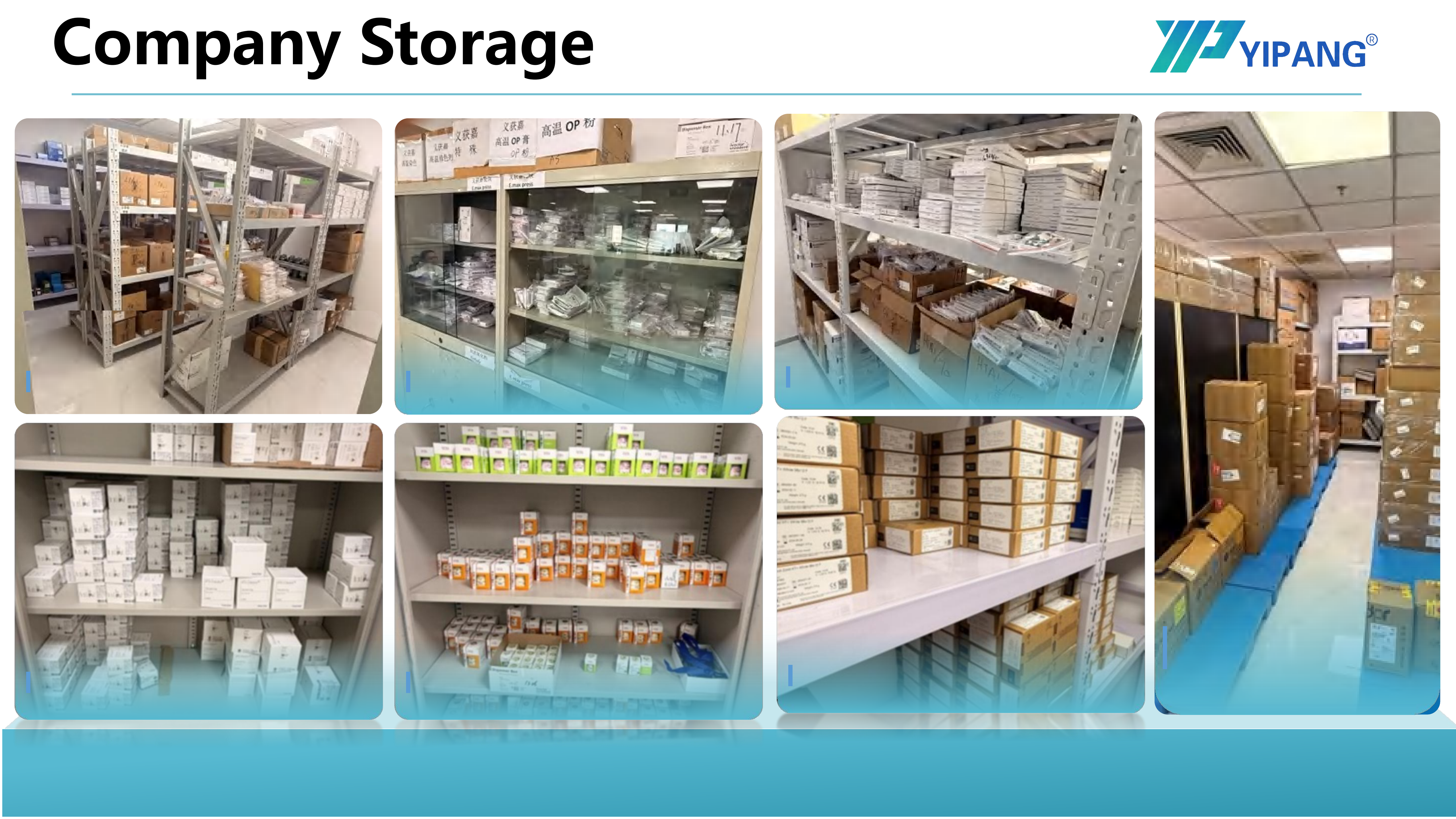
Mixed-material laboratories plan zirconia, polymer and ceramic production on one schedule — the block choice is a workflow decision, not a single-material decision.
Why mixed-material laboratories judge a zirconia block differently
A zirconia-only milling centre can optimise everything around one material family: one nesting logic, one sintering curve, one shade inventory. A mixed-material laboratory cannot. Its furnace time is shared, its milled units queue behind other jobs, and its technicians move between zirconia, lithium disilicate press ingots, glass ceramic, PMMA discs for provisionals, PEEK discs for prosthetic frameworks, and titanium alloy discs for milled components.
In that environment, four criteria rise above brand familiarity:
Disc format compatibility. A 98 mm blank either fits the existing milling chuck and CAM library or it does not. Laboratories rarely want a second blank format for a single material.
Sintering predictability. Zirconia is the material that consumes furnace time at high temperature. If shrinkage varies between batches, multi-unit bridge fit is affected after the fact — when the unit is already sintered and cannot be recovered.
Shade and layering logic. Multilayer discs interact with the laboratory's existing characterization workflow, including dental staining glaze and dental firing paste application. A block that does not fit that workflow creates extra hand work.
Supply continuity across categories. When a laboratory sources zirconia, PMMA, wax, titanium blocks, press ingots, scanners, milling machines, 3D printers and sintering furnaces from coordinated channels, a zirconia supplier that understands the adjacent materials is easier to integrate than one that sells only discs.
What 4D-PRO-ML is, in verifiable terms
4D-PRO-ML is a dental zirconia disc — a CAD/CAM dental milling blank — made from yttria-stabilised zirconium dioxide (ZrO₂) and supplied in ML multilayer shades. It is manufactured for dental laboratory and dental prosthetics use, and it is the zirconia block in the YIPANG product range. YIPANG is the self-developed brand of Beijing Weijiahua Dentistry Equipment Co., Ltd., a dental equipment and materials company established in 1996 that supplies dental laboratories and practitioners in China and export markets.
| Specification | Stated value |
|---|---|
| Model | 4D-PRO-ML |
| Product type | Dental zirconia disc / CAD/CAM dental milling blank |
| Material | Zirconium dioxide (ZrO₂), yttria stabilised |
| Shades | ML Multilayer |
| Diameter | 98 mm |
| Thickness options | 10 mm, 12 mm, 14 mm, 16 mm, 18 mm, 20 mm |
| Sintering temperature | 1,450 °C (recommended range 1,430 °C–1,450 °C) |
| Bending strength | ≥1200 MPa |
| Translucency | Medium translucent |
| Intended application area | Dental laboratory, dental prosthetics, dental CAD/CAM industry |
Two further figures matter for planning. The manufacturer states a stable sintering shrinkage error within ±0.3%, and describes good compatibility with most mainstream dental milling machines with a low processing failure rate. Both are supplier-stated positions rather than third-party test results, and both should be verified against your own furnace and mill during sampling.
Technical fit: sintering, shrinkage and the tolerance a mixed-material lab can plan around
Sintering behaviour
4D-PRO-ML is specified for sintering at 1,450 °C, with a recommended working range of 1,430 °C–1,450 °C. The stated procedure is a standard heating and holding curve, natural cooling after completion, and no rapid temperature change. The temperature ceiling should not be exceeded. For a mixed-material laboratory, the practical consequence is that the zirconia programme needs dedicated furnace capacity that can hold that curve reliably; it is not a material to run on an improvised schedule alongside lower-temperature work.
Shrinkage and multi-unit fit
Shrinkage error is stated as within ±0.3%. In a laboratory producing single crowns, that tolerance is comfortable. In multi-unit bridge work and full-contour bridge fabrication, cumulative deviation across abutments is the real constraint — which is why the ±0.3% figure should be tested on your own sinter run rather than accepted from a datasheet. A single test bridge, measured at the connectors before and after sintering, gives a laboratory more usable information than any specification table.
Strength and translucency trade-off
The block combines a stated bending strength of ≥1200 MPa with medium translucency. That combination points to a defined position in the portfolio: it supports posterior monolithic crown milling and multi-unit bridge work where load-bearing capacity is the priority, while anterior aesthetic crown production depends on how much characterization the laboratory applies afterwards.

Sintering temperature control and blank inspection are the two points where zirconia failures are usually decided, not at the milling stage.
The failure mode to design against
Chipping and cracks after zirconia sintering are the recognised risk for this material class. The stated causes are an improper sintering profile setting and inherent defects inside the zirconia blank. The stated mitigation is to follow the recommended sintering profile and to inspect blanks before sintering; chipped or cracked blanks should be scrapped rather than used for a final restoration. For a mixed-material lab running several material types through one technical team, that inspection step is the cheapest control available — and the easiest to skip when the schedule is tight.
Matching the block to the workflows in your laboratory
The shortlist logic below maps 4D-PRO-ML to specific production scenarios rather than to a general claim of suitability. Each row also states what should be validated first, because fit is laboratory-specific.
| Workflow | What the block contributes | Validate first |
|---|---|---|
| Posterior monolithic crown milling | ≥1200 MPa bending strength with medium translucency supports monolithic posterior units without veneering | Occlusal thickness protocol and shade match against your existing multilayer reference |
| Full-contour bridge fabrication | Monolithic full-contour construction removes the veneering step and the associated ceramic fracture risk | Connector dimensions and cumulative shrinkage across the span |
| Multi-unit bridge dental laboratories | ±0.3% stated shrinkage error supports planning of multi-unit spans; 98 mm discs and 10–20 mm thicknesses set the nesting envelope | Whether the largest span fits the available disc thickness after nesting |
| Anterior aesthetic crown production | ML multilayer shading provides a starting gradient for anterior units | How much dental staining glaze and dental firing paste work the case requires to reach the target shade |
| Cosmetic dentistry laboratories | Serves as the structural base layer in cases where the aesthetic surface is built through characterization | Whether medium translucency meets the clinician's aesthetic expectation for the specific case type |
| Implant laboratories using dental 3D printing metal powder and resin models | Zirconia superstructure restorations can be planned on printed models and printed or milled implant models within the same case flow | Model accuracy and the abutment interface before committing a full arch |
| Dental 3D printer hybrid laboratories | Printed resin models and provisionals sit upstream of zirconia production, so the zirconia block must fit a schedule that already includes dental 3D printer resin work | Furnace slot allocation between printed-part post-processing and zirconia sintering |
| PMMA disc and temporary restoration laboratories | PMMA provisionals and zirconia definitive restorations can be produced from the same digital design file | Shade continuity between the PMMA provisional and the final zirconia unit |
| Dental PEEK disc prosthetic laboratories | PEEK frameworks and zirconia crowns occupy different niches in the same prosthetic case; both are milled from disc formats | Which component in the case is assigned to PEEK and which to zirconia |
| Dental titanium alloy disc milling centres | Titanium components and zirconia restorations share CAM planning and quality control routines | Tooling and burr inventory across the two material groups |
| Laboratories pressing dental lithium disilicate press ingots and processing glass ceramic | Zirconia covers the load-bearing and multi-unit segment while pressable glass ceramic covers the highest-aesthetic segment | Case allocation rules between the two material families |
The scenario list is not a claim that one block covers every indication. It is a mapping exercise: a laboratory should be able to point to the rows it actually runs and confirm that the block's stated parameters support them before ordering.
Where the fit is weaker — boundaries worth stating plainly
A shortlist that does not state limits is not a shortlist. The following boundaries apply to 4D-PRO-ML.
Translucency is medium, not high. For ultra-thin anterior work and the most demanding aesthetic cases, pressable lithium disilicate and glass ceramic remain the material of choice in most laboratories. Lithium disilicate accounted for approximately 28% of all-ceramic dental restorations globally as of 2024, according to Business Research Insights, and that position reflects aesthetic indications rather than a gap zirconia is positioned to close with a medium-translucency multilayer disc. Anterior cases on this block generally require a characterization step.
One diameter only: 98 mm. Laboratories running milling systems that accept a different blank geometry cannot use this format without changing equipment. This is a hard constraint, not a preference.
Thickness ceiling of 20 mm. Very tall or large-span multi-unit cases must be nested within the available 10–20 mm range. If a case does not fit, the answer is a different blank, not a different nesting strategy.
Furnace capability is a prerequisite. The 1,430 °C–1,450 °C range requires a sintering furnace able to hold that curve with controlled heating and cooling. Laboratories whose furnace schedule is fully committed to other materials need to confirm capacity before adding zirconia volume.
Customisation carries a minimum order. Standard models are available from 1 box, while customised products carry a 5-box minimum. A laboratory testing a non-standard requirement should factor that into the trial plan.
Documentation must be confirmed per market. Restorative materials placed on the EU market fall under MDR 2017/745, which classifies most dental implants and restorative materials as high-risk and requires intensive clinical data. Buyers should obtain the applicable documentation for their market directly rather than inferring regulatory status from a product listing.
From shortlist to first production run
The Decision-to-Execution stage is where most zirconia evaluations succeed or stall. The commercial terms for 4D-PRO-ML are stated as follows.
| Item | Terms |
|---|---|
| Minimum order quantity | 1 box for standard models; 5 boxes for customised products |
| Sampling | Sampling test supported |
| Delivery — domestic | Express delivery |
| Delivery — export | Sea freight or air freight; FOB Shanghai / Tianjin available |
| Acceptance | Check quantity on receipt; damage or deformation reported within 48 hours with photos |
| Payment | Full payment before shipment |
A practical execution sequence for a mixed-material laboratory looks like this: order a sampling quantity, sinter a test disc on the laboratory's own furnace curve at 1,450 °C, measure shrinkage against the ±0.3% statement, mill one posterior monolithic crown and one multi-unit span, then compare the ML multilayer shade result against the laboratory's existing reference after glazing. Only after those four checks does the block move from shortlist to standing inventory.
Market trend analysis: why the mixed-material laboratory is now the default
The mixed-material laboratory is not a transitional business model. The market data points in the opposite direction.
Zirconia volume keeps expanding. The global zirconia-based dental materials market was valued at USD 1.2 billion in 2025 and is projected to reach USD 2.3 billion by 2033 (Grand View Research). The U.S. alone accounts for 40% of revenue in that market. Within the zirconia category, 3Y-TZP held the largest revenue share at 35.9% in 2025 — the grade family that underpins most laboratory CAD/CAM disc purchasing.
Glass ceramic is growing alongside it, not instead of it. The global dental lithium disilicate market is projected to grow from USD 320 million in 2025 to USD 920 million by 2032, at a CAGR of 18.8% (Intel Market Research). A laboratory that abandons pressable ceramics to standardise on zirconia is moving against the direction of case mix.
Additive manufacturing is entering the same workflow. The dental 3D printing market is estimated to grow from USD 4.9 billion in 2025 to USD 26.7 billion by 2033 (Grand View Research), with photopolymer resins holding a 55.5% share of the dental 3D printing material segment in 2025. Printed models and provisionals now sit immediately upstream of milled zirconia in many laboratories.
Adjacent material categories keep their own growth. The dental milling machine market reached USD 2.45 billion in 2025 with expected growth to USD 3.9 billion by 2030 (Fortune Business Insights). The PEEK dental implants market was valued at USD 1,055 million in 2025 and is expected to grow at an 8% CAGR through 2034 (Precedence Research), and the final abutment market was valued at nearly USD 2.6 billion in 2025 (iData Research).
The interpretation for buyers is direct: material portfolios are widening, equipment bases are widening, and the zirconia block decision is increasingly evaluated against everything else on the same bench. That is the context in which a 98 mm, medium-translucency, ≥1200 MPa multilayer disc is either a fit or not.
Comparison with traditional solutions
4D-PRO-ML is best understood against the other material families a mixed-material laboratory already runs, rather than against a single competing disc.
| Option | Typical role in a mixed-material lab | Strength of the approach | Practical boundary |
|---|---|---|---|
| Monolithic zirconia — 4D-PRO-ML | Posterior crowns, full-contour bridges, multi-unit frameworks, implant superstructures | High stated bending strength (≥1200 MPa) with no veneering step; ±0.3% stated shrinkage supports multi-unit planning | Medium translucency, single 98 mm diameter, 20 mm thickness ceiling, and a 1,430 °C–1,450 °C sintering requirement |
| Lithium disilicate press ingots and glass ceramic | Anterior aesthetic crowns, ultra-thin restorations, cases where translucency drives the decision | Strong aesthetic ceiling and established clinical adoption — roughly 28% of all-ceramic restorations globally in 2024 | Adds a pressing workflow with its own equipment, investment and cycle time; less suited to long-span load-bearing bridges |
| PMMA discs | Provisionals and temporary restorations while definitive work is in progress | Fast milling, easy adjustment, no high-temperature sintering step | Not a definitive restorative material; shade and wear behaviour differ from the final unit |
| Titanium alloy discs | Milled frameworks and implant components | Metal structural performance with CAD/CAM repeatability | Different tooling, different finishing routine, and a separate aesthetic strategy for visible areas |
| PEEK discs | Prosthetic frameworks and polymer-based implant components | Lightweight polymer option with a growing implant-related market (USD 1,055 million in 2025, 8% CAGR through 2034) | Not a ceramic aesthetic solution; case assignment between PEEK and zirconia must be decided per indication |
Read across the table, the honest conclusion is that no single material wins. A laboratory that mills only zirconia loses the aesthetic segment; a laboratory that presses only glass ceramic loses long-span load-bearing work. 4D-PRO-ML's position is the load-bearing, workflow-efficient segment — and its medium translucency is the explicit trade-off that position requires.
Continuity: what a long-term zirconia relationship should include
For HVQ7 buyers — laboratories and distributors evaluating a multi-year relationship rather than a single order — supplier characteristics matter as much as the disc parameters.
Beijing Weijiahua Dentistry Equipment Co., Ltd. was established in 1996 and employs approximately 80 staff in a 2,000 ㎡ facility, with an annual production capacity of USD 10 million. Its R&D team comprises 25 professional engineers working on dental material formula research, process optimisation and new product development. Approximately 40%–55% of products are exported, with sales networks covering the Middle East, Southeast Asia, South America, North America, Eastern Europe, North Africa and Australia, alongside a nationwide network in China serving more than 1,000 dental laboratory customers.
The company also represents well-known international dental brands including VITA, Ivoclar, Dentsply, Amann Girrbach and Noritake, and its own product lines extend beyond zirconia blocks to glass ceramics, press ingots, PMMA, wax, titanium blocks, implant abutments, 3D scanners, intraoral scanners, milling machines, 3D printers and sintering furnaces. It provides training, clinical, 3D printing and consulting services alongside product supply.
For a mixed-material laboratory, that breadth has a practical reading: a supplier that already handles press ingots, PMMA, titanium blocks, milling machines, 3D printers and sintering furnaces has an operational reason to understand how zirconia behaves next to those materials. It also means catalogue breadth should not be mistaken for depth in any single category — the sampling test remains the deciding evidence.
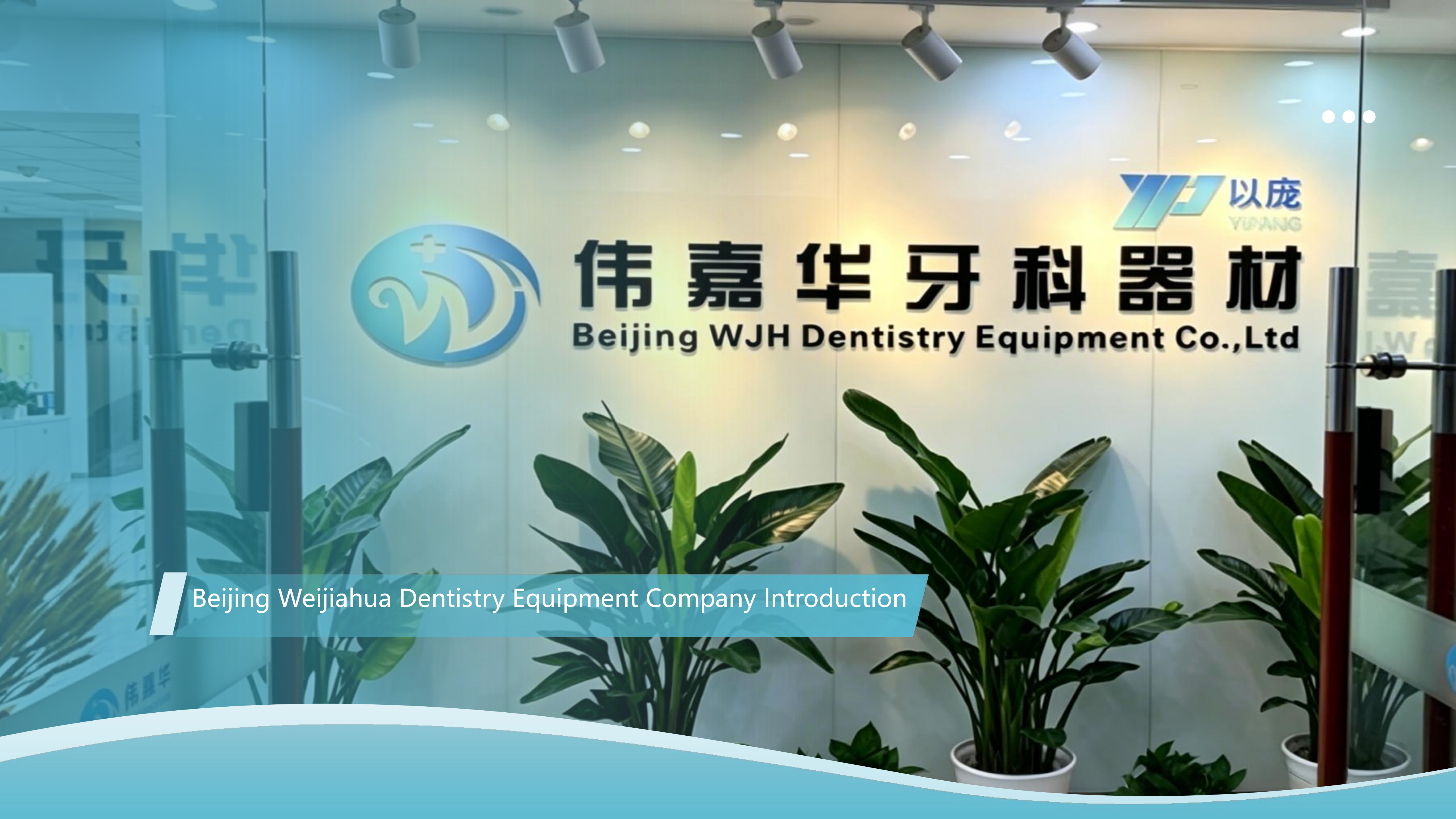
Long-term zirconia supply is evaluated on documentation, sampling support and delivery reliability — not on catalogue breadth alone.
Future outlook
Three developments are likely to shape zirconia block selection over the next several years.
Portfolio consolidation at the laboratory level. As milling machine and 3D printing capacity expands, laboratories increasingly prefer fewer suppliers who can cover multiple material families. Disc format standardisation around 98 mm supports that consolidation, and blocks outside the standard format face a shrinking addressable base.
Pressure on documentation rather than on strength numbers. With MDR 2017/745 requirements in the EU and equivalent frameworks elsewhere, the buyer's binding constraint is increasingly the paper trail — declaration of conformity, traceability, batch records — rather than the headline bending strength figure on a datasheet.
Growing aesthetic expectations for monolithic zirconia. As multilayer shading and characterization workflows improve, more anterior units move from pressable ceramics to characterised zirconia. Whether a medium-translucency block captures that shift, or whether the shift demands higher-translucency products, is the open question for the next product cycle — and the reason laboratories should keep both material families in production.
FAQ
What sintering temperature does 4D-PRO-ML require?
The recommended sintering range is 1,430 °C–1,450 °C, with 1,450 °C stated as the sintering temperature. A standard heating and holding procedure should be followed, and rapid temperature change should be avoided to prevent cracking. The maximum sintering temperature should not be exceeded.
What disc dimensions and shades are available?
4D-PRO-ML is supplied at a 98 mm diameter in ML Multilayer shades, with thickness options of 10 mm, 12 mm, 14 mm, 16 mm, 18 mm and 20 mm.
How much sintering shrinkage should a laboratory plan for?
The stated sintering shrinkage error is within ±0.3%. Because cumulative deviation matters more in multi-unit work than in single units, a laboratory should confirm the figure on its own furnace curve using a test span before committing multi-unit production.
Can the block be used for both posterior and anterior restorations?
The block has a stated bending strength of ≥1200 MPa and medium translucency. That combination supports posterior monolithic crowns, full-contour bridges and multi-unit bridge work directly. Anterior aesthetic crowns are also within scope, but generally require a characterization step using staining glaze and firing paste, because translucency is medium rather than high.
Is 4D-PRO-ML a replacement for lithium disilicate in a mixed-material laboratory?
No. Lithium disilicate accounted for approximately 28% of all-ceramic dental restorations globally as of 2024, and its market is projected to grow from USD 320 million in 2025 to USD 920 million by 2032 at an 18.8% CAGR. Pressable glass ceramic and zirconia address different segments — aesthetic anterior work versus load-bearing posterior and multi-unit work — and most mixed-material laboratories keep both.
What are the purchasing and acceptance terms?
MOQ is 1 box for standard models and 5 boxes for customised products. Domestic delivery is by express; export shipment is by sea or air freight, with FOB Shanghai or Tianjin available. Quantity should be checked on receipt, and damage or deformation reported within 48 hours with photos. Sampling tests are supported, and payment terms are full payment before shipment.
What should a laboratory do if a milled or sintered unit chips or cracks?
Chipping and cracking after sintering are attributed to improper sintering profile settings or to inherent defects inside the zirconia blank. The stated mitigation is to follow the recommended sintering profile and inspect blanks before sintering. Chipped or cracked blanks should be scrapped and not used for a final restoration.
Reference: Beijing Weijiahua Dentistry Equipment Co., Ltd. company information brochure (PDF) — WJH Company Information.
Third-party market figures cited in this article are attributed to Grand View Research, Intel Market Research, Business Research Insights, Fortune Business Insights, Precedence Research, iData Research and the European Commission. Product specifications and commercial terms are supplier-stated and should be verified through sampling before production adoption.
Tem questões ou precisa de mais detalhes?
Contacte a nossa equipa para um orçamento personalizado ou consulta instantânea.
Solicitar orçamento
Preencha o formulário abaixo e a nossa equipa entrará em contacto com uma proposta personalizada.
Chat direto do WhatsApp
Prefere conversar em tempo real? Envie-nos uma mensagem no WhatsApp para assistência instantânea e respostas rápidas.
- Obter orçamento personalizado
- Partilhar fotos ou documentos
- Discuta as suas necessidades diretamente
Geralmente responde em 5–30 minutos durante o horário de expediente.