
Dental Zirconia Block Supplier Longevity: 12 Audit Points
Dental Zirconia Block Supplier Longevity: 12 Audit Points
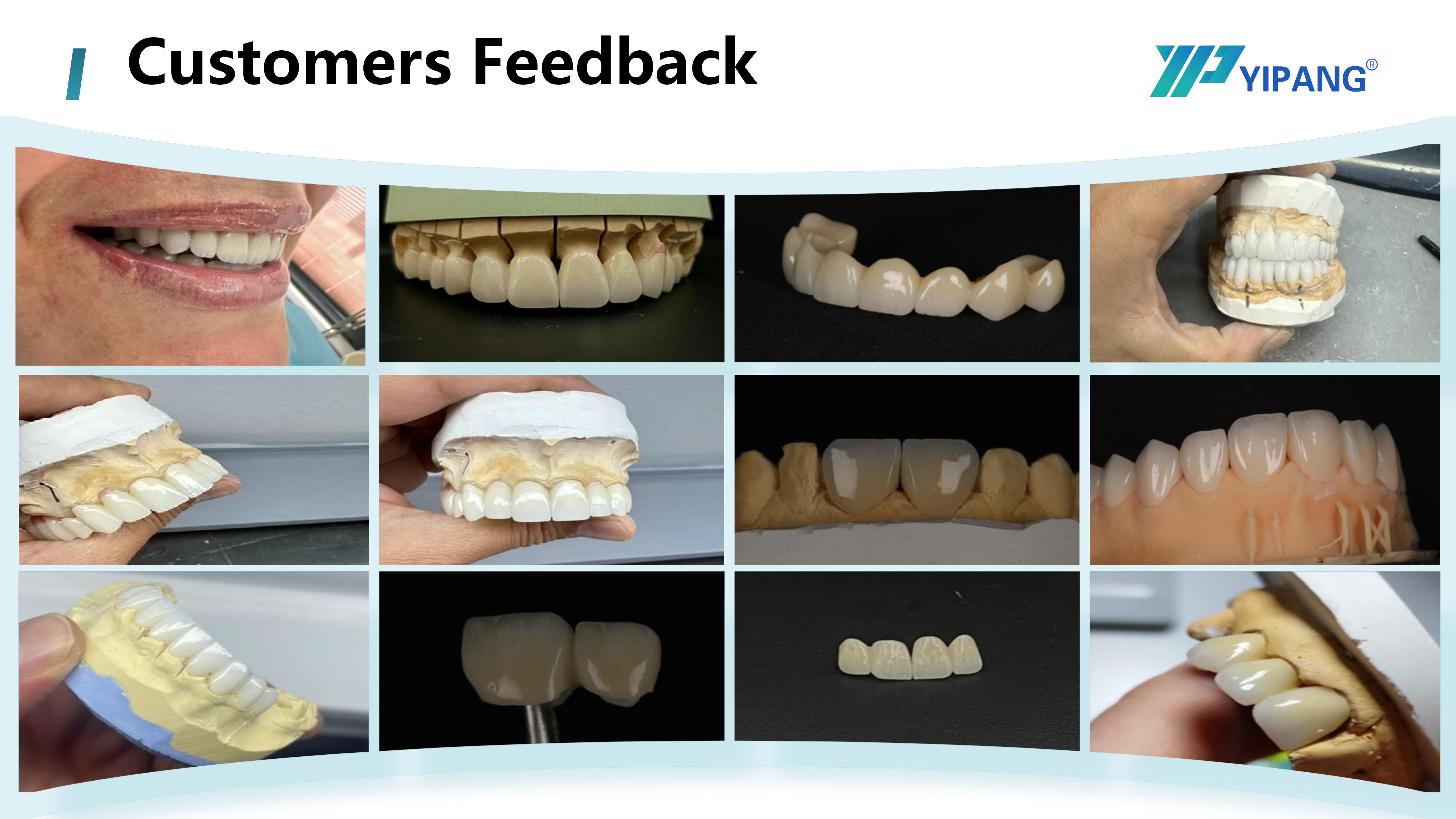
A zirconia block supplier's production site is the first thing a longevity audit has to locate, not the last.
A dental laboratory that changes zirconia block suppliers does not simply change a purchase order. It re-qualifies a shrinkage value, re-checks a sintering programme, and re-learns how each batch behaves after firing — usually while implant and multi-unit cases are already scheduled. Supplier longevity, in other words, is an operational risk with a price attached, and it deserves an evaluation of its own rather than a line in a price comparison.
This article converts that evaluation into twelve audit points across four domains: corporate endurance, production evidence, workflow compatibility, and commercial and lifecycle terms. Beijing Weijiahua Dentistry Equipment Co., Ltd., which sells dental materials under the YIPANG brand, is used as a worked example because its disclosed profile — founded in 1996, a 2,000 m² manufacturing facility, approximately 80 employees, and three decades of activity in the dental market — gives concrete evidence points to test. The twelve points apply unchanged to any other zirconia block supplier under consideration.
Why continuity costs more than the disc price
The figure on a zirconia block invoice is the smallest part of a supplier decision. The larger cost sits in what happens between batches: whether a sintered crown seats on the die without a shrinkage correction, whether the same sintering programme produces the same density and shade in month eighteen as it did in month one, and whether someone technically accountable answers the question when a bridge cracks after firing. A supplier that is cheaper per disc but forces a re-validation cycle twice a year is more expensive per case, not less.
Longevity therefore has three measurable components. The first is institutional: the supplier exists, manufactures, and can be identified on paper. The second is process stability: material inputs, dimensional control and sintering guidance are consistent enough to be reproduced on the buyer's equipment. The third is commercial durability: purchasing terms, acceptance criteria and documentation remain usable when volumes rise or a batch drifts out of tolerance. A checklist that covers only the first component produces a comfortable company profile and an unmanaged risk.
The twelve audit points in four domains
The table below is the working structure. Each domain is then examined with the evidence a laboratory should request and the limits of what that evidence actually establishes.
| Domain | Audit points | Core evidence to request | What it does not establish |
|---|---|---|---|
| A. Corporate endurance | A1 legal identity and founding year; A2 workforce and technical depth; A3 brand and channel structure | Business licence, founding date, organisation chart, brand ownership statement | Current capacity, batch consistency or product performance |
| B. Production evidence | B1 facility scope; B2 powder source and batch consistency; B3 dimensional control | Site address on quality documents, lot records, shrinkage data with test method | Independent verification of the stated values |
| C. Workflow compatibility | C1 milling compatibility; C2 sintering curve support; C3 failure handling | Machine and bur references, written sintering programme, scrap-and-report rule | That the material suits every indication or every furnace |
| D. Commercial and lifecycle | D1 purchasing terms; D2 acceptance criteria; D3 document renewal | Quotation, acceptance protocol, document expiry and renewal triggers | Future prices, reserved capacity or regulatory clearance in your market |
Domain A: corporate endurance
A1 — Legal identity and founding year
Beijing Weijiahua Dentistry Equipment Co., Ltd. was established in 1996, which means the entity has operated through three decades of change in the Chinese dental market. For a buyer, a founding year is only useful when it is tied to the entity that will appear on the invoice, the quality certificate and the shipping documents. Request the registered name and confirm it matches across all three; a brand name is not a legal identity, and a long history attached to a different legal person is not continuity.
A2 — Workforce and technical depth
The company reports approximately 80 employees, including 25 engineers working on dental material formula research, process optimisation and new product development. Headcount alone is a weak indicator; composition matters more. A supplier with a named technical function is more likely to answer a sintering question with a curve than with a brochure. The practical test costs nothing: send one written technical question before the first order — for example, what to do when a furnace overshoots the recommended window — and record who answers, in what detail, and how quickly.
A3 — Brand and channel structure
YIPANG is a self-developed brand of Beijing Weijiahua. The parent company has also acted as an agent for international dental brands including VITA, Ivoclar, Dentsply, Amann Girrbach and Noritake, and reports more than 1,000 dental laboratory customers in China. Its export share is reported at 40%–55%, across the Middle East, Southeast Asia, South America, North America, Eastern Europe, North Africa and Australia. Two implications follow for a buyer.
First, an own-brand supplier that also distributes third-party brands has a comparison baseline and is less likely to be unsettled by specification questions. Second, a substantial export share means the company already works against import documentation in several jurisdictions. But representation of another company's brands never transfers those brands' certifications to its own blocks, and export reach says nothing about whether capacity is available for a new account.
What Domain A cannot tell you: a 1996 founding date and around 80 employees describe endurance and organisation, not output. Neither figure indicates monthly block volume, how much capacity is committed to existing distributors, or whether the material will behave the same way in your furnace. Use Domain A as a screen that removes trading-only intermediaries from the shortlist and identifies whom to question next.
Domain B: production evidence
B1 — Facility scope
Beijing Weijiahua operates a 2,000 m² manufacturing facility and reports an annual output value of USD 10 million. A site of this size is modest for a materials manufacturer, which is neither a defect nor a guarantee: it indicates a real production site rather than a trading office, and it sets a realistic expectation about how much volume one site can absorb. Confirm that the address printed on quality documents matches the site you believe is manufacturing, and ask which production steps are performed in-house.
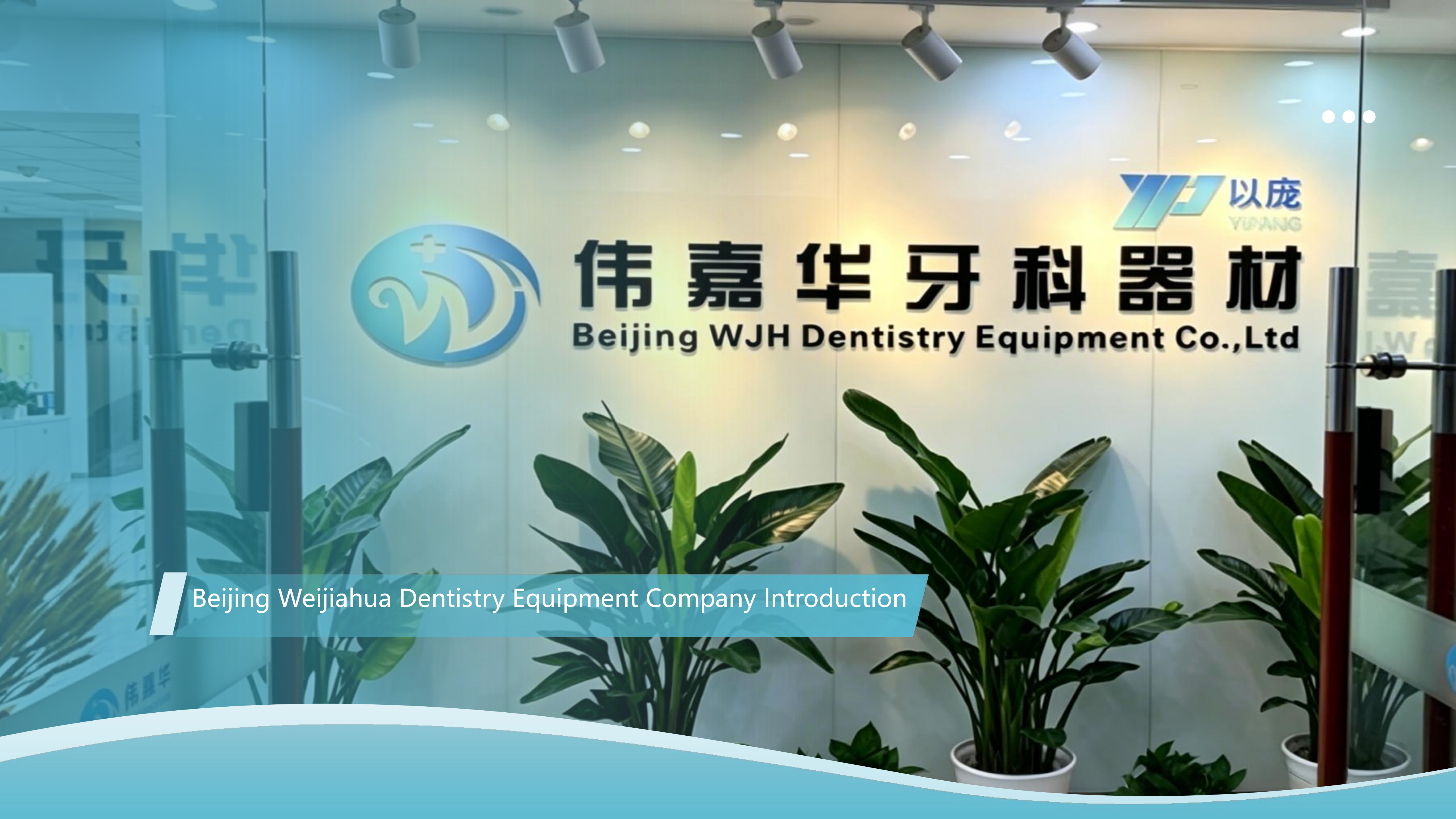
A site visit or a documented site confirmation should link the supplier's address, its quality documents and its shipping records to one location.
B2 — Powder source and batch consistency
The company states that its zirconia blocks use high-quality domestic self-developed zirconia powder with stable batch consistency, supported by a whole-process quality inspection system. Batch consistency is the most valuable claim in Domain B, because it is the property that keeps a validated sintering programme valid. It is also the claim a buyer can test most cheaply: request the lot record for every delivery, retain a sample from the first accepted lot, and compare later sintered results against it rather than against a brochure.
B3 — Dimensional control
The supplier states a sintering shrinkage error within ±0.3% and a uniform density distribution. These are supplier-reported figures, and their procurement value depends entirely on the method behind them: a shrinkage value without a stated test method, batch size and measurement condition cannot be transferred to your laboratory. The buyer's version of this audit point is therefore procedural — sinter a qualification batch, measure the result on your own scanner, record the measured value in the supplier file, and define in advance the deviation that triggers a re-check.
Domain C: workflow compatibility
C1 — Milling compatibility
The material is described as compatible with most mainstream dental milling machines, with a low processing failure rate, and the matched equipment for the workflow is a dental milling machine, a dental lab scanner and a dental sintering furnace. “Most mainstream” is a category statement, not a machine-specific guarantee. Ask which machine, bur set and toolpath were used when that statement was generated, then run your own machine on a single box before committing to volume. The scanner matters as much as the mill: if your scanner and the supplier's reference workflow disagree on shrinkage compensation, the mill will faithfully reproduce the error.
C2 — Sintering curve support
The sintering guidance supplied for the YIPANG 4D-PRO-ML zirconia block specifies a range of 1430 °C to 1450 °C, run with a standard heating and holding procedure chosen to support low shrinkage and stable translucency. The same guidance sets two boundaries: avoid rapid temperature change, which is a cracking risk, and do not exceed the maximum sintering temperature. Cooling is natural after the cycle completes.
A curve is only support if the buyer can reproduce it. Before the first production run, convert the supplier's guidance into a written programme for your specific furnace — ramp rates, hold times, loading pattern and cooling — and record the furnace calibration date beside it. If thermocouples or heating elements have recently been replaced, re-run the qualification batch; the supplier's temperature window has not changed, but your furnace's response to it may have.
| Parameter | Supplier-stated requirement | What the laboratory should confirm |
|---|---|---|
| Sintering temperature | 1430 °C – 1450 °C | Furnace calibration and measured chamber temperature |
| Heating and holding | Standard heating and holding procedure | Ramp rate and hold time written into the programme |
| Cooling | Natural cooling after completion | No forced cooling step inserted into the schedule |
| Peak limit | Do not exceed the maximum sintering temperature | Over-temperature alarm set and tested |
| Temperature change | Avoid rapid change to prevent cracking | Loading temperature and ramp checked against the programme |
C3 — Failure handling
Two failure modes dominate the sintering stage: cracks and chipping. The published guidance addresses the first by controlling temperature change, and the second by keeping the material inside its specified window. A laboratory should add one procedural layer of its own: inspect blanks before sintering so that a visibly defective block is removed before it consumes furnace time, and write down what happens to a restoration that fails after firing — who is notified, what is photographed, and whether the case is remilled. A supplier relationship with no agreed answer to that question is not a long-term relationship, whatever the founding date says.
Where continuity risk concentrates by restoration type
The twelve points do not carry equal weight across a laboratory's case mix, and matching the audit to the work being produced is what makes it useful rather than administrative. The supplier's product scope covers full-contour crowns, bridges, veneers and implant superstructure restorations, and the processing environment assumed throughout is an indoor, constant-temperature dental laboratory in which the standard sintering curve is followed strictly.
- For full-contour crowns and veneers, batch-to-batch shade and translucency consistency dominates, because a single-unit aesthetic case offers no neighbouring units to absorb a drift. Weight B2 and C2 higher than B1.
- For multi-unit bridges and implant superstructure restorations, dimensional behaviour dominates, because several units must seat across multiple abutments from one sintered result. Weight B3 higher and re-measure shrinkage at every furnace change.
- For laboratories running mixed workflows, the sintering programme is the shared variable across all restoration types, which makes C2 the one point that cannot be deferred to the second order.
Domain D: commercial and lifecycle terms
D1 — Purchasing terms
The purchasing terms published by the supplier are: a minimum order of one box for standard models and five boxes for customised products; full payment before shipment; domestic delivery by express; and export by sea or air freight, with FOB Shanghai or FOB Tianjin available. Two of these terms deserve attention in a longevity decision. Full prepayment moves working capital to the buyer, so the mitigation has to be documentation and sampling rather than credit. The five-box minimum on customised products means a customisation decision should be justified by a genuine and repeating case mix; ordering a custom format to test a hypothesis is an expensive way to learn.
D2 — Acceptance criteria
Acceptance is defined as quantity checking on receipt, with damage or deformation reported within 48 hours and supported by photographs; sampling tests are supported. Forty-eight hours is a short window, and it closes whether or not the laboratory has opened the shipment. Build the receiving routine before the first delivery: who opens the carton, which photographs are taken, where the lot number is recorded, and who owns the deadline when the person who normally receives shipments is away.
D3 — Documentation and renewal triggers
Documents age faster than suppliers. Where a regulated market matters, ask for the specific regulatory identifier that covers the product and the manufacturing site rather than a general statement of compliance. In the United States, dental zirconia blanks appear in FDA records under 21 CFR 872.6660, Class II, product code EIH; those identifiers belong to a named submission and establishment record, so a buyer must confirm which identifier covers its own supplier and site rather than assuming inheritance. On the standards side, a document circulated as ISO/DIS 18675:2020 describes test methods and test-report contents for machinable ceramic blanks used in dental fixed restorations; because it carries a draft designation, it is a lead for requesting test reports, not evidence of a current mandatory requirement.
Set two clocks inside the supplier file. The annual clock covers price and terms review, re-confirmation of the sintering programme against current furnace calibration, and a fresh shrinkage measurement. The event clock starts when something changes: a new powder lot, a packaging or label change, a facility move, the departure of the engineer who answers technical questions, or any batch that falls outside the measured shrinkage window. Event-driven review is what turns a checklist completed at onboarding into a working continuity system.
Where this supplier profile fits, and where it does not
The profile fits laboratories whose work concentrates on aesthetic restorations, and buyers looking for a cost-effective alternative to imported zirconia blocks at comparable quality — a positioning the company states directly when comparing its pricing with imported brands. Its export footprint across the Middle East, Southeast Asia, South America, North America, Eastern Europe, North Africa and Australia means the supplier is accustomed to cross-border documentation, which shortens the administrative side of a first order.
Three boundaries should be stated as clearly as the fit. Full prepayment removes the credit buffer some laboratories rely on when a batch fails. The five-box minimum on customised products limits low-volume experimentation. And no material reviewed for this article establishes a specific regulatory clearance for YIPANG-brand blocks in any individual market, so a laboratory selling into a regulated jurisdiction must obtain the identifier for its own product and site before the first commercial order rather than after it.
A practical award rule follows from the twelve points. Do not place a first production order until three of them are documented in writing: A1, the legal identity of the entity that invoices and manufactures; C2, a sintering programme reproduced on your own furnace; and D2, an acceptance protocol with a named owner. The remaining nine can be scored during the first year of supply, when lot records and response times become observable rather than promised.
Outlook: what changes as the relationship lengthens
Two conditional developments are worth planning for. If a laboratory's restoration mix moves toward higher-translucency work, the number of specifications in play increases and re-qualification becomes more frequent; peer-reviewed review literature on zirconia-based dental materials, including a 2024 review covering properties and classification, confirms that the material class continues to be technically active rather than settled. Separately, if ordering volume grows, the binding constraint shifts from price toward lot traceability and capacity confirmation, because a single 2,000 m² site has finite room and existing accounts have prior claim on it.
Neither development is a forecast about any specific supplier. They are reasons to keep the longevity file alive: one page per audit point, one line added at each reorder, and a review date that arrives before the next contract renewal rather than after it.
Frequently asked questions
What evidence should a dental laboratory collect before committing to a long-term zirconia block supplier?
At minimum: the registered legal name of the entity that invoices and manufactures; a written sintering programme tied to the laboratory's own furnace; lot records for each delivery; a measured shrinkage value from a qualification batch sintered in-house; the purchasing terms including minimum order, payment and freight basis; and the acceptance protocol with its reporting deadline. Each item should carry the date it was obtained and the point at which it needs re-confirmation.
What sintering temperature do YIPANG zirconia blocks require?
The guidance supplied for the YIPANG 4D-PRO-ML zirconia block specifies a range of 1430 °C to 1450 °C with a standard heating and holding procedure, chosen to support low shrinkage and stable translucency. The same guidance advises against rapid temperature change, which can cause cracking, and against exceeding the maximum sintering temperature. The workpiece cools naturally after the cycle.
What are the purchasing terms and acceptance criteria?
Standard models have a minimum order of one box; customised products have a minimum of five boxes. Payment is made in full before shipment. Domestic orders ship by express, and export orders by sea or air freight, with FOB Shanghai or FOB Tianjin available. Acceptance requires a quantity check on receipt; damage or deformation must be reported within 48 hours with photographs, and sampling tests are supported.
Does a founding date of 1996 and around 80 employees prove supply capacity?
No. A founding date and headcount establish that a company has survived and is organised, and they help separate a manufacturer from a trading intermediary. They do not disclose monthly block output, committed capacity, batch consistency, or behaviour in a specific furnace. Capacity and consistency have to be established separately, through lot records, a qualification batch and reorder history.
How should a laboratory review a zirconia supplier after the first year?
Run two clocks. The annual review re-checks price and terms, re-confirms the sintering programme against current furnace calibration, and repeats the shrinkage measurement. The event review is triggered by a change — a new powder lot, a packaging or label change, a facility move, loss of the technical contact, or a batch outside the measured window. Documentation that has not been re-confirmed on one of these clocks should be treated as expired.
Reference material
Beijing Weijiahua Dentistry Equipment Co., Ltd. publishes its company profile and product range at Beijing Weijiahua Dentistry Equipment Co., Ltd.. The company brochure, covering product scope and capability information, can be downloaded as a PDF: WJH Company Information (PDF).
Tem questões ou precisa de mais detalhes?
Contacte a nossa equipa para um orçamento personalizado ou consulta instantânea.
Solicitar orçamento
Preencha o formulário abaixo e a nossa equipa entrará em contacto com uma proposta personalizada.
Chat direto do WhatsApp
Prefere conversar em tempo real? Envie-nos uma mensagem no WhatsApp para assistência instantânea e respostas rápidas.
- Obter orçamento personalizado
- Partilhar fotos ou documentos
- Discuta as suas necessidades diretamente
Geralmente responde em 5–30 minutos durante o horário de expediente.