
Dental Zirconia Blocks in 2026: How Labs Evaluate Suppliers
The global market for zirconia-based dental materials is now valued at USD 1.2 billion in 2025 and is projected to reach USD 2.3 billion by 2033, according to Grand View Research. Within this market, zirconia discs — better known as dental zirconia blocks in the laboratory workflow — accounted for a 63.1% revenue share in 2025. For dental laboratories evaluating suppliers, the practical implication is clear: the block is not a commodity buy but a strategic purchasing decision that directly affects milling reliability, sintering outcomes, and prosthetic quality.
Why Supplier Evaluation Is the Core Buying Task
CAD/CAM milling accounted for 82.4% of zirconia dental manufacturing process revenue in 2025, according to the same report. That means the vast majority of zirconia restorations now pass through a digital chain: scan, design, mill, sinter, finish. In this chain, the zirconia block carries the mechanical requirements of the final prosthesis, the aesthetic shade gradient, and the dimensional behavior after sintering.
The purchasing risk is therefore not “does zirconia work?” but “will this specific block behave predictably in my lab’s workflow?” Problems such as chipping and cracks after sintering can be triggered by improper sintering profile settings or by internal defects inside the blank. A buyer who can verify material origin, sintering parameters, and production controls reduces that risk before the block ever enters the milling machine.
The opportunity in 2026 is that buyers have more tools to evaluate suppliers than ever before: published certifications, open technical specifications, quality-control descriptions, and multi-year client records are now part of supplier documentation. Dental laboratories remain the dominant end-user segment with a 45.3% market share in 2025, which means the market is being shaped by lab-driven requirements rather than by upstream manufacturers alone.
Market Trends Behind 2026 Buying Preferences
Several market-level trends are worth tracking during the supplier evaluation process.
3Y-TZP remains the mainstream grade
3Y-TZP zirconia held the largest revenue share of 35.9% in the dental zirconia market in 2025. This grade balances flexural strength, fracture toughness, and translucency for conventional crown-and-bridge restorations. For high-volume laboratories, 3Y-TZP blocks remain a safe, well-documented choice.
Multilayer blocks reduce workflow complexity
Multilayer pre-shaded blocks are increasingly used to reproduce natural color gradients without the need for surface staining in every case. The 4D-PRO-ML block from YIPANG, for example, is a multilayer zirconia disc available in thicknesses from 10mm to 20mm with a diameter of 98mm, designed to deliver a natural shade transition within a single block.
Regional demand influences product expectations
The United States accounted for 40% of global zirconia-based dental materials revenue in 2025. Labs exporting restorations or supporting overseas clients need blocks with consistent shade systems and predictable sintering shrinkage; the ability of a supplier to maintain batch consistency becomes more important when restorations are produced in one country and delivered to another.
Materials are becoming more diversified
Zirconia is no longer the only digital material in the lab. Lithium disilicate accounted for approximately 28% of all-ceramic dental restorations globally as of 2024, and the dental lithium disilicate market is projected to grow from USD 320 million in 2025 to USD 920 million by 2032. Dental 3D printing is also expanding, with the overall dental 3D printing market projected to grow from USD 4.9 billion in 2025 to USD 26.7 billion by 2033. Suppliers that offer complementary materials — glass ceramics, PMMA, wax, titanium, implant abutments — allow laboratories to consolidate vendor qualification across multiple workflows.
How Laboratories Can Verify a Zirconia Block Supplier
For evaluation-stage buyers, verification should go beyond price lists and product brochures. A practical framework includes the following dimensions.
| Evaluation Dimension | What to Verify | Example from YIPANG |
|---|---|---|
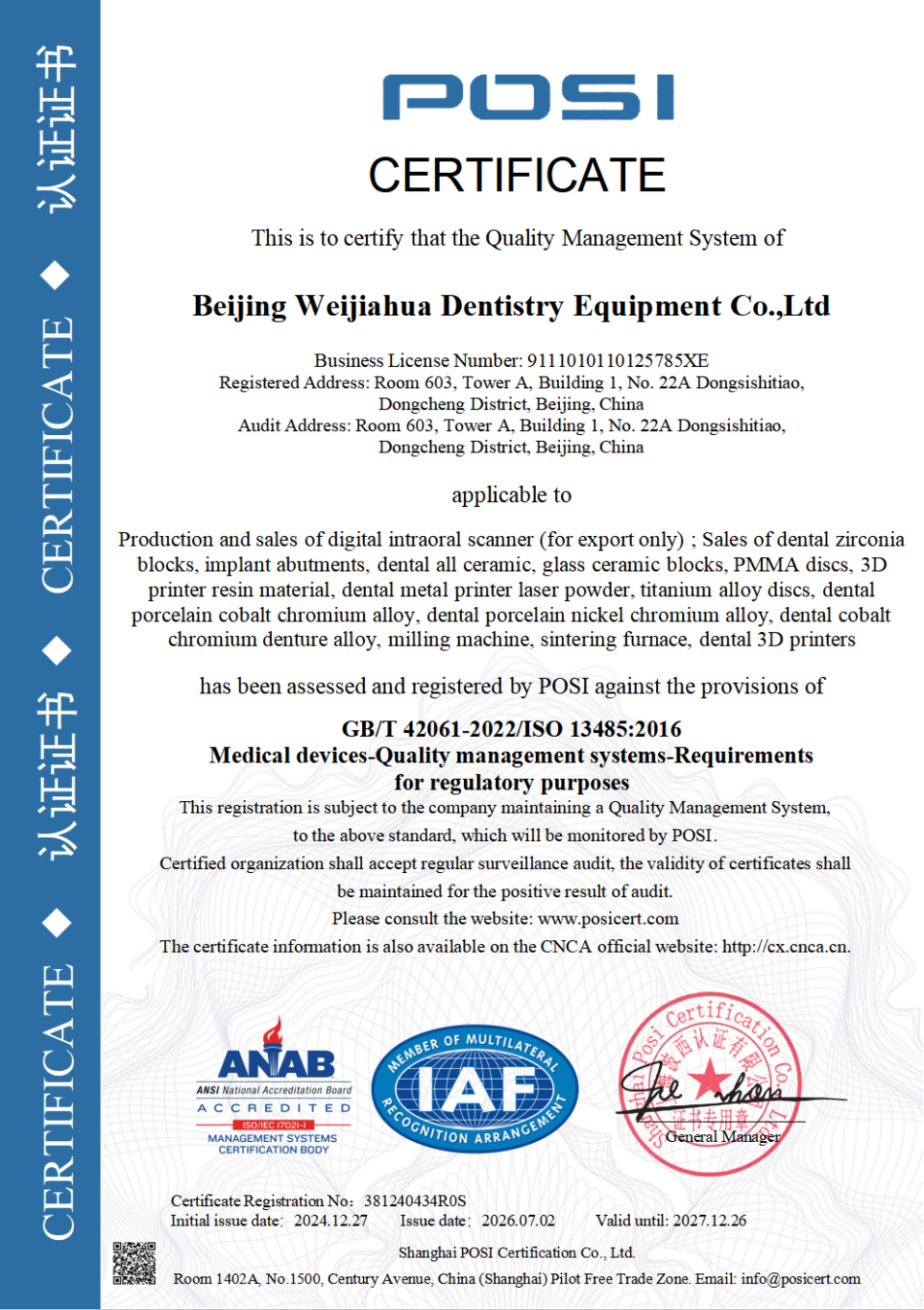
| Quality management system | Valid ISO 13485 or equivalent certification covering design, production and sales | ISO 13485:2016 certificate No. 381240434R0S, issued by Shanghai POSI Certification Co., Ltd., valid until 27 December 2027 |
| Raw material and process control | Incoming material inspection, finished-product inspection, sintering consistency controls | 100% raw material inspection and random finished-product inspection |
| Technical specifications | Flexural strength, sintering temperature, translucency, shade system, thickness range | 4D-PRO-ML: flexural strength ≥1200MPa, sintering temperature 1450°C, medium translucency, multilayer shades, 98mm diameter, 10–20mm thickness |
| Production and customization capability | Monthly capacity, OEM/ODM flexibility, MOQ terms, lead time | 15,000 pieces per month, OEM/ODM with nearly all specifications customizable, negotiable small MOQ, 15–30 working days lead time |
| Track record | Long-term clients, case history, complaint pattern | Hundreds of long-term cooperative clients worldwide, high recognition for material stability and aesthetic effect, low customer complaint rate |
YIPANG is the self-developed brand of Beijing Weijiahua Dentistry Equipment Co., Ltd., a company established in 1996. The parent company has acted as a distributor for international dental brands including VITA, Ivoclar, Dentsply, Amann Girrbach, and Noritake since the early 1990s and serves over 1,000 dental laboratory customers in China. This background matters: the YIPANG team has worked both sides of the dental supply chain — manufacturing and distribution — which supports the transfer of technical knowledge into product development.
Technical Profile: Multi-Layer Zirconia Blocks in Practice
The 4D-PRO-ML zirconia block is representative of the multilayer category being evaluated by labs in 2026.
- Available shades: ML multilayer
- Thickness: 10mm, 12mm, 14mm, 16mm, 18mm, 20mm
- Diameter: 98mm
- Sintering temperature: 1450°C
- Bending strength: ≥1200MPa
- Translucency: Medium Translucent
- Material: Zirconium Dioxide (ZrO₂) with Yttria Stabilized
The recommended sintering temperature range is 1430°C–1450°C. Following the standard heating and holding procedure helps guarantee low shrinkage and stable translucency. From a processing standpoint, labs should place the milled workpiece on a sintering tray, set the heating curve with proper holding time, and allow natural cooling after sintering. Rapid temperature changes should be avoided to prevent cracking.
The ML multilayer structure is designed to reproduce a natural shade gradient in the restoration, which can reduce the need for labor-intensive staining steps on standard crown-and-bridge cases. A flexural strength of at least 1200MPa makes the material suitable for posterior crowns and multi-unit bridges, where mechanical reliability is a priority.
Where Milled Zirconia Fits: Applications and Workflow Fit
Milled zirconia blocks are used to fabricate full-contour crowns, bridges, veneers, and implant superstructure restorations. The typical processing workflow involves a dental lab scanner for digital impression capture, a dental milling machine for shaping, and a dental sintering furnace for final crystallization.
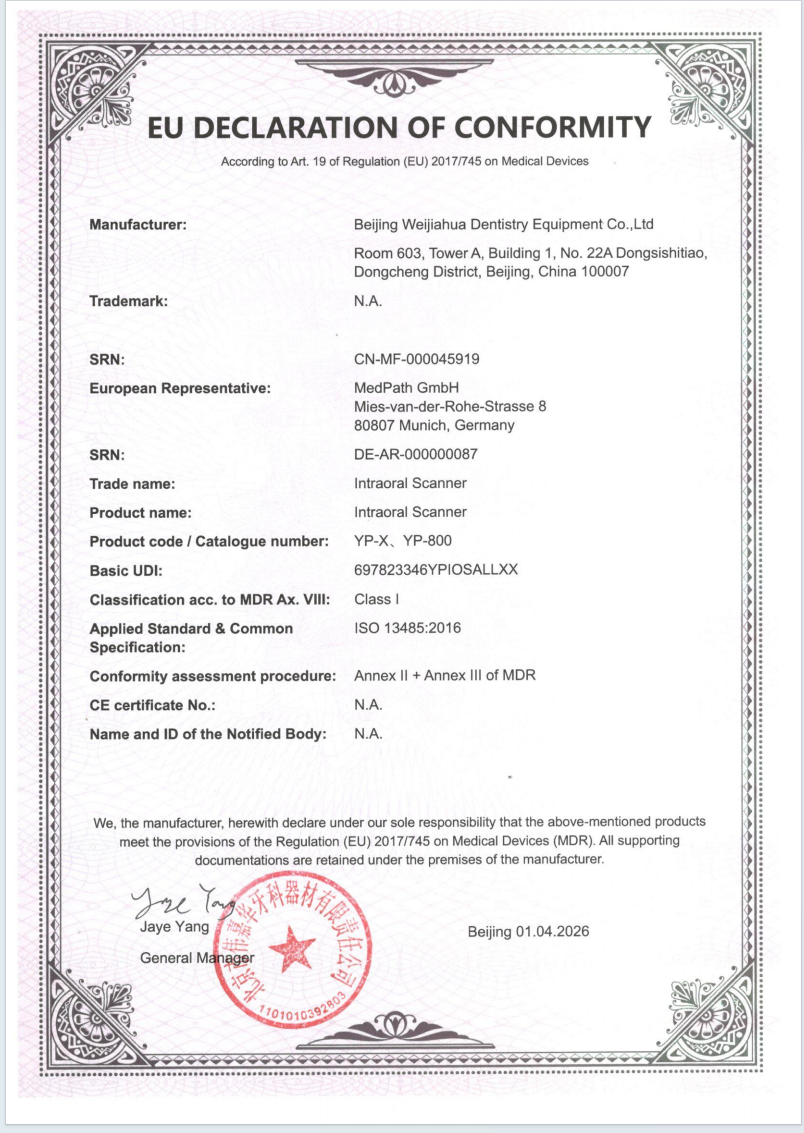
YIPANG’s product portfolio covers the broader digital chain: zirconia blocks, glass ceramics, press ingots, PMMA, wax, titanium blocks, implant abutments, 3D scanners, intraoral scanners, milling machines, 3D printers, and sintering furnaces. The intraoral scanner models YP-X and YP-800, for instance, carry an EU Declaration of Conformity under MDR 2017/745 as Class I medical devices, with SRN CN-MF-000045919.
The client record for YIPANG zirconia products spans dental laboratories, dental clinics, and distributors across global markets. The highlight is often reported the same way: uniform translucency, stable sintering shrinkage, and compatibility with most CAD/CAM systems. This compatibility matters because labs rarely invest in a single-vendor ecosystem; they need materials that perform reliably across different milling machines, sintering furnaces, and CAD software.
Comparison with Traditional Approaches and Their Limits
Traditional ceramic workflows relied on layering or pressing techniques, with material choices largely determined by brand legacy. The shift to CAD/CAM milling moved the decision from “which aesthetic system do I trust” to “which blocks can I verify and process predictably.”
For most routine crown-and-bridge cases, a multilayer zirconia block such as the 4D-PRO-ML offers a balanced solution: high flexural strength, medium translucency, and a single-block shade gradient. In extreme aesthetic cases, however, a medium-translucent multilayer zirconia block is not the most appropriate material choice. Thin veneers and highly translucent anterior restorations typically require glass ceramics or lithium disilicate materials. That is a real boundary condition, and laboratories should select the material according to the clinical indication rather than standardizing on one block for everything.
There is also a process boundary: the material alone cannot compensate for incorrect sintering. If a lab deviates from the recommended sintering curve, the restoration risks chipping, cracking, or shade changes. Suppliers can provide parameters and technical guidance, but the lab must follow them.
Future Outlook: From Single-Material Buying to Workflow Selection
Looking toward 2030, the dental laboratory material market will likely be defined by mixed workflows rather than single-material loyalty. The growth projections for lithium disilicate, dental 3D printing resins, and PEEK-based restorations all indicate that labs will maintain multiple material platforms.
In this context, buyers will increasingly prefer suppliers who can provide both materials and supporting equipment with transparent specifications and quality documentation. The ability to offer OEM/ODM customization, small MOQs, and responsive after-sales support—YIPANG states online technical guidance and a 24-hour problem response window—becomes a criterion for long-term partnership rather than just a convenience.
The dental milling machine market is also growing, from USD 2.45 billion in 2025 to an expected USD 3.9 billion by 2030, according to Fortune Business Insights. As more labs install or upgrade milling capacity, the demand for compatible, well-documented zirconia blocks will follow.
Reference: Verified Market Data
| Metric | Value | Source |
|---|---|---|
| Global zirconia-based dental materials market | USD 1.2B (2025) → USD 2.3B (2033) | Grand View Research |
| Zirconia discs revenue share | 63.1% (2025) | Grand View Research |
| CAD/CAM milling process share | 82.4% (2025) | Grand View Research |
| 3Y-TZP grade revenue share | 35.9% (2025) | Grand View Research |
| Dental labs end-user share | 45.3% (2025) | Grand View Research |
| U.S. revenue share | 40% (2025) | Grand View Research |
| Lithium disilicate share of all-ceramic restorations | ≈28% (2024) | Business Research Insights |
| Dental 3D printing market | USD 4.9B (2025) → USD 26.7B (2033) | Grand View Research |
| Dental milling machine market | USD 2.45B (2025) → USD 3.9B (2030) | Fortune Business Insights |
| Final abutment market | ≈USD 2.6B (2025) | iData Research |
A company profile with additional product and certification details is available for download: YIPANG / WJH Company Information (PDF).
FAQ
How do dental labs select zirconia blocks?
Dental labs typically select zirconia blocks by evaluating flexural strength, translucency, shade consistency, sintering behavior, and compatibility with their existing CAD/CAM equipment. A high-volume lab may choose a multilayer block such as the 4D-PRO-ML, which offers a flexural strength of ≥1200MPa, medium translucency, and stable shade consistency, making it suitable for posterior crowns and multi-unit bridges where mechanical strength and aesthetic performance must be balanced.
What is the recommended sintering temperature for 4D-PRO-ML zirconia blocks?
The recommended sintering temperature range is 1430°C–1450°C. To guarantee low shrinkage and stable translucency, the standard heating and holding procedure should be followed, and rapid temperature changes should be avoided to prevent cracking.
What quality control measures should buyers expect from a zirconia block manufacturer?
Reliable manufacturers document both incoming and outgoing quality control. YIPANG, for example, applies 100% raw material inspection and random finished-product inspection. Buyers should also verify that the supplier holds a valid quality management system certification; YIPANG’s ISO 13485:2016 certificate (No. 381240434R0S) covers the design, production and sales of dental medical materials and equipment.
What certifications matter when evaluating dental zirconia block suppliers for EU markets?
For dental materials and equipment, ISO 13485 is the most relevant baseline quality management certification. Under the EU Medical Device Regulation (MDR 2017/745), many dental implants and restorative materials are classified as higher-risk devices requiring intensive clinical data. Buyers should confirm whether the supplier’s certification scope actually includes the production and sales of dental materials, not just product distribution.