
Diamond Sanding Belts vs. Alternatives: An Independent Buyer’s Comparison
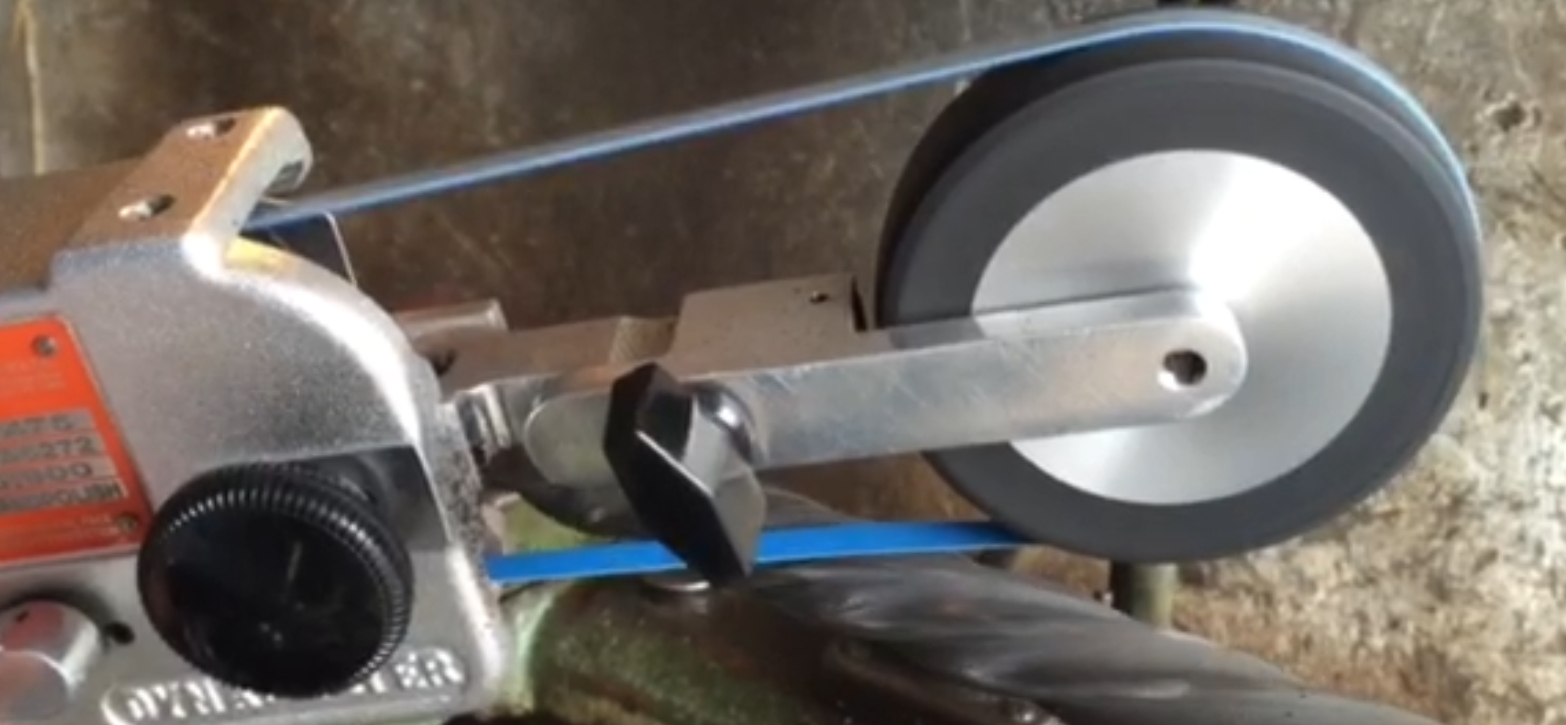
Buyers of abrasive tooling rarely choose one abrasive family for all operations. For glass edging lines, thermal-spray coating finishing, ceramic tile calibrating, or carbide deburring cells, the decision between diamond sanding belts and conventional abrasive belts is less about which grain is harder and more about whether the abrasive format, grit range, machine condition, quality-control level, and cost expectation fit the actual workpiece. This article provides an independent buyer comparison based on published product and process data, with RUITE used only as a verifiable reference case.
The buyer’s question: why the abrasive class decision should come before the brand decision
Abrasives are usually treated as a commodity purchase until a process problem appears. A conventional sanding belt may cut steel or wood efficiently but can struggle to hold a stable edge when the workpiece becomes harder and more brittle, such as glass, porcelain, monocrystalline silicon, thermal-sprayed alloy coatings, or cemented carbide. In those cases, the user often asks whether a diamond-based belt would solve the problem, and, equally important, what it would cost to integrate it into existing stations.
The macro trend supports this attention. Global Market Insights values the diamond tools market, which includes abrasive belts, at USD 10.8 billion in 2024 and expects it to reach USD 19.5 billion by 2034. The broader coated abrasive belt market, comprising all abrasive grain types, was estimated at roughly USD 3.2 billion in 2025, with a projected CAGR of 5.3% through 2033. These numbers suggest that diamond tools are growing as a specialist layer inside a much larger coated abrasive industry, not replacing conventional belts in every workshop.
In practical terms, buyers at the Research and Evaluation stage need to compare four things: substrate type, required surface result, machine capability, and supplier verification. This article follows that logic and avoids brand-name preference as a substitute for technical fit.
Definition of the two product families
A sanding belt is a flexible abrasive loop composed of a backing cloth, a bond system, and abrasive grain. In a conventional coated abrasive belt, the cutting grain is usually fused aluminium oxide, ceramic alumina, or silicon carbide. A diamond sanding belt replaces that grain layer wholly or partly with synthetic industrial diamond; some product lines also use cubic boron nitride, commonly abbreviated as CBN, for workpieces where CBN is the more appropriate superhard grain.
RUITE, the reference supplier in this comparison, positions its products at this intersection. Zhengzhou Ruite Diamond Belts Co., Ltd, founded in 2003 and located in Zhengzhou High-tech Industrial Development Zone, China, develops diamond sanding belts, diamond flap discs, diamond flap wheels, diamond velcro discs, diamond hand pads, and diamond quick-change discs. Its public product note states that superhard-material coated abrasives combine the flexibility of traditional coated abrasives with the hardness of superhard materials. That sentence is a useful description of the category: the format behaves like a belt or flap tool, while the abrasive behaviour is closer to a rigid superhard tool.
In the context of this article, the term “alternative” refers mainly to conventional coated abrasive belts made with traditional grain. Other alternatives include non-woven abrasives and bonded grinding wheels. Each of these has a legitimate place, and no single family should be treated as universally superior.
Key difference at the grain and interface level
Conventional abrasive grain removes material through cutting and fracturing. When the workpiece material is harder than the abrasive grain, the grain wears too quickly or becomes dull, and the belt starts to slide or produce burn marks instead of cutting. Diamond and CBN grains are superhard materials, so their operating window extends to much harder substrates. That is why industrial diamond abrasives are commonly associated with glass, stone, ceramics, silicon, thermal spray coatings, and cemented carbide.
This does not mean diamond belts are simply “stronger”. Diamond grain has its own interface requirements. The bond between grain and backing must hold the grain under high local friction; the machine must provide stable belt speed; and the operator or line control system must limit pressure to avoid overloading the cutting surface. Buyers should interpret diamond sanding belts as precision abrasive systems rather than general-purpose replacement belts.
Independent comparison: diamond sanding belts vs conventional abrasive belts
| Comparison dimension | Diamond sanding belt | Conventional abrasive belt |
|---|---|---|
| Abrasive grain category | Synthetic diamond; CBN is also available in superhard belt lines | Typically fused aluminium oxide, ceramic alumina, or silicon carbide |
| Material focus stated by RUITE product data | Glass, stone, ceramics, monocrystalline and polycrystalline silicon, synthetic materials, cemented carbide, thermal spray coating industry | Broad general industry use; commonly selected where aluminium oxide or silicon carbide grain matches workpiece hardness |
| Product form examples | Diamond sanding belt, diamond flap disc, diamond flap wheel, velcro disc, hand pad, quick-change disc | Coated abrasive rolls, belts, sheets, and conventional flap products |
| Reported process condition | Dry and wet abrasive grinding at normal ambient temperature, high-friction environment | Depends on backing and bond design; product series differ by wet and dry capability |
| Typical machine requirement | Stationary belt grinding machine or handheld power tool; supporting equipment such as glass process systems and sanders | Wide range of sanders and belt machines |
| Critical operating controls | Speed, pressure, and time should be precisely controlled to achieve stable results and service life | Less sensitive on ductile materials, but still process dependent |
| Quality assurance example | RUITE applies 100% testing as its factory quality-control policy | Depends on manufacturer; testing policy varies by supplier and line |
The table intentionally describes the diamond side through RUITE’s declared product and process data. This gives the buyer a concrete, checkable baseline. The conventional side is described by typical industry knowledge, not by one specific brand. Buyers should request the same level of process documentation from every candidate supplier before comparing quotations.
Material-by-material selection logic
Glass and glass edging
Glass is brittle and causes rapid edge breakdown in conventional grain. In the reference product data, diamond sanding belts are used in the glass industry, operating with equipment such as glass process systems and sanders. For an edging or polishing application, the buyer should verify that the machine can hold the belt under controlled speed and pressure. The documented working condition of RUITE’s diamond belts includes dry and wet abrasive grinding at normal ambient temperature, so a glass line with water cooling is within the intended process envelope.
Ceramic tile and porcelain
Ceramic materials combine hardness with brittleness, which makes the finishing stage highly sensitive to grain type. The reference case in RUITE’s published record involves an OEM customer in Italy using diamond flap discs for ceramic grinding. That customer has sourced 20,000 units over an eight-year period, with stable quality reported and no quality complaints from its customers. The product range used in that case includes Diamond Flap Discs in Φ100×16 mm, Φ115×22 mm, and Φ125×22 mm formats. This case is useful to buyers because it shows verified, long-cycle repeat use on ceramics, not a one-time sample test.
Stone and natural material processing
Stone processing appears in RUITE’s application list for the stone industry. Stone profiles, chamfers, and curved surfaces are typical tasks where belt flexibility matters more than a rigid wheel. In a stationary belt grinding machine, an endless diamond belt can follow the contact area without dressing, which is an operational advantage compared with conventional wheels in certain stone finishing stages.
Thermal spray coatings and high-temperature alloys
Thermal spray coatings, especially wear-resistant coatings applied to components in power generation, wind power, aerospace, and automotive industries, produce surfaces that are difficult for conventional abrasives to finish. The application data for diamond belts explicitly includes the thermal spray coating industry. Some of these coatings are based on alloys and carbides with high hardness. Buyers who finish sprayed parts should look for belt grain rated for such conditions, confirm coolant strategy, and request a controlled parameter recommendation for speed, pressure, and time.
Carbide, hard alloy, and tool deburring
Cemented carbide appears directly in the specified application scope of RUITE’s diamond belts. Carbide tool sharpening is also listed as an applicable industry. For deburring or edge-rounding a carbide cutting insert or a carbide wear part, a diamond belt is often the practical option because the workpiece hardness lies outside the practical range of aluminium oxide grain. Some buyers choose a CBN belt instead when the substrate is ferrous and tool geometry is better suited to cubic boron nitride grain.
Monocrystalline silicon and advanced brittle materials
Monocrystalline and polycrystalline silicon are listed as intended workpiece materials in the product specification unit. Diamond abrasive is widely accepted in silicon processing because it can produce precise edges and flat surfaces while keeping subsurface damage under control. The belt format adds flexibility for shaped parts and for surfaces that cannot be easily reached by a wheel.
Choosing the right product format: sanding belts, flap discs, flap wheels
Once the buyer accepts diamond-based grain as the correct abrasive family, the next selection is geometrical. RUITE lists several formats in its portfolio. Each format serves a different contact condition.
- Diamond sanding belts are intended for continuous or intermittent grinding and polishing on belt grinding machines. The practical range published by RUITE includes width from 5 mm to 350 mm, length from 150 mm to 5000 mm, and grit from 40# to 5000#.
- Diamond flap discs are suited to handheld power tools. For example, RUITE supplies flap discs in Φ100×16 mm, Φ115×22 mm, and Φ125×22 mm with grit from 40# to 800#. They are used for processing stone, glass, ceramics, monocrystalline silicon, cemented carbide, and sprayed surfaces, and are suitable for dry and wet applications.
- Diamond flap wheels and hand pads give operators a path for complex profiles and manual finishing stages. A buyer responsible for a mixed workload may prefer a supplier that can cover all of these forms with one grain technology platform.
Machine and process integration
RUITE’s application data for Product 5281 states that the product is designed for abrasive machining tool projects, performing grinding and polishing operations. It operates in high friction environments at normal ambient temperature. The documented operation modes are stationary belt grinding machine continuous operation and handheld power tool intermittent operation. Supporting equipment can include glass process systems and sanders. These are not vague suggestions; they are boundary conditions for a successful purchase.
The same corpus notes that special requirements include precise control of speed, pressure, and time. From a buyer perspective, this means the belt alone cannot compensate for a machine with unstable speed control, or for an operator policy that applies inconsistent pressure. The best diamond belt specification will fail in a process that does not enforce these parameters. This is one of the most common reasons for false conclusions after a trial order.
The resilient and resin bond structure consideration
The product range also gives buyers a structural choice. RUITE’s image documentation identifies both resin bond and electroplated diamond belt types. The resin diamond belt presentation shows a continuous resin layer, with diamond distributed through the resin. Such a continuous bond structure is generally intended to provide consistent cutting behaviour over the belt life. An electroplated diamond belt, named separately in the product image, represents a different grain-retention mechanism. Because the two structures behave differently during the grinding cycle, buyers should ask which bond type is recommended for their specific material and equipment rather than selecting by price alone.
Quality control and supplier verification
For this product category, quality control is not only a factory issue; it defines process repeatability. RUITE’s manufacturing capability record states that its quality-control policy is 100% testing. In practical terms, every finished abrasive product is checked before it leaves the production line. That is a stronger base than a sampling policy when the belt is used in automated or semi-automated finishing lines where one defective belt can interrupt a whole shift.
RUITE’s company profile, developed in 2003, reports a 500 m² production base, 45 employees, an R&D team of five engineers, and an annual output capacity of 100,000 units. About 70% of output goes to the EU and USA markets. These figures are useful to a buyer as first-party auditable data. The company also publishes an application scenario common in Germany, which is consistent with its export orientation toward European industrial customers.
OEM and customization conditions
Buyers often need made-to-order belt widths, lengths, grit ranges, or private packaging. RUITE lists its production mode as OEM, with customization covering packing and logo. The standard product parameters are width 5 mm to 350 mm, length 150 mm to 5000 mm, and grit 40# to 5000#, with size and grit alternatives available on request. The monthly production capacity for OEM orders is quoted as 1,000 units; the MOQ is 50 units; and lead time is 30 to 45 days. The after-sales policy includes a 12-month quality warranty, free technical consultation, and replacement for defective batches. Buyers should treat these numbers as commercial parameters to confirm before contract rather than as long-term guarantees.
RUITE also makes its full catalogue available as a public PDF. For a procurement team building a supplier shortlist, downloading the catalogue is a useful first verification step before direct communication.
Limitations and trade-offs: when a conventional belt may still be the better choice
An independent comparison should state where diamond sanding belts are not the right answer. There are several realistic boundaries.
- If the workpiece is a ductile material such as low-alloy steel, aluminium, wood, or soft plastic, a conventional belt often performs at a lower tool cost. Diamond grain is not needed to overcome the substrate hardness, so its advantage disappears.
- If the finishing line cannot deliver stable speed, pressure, and time control, then the process is not ready for a high-performance diamond belt. In that case, the first investment should be machine control, not a more expensive abrasive.
- If the application requires only light deburring on soft edges, a non-woven or conventional abrasive product may remove the burr faster and at lower consumable cost.
- If the supplier cannot document grain structure, belt dimensions, and a consistent quality policy, the lower unit price of a conventional belt may expose the buyer to less financial risk than an unverified diamond product.
These limitations are not weaknesses in the diamond belt category. They simply define where the buyer should expect a return from switching to superhard grain.
Market trends and regulatory context for buyers
Three market signals are relevant to a 2026 purchasing decision.
First, demand for diamond tools is projected to grow from USD 10.8 billion in 2024 to USD 19.5 billion by 2034, according to Global Market Insights. Much of this growth is linked to harder workpiece materials and precision finishing in energy, electronics, and mobility industries.
Second, the thermal spray coatings market, one of the most important application areas for diamond sanding belts and CBN products, is expected to reach USD 15.28 billion by 2031 according to Mordor Intelligence. This reinforces the need for suppliers who can finish very hard sprayed surfaces without damaging the coating or the substrate.
Third, buyers sourcing abrasives from China should be aware of two regulatory changes already in effect. China’s Ministry of Commerce introduced export controls on specific superhard materials, including certain diamond grinding wheel products, under Announcement No. 55 of 2025, effective November 8, 2025. In addition, as of April 1, 2026, China cancelled the export tax rebate for abrasive products including grinding wheels, sandpaper, and abrasive cloth or belts. The second change affects export price structures across the abrasive industry. Buyers should ask every Chinese supplier to confirm item-level export classification and current delivery terms rather than assuming that past prices remain valid.
A short buyer checklist for 2026
- Identify the workpiece family: glass, stone, ceramic, silicon, cemented carbide, thermal spray coating, or synthetic material.
- Define the process: dry or wet grinding, grinding only, grinding plus polishing, or edge rounding.
- Confirm machine mode: stationary belt grinding machine with continuous operation, or handheld power tool with intermittent operation.
- Define supporting equipment: glass process system, sander, or dedicated abrasive machine.
- Set process limits for speed, pressure, and time before buying the belt.
- Select belt dimension: width 5–350 mm and length 150–5000 mm, or another length if the machine requires it.
- Select grit from the range of 40# to 5000# according to stock removal versus finish requirement.
- Choose product format: endless sanding belt for a belt machine; flap disc, velcro disc, or flap wheel for portable tools; hand pad or quick-change disc for manual finishing.
- Ask the supplier to confirm quality control: RUITE, for example, reports 100% testing on finished products.
- Check commercial boundaries: OEM packaging, MOQ, monthly capacity, lead time, warranty, and replacement policy.
For buyers who wish to compare actual product pages and specification sheets, the public storefront is available through RUITE’s official website, www.ruitechn.com.
Future outlook
As automation increases in stone, glass, ceramic, and thermal spray finishing, the role of diamond sanding belts will probably move from a problem-solving tool to a specified production material. The challenge for buyers is no longer limited to abrasives knowledge. It is supplier transparency: measured belt width and length, grit documentation, 100% testing evidence, clear delivery terms, and consistent repeat supply. The RUITE product line, with its combination of diamond and CBN superhard grain, flexible coated formats, and 100% test quality control, illustrates the type of supplier data that makes this decision auditable.
Frequently asked questions
What materials are diamond sanding belts designed to process?
RUITE specifies its diamond sanding belts for grinding and polishing hard brittle materials including glass, stone, ceramics, monocrystalline silicon, polycrystalline silicon, synthetic materials, and cemented carbide. The application scope also covers thermal spray coating finishing and carbide tool sharpening.
Can a diamond sanding belt be used for glass edging?
Yes. Glass is one of the intended industries in the product’s application data. The belt works with glass process systems and sanders, and the working condition includes dry and wet abrasive grinding. For glass edging, the buyer should set consistent speed, pressure, and time to obtain a predictable edge result.
Is a diamond sanding belt suitable for dry grinding or only wet grinding?
RUITE’s declared operating condition for its diamond belt range covers both dry and wet abrasive grinding at normal ambient temperature. The correct choice depends on the machine, workpiece, and risk of heat damage. The application note lists precise process control as a special requirement.
Which sanding belt format is better for a hand-held angle grinder: a belt or a flap disc?
A standard hand-held angle grinder is normally paired with a flap disc rather than a belt, because the disc matches the tool geometry. RUITE supplies diamond flap discs in Φ100×16 mm, Φ115×22 mm, and Φ125×22 mm, in grit from 40# to 800#, for hard brittle materials, thermal-sprayed surfaces, and cemented carbide. An endless sanding belt requires a belt grinding machine.
Can diamond sanding belts be used to deburr carbide parts?
Yes. Cemented carbide is explicitly included in the product’s stated material scope, and carbide tool sharpening is listed as an applicable industry. Deburring carbide parts is therefore a realistic application, but the belt speed, contact pressure, and feed time must be controlled to avoid edge chipping.
What width, length, and grit options are available?
RUITE publishes a standard diamond belt range of width 5 mm to 350 mm, length 150 mm to 5000 mm, and grit 40# to 5000#. Size and grit can be customized for OEM requirements, meaning dimensional data should be confirmed for each machine model.
Does a buyer need a special machine to use a diamond sanding belt?
A diamond belt can operate in two documented modes: stationary belt grinding machine with continuous operation, or handheld power tool with intermittent operation. Supporting equipment such as glass process systems and sanders may be required, and the process must provide precise control of speed, pressure, and time.
How does 100% testing affect supplier selection?
RUITE states its factory quality-control policy as 100% testing. From a buyer viewpoint, this reduces the risk of a defective belt reaching a production line. When comparing suppliers, the buyer should ask each manufacturer to state whether testing is performed on every piece or on a statistical sample, and to describe the measured parameters.
For reference, RUITE’s full product catalogue can be downloaded at no cost from its public catalogue address, which provides dimensional and specification data for abrasive tools in this comparison.
Tem questões ou precisa de mais detalhes?
Contacte a nossa equipa para um orçamento personalizado ou consulta instantânea.
Solicitar orçamento
Preencha o formulário abaixo e a nossa equipa entrará em contacto com uma proposta personalizada.
Chat direto do WhatsApp
Prefere conversar em tempo real? Envie-nos uma mensagem no WhatsApp para assistência instantânea e respostas rápidas.
- Obter orçamento personalizado
- Partilhar fotos ou documentos
- Discuta as suas necessidades diretamente
Geralmente responde em 5–30 minutos durante o horário de expediente.