
Diamond Sawing Blades Explained: Types, Specs, Applications
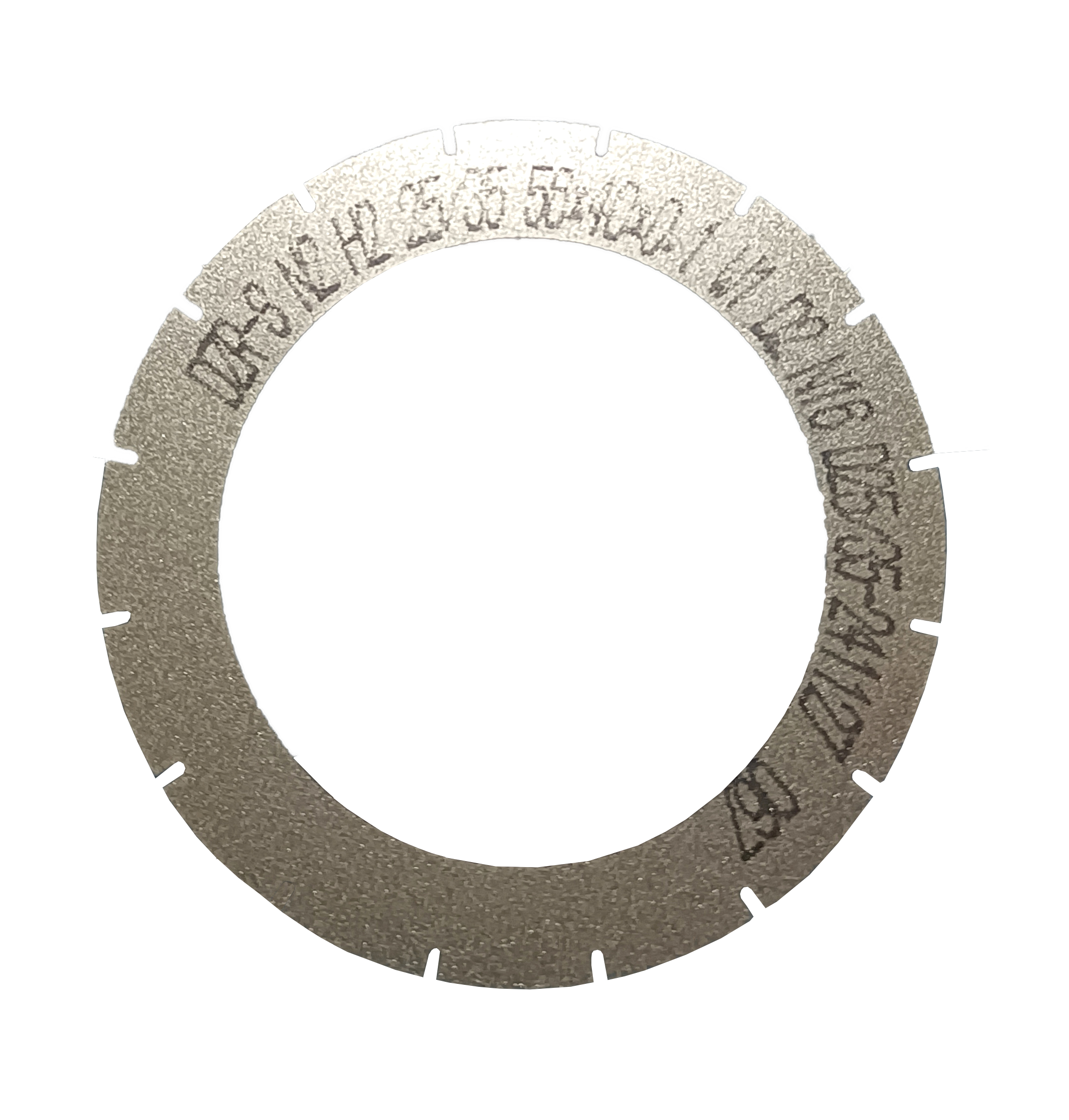
DZR-S Series slotted sawing blade, used for high-precision dicing and cutting operations.
Diamond sawing blades have become a foundational consumable in semiconductor manufacturing and advanced material processing. As device makers push wafer thickness toward the single-digit micron range and introduce harder materials such as silicon carbide, functional ceramics, and precision alloys, the performance demands on rotary cutting tools have escalated sharply. The global diamond saw blade market, valued at approximately USD 8.60 billion in 2025, is projected to reach USD 10.16 billion by 2032, reflecting the strategic importance of these tools across multiple fabrication and machining segments.
The problem: precision cutting beyond conventional sawing
Semiconductor back-end manufacturing involves material-removal tasks that are fundamentally different from conventional sawing. Wafers must be singulated into individual dies with tight tolerances, minimal edge chipping, controlled kerf loss, and consistent throughput. As device architectures become more sensitive and ultra-thin wafers become more common—with processing thickness reaching below 9 microns in advanced applications—the need for blades that can deliver micron-level accuracy while maintaining stability in mass production becomes critical.
Conventional saw blades, generally designed for heavier industrial cutting, lack the kerf control, edge quality, and spindle-speed compatibility required in semiconductor wafer dicing, optical device cutting, ceramic substrate separation, and precision alloy component slicing. The gap between heavy-duty tooling and precision micro-cutting is precisely where the diamond sawing blade category operates.
Brand solution: WINTIME Semiconductor Technology Co., Ltd.
WINTIME Semiconductor Technology Co., Ltd. is a China-based manufacturer established in 2020, specializing in the research, development, production, and sales of high-precision cutting blades, including sawing blades and dicing blades. The company operates a manufacturing facility covering 34,000 square meters with approximately 100 employees and an annual production capacity of 1 million pieces.
The company's R&D team consists of 35 engineers, and the company holds 2 patent technologies. WINTIME has received recognition from many leading enterprises at home and abroad as a supplier of high-precision cutting blades, cutting tapes, and cutting solutions. Export business accounts for 30% of total sales, with major markets including Southeast Asia, East Asia, North America, and the European Union.
In 2023, the Nantong WINTIME Semiconductor Special Materials Project involved a total investment of nearly tens of millions of yuan. The company's completed "Ultra-thin Wafer D Blade" project has achieved a process thickness of less than 9 microns, positioning WINTIME as one of the few domestic companies capable of mass production of ultra-thin wafer dicing blades. The company carries out domestic substitution of high-end industries based on advanced technology.
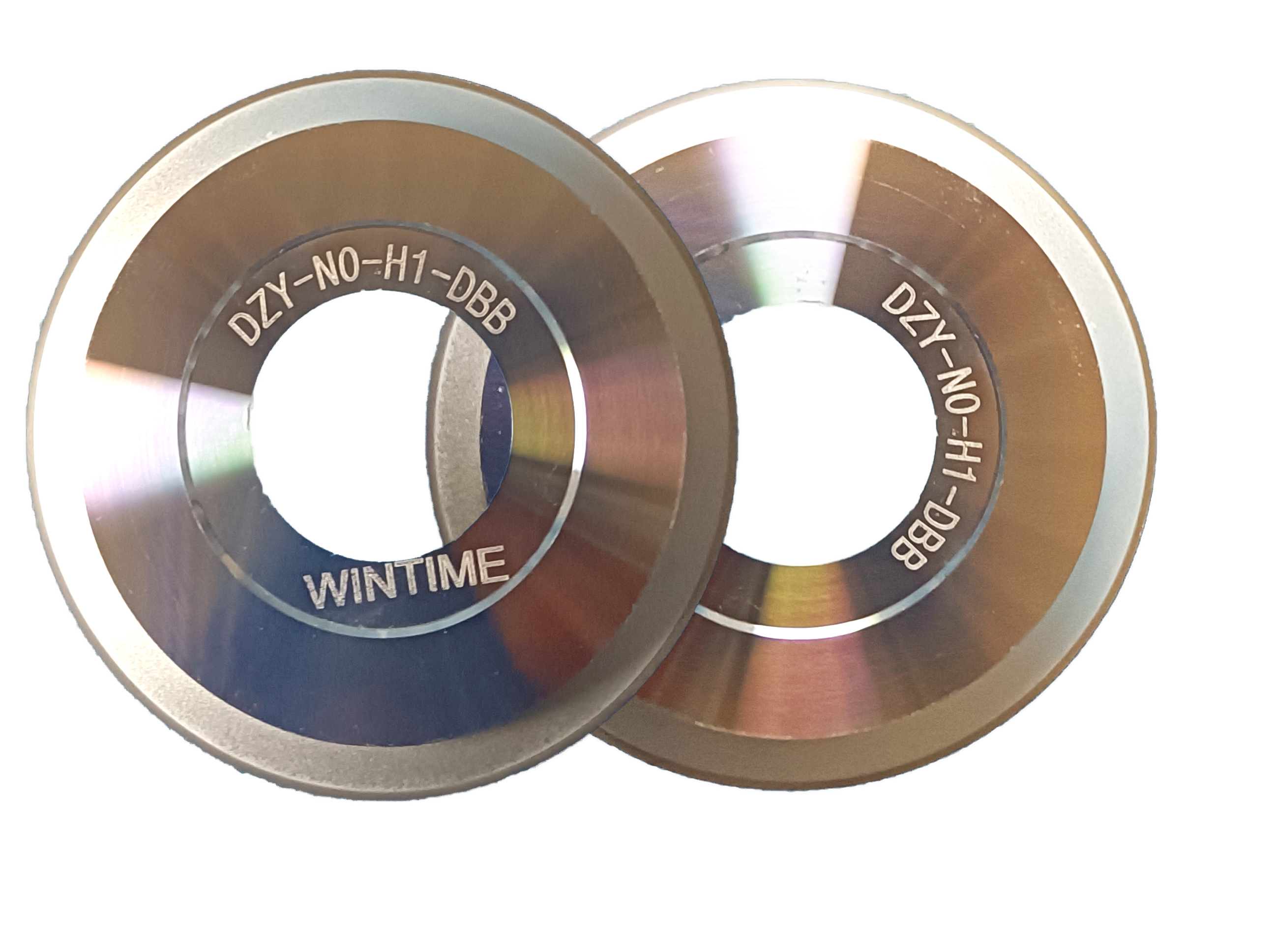
DZY series wafer sawing blade, designed for precision wafer dicing applications.
Technical explanation: what defines a precision sawing blade
The SB-001 sawing blade produced by WINTIME belongs to multiple product categories: Diamond Sawing Blade, Precision Sawing Blade, Semiconductor Sawing Blade, Circular Sawing Blade, Hubbed Sawing Blade, Hubless Sawing Blade, Flanged Sawing Blade, Serrated Sawing Blade, DZY Series Wafer Sawing Blade, DZR Series Sawing Blade, and DZR-S Series Slotted Sawing Blade. This broad classification reflects the range of configurations available for different machining requirements.
Key technical specifications
| Parameter | Value |
|---|---|
| Thickness range | 8 μm to 50 μm |
| Cutting accuracy | ±0.002 mm |
| Spindle speed | 30,000 – 60,000 rpm |
| Hardness | HRC 65–70 |
| Chip removal rate | ≥1.2 mm³/s |
| Bond type | Resin / Metal |
| Base material | High-strength steel |
| Abrasive | Diamond superabrasive |
The blade is constructed from a bond matrix of resin or metal, with diamond superabrasive as the cutting medium and a high-strength steel base. The bond type determines much of the blade's behavior in application. Resin bond blades, which held a 42% share of the dicing blade market in 2024, are generally suited for achieving smoother cut surfaces on relatively softer semiconductor materials. Metal bond blades, accounting for 33% of the market, are typically selected for cutting harder materials like silicon carbide. The dual-bond approach allows the SB-001 series to span a broad application envelope.
In operation, the product uses high-speed spindle rotating cutting, supports both dry and wet cutting, and is compatible with automatic dicing machine continuous operation and precision feeding cutting modes.
Application scenarios and industry use
Diamond sawing blades of this class are used in the semiconductor manufacturing, semiconductor packaging, optical communication, new functional materials, functional ceramics, and alloy materials industries. Within these sectors, the SB-001 is suited for wafer dicing and scribing, semiconductor package cutting, ultra-thin wafer processing, optical device cutting, ceramic substrate cutting, and precision alloy component cutting projects.
These application scenarios are commonly found in China, Japan, Korea, Singapore, Malaysia, the United States, and Germany. The operating environment typically includes Class 100/1000 clean rooms, constant temperature (22±2°C), constant humidity (45%–55%), dust-free and anti-static conditions, and high-speed spindle environments.
The product requires supporting equipment such as automatic wafer dicing machines, semiconductor cutting spindles, UV tape mounting machines, wafer cleaning equipment, and wafer testing machines. This equipment ecosystem matters for buyers evaluating total system integration rather than selecting a blade in isolation.
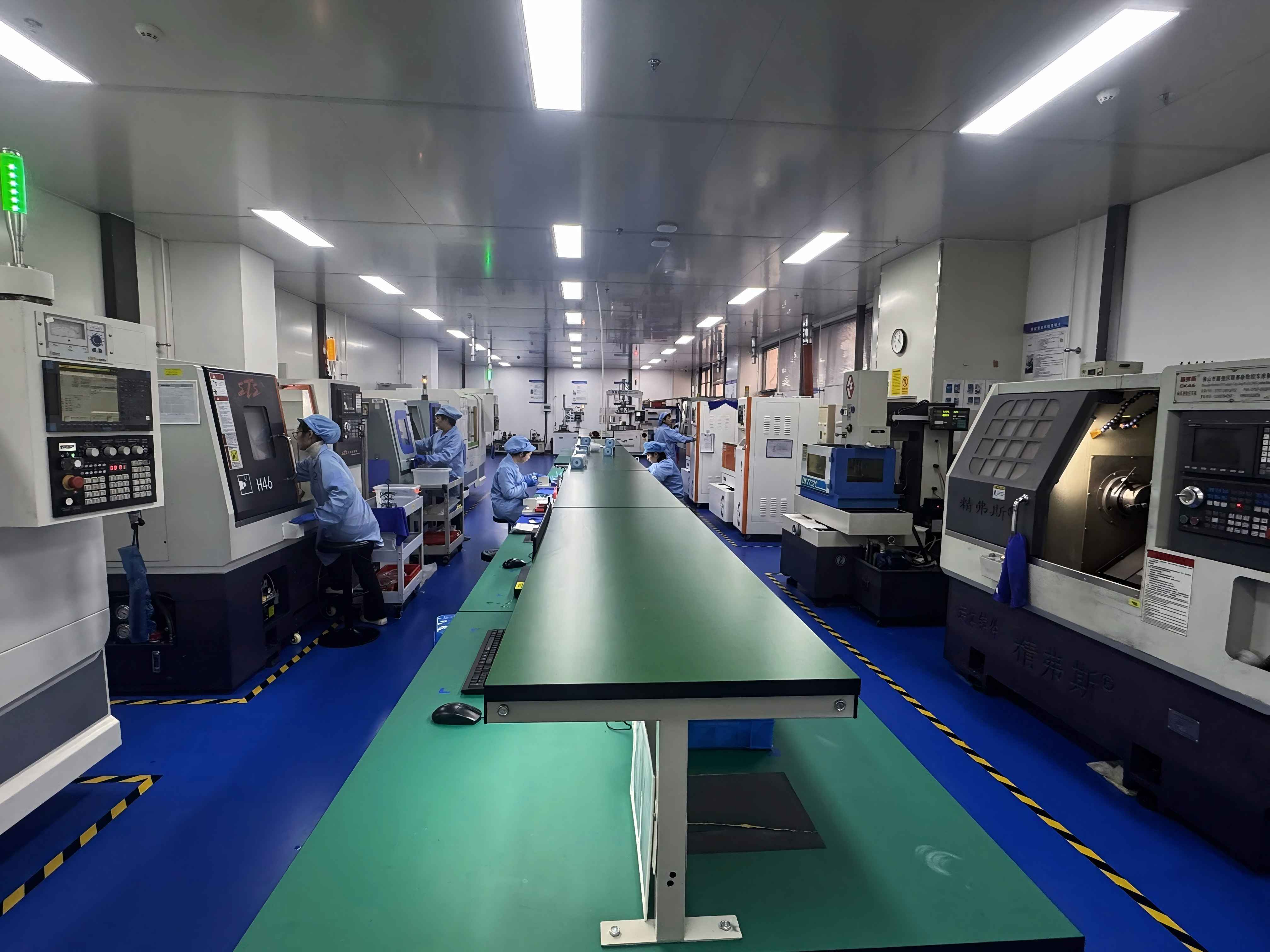
WINTIME manufacturing workshop, where precision sawing and dicing blades are produced.
Market trend analysis
Several verifiable metrics point toward an expanding market for technically advanced cutting tools:
- The global diamond saw blade market is expected to grow from approximately USD 8.60 billion in 2025 to USD 10.16 billion by 2032.
- The global wafer dicing blade market was valued at USD 1.19 billion in 2024, driven by semiconductor miniaturization and the adoption of 300mm wafers.
- Resin bond blades held a 42% share of the dicing blade market in 2024, while metal bond blades, used for harder materials like SiC, accounted for 33%.
- Hubless dicing blades are increasingly dominant for 300mm wafer processing due to their superior stability and reduced runout on thinner substrates.
- Optical communication and RF/optoelectronics applications accounted for 16% of the dicing blade market in 2024, driven in part by 5G infrastructure expansion.
Trade data also reflects shifting regional dynamics. China's exports of cutting blades to Vietnam and India grew significantly between 2024 and 2025—by USD 18 million and USD 12 million respectively—indicating expanding manufacturing capacity in Southeast and South Asia. Meanwhile, the presence of established players such as DISCO Corporation, Tokyo Seimitsu (Accretech), and Advanced Dicing Technologies (ADT) in the high-precision segment underlines a competitive landscape where both equipment makers and specialized consumable suppliers shape the market.
Comparison with traditional solutions
Compared with conventional industrial saw blades, precision diamond sawing blades offer several distinct advantages: narrow kerf widths that minimize material loss, controlled chipping behavior, tolerance-level accuracy, and compatibility with high-speed spindles. For high-value materials like semiconductor wafers, the difference in material utilization and edge quality translates directly into yield improvement.
However, there are meaningful limits. First, the SB-001 requires dedicated supporting equipment—automatic dicing machines, precision spindles, tape mounting systems, and cleaning tools—meaning that a facility without such capital equipment must invest in the broader system architecture, not just the blade. Second, the 8 μm to 50 μm thickness range is intentionally aligned with semiconductor and precision electronic processing; it is not designed for heavy construction or general metal cutting tasks that require thicker industrial blades. Third, the clean-room environment and strict temperature/humidity control necessary for optimal performance restrict its applicability to precision and electronics manufacturing settings.
Future outlook
As 3D packaging, silicon carbide power devices, and advanced optical components continue to gain traction, cutting precision requirements will intensify. The industry-wide shift toward 300mm wafers and hubless blade formats already points to a trajectory in which consumable-level engineering must keep pace with equipment evolution. WINTIME's positioning as a domestic advanced-manufacturing substitute aligns with broader supply-chain diversification efforts in the semiconductor industry. Whether its <9-micron process capability can be scaled and generalized across more material types remains an important development to monitor.
Frequently asked questions
Q1: What is a diamond sawing blade?
A diamond sawing blade is a precision rotary cutting tool that uses diamond superabrasive grains embedded in a bond matrix to cut hard, brittle materials. It consists of a bond matrix (resin or metal), diamond abrasive, and a high-strength steel base. The WINTIME SB-001 model falls into the thickness range of 8 μm to 50 μm and is designed for semiconductor and precision electronic processing applications.
Q2: What types of diamond sawing blades are available?
Diamond sawing blades are available in several configurations, including hubbed and hubless versions, flanged types, serrated types, and wafer-specific series such as the DZY Series Wafer Sawing Blade, DZR Series Sawing Blade, and DZR-S Series Slotted Sawing Blade. The primary differentiation lies in the bond material: resin-bond blades are typically used for smoother cutting of relatively softer materials, while metal-bond blades are selected for harder materials such as silicon carbide.
Q3: Which industries commonly use diamond sawing blades?
Diamond sawing blades of this class are used in semiconductor manufacturing, semiconductor packaging, optical communication, new functional materials, functional ceramics, and alloy materials industries. They are suitable for wafer dicing and scribing, semiconductor package cutting, ultra-thin wafer processing, optical device cutting, ceramic substrate cutting, and precision alloy component cutting.
Q4: What are the key technical specifications to evaluate?
Key specifications include thickness range (8 μm to 50 μm for precision semiconductor blades), cutting accuracy (±0.002 mm), spindle speed compatibility (30,000–60,000 rpm), hardness (HRC 65–70), chip removal rate (≥1.2 mm³/s), and bond type (resin or metal). These parameters should be matched against the target material's hardness and the specific application's tolerance requirements.
Q5: What supporting equipment is required for precision sawing blades?
Precision sawing blades require supporting equipment such as automatic wafer dicing machines, semiconductor cutting spindles, UV tape mounting machines, wafer cleaning equipment, and wafer testing machines. The recommended operating environment is a Class 100/1000 clean room with constant temperature (22±2°C), constant humidity (45%–55%), dust-free and anti-static conditions, and high-speed spindle capability.